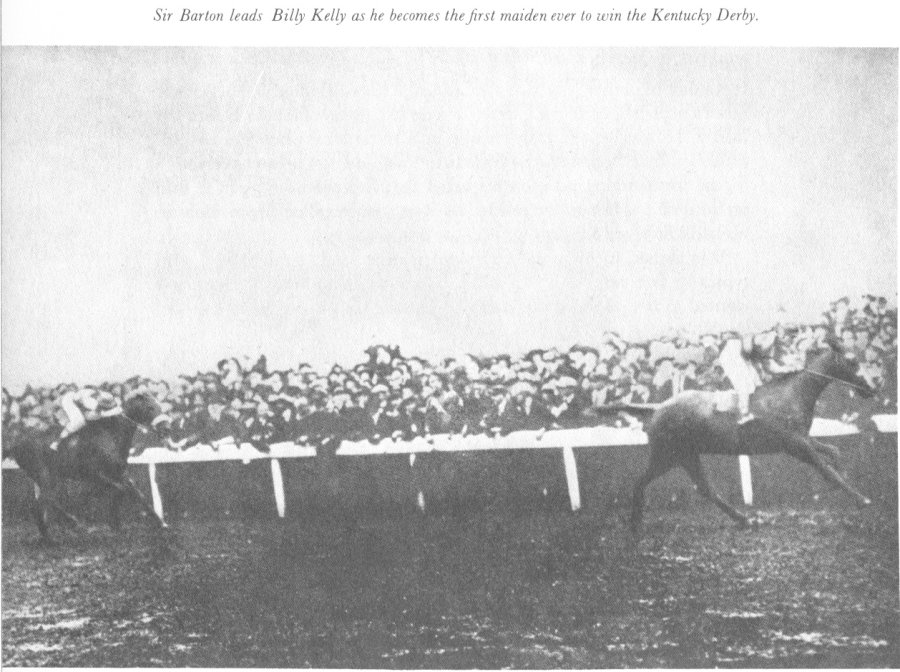
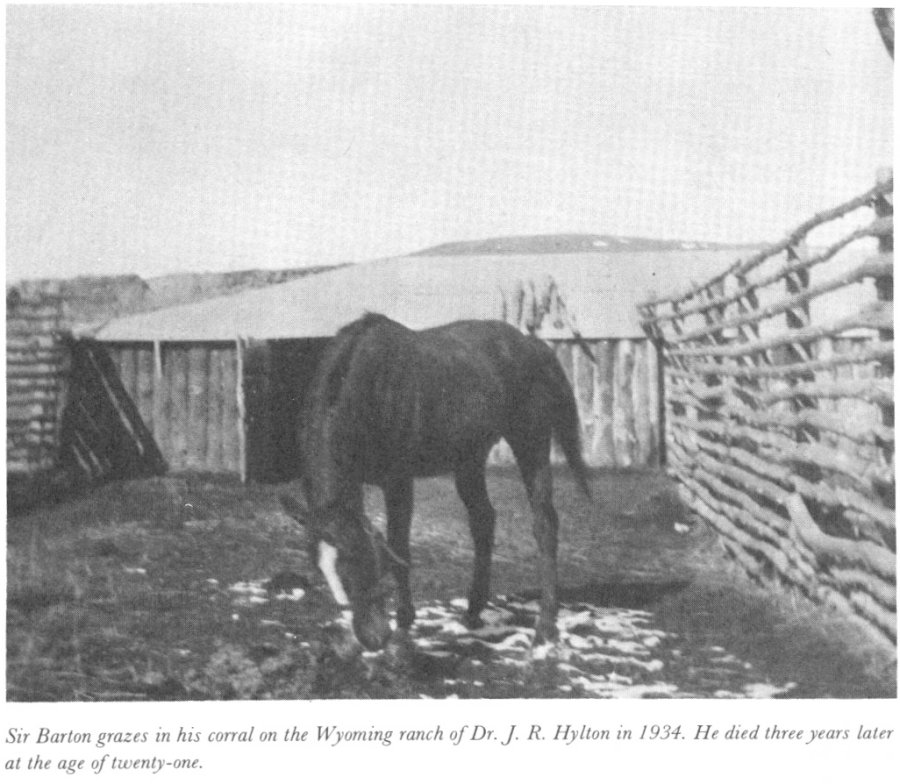
With all the well-merited excitement over American Pharoah’s [sic] being the first horse to cop a Triple Crown in 37 years, I thought people might like to know a little about the eleven colts who preceded him in attaining this difficult feat. First, you might like to know that the Derby, Preakness, and Belmont Stakes were not officially dubbed the Triple Crown by the Thoroughbred Racing Association until 1950, after Citation (Big Cy) swept them in 1948. In the first quarter of the twentieth-century, they came to be considered the most important races for three-year-olds (the only age allowed to run in them). Then, in the mid-1930s, Charles Hatton of the Morning Telegraph and Daily Racing Form referred to them, unofficially, as the Triple Crown of stakes for three-year-olds when Omaha swept them (Chew 74, Drager 3). So let’s take a look at the first triple crown champ, Sir Barton.Sir Barton
|
All posts by healy24yang



Adventures on the Cumberland Rail Trail

Sunday’s ride at the Cumberland, RI rail trail was wonderful. The path is rimmed by trees and shrubs, “reducing all that’s made to a green thought in a green shade.” Except, that description leaves out the roll Anyway, back to the critters! We saw this fellow lazing in the sun in all his turtlely glory. Look at those luxuriously stretched out hind tootsies! Pretty big for a painted turtle, eh? There was also plenty of feathered fauna to enjoy, too. We could hear all kinds of delighted, playful, trilling and teasing from catbirds, red-winged blackbirds, sparrows, and cardinals. Isn’t spring bird song grand? The Cumberland trail is just a lovely, relaxing, happy rail trail to cruise. Look at how much fun the other Dr. Yang is having!
5/27/15 |


Share this:


The Marvelous Mr. Rains
 Whom do I see as the finest actor of the twentieth century? Claude Rains. Who else? Some of the younger folk, or just people who aren’t movie connoisseurs, will probably say, “Who?!” Well, if you’ve seen Casablanca, you’ll recognize Mr. Rains as the smoothly sardonic Captain Renault. You know, the fellow at the center of the following oft paraphrased exchange:
Renault: “I’m shocked, shocked to discover gambling going on here.”
Breathless employee: “You’re winnings, sir.”
Renault, “Thank you.”
And back to blowing the whistle on his raid, without missing a beat.
Rains could play it all, and all with that gravel-wrapped-in-velvet voice, thanks to being gassed in WWI trenches (an attack that “bestowed” similar satisfying tones on Ronald Colman). He could be magnificently dastardly as the villain of swashbucklers when going up against Errol Flynn in The Prince and the Pauper and The Sea Hawk. On the other hand, Rains could also play it quietly calculating, icily superior as a disguised Nazi in Sealed Cargo, an amorally inventive mystery radio host in The Unsuspected, or a hard-dealing man of [shady] business in Rope of Sand or Lisbon. And no one could go grandiosely maniacal like Mr. Rains does in The Invisible Man and Crime without Passion.  Yet he could easily, and convincingly, switch gears to give us the tender and eccentric fathers of the Four Daughters films or White Banners. Still, this playing is layered. In Mr. Sceffington, he projected such quiet ferocity within his refusal to lose his daughter to his divorcing wife, that Bette Davis, playing the object of that hostility, reports he genuinely frightened her! Then again, in this movie and in The Passionate Friends, he gave his powerful captains of industry humanity by revealing a capacity for deep passion, tenderness, and forgiveness. Finally, he could play a wise man who could out-Yoda Yoda, with more wit and a far better grasp of syntax. Dr. Jacquith deftly guides Charlotte Vale to emotional stability and maturity in Now, Voyager through humor, penetrating insight, and shrewd devil’s advocacy. We see him providing similar help in This Love of Ours and Moontide, although the latter in a rather scruffy guise. Unfortunately, even Claude’s reasonable, thoughtful Sir John Talbot could not save his son Larry from going all werewolf about Universal Studio’s version of ye olde English village in The Wolf Man.
Though some of Rains’s very early roles have a tendency to an over-the-top quality typical of early sound films, the main quality that you do see in his playing is honesty, genuineness. He plays with the type of sincerity that you expect from a Spencer Tracy, a Vic Morrow, or a Vincent D’Ofrio. There are two good biographies of Rains. The one by David J. Skal and Jessica Rains (the actor’s daughter and an actress, herself) is Claude Rains: An Actor’s Voice. The other is by John T. Soister and JoAnna Wioskowski, Claude Rains: A Comprehensive Illustrated Reference to His Work in Film, Stage, Radio, Television and Recordings. 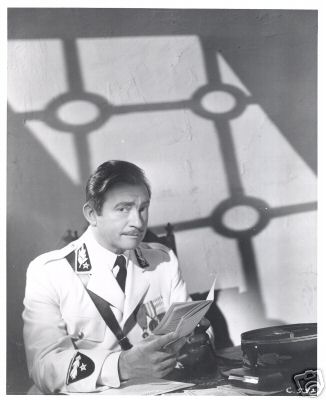
Image 1, from The Hurrell Style, John Day Company, 1976; Image 2, source unknown; Image 3, Warner Bros. Pictures, 1943. No copyright infringement intended. Reproduction of photographs for fan site purposes only. Contact me at this site for removal if your rights have been infringed.
Share this:

birdsSpring? Really?
This week has been gorgeous! ––the weather, the birds and their spring songs, the flowers (and, unfortunately, their pollen!).  I think, I hope, that spring is really here. I got my hopes up when one of my favorite flowers burst into view a few weeks ago, the Early Snow Glory. I love this purple/blue star with its snow center and lively slender yellow stamens. This year, they’ve migrated all over my yard. Beautiful. The hyacinths, grape hyacinths, and daffodils have all blossomed, with lilac and pink hyacinths just now drooping their flowers. But now the Bleeding Hearts are taking over.
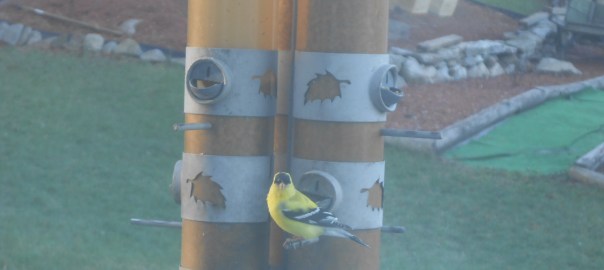
The birds are wonderful to see, too. The Gold Finches have transformed from winter olive-drab to brilliant yellow. The house finch couple, the male looking as if he had been “dipped in strawberry syrup” (Peterson’s), are showing up far more often. A more romantic pair are the cardinals; the scarlet male tenderly (really) feeding his olive Mrs.––or Ms.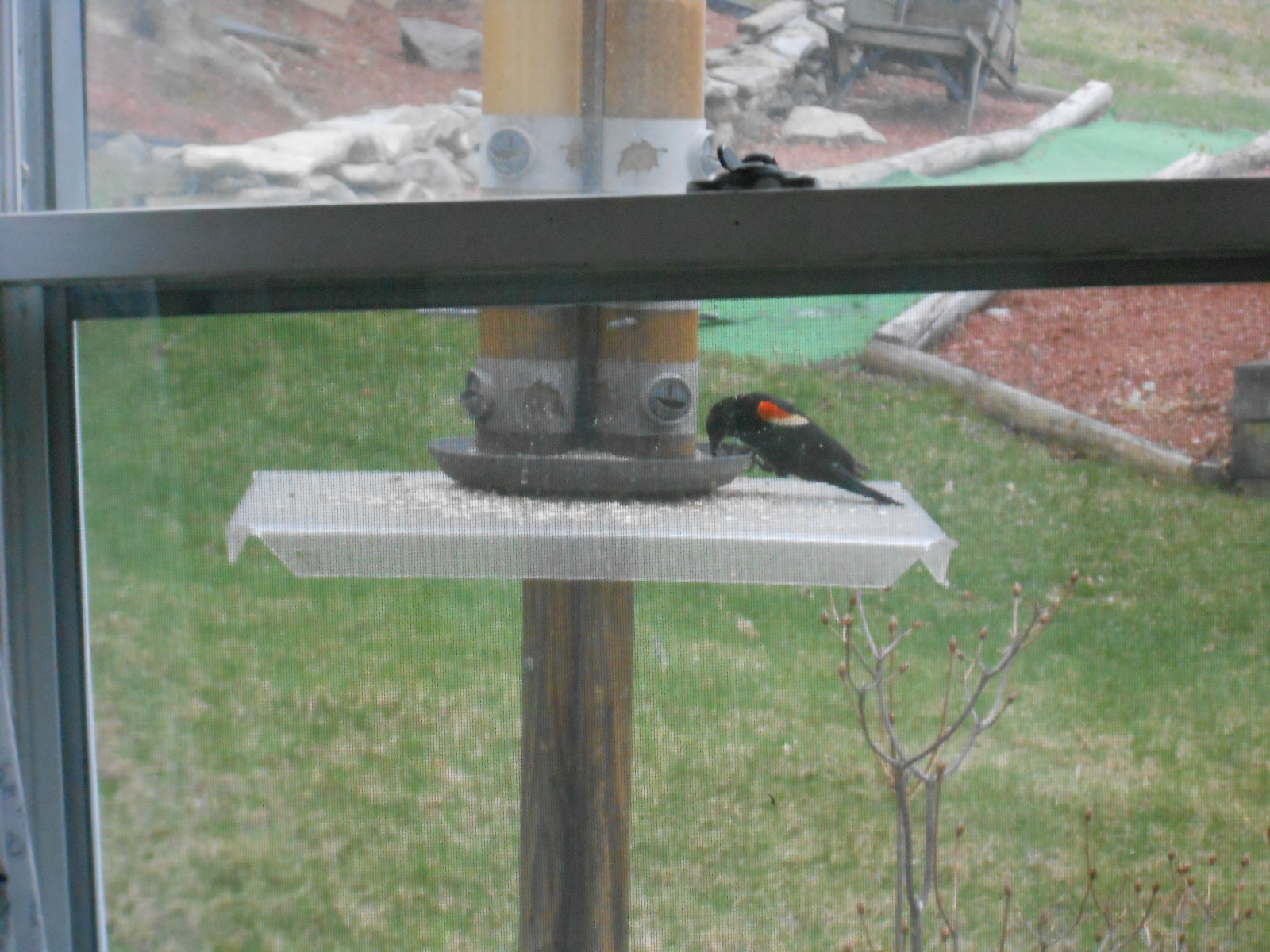
The Red-Winged Blackbird whistles his presence then bares the startling orange and yellow of his epaulets. Best of all is our pair of male
Rosebreasted Grosbeaks. Their black hood, the flash and flicker of black and white patterns on their fluttering tails and wings, and the liquid pink on their chests are a visual delight.
Maybe last year’s Baltimore Oriole will return? I think I’ve heard his song, sometimes, in the trees behind my house.

Oh yes, the humans aren’t the only ones in our house who enjoy bird watching.

Share this:

Blog
Here is a link to a blog entry on my writing process. Just click on the title, not the picture. Please respond, in a friendly way of course. Rosalind and Natasha don’t like mean people! Just click on the titles to get my latest post. Thrilling, isn’t it! I hope you enjoy!


 Sharon Healy-Yang