“Rod Serling: A Man for All Times”
by
Kathleen Healey
It is amazing to think that Rod Serling’s The Twilight Zone continues to be popular well beyond the mid-twentieth century in which it was originally broadcast. Various television networks, including the Sy-Fy channel, have Twilight Zone marathons several times a year. In 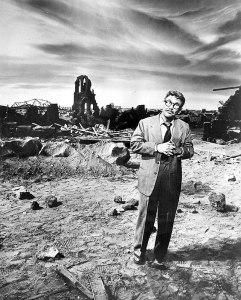 fact, one could argue that The Twilight Zone series has become a cult classic. Who can forget characters like the bespectacled Bemis, the lone survivor of atomic war, in “Time Enough at Last” (1959); the murderous Talky Tina in “Living Doll” (1963); or William Shatner’s terror at the creature on the wing of the plane in “Nightmare at 20,000 Feet” (1963)? How can one explain the continuing popularity of this quirky but utterly fascinating black and white television series? The writing, the plots, the characters, and the acting all bring us back to watch over and over, but there is more. Perhaps what makes any great work, such as The Twilight Zone, endure is the fact that it speaks to an essential understanding of human nature, politics, and society. In other words, The Twilight Zone transcends the time in which it was written. fact, one could argue that The Twilight Zone series has become a cult classic. Who can forget characters like the bespectacled Bemis, the lone survivor of atomic war, in “Time Enough at Last” (1959); the murderous Talky Tina in “Living Doll” (1963); or William Shatner’s terror at the creature on the wing of the plane in “Nightmare at 20,000 Feet” (1963)? How can one explain the continuing popularity of this quirky but utterly fascinating black and white television series? The writing, the plots, the characters, and the acting all bring us back to watch over and over, but there is more. Perhaps what makes any great work, such as The Twilight Zone, endure is the fact that it speaks to an essential understanding of human nature, politics, and society. In other words, The Twilight Zone transcends the time in which it was written.
 You don’t have to read a biography of Serling to get an understanding of his views. As Mark Boulton aptly states, “[t]he medium of television offered Serling an opportunity to shine a light on many of the social ills afflicting the nation” (1227). Serling himself stated in a speech in 1968 that “[t]he writer’ s role is to menace the public’s conscience . . . He must see the art as a vehicle of social criticism and must focus on the issues of his time” (qtd. in Boulton 1227). Boulton further states that while “the show’s stories were laden with the kind of caustic, social commentary” that would not be acceptable to mainstream network television, “science fiction allowed Serling to address real-world issues – such as racism, militarism, political extremism, and Cold War paranoia – with allegorical characters and situations that were unlikely to send sponsors or all-but-the-most sensitive viewers scurrying” (1229). You don’t have to read a biography of Serling to get an understanding of his views. As Mark Boulton aptly states, “[t]he medium of television offered Serling an opportunity to shine a light on many of the social ills afflicting the nation” (1227). Serling himself stated in a speech in 1968 that “[t]he writer’ s role is to menace the public’s conscience . . . He must see the art as a vehicle of social criticism and must focus on the issues of his time” (qtd. in Boulton 1227). Boulton further states that while “the show’s stories were laden with the kind of caustic, social commentary” that would not be acceptable to mainstream network television, “science fiction allowed Serling to address real-world issues – such as racism, militarism, political extremism, and Cold War paranoia – with allegorical characters and situations that were unlikely to send sponsors or all-but-the-most sensitive viewers scurrying” (1229).
At times Serling’s prescience is almost uncanny; he has a piercing understanding of human nature, something lurking in us that cannot be eradicated, playing the same script of history over and over again. As a young man, Serling enlisted in the army during World War II, hoping to fight the Nazis. He was instead sent to the Philippines, but his hatred of extremism remained and found its way to the pages of his writing (Boulton 1229). In the opening monologue of “The Obsolete Man” (1961) – an episode in which a Fascist government led by an unnamed Chancellor deems a librarian obsolete because of his love of books and belief in God – Serling reveals that:
This is not a new world, it is simply an extension of what began in the old one. It has patterned itself after every dictator who has ever planted the ripping imprint of a boot on the pages of history since the beginning of time. It has refinements, technological advances, and a more sophisticated approach to the destruction of human freedom. But like every one of the superstates that preceded it, it has one iron rule: logic is an enemy and truth is a menace” (qtd in Zicree 207-08).
Serling makes clear in other episodes that extremists control the  body as well. In “Eye of the Beholder” (1960), for example, a beautiful young woman is forced to undergo numerous surgeries to look like the rest of society. The episode is shot in shadows and darkness; it is not until the end that we see that the doctors and nurses are all identically monstrous to us. As the young woman attempts to flee, a nameless dictator extols the joys of “glorious conformity” from omnipresent televisions. The woman is sent to live out her life with others like herself – a fate that seems much better than living in a society where everyone is the same. body as well. In “Eye of the Beholder” (1960), for example, a beautiful young woman is forced to undergo numerous surgeries to look like the rest of society. The episode is shot in shadows and darkness; it is not until the end that we see that the doctors and nurses are all identically monstrous to us. As the young woman attempts to flee, a nameless dictator extols the joys of “glorious conformity” from omnipresent televisions. The woman is sent to live out her life with others like herself – a fate that seems much better than living in a society where everyone is the same.
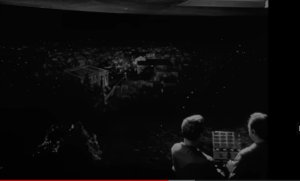
Perhaps, though, the most frightening episodes show not futuristic extremists, but the kinds of people we all know – our neighbors, 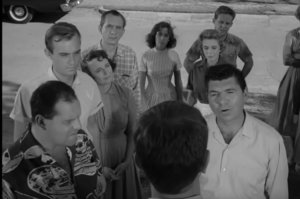 friends, and relatives. In these episodes, the danger is all too real, yet it sleeps beneath the surface like a creature waiting to awaken from a deep slumber. It hides behind the façade of ordinary life and quiet neighborhoods, tree lined streets and weekend barbecues. However, it takes little to cause the creature to awaken and show its true nature. “The Monsters are Due on Maple Street” (1960) depicts a quiet neighborhood that could be anywhere in America. As the neighbors go about their daily lives, the electricity goes out and the neighbors’ fears and paranoia begin to surface. A friends, and relatives. In these episodes, the danger is all too real, yet it sleeps beneath the surface like a creature waiting to awaken from a deep slumber. It hides behind the façade of ordinary life and quiet neighborhoods, tree lined streets and weekend barbecues. However, it takes little to cause the creature to awaken and show its true nature. “The Monsters are Due on Maple Street” (1960) depicts a quiet neighborhood that could be anywhere in America. As the neighbors go about their daily lives, the electricity goes out and the neighbors’ fears and paranoia begin to surface. A 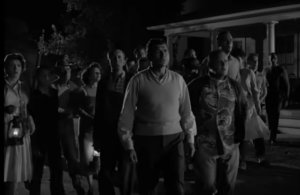 young boy named Tommy, who loves science fiction, tells his neighbors that he knows that human-looking aliens have invaded and are causing the disruption. Suddenly, the neighbors begin to turn on each other. Fear, paranoia, and hidden intolerance replace reason. Friends become enemies as the mob accuses one and then another of being the alien come to destroy life as they know it. You don’t have to probe too deeply to see Serling’s young boy named Tommy, who loves science fiction, tells his neighbors that he knows that human-looking aliens have invaded and are causing the disruption. Suddenly, the neighbors begin to turn on each other. Fear, paranoia, and hidden intolerance replace reason. Friends become enemies as the mob accuses one and then another of being the alien come to destroy life as they know it. You don’t have to probe too deeply to see Serling’s 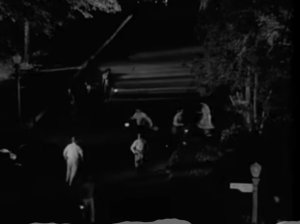 critique of the Cold War and Blacklisting, as neighbor turns against neighbor, deflecting the blame to avoid the mob. Murder, stoning, and chaos ensue as society crumbles and the true monsters emerge: us. The episode ends with aliens watching the mayhem. They had manipulated the electricity, then just waited for human beings’ fear and bigotry to do the rest. As one alien says to the other: “Humans pick the most dangerous enemy they can find and it’s themselves. All we need to do is sit back – and watch.” (“Monsters”). critique of the Cold War and Blacklisting, as neighbor turns against neighbor, deflecting the blame to avoid the mob. Murder, stoning, and chaos ensue as society crumbles and the true monsters emerge: us. The episode ends with aliens watching the mayhem. They had manipulated the electricity, then just waited for human beings’ fear and bigotry to do the rest. As one alien says to the other: “Humans pick the most dangerous enemy they can find and it’s themselves. All we need to do is sit back – and watch.” (“Monsters”).

Rod Serling was a man for all times. His understanding of human psychology, power structures, and history gives us warnings, even  today. There is always the danger of extremists in whatever garb they wear. We don’t have to look too far to see the effect of a few words on social media to turn otherwise rational people into a mob. A comment made in cyberspace quickly becomes gospel, inflaming the mob against one another by highlighting our differences. We don’t need the aliens to destroy ourselves. Hatred, anger, and intolerance replace our better selves while violence erupts – yet we then question why it happens. Perhaps we need to take a look at what Rod Serling said over 50 years ago. today. There is always the danger of extremists in whatever garb they wear. We don’t have to look too far to see the effect of a few words on social media to turn otherwise rational people into a mob. A comment made in cyberspace quickly becomes gospel, inflaming the mob against one another by highlighting our differences. We don’t need the aliens to destroy ourselves. Hatred, anger, and intolerance replace our better selves while violence erupts – yet we then question why it happens. Perhaps we need to take a look at what Rod Serling said over 50 years ago.
Works Cited
Boulton, Mark. “Sending the Extremists to the Cornfield: Rod Serling’s Crusade Against Radical Conservatism.” The Journal of Popular Culture. Vol. 47, No. 6, 2014, pp. 1227-1244.
“The Eye of the Beholder.” The Twilight Zone: Season 2, Directed by Douglas Heyes, Episode 6, CBS, Aired November 11, 1960.
“The Monsters Are Due on Maple Street.” The Twilight Zone: Season 1, Directed by Ron Winston, Episode 22, CBS, Aired March 4, 1960.
“The Obsolete Man.” The Twilight Zone: Season 2, Directed by Elliot Silverstein, Episode 29, CBS, Aired June 2, 1961.
Zicree, Marc Scott. The Twilight Zone Companion. 2 nd Edition. Los Angeles: Silman-James,1989. Print.
 Kathy Healey is an Adjunct Professor of English at Worcester State University. Her doctorate is in American Literature and Culture with a focus on the 18th and 19th century. Her many literary interests include Gothic literature and Science Fiction. She has published numerous scholarly articles on literature and popular culture, including co-editing and contributing to Gothic Landscapes: Changing Eras, Changing Cultures, Changing Anxieties (Palgrave Press). When she is not working, she paints, enjoys gardening, and learning about herbalism and the many uses of plants. Her other job is as a museum guide at the Nathan Hale Homestead in Coventry, CT, where she gets to share her love of American history and culture, even getting to wear 18th century clothing and cook over an open fire! Kathy Healey is an Adjunct Professor of English at Worcester State University. Her doctorate is in American Literature and Culture with a focus on the 18th and 19th century. Her many literary interests include Gothic literature and Science Fiction. She has published numerous scholarly articles on literature and popular culture, including co-editing and contributing to Gothic Landscapes: Changing Eras, Changing Cultures, Changing Anxieties (Palgrave Press). When she is not working, she paints, enjoys gardening, and learning about herbalism and the many uses of plants. Her other job is as a museum guide at the Nathan Hale Homestead in Coventry, CT, where she gets to share her love of American history and culture, even getting to wear 18th century clothing and cook over an open fire!
Image Sources:
“Time enough at Last” image CBS Television, Public domain, via Wikimedia Commons
Serling 1 CBS Television via the Bureau of Industrial Service. During the 1950s and 1960s, television networks, program sponsors and studios often used either advertising or public relations agencies to distribute publicity materials. The Bureau was a division of ad agency Young & Rubicam., Public domain, via Wikimedia Commons
Screen shot “The Eye of the Beholder,” author’s collection from YouTube https://www.youtube.com/watch?v=4WdtAj8jYMM
Screen shots from “The Monsters Are Due on Maple Street,” author’s collection from Chanel Awesome, YouTube, https://www.youtube.com/watch?v=u3Jey34CxQk
Rod Serling/Twilight Zone ad: https://adarkandscaryplace.com/the-twilight-zone
Copyright © 2017 – 2024 A Dark and Scary Place – All Rights Reserved. “The Imagination of Ty Power”
|


 Sharon Healy-Yang
