 I’ve been a horse-racing aficionado since 1966, when I started watching the Triple Crown races on TV. My pick was Amberoid, who finished eleventh in the Derby, moved on up to third in the Preakness, then blasted home first by 2 1/2 lengths in the Belmont Stakes. Sorry Kaui King on crimping your Triple Crown bid. So it’s been lots of fun for me to bring my favorite sport into play in Always Play the Dark Horse. For verisimilitude, I drew on some real race horses’ interesting quirks when creating the equine players of my story. I’ve been a horse-racing aficionado since 1966, when I started watching the Triple Crown races on TV. My pick was Amberoid, who finished eleventh in the Derby, moved on up to third in the Preakness, then blasted home first by 2 1/2 lengths in the Belmont Stakes. Sorry Kaui King on crimping your Triple Crown bid. So it’s been lots of fun for me to bring my favorite sport into play in Always Play the Dark Horse. For verisimilitude, I drew on some real race horses’ interesting quirks when creating the equine players of my story.
 Equipoise, a handicap star of the 1930s, was known as “The Chocolate Soldier” for his dark brown coat and his warrior-like determination to win. A tough horse, he ran for five seasons and won an impressive 29 of 52 starts. If he couldn’t outrun his competition, he wasn’t above taking a little chunk out of a horse who challenged him in a stretch drive – hence his disqualification in the 1934 Metropolitan Handicap. That loss actually was used for the final twist in the play and movie Three Men and a Horse. He brought such disqualifications on himself two other times as well, but he was also known as “the best assistant starter” for keeping fractious horses in line when he was set on the business of getting the race started clean. An honest, hard-working, hard-knocking horse (literally), Equipoise was a leading stakes and money winner. Equipoise, a handicap star of the 1930s, was known as “The Chocolate Soldier” for his dark brown coat and his warrior-like determination to win. A tough horse, he ran for five seasons and won an impressive 29 of 52 starts. If he couldn’t outrun his competition, he wasn’t above taking a little chunk out of a horse who challenged him in a stretch drive – hence his disqualification in the 1934 Metropolitan Handicap. That loss actually was used for the final twist in the play and movie Three Men and a Horse. He brought such disqualifications on himself two other times as well, but he was also known as “the best assistant starter” for keeping fractious horses in line when he was set on the business of getting the race started clean. An honest, hard-working, hard-knocking horse (literally), Equipoise was a leading stakes and money winner.
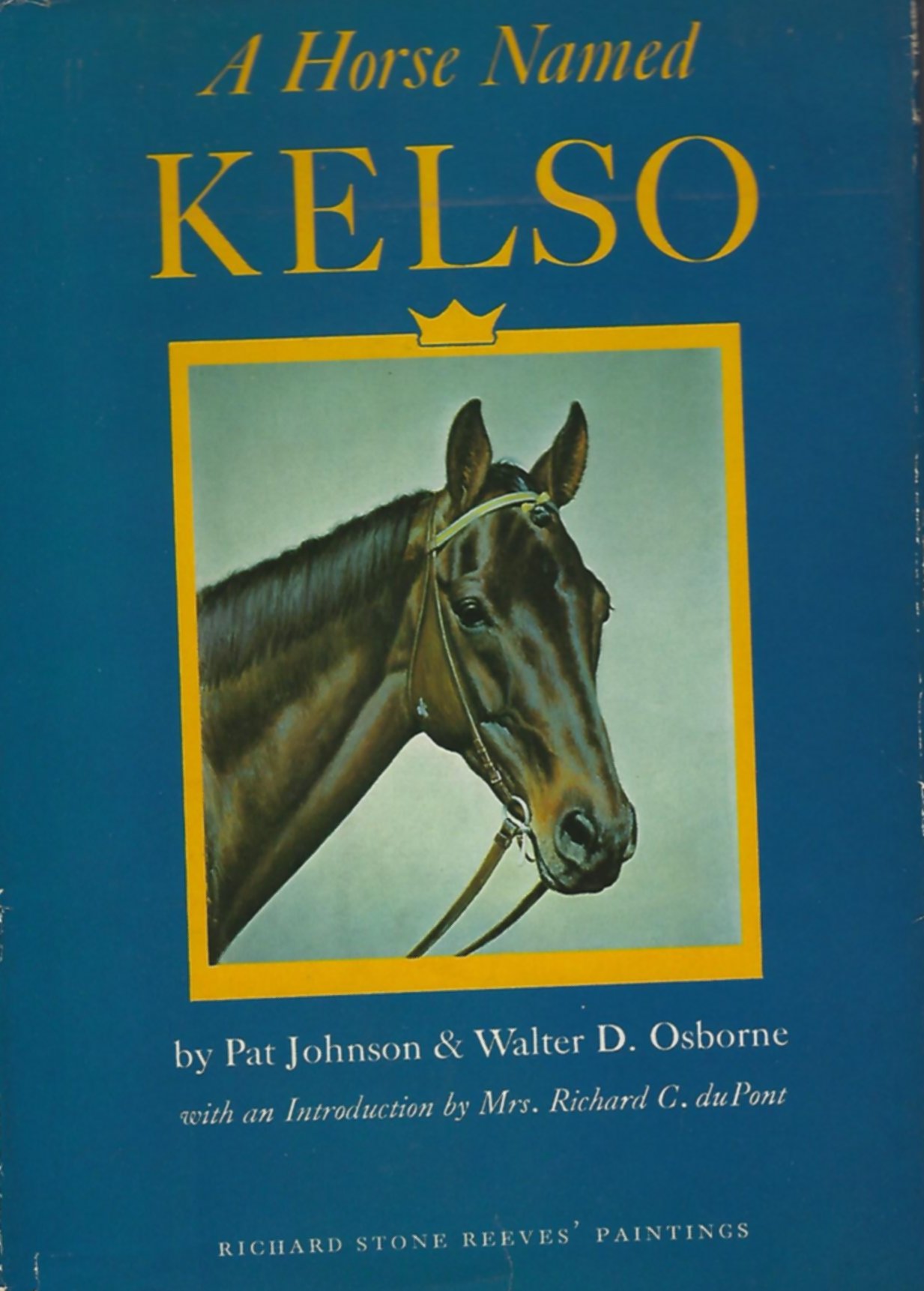
Another champion handicap horse, equally determined but far less free with his chompers, was  Kelso. For 4 years (1961-65) Kelso dominated handicap racing, knocking heads with such stars as Gun Bow, Mongo, Beau Purple, and Roman Brother. He was horse of the year four consecutive years and won one handicap triple crown as well four consecutive Jockey Club Gold Cups, eventually became leading money winner, just missing being the first horse to win two million dollars. Kelly may have been a tough nut to crack on the track, but he was a tenderhearted guy when it came Kelso. For 4 years (1961-65) Kelso dominated handicap racing, knocking heads with such stars as Gun Bow, Mongo, Beau Purple, and Roman Brother. He was horse of the year four consecutive years and won one handicap triple crown as well four consecutive Jockey Club Gold Cups, eventually became leading money winner, just missing being the first horse to win two million dollars. Kelly may have been a tough nut to crack on the track, but he was a tenderhearted guy when it came  to kids, letting them feed him ice cream sundaes. After he retired, his owner, Mrs. Allaire Dupont even turned him into a saddle horse, but Kelso was not one to poke along trails. She noticed he had an affinity for jumping natural obstacles on their rides, so to keep her equine friend from getting bored, she successfully trained him as a jumper. I can remember one of his exhibitions at a New York track where the old guy showed himself a master in yet another equine endeavor. The racehorse to jumper story almost made it into Dark Horse; but, alas, necessary cuts sheared it from the story. Maybe a sequel where this equine character makes a return engagement? to kids, letting them feed him ice cream sundaes. After he retired, his owner, Mrs. Allaire Dupont even turned him into a saddle horse, but Kelso was not one to poke along trails. She noticed he had an affinity for jumping natural obstacles on their rides, so to keep her equine friend from getting bored, she successfully trained him as a jumper. I can remember one of his exhibitions at a New York track where the old guy showed himself a master in yet another equine endeavor. The racehorse to jumper story almost made it into Dark Horse; but, alas, necessary cuts sheared it from the story. Maybe a sequel where this equine character makes a return engagement?
Devil His Due was a racer of the 1990s who looked as if he could have played the title role in Walter Farley’s Black Stallion series. Unusual for a champion stallion, he was not retired early but ran into his sixth year. Also unusual, he was sound enough to never have run on Lasix. I was even lucky  enough to have seen him at Belmont Park when he ran in the 1994 Woodward Stakes. Unfortunately, it was Holy Bull’s day of glory not Devil’s. This black stallion still won more than his share of stakes: Pimlico Special, Brooklyn Handicap, Gulfstream Park Handicap, and back-to-back victories in the Suburban Handicap (with 1994 victories in the Brooklyn and Suburban, he copped two legs of the Handicap Triple Crown). He was especially admired for his determined stretch battle with Lured in the Wood Memorial, finishing in a dead heat for first with the other horse. enough to have seen him at Belmont Park when he ran in the 1994 Woodward Stakes. Unfortunately, it was Holy Bull’s day of glory not Devil’s. This black stallion still won more than his share of stakes: Pimlico Special, Brooklyn Handicap, Gulfstream Park Handicap, and back-to-back victories in the Suburban Handicap (with 1994 victories in the Brooklyn and Suburban, he copped two legs of the Handicap Triple Crown). He was especially admired for his determined stretch battle with Lured in the Wood Memorial, finishing in a dead heat for first with the other horse.
Our black stallion was also famous for a little escapade with the IRS, a version of which makes it into Dark Horse. Apparently, the IRS didn’t believe that the horse actually belonged to Edith Libutti, but thought the ownership was a tax dodge for her father. They had a court order to take possession of him. When trainer Allen Jerkins warned the IRS reps that race horses were temperamental and dangerous if not handled properly, the head agent snapped back that the government had a lien on Devil, could do whatever they wanted with him, going into the stall to seize him. Devil was having none of this: laying back his ears and barring his teeth, he chased the agents out. Apparently Devil was too tough even for the IRS. He was back on the track and winning that same racing season. Blackie in Dark Horse puts on a similar show, demonstrating that we should all use our horse sense – if not our flashing teeth and hooves. Dark Horse. Apparently, the IRS didn’t believe that the horse actually belonged to Edith Libutti, but thought the ownership was a tax dodge for her father. They had a court order to take possession of him. When trainer Allen Jerkins warned the IRS reps that race horses were temperamental and dangerous if not handled properly, the head agent snapped back that the government had a lien on Devil, could do whatever they wanted with him, going into the stall to seize him. Devil was having none of this: laying back his ears and barring his teeth, he chased the agents out. Apparently Devil was too tough even for the IRS. He was back on the track and winning that same racing season. Blackie in Dark Horse puts on a similar show, demonstrating that we should all use our horse sense – if not our flashing teeth and hooves.

Sources for information and Images on each of the thoroughbreds. If you believe the posting of an image here violates your copyright, please contact me and I will remove it. No violation of copyright intended.
Amberoid photo: Turf and Sport Digest Cover, September 1966
Equipoise
1. History of Thoroughbred Racing in America, William H.P. Robertson
2. https://www.bloodhorse.com/horse-racing/articles/214268/bh-100-equipoise
3. https://www.champsofthetrack.com/post/10-facts-about-equipoise
4.https://www.equibase.com/profiles/Results.cfm?type=Horse&refno=146348®istry=T&rbt=TB
Kelso
1. History of Thoroughbred Racing in America, William H.P. Robertson
2. A Horse Named Kelso, Pat Johnson and Walter D. Osborne
3. Richard Stone Reeves Paintings also from A Horse Named Kelso
Devil His Due
1. SuperPickle, Registered User Join Date: Nov 2014 Posts: 1,121 Rep Power: 7 SuperPickle is on a distinguished roadhttp://www.paceadvantage.com/forum/showthread.php?t=138591
2.https://www.bloodhorse.com/horse-racing/articles/221713/grade-1-winner-sire-devil-his-due-dies-at-28
3. https://www.thoroughbreddailynews.com/devil-his-due-dies-at-28/
4.Post Parade Image: Author’s collection
5. https://twitter.com/drflivingston/status/578934814767751168
6.Confirmation Portrait: Thoroughbred Times 1997 Stallion Directory |

 I’ve been a horse-racing aficionado since 1966, when I started watching the Triple Crown races on TV. My pick was Amberoid, who finished eleventh in the Derby, moved on up to third in the Preakness, then blasted home first by 2 1/2 lengths in the Belmont Stakes. Sorry Kaui King on crimping your Triple Crown bid. So it’s been lots of fun for me to bring my favorite sport into play in Always Play the Dark Horse. For verisimilitude, I drew on some real race horses’ interesting quirks when creating the equine players of my story.







 Sharon Healy-Yang
