Category Archives: Nature

Mont Saint Michel

When I was a little girl, perusing my geography book in a grade I can’t quite remember, I came across a photograph of and sidebar on the island castle/monastery Mont Saint Michel. Its inaccessibility, magnificence, and antiquity fascinated me.  I remember reflecting that never in a million years would I get the chance to visit such a cool place. It was a place to dream on, though.  1Stmicehl1Well, a million years rolls around sooner than you would ever expect. Last month, I found myself journeying to the mysterious isle, and not being disappointed.

The tide was out when we arrived––otherwise, we never could have crossed to the towering rock island, which would have been surrounded by tide-ripped ocean. Still, no one ought to feel all that much at ease, even with the tide out, for the sands hide quicksand, 2St.Michel2waiting to suck you down. So, stay on that boardwalk!  Then, when the tide comes back in, it’s with a rush that’s earned the nick-name “galloping horses.”


The monastery/cathedral that tops the island seems like an organic outgrowth, built into the 3Village1rock, as is the village, circled by city walls, that spirals up narrow, cobbled streets and ancient stone stairs to the  magnificent edifice melded into the summit.


3village2


5steps1

5steps2


Fortunately, the collapsible stool Yang got me, enabled me to climb almost ad infinitum, with moments of rest to forestall the onslaught of my plantar fasciitis pain.7steps4


10view below1

It’s a long drop below.


9gargoyles2What would a castle/cathedral be without presiding gargoyles?


13cathedral1

The church where mass was said had beautiful Gothic architecture


14cathedral2


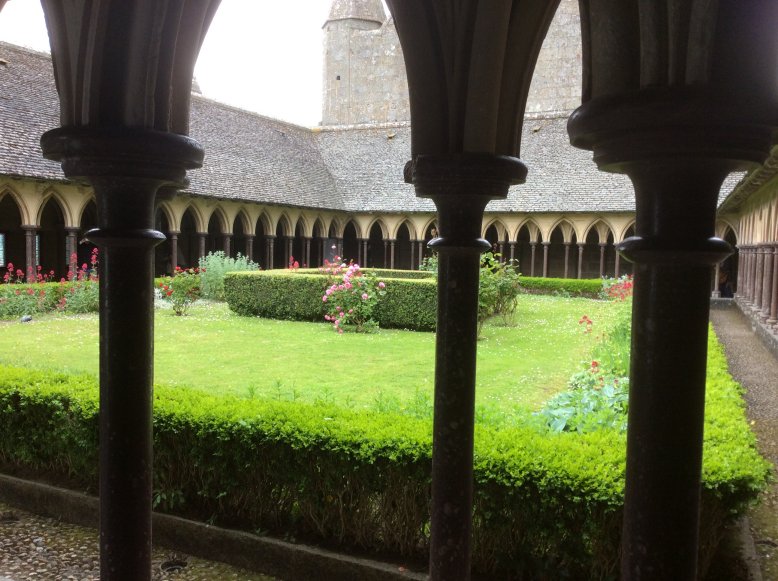
Outside at the top were gardens, which reminded me of the Cloisters in New York, near Fort Tryon State Park.  The Cloisters is clearly inspired by this wonderful aspect of some monasteries.  But how do 15cloiser1these flowers grow so beautifully on an island smack dab in the ocean?  How do the salt air and the harsh winter cold affect them?


Inside, within the monastery that contains that cathedral space is the refectory that fed a 21refectorypassel of monks and their royal guests in ages long ago.  They must have seen me coming and hidden all the food.


Crypt:  here, the crypt refers to the original meaning, a hidden place as opposed to a burial 19inside1place.  This was one of the vast chambers in the monastery.  The lack of light in these rooms made taking photographs extremely difficult, so I can’t share the dark, dreamy quality of the chambers that twisted around each other. That’s why the image of the Black Madonna here (a much later installation) isn’t the best.   I could definitely understand why in “The Horla” Guy deMaupassant characterized Mont Saint Michel as a setting that left one susceptible to possibilities of the fantastic and eerie.18Blackmadonna


24comingdown3

Going down showed us the beauty and magnificence of the curving stone walls, seeming to be an organic extension of the mountain rock.  22comingdown1


And gorgeous flowers and other plants revealed Nature’s tenacity, growing from the slightest cracks in man-made and Nature-made walls.


25comingdown4


26cominingdown3


Back in the village, we wound down the narrow streets, toward St. Michael’s Church, with the 27downvillage5warrior angel, himself, on guard in statue form by the door.  We visited inside and felt the joy of painting, stained glass, and statuary celebrating wonder at the Divinity (Take that Protestant Reformation!).  We also visited a tiny cemetery of tall gravestones with plots of flowers or colored broken stones enclosed by stone borders.  Finally, we made it to a little cafe for lunch, where I managed to order in French without embarrassing us!  Mmm, savory galettes of jambon, champignons, and fromage, complemented by cafe au lait.  What a wonderful day.28downvillage

Great Bustards, Batman! Holy Rooks! Birds in England

 The last few days of May and the first week of June, my spousal unit and I joined a tour in England and France.  Of course, we had to take advantage of the opportunity to sight and photograph lots of birds that we couldn’t see back home.  In England, we got most of our shots in and around London and at Stonehenge.  The special guest star who appeared at Stonehenge, I’m saving for last on this page.

One of the most common birds comes first, the Wood Pigeon.  This guy looks a bit like thewood pigeon Rock Doves back home, but he is quite plumper and longer.  People in Europe probably see them the way we see pigeons back here, but for my husband and I they are a treat for being a bit different from what we’re used to seeing.

We got to add some new ducks and geese to our list of bird sightings for the year.  Here is the Grey Lag  goose.Grey Lag1 There was also another duck we weren’t quite sure of.

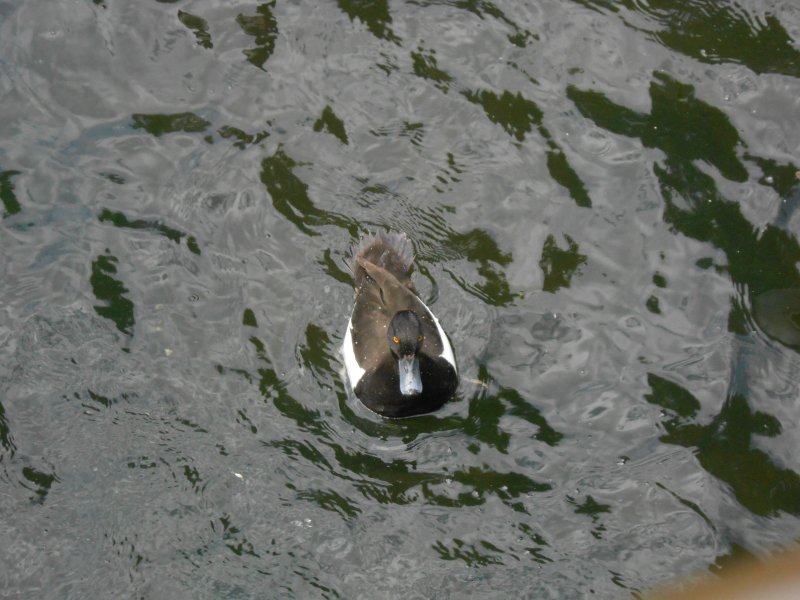
It looks like a Tufted Duck with his tuft slicked down.  If anyone else can better identify these guys, please let me know.  We photographed both the male and the female.  Dig those crazy, Satanic orange eyes!  Tufted3


This one is probably the male.

This one looks like the female.  What a lovely couple!

Tufted2

We also saw some coots, including these  babies.

coots2

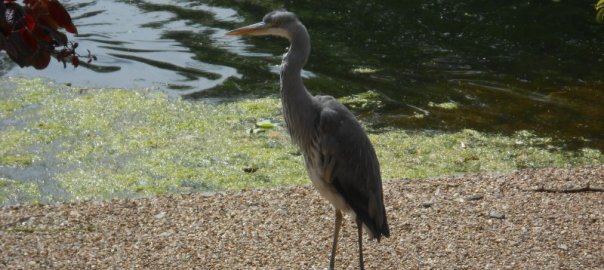
grey heron1One of the prettiest of the water birds was this Grey Heron.  I believe he is an immature one.  Not only have the tuft feathers on his head not developed as they do on a mature bird, but he giggled anytime anyone said “underwear.”  Don’t ask me why anyone did.


Here’s an even better shot of the heron.grey heron2


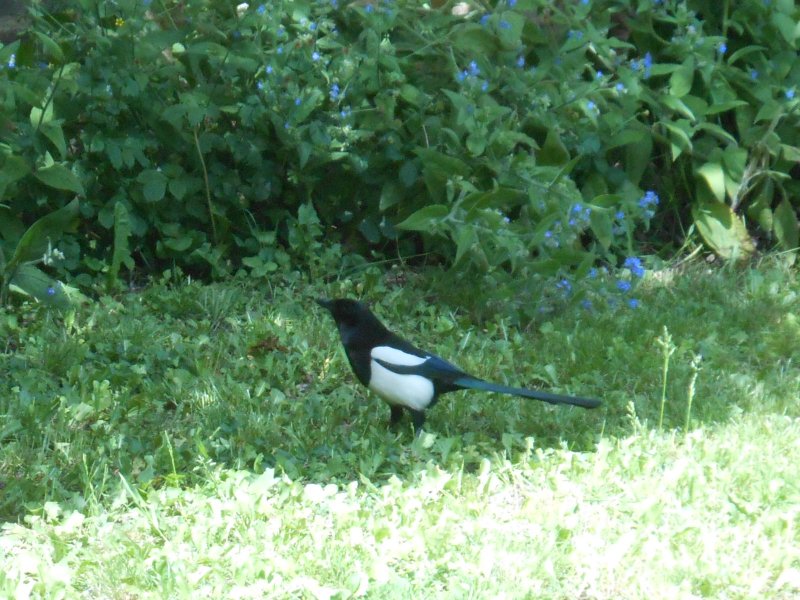
We also noticed there were lots more birds in the crow family here in England than back at home.  We saw this beautiful Magpie in Highgate Cemetary.Magpie4  Notice how the blue toward the back of his wings picks up the blue of the flowers.  Did he plan that?  We don’t have any of these guys in New England, but I’ve seen them on the West Coast, in California and as far east as Colorado. There are tons of them in China as well.  I wonder why they never seemed to spread past the Rockies?

At Stonehenge, we also saw some other crow relatives, Rooks and  Jackdaws.  I’m fascinated by the missing feathers right above the beak on Rooks.  Since Rooks are carrion feeders, does this lack of feathers help them ward off bacterial infections, as does the Condor’s and vulture’s featherless noggin?IMG_0487

Here’s a Rook.

And here’s a Jackdaw. My husband loves the grey at the back of their heads. jackdaw2 He thinks it makes them look cute.

So here is the treat I promised you at the beginning of this blog!  The Great Bustard! Apparently this bird was almost extinct, and the conservation people have been breeding them to bring them back to repopulate the country.  I was told that I was extremely lucky to be able to see one when I was at Stonehenge.  I certainly feel lucky.  Good luck to these guys making a comeback.

bustard8

     bustard6

bustard5