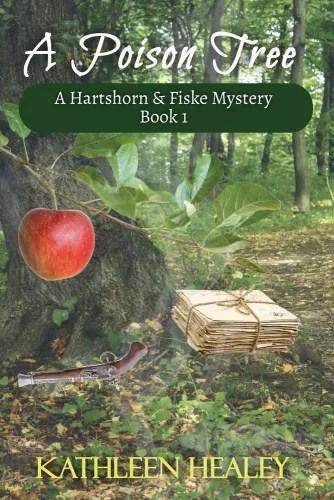
Walking in 250-Year-Old Shoes
by Kathleen Healey
What does it take to write historical fiction? When I set out to write A Poison Tree, my historical mystery that took place during the American Revolutionary War, I knew the basic plot of my story; but I had not yet fully fleshed out my characters, and I certainly didn’t understand how difficult it would be to see the world through the eyes of those characters. I knew that eighteenth-century American people would dress differently, have no access to modern conveniences, and experience very difficult lives. Many were also more religious. Still, I have always believed that people throughout time are essentially the same: human beings worry about security, caring for family, and survival. However, I didn’t realize that creating those characters meant learning a very different culture.
As Joe South in his song “Walk a Mile in My Shoes” astutely points out, in order to truly know others, you need to get inside their minds. While Mr. South was speaking of moving beyond ego in relationships, his lyrics also speak to any kind of writing. Writing is really about empathy. It is about donning someone else’s cloak and becoming that person, even for a short time. So, what does it take for me to write a historical mystery about a culture so different from my own? To help me get inside those minds and accurately portray the similarities and the difference between our two time periods? It took a lot of research to immerse myself in another time period.
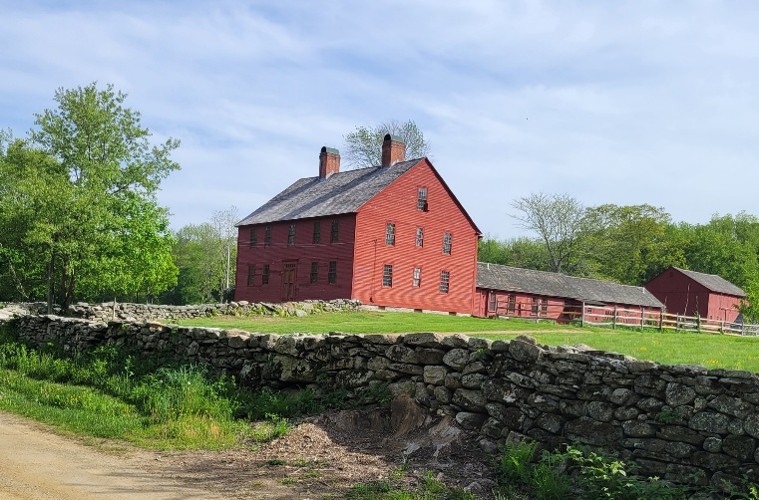
I happen to be very lucky in many different ways to work as a 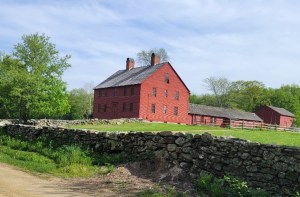 guide at an eighteenth-century museum. The house at the Nathan Hale Homestead in Coventry, CT, built in 1776, is a perfectly preserved building, offering a glimpse into the past. Working there has enabled me to soak in what life was like in eighteenth-century America. For me, being surrounded by that century’s artifacts, paneled walls, and the wide board floors enabled me to imagine more clearly the everyday lives of the people who once lived there.
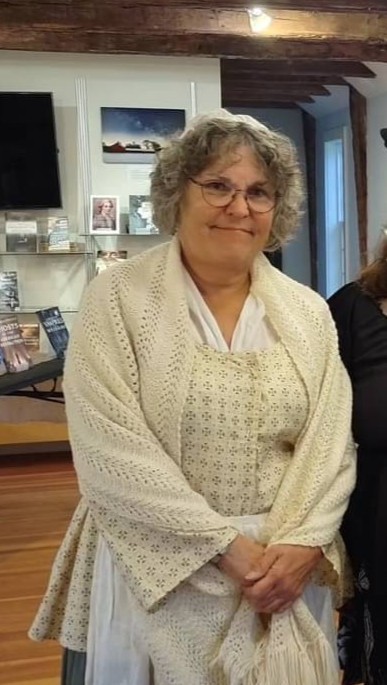
As a museum guide, I often dress in eighteenth-century attire, even demonstrating hearth cooking and discussing herbalism with school children who visit. I certainly now sympathize with the main character, Rachel Hartshorn, when she complains about cooking at a hearth on hot days! At the museum, I am surrounded by people who are very knowledgeable about the time period, and I have learned so much by working with them. Our discussions and the books they have suggested that I read helped me write my novel. Visiting other Revolutionary War era museums was also informative, as well as watching videos about eighteenth-century life created by Colonial Williamsburg, the Museum of the American Revolution, and those put out by Townsends. These videos give a glimpse into how real people lived during that time period: hearth cooking and types of food, clothing styles, courtship rituals, medicine, and even dancing and music.
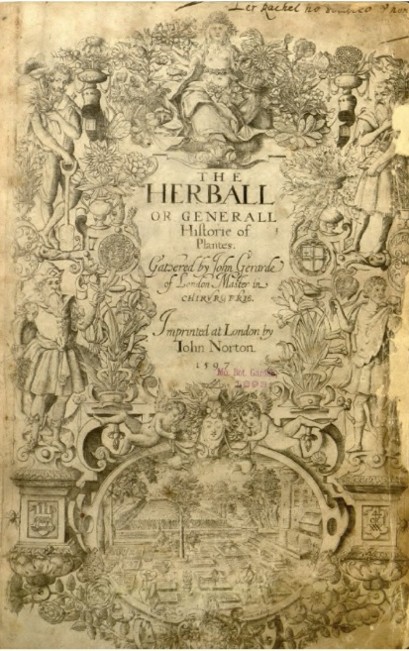
Since the two main characters of A Poison Tree are a midwife 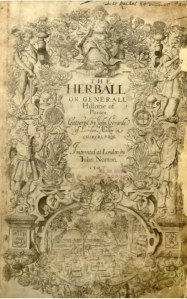 and a physician, I spent a lot of time researching how medicine was practiced in eighteenth-century America. Some of my research on being a midwife in the eighteenth-century was gleaned from Laurel Thatcher Ulrich’s edition of A Midwife’s Tale: The Life of Martha Ballard, Based on Her Diary, 1785-1812. Ballard’s journal is rich with details about illness, herbalism, and everyday life during that time. Other books on herbalism that I read were Culpeper’s Complete Herbal, published in the seventeenth century, and Gerard’s The Herball, or Generall Historie of Plantes (1597), both of which my characters would have been familiar with. Another book I consulted was Revolutionary Medicine, 1700-1800, which describes medical practices during that time period. Equally important, Every Man His Own Physician, published in 1734 in Williamsburg, VA, was the first medical book for the average person published in America.
In addition, my work as a museum guide has also given me the opportunity to attend programs about surgery and medicine during the American Revolution. As I developed Josiah Fiske as a physician, I wanted to show that he was knowledgeable and compassionate. Yet from our twenty-first-century viewpoint, medicine at that time was barbaric. For example, a soldier whose leg was badly damaged by a bullet might have needed his leg amputated, and this would be done without the use of anesthesia. Anesthesia had not been invented yet. Furthermore, bloodletting was a common way to treat diseases, and the kind of hygiene we have today, such as frequent handwashing when dealing with patients, was not commonly observed. These practices were not examples of negligence on the part of eighteenth-century doctors but were due to a lack of understanding about bacteria. There were no antibiotics. Not surprisingly, more soldiers during the American Revolution died of diseases such as smallpox, dysentery, typhus, malaria, fevers, and pneumonia than of wounds from warfare. In fact, many times when they did die from wounds, the actual cause was infections to those wounds because there were no antibiotics.
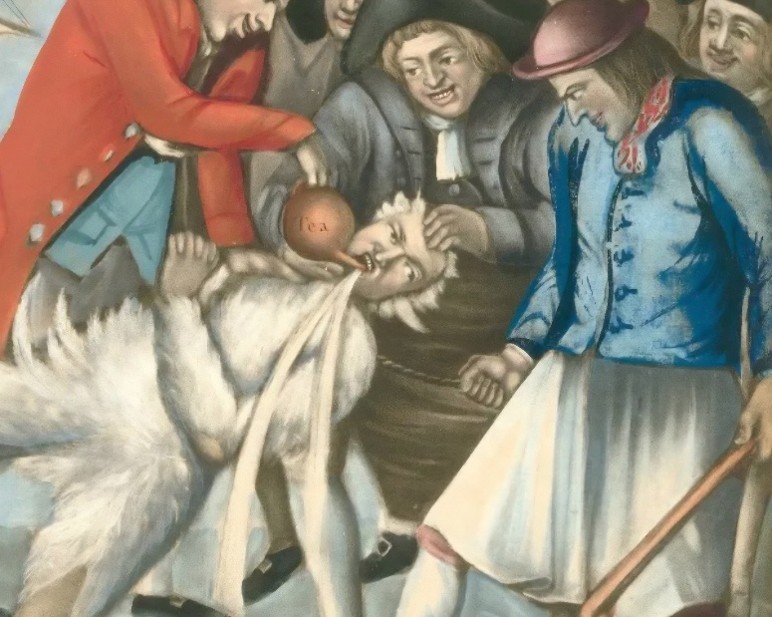
Beyond medicine and activities of daily life, I wanted to gain an understanding of what the average colonist experienced as more and more of their neighbors took sides. It is common knowledge that not all colonists wanted to break from England. There were a good number of Loyalists in the colonies, just as there were many who supported leaving 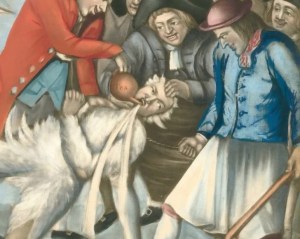 English rule. As the Ken Burns documentary The American Revolution aptly demonstrates, there was a lot of division on the subject of the revolution that led, in some cases, neighbor to rise up against neighbor, and family member to fight against family member. Loyalists were sometimes dragged out of their homes and tarred and feathered by their neighbors. And it wasn’t just Loyalists who were punished. In A Poison Tree, the main character, Josiah Fiske, is disowned by his Loyalist father for joining the Continental Army.
As much as learning about the history and culture of the eighteenth century in America was a big undertaking, the greatest obstacle I found in writing A Poison Tree, surprisingly, was language. There are no recordings of eighteenth-century Americans speaking, no actual film footage of the time period, and only texts such as letters, diaries, and some published works exist to help us understand the kind of language early Americans used. Much of what is acceptable today, both in language and social behaviors, would not have been acceptable in the eighteenth century. As I worked on my first draft, the words flowed with the idioms and metaphors I grew up with. It was through the diligence of my good friend and first reader of my novel, Sharon Healy-Yang, that I realized that some of the words and phrases I was using wouldn’t have been known in the eighteenth century, or at least would not have been used as metaphors. For example, one of my characters told another that he had “a one-track mind.” This term would not be known by most Americans in the eighteenth century since it refers to a train on a track, and rail service did not exist for Americans at the time. Yet knowing that I couldn’t rely on familiar idioms caused me to learn the phrases that would have been common during the American Revolution. It was interesting to learn that while we might say “It was like looking for a needle in a haystack,” Americans in the eighteenth-century might say “It was like looking for a needle in a hay bale.” Or saying that someone has seen you “warts and all” reportedly came from something Oliver Cromwell said in the 1650s.
Although it may seem overwhelming to try to understand the people and culture of another time period, for me, the research has been exciting and rewarding. As we recently commemorated the 250th anniversary of the United States, taking this time to learn about and reflect on the struggles of people, somewhat different, but still very much like us is a great way to understand who we are today as a nation. This research has given me empathy and accuracy in writing A Poison Tree. As you read my book, I hope that you will be able to visualize life as it may have been.
Images: Image #1, Nathan Hale Homestead, Author’s Collection
Image #2 Cover of Frontispiece to the John Norton edition of Gerard’s Herball, Author’s Collection
Image #3 Man Being Tarred and Featheredfrom American Battlefield Trust\
Image #4 Author’s Photo of Self
Kathleen Healey is a former college professor who works as a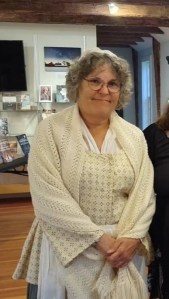 guide at the Nathan Hale Homestead in Coventry, Connecticut, and is the author of a newly released historic mystery, A Poison Tree, that takes place during the American Revolution.
Check out Kathleen Healey’s website at:
healeyauthor.com
Want to buy A Poison Tree?
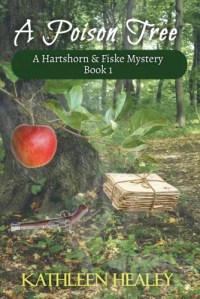
Posted 11/14/2026 |