The Norliss Tapes (1973)
In some ways, the 1970s were a golden age for horror on network TV. Series such as Ghost Story, Night Gallery, The Sixth Sense, and The Night Stalker chilled us back then, though the 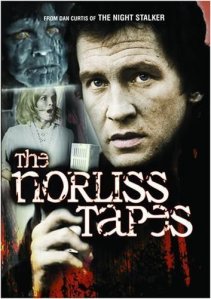 over-plus of poster-vision, superimposition, electronic music, and a dizzying tracking in and out may seem a little cheesy now. And why did everyone think harpsichord music was so scary? The horror genre also heavily populated another 1970s television trend, the made-for-TV movie. One of the most prolific purveyors of ’70s TV horror in a series or a one-off film was Dan Curtis, the guy who brought us Dark Shadows, the first gothic soap opera, in the 1960s. Many people know Curtis for Darren McGavin’s The Night Stalker series, which actually started out with two TV movies: The Nigh Stalker and The Night Strangler. Dan Curtis, quite the busy beaver, also wrote, produced, and/or directed quite a few other telefilms, including Trilogy of Terror, Dracula, The Strange Case of Dr. Jekyll and Mr. Hyde, and The Picture of Dorian Grey. One film he wrote/directed/produced that was not based on a classic horror tale was The Norliss Tapes. A pilot that never made it to a series, The Norliss Tapes is a kind of upscale Night Stalker, based on the premise of writer David Norliss investigating supernatural incidents in order to debunk them. Kind of a Scully and Mulder in one. It could have made an interesting series. over-plus of poster-vision, superimposition, electronic music, and a dizzying tracking in and out may seem a little cheesy now. And why did everyone think harpsichord music was so scary? The horror genre also heavily populated another 1970s television trend, the made-for-TV movie. One of the most prolific purveyors of ’70s TV horror in a series or a one-off film was Dan Curtis, the guy who brought us Dark Shadows, the first gothic soap opera, in the 1960s. Many people know Curtis for Darren McGavin’s The Night Stalker series, which actually started out with two TV movies: The Nigh Stalker and The Night Strangler. Dan Curtis, quite the busy beaver, also wrote, produced, and/or directed quite a few other telefilms, including Trilogy of Terror, Dracula, The Strange Case of Dr. Jekyll and Mr. Hyde, and The Picture of Dorian Grey. One film he wrote/directed/produced that was not based on a classic horror tale was The Norliss Tapes. A pilot that never made it to a series, The Norliss Tapes is a kind of upscale Night Stalker, based on the premise of writer David Norliss investigating supernatural incidents in order to debunk them. Kind of a Scully and Mulder in one. It could have made an interesting series.
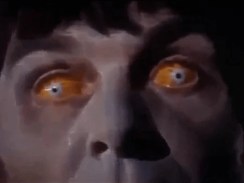
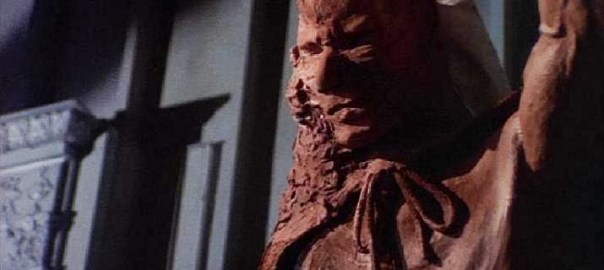
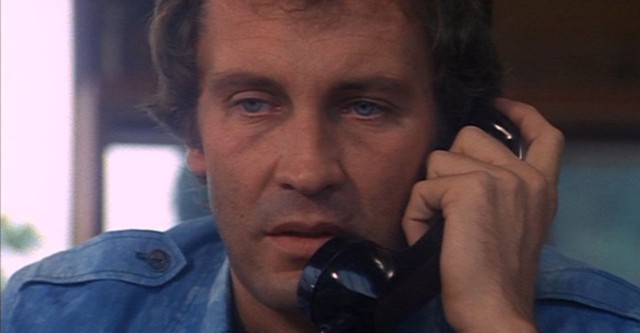
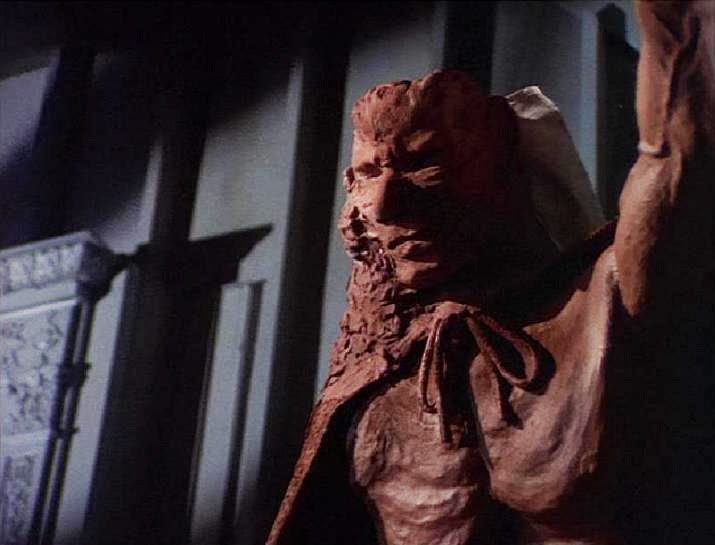
The movie starts with a tense David Norliss (Roy Thinnes) brooding over a foggy San Francisco landscape from the balcony of his apartment, then calling up his editor (Don Porter) to pressure him into a meeting about a book he was supposed to have completed on his investigations of the supernatural, with an aim to debunk. He cryptically alludes to threats that have kept him from writing, which he now fears may even take his life. When Norliss  misses the meeting, the publisher seeks the writer at his apartment only to comes across a note telling him to play a set of numbered tapes (in the right order!) to understand what’s really going down. After putting the tape in a handy cassette player/recorder (Now there’s a trip down memory lane!), the publisher and audience hear David’s voice narrating us to his first adventure into darkness — dissolve back into the past and away we go! The tale unfolds with a recently widowed woman (Angie Dickinson) encountering a gruesome being in her late husband’s art studio, which of course she and her German Shepherd have to cross a hill and some woods in the middle of the night to access. The creature whips the dog across the room and takes blasts from her shotgun as if it’s only a tackle from a linebacker. Still, he’s down long enough for the woman to get away so she can misses the meeting, the publisher seeks the writer at his apartment only to comes across a note telling him to play a set of numbered tapes (in the right order!) to understand what’s really going down. After putting the tape in a handy cassette player/recorder (Now there’s a trip down memory lane!), the publisher and audience hear David’s voice narrating us to his first adventure into darkness — dissolve back into the past and away we go! The tale unfolds with a recently widowed woman (Angie Dickinson) encountering a gruesome being in her late husband’s art studio, which of course she and her German Shepherd have to cross a hill and some woods in the middle of the night to access. The creature whips the dog across the room and takes blasts from her shotgun as if it’s only a tackle from a linebacker. Still, he’s down long enough for the woman to get away so she can  tell her sister, a pal of David’s, that this thing is a creepy version of her husband. He shows up to investigate, but for a skeptic he comes to believe the woman right quick — dazzled by Angie’s charms? Before you can say Necronomicon (which actually is a long word), victims are being strangled and drained of blood, a new sculpture of something demonic in reddish clay appears to be gradually being finished in the studio, reports emerge of the husband’s prior involvement in dark arts once he learned he was dying, and creepy caverns and crypts reveal horrible secrets. All of which David pieces together, despite the local sheriff’s skepticism not his own. tell her sister, a pal of David’s, that this thing is a creepy version of her husband. He shows up to investigate, but for a skeptic he comes to believe the woman right quick — dazzled by Angie’s charms? Before you can say Necronomicon (which actually is a long word), victims are being strangled and drained of blood, a new sculpture of something demonic in reddish clay appears to be gradually being finished in the studio, reports emerge of the husband’s prior involvement in dark arts once he learned he was dying, and creepy caverns and crypts reveal horrible secrets. All of which David pieces together, despite the local sheriff’s skepticism not his own.
Despite some of those annoying trackings in and out and a little too much screeching with the electronic music (Robert Colbert did his job much better on Dark Shadows), the movie has some genuinely creepy and suspenseful moments as victims are stalked on dark, lonely nights; in a dank mausoleum; or to a lonely motel room. The film even makes effective use of the traditional “We’ve got to find the monster in this forbidding underground passage before he stirs.” Roy Thinnes, no stranger to the eerie (The Invaders, Horror at 30,000 Feet), makes an interesting and capable investigator: discovering the right people to interview and asking the right questions, as well as effectively using the library. Still, Thinnes plays the guy a little too much on the low-key side; he could make Duchovny’s Mulder look peripatetic. In all fairness, though, didn’t an ambiance of low grade, indefinable anxiety predominate many films of the era, especially mystery and horror? After tale number one ends, the film returns to the editor,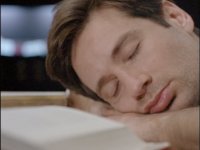 ending with him selecting tape number two. So, one wonders what new adventure in horror David Norliss would have faced had this pilot led to a series. Though Chris Carter credits The Night Stalker as an inspiration for The X-Files, the sophistication and the detecting skills of Norliss suggest this film is a much closer match. How might Carter have developed his series if The Norliss Tapes had become a series? Thinnes did reappear on The X-Files as Jeremiah Smith, ironically, an alien, though one with good intentions for us benighted earthlings. ending with him selecting tape number two. So, one wonders what new adventure in horror David Norliss would have faced had this pilot led to a series. Though Chris Carter credits The Night Stalker as an inspiration for The X-Files, the sophistication and the detecting skills of Norliss suggest this film is a much closer match. How might Carter have developed his series if The Norliss Tapes had become a series? Thinnes did reappear on The X-Files as Jeremiah Smith, ironically, an alien, though one with good intentions for us benighted earthlings.
No copyright infringement intended by use of the properly attributed photos. If you feel there is a problem, contact me about removing the images.
Image One – author’s collection
Image 2 – https://www.justwatch.com/us/movie/the-norliss-tapes
Image3 – http://thebloodypitofhorror.blogspot.com/2013/10/norliss-tapes-1973-tv.html
Image 4 – https://cleigh6.tripod.com/CTP/CTP-grotesque.html
Image 5 – https://moviebuffsforever.com/products/the-norliss-tapes-dvd-1973 |



 Sharon Healy-Yang