Category Archives: Loon

Fare Thee Well, Winter Birds

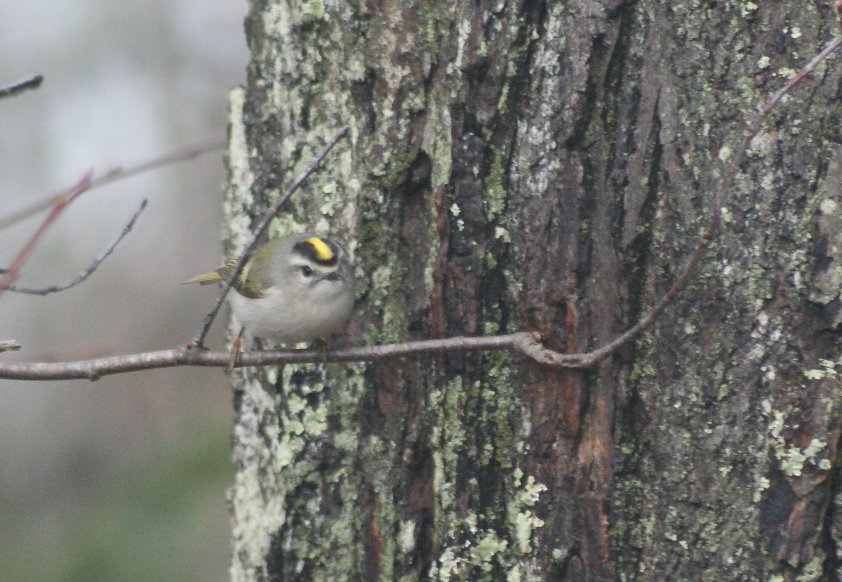
Well, this title isn’t entirely accurate.  Many of the winter birds are still hanging out, as is the cold weather.  Still, I thought I’d better post on some of our winter visitors before the air conditioners snap on and the Baltimore Orioles start sipping mimosas and fanning themselves.  The first visit I want to mention was a local one:  the Swedish Cemetery in Worcester.  Here, we had the great pleasure of snapping some shots of Gold Crowned Kinglets.  These cuties are awfully fast, so Yang actually managed to end up with a few shots of a tree where the bird had been a millisecond before.  Nevertheless, he did get some nice photos, as you see.  Some were even “action” shots like the one below!
In January, we also made it to Gooseberry Island, one of our favorite spots.  Though, for the first time, we missed out on the Long-tailed ducks there, we did sight lots of other feathered pals.  We caught some Eiders on film.  There was a male, a female, and an immature male.  Note the immature male at the the top, right,  acting like a typical teenager – not wanting to be seen with his parents.

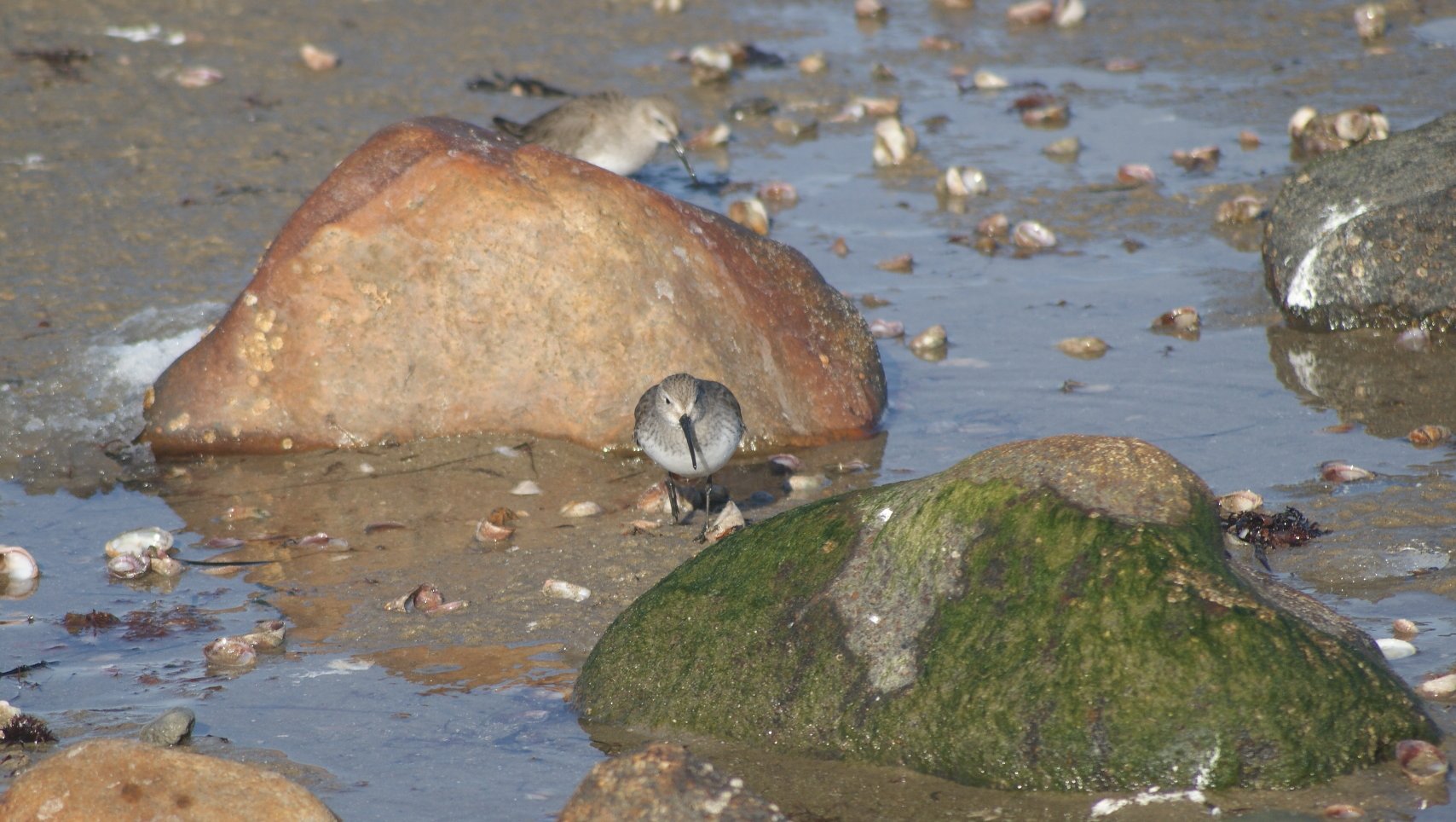
We also some adorable shore birds.  The Dunlins were real cuties.


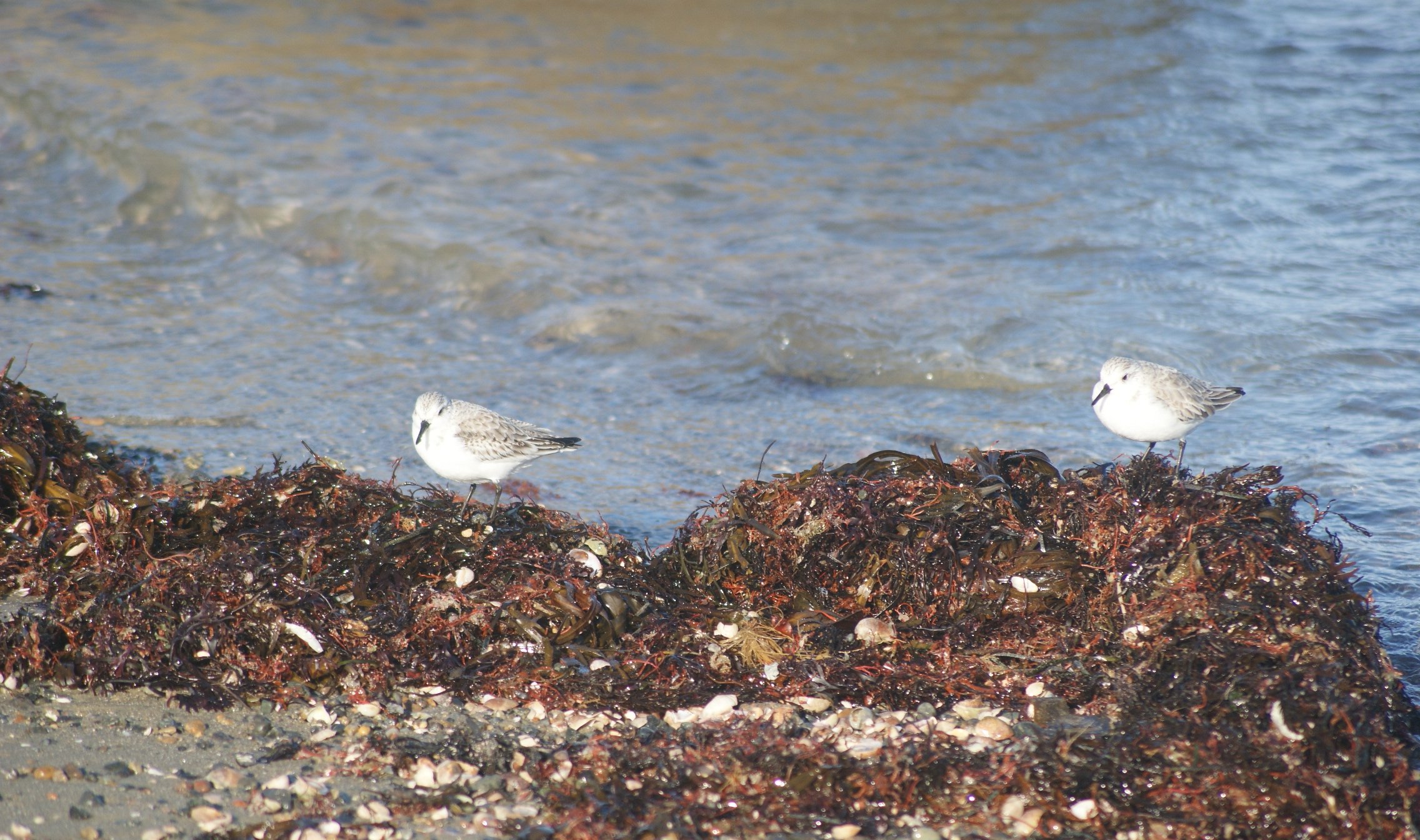
And the Sanderlings were no slouches, either!


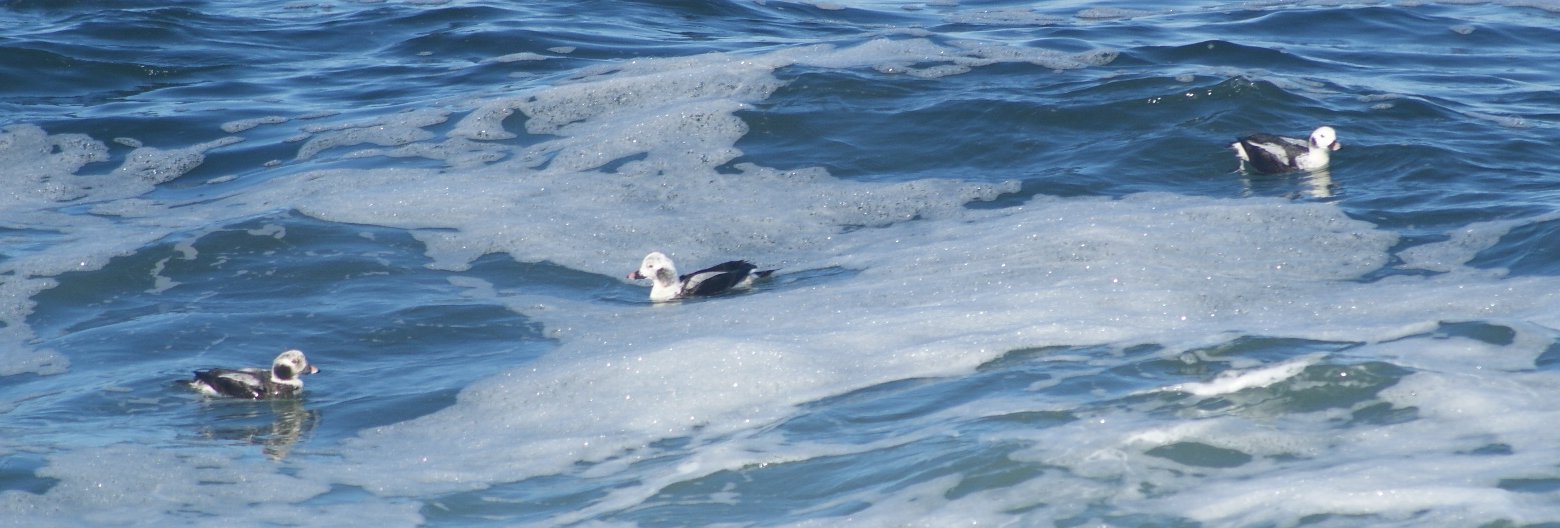
We had to go to Halibut Point to see the Long-Tails and Harlequin Ducks.


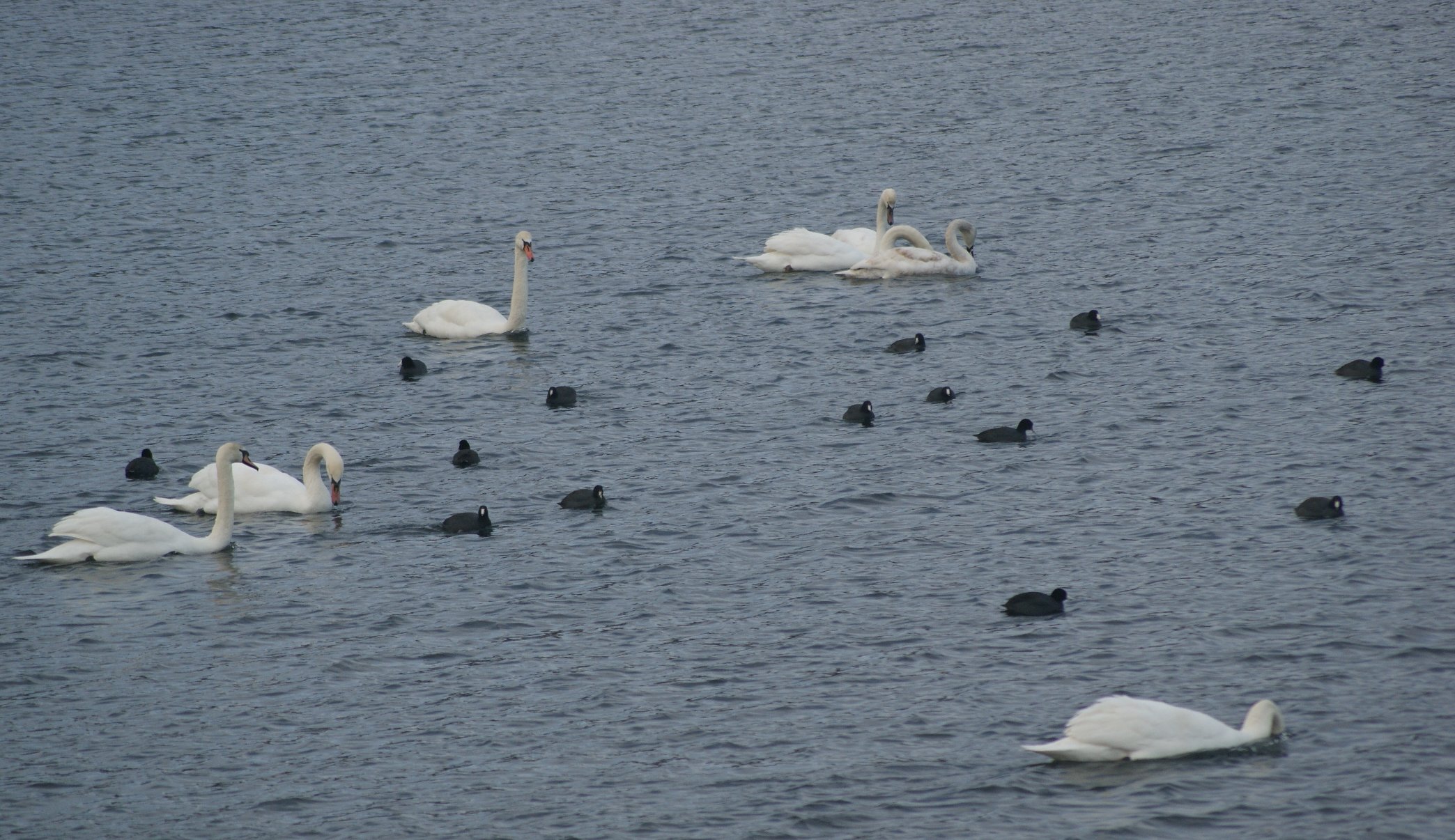
We also made to the Chestnut Hill Reservoir, where we saw many a different waterfowl.  The Coots were in abundance – and they loved to hang out with the Swans.


We also got some closeups of these plump guys.  Their heads are black, their bodies are grey, they have a white streak over their beaks, and they have huge, lobed, yellow feet.  We couldn’t get a good shot of their feet because they were in the water.  Still, we did get some nice close ups of these guys.  They are still at the the Reservoir now, along with tons of Ringed-Neck Ducks.  The Ruddy Ducks have also re-appeared – but that’s a set of pictures for another blog.  For now, enjoy these rotund cuties.  By the way, they also love Horn Pond in Woburn – the forthcoming subject of another blog.

Their bodies may be plump and take-off may be skittery, but the coot can fly!


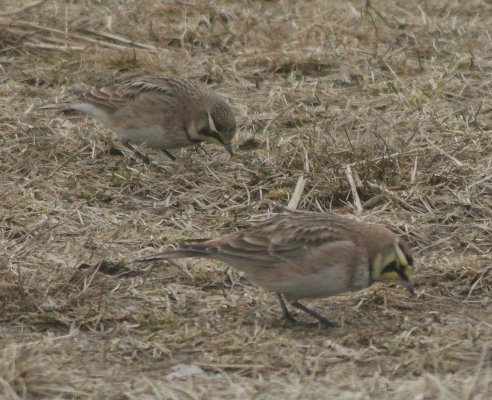
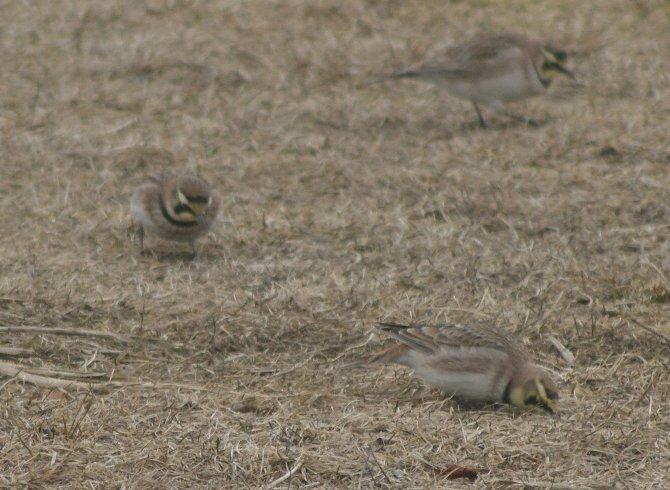
Last report is on our visit to Meig’s Point in Connecticut in February.  A week or so before, we’d gone there on an unseasonably warm Saturday – and, unfortunately, everyone else had the same idea.  There were tons of people but hardly a bird to be seen.  That was sad for Yang, because this was the place we always saw one of his favorites, the Horned Larks.  So, we went back on a colder weekday a week or two later and guess what we saw?

We got to see a whole flock!  We were so careful to approach them quietly, because these guys are very shy.  The the flock will fly off in a winged shape, much like the Snow Buntings that we saw on Deer Island.  It’s so neat to see that sweep of black feathers giving them a “horned” appearance, with that splash of chartreuse on their faces.  As you can see, it’s hard to pick them out with the way their brown feathers blend them in with the winter seared grass.  If you click on the photo, you’ll get a better look.

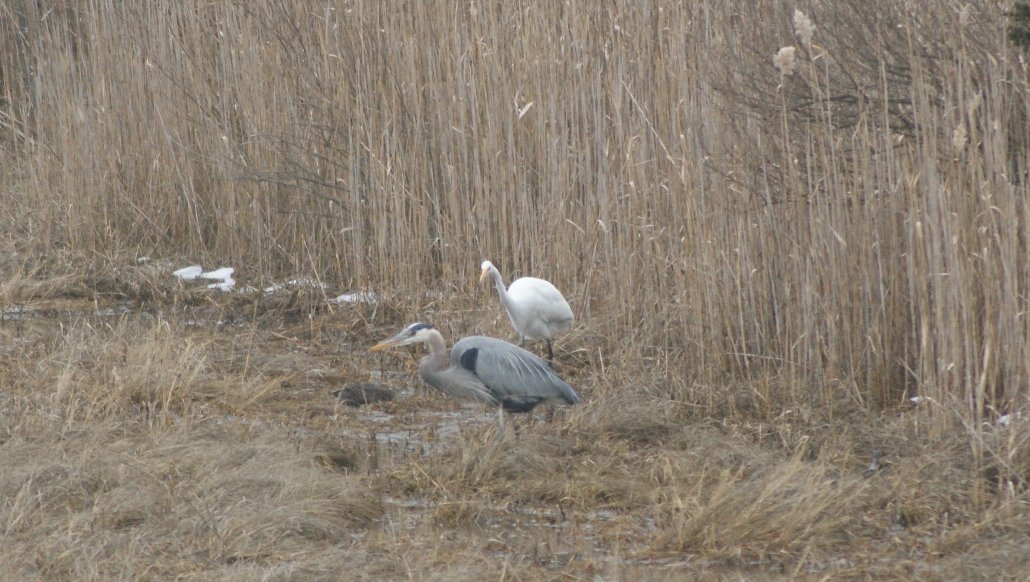
We didn’t just see the larks, though.  I wasn’t able to get a picture, but I did see a female Ruby-Crowned Kinglet close up.  We were  sighted lots of Loons (the avian not the human kind) swimming along the shore, like this chap.  At one point, we even saw three seals sunning themselves out in the bay.  Sorry, they were too far to photograph.  Here’s one of the many Golden Eyes we saw, along with tons of Surf and Black Scoters.  We also had the pleasure of watching a conference between a Great Blue Heron and a Great Egret that, fortunately, ended without bloodshed.


So, winter may be past, or passing, but we did get some nifty bird sightings in!


Halibut Point Feathered Friends

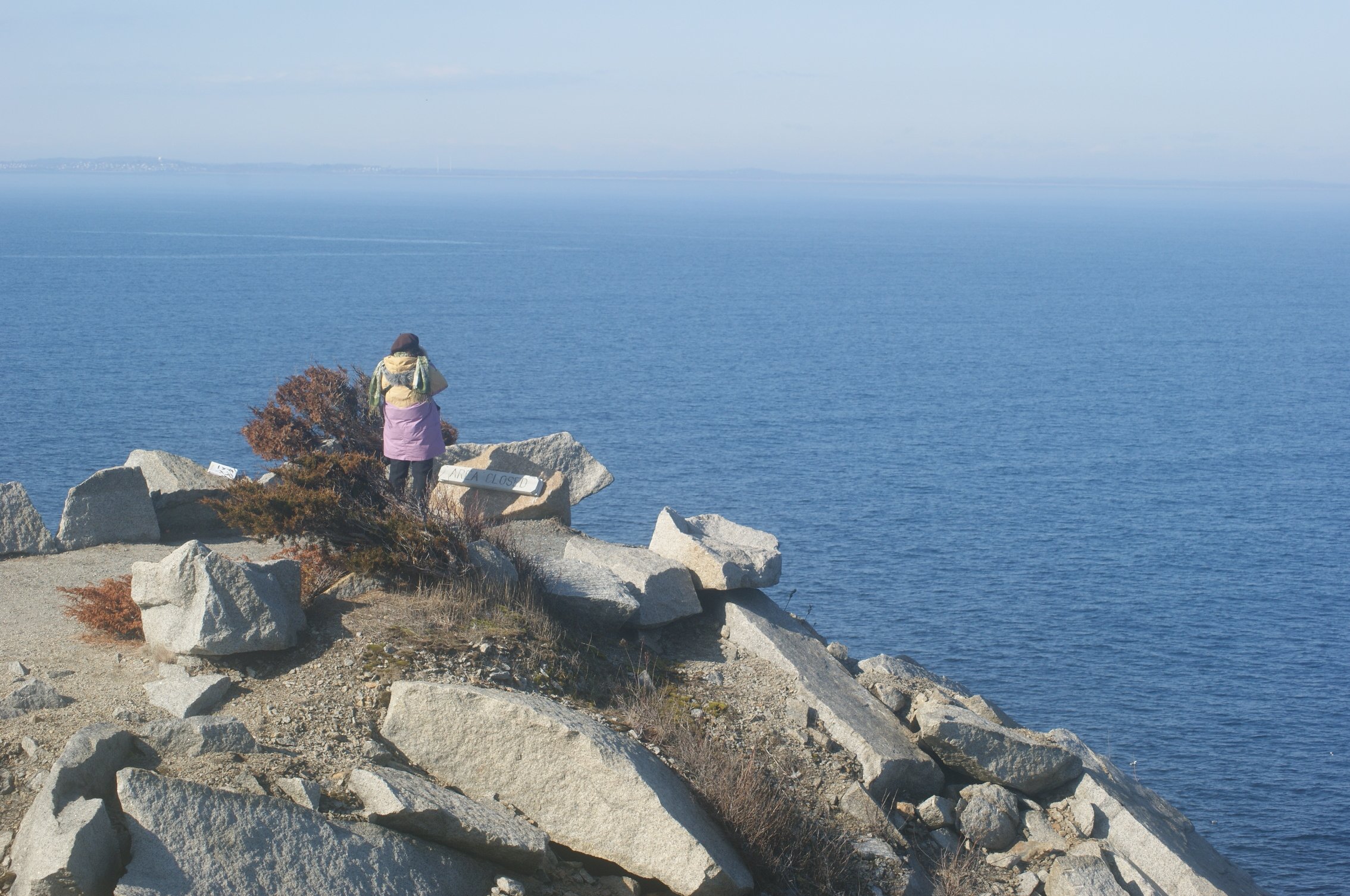
Two Fridays back, Yang and I happened to be on the North Shore, so we stayed overnight in order to make an early visit to Halibut Point State Park.  We’d been meaning to get there since November, after hearing about all the cool water fowl hanging out there.  Unfortunately, the opportunity hadn’t come up before this.  So, after our breakfast of bagels and cream cheese (yum!), we headed out to the state park.  We were not disappointed.  In the quarry, we spotted a Scaup, Black Ducks, and Mallards.  When we headed for the ocean, we got an even bigger treat.  Here you see me peering out at the ocean’s wonderland – or wonderwater- of ducks. Isn’t that point beautiful?

At first, we  saw only a couple of pairs of Harlequin Ducks, looking absolutely adorable.  All the FB bird groups to which I belonged extolled the plenitude of Harlequins out here.  So, we were happy to spot this couple chilling along.


Mrs. Harley seems to be finding a snack while her husband looks on.

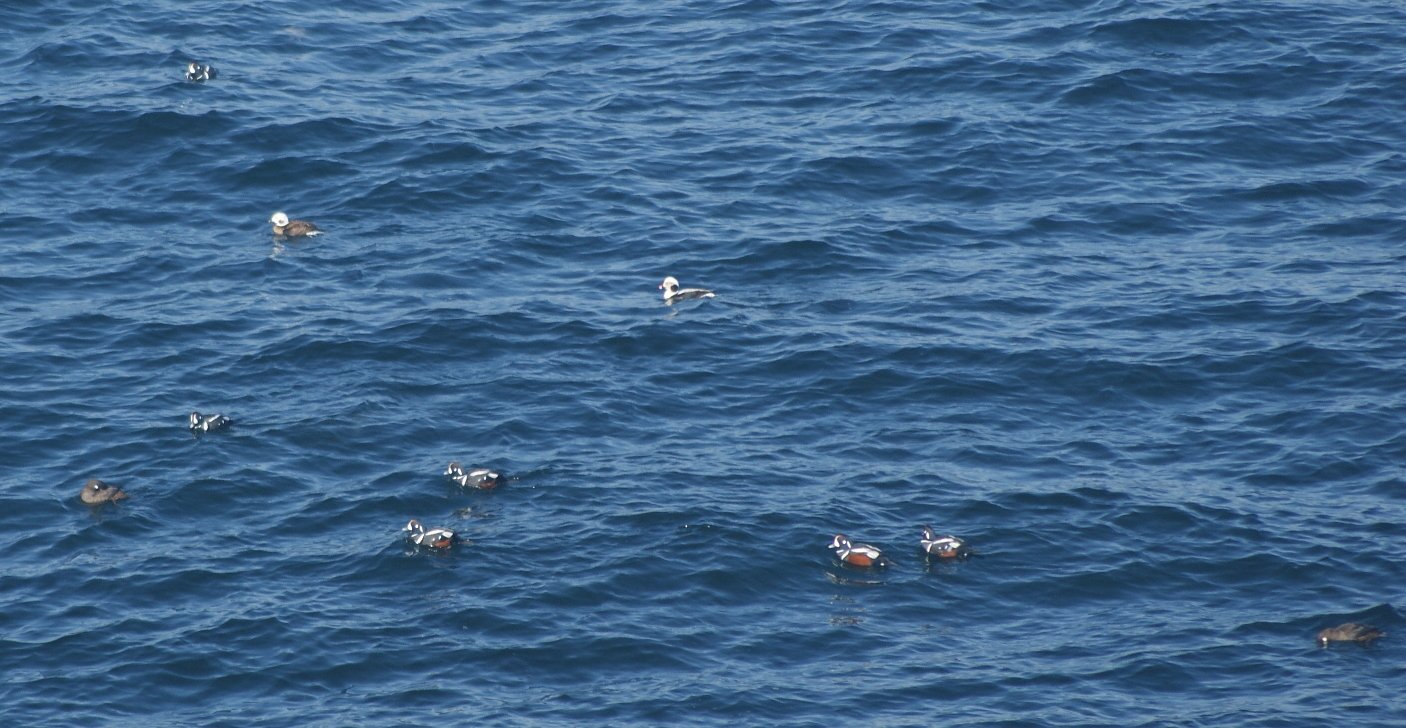
Neat as this sighting was, things got MUCH better.  Looking all around and out to sea, we saw flocks of Harlequins diving, chilling, and looking good.  There were so many that we couldn’t always get them all in one picture.  I would say we saw several flocks ranging from 9-15 Harlequins.  And that’s not counting the friendly-neighbor Long-tail Ducks who joined the party.  Counting the ducks was never easy, because, all of a sudden, the whole kit and kaboodle would take a dive on a hunt for food.  So, Yang had to time his shots carefully to catch them.  I guess it’s true that these ducks love rough waters, because that’s exactly what they got here and in the other place we saw them, Sachuest Point, RI.  This was the biggest contingent of Harleys that I had seen. Though the ducks are hard to pick out in these pictures, if you just click on them you will get a better look.

Then we saw this Loon way off above the group of Harlequins.  It’s the white figure in the upper left corner.

Wouldn’t you know, we also saw plenty of flocks of Scoters. 


Here’s a closeup of a female Scoter.  I believe these are all Black Scoters.


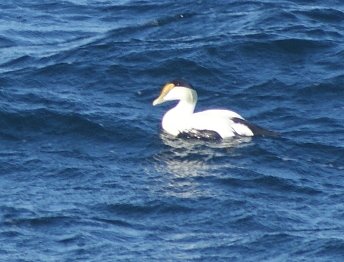
When we moved onto the harbor at Rockport, Yang also got a shot of a male Eider Duck.  Usually we see big flocks of these guys, especially at Cape Cod (check out this older blog).  Today, we saw this guy all by his lonesome.


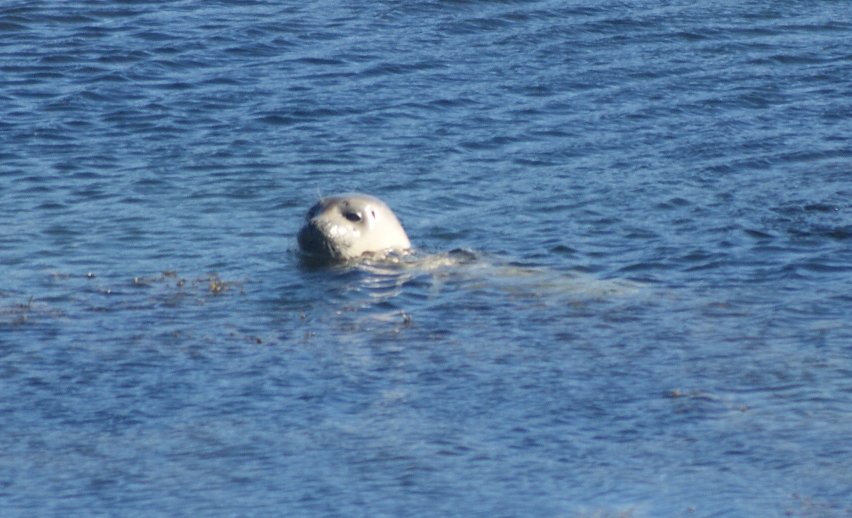
Then, finally, what should we espy on the other side of the point in the harbor in Rockport?  We thought we it was a brown female eider – except, Yang said that once the critter dived  he could see her  walking under water.  Huh?  Then “she” came up.


Yup, a seal!  So I hope this critter can be a “seal” of approval for today’s blog.


Gooseberry Island Redux – or Reducks?

Yang and I returned to Gooseberry island on a sunny day for a change last Saturday – celebrating my birthday over the weekend.  This time, no fog and plenty of sunshine.  Also, plenty of water fowl!

One of the first sightings I want to discuss are the shore birds.  since we could actually get to the shore this time, we walked along the beach and saw a flock of shore birds whip around in tight and angular formation.  When we came around some rocks, we got a good look at these cuties.  I was surprised to find that we had a mix of Dunlins and Sanderlings together.  This time, I didn’t mistake their tummies for seaside rocks, so perfectly had they blended in with sand and sea-smoothed stones, when I saw them in December.  The Dunlins are brownish on top, with  buff tummies and long, slightly curved beaks.  The Sanderlings are grey on top with white tummies and shorter and straight beaks.  They were fun to watch scurrying about in search of dinner, all while seeming quite at home with one another. These images might look tiny here, but if you click on the pictures to enlarge them, you can see the birds much more clearly.

Apparently, the pickings were getting kind of slim, for Yang managed to snap a shot of some of these guys taking it on the wing for better dining.

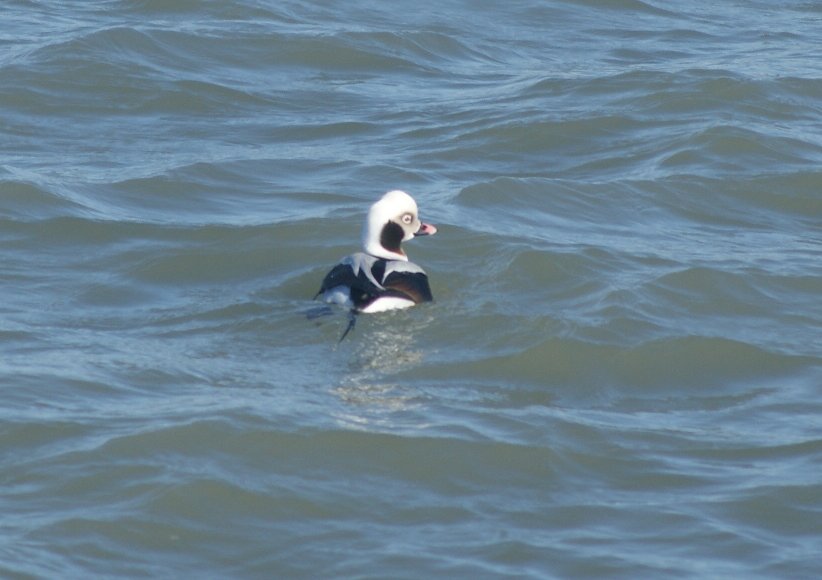
We also saw plenty of birds in the water that day. With perfect visibility and trusty binoculars, we could sight dozens of Long-tailed ducks near the shore and way out in the bay.  Yang got some neat pictures of a few near us.  This male is a handsome specimen.  You can even see a little of his long tail in these photos.  Apparently, these ducks can dive as deep as 95 feet and can stay under water longer than any of the  diving ducks.  Wouldn’t Lloyd Bridges be impressed?  Yang took these pictures as we we heading toward the island along the causeway.


Coming back along the causeway, we found this Long-tail extremely close to shore.  I think it’s a nonbreeding female, but sometimes they are difficult to distinguish from an immature male.  I didn’t see a long tail on this duck, so I’m going to take a flyer and say this is a female.  She was quite unimpressed by the humans walking by.  She also didn’t seem to be much worried about the rocks towards which the surrounding waves  were shoving her.  Still, she did just fine for herself, bold duckess!

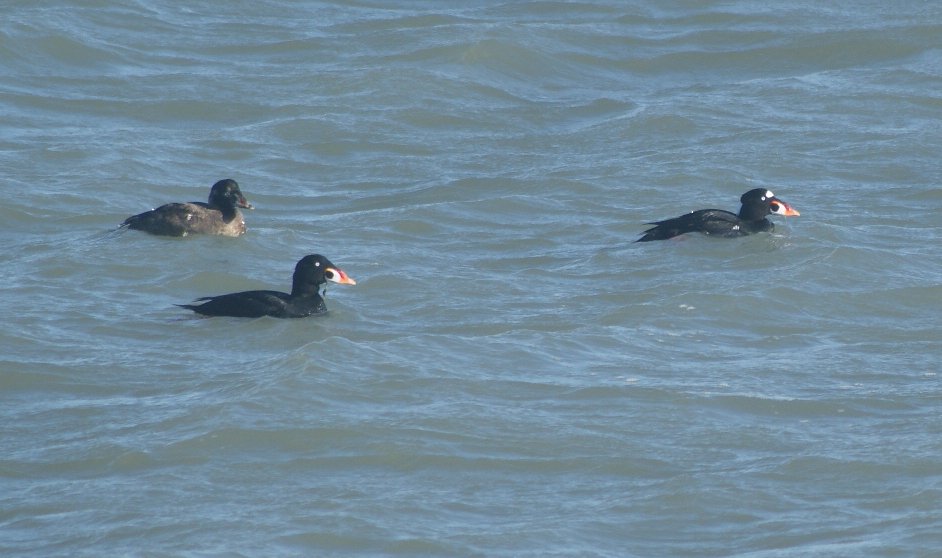
Another aquatic bird of which we saw tons were Scoters.  We saw Black Scoters, White-winged Scoters, and Surf Scoters.  Again dozens and dozens throughout the bay.  Yang was only able to photograph some of the Surf Scoters, but he got some good shots.  As we were coming back along the causeway, there was a trio: a male, a female, and an immature male (I believe). the female is brown with a white spot on either side of her head.  The males all have that unique pink beak with a white spot on the forehead, white on either side of the beak,  and one on the back of the head.  You can see that one of the males doesn’t have the white spots on his face.  We wondered if he were a Black or White-winged Scoter; however, neither type has a white patch on the back of the head like this fellow.  So maybe the younger males take time to get all their patches in?

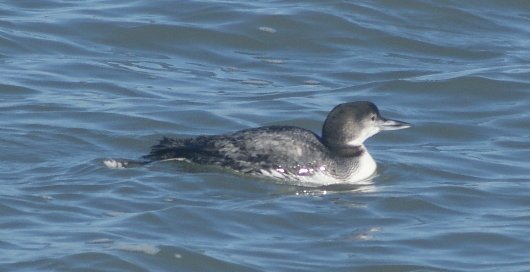
You can see from this shot that the Scoters weren’t alone.  Here’s a  Loon photo bombing the Scoters.  We noticed him hanging out with this group from another species.  We also have a nice picture of the Loon by him= or herself.  I believe this is a Common Loon in winter plumage, but if I’m wrong, feel free to set me straight.

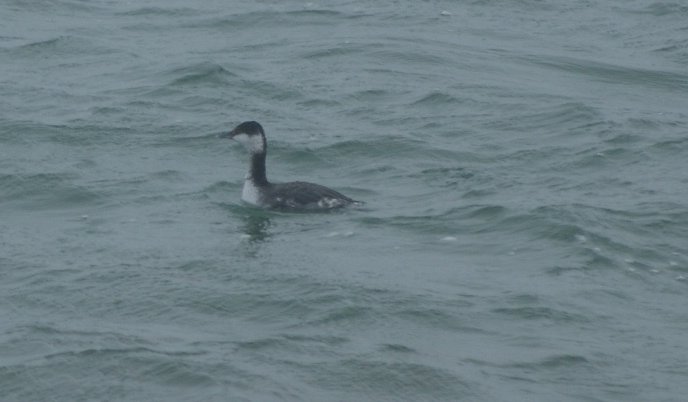
Another, smaller, diving water bird joined the show.  A horned grebe!  We saw one or two popping up (and back down again) amongst the various flocks of Scoters and Long-tails. Again, let me know if I misidentified the type of Grebe.

Last but not least, here comes the Bufflehead!  Usually there are big flocks of these guys around in the winter, but today, this chap seems to be swimming solo.  Well, it’s a big ocean and there’s room for everybody.  So where are the Harlequins?

Duck, Duck, Horned Grebe – and a Loon!

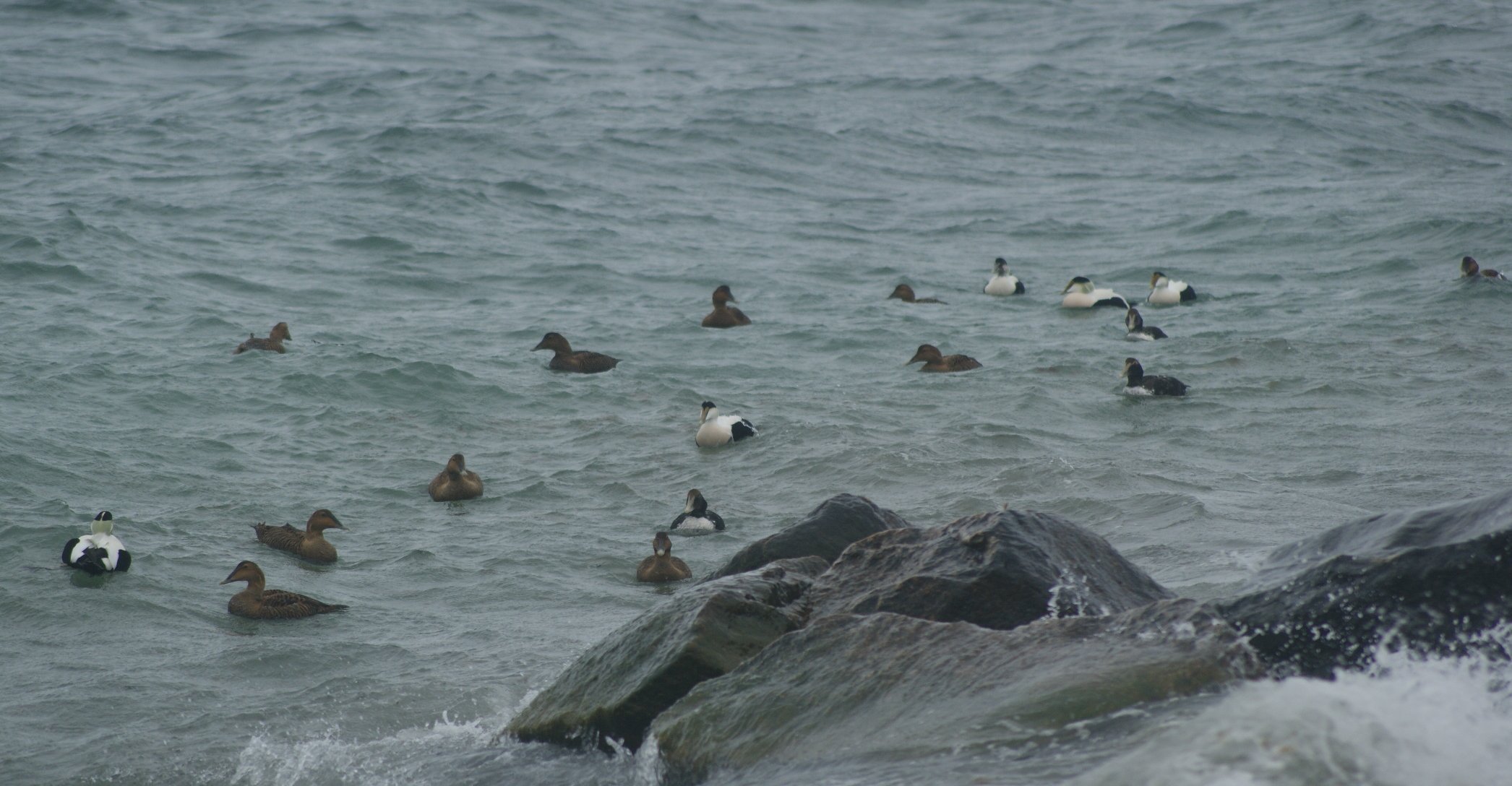
January and February have become a tradition for us to go bird watching for ducks, geese, and other aquatic birds.  This year has been an exceptionally good one for such adventures.  We always head to the Cape and the Shining Sea Trail around my birthday for one of our biggest forays.  This year we were not disappointed.  Once more, we saw a large flock of Eider Ducks rafting on the rough January seas.  The weather was so cold one of my knees started to seize up!  Nevertheless, we saw a large flock that included the brown females, mature males startling in their contrast of black and white feathers, and the juvenile males that tended to a gradual graying into white in a less striking contrast.  Did you ever notice that Eiders have a beak reminiscent of Bob Hope’s ski-slope schnozz – no disrespect to Eiders.
Swimming separately in the same bay were other interesting aquatic birds.  Here are a pair of Common Golden Eyes.  I thought they were Ring-Necked Ducks at first; but, no, they are Golden Eyes.    Anyway, they were fun to watch surfing the waves, diving for lunch, and popping up goodness knows where.  We also had the good fortune to catch sight of a Horned Grebe.  I can’t remember the last time I saw one.  He also was a little charmer with his unexpected dives and equally surprising reappearances.  I hope these guys caught some snacks – pace to the Atlantic fish.
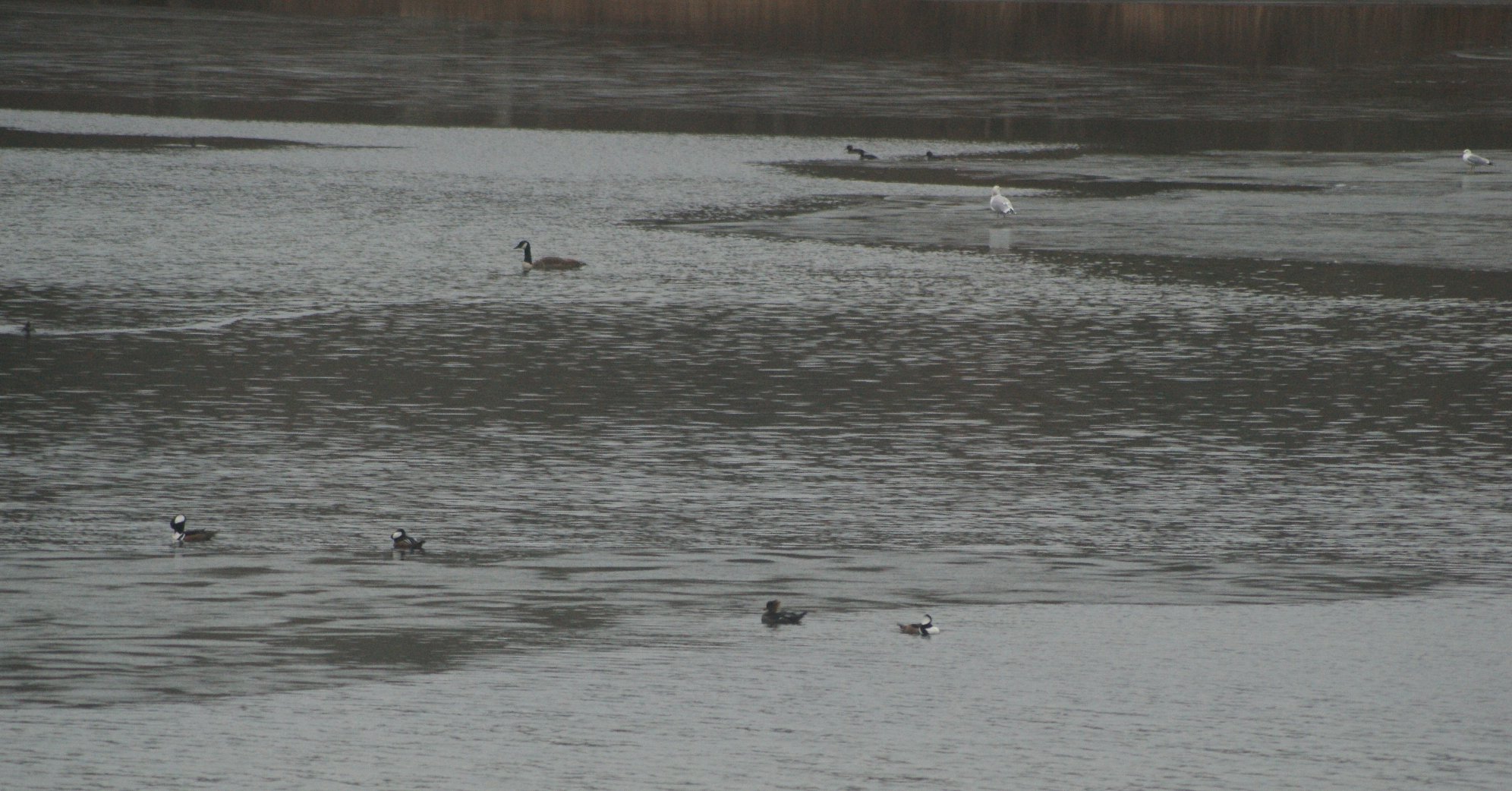
We scooted over to a pond in Falmouth and got a gander (sorry, couldn’t resist) at some Canada Geese, Hooded Mergansers, and a Swan.  Here’s a group shot.
Here’s a flotilla of Hooded Mergansers. Just click on the photo to get a clearer view.

Our next adventure was at the Charles River in Needham Heights, where we saw not only Mallards but the Common Merganser.  This guy was so beautiful, with his green/black head and contrasting pure white chest and underside.  Also on display were more Hooded Mergansers.  I love to watch these guys.  Where the other ducks and geese serenely loiter across the waters, these guys surge along like mini speed boats, white crests proclaiming their presence!


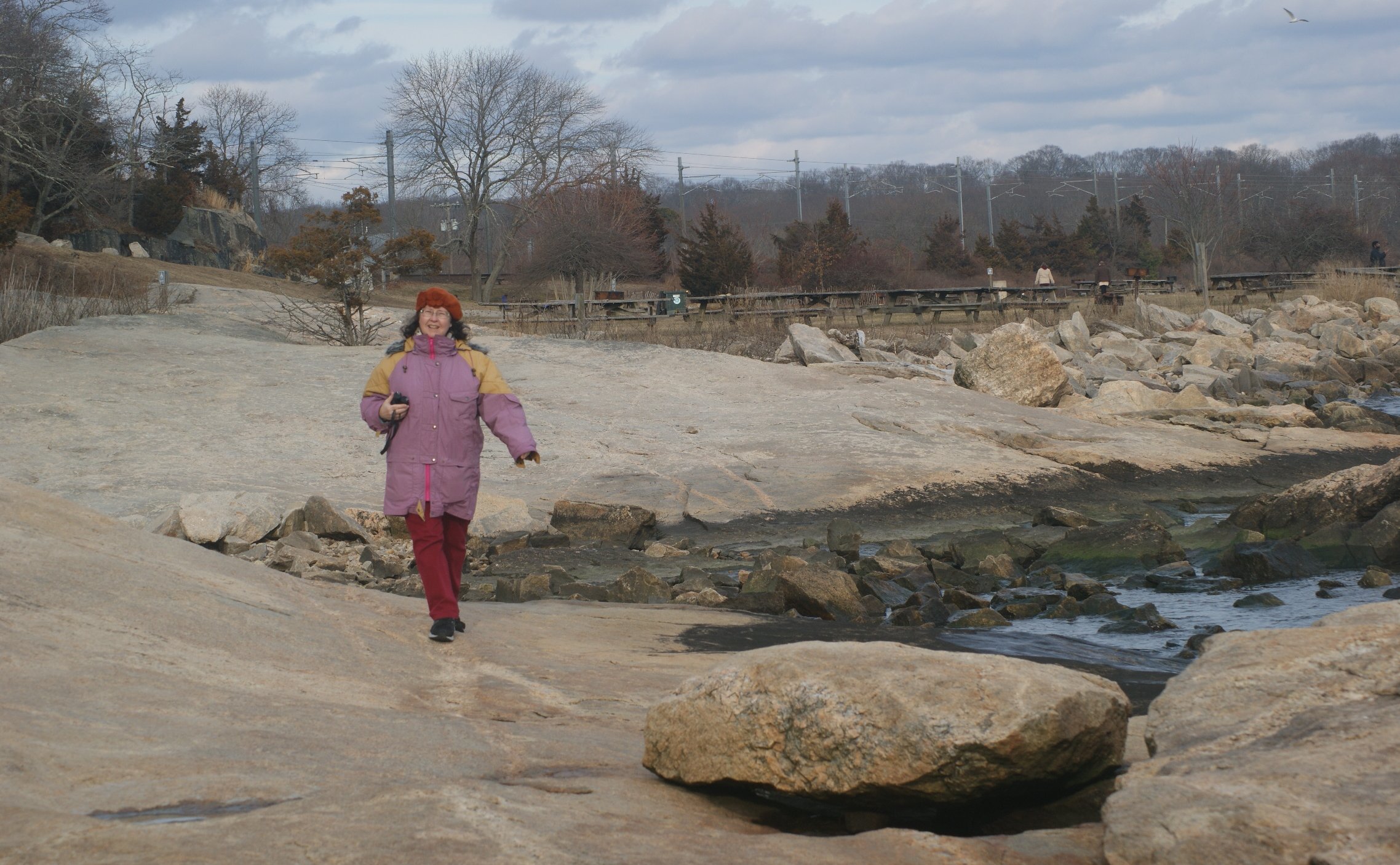
Third stop:  Rocky Neck, Ct.  Here we saw quite a few interesting water birds.  Once again, the proud and speedy little Hooded Mergansers powered their way across the marsh water.  We also saw several other types of birds as well.  There were Gadwall Ducks, Blue Herons,  gulls and even a Common Loon.  The Loon was not in this same marsh, but in the ocean, in a cove by the jetty.  Many of these critters were pointed out to us by two lovely people who were also birding fans.  Thanks to their kind advice!  Check out some of the images below.
A closeup of the Hooded Merganser.

The Gadwall Ducks.
                                 The  Loon


Who you lookin’ at?

A different type of Loon. The Sharon Bird on her migratory peregrinations in search of feathered friends at the beach.  Note the winter plumage.