In my first novel, Bait and Switch, heroine Jessica Minton starts out as a moderately successful stage  actress. So why did I switch her from the stage to the radio as I continued the series with Letter from a Dead Man? Well, there are two reasons. First of all, radio work gave Jessica more free time to join her sister Liz in unraveling mysteries. However, the second reason is far more interesting. I’ve always been fascinated by the imaginative entertainment radio provided Americans for almost five decades. The more I delved into how shows were written and produced; what made some actors excel and others bomb when playing to an audience over the airwaves; the way audiences were engaged, even enthralled, by the “theatre of the mind,” the more possibilities I could see this environment inspiring in a mystery. actress. So why did I switch her from the stage to the radio as I continued the series with Letter from a Dead Man? Well, there are two reasons. First of all, radio work gave Jessica more free time to join her sister Liz in unraveling mysteries. However, the second reason is far more interesting. I’ve always been fascinated by the imaginative entertainment radio provided Americans for almost five decades. The more I delved into how shows were written and produced; what made some actors excel and others bomb when playing to an audience over the airwaves; the way audiences were engaged, even enthralled, by the “theatre of the mind,” the more possibilities I could see this environment inspiring in a mystery.
My first awareness of radio entertainment of the classic 1920s-50s came from old movies of the ’30s 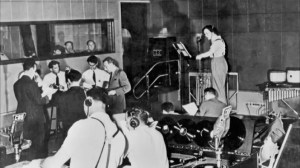 through ’50s that I watched on TV as a child – a very young child. I loved the excitement of actors and musicians, quiz contestants, and newscasters performing before live audiences. I was so influenced by what I saw that I was close to six or seven before realizing that the music I heard on the radio was not being performed live at the local radio studio. Until that epiphany, I had been dearly puzzled by how the Beatles and Supremes could get from Lowell to Lawrence, MA in a matter if minutes! through ’50s that I watched on TV as a child – a very young child. I loved the excitement of actors and musicians, quiz contestants, and newscasters performing before live audiences. I was so influenced by what I saw that I was close to six or seven before realizing that the music I heard on the radio was not being performed live at the local radio studio. Until that epiphany, I had been dearly puzzled by how the Beatles and Supremes could get from Lowell to Lawrence, MA in a matter if minutes!
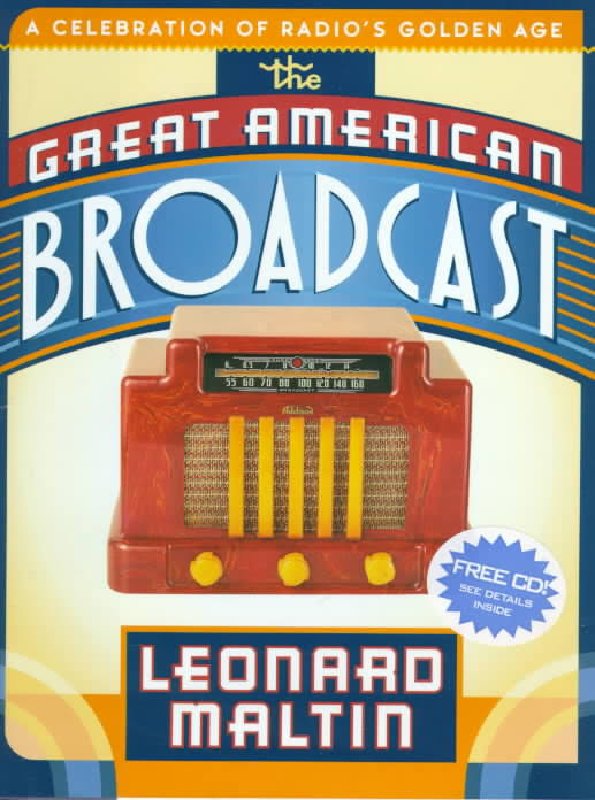
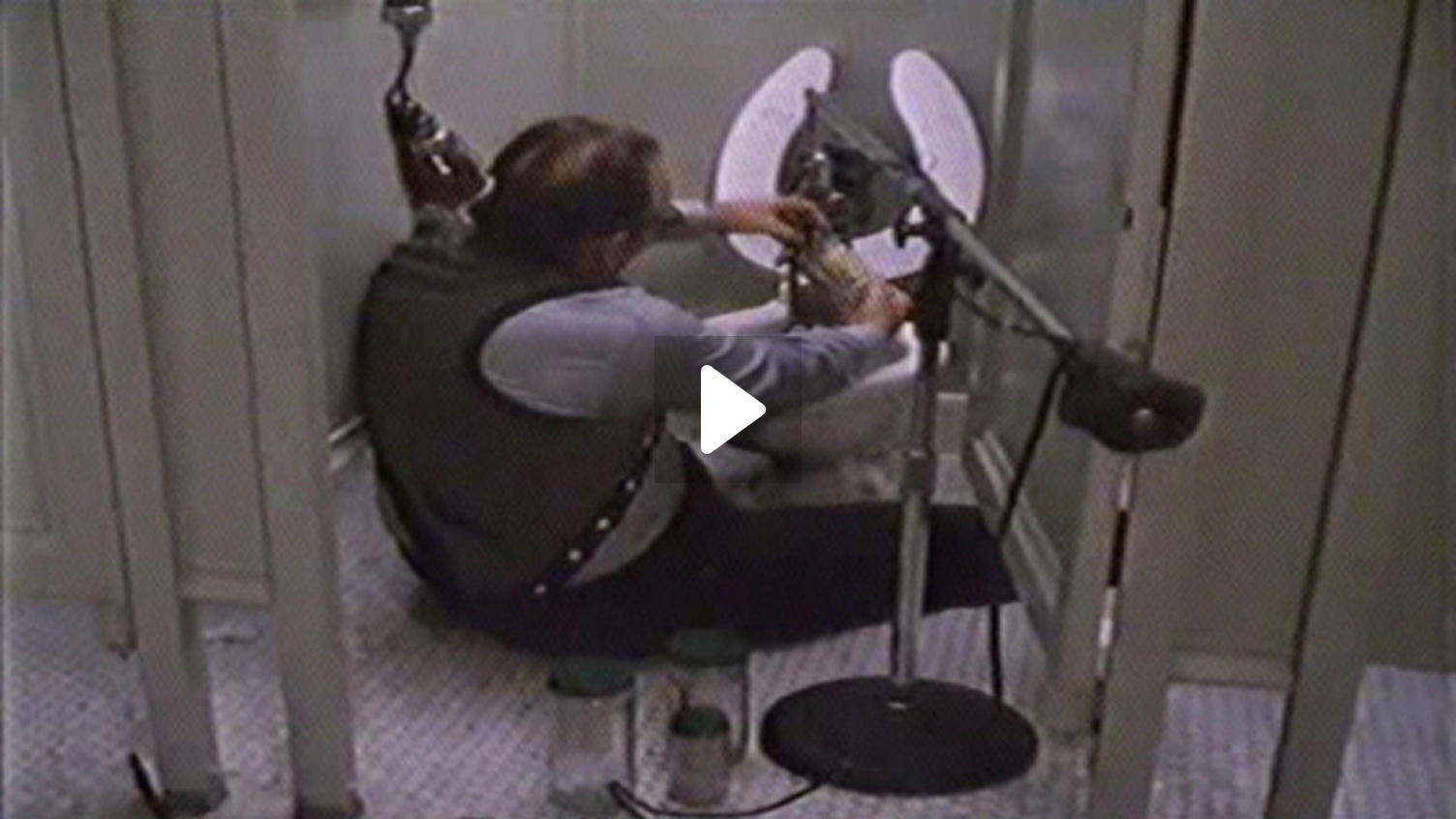
As I got older, read more, and watched movie and TV portrayals of radio with a deeper understanding, I learned more about the intricacies of production – including writing, directing,  acting, and sound effects creation, which made me even more fascinated. Books such as The Great American Radio Broadcast, Terror on the Air, Suspense, Inner Sanctum Mysteries, and The I Love a Mystery Companion revealed to me the behind the scene creation of programs such as Inner Sanctum, Lux Radio Theatre, Suspense, and I Love a Mystery, to name a few – from initial inspiration and pitching of a show to sponsors, to the intense schedule for writing and rehearsing, to actors’ perspective on radio performing, to audience reactions. I was especially intrigued by how special sound effects, combined with an audience’s willing imagination, acting, and sound effects creation, which made me even more fascinated. Books such as The Great American Radio Broadcast, Terror on the Air, Suspense, Inner Sanctum Mysteries, and The I Love a Mystery Companion revealed to me the behind the scene creation of programs such as Inner Sanctum, Lux Radio Theatre, Suspense, and I Love a Mystery, to name a few – from initial inspiration and pitching of a show to sponsors, to the intense schedule for writing and rehearsing, to actors’ perspective on radio performing, to audience reactions. I was especially intrigued by how special sound effects, combined with an audience’s willing imagination, 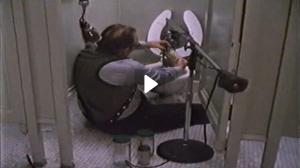 were such a powerful force in creating reality: coconut shells became pounding hooves, a stabbed melon was transformed into a fatally impaled human, a flushing toilet could be modified to become space invaders’ horrific weapons, or a heart beat might be created with a rubber sponge, a turn table, and a stylus (Maltin 108)! Of course, there were also the ultra realists like Jack Webb whom Leonard Maltin reveals created the sounds of passing cars on Los Feliz Blvd. at 2:30 a.m. by having a sound man go out and record passing cars at 2:30 a.m. on Los Feliz Blvd. (Great American Radio Broadcast 100). were such a powerful force in creating reality: coconut shells became pounding hooves, a stabbed melon was transformed into a fatally impaled human, a flushing toilet could be modified to become space invaders’ horrific weapons, or a heart beat might be created with a rubber sponge, a turn table, and a stylus (Maltin 108)! Of course, there were also the ultra realists like Jack Webb whom Leonard Maltin reveals created the sounds of passing cars on Los Feliz Blvd. at 2:30 a.m. by having a sound man go out and record passing cars at 2:30 a.m. on Los Feliz Blvd. (Great American Radio Broadcast 100).
One source that especially galvanized my interest was Rupert Holmes’s Remember WENN (the real 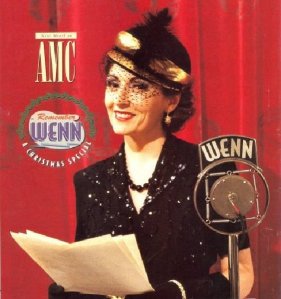 first original AMC series). This delightful program traced the adventures of a Mid-West small-town girl who makes it to the big city (sort of), Pittsburgh, and starts as writer but soon finds the hectic demands of the station moving her swiftly into the roles of director; producer; business manager; and, occasionally, actress. With humor that is sometimes whimsical, but always clever, Remember Wenn joyfully captures the seat-of-your-pants spirit at a radio station that characterized how this medium entertained and delighted audiences. first original AMC series). This delightful program traced the adventures of a Mid-West small-town girl who makes it to the big city (sort of), Pittsburgh, and starts as writer but soon finds the hectic demands of the station moving her swiftly into the roles of director; producer; business manager; and, occasionally, actress. With humor that is sometimes whimsical, but always clever, Remember Wenn joyfully captures the seat-of-your-pants spirit at a radio station that characterized how this medium entertained and delighted audiences.
 Whether in Remember Wenn or in the books I read, I especially loved learning how actors had the pleasure of playing an enormous catalogue of roles because we created their characters in our minds on the inspiration of their voices. That’s how a short, chubby chap could become a strapping western marshal or a middle-aged man could mentally materialize as a kindly old grandmother in the theatre of our minds! Or we got to “see” our favorite actors playing roles they never had a chance to have a crack at on the screen. For example, as a Joan Bennett fan, I was delighted to catch her deftly cracking wise in Rosalind Russell’s part in Hired Wife or seductively manipulating Burt Lancaster in Barbara Stanwyck’s role in Double Indemnity. Whether in Remember Wenn or in the books I read, I especially loved learning how actors had the pleasure of playing an enormous catalogue of roles because we created their characters in our minds on the inspiration of their voices. That’s how a short, chubby chap could become a strapping western marshal or a middle-aged man could mentally materialize as a kindly old grandmother in the theatre of our minds! Or we got to “see” our favorite actors playing roles they never had a chance to have a crack at on the screen. For example, as a Joan Bennett fan, I was delighted to catch her deftly cracking wise in Rosalind Russell’s part in Hired Wife or seductively manipulating Burt Lancaster in Barbara Stanwyck’s role in Double Indemnity.
And short stories or novels were brought alive for us as well – especially Orson Welles’s infamous trick more that treat, War of the Worlds. Both situations inspired me to think about what fun it  would be to take some of my favorite horror or mystery stories or even movies and imagine them as venues for Jessica to strut her thespian stuff. So, in Dead Man, Jess gets to talk about doing “A Rose for Emily” and “The Dunwich Horror”; in Dark Horse, we have reference to her playing in “The Horla.” would be to take some of my favorite horror or mystery stories or even movies and imagine them as venues for Jessica to strut her thespian stuff. So, in Dead Man, Jess gets to talk about doing “A Rose for Emily” and “The Dunwich Horror”; in Dark Horse, we have reference to her playing in “The Horla.”
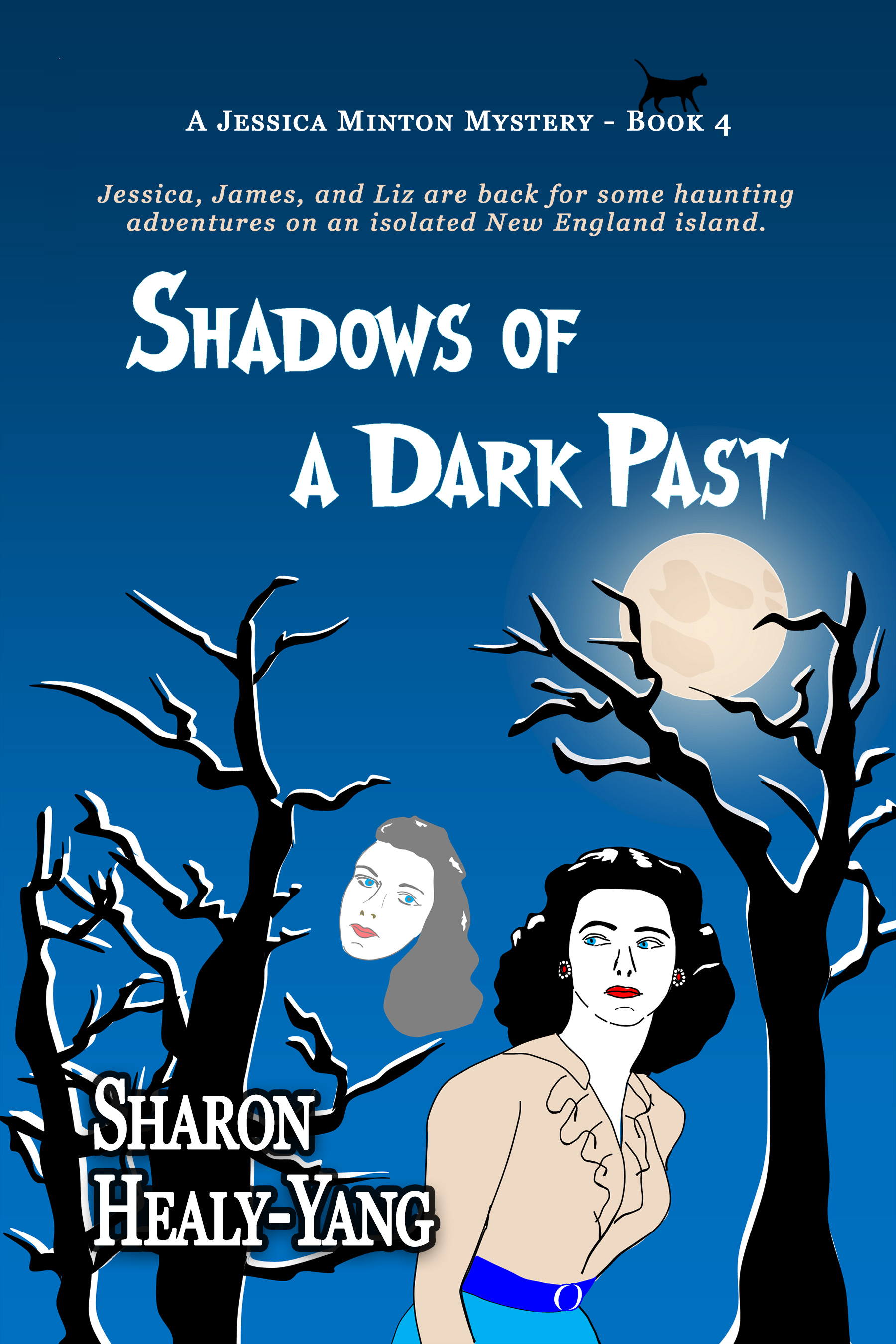
In Jessica’s most recent adventure, Shadows of a Dark Past, I’ve centered the story around her work 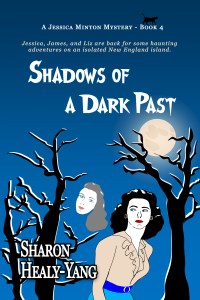 on a remote broadcast in a haunted New Hampshire mansion (somewhat inspired by Charlie Chan in the Wax Museum). Attempting to drum up ratings, her director/producer Scott plans to reopen the tragedy of a woman’s tragic disappearance, and likely murder, in this mansion twenty years before. The owner of the mansion, the husband of the woman reputed to be the ghost, her daughter, and others in the town who remember the event have dangerously mixed emotions about the broadcast. And Jessica finds that she has a disturbing connection to the woman in question. Then there’s the Hound of Hell. The topper is when things go horribly wrong in a séance recorded for later transmission. on a remote broadcast in a haunted New Hampshire mansion (somewhat inspired by Charlie Chan in the Wax Museum). Attempting to drum up ratings, her director/producer Scott plans to reopen the tragedy of a woman’s tragic disappearance, and likely murder, in this mansion twenty years before. The owner of the mansion, the husband of the woman reputed to be the ghost, her daughter, and others in the town who remember the event have dangerously mixed emotions about the broadcast. And Jessica finds that she has a disturbing connection to the woman in question. Then there’s the Hound of Hell. The topper is when things go horribly wrong in a séance recorded for later transmission.
In a book still in the outline stage, the plot revolves around Jessica’s work in the studio with some members of the writing team who are dangerously not what they seem. It’s Dusty who sets the plot in motion! So, don’t change that station! I plan to bring you more exciting installments of the adventures of Jessica, Liz, James, and Dusty in and out of the studio! members of the writing team who are dangerously not what they seem. It’s Dusty who sets the plot in motion! So, don’t change that station! I plan to bring you more exciting installments of the adventures of Jessica, Liz, James, and Dusty in and out of the studio!
If you’re looking for some films to give you a flavor of radio at its most exciting and mystery-inspiring, check out Charlie Chan in the Wax Museum (1940), Abbott and Costello’s Who Done It? (1942), Danger on the Air (1938), The Hucksters (1949), That’s Right, You’re Wrong (1939), The Big Broadcast of 1938, Playmates (1941) The Frozen Ghost (1945), Radioland Murders (1994 – George Lucas directing, no less), and The Scarlet Clue (1945). For a sardonic look at the effects of Orson Welles’s broadcast of War of the Worlds, have a chuckle at Hullabaloo (1940); and for a (mostly) more serious look, watch The Night That Panicked America (1975).
Image of Orson Welles directing: Broadcasting play: https://musingsofamiddleagedgeek.blog/2022/10/07/the-night-that-panicked-america-1975-is-a-little-seen-tv-movie-about-the-greatest-halloween-prank-ever-played/
Screen shot of soundman and toilet from The dvd The Night That Panicked America,CBS Studios, (c) 2014
Image of Melinda Mullins from AMC Movie Magazine.
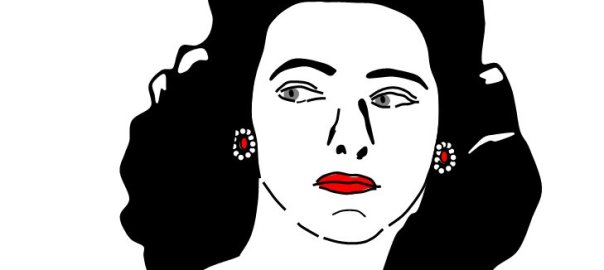
Image of Joan Bennett, Dusty, and Jessica Minton, author’s collection
|









 Sharon Healy-Yang
