| As you may have extrapolated from many of my posts, Yang and I are great bird watchers. We’ve traveled all over the Northeast (and to Canada, China, England, and France in the past) to sight all kinds of befeathered critters. My count for species this year is now a whopping 93! However, I can’t help agreeing with him that we often see a greater numbers of birds and species on our bird feeders thnt we do on our trips to woods, fields, rivers, and oceans! Maybe this blog will lead you to agree.
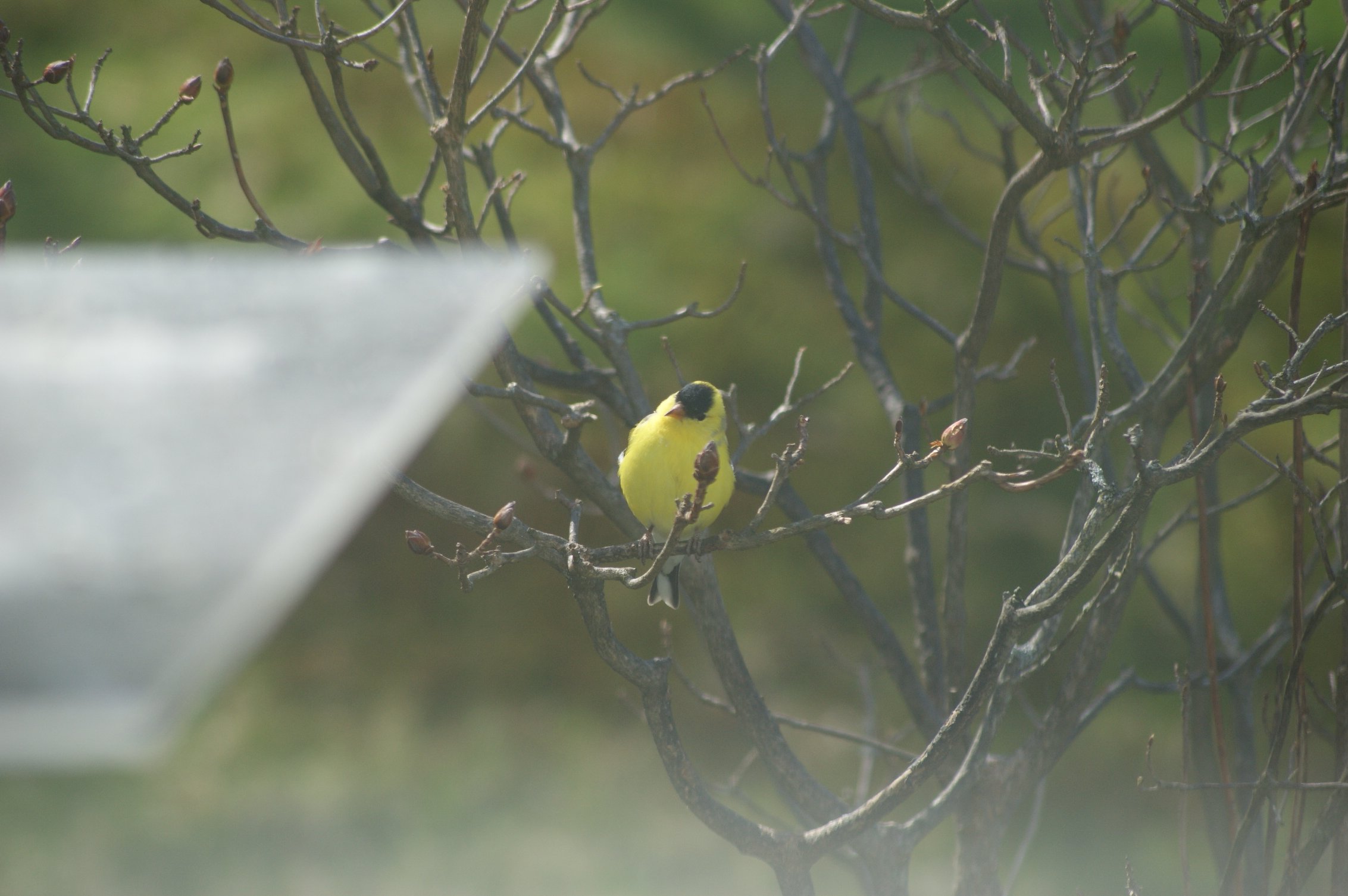
Many of our regular spring and summer visitors have made their appearances here. I can report that I’ve seen one Hummingbird, lots of Goldfinches and House Finches, Red-winged Blackbirds (male and female), and Cardinals by the score. Our Chickadees and Titmice have briefly been on haiatus, brooding their babes, but they are now back at work snagging black-oil sunflower seeds. It’s also so much fun to see Mommy and Daddy (mostly Daddy) Cardinals bringing their kids to the feeders now that the little tykes can fly. Unfortunately, I don’t have any pictures of these guys, but I do have quite a few of some of my other feathered favorites.
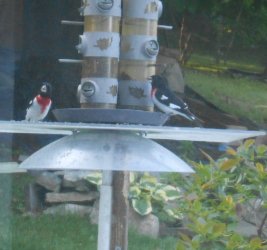
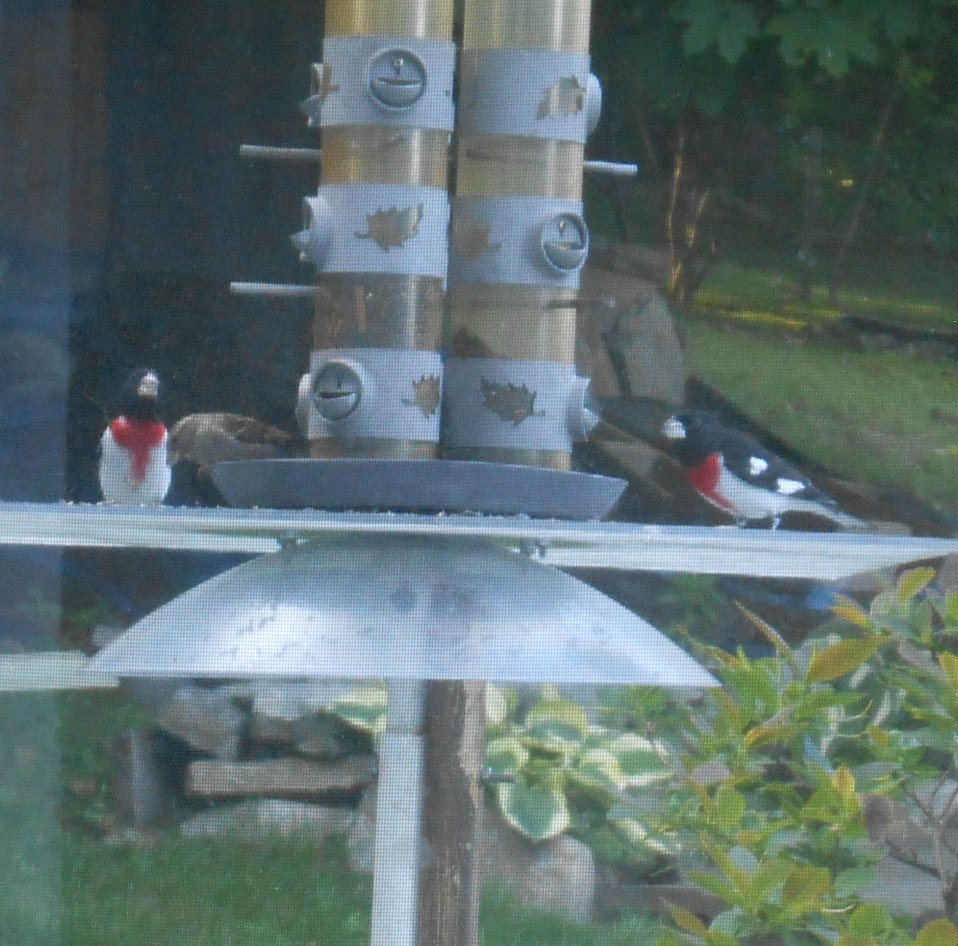
One of my favorite species are the Rosebreasted Grosbeaks. Usually, we get the females first, then 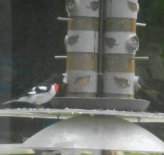 the males; however, it was the opposite this year. We had at least one male, finally, on a feeder. Then, tragedy struck: we found him dead on the ground under a tree. Yang and I were heartbroken. These guys were like our pals. Still, our hearts mended a bit two week later when we found another male chomping on sunflower seeds. Then we saw a female. Then we saw two males at the same the males; however, it was the opposite this year. We had at least one male, finally, on a feeder. Then, tragedy struck: we found him dead on the ground under a tree. Yang and I were heartbroken. These guys were like our pals. Still, our hearts mended a bit two week later when we found another male chomping on sunflower seeds. Then we saw a female. Then we saw two males at the same 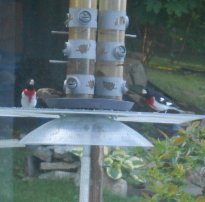 time! There could be up to thirty males on that feeder as long as they didn’t all show up together! By the way, the time! There could be up to thirty males on that feeder as long as they didn’t all show up together! By the way, the  males are quite aggressive. They don’t take guff from each other and not from Grackles, Blue Jays, or Mourning Doves. The females can be tough cookies as well. Anyway, I’m glad they are back. Below is a shot of the males in a more pacific mod. I guess they can stand each other when multiple tubes of seeds separate them. males are quite aggressive. They don’t take guff from each other and not from Grackles, Blue Jays, or Mourning Doves. The females can be tough cookies as well. Anyway, I’m glad they are back. Below is a shot of the males in a more pacific mod. I guess they can stand each other when multiple tubes of seeds separate them.
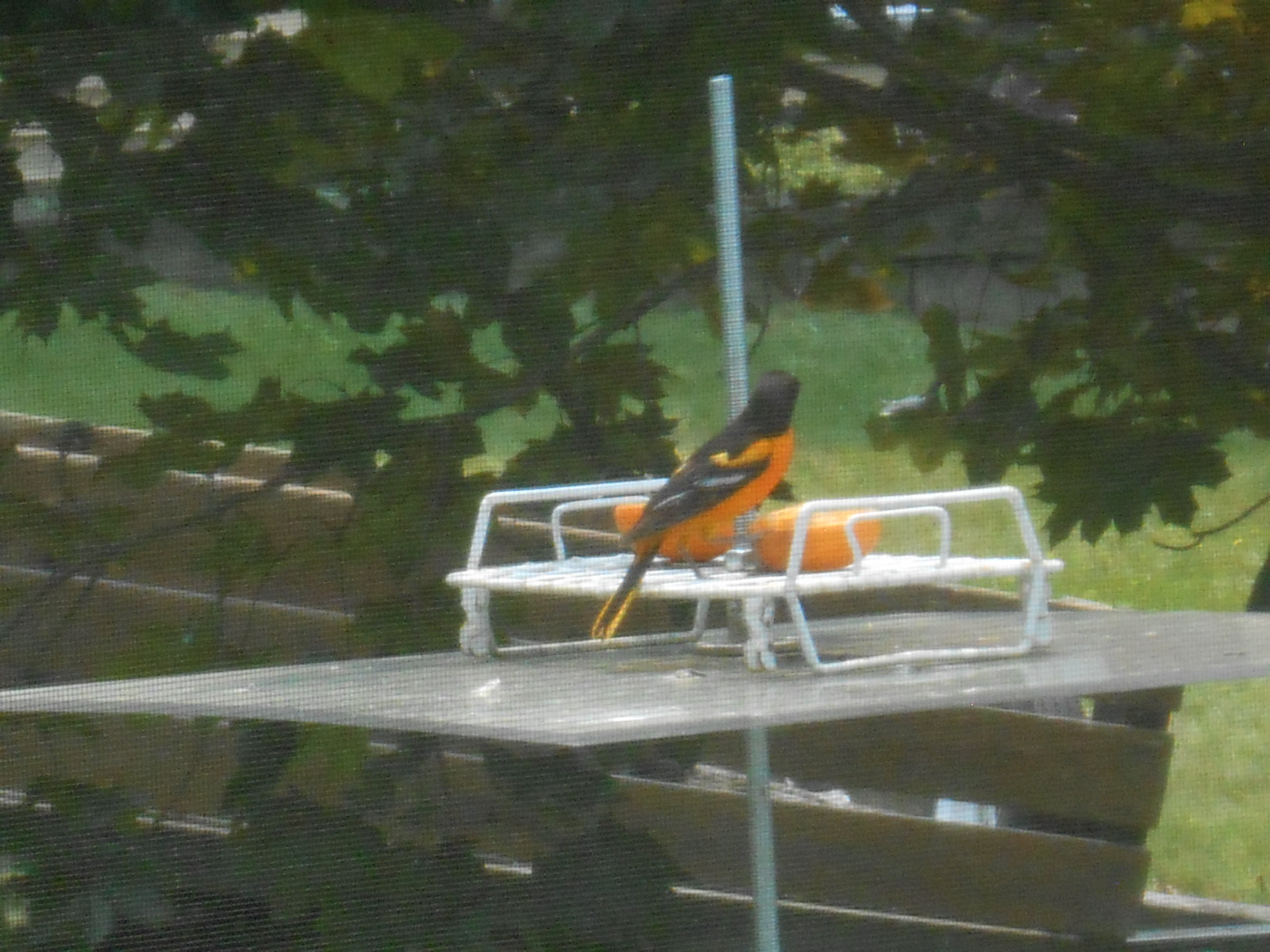
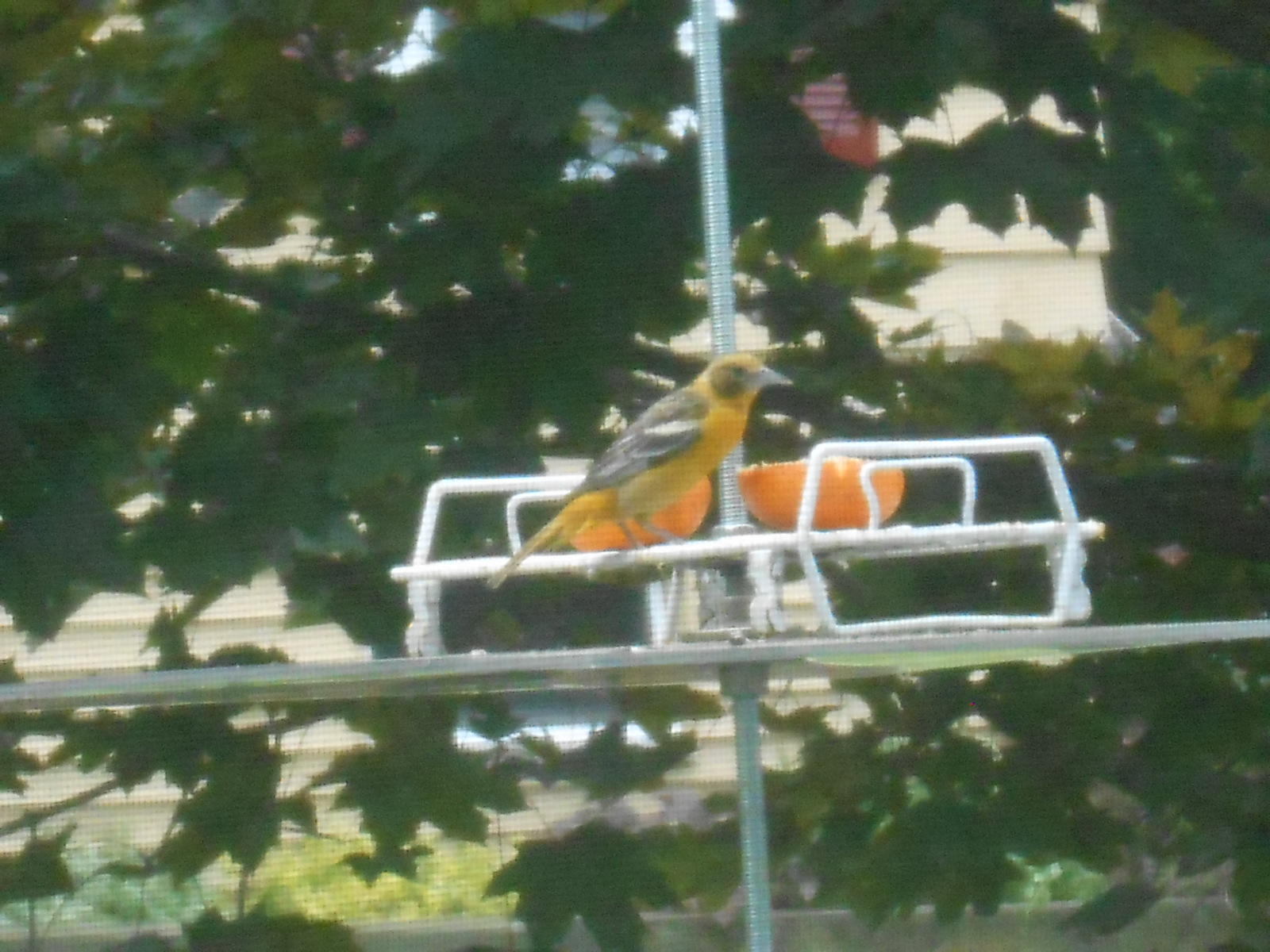
 Another of our beloved colorful visitors is the Baltimore Oriole. After long waiting, we saw one toward the end of May, then nothing! Many an orange might have withered away if not for Another of our beloved colorful visitors is the Baltimore Oriole. After long waiting, we saw one toward the end of May, then nothing! Many an orange might have withered away if not for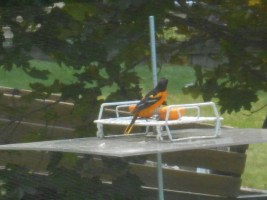 other birds. So, we almost gave up hope of seeing another Oriole – until in the middle of June Orioles reappeared! We saw a male several days in a row, then a female for a couple of other birds. So, we almost gave up hope of seeing another Oriole – until in the middle of June Orioles reappeared! We saw a male several days in a row, then a female for a couple of 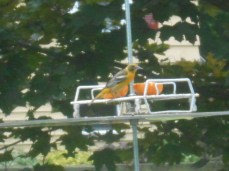 days, then a week later: a juvenile. It’s been a couple of weeks and – nothing! Of course, who knows what shows up when Yang and I are away, but we haven’t seen any Orioles since. I guess this was just a stopover on their way to their real summer grounds. Well, at least we saw a few of them! And the oranges did not go to waste. days, then a week later: a juvenile. It’s been a couple of weeks and – nothing! Of course, who knows what shows up when Yang and I are away, but we haven’t seen any Orioles since. I guess this was just a stopover on their way to their real summer grounds. Well, at least we saw a few of them! And the oranges did not go to waste.
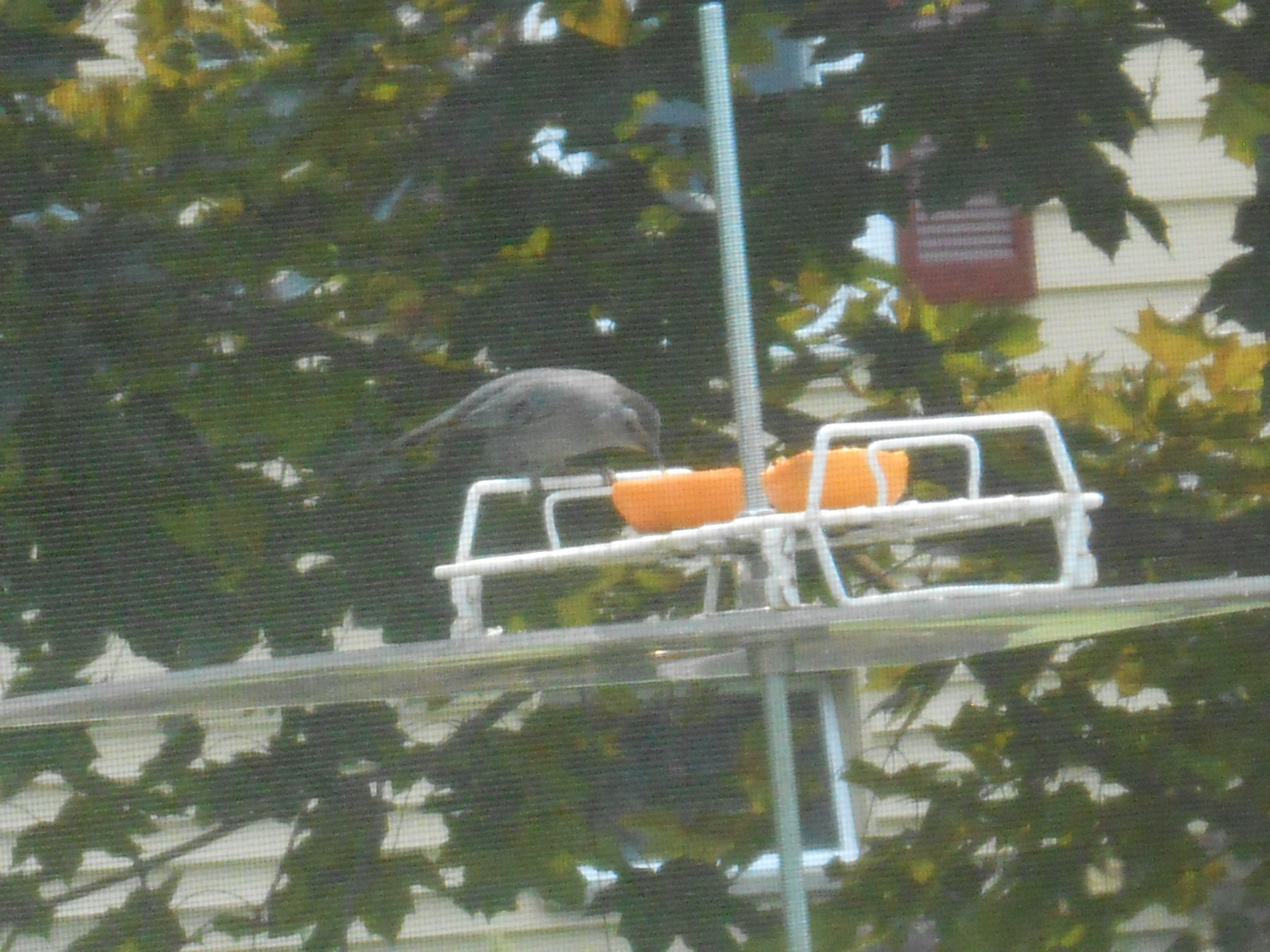
 We have discovered that Catbirds adore orange pulp! When there’s no suet to be had (and even when there is!) our catbird We have discovered that Catbirds adore orange pulp! When there’s no suet to be had (and even when there is!) our catbird 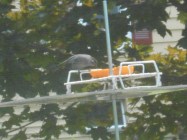 couple come by to snack on the orange halves we have set out. They must keep up their strength, since they have a nest with babies on our property. couple come by to snack on the orange halves we have set out. They must keep up their strength, since they have a nest with babies on our property.
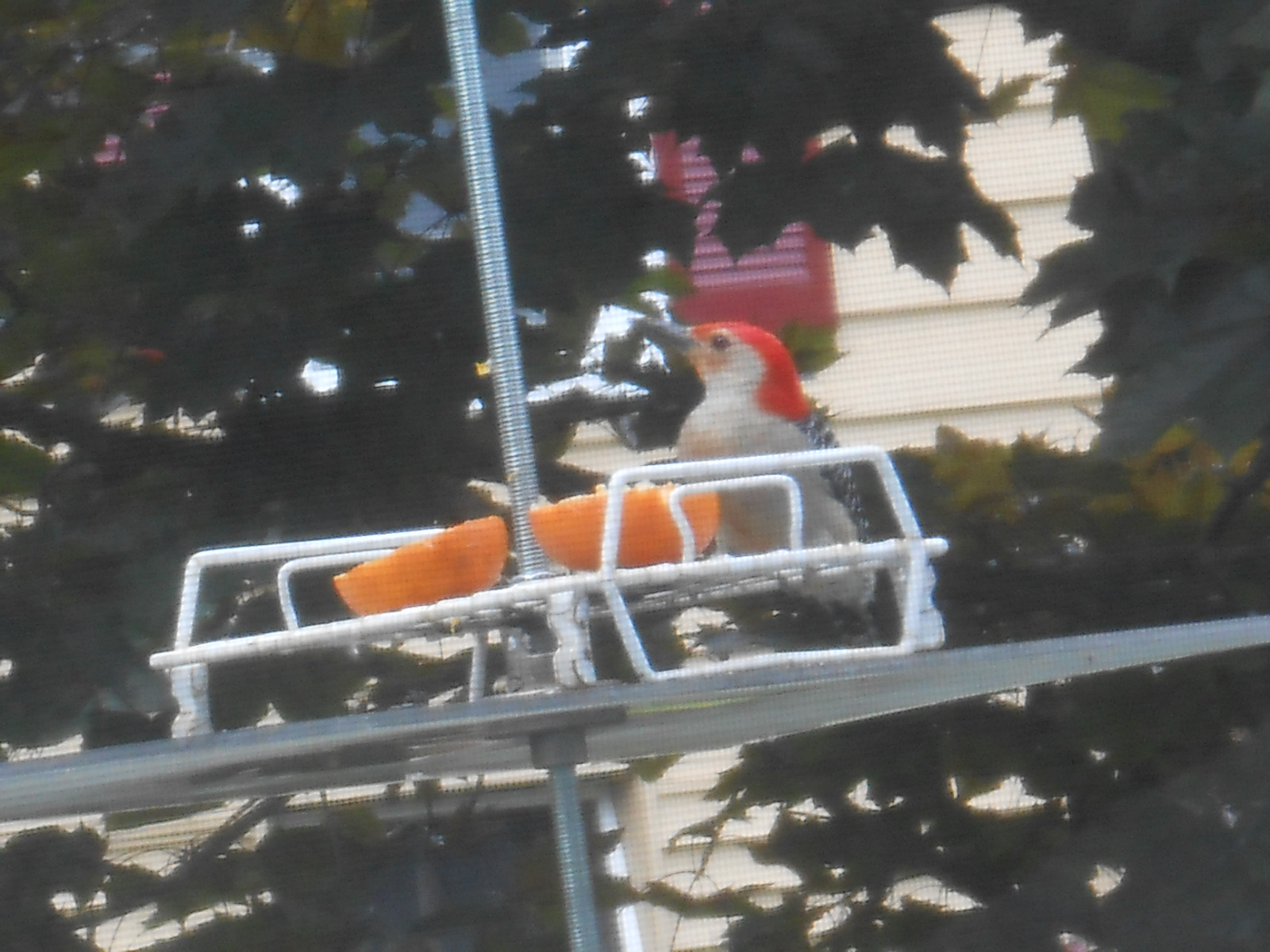
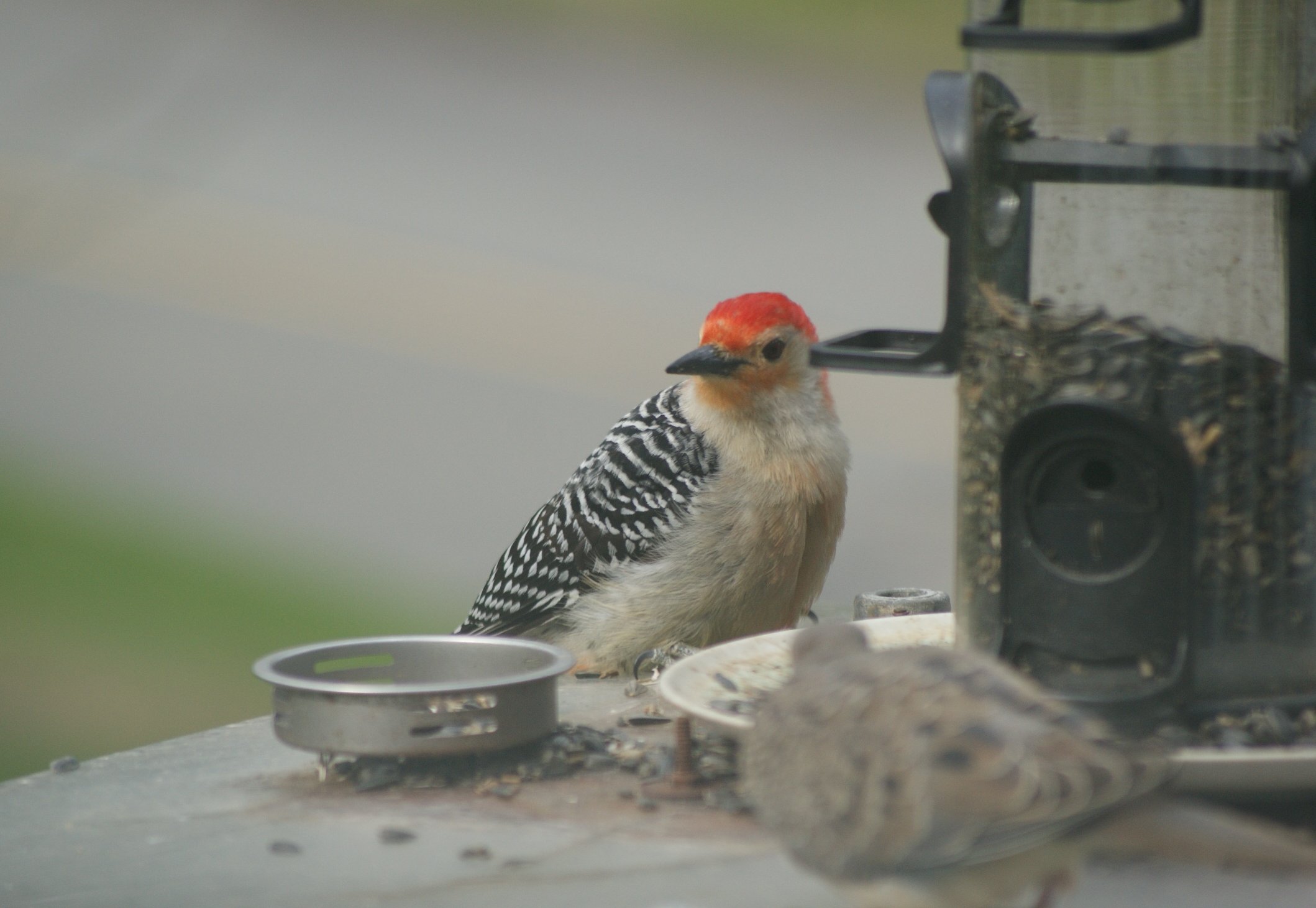
 Mr. Redbellied Woodpecker thinks the oranges are pretty cool stuff, Mr. Redbellied Woodpecker thinks the oranges are pretty cool stuff, 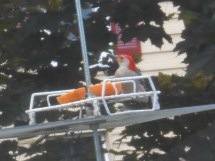 too. You can see him having a grand time chowing down on pulp. Maybe the Orioles are afraid to go for the oranges with these guys around! too. You can see him having a grand time chowing down on pulp. Maybe the Orioles are afraid to go for the oranges with these guys around!
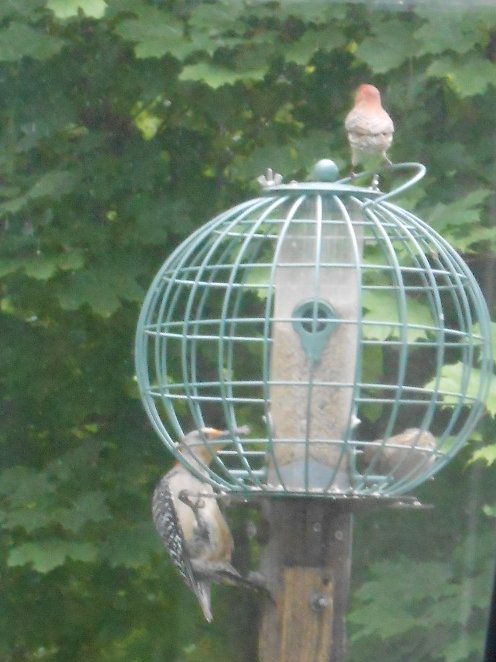
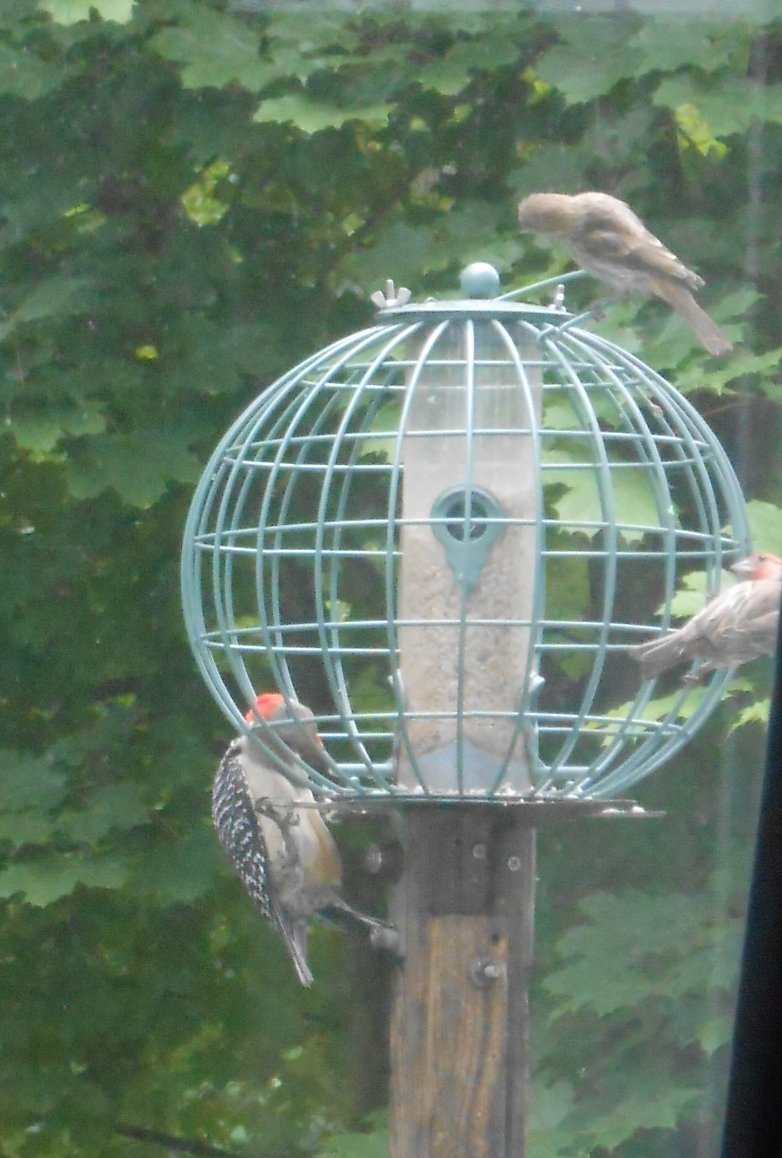
 One idea that Yang came up with to thwart the squirrels from stealing food from the birds (and breaking our feeders) was to buy a tube feeder inside a globed cage. It also had the advantage of preventing the big bully birds like One idea that Yang came up with to thwart the squirrels from stealing food from the birds (and breaking our feeders) was to buy a tube feeder inside a globed cage. It also had the advantage of preventing the big bully birds like  Grackles, Doves, and Jays from keeping the little birds from food. it works. Of course, medium size birds like the Rosebreasted Grosbeak and the female Redwinged Blackbirds can get in, without being bullies. Tough luck male Red Wings! Birds with long beaks also have a shot – like the Redbellied Woodpecker. The House finches try to out- Grackles, Doves, and Jays from keeping the little birds from food. it works. Of course, medium size birds like the Rosebreasted Grosbeak and the female Redwinged Blackbirds can get in, without being bullies. Tough luck male Red Wings! Birds with long beaks also have a shot – like the Redbellied Woodpecker. The House finches try to out- aggress the Goldfinches, but the latter either hold their own or just wait and dive in when the coast is clear. Titmice and Chickadees are too fast for anyone to harass them! aggress the Goldfinches, but the latter either hold their own or just wait and dive in when the coast is clear. Titmice and Chickadees are too fast for anyone to harass them!
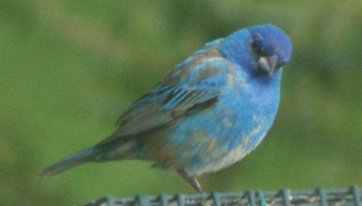
So, you can see, we’ve seen a healthy variety of avian visitors right outside out windows. Bring on the Scarlet Tanagers, the Pileated Woodpeckers, and the Indigo Buntings! It wouldn’t be the first time one of them has shown up at chez Yang.

|
















 Sharon Healy-Yang