 Even as November eased into December, Yang and I have still enjoyed the creatures and plantation around the Yang Manse. Would you believe that we still had morning glories toward the middle of November? Gallantly Even as November eased into December, Yang and I have still enjoyed the creatures and plantation around the Yang Manse. Would you believe that we still had morning glories toward the middle of November? Gallantly  battling colder, shorter, darker days, these Heavenly Blues waited until the last gasps of autumn to bloom. Their beauty shown through the dying colors of the late season. They even provided a lovely contrast to the last of autumn’s orange and rust foliage. battling colder, shorter, darker days, these Heavenly Blues waited until the last gasps of autumn to bloom. Their beauty shown through the dying colors of the late season. They even provided a lovely contrast to the last of autumn’s orange and rust foliage.
Though we had an extremely poor crop of pumpkins and gourds (three fertilized, two surviving long  enough to be picked), we did still manage to grow some of the plants to maturity. Here, is one gourd that started out lovely, but succumbed to cold, too much dampness, and the onslaught of slugs. You can see how pretty it was before Mother nature went wild on it. enough to be picked), we did still manage to grow some of the plants to maturity. Here, is one gourd that started out lovely, but succumbed to cold, too much dampness, and the onslaught of slugs. You can see how pretty it was before Mother nature went wild on it.
In a happier vein, though, how about a look at the survivors? This gourd that did make it was a  surprise fertilization, which we found peeping under some leaves. Here it is shortly after discovery. We try to put a rock or plate under the growing gourds and pumpkins to keep the damp ground from rotting them. surprise fertilization, which we found peeping under some leaves. Here it is shortly after discovery. We try to put a rock or plate under the growing gourds and pumpkins to keep the damp ground from rotting them.
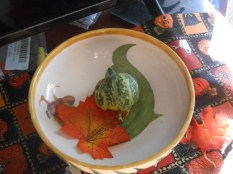 And here is the same gourd all grown up. Sadly, because it was fertilized, late it never grew very much and then spoiled after only about six weeks. It was pretty while it lasted! And here is the same gourd all grown up. Sadly, because it was fertilized, late it never grew very much and then spoiled after only about six weeks. It was pretty while it lasted!
We also managed to get one pumpkin! It was fertilized during a short break in the rain for a week or  so of sunshine and hot weather. Here’s our pumpkin a beautiful dark green as it grows slowly but surely, out facing damp and ravenous slugs! so of sunshine and hot weather. Here’s our pumpkin a beautiful dark green as it grows slowly but surely, out facing damp and ravenous slugs!
It may not be the biggest pumpkin we’ve ever grown, but like Reba Mcentire, it can sing, “I’m a  survivor” – if pumpkins can sing. Now the pumpkin resides in state in the picture window on the sun porch, where we can enjoy viewing it as we watch the birds chowing down at our feeders. survivor” – if pumpkins can sing. Now the pumpkin resides in state in the picture window on the sun porch, where we can enjoy viewing it as we watch the birds chowing down at our feeders.
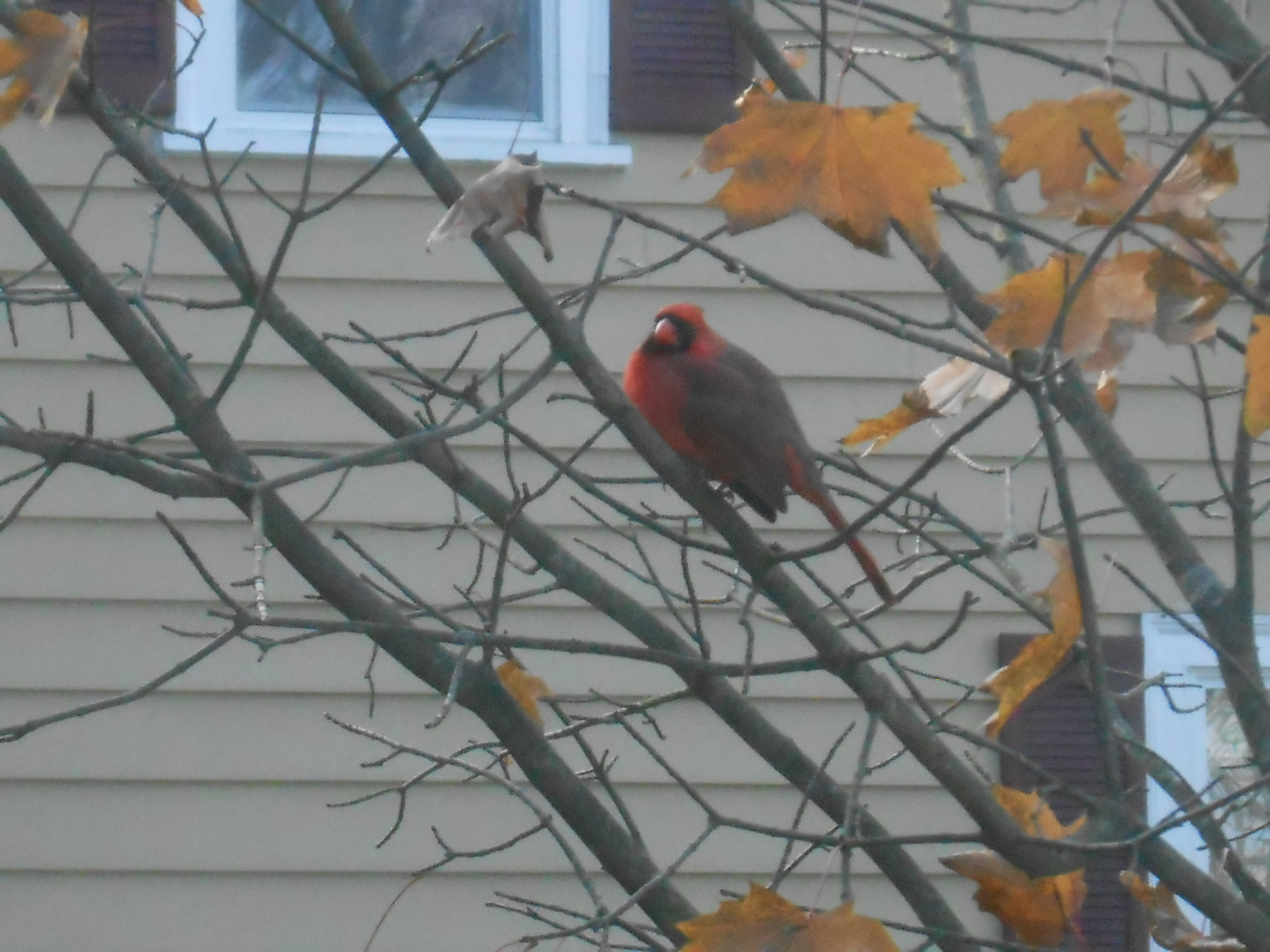
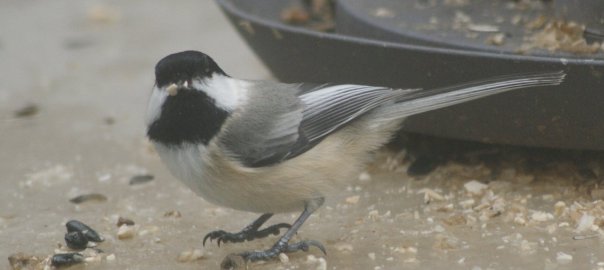
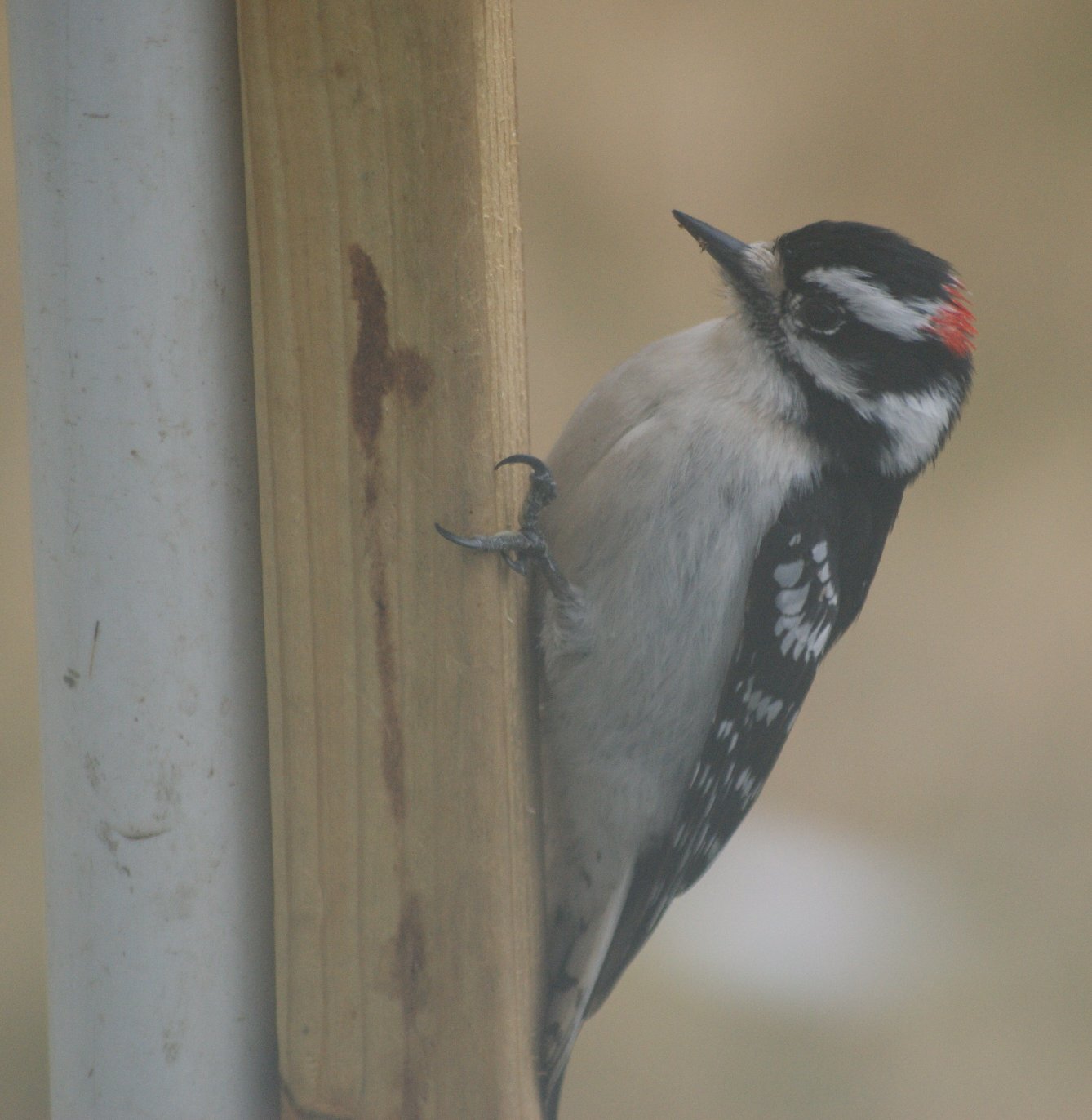
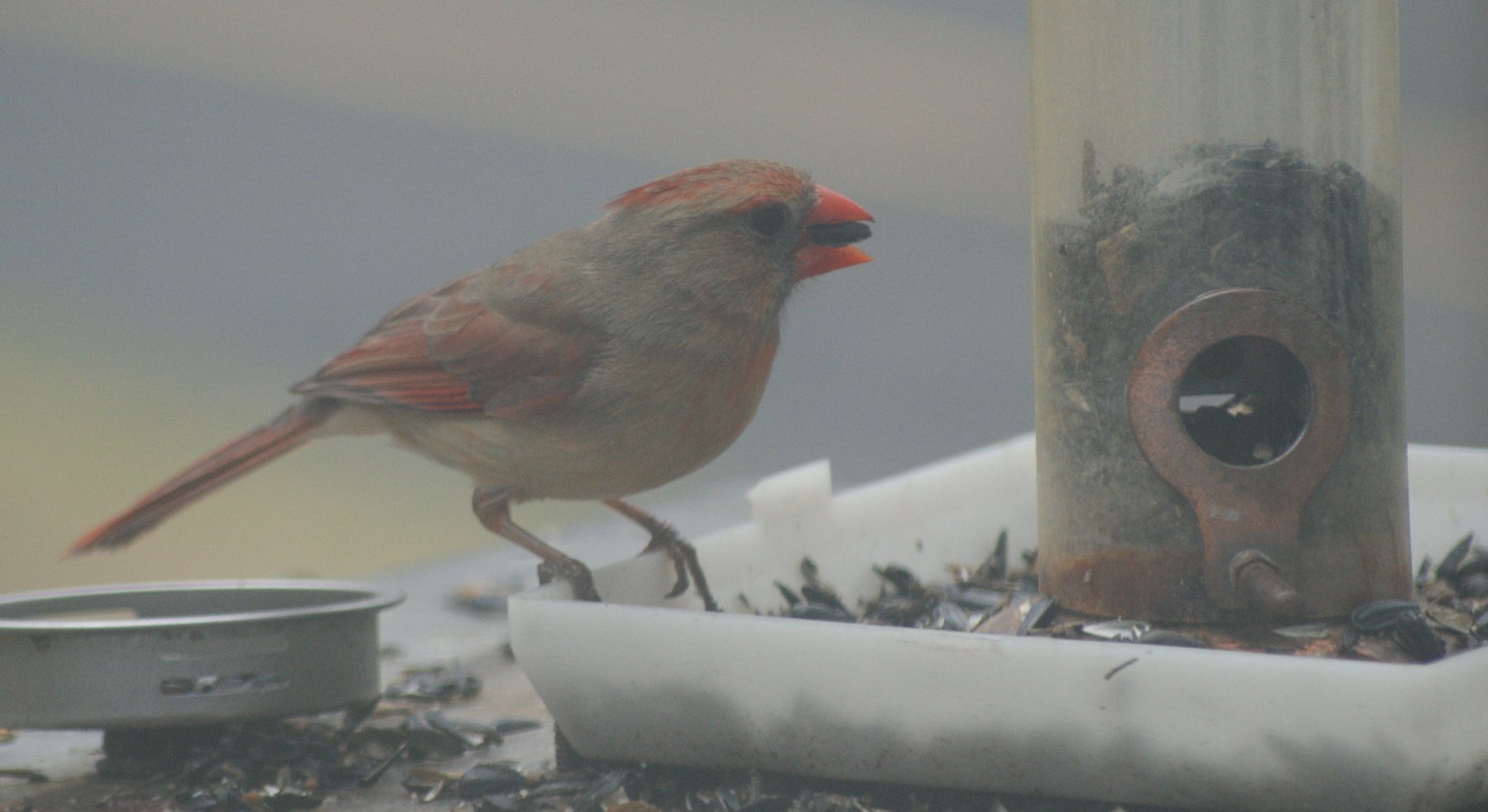
 And speaking of birds chowing down on our feeders, we’ve got plenty of the little feathered guys to watch! We have the usual suspects: Mourning Doves, Blue Jays, Cardinals, Chickadees, And speaking of birds chowing down on our feeders, we’ve got plenty of the little feathered guys to watch! We have the usual suspects: Mourning Doves, Blue Jays, Cardinals, Chickadees, 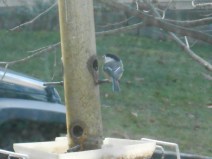 Red Bellied Woodpeckers, Titmice, Downy Woodpeckers, and Nuthatches, for example. Red Bellied Woodpeckers, Titmice, Downy Woodpeckers, and Nuthatches, for example.

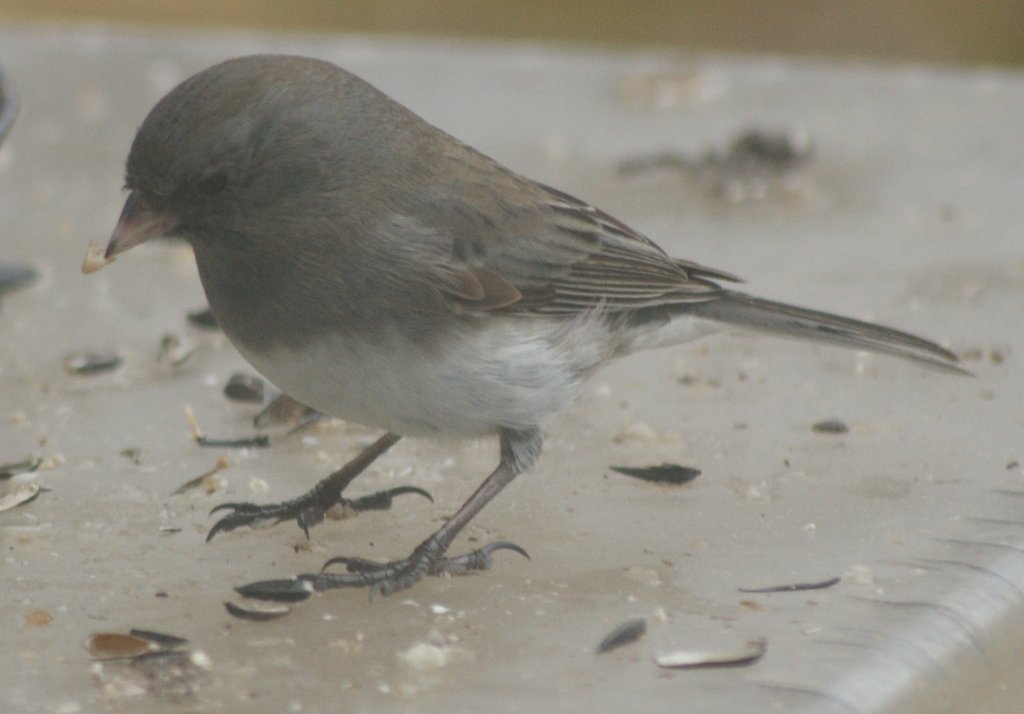
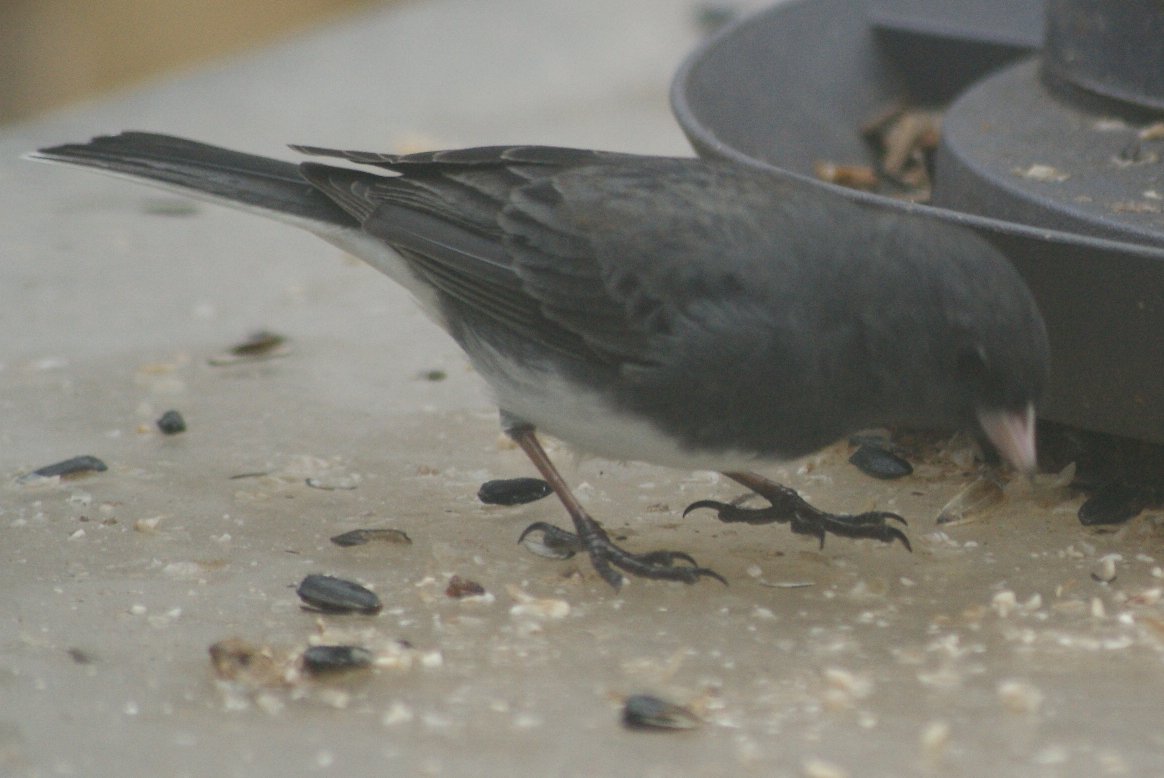
But there are also returning old friends, as well. The harbingers of winter, the Slate Colored Juncos,  are back. At first, they did their typical feeding off the ground, but now they are returning to old habits of taking lunch at the feeding bar. It just takes them a little while to remember that they can do that. I love to see them flying away, making the sound of castanets and flashing the white stripes on the fan of their tails. are back. At first, they did their typical feeding off the ground, but now they are returning to old habits of taking lunch at the feeding bar. It just takes them a little while to remember that they can do that. I love to see them flying away, making the sound of castanets and flashing the white stripes on the fan of their tails.
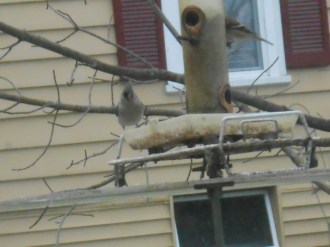
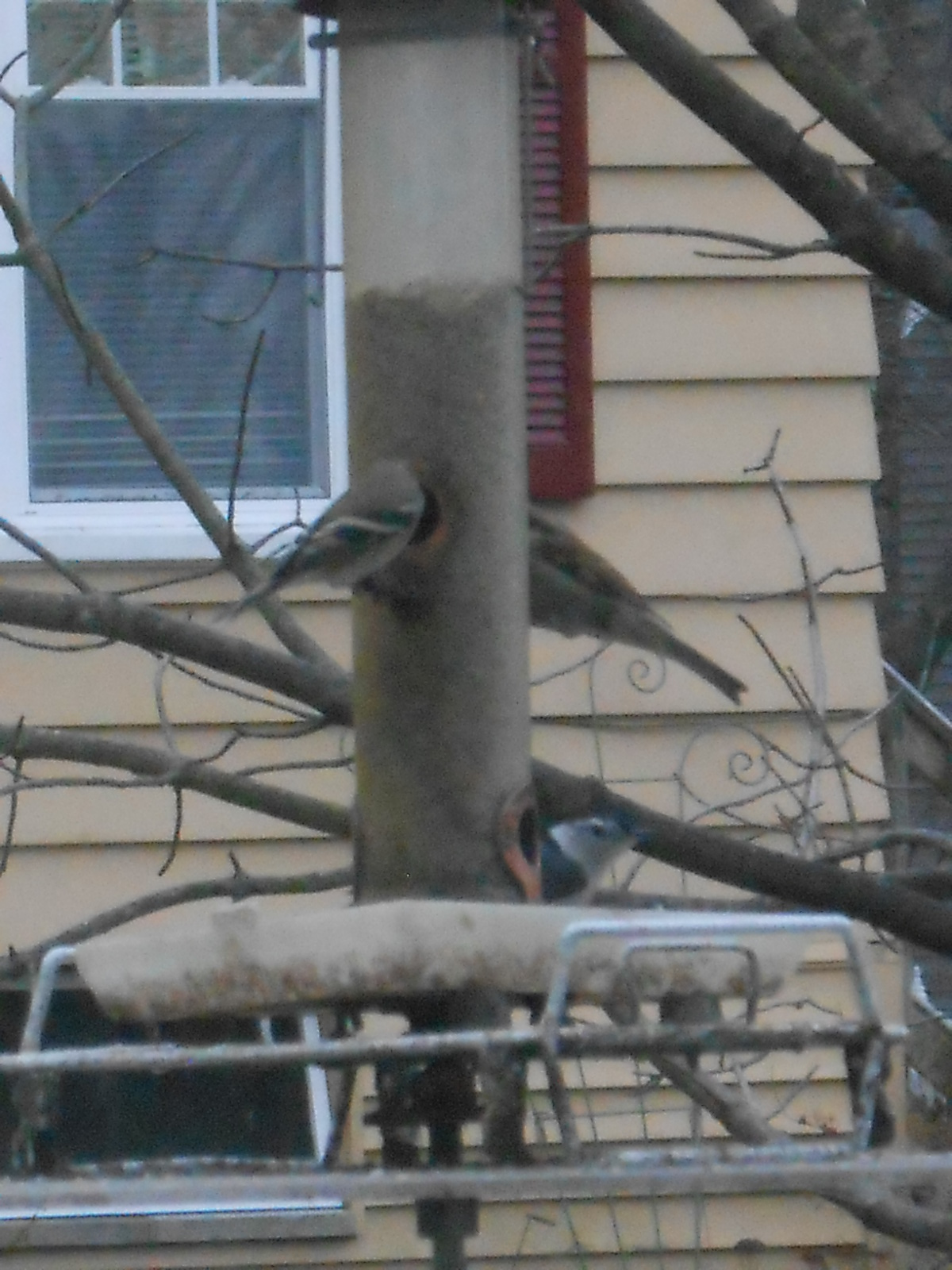
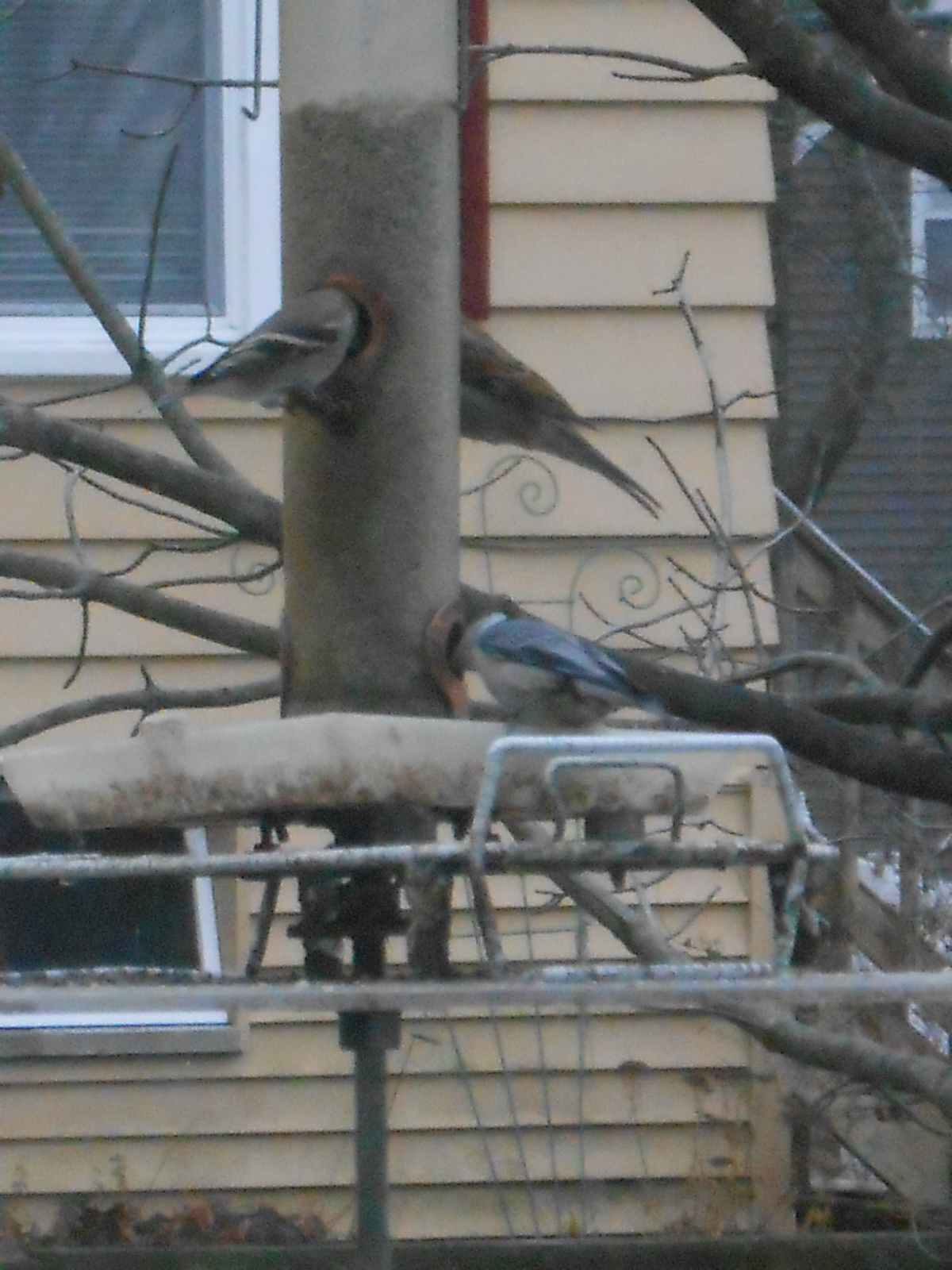
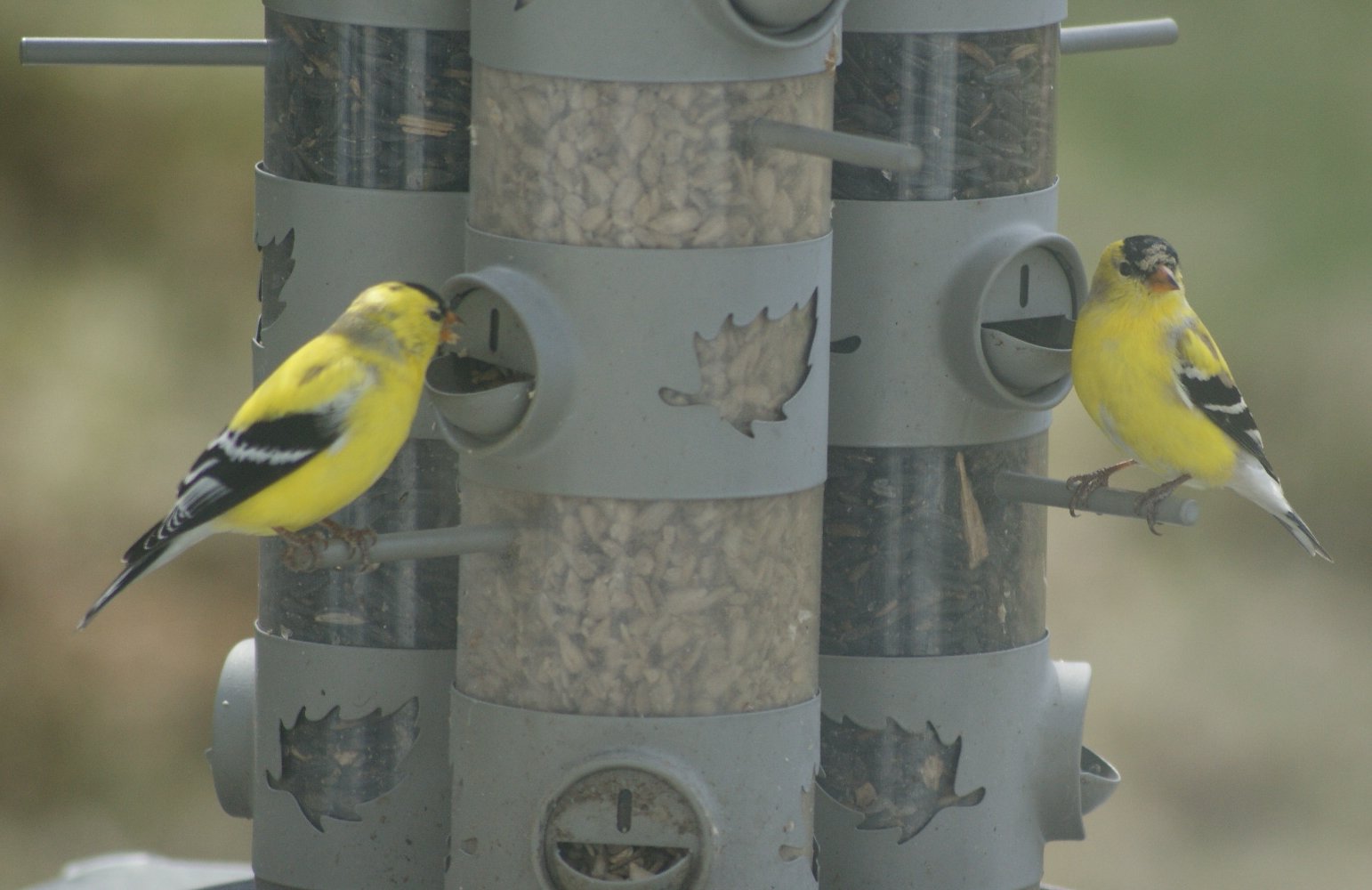
 Who else should make a return engagement after a short absence, but the Goldfinches! As summer ended, these guys disappeared from my feeders for several weeks. Then, suddenly, they all Who else should make a return engagement after a short absence, but the Goldfinches! As summer ended, these guys disappeared from my feeders for several weeks. Then, suddenly, they all  returned in November, wearing their olive winter coats. They also like to chow down with the other birds, so I have some neat shots of them with their pals, though woe betide the bird who tries to chase one of these aggressive little olive-garbed guys away! I love this picture with two Goldfinches and a Titmouse (on the right)doing acrobatics. returned in November, wearing their olive winter coats. They also like to chow down with the other birds, so I have some neat shots of them with their pals, though woe betide the bird who tries to chase one of these aggressive little olive-garbed guys away! I love this picture with two Goldfinches and a Titmouse (on the right)doing acrobatics.
Here’s another one of the Goldfinch with a Nuthatch. Isn’t the Nuthatch in picture #1 adorable, just peeking around the corner of the feeder? Don’t you love the gorgeous blue/grey of the Nuthatch’s cloak, more visible in picture #2?
 
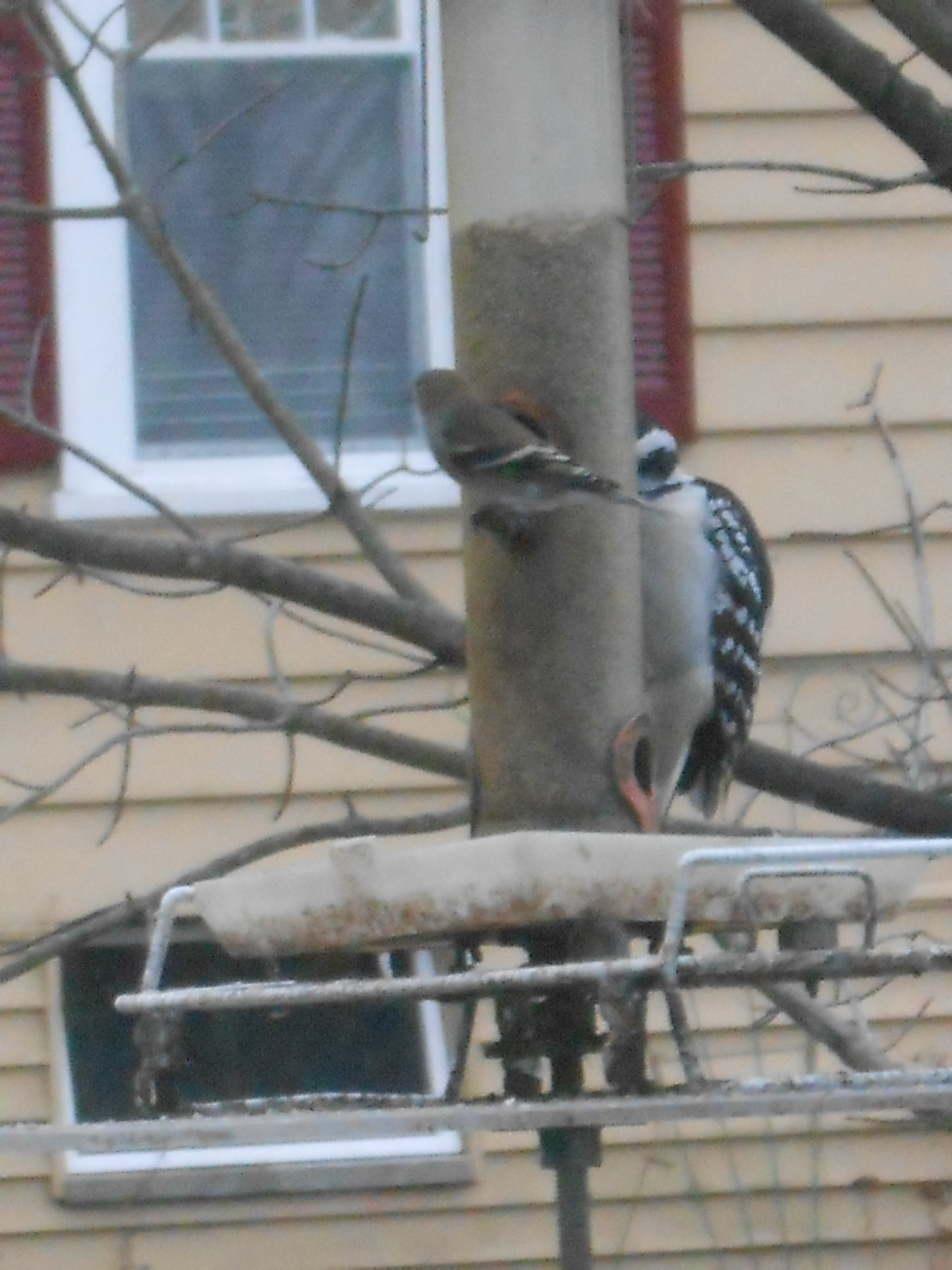
As you can see here, the Goldfinches don’t seem to have trouble getting along with either the Hairy (photo #1) or the Downy Woodpeckers (Photo #2).
 
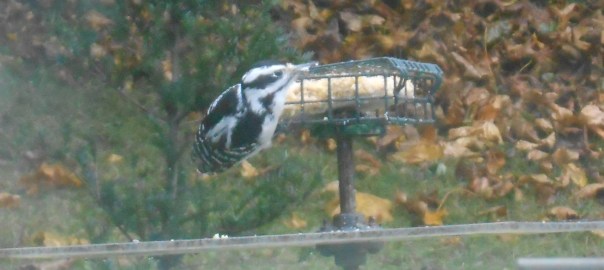
 In fact, this summer and fall, I don’t think I’ve seen so many Hairy Woodpeckers on my feeders. They In fact, this summer and fall, I don’t think I’ve seen so many Hairy Woodpeckers on my feeders. They  certainly do seem to look like Downies on steroids. Here are some nice shots I got of the female Hairy. You can tell the difference because the only the male has a red spot on the back of his head – like in the case of the Downies. certainly do seem to look like Downies on steroids. Here are some nice shots I got of the female Hairy. You can tell the difference because the only the male has a red spot on the back of his head – like in the case of the Downies.
So, I’ll just end with a shot of a Titmouse and a Goldfinch snacking away.

Until the Titmouse turns to me with a definite, “Who you lookin’ at, human!” expression.
|
 Even as November eased into December, Yang and I have still enjoyed the creatures and plantation around the Yang Manse. Would you believe that we still had morning glories toward the middle of November? Gallantly
  battling colder, shorter, darker days, these Heavenly Blues waited until the last gasps of autumn to bloom. Their beauty shown through the dying colors of the late season. They even provided a lovely contrast to the last of autumn’s orange and rust foliage.












 Sharon Healy-Yang