Here we are with only two days left to November, closing out autumn.  Though the season doesn’t officially end until December 21 or 22, depending on the year, the last day of November always feels like the turn of the page into winter with December 1st. So, I’d like to present you with a blog or two taking a lingering, pleasing look back at the “season of mellow fruitfulness.” Though the season doesn’t officially end until December 21 or 22, depending on the year, the last day of November always feels like the turn of the page into winter with December 1st. So, I’d like to present you with a blog or two taking a lingering, pleasing look back at the “season of mellow fruitfulness.”
Last year, Yang and I celebrated Halloween during the day with a 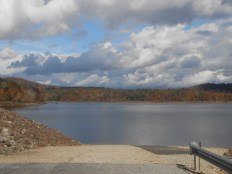 hike at Colbrook Reservoir in western Mass. Remember how we were in drought status that year? Well, that’s why we not only were able to have a memorable walk along the waterway on an abandoned two-lane paved road, but also could discern parts of the town that had been submerged by the flooding to create the reservoir. We even caught sight of the phantom bridge! This year we sought to repeat our adventure, with hopes of an even more pleasant outing since the weather was so much warmer than last year. Unfortunately, in 2021 we had so much more of something else than last year: Rain! hike at Colbrook Reservoir in western Mass. Remember how we were in drought status that year? Well, that’s why we not only were able to have a memorable walk along the waterway on an abandoned two-lane paved road, but also could discern parts of the town that had been submerged by the flooding to create the reservoir. We even caught sight of the phantom bridge! This year we sought to repeat our adventure, with hopes of an even more pleasant outing since the weather was so much warmer than last year. Unfortunately, in 2021 we had so much more of something else than last year: Rain!
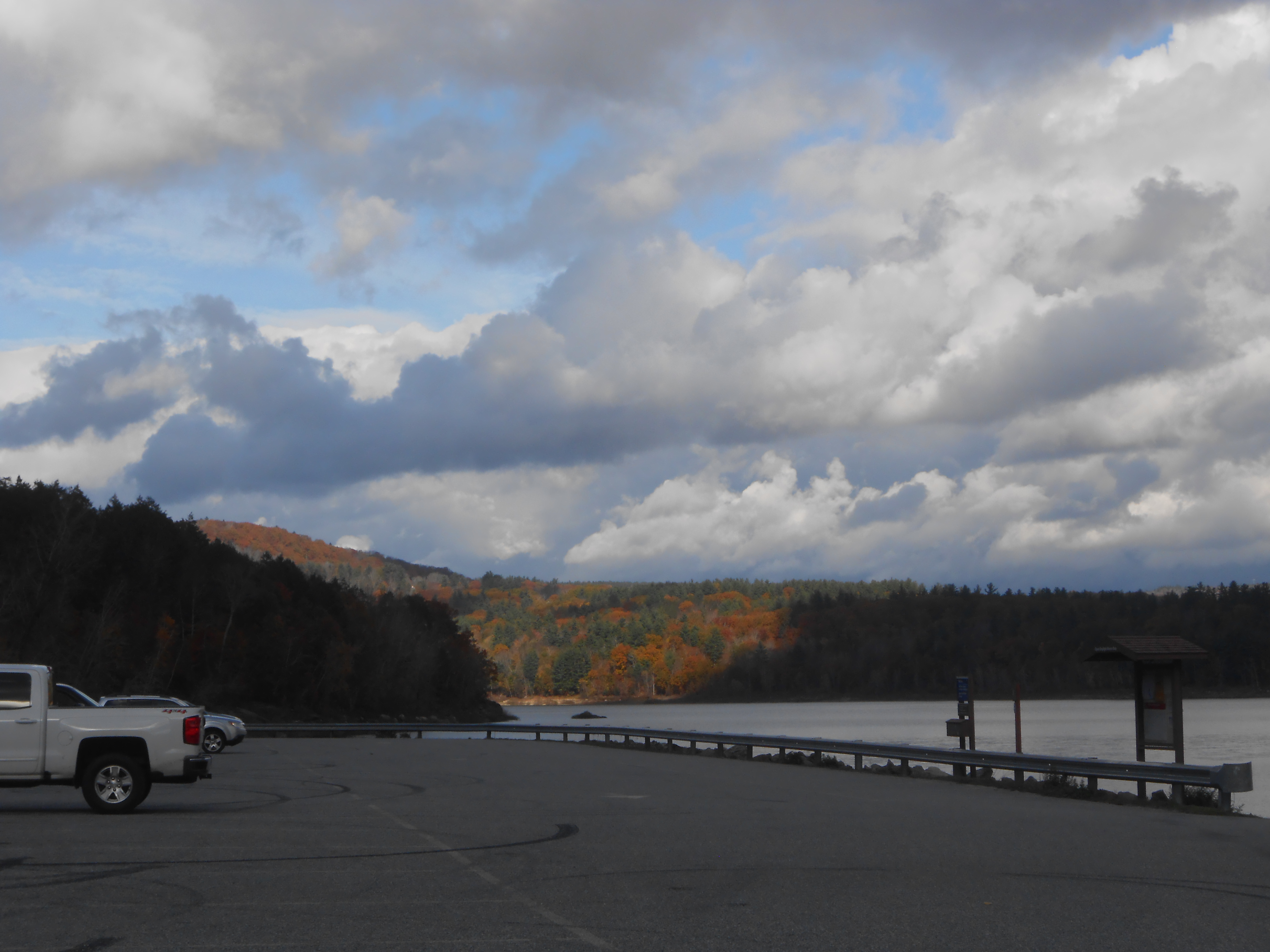
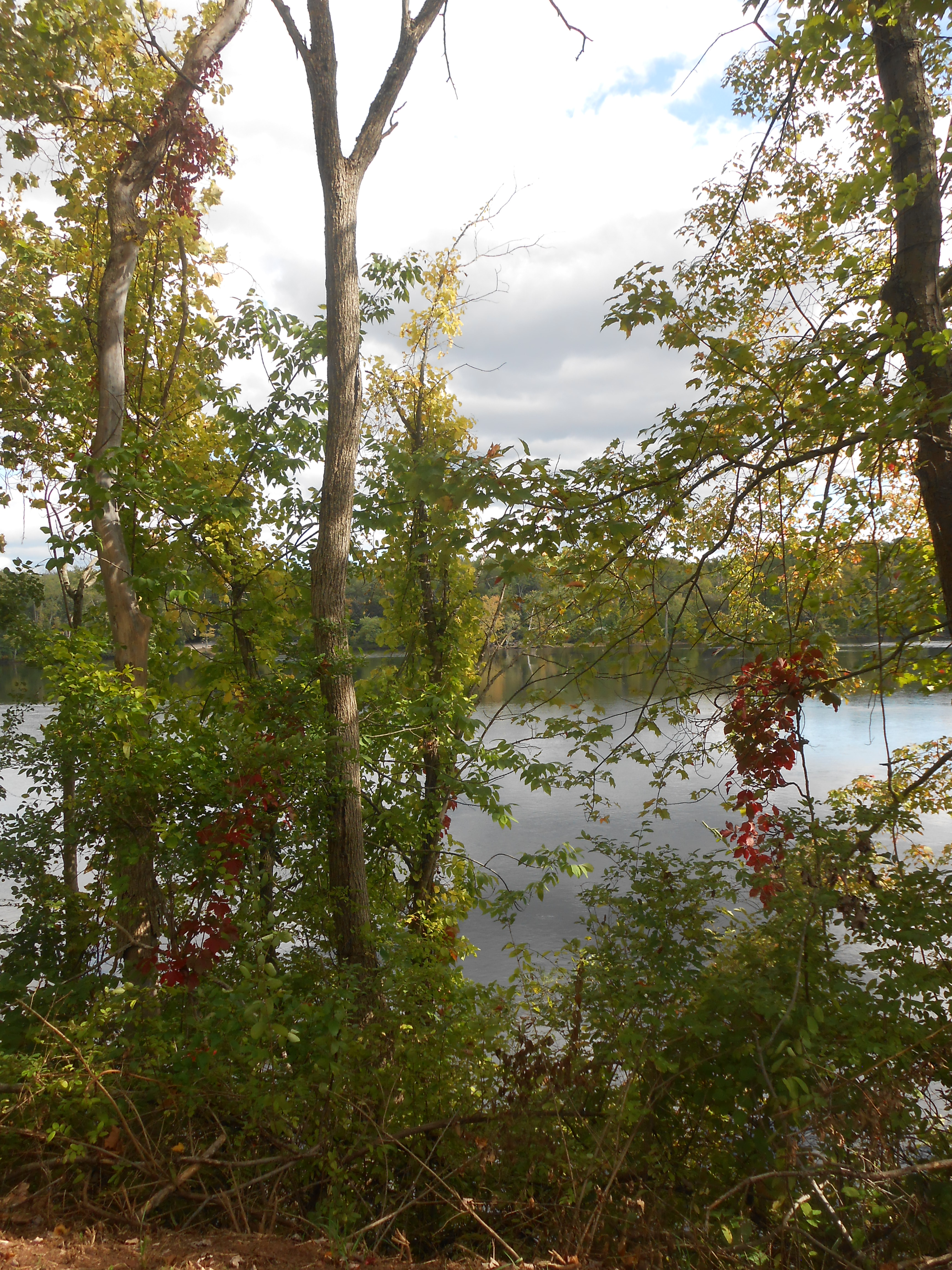
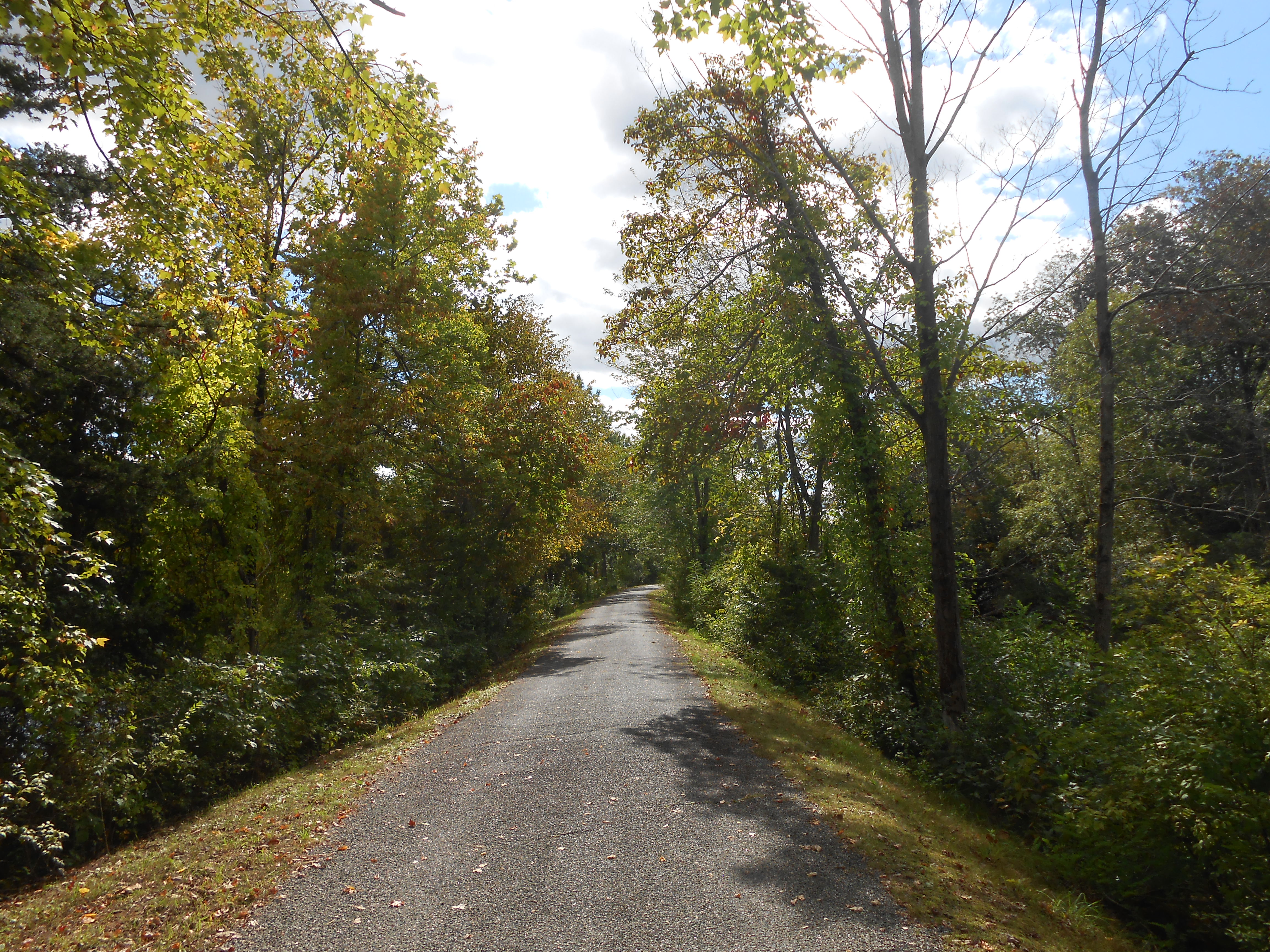
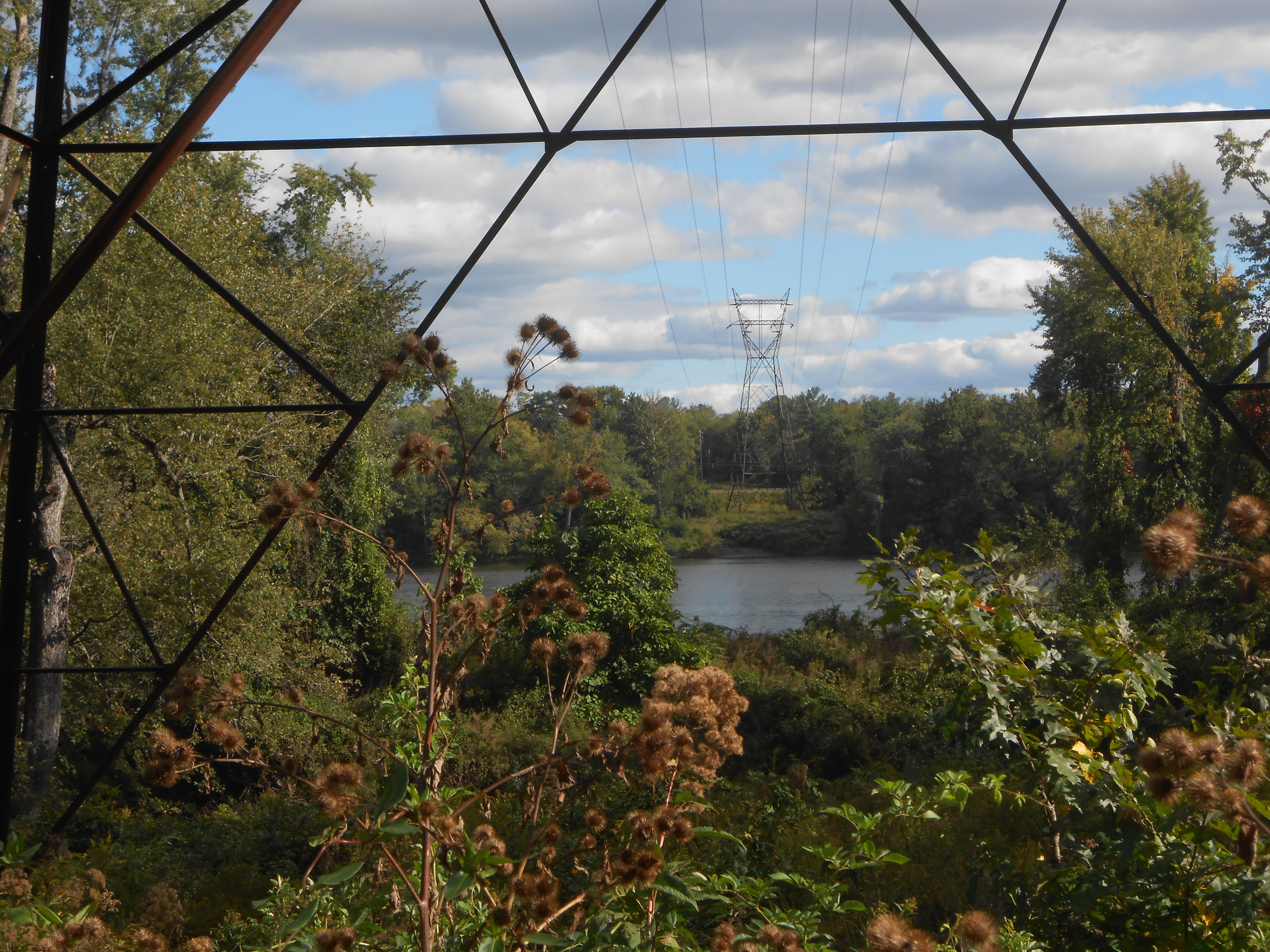
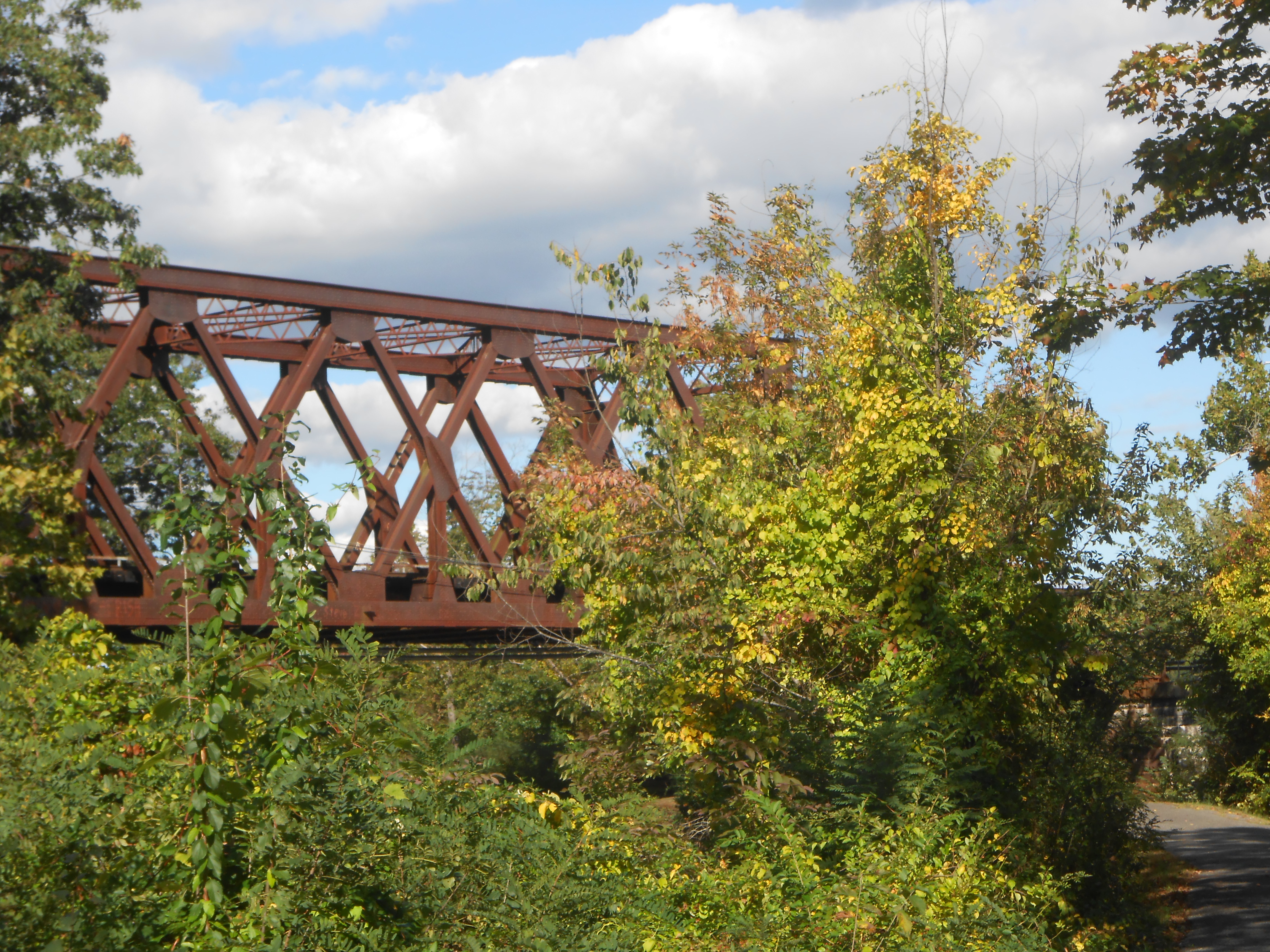
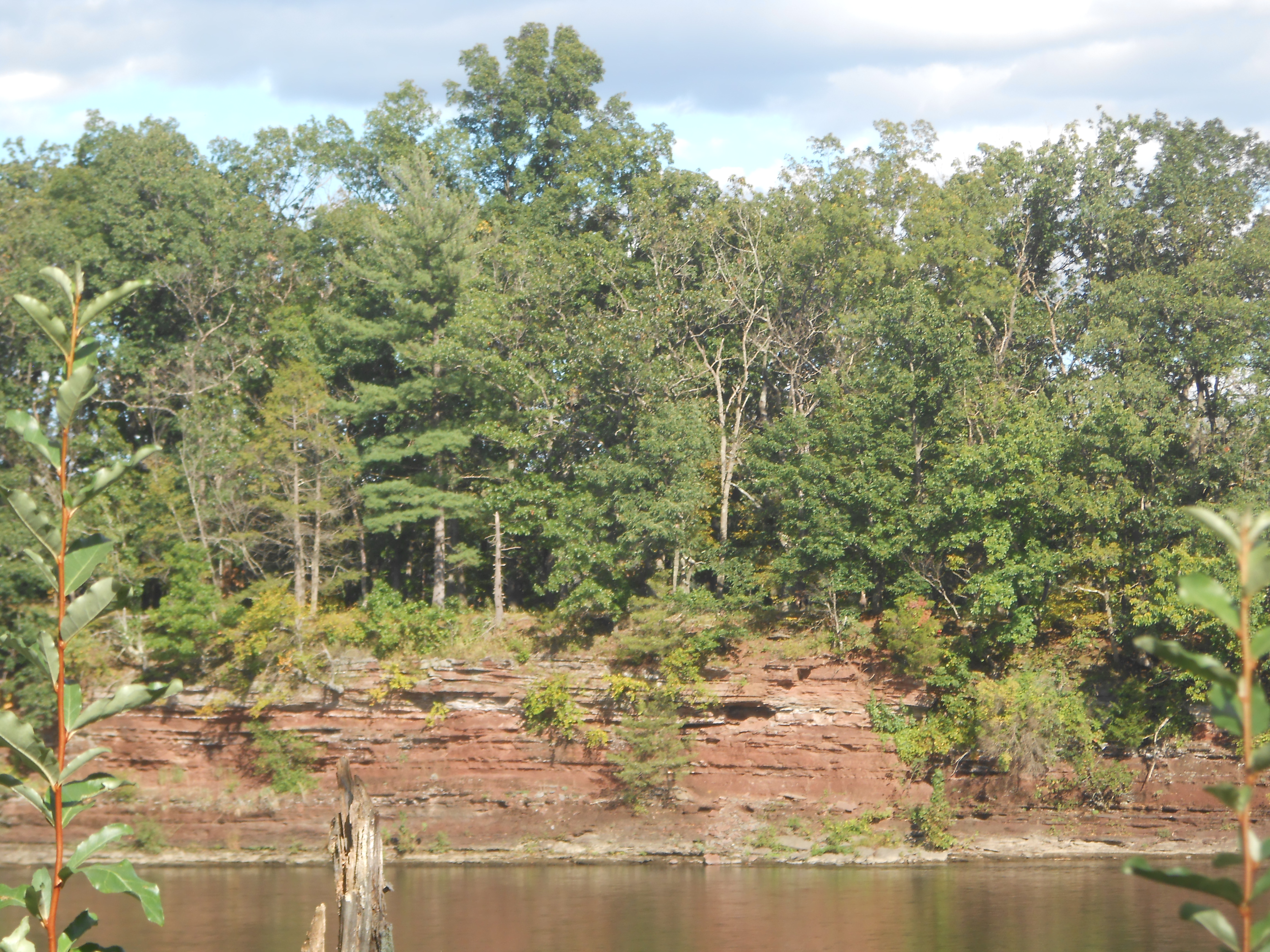
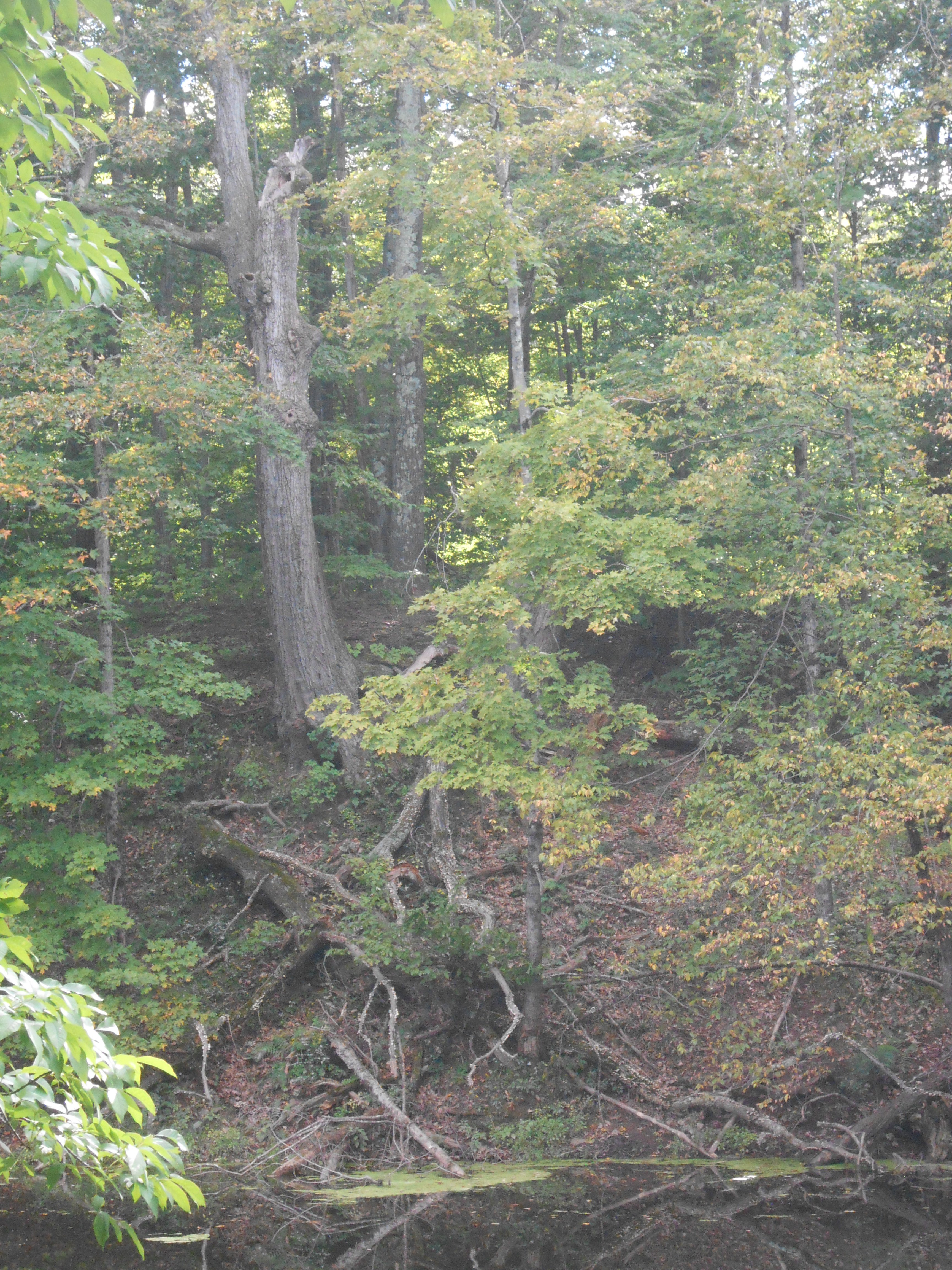
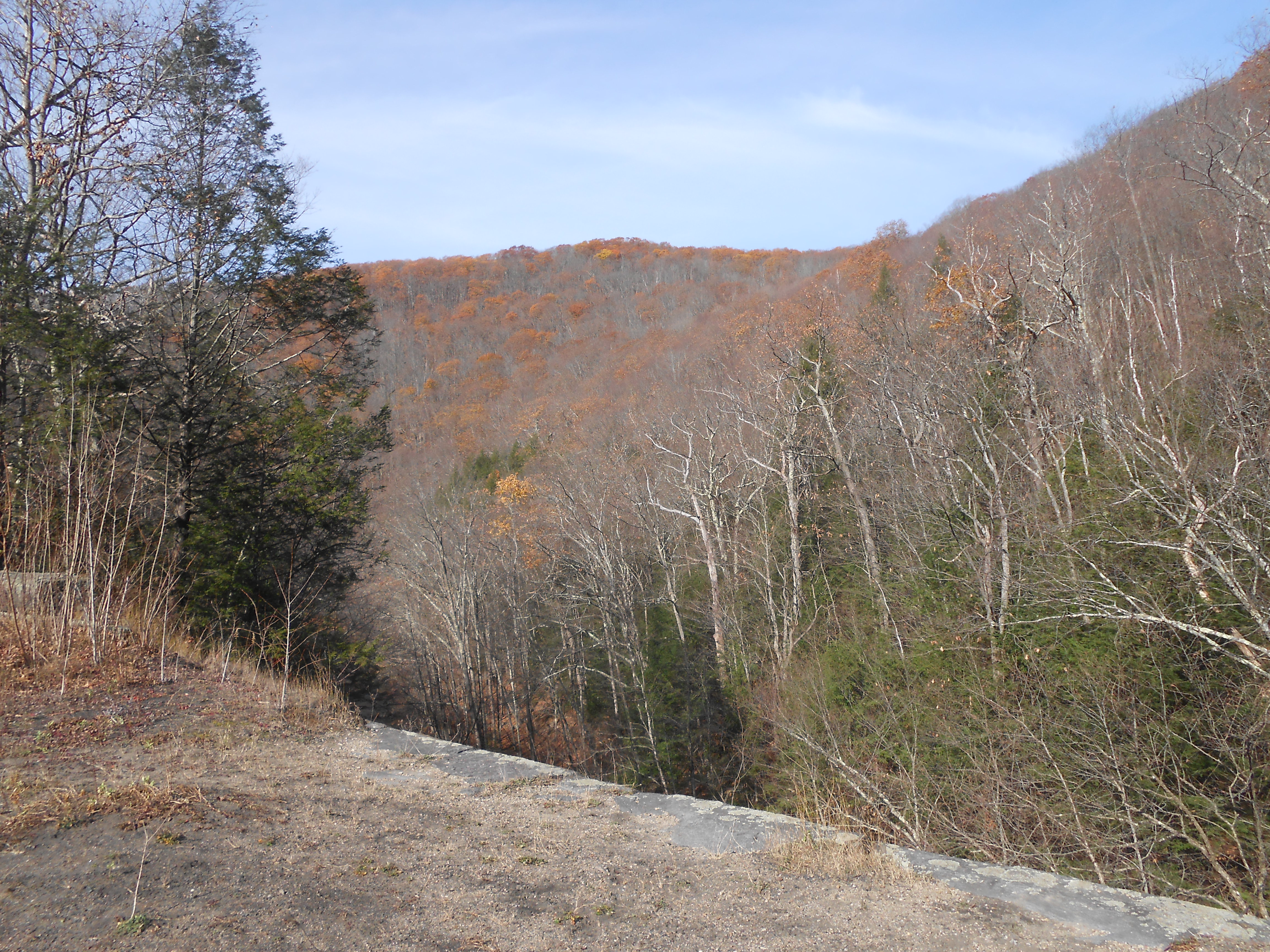
 Last year there was water, shoreline, road, rocks and trees. This year, there was water, rocks, and trees. We were flooded out in both directions of the road from the parking lot. Yang mentioned that we also rode our bikes here the day after Thanksgiving last year; so, I commented that unless we had paddle boats, we weren’t doing any paddling here this year! Disappointed, I still managed to get some nice shots of foliage and water, as you can see. Yang had another idea, which also had been percolating in my head. We hopped in the car and headed just across the nearby border for Heublein Tower on Talcott Mountain in Connecticut! (If you want to get a look at what we saw at Colbrook last year, click here for my earlier blog .) Last year there was water, shoreline, road, rocks and trees. This year, there was water, rocks, and trees. We were flooded out in both directions of the road from the parking lot. Yang mentioned that we also rode our bikes here the day after Thanksgiving last year; so, I commented that unless we had paddle boats, we weren’t doing any paddling here this year! Disappointed, I still managed to get some nice shots of foliage and water, as you can see. Yang had another idea, which also had been percolating in my head. We hopped in the car and headed just across the nearby border for Heublein Tower on Talcott Mountain in Connecticut! (If you want to get a look at what we saw at Colbrook last year, click here for my earlier blog .)
A little on Heublein Tower. Heublein was the third tower to stand on Talcott  Mountain, built by German-born, American businessman from Hartford, Gilbert Heublein, While hiking the mountain with his fiancee, he promised her “a castle on a mountain,” keeping his promise after their marriage by constructing this tower. The edifice, which contained bedrooms on all but the pinnacle, a spacious ground-floor living room and foyer, dining room; second floor sun room, an elevator, and a ballroom on the glassed-in top floor was completed by 1929. Here, the Heubleins relaxed in their summer home, inviting guests and holding events that drew the cream of Hartford’s social crop. Heublein died in 1937, with his building falling out of use until bought in 1943 by The Hartford Times. Once again, it became the place to be for social events with celebrities of the era in attendance, including Tallulah Bankhead! Eventually, it was let slide by the Times and nearly bought by developers, until saved by the group Save Talcott Mountain. Now the mountain and the Tower are open to the public for hiking and viewing, as the area has become a state park. It’s a wonderful place to enjoy nature and some unique architecture. For more details on the Tower and the park, click here for the web site. Mountain, built by German-born, American businessman from Hartford, Gilbert Heublein, While hiking the mountain with his fiancee, he promised her “a castle on a mountain,” keeping his promise after their marriage by constructing this tower. The edifice, which contained bedrooms on all but the pinnacle, a spacious ground-floor living room and foyer, dining room; second floor sun room, an elevator, and a ballroom on the glassed-in top floor was completed by 1929. Here, the Heubleins relaxed in their summer home, inviting guests and holding events that drew the cream of Hartford’s social crop. Heublein died in 1937, with his building falling out of use until bought in 1943 by The Hartford Times. Once again, it became the place to be for social events with celebrities of the era in attendance, including Tallulah Bankhead! Eventually, it was let slide by the Times and nearly bought by developers, until saved by the group Save Talcott Mountain. Now the mountain and the Tower are open to the public for hiking and viewing, as the area has become a state park. It’s a wonderful place to enjoy nature and some unique architecture. For more details on the Tower and the park, click here for the web site.
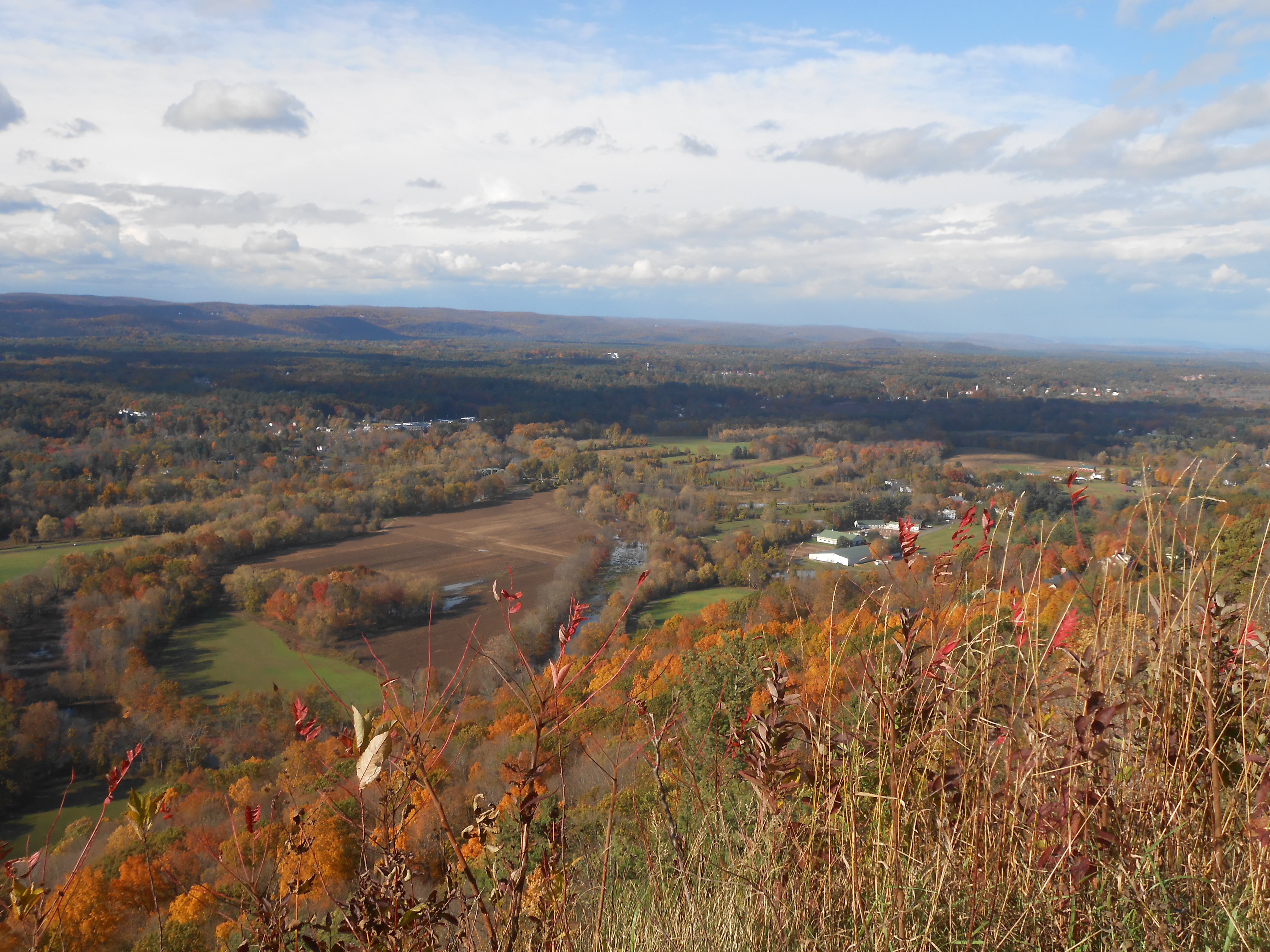
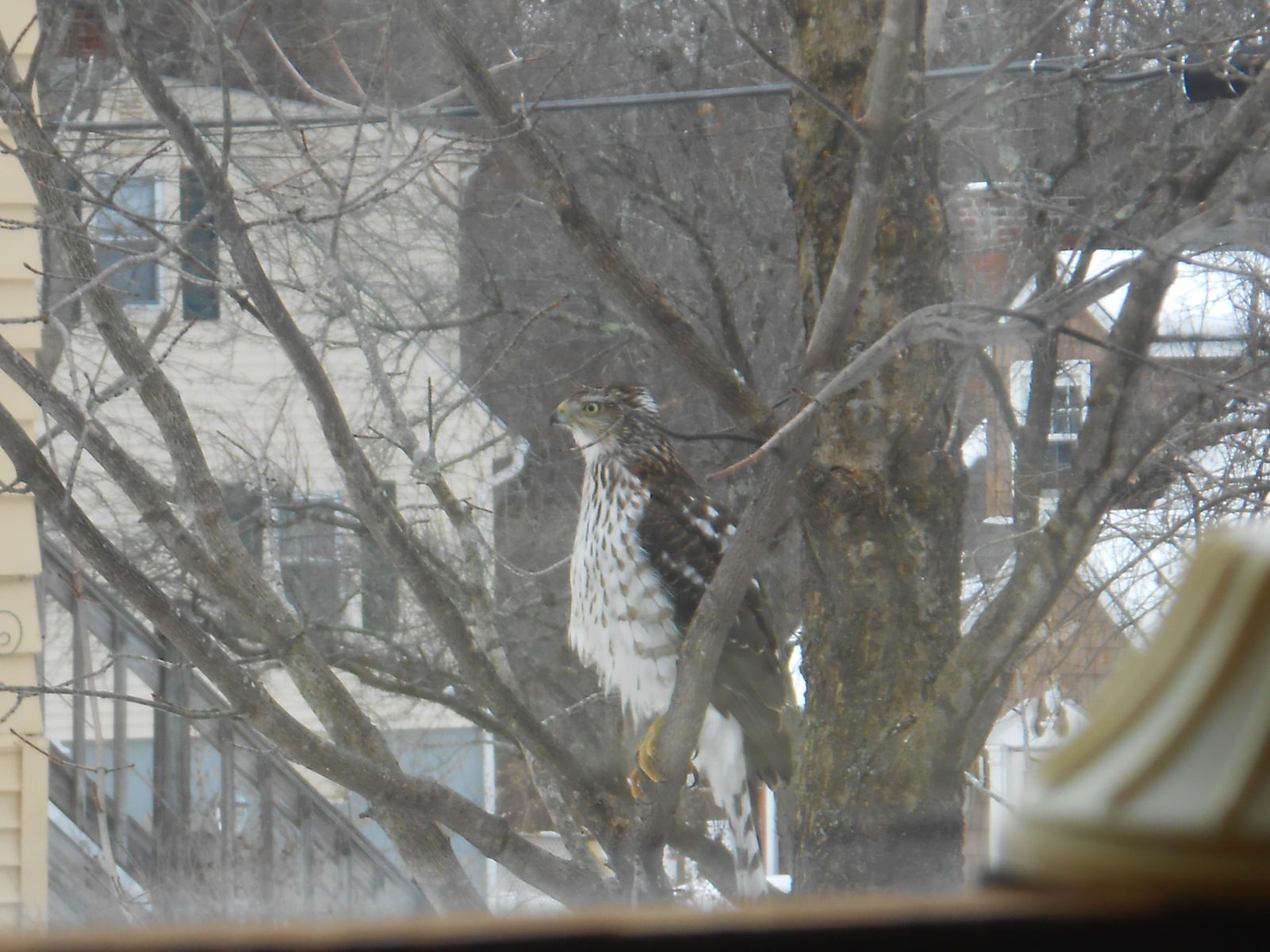
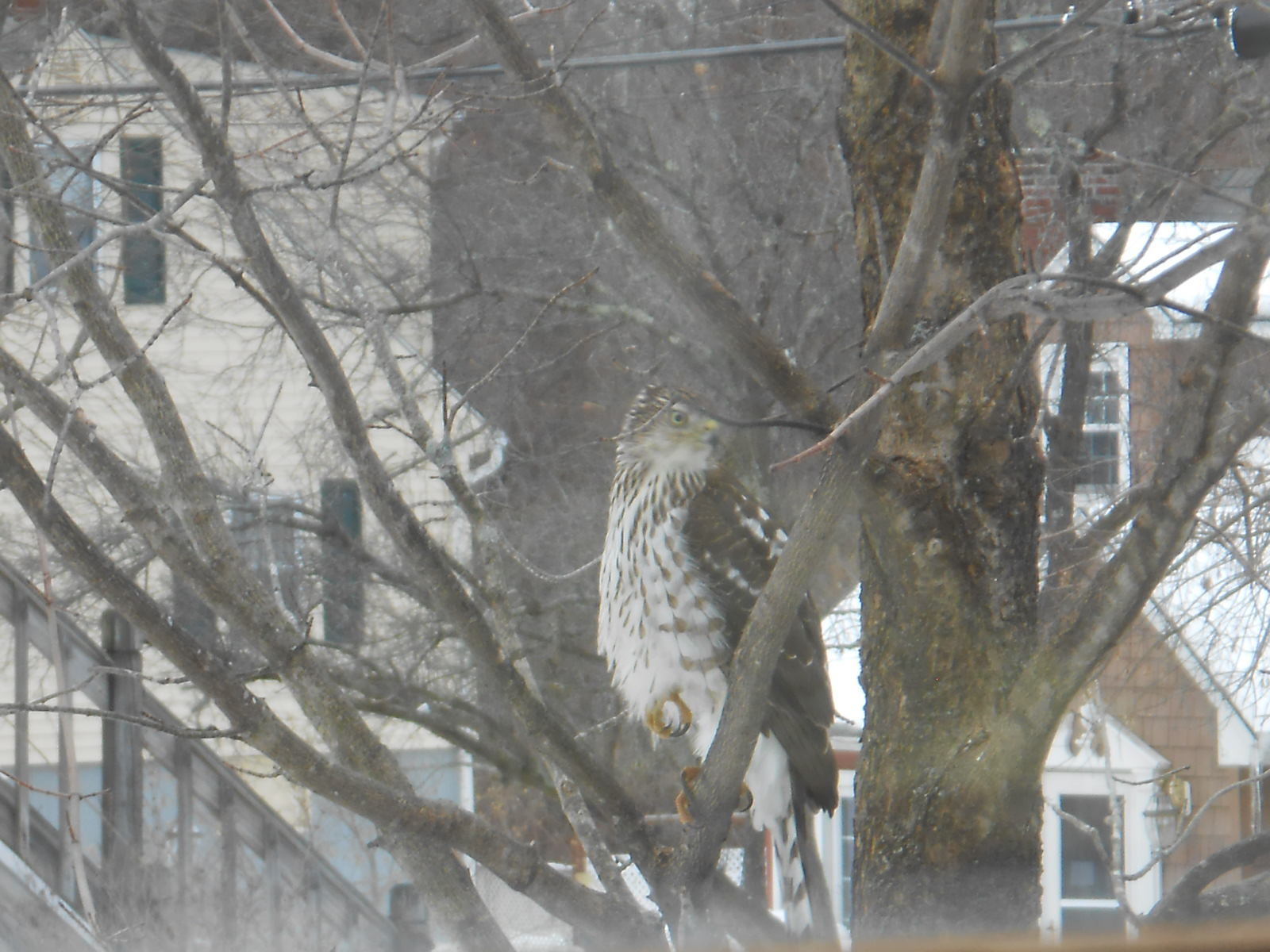
 Hiking up the mountain isn’t too bad a hike at all. There are several trails to get to the Tower. The most popular one is a little steep at first, through autumn woods, but there are benches along the way if you’re out of shape and need a rest. We were in good enough shape not to! Then, you come out of the woods and onto a ridge overlooking the valley below. The view along this ridge is wonderful, and you might even see a hawk as we did! Some great overlooks. Hiking up the mountain isn’t too bad a hike at all. There are several trails to get to the Tower. The most popular one is a little steep at first, through autumn woods, but there are benches along the way if you’re out of shape and need a rest. We were in good enough shape not to! Then, you come out of the woods and onto a ridge overlooking the valley below. The view along this ridge is wonderful, and you might even see a hawk as we did! Some great overlooks.
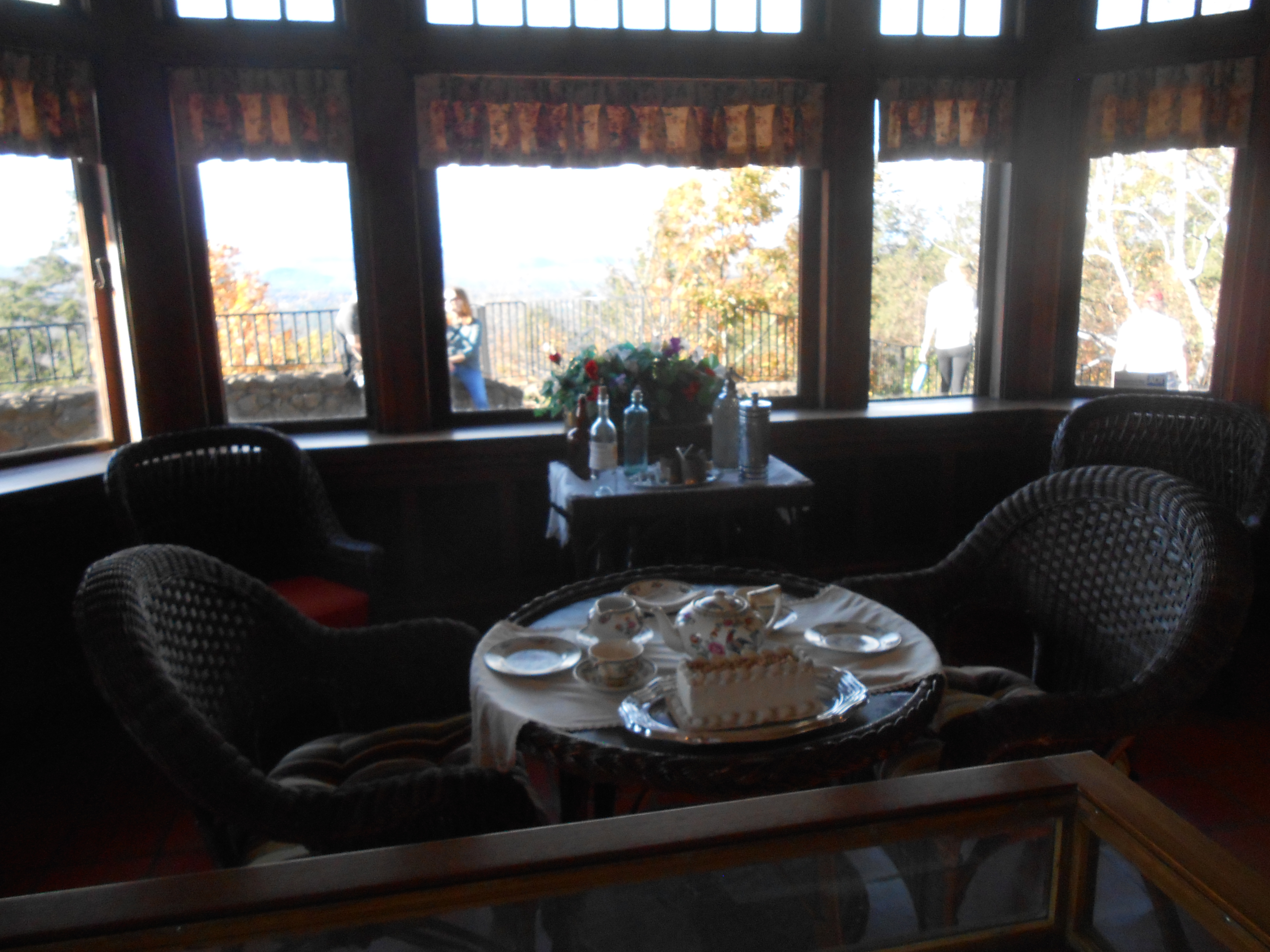
 The Tower itself is quite a treat! This old photo shows what the foyer and living room The Tower itself is quite a treat! This old photo shows what the foyer and living room 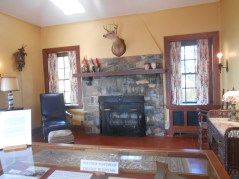 originally looked like. My shot lets you see an updated in-color version. The furnishings have been carefully assembled to approximate the style and taste of the original era. Though I’m not sure I would have wanted a big deer head on my wall, I would have loved to relax before originally looked like. My shot lets you see an updated in-color version. The furnishings have been carefully assembled to approximate the style and taste of the original era. Though I’m not sure I would have wanted a big deer head on my wall, I would have loved to relax before 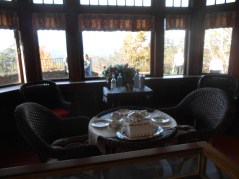 that fireplace in a comfy chair or to play card games with friends on a crisp fall evening, with coffee or tea and scones for sustenance. And how about this nook by the window that looks out over a gorgeous mountain landscape, cascading fall colors into the valley below? How’s that for having breakfast or an afternoon tea? I wonder what flavor that cake is on the table? that fireplace in a comfy chair or to play card games with friends on a crisp fall evening, with coffee or tea and scones for sustenance. And how about this nook by the window that looks out over a gorgeous mountain landscape, cascading fall colors into the valley below? How’s that for having breakfast or an afternoon tea? I wonder what flavor that cake is on the table?
 Or maybe I’d take tea, solo or with companions, on this wonderful sun porch, warm with solar emanations? Or maybe I’d take tea, solo or with companions, on this wonderful sun porch, warm with solar emanations?  Could also be a great place to settle down and read or listen to the radio programs back in the day. And the view from up here ain’t bad, either. Could also be a great place to settle down and read or listen to the radio programs back in the day. And the view from up here ain’t bad, either.
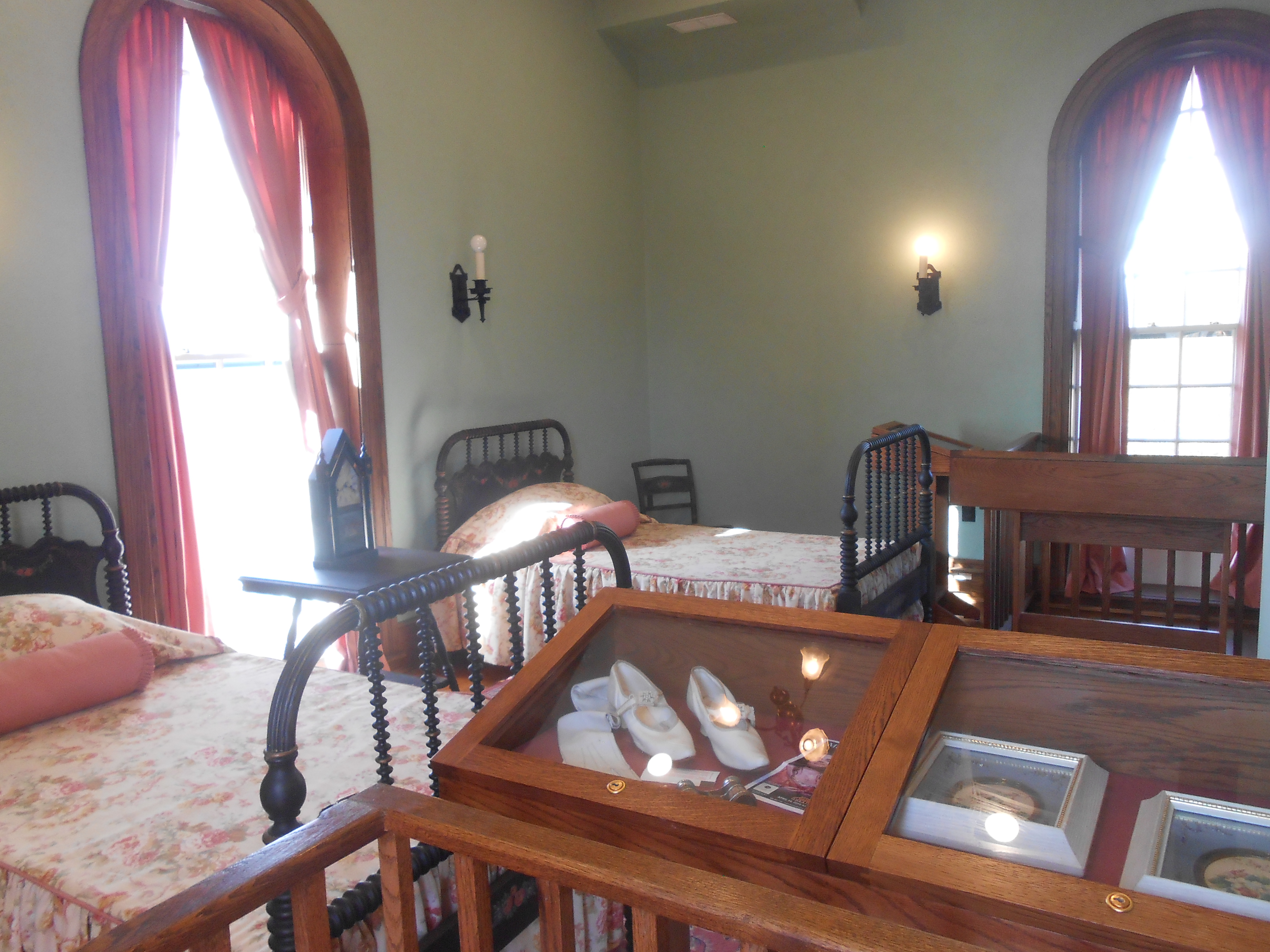
How about some of those bedrooms? Not necessarily luxurious, but roomy   enough. Plenty of sunlight during the day, should you wish to retire here. Pleasant, if not elaborate, decor. But you’re on a rustic retreat, so who needs frills? Though this set up is far from camping on the cold, hard New England bedrock. And, oh, those views when you get up in the morning! Imagine the rising sun setting aflame these fall colors! enough. Plenty of sunlight during the day, should you wish to retire here. Pleasant, if not elaborate, decor. But you’re on a rustic retreat, so who needs frills? Though this set up is far from camping on the cold, hard New England bedrock. And, oh, those views when you get up in the morning! Imagine the rising sun setting aflame these fall colors!
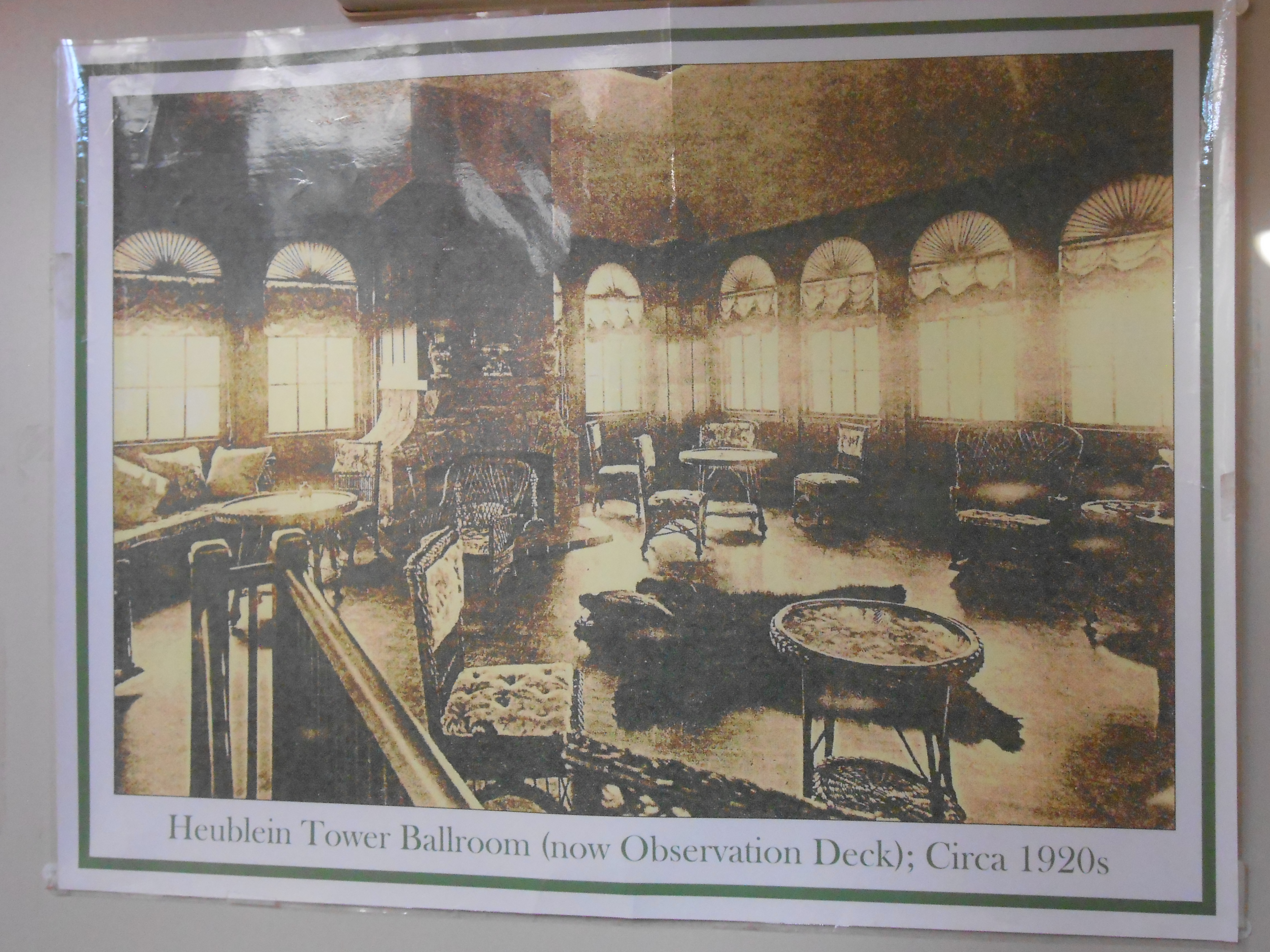
 One of the most interesting parts of the One of the most interesting parts of the  Tower is the observation deck. Originally, this area was known as the ballroom, as you can see from this old image of the earlier set up. Wouldn’t it be grand to dance away the evening on these hard wood floors? It could be a real Stardust Ballroom, with the twinkling lights of the darkened heavens glittering through the tall windows of all four sides of the room. Of course, you’d have to move away all that furniture. Great place for a big party! Tower is the observation deck. Originally, this area was known as the ballroom, as you can see from this old image of the earlier set up. Wouldn’t it be grand to dance away the evening on these hard wood floors? It could be a real Stardust Ballroom, with the twinkling lights of the darkened heavens glittering through the tall windows of all four sides of the room. Of course, you’d have to move away all that furniture. Great place for a big party!
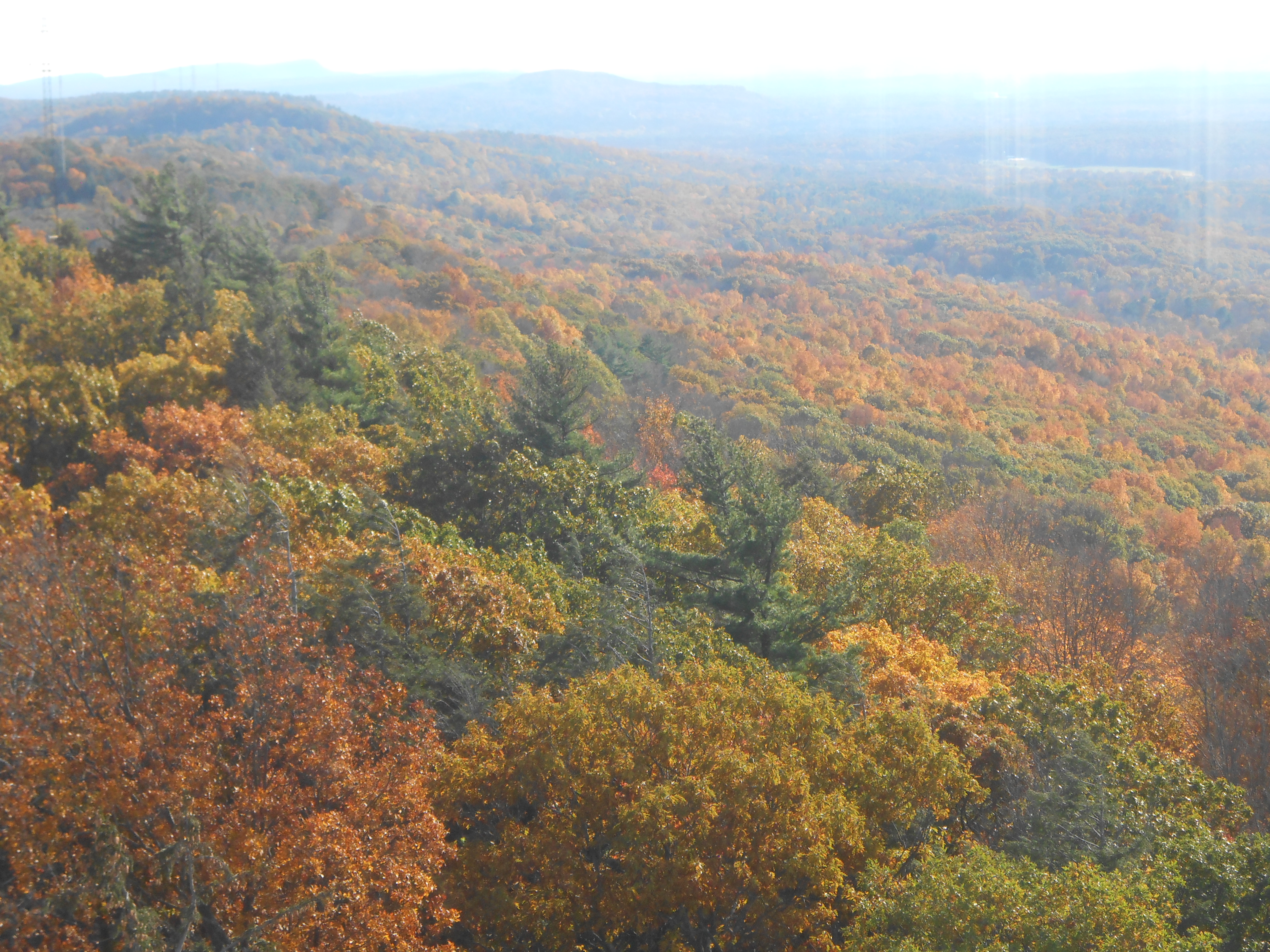
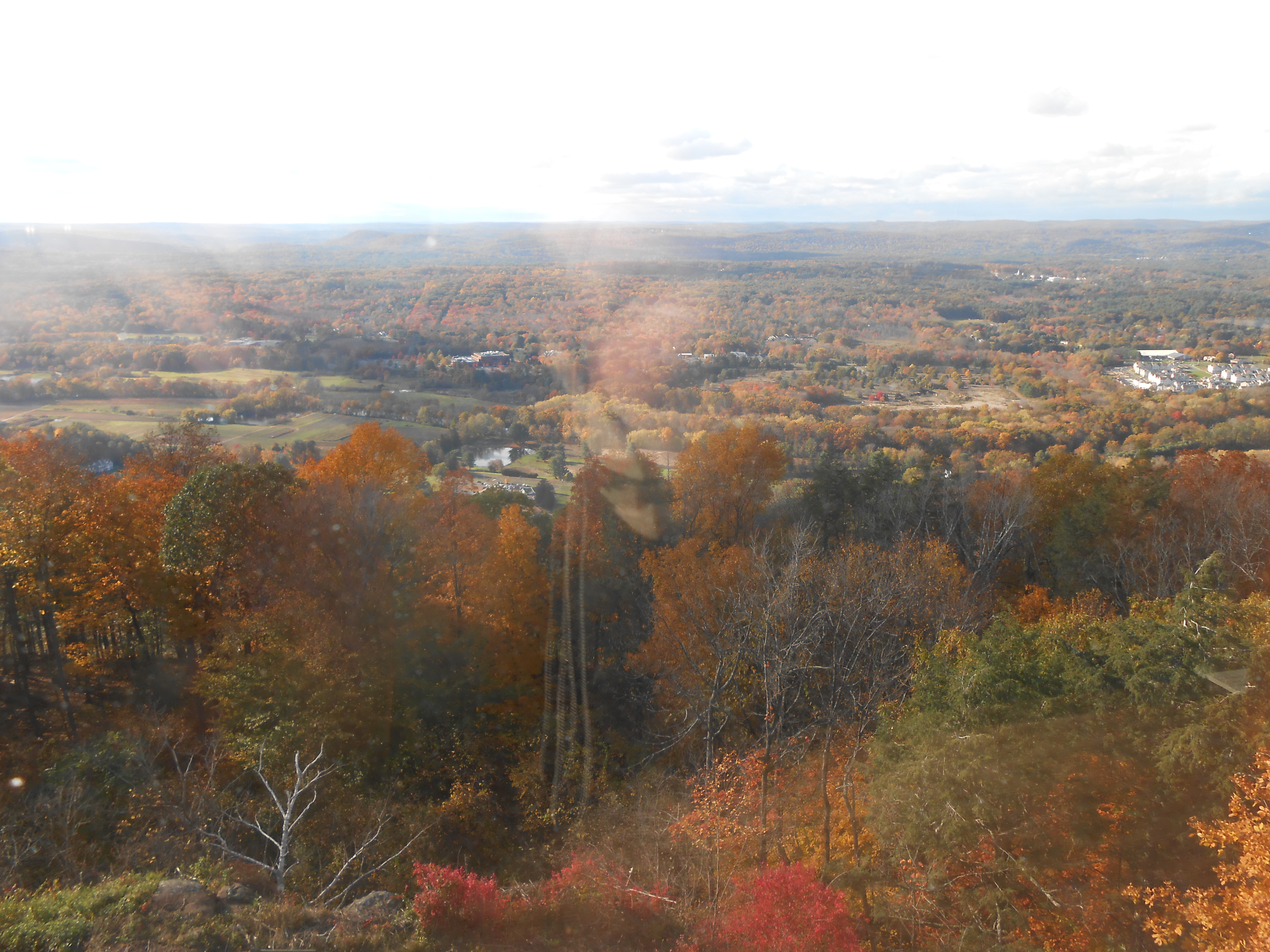
Yet there’s no need to wait for evening to fall in love with the observation deck. During the day, you get views for miles, across Connecticut and into Massachusetts – an especially fine sight in the autumn, when the hills burst with colors. Feast your eyes!


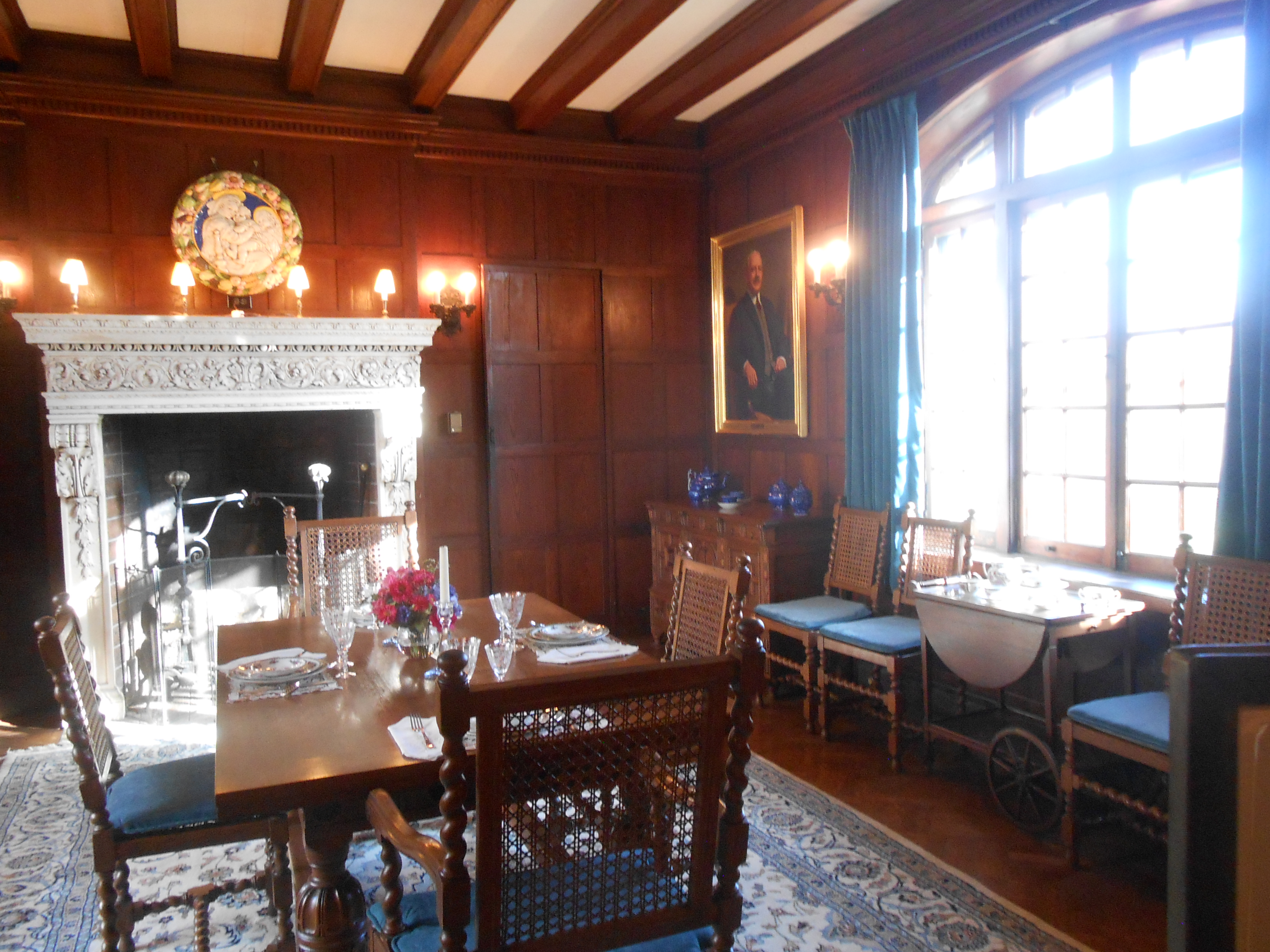
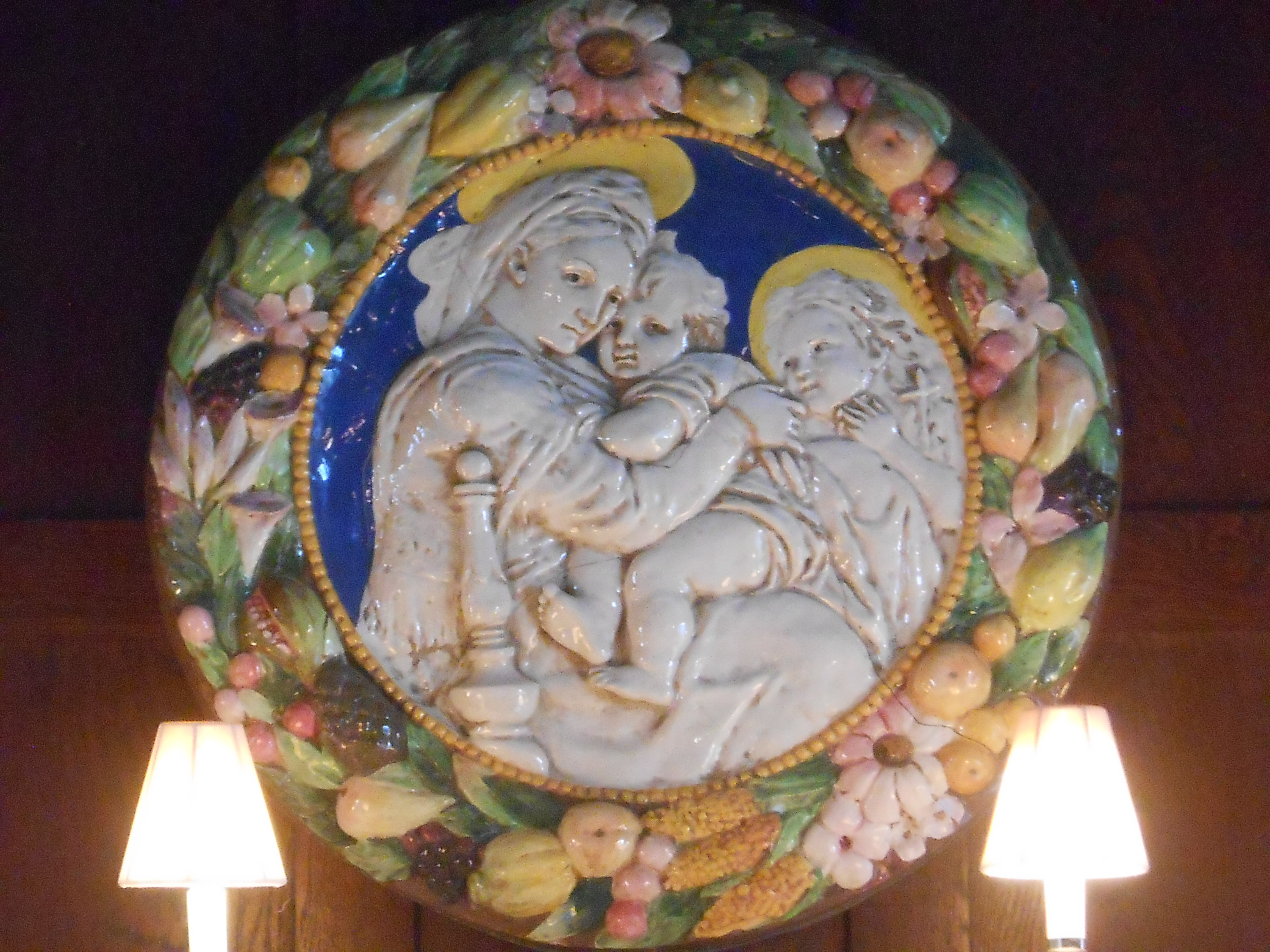
 Finally, returning to the first floor, towards the rear of the building, you find the formal dining room, gorgeous in wood paneling, dark wood furniture, marble fireplace, exquisite Persian rug, elegant china and cutlery, Finally, returning to the first floor, towards the rear of the building, you find the formal dining room, gorgeous in wood paneling, dark wood furniture, marble fireplace, exquisite Persian rug, elegant china and cutlery,  and painted medallion above the fireplace. How about the gorgeous beamed ceilings? It’s fun to notice that the door to the butler’s pantry is hidden in the shape of the paneling on one side of the fireplace, while a closet is similarly hidden on the other. Light pours in the windows. and painted medallion above the fireplace. How about the gorgeous beamed ceilings? It’s fun to notice that the door to the butler’s pantry is hidden in the shape of the paneling on one side of the fireplace, while a closet is similarly hidden on the other. Light pours in the windows.

Now, I ask you, would this not be the perfect setting for a mystery? This is  how the UConn campus at Avery Point inspired me for Always Play the Dark Horse. So, how should we work this? Jessica and James are invited for a weekend by the owner, a mysterious sort who seems to know more about them than they about him or her? Or maybe it is someone they know, or think they do. Should guests start dropping like flies over a dinner in that elegant dining room? Should Jessica settle down to a quiet read on the sun porch, only to be interrupted by a figure sailing past to his/her death below? Should Liz also be on hand? What do you think? how the UConn campus at Avery Point inspired me for Always Play the Dark Horse. So, how should we work this? Jessica and James are invited for a weekend by the owner, a mysterious sort who seems to know more about them than they about him or her? Or maybe it is someone they know, or think they do. Should guests start dropping like flies over a dinner in that elegant dining room? Should Jessica settle down to a quiet read on the sun porch, only to be interrupted by a figure sailing past to his/her death below? Should Liz also be on hand? What do you think?
|

























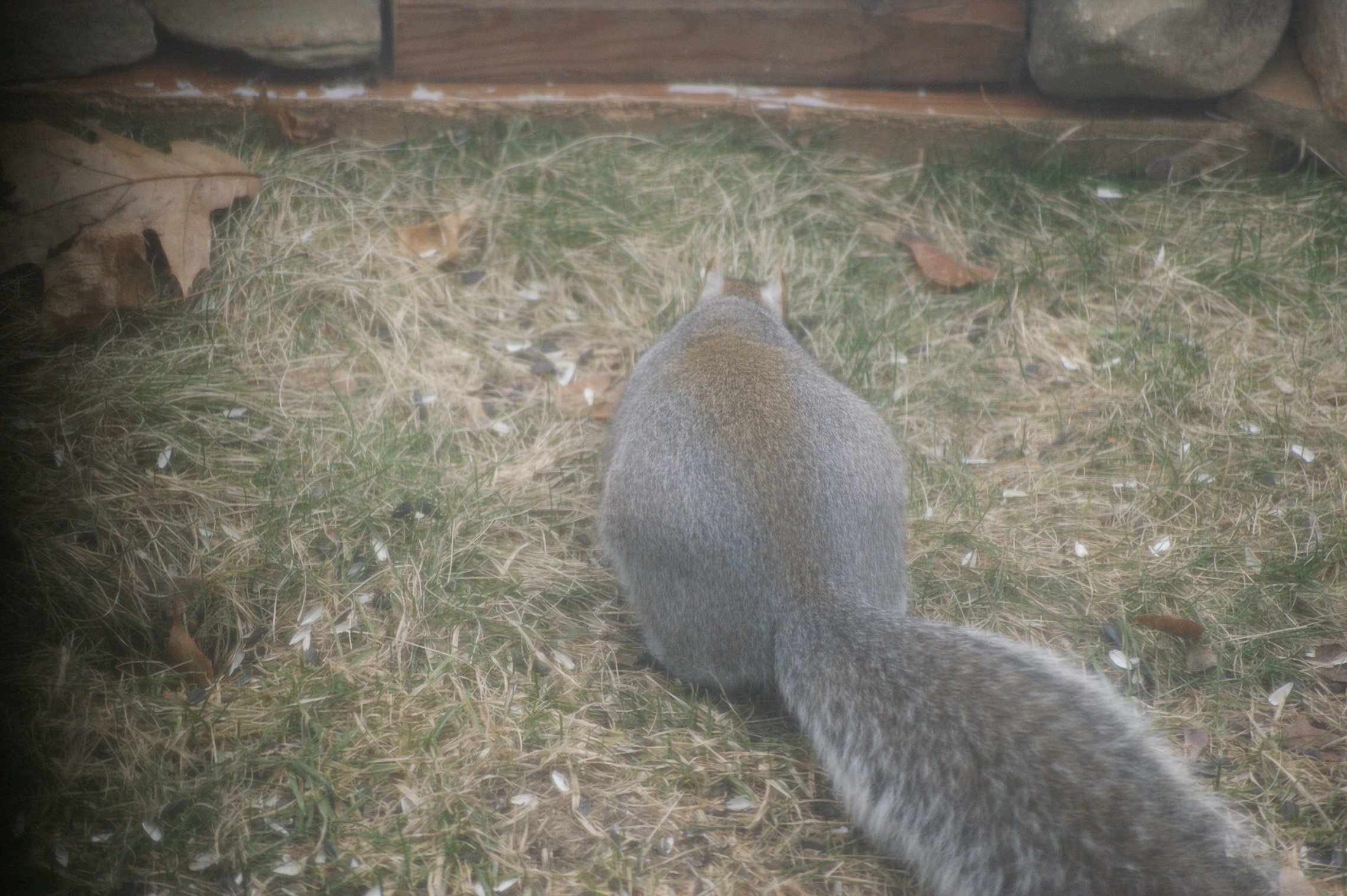
 I haven’t had a chance to do a lot of photography around the yard lately, since I’ve been so busy with writing and traveling. However, we do have many neat critters to see. We still have many interesting birds, for
  example, a turkey for several days, visiting around 5:00 in the afternoon. Rosalind noticed the turkey first and tipped me off. so, we got some nice shots of her.
 The cardinals have been bringing their kids to visit. I see plenty of Mr. and Mrs. Cardinal, but I’m not sure how many adolescents they have because they are all olive colored with black beaks (The beak helps you distinguish kids from female adults). I only see one baby at a time, so I don’t know if it’s the same one repeatedly or different Cardinal kiddos every time. Last year, the parents brought quite a few to the feeders, and
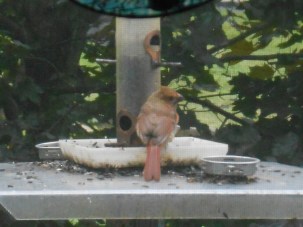 we had about six males and females in the winter and through the spring. Then, we only seemed to have two adults. My guess is the last generation of kids moved off to college or got a job and nest in a new territory. What do you think, Cardinal experts? Anyway, this kid is pretty aggressive. He was on the feeder with a female Rosebreasted Grosbeak, who had scared every other birds off, including Mommy Cardinal. Not this kid! He kept pecking right back at her for some time.
 Speaking of Grosbeaks, we have at least three males (whom I’ve seen all at the same time), but I’m not sure how many females. I have noticed that I do see a pair show up frequently, though I usually see a male or two show up
 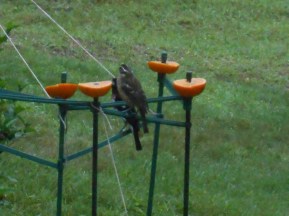 without the wife. Occasionally, I’ve seen a female without the hubby. These two like to hang together on this particular feeder. They also decided to check out the oranges we put out for the Orioles as well.
 The catbirds used to come frequently in the beginning of the summer, then they disappeared, pretty much, for about a
  month. However, now they are BACK. And they are aggressively defending the suet, cocking up their black tails and showing off that red spot underneath. I’m glad to see them-and hear them call my name, “Sharon! Sharon!” There’s one outside my window right now!
 Anyway, let’s move on to a more enjoyable descent into darkness. Here’s a
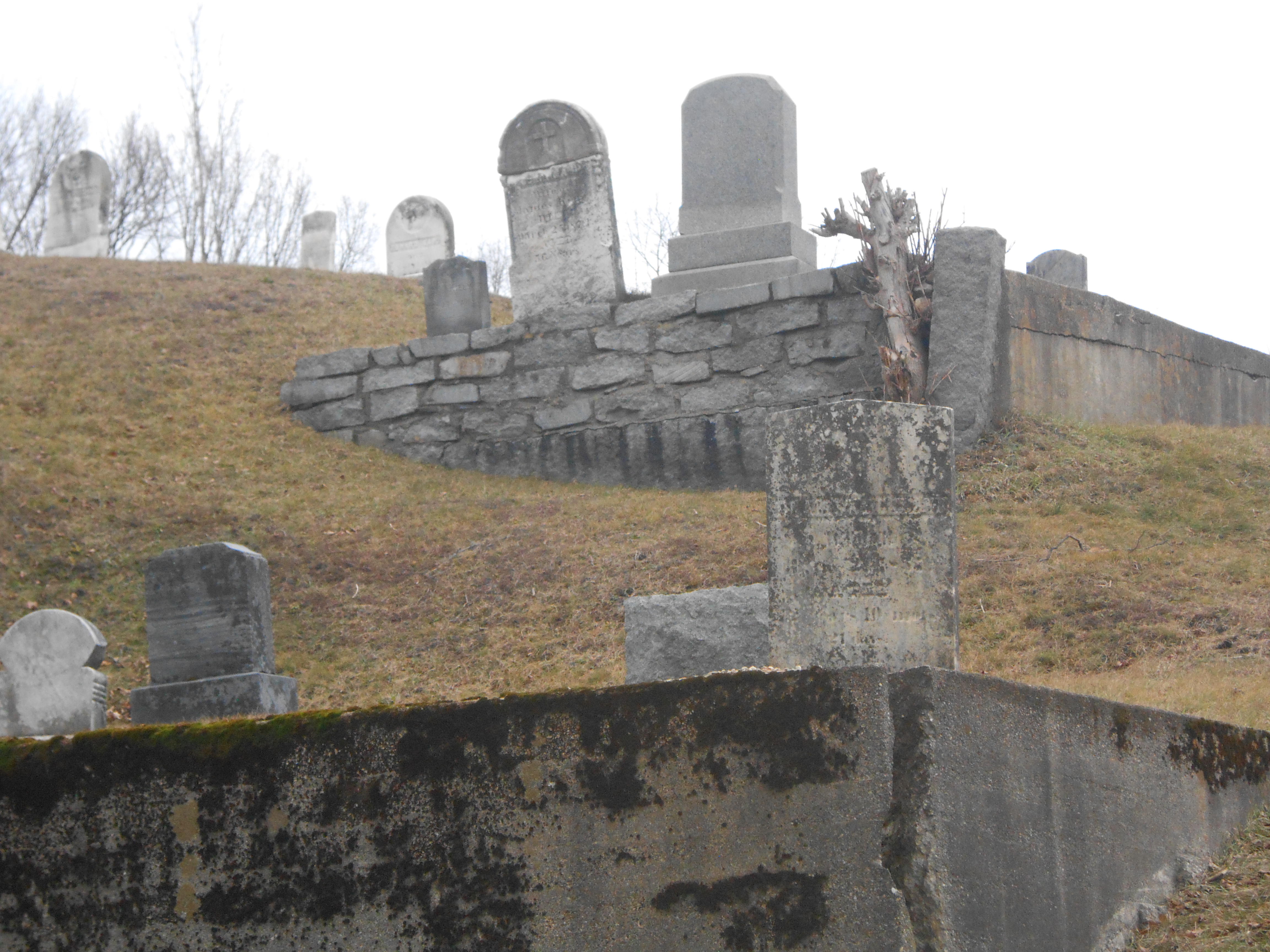
  last gasp at wintry images with Part 2 of my report on the Hillside Cemetery of North Adams. Across the street from the original portion of the graveyard, lonely mountains rise up to close you you in and the rest of the world out on this grey day.
 hillside. With the rolling slopes here, the graves, mostly 19th century, tilt and are almost upended as the ground has settled and shifted over the years-or is someone or something trying to push out?
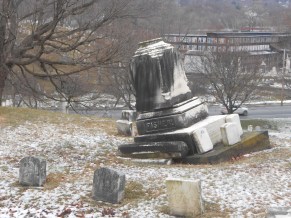
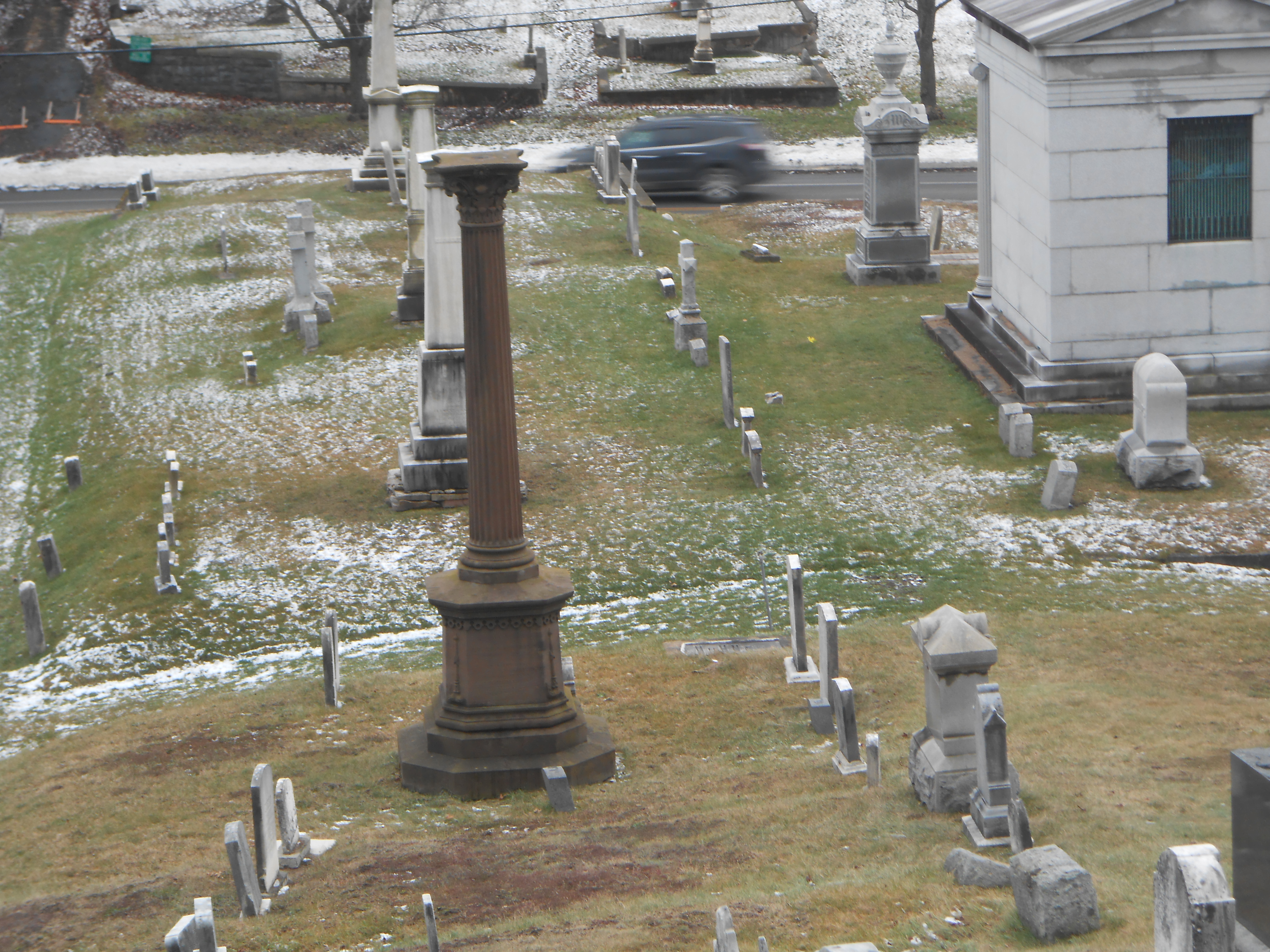
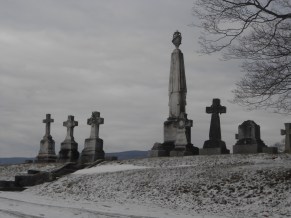 And those slopes are pretty darned high, too, with gravestones and monuments, bleakly, implacably towering upward from an earth both browned by autumn and frosted by snow.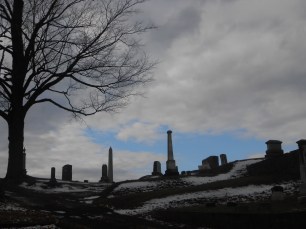
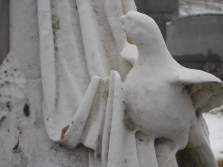 brutal western Massachusetts winds, rain,
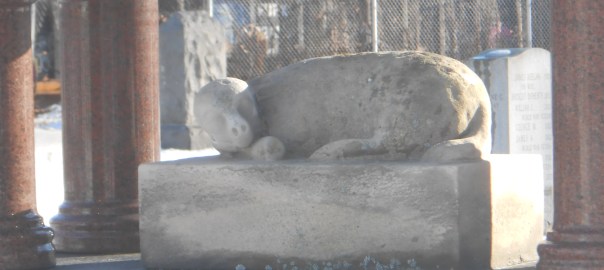
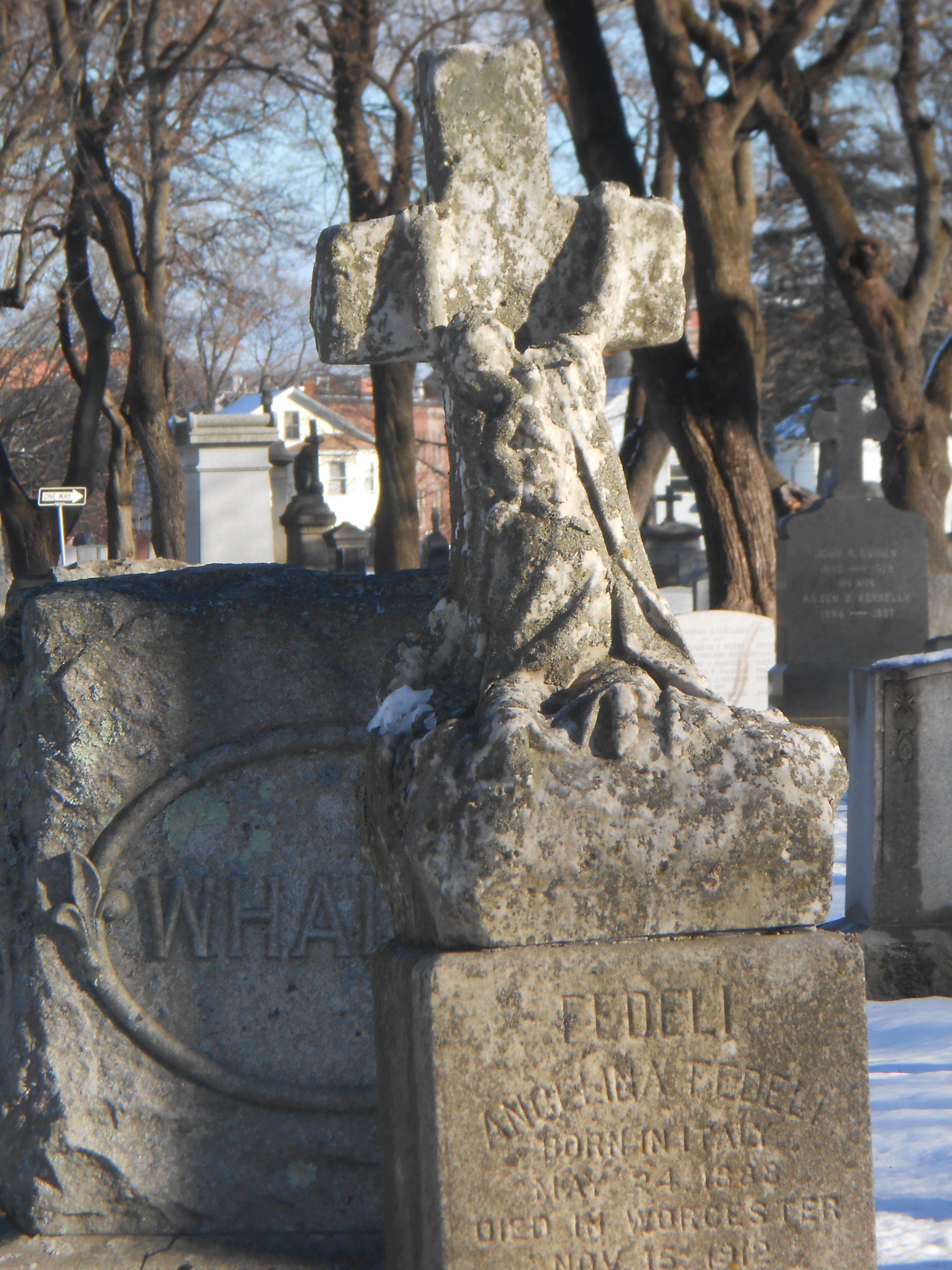
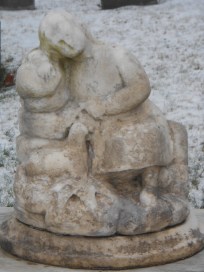 and snow have not been kind to them, gradually wearing them down to softened blurs in many cases. The dove embracing this shrouded cross has lost its distinctive features and now softly merges into the cross’s drapery. The child and the lamb, representing her innocence, have melted into the seat of broken rocks symbolizing her life cut too short, too soon. A
  relief that should have preserved a woman’s identity in endurable stone for eternity has blurred her features into gentle vagueness. Even her identity in the form of name, family, and birth and death dates have been smoothed away to soft whiteness. A book of life’s secrets
 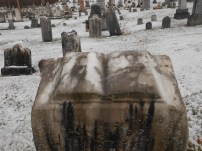 has subsumed its truths into a creamy blank of pages melted together, marked only by the stain of mold and decay. Or might this be an edition of the Necronomicon?
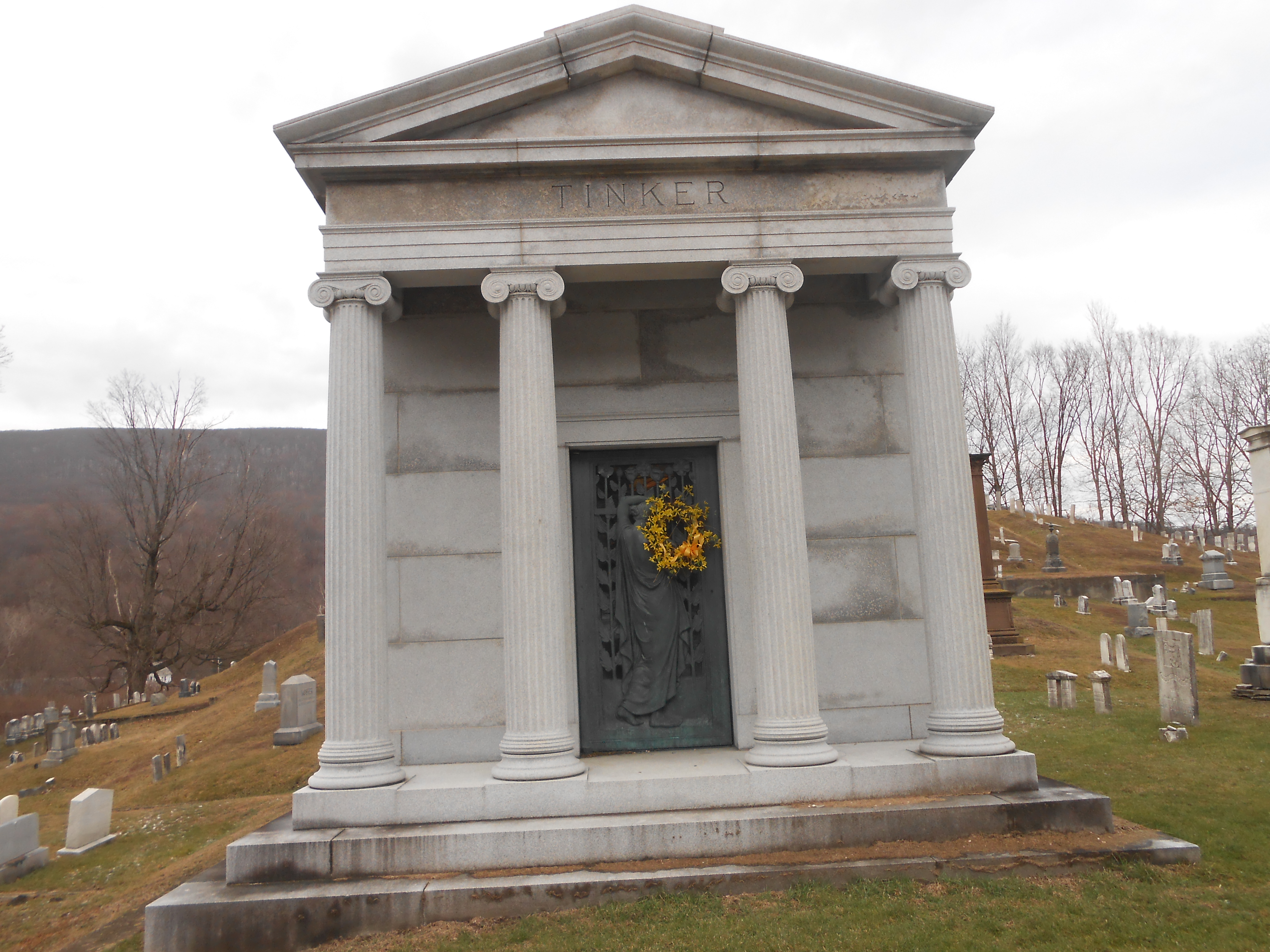
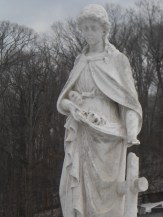 Of course there are also still striking images of angels and symbolic broken columns, some standing relentless against nature’s assault by winds, weather, and devouring by lichen and mold.

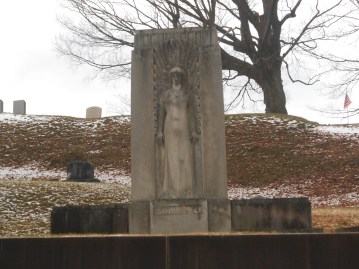 it is impressive, especially for the art deco angel guarding the resting bodies of the family beneath. There’s a wonderful starkness in its rising near the crest of the rolling hill, the dark tree grasping hungry branches at the sky beyond it.


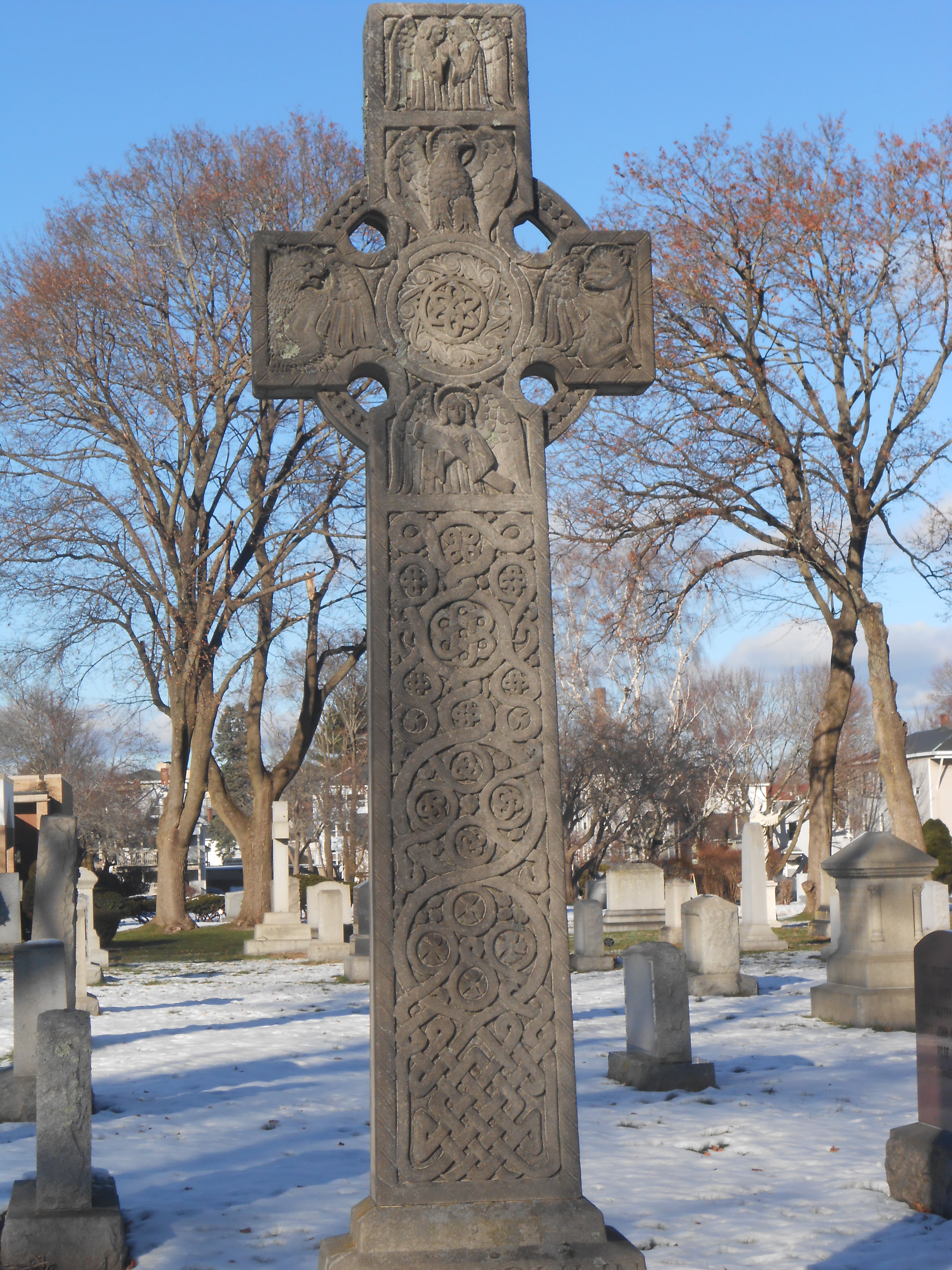


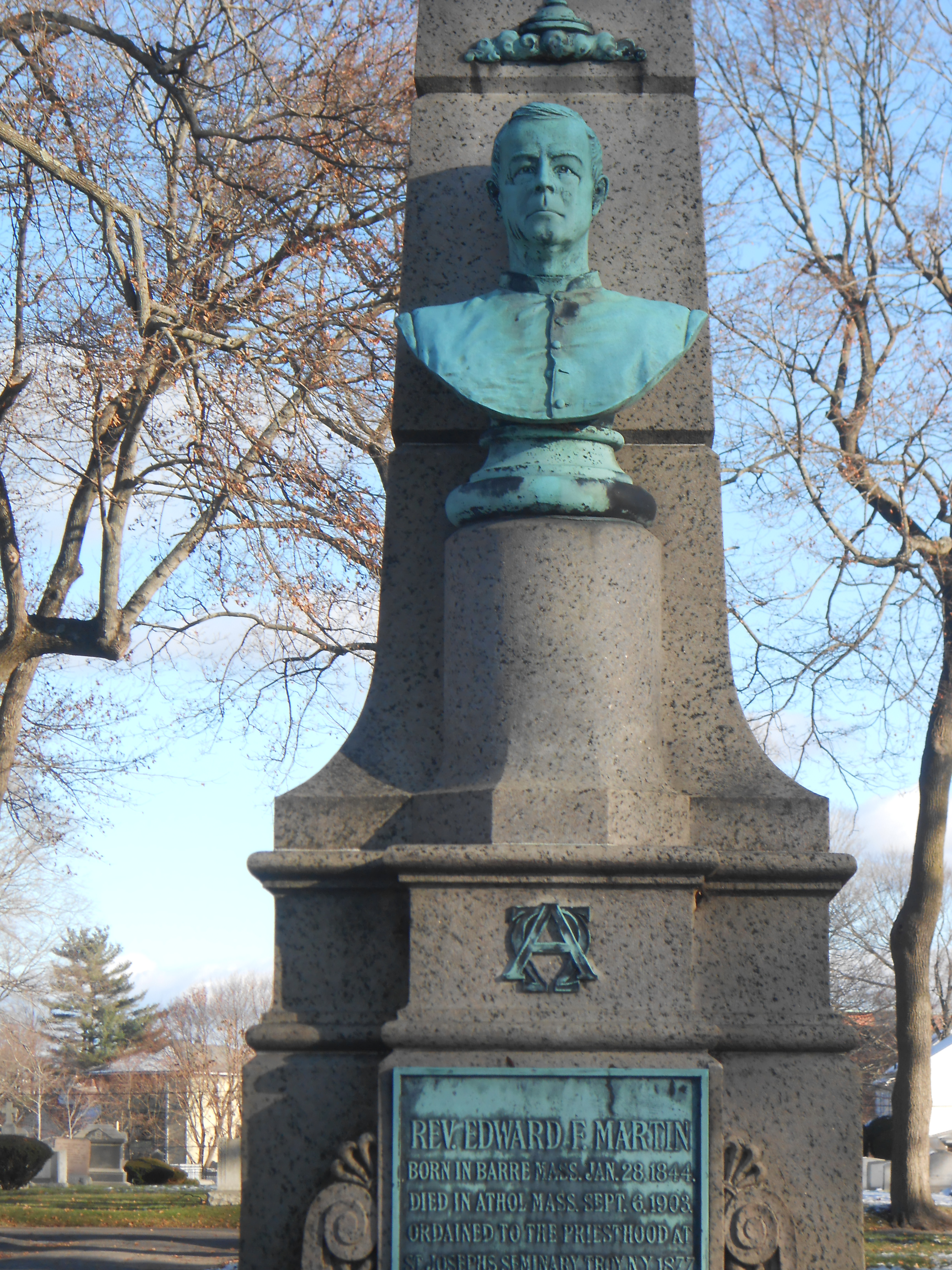
























 Sharon Healy-Yang