Tag Archives: New England

Research Follies

I recently saw this meme in my feed on FaceBook and said to myself, “Oh, how painfully true!”
You may plot out the most deliciously intricate and logical outline for your masterpiece.  Every piece may seem to interconnect beautifully in your initial set up; but, darn it, not only the devil is in the details but Belial, Beelzebub, Moloch, Asmodeous, Lucifer, and the whole gang are too!
Case in point, my current project, a sequel to Surprise! with the ironic working title Memories of You.  I knew where I wanted to move my main characters, scene to scene, but creating those scenes, developing them, dealing with new and tempting possibilities once I got started, that was another kettle of guppies – sometimes sharks, hammerheads!
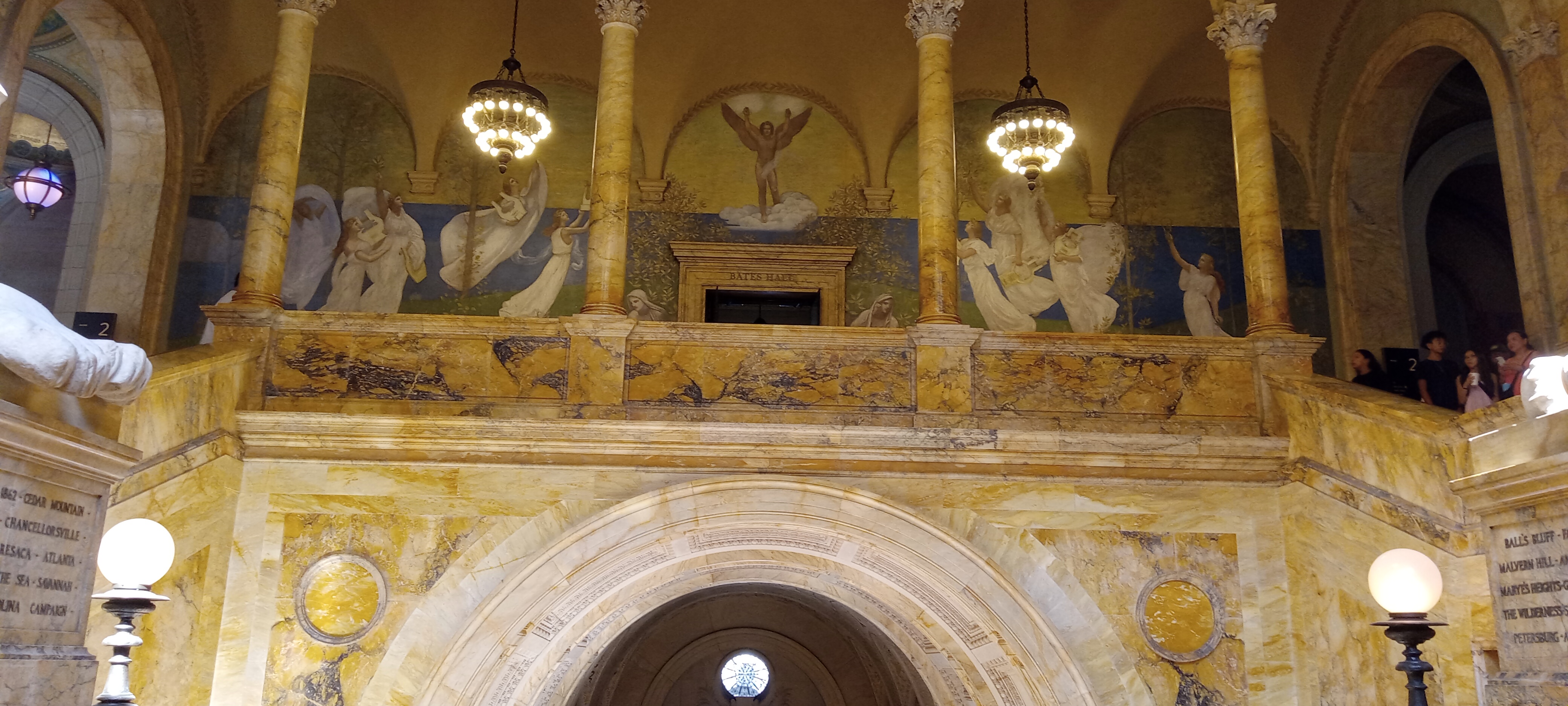
For example, I knew Vicki Westlake would clue in to some important information about a dangerous man from her veteran husband’s past while she was doing research in the Boston Public Library for a new mystery novel that she was planning.  Simple, then, kind of.  If I plunk her down in the library, I have to describe the library to create a genuine sense of place – except I hadn’t been doing research at the BPL for many years.  Field trip!
Off Yang and I went to that gorgeous receptacle of knowledge to take pictures and just drink in the impressive architecture as we explored the layout – part of which led me to a side room that would help me develop a new part of the story.  Problem solved.

Um, not exactly.  I was visiting the library in 2025; my story takes place in 1947.  Things change over the years.  So, off to the internet to find architectural plans and photos of the library that would work for the time period of Memories.  I even found a floor plan of the first and second floors! Side note:  I’m now really enjoying the FB group Boston Mass. Vintage.  It’s a great site to help me with future mid-century writing projects.


Another vital part of my outline hit a little bit of a “roadblock” as I moved to the end of “Memories,” where the two main characters journey to Maine in October 1947 in order to learn vital answers about the husband’s past in the war from his retired commanding officer.  Did you know that 1947 was known as the fall Maine burned, as massive wildfires swept through much of southern Maine, as well as other parts?  Can you get any more exciting than having your denouement occur in the midst of devastating, inexorable flames?
Piece of cake to write?  Um, no!  My heroine and spouse have to travel to a more northern part of Maine, so I have to figure out how they can get through southern Maine without being caught by fire but end up at their destination just as another blaze is heading for them, then be able to get out without being incinerated.  Fortunately, I have Joyce Butler’s Wildfire Loose, The Week Maine Burned, a brilliantly thorough and exciting recounting of when and where the fires started, how they progressed with speed and almost omnipotence, how they were fought, and how people escaped by the skin of their teeth (sometimes not).  So, in order to time my main characters’ journey from Boston to Maine, I created a chart of where the fire was each day, as well as whipping out a road map of Maine and blocking off in pen the areas where the fires blazed through, based on Butler’s citing the towns affected.  I also had to factor in the time their trip would take considering the lower travel speeds of the 1940s, as well the routes available.  Fortunately, I passed fourth grade math.
Of course, I also had to use a roadmap to chart my characters’ route from Boston to their destination in Maine, which creates problems of its own.  Today, we can shoot straight up Interstate 95 and save scads of time.  Unfortunately, no  95 in 1947.  I had to look over the routes listed on the map, determine if they were state roads, and find out if they existed in 1947.  Joyce Butler’s book provides plenty of helpful references to routes in existence, as well as does  the internet on history of specific routes.  The internet was surprisingly unhelpful in providing road maps from the time period – unless I wanted to shell out to ebay or some other source.  Thanks to Yang for looking over routes, sharing research, and discussing driving.
So, all I need to do now is pick a town near a fire and away we go – um, not quite.  For reasons related to the plot, the town couldn’t be southern Maine – not isolated enough.  Some further north or west?  Well, the time frame wouldn’t work.  When those fires got going my characters would have been stalled  by the big blazes across the southern part of the state.  Anson almost made it as guest star town.  My solution?  The same  that many other authors choose:  make up your own town and date for its threatening forest fire.  Just make it fit the general setting where you locate it.  So, Amberoid, Maine was born.  How do you like the name?  An amberoid is actually synthesized gemstone containing crushed amber.  It’s also the name of the first horse I picked in the Triple Crown races.  He did not run in 1947.  I’m not that old.
So, anytime you think all a writer has to do is sit down and write – Ho boy, have you got another thing coming!
Intrigued?  Well, first, you should read Surprised!  Check it out here.

Images: Every effort has been made to ensure there is no copyright infringement in the use of images.  These images are for education and entertainment only.  If you feel your copy right has been infringed, let me know and I will remove the image.  syang@worcester.edu

Hammerhead shark:  Hammerhead Shark (28776238172).jpg:  Wikki Commons https://commons.wikimedia.org/wiki/File:Scalloped_Hammerhead_Shark_Sphyrna_Lewini_%28226845659%29.jpeg

Modern Photos of BPL: author’s collection

Floor Plan of BPL: The Urban Imagination https://hum54-15.omeka.fas.harvard.edu/items/show/672

Older photos of  Bates-Mckim Reading Hall in BPL  https://lostnewengland.com/2016/07/bates-hall-boston-public-library/

Image of Maine 1947 fire from https://www.maine.gov/dacf/mfs/forest_protection/1947_fire.html (origin Guy P. Gannett Newsletters in Maine)

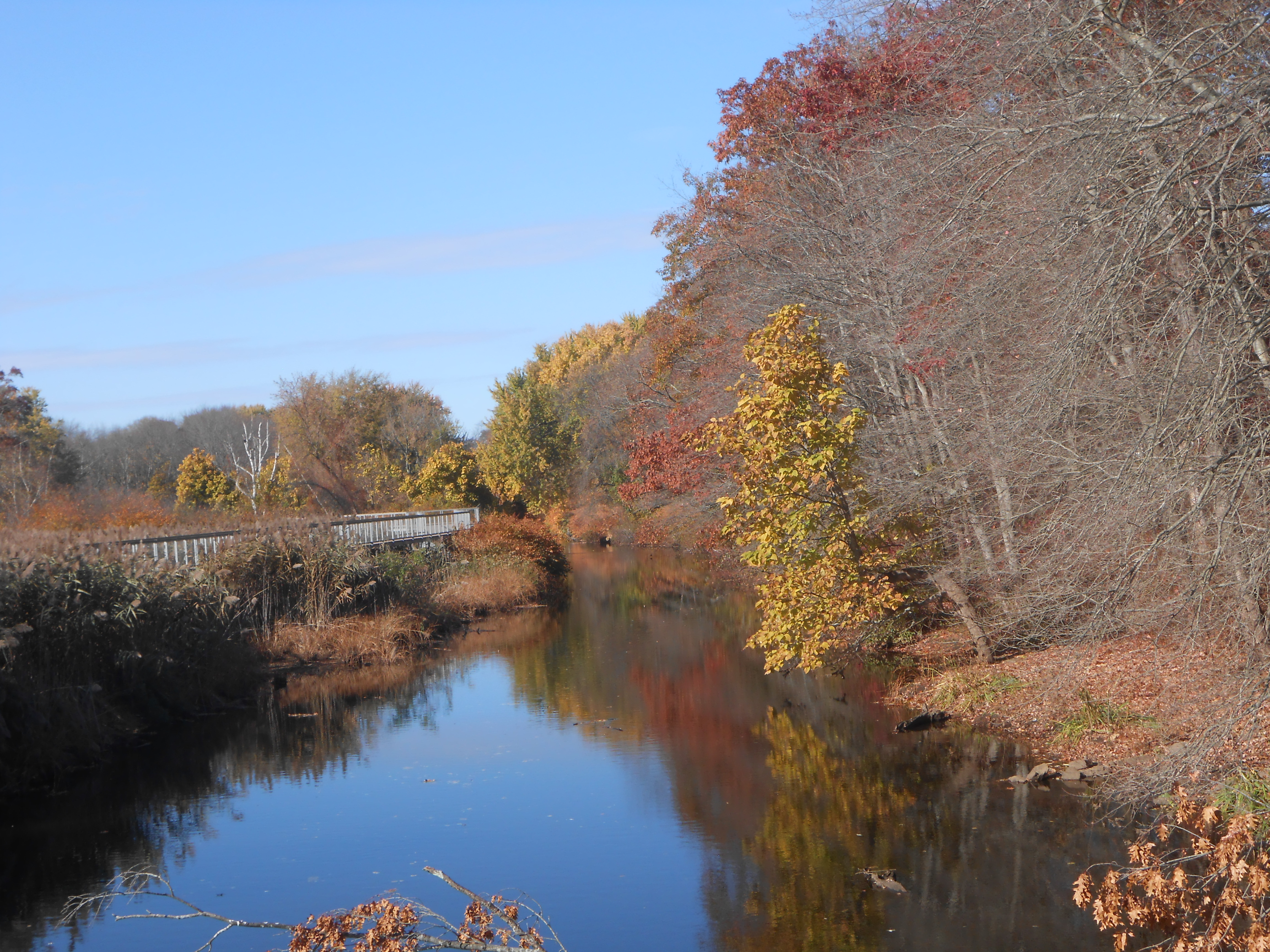
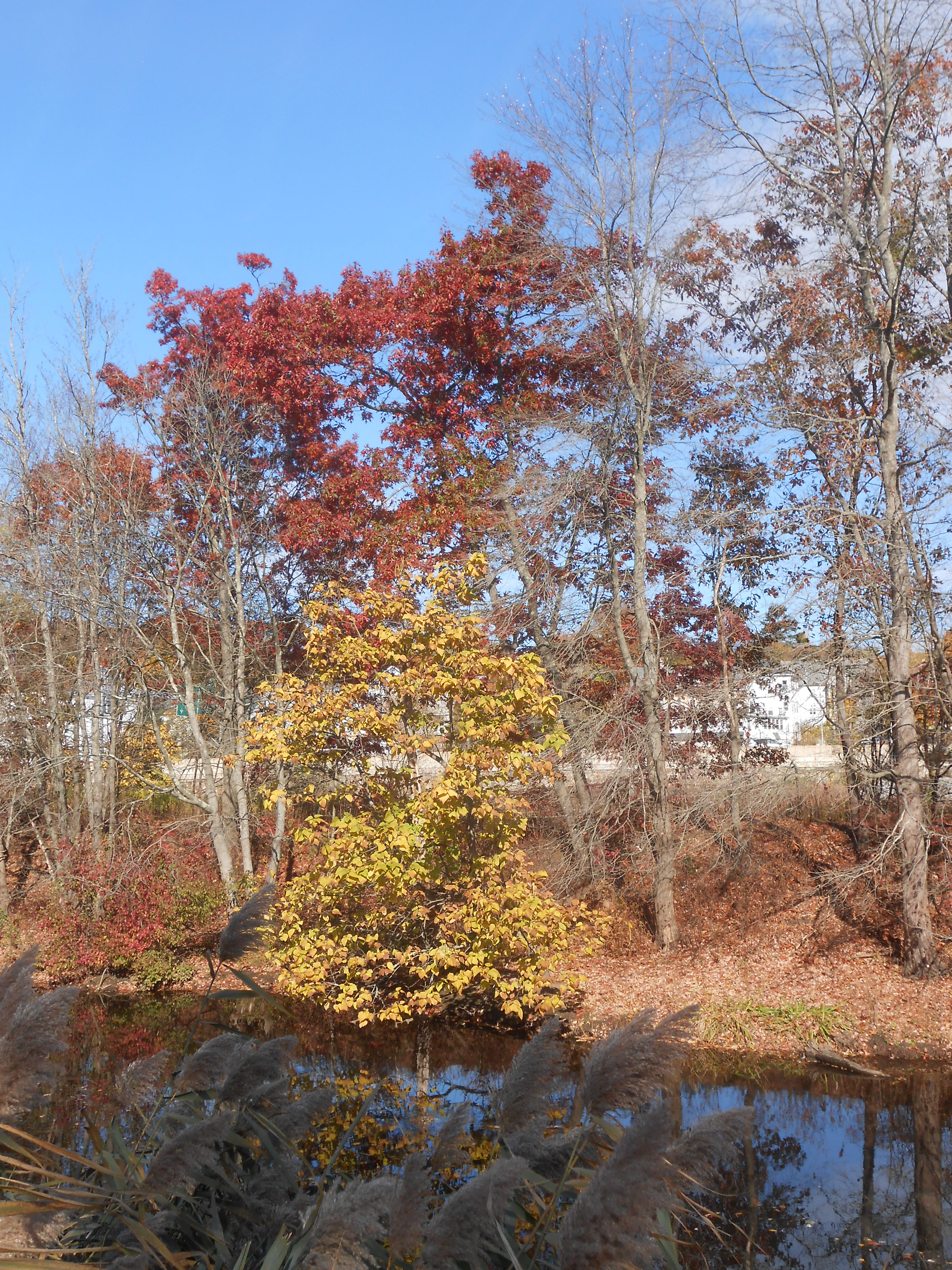
“Autumn Reflections 2024”

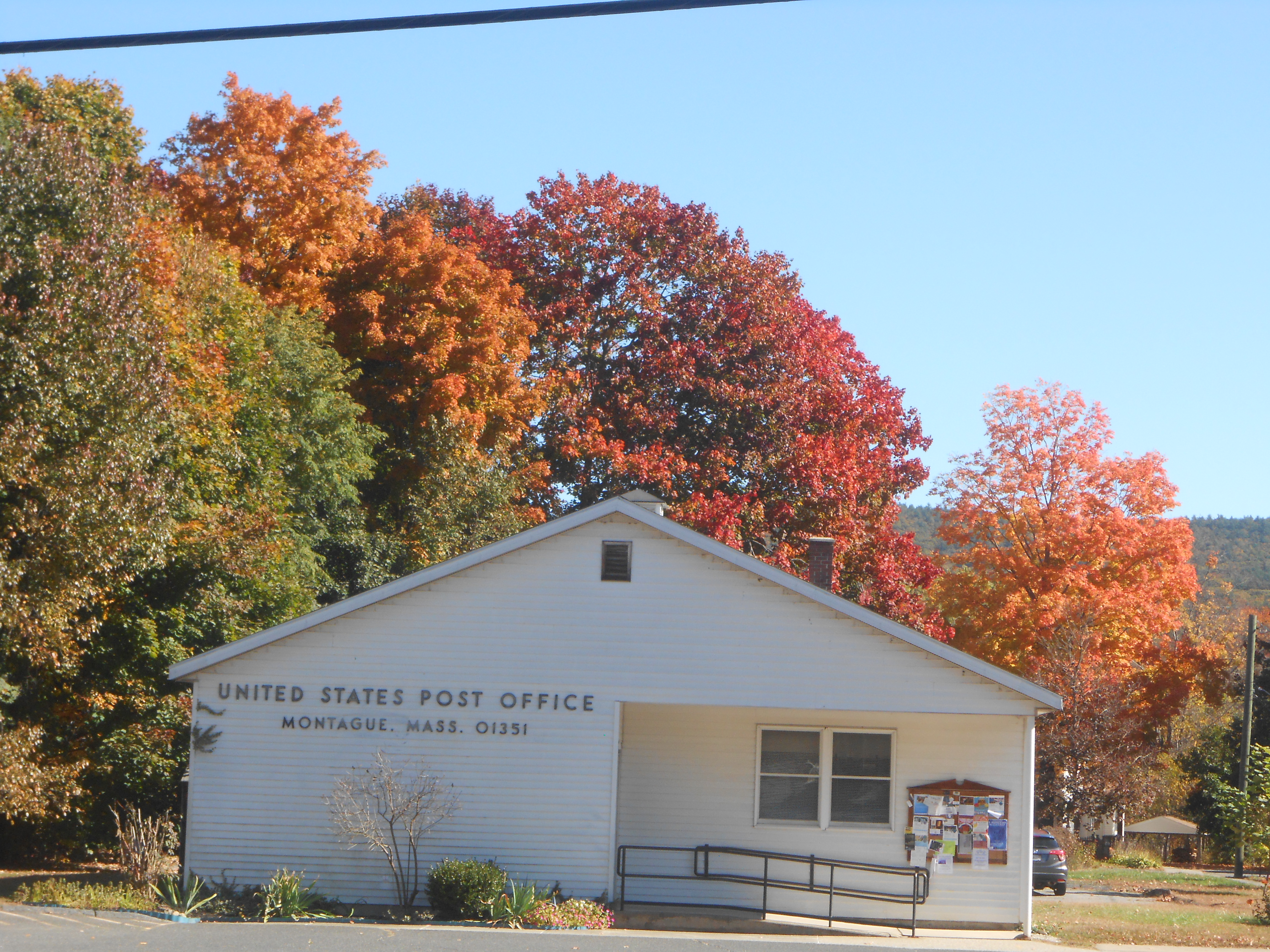
“Autumn Reflections 2024”

Well, we’ve had our first snowfall here in Massachusetts, so even the brown, greys, and maroons of late autumn are now sheeted o’re with white.  Still, it’s nice to recall the glories of September and October, isn’t it?  So, I thought you folks might enjoy an overview of some of the autumn travels Yang and I did to enjoy the lovely landscapes of autumnal New England.
Starting not far from home, Yang and I took a stroll along the board walk that takes you across wetlands and the Muddy River near the College of the Holy Cross.  We came across some beautiful colors, even as we noted how the drought had dried up much of the little river and the marsh.
We didn’t see any waterfowl, which was very unusual – not even any Mallards of Canada Geese.  No beavers were in view, either.  However, I did catch sight of this beauty and a chum galloping through the grass.  If you click on the photo, you can see her really well. You’ll notice that she looks as interested in me as I am in her!


Next stop on your Fall Tour is Montagu, Mass.  We went out there to sell some books at the Book Barn, have breakfast at Lady Killigrew’s, then take a stroll in the part of town nearby.  There were some absolutely beautiful colors to enjoy.


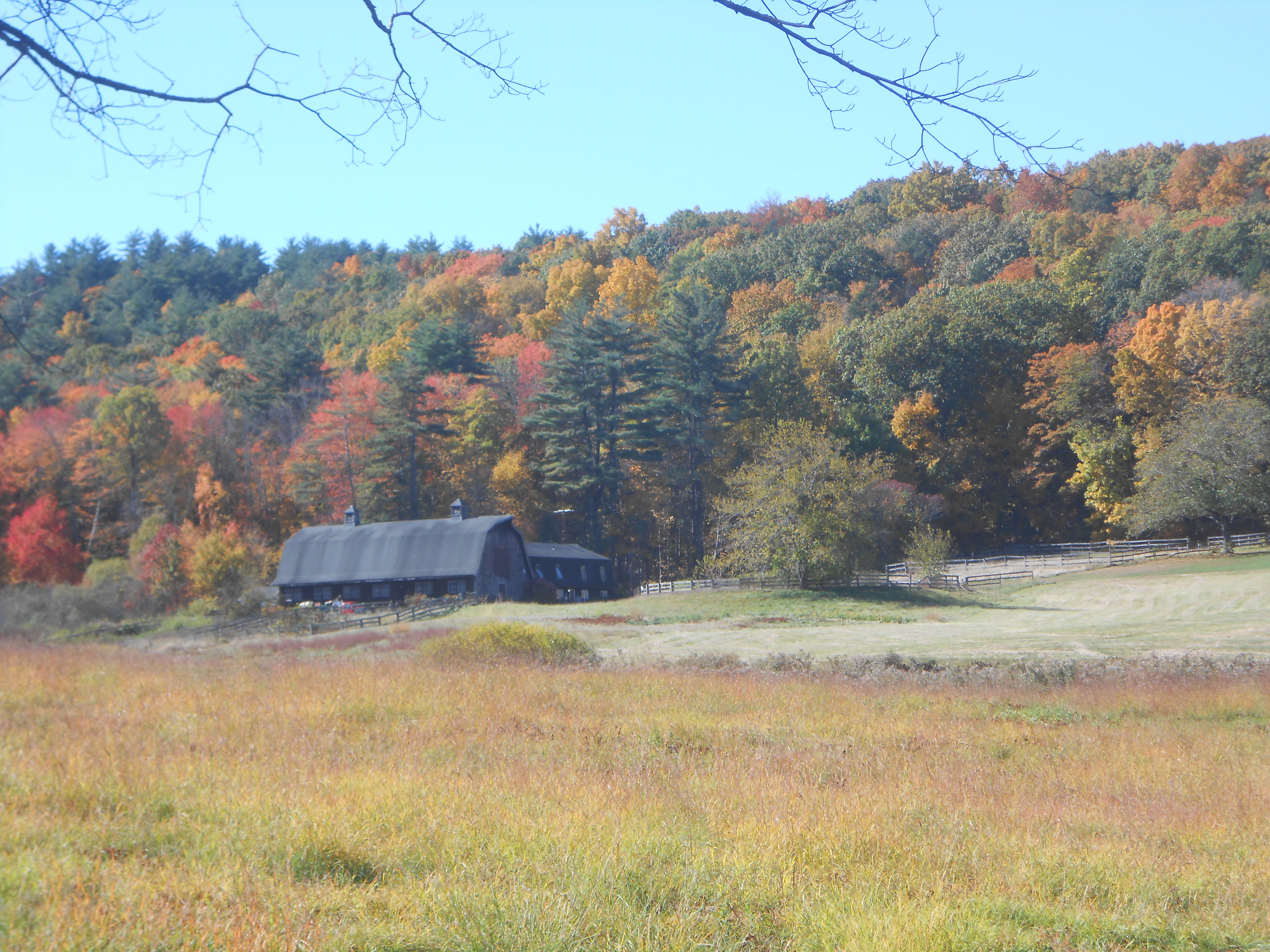
I love this picture of a New England farm.  It looks as if it had been painted in pastels.
Our bike ride  from Pittsfield to just above Adams, Mass. once more rewarded us with some exciting views of foliage.  There’s Yang, pedaling away from me through a tunnel of gold, tangerine, and green.
Here’s a row of scarlet and gold flanking the trail.


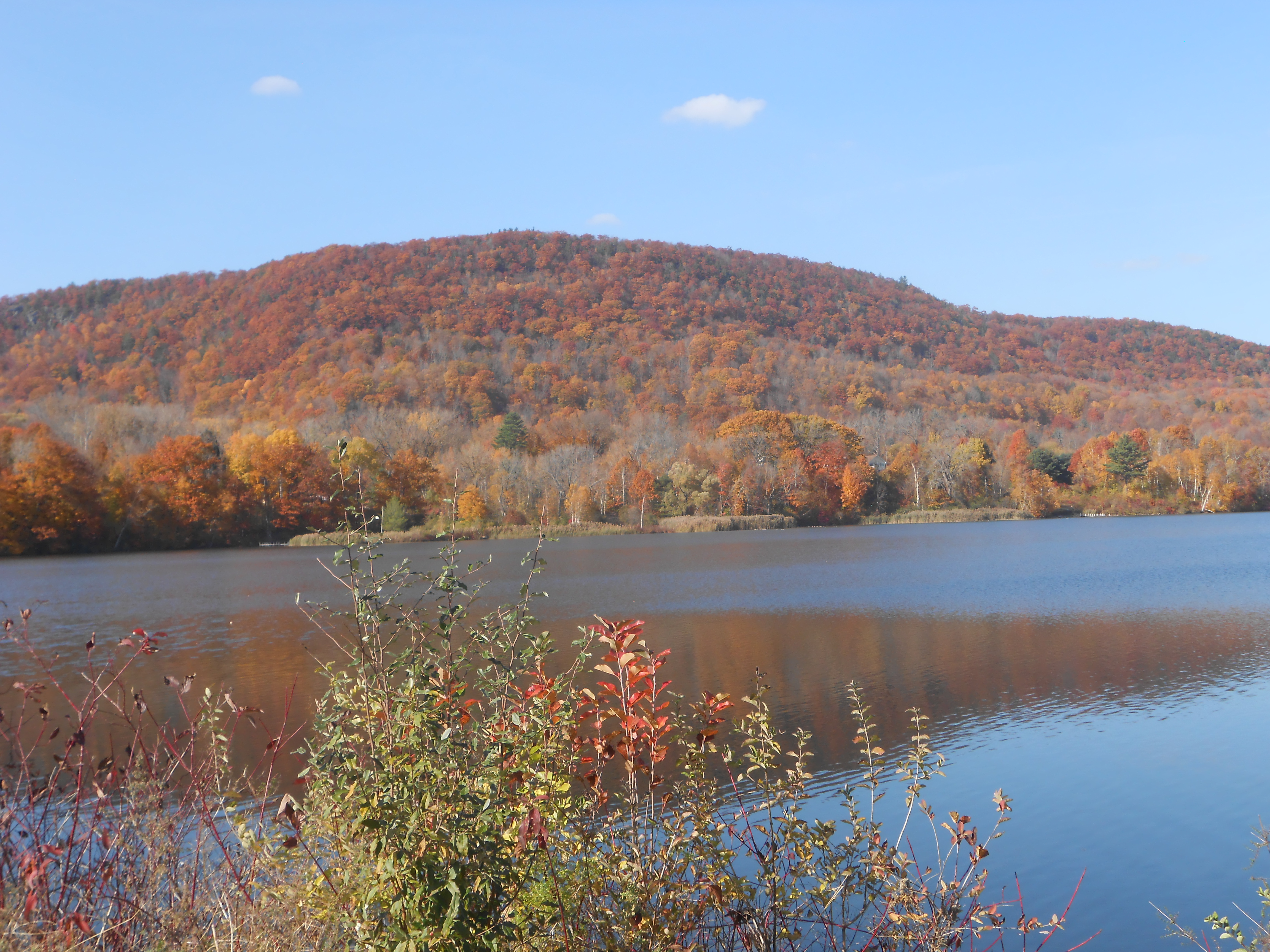
Across the lake from us the shore blazed red, gold, and orange.


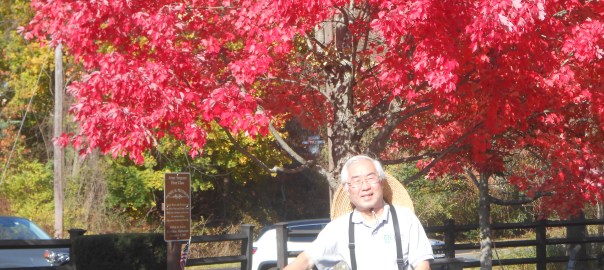
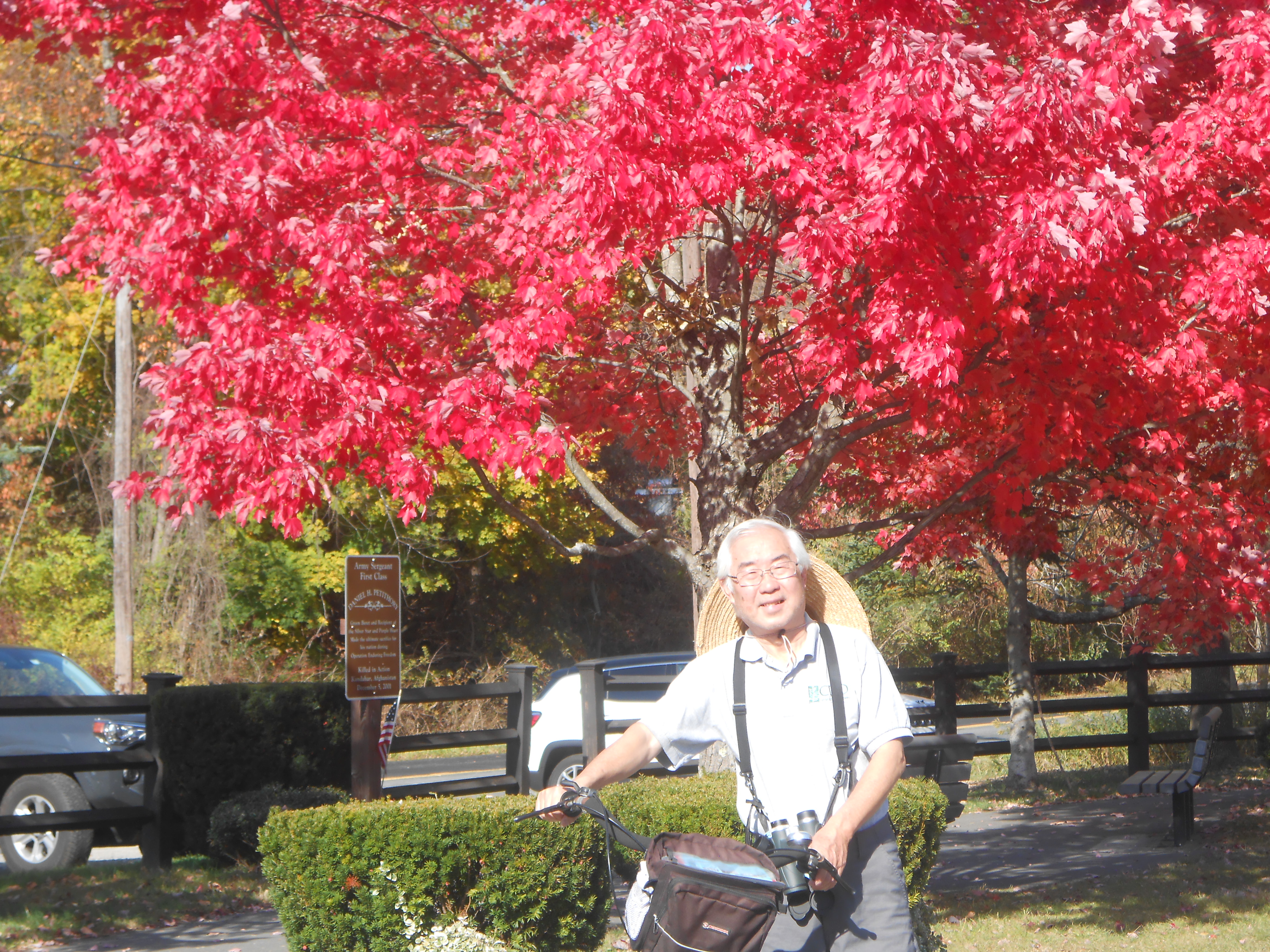
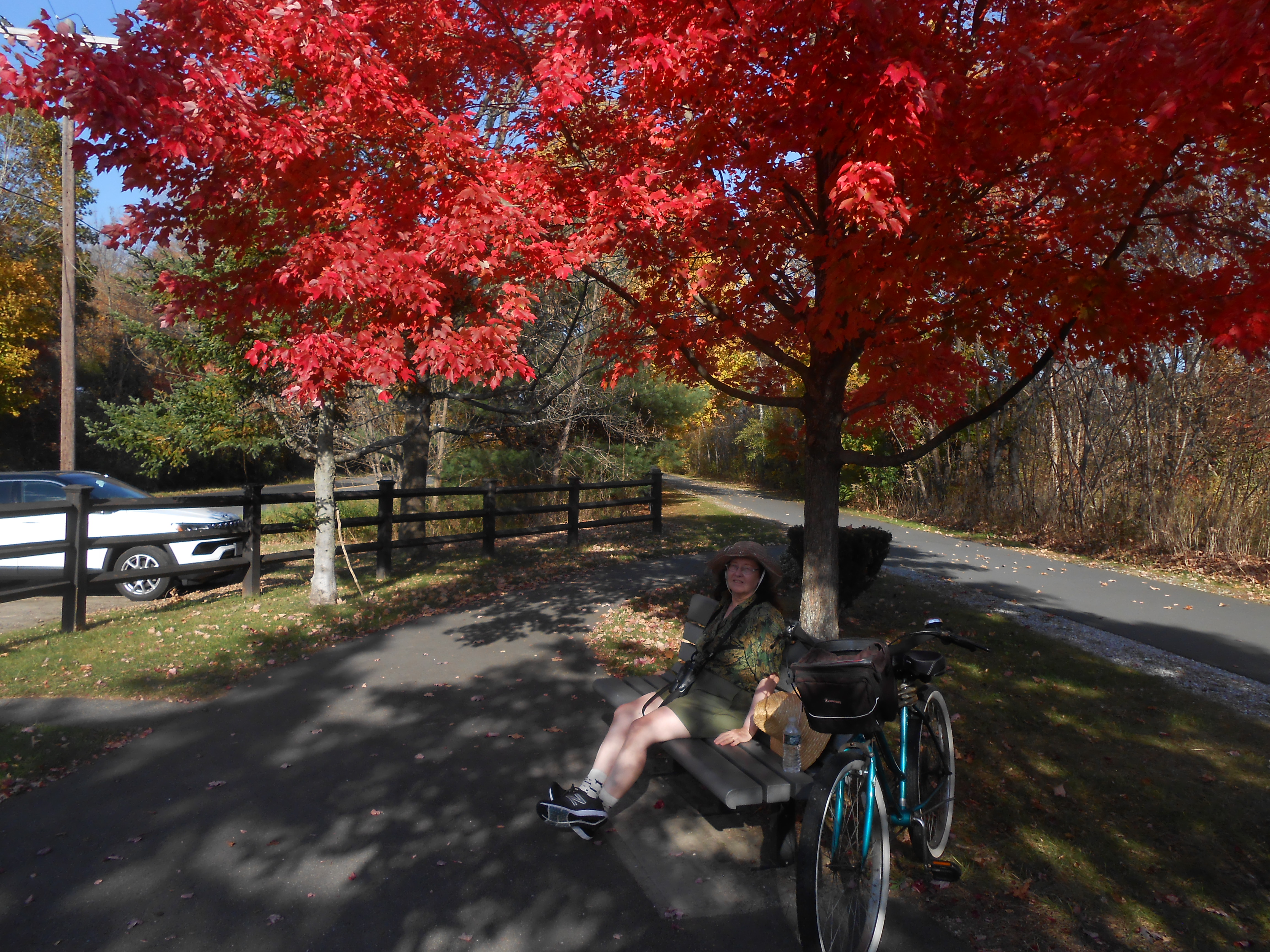
And the scarlet of some of the maples was exhilaratingly vibrant.  Here’s a nice shot of Yang under one such tree.

We finally made it to one place I’d been wanting to visit for years:  The William Cullen Bryant Homestead.  Though I’m more of a specialist in British Lit, Bryant was always an American poet whom I especially liked.  I’m sorry that the house itself wasn’t open for viewing.  From the outside, you can see it’s spacious, gracious, and beautiful.
The view from the house is gorgeous, crossing a meadow to reveal the color-splashed trees beyond.


We had an enjoyable walk in the woods near the house, still part of the homestead.  Here, autumn provides a tunnel of  dreamy, misty color.


Yang challenged me to be able to photograph the fascinating swirls of moss decorating the rough New England boulder layered with marble and blanketed with brown, crisped leaves.  I guess I showed him!

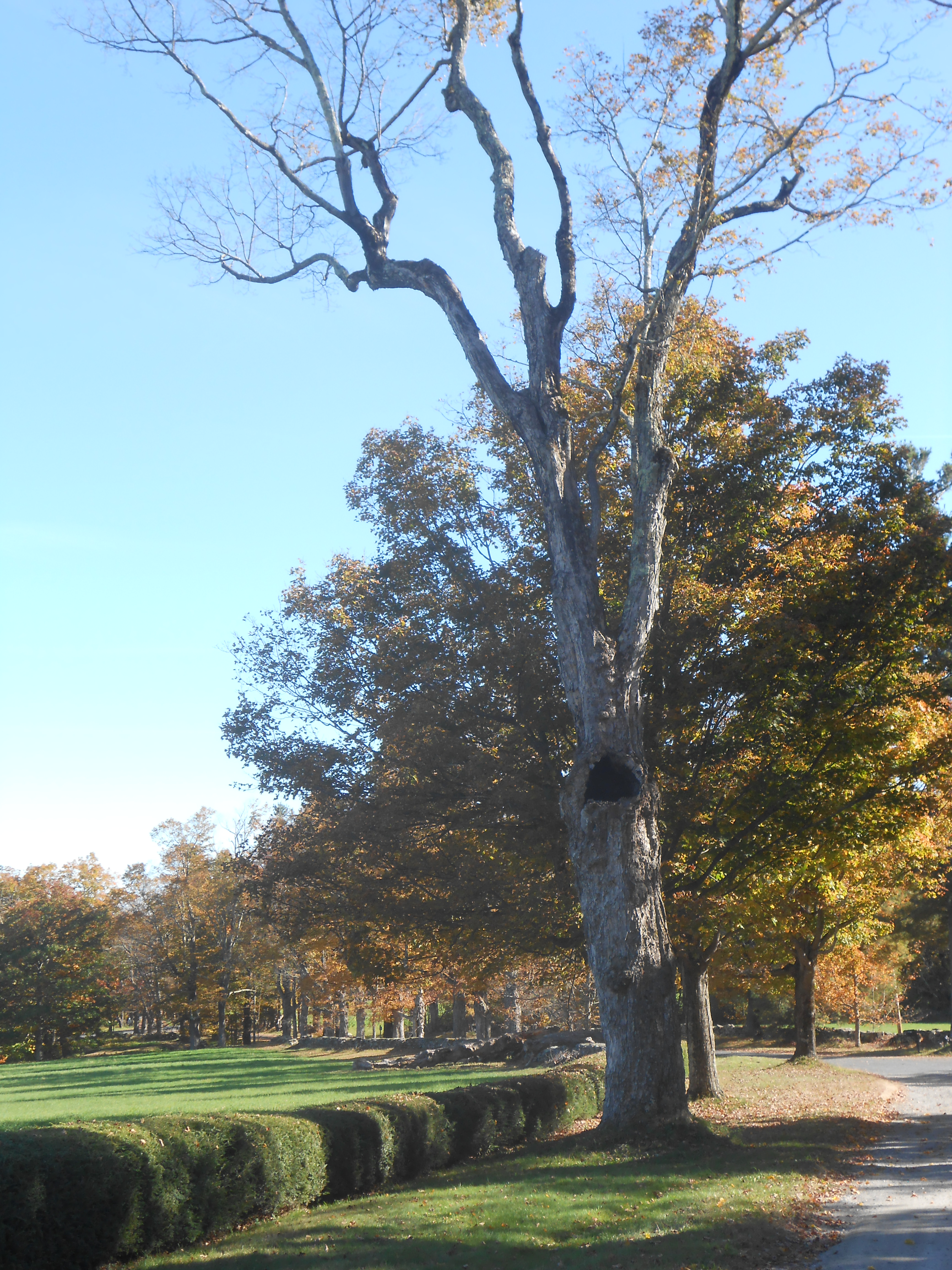
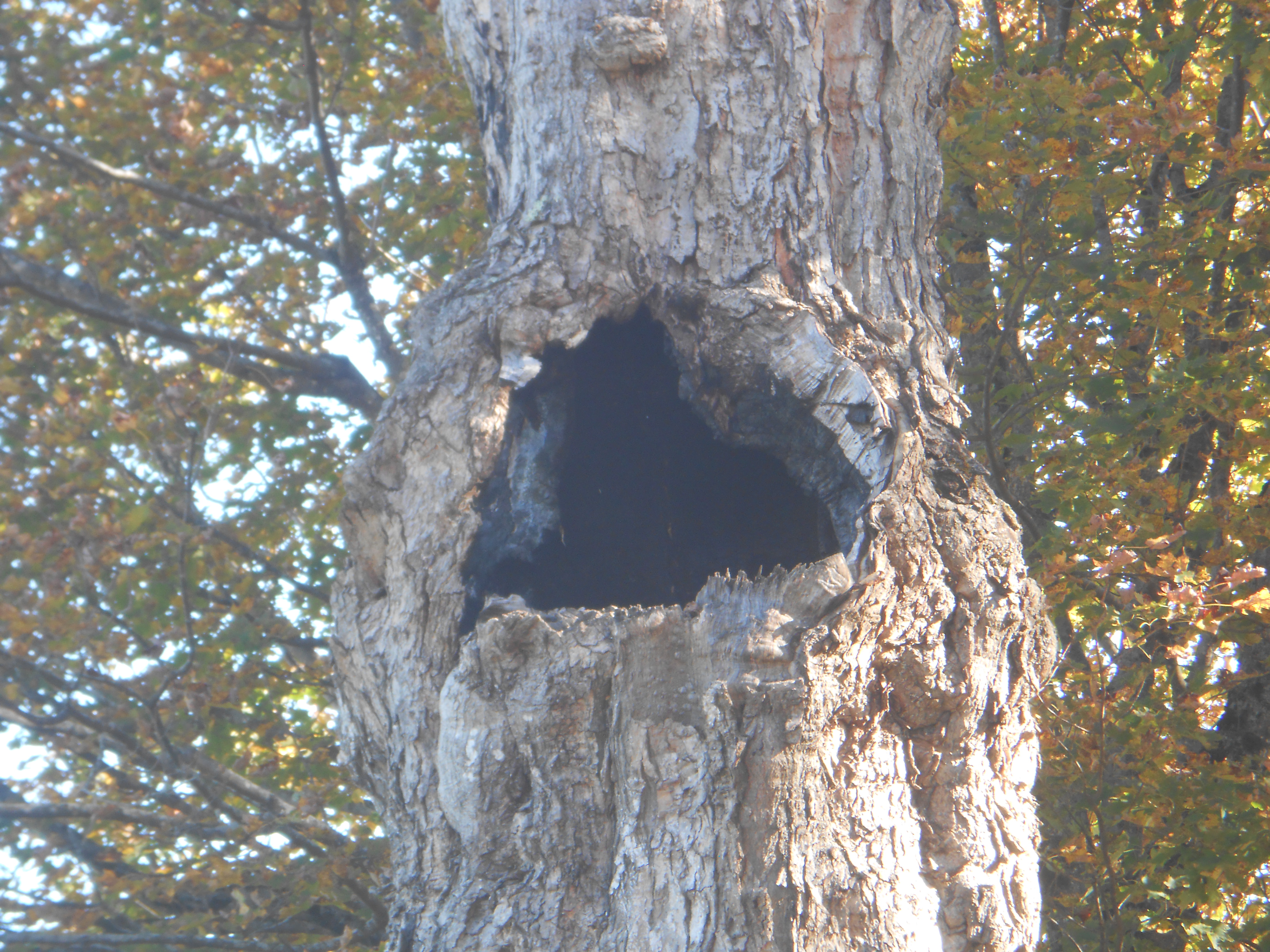
One of my favorite sights was this old tree with a gaping maw.

I just had to get a close up of said maw.  Really, isn’t it perfectly Lovecraftian? Do you see those jagged teeth on the upper part?

Finally, there’s one of my old favorites, Stafford.  Here are some of the traditional views.
Across the pond.


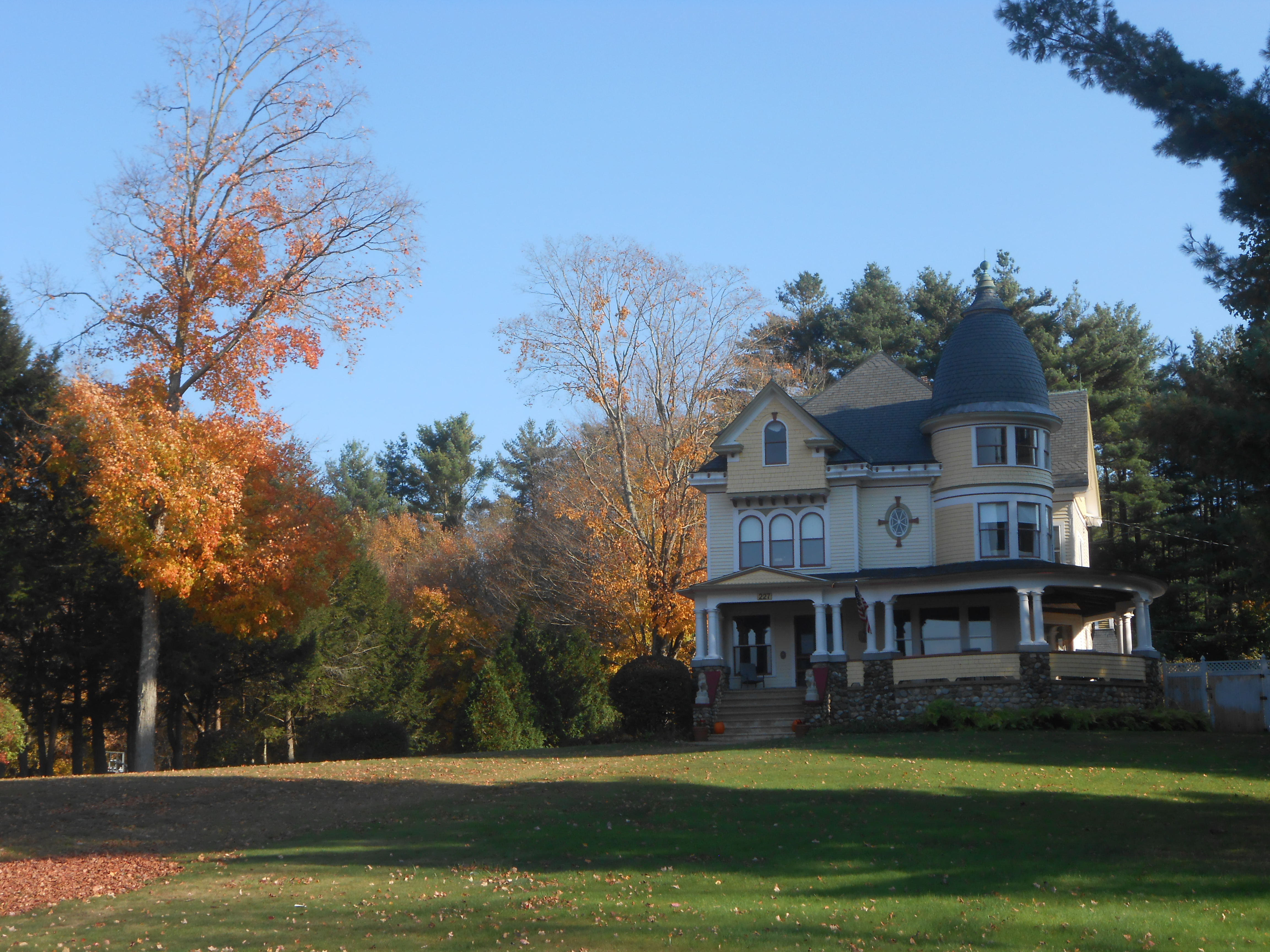
My Favorite Victorian House.  Couldn’t I really decorate that one swell for Halloween!


But some of the shots of foliage and sky thrill me even more.  I love the way the azure sky serves as a perfect complement to the golds, yellows, and orange flames of the autumn leaves.


Now, if you’ll excuse me, I’ve got to sit down and rest.  All this traveling and photographing has me exhausted!

Casting Shadows, Part Two

“Casting Shadows,  Part Two”


Philip Carlyle –  The master of the Carlyle Estate where the Wellstone Mystery Hour is making its remote broadcast, Philip Carlyle has opened his home and the secrets of its past to answer the mystery behind the disappearances of Felicia Blasko and his brother Bill Carlyle.  An engineer and businessman by profession, Philip still nurses the soul of a poet and musician, while holding secrets of his own concerning Felicia.  Embodying Philip requires a man of power, incisive wit and vision, as well as a sympathetic sense of artistry ‒ someone whose fascination with Jessica Minton rings more sad than creepy.  Claude Rains is my choice.  Think of the urbanity and authority of his Victor Grandison in The Unsuspected and the sly, mordant humor in Casablanca’s Inspector Renault.  Then there’s his incisive and forthright authority as Now Voyager’s Dr. Jaquith, tempered by his wry humor and genuine, though never soppy, compassion. Also think about the vulnerable passion of Paul Verin in The Man Who Reclaimed His Head, a quality that burns beneath the wall of authority in Job Skeffington of Mr. Skeffington. That’s the complexity of Philip Carlyle.


Jeanne Rivers and Madame Wanda are two ladies who may or may not be whom they seem.


Jeanne Rivers is the housekeeper for Philip Carlyle in the mansion that Felicia haunts.  She’s a top sergeant making the place run like clockwork, even managing to banish the indomitable Liz Minton from kitchen gossip fests with the help. Her wit can be acerbic, but she can show warmth and good humor when she’s helpful ‒ a woman of practical advice.  She also has ties to the mansion’s tragic past that could open up its secrets. ­A fine choice to inspire Jeanne is Jean Brooks, leading lady of the RKO B-division.  Brooks has demonstrated a dry and clever wit in such films as The Leopard Man, The Falcon in Hollywood, and The Falcon and the Co-eds. Falcon Tom Conway can’t get by without her popping up somewhere! Further our Ms. Brooks is no stranger to a cinematic world of shadows.  A veteran of Val Lewton’s dark tales, in addition to playing a smart-talking gal in The Leopard Man, Brooks also portrayed the haunted Jacqueline in The Seventh Victim.


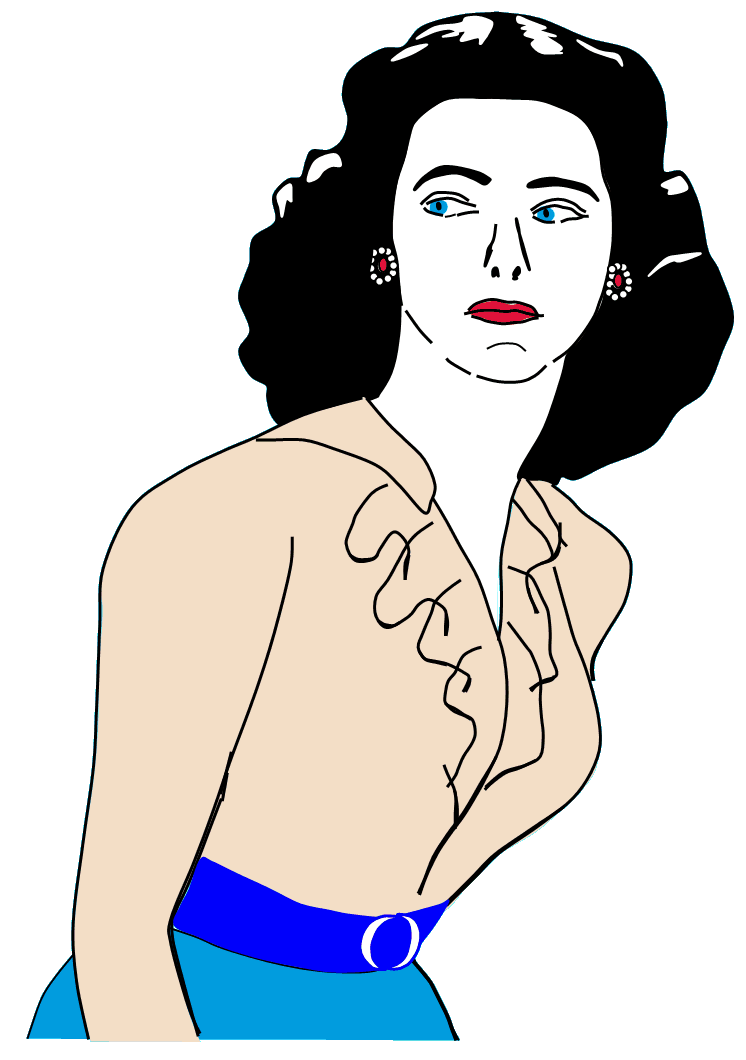
Madame Wanda – Wanda Hendrix brings more than a first name to Shadows’ medium.  Apple-cheeked and merry-eyed, Hendrix played comedy deftly in films like Miss Tatlock’s Millions and The Admiral Was a Lady.  Thus, Madame Wanda shatters the stereotypes of film mediums as otherworldly, mysterious, and at times even sinister.  Our stylishly outfitted Madame Wanda is quick with a quip to challenge and defeat skepticism about her capabilities, especially from the suspicious Liz Minton and Gerry Davis.  Still, Wanda’s description of her powers and her conjuring of a voice from beyond the pale demonstrate her bona fides for connecting with the supernatural.  Preparing her for the darkness of Shadows, in My Own True Love and Ride the Pink Horse  Hendrix moves through a post-war world now darkened by bitterness, vengeance, and corruption.

Next entry, a look at more of Jessica’s colleagues from the Wellstone Mystery Hour.

Casting Shadows, Part One
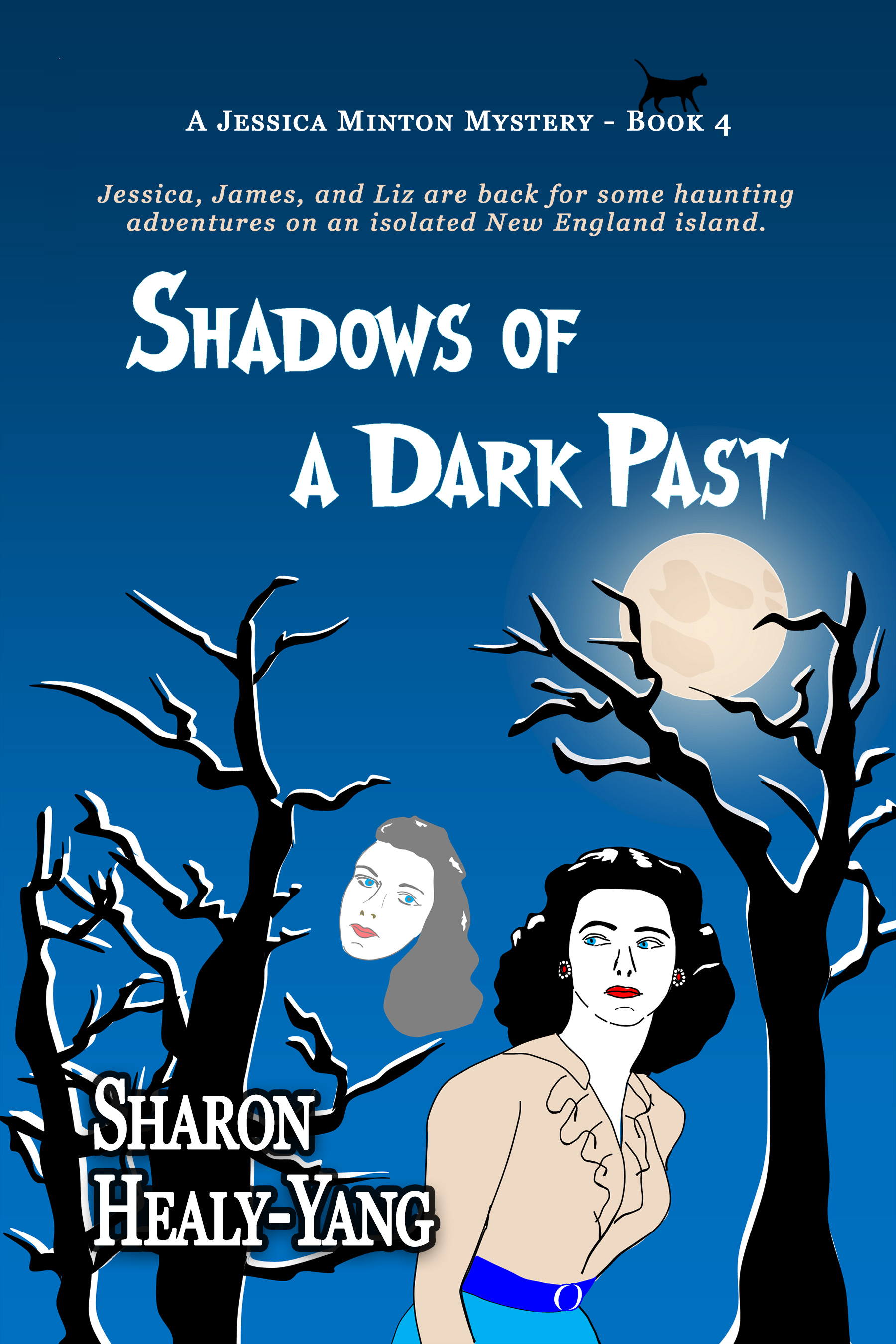
Shadows of a Dark Past
Jessica Minton Mysteries
Home
Images

-Claude Rains  Photo from John Engstead. Star Shots: Fifty Years of  Pictures and Stories by One of Hollywood’s Greatest Photographers. New York:  EP Dutton, 1978. p. 185.

-Jean Brooks in white trenchcoat:  Wikipedia public domain, https://en.wikipedia.org/wiki/Jean_Brooks#/media/File:Jean_Brooks_1940s_fan_photo.jpg

-Jean Brooks in plaid jacket public domain:  https://commons.wikimedia.org/wiki/File:Jean_Brooks_in_The_Falcon_in_Danger_1943.png?uselang=en#Licensing

-Wanda Hendrix photo, Author’s collection


October Thrills and Chills with Shadows of a Dark Past!

October Thrills and Chills with Shadows of a Dark Past!

I had quite the busy Halloween month meeting people and getting the word out about my latest Jessica Minton novel, Shadows of a Dark Past.  October kicked off  when I joined authors Jean M. Grant and Janet Raye Stevens at the Horseshed Fair in Lancaster, MA.  Some friends showed up expressly to get their copy of Shadows hot off the press.  I also sold copies to new readers as well. It was a beautiful sunny and warm day, setting Jessica and Company’s ghostly adventures off to an exciting start.  Here I am with one of my friends from the Shakespeare Club of Worcester, Becky Spanagel.  It was great of Becky and her husband David to drop by to say hello.  By the way, Yang made that purple blouse with the stars and moons that I’m wearing!

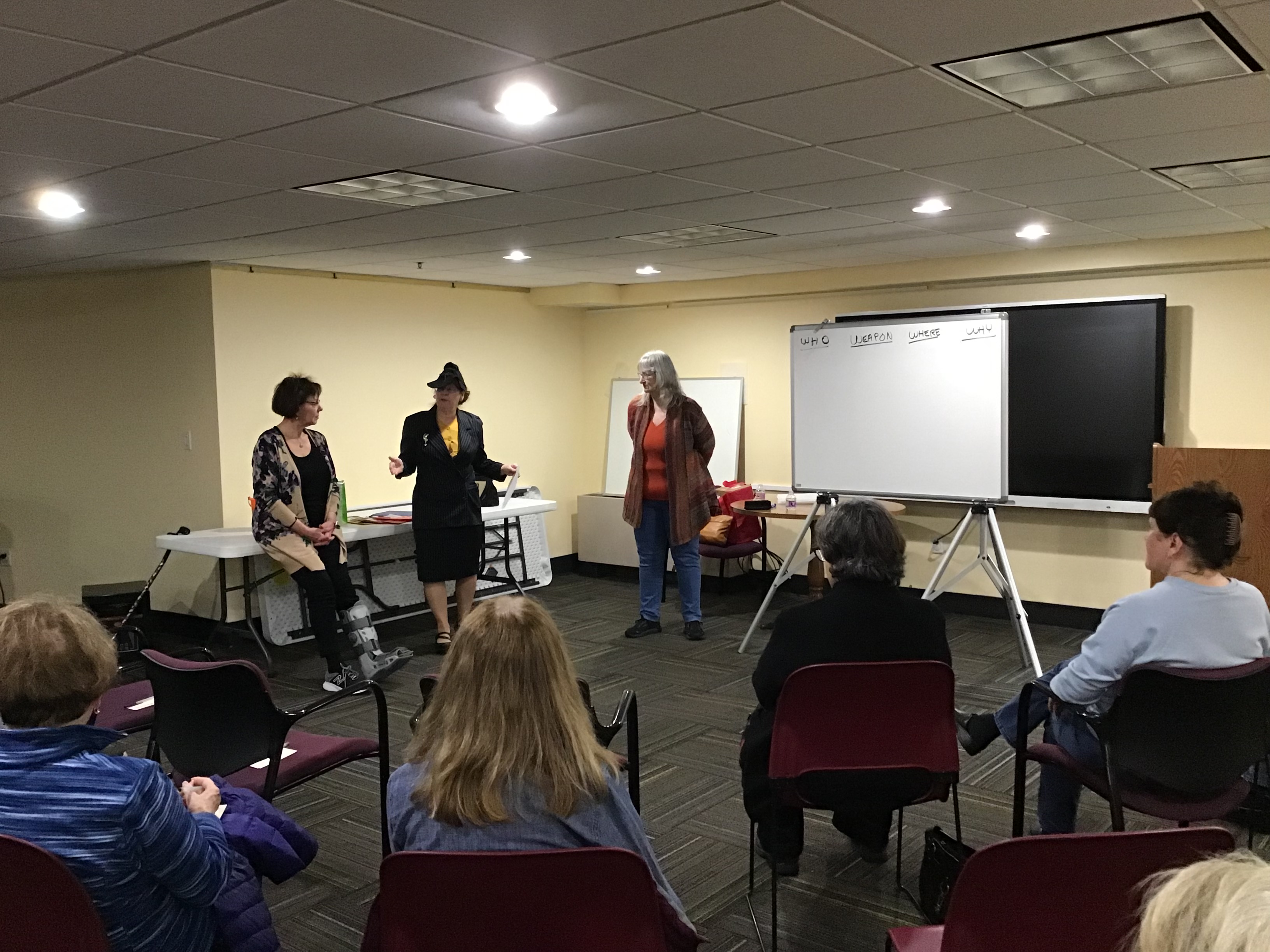
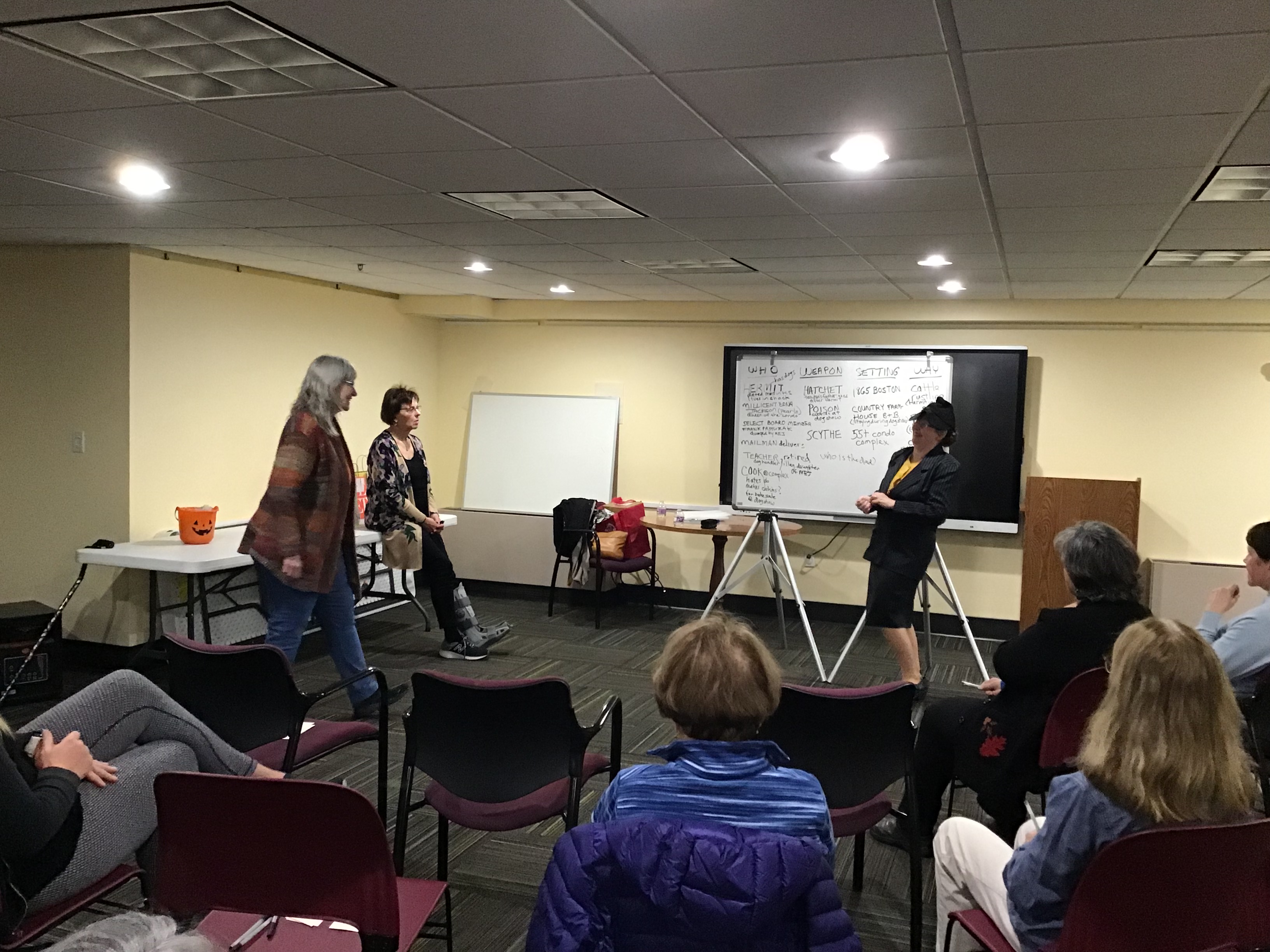
Next on the agenda was a Sisters in Crime New England Mystery Making Night at the West Boylston Library, also in Mass.  I had the privilege of working with two good buddies, Janet Raye Stevens and Carol Goodman Kaufman.  I joked to them that with me (Sharon Healy Yang) joining them, it looked as if it was a requirement to have three names to be on the panel .  We had a ball weaving the suggestions of our audience into a tale of murder on a cruise ship involving an ice pick, secret identities, and ice cream.  You had to be there.  I decided to combine the holiday ambience with my 1940s fashions to wear a black and white pin-striped suit, autumn gold blouse, and peaked chapeau that is two-parts wicked witch and two parts 1943 fashion!

I traveled south of the (Mass,) border to Connecticut to do another Sisters in Crime Mystery Making event, this time with Kate Flora.  It ended up just the two of us; however, you can see from the picture that our audience inspired us to a complex and exciting tale.

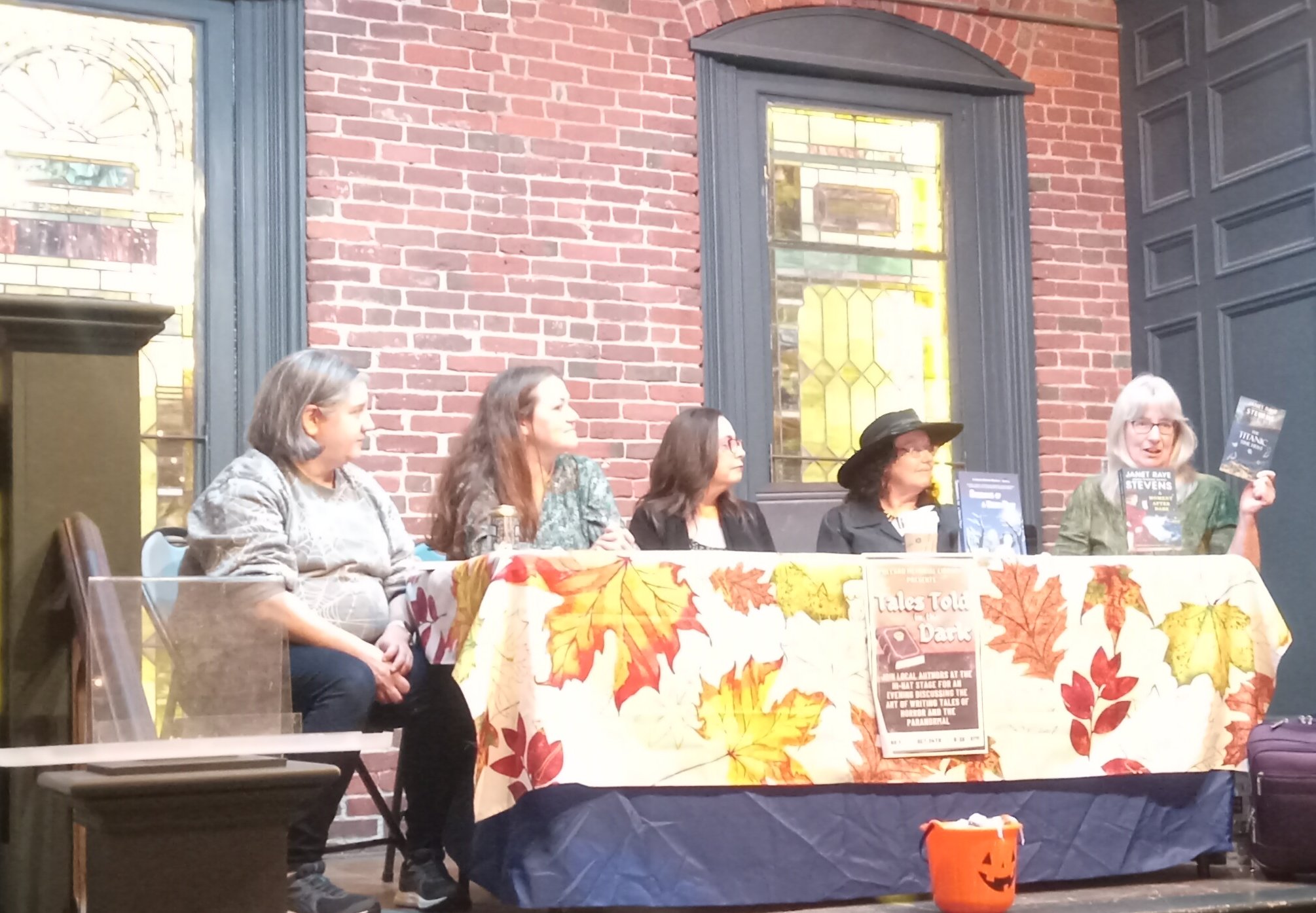
Later in the month, I joined Janet Raye Stevens and three other writers of the supernatural for “Tales Told in Darkness” in a Lowell Library sponsored event.  We had a good audience, including two of my best buddies from as far back as grammar school, Mary Lou and Kathy.  We all did a reading and I had the thrill of seeing people put down their phones and listen when I read of Jessica’s night time peregrination to a haunted room in the Carlyle manse. Did she dream or did she wake?


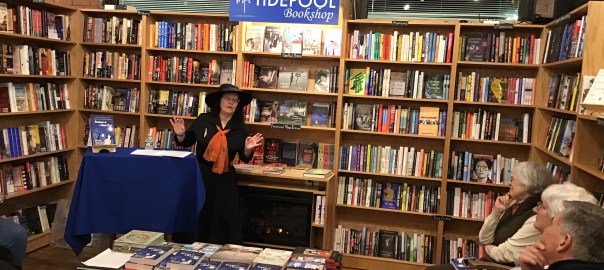
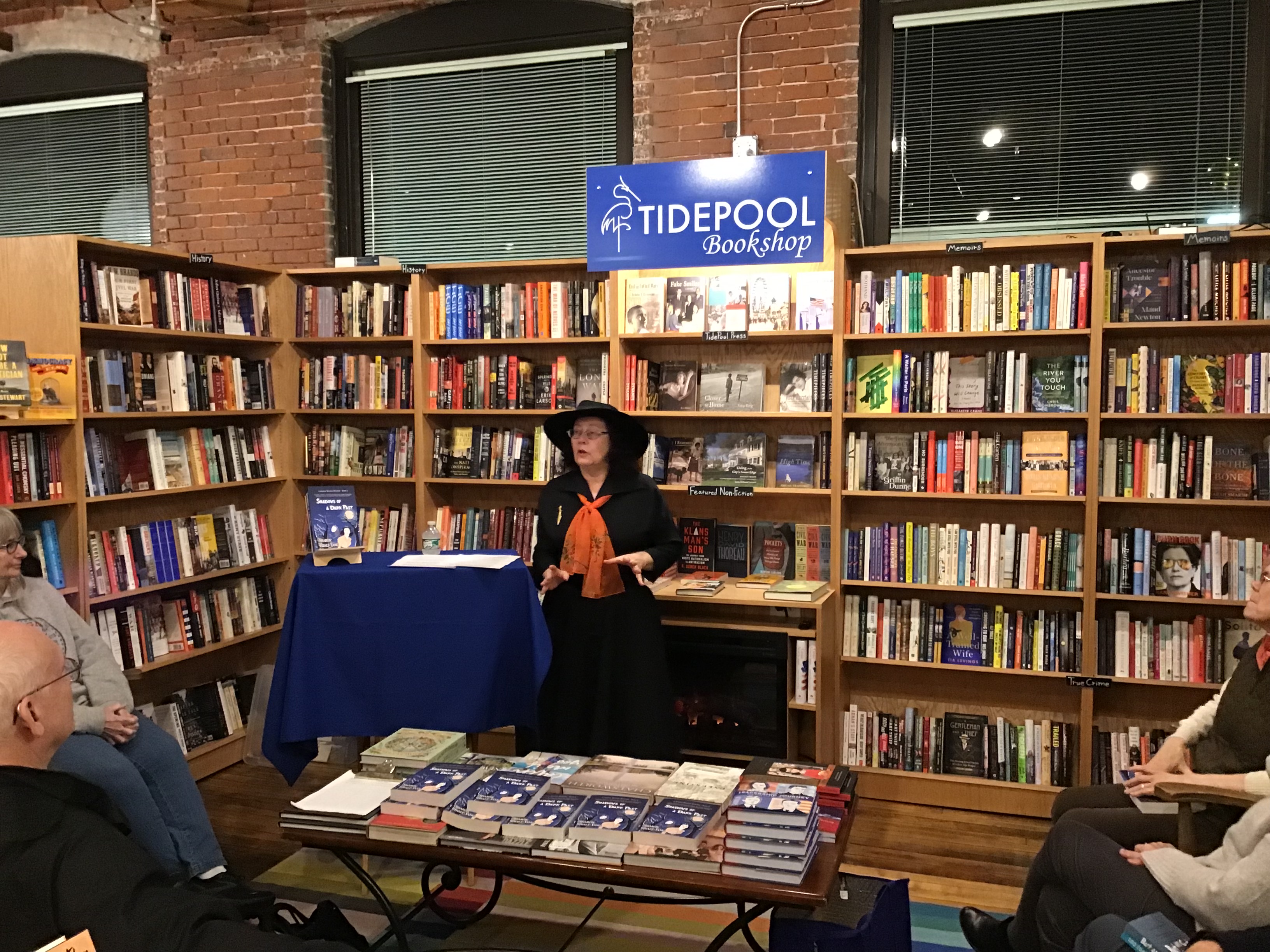
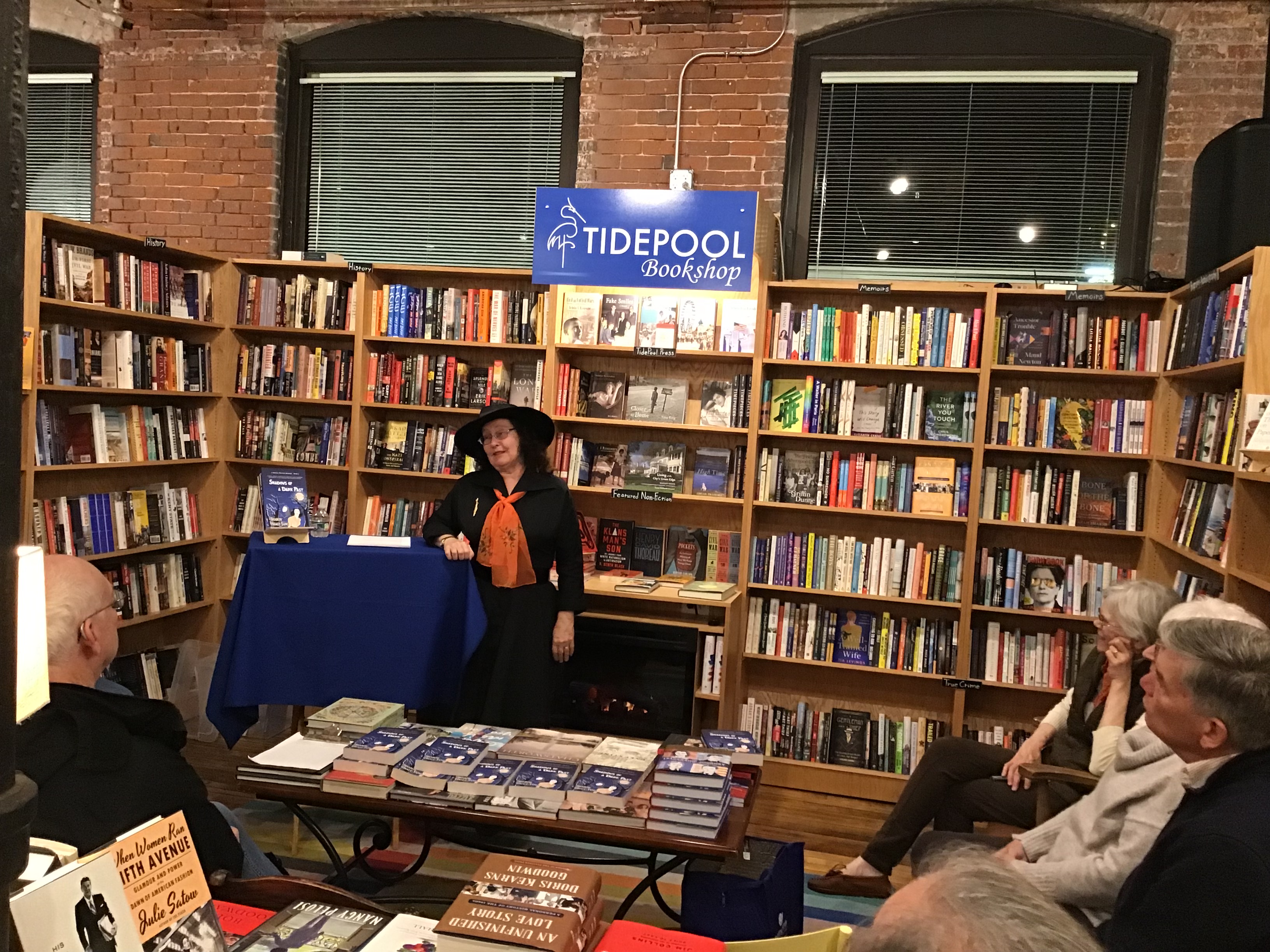
Probably my favorite event was the Book Launch and Reading I did at TidePool Books in Worcester.  It was the night I’d been waiting for!  Would you believe that people from all aspects of my life came?  My teaching years, my writing colleagues, my church, the Shakespeare Club, my old friend from years back!  I was so happy.  And I got to talk about the  films and books from the first half of the 20th century that influenced me with  imagery and atmosphere that was dreamy, eerie, haunting and their tales of obsession, vengeance, and sometimes forgiveness.  People were really interested in the three readings I did:  Jessica’s meeting in a cemetery with the husband of the alleged ghost; the reading I also did in Lowell; and a séance gone horribly wrong. My audience also had great questions about writing, about my characters and research, my writing process.  It was a dream.  One of my former students said that it was like being back in the classroom – and she meant it in a good way!  And it did feel like the good parts of teaching:  sharing ideas, getting people to think,  hearing what they thought.  You can see that I definitely dressed for the occasion.


So, this positive note is where I will wrap up.  On to November and December are a little less harried.  If you haven’t already dropped by to say hello and catch Jessica, Liz, and James’s latest adventures, you can come see me at the Narragansett Craft Festival at Narragansett Middle School, Baldwinville, MA on 11/9; the Auburn Holiday Craft Fair at Auburn High School, Auburn, MA (12/14); or Tatnuck Bookseller, Westborough, MA (12/15),  Check my web site here for deatils.  See you then!

Click here for the Shadows web page to see more details on the book and some fun bonuses!

Casting Shadows, as It Were

“Casting Shadows, as It Were”

In the past, I’ve posted on how “casting” characters as if they were played by (mostly) classic era actors in my earlier Jessica Minton mysteries helped me  flesh out their characters.  Now  that Shadows of a Dark Past is out, I thought you might enjoy reading about the inspirations for the folks Jessica, Liz, and James encounter on the mysterious Birdsong Island.  So, let’s begin!
When you’re writing a ghost story à la Val Lewton/Edgar Ulmer/ Joseph Lewis, it only makes sense that some of your characters be inspired by star players from those films.  So, with whom to start?  Why not the inspiration for the haunted scientist/widower of Shadows, Vitus Blasko?
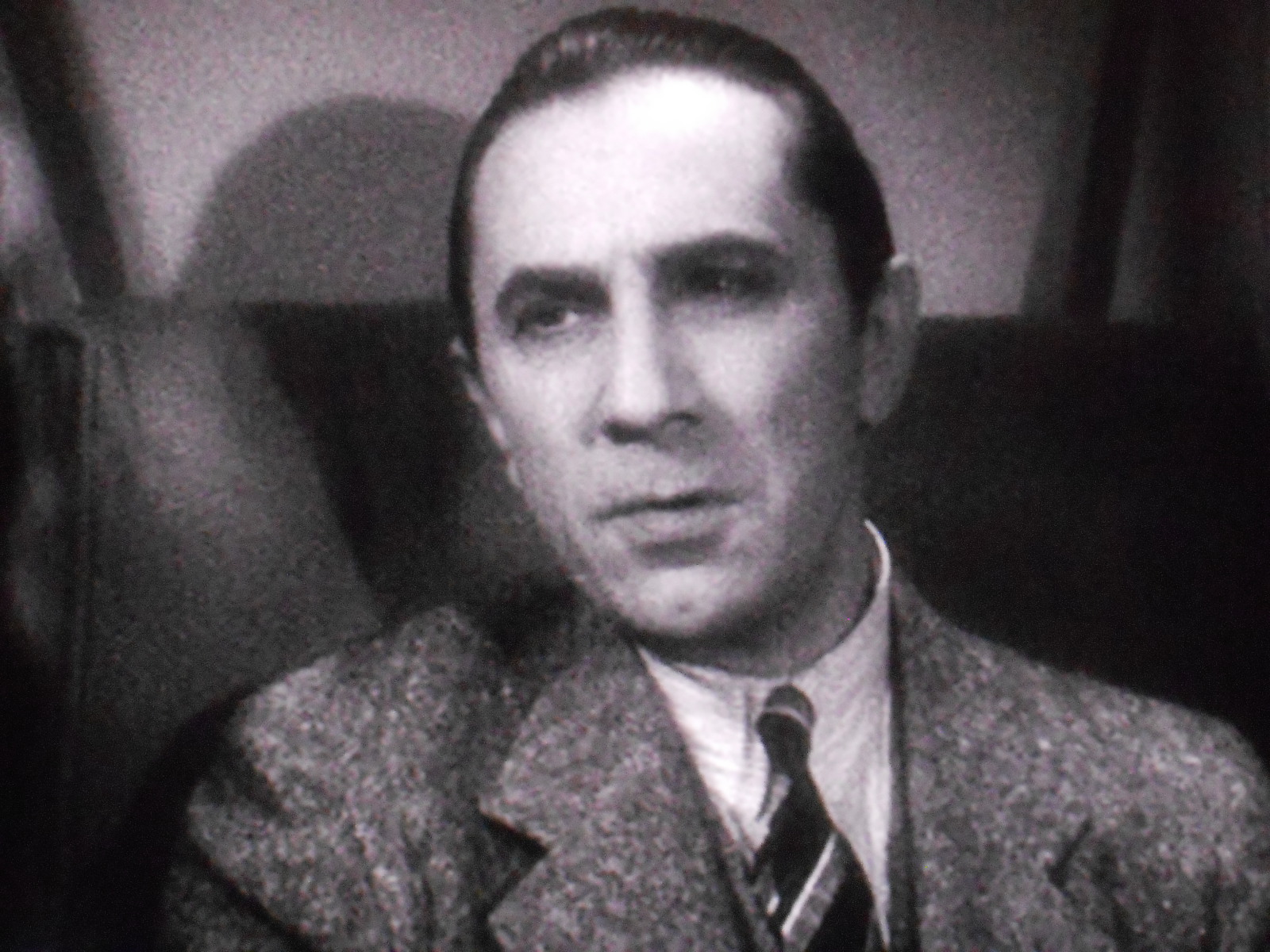
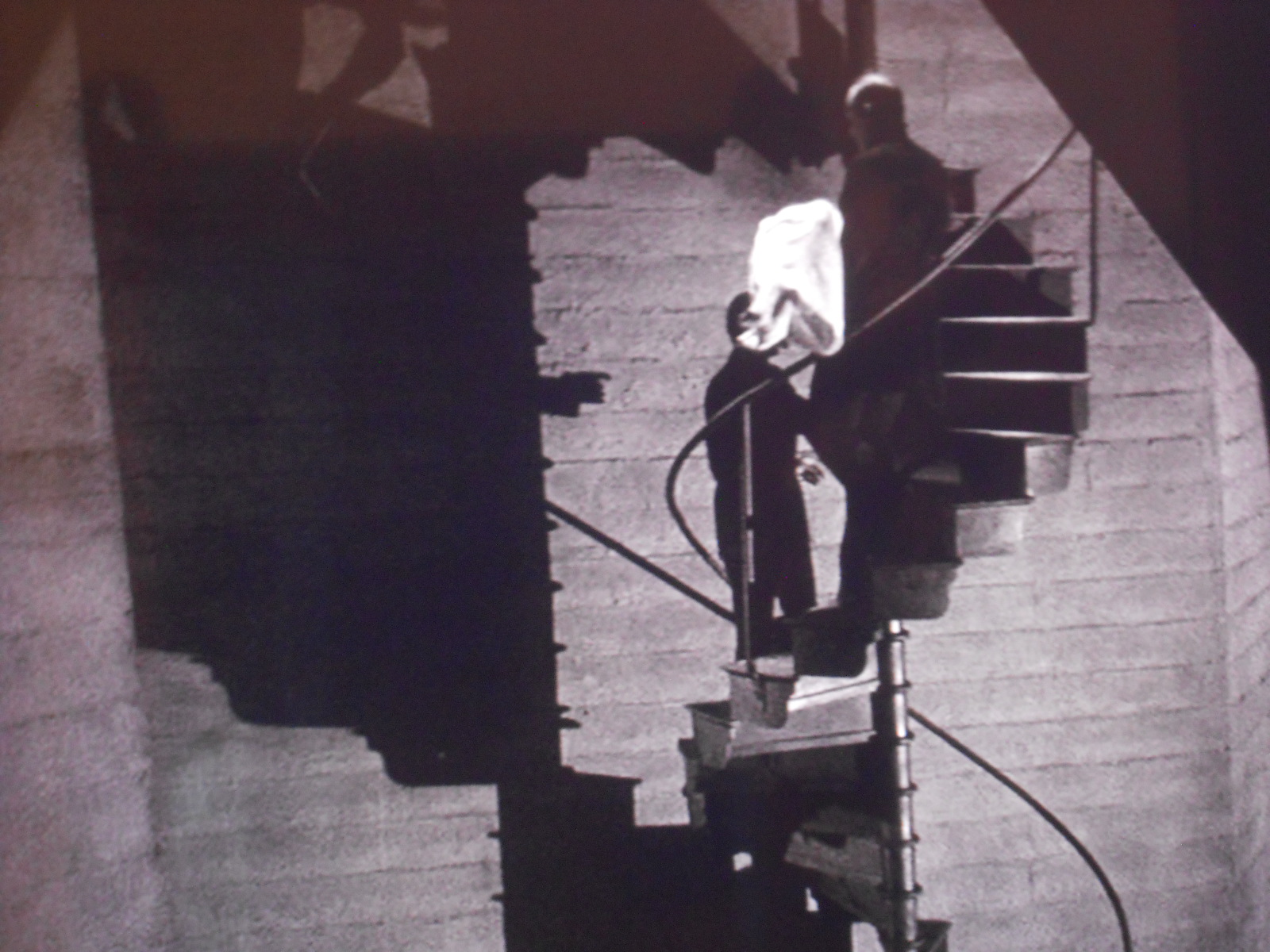
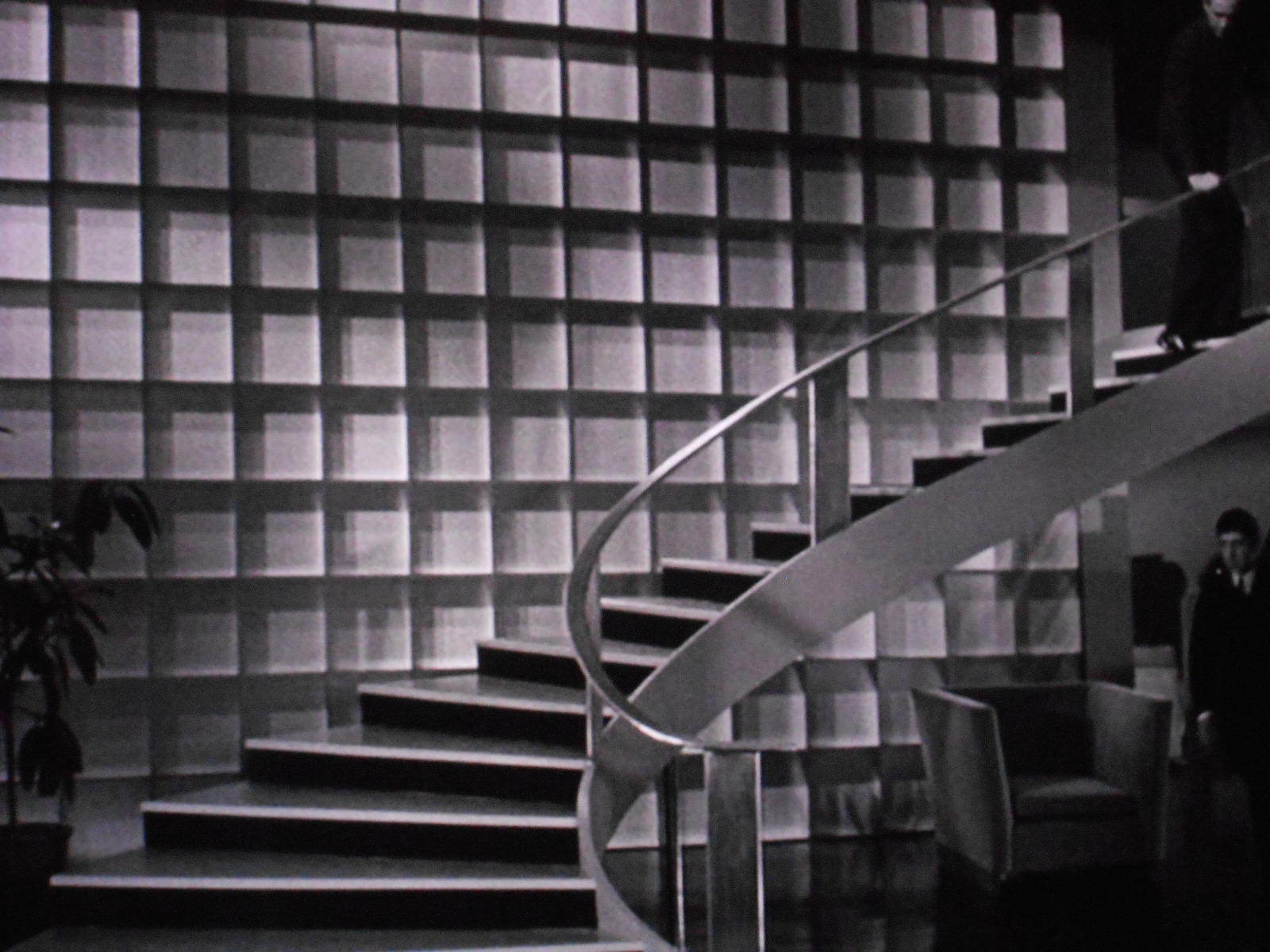
Who is a prime prospect to play a man whose obsession with his work cost him his wife and child many years ago?  My choice was one of the premiere players of 1930s/40s horror, especially at Universal:  Bela Lugosi.    “What?!” you exclaim.  “The guy who played those Machiavellian vampires in Dracula (1931) and Return of the Vampire (1945), as well a plethora of sinister scientists?” “You bet!” I reply.  Lugosi also played the tortured and highly sympathetic Dr. Vitus Werdegast in 1934’s The Black Cat.  Here, he’s a doctor who had been sent to a death camp at the end of WWI, costing him his wife and daughter, through the betrayal of Boris Karloff’s Hjalmar  Poelzig.  (Now those are names!)  His intellectual battles with Poelzig may seem sinisterly to threaten a young married couple caught in the middle at Hjalmar’s Frank-Lloyd-Wright-on-LSD designed mansion.  However, Werdegast’s grief over what he has lost and his protection of the couple reveal a sympathetic tenderness in Lugosi’s acting.  In honor of the sensitivity of Lugosi’s performance, I opted to select Vitus for the first name of my haunted scientist from Lugosi’s character in The Black Cat and the last name from Lugosi’s actual family name.

Jamie Blasko:  Jamie, Vitus and the ghostly Felicia’s daughter, has terribly suffered through her mother’s murder (or abandonment?), a broken engagement, and living in a shadow-shrouded manse looking after a father broken by the mistakes of his past.  With a cast member of The Wellstone Mystery Hour offering her the life saver of romance, Jamie has a chance for happiness.  Dare she take it?  The radio program will broadcast shows focusing on that most terrible time: the mystery of her mother’s disappearance.  Can Jamie bear a revival of that scandal and pain?  Will the program provide the answers she needs?  Will she and her father be able to bear those answers?
Soulful-eyed Gail Russell is the natural inspiration of my creation, Jamie Blasko.  In such roles as the haunted daughter determined to embrace the ghostly touch of her mother in The Uninvited or the young woman struggling against the psychic prediction of her death at a fast approaching appointed hour in The Night Has a Thousand Eyes, Russell’s gentle demeanor threaded with flashes of piercing anguish embodies the spirit of the Blasko girl.


Gerry Davis:  A WWII vet who lost a leg at Anzio, Gerry is a true radio trouper on The Wellstone Mystery Hour, not only playing most of their romantic leads but a host of other parts as the need arises.  Handsome with wavy blondish brown hair and a twinkle in his eye, Gerry’s kind heart and impish wit may be just the ticket to save Jaime Blasko from the darkness shadowing her life.  However, Gerry must overcome the antipathy between Vitus Blasko and the Carlyle family sponsoring these broadcasts of a past tearing apart both families.  For Gerry, I’ve turned to a more modern player for inspiration: Geraint Wyn Davies.  The humor, passion, and intelligence Davies has brought to roles ranging from Shakespeare to the conscience-stricken vampire detective of Forever Knight makes him an ideal choice to inspire Gerry’s good nature and passion  to protect Jamie Blasko.
If you haven’t already, check out my blogs on casting characters in the first three novels of the Jessica Minton Mysteries
Bait and Switch
Letter from a Dead Man
Always Play the Dark Horse

Image Credits
Bela Lugosi images screen shots from The Black Cat (1934), © Universal Pictures.
First Gail Russell Image:  Screen Shot from The Uninvited (1944) © Paramount Pictures.
Second Gail Russell Image Public Domain from Wikkipedia: https://commons.wikimedia.org/wiki/File:Gail_Russell_postcard_photo_circa_1950s.jpg
Geraint Wynn Davies image a portion of Lady Vamp’s Forever Knight Site, http://www.foreverknight.org/LadyVampKnight1228/home.html

If any violation of copyright has been inadvertently committed by my posting or re-posting these images, let me know and I will remove them.
Back to Shadows of a Dark Past
Back to Home Page
 

Live! And on the Air!: Shadows of a Dark Past!

In my first novel, Bait and Switch, heroine Jessica Minton starts out as a moderately successful stage actress.  So why did I switch her from the stage to the radio as I continued the series with  Letter from a Dead Man?  Well, there are two reasons.  First of all, radio work gave Jessica more free time to join her sister Liz in unraveling mysteries.  However, the second reason is far more interesting.  I’ve always been fascinated by the imaginative entertainment radio provided Americans for almost five decades. The more I delved into how shows were written and produced; what made some actors excel and others bomb when playing to an audience over the airwaves; the way audiences were engaged, even enthralled, by the “theatre of the mind,” the more possibilities I could see this environment inspiring in a mystery.

My first awareness of radio entertainment of the classic 1920s-50s came from old movies of the ’30s through ’50s that I watched on TV as a child – a very young child.  I loved the excitement of actors and musicians, quiz contestants, and newscasters performing before live audiences.  I was so influenced by what I saw that I was close to six or seven before realizing that the music I heard on the radio was not being performed live at the local radio studio. Until that epiphany, I had been dearly puzzled by how the Beatles and Supremes could get from Lowell to Lawrence, MA in a matter if minutes! 

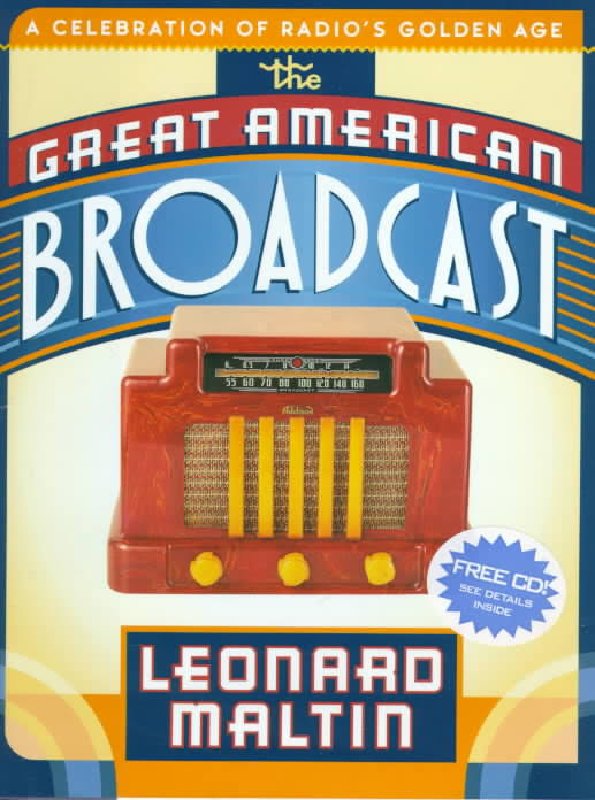
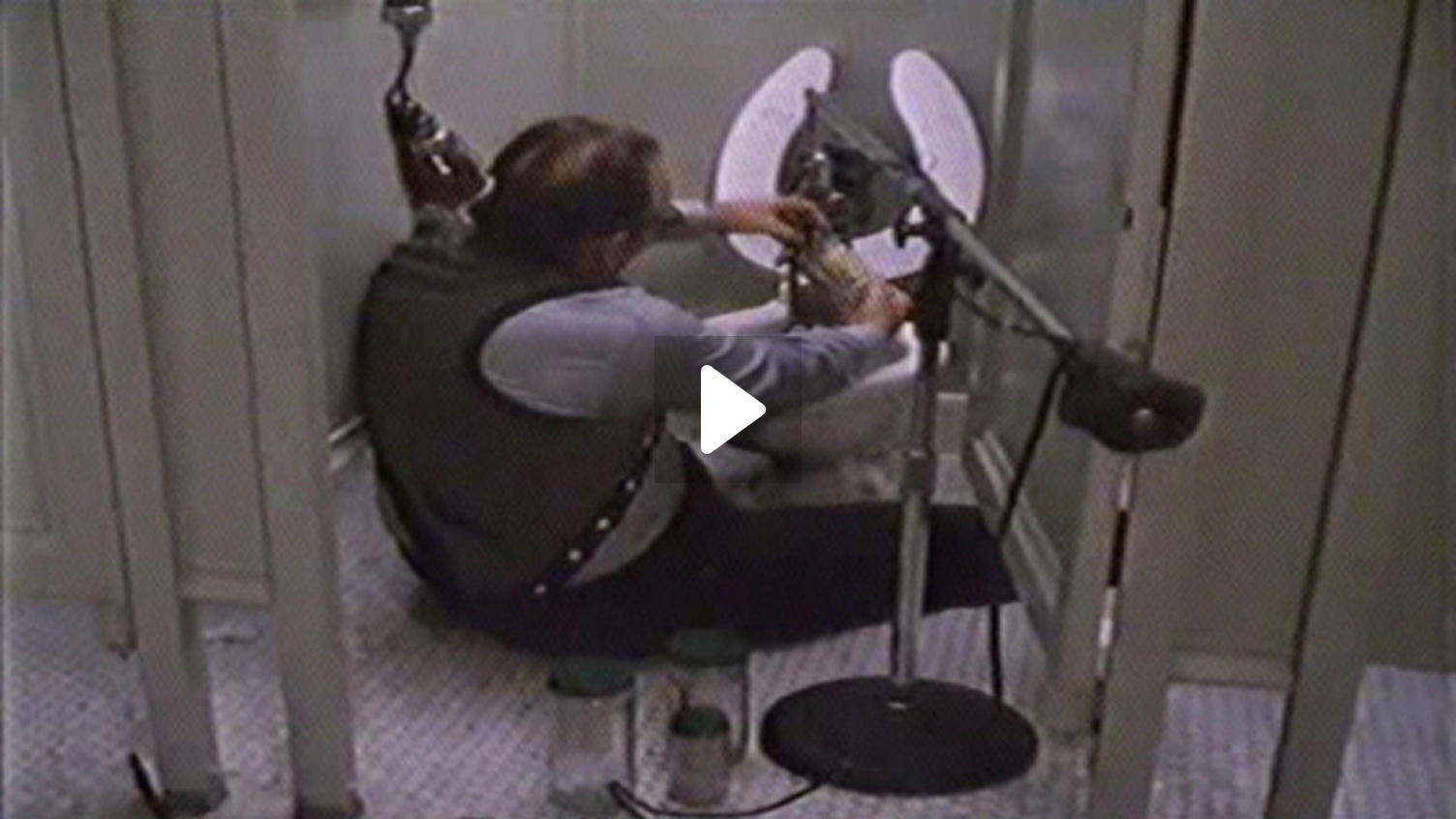
As I got older, read more, and watched movie and TV portrayals of radio with a deeper understanding, I learned more about the intricacies of production – including writing, directing, acting, and sound effects creation, which made me even more fascinated.  Books such as The Great American Radio Broadcast, Terror on the Air, Suspense, Inner Sanctum Mysteries, and The I Love a Mystery Companion  revealed to me the behind the scene creation of programs such as Inner Sanctum, Lux Radio Theatre, Suspense, and I Love a Mystery, to name a few – from initial inspiration and pitching of a show to sponsors, to the intense schedule for writing and rehearsing, to actors’ perspective on radio performing, to audience reactions.  I was especially intrigued by how special sound effects, combined with an audience’s willing imagination, were such a powerful force in creating reality:  coconut shells became pounding hooves, a stabbed melon was transformed into a fatally impaled human, a flushing toilet could be modified to become space invaders’ horrific weapons, or a heart beat might be created with a rubber sponge, a turn table, and a stylus (Maltin 108)!  Of course, there were also the ultra realists like Jack Webb whom Leonard Maltin reveals created the sounds of passing cars on Los Feliz Blvd. at 2:30 a.m. by having a sound man go out and record passing cars at 2:30 a.m. on Los Feliz Blvd. (Great American Radio Broadcast 100).

One source that especially galvanized my interest was Rupert Holmes’s Remember WENN (the real first original AMC series).  This delightful program traced the adventures of a Mid-West small-town girl who makes it to the big city (sort of), Pittsburgh, and starts as writer but soon finds the hectic demands of the station moving her swiftly into the roles of director; producer; business manager; and, occasionally, actress.  With humor that is sometimes whimsical, but always clever, Remember Wenn joyfully captures the seat-of-your-pants spirit at a radio station that characterized how this medium entertained and delighted audiences.

Whether in Remember Wenn or in the books I read, I especially loved learning how actors had the pleasure of playing an enormous catalogue of roles because we created their characters in our minds on the inspiration of their voices.  That’s how a short, chubby chap could become a strapping western marshal or a middle-aged man could mentally materialize as a kindly old grandmother in the theatre of our minds!  Or we got to “see” our favorite actors playing roles they never had a chance to have a crack at on the screen.  For example, as a Joan Bennett fan, I was delighted to catch her deftly cracking wise in Rosalind Russell’s part in Hired Wife or seductively manipulating Burt Lancaster in Barbara Stanwyck’s role in Double Indemnity

And short stories or novels were brought alive for us as well – especially Orson Welles’s infamous trick more that treat, War of the Worlds.  Both situations inspired me to think about what fun it would be to take some of my favorite horror or mystery stories or even movies and imagine them as venues for Jessica to strut her thespian stuff.  So, in Dead Man, Jess gets to talk about doing “A Rose for Emily” and “The Dunwich Horror”; in Dark Horse, we have reference to her playing in “The Horla.”


In Jessica’s most recent adventure, Shadows of a Dark Past, I’ve centered the story around her work on a remote broadcast in a haunted New Hampshire mansion (somewhat inspired by Charlie Chan in the Wax Museum). Attempting to drum up ratings, her director/producer Scott plans to reopen the tragedy of a woman’s tragic disappearance, and likely murder, in this mansion twenty years before.  The owner of the mansion, the husband of the woman reputed to be the ghost, her daughter, and others in the town who remember the event have dangerously mixed emotions about the broadcast.  And Jessica finds that she has a disturbing connection to the woman in question.  Then there’s the Hound of Hell. The topper is when things go horribly wrong in a séance recorded for later transmission.

In a book still in the outline stage, the plot revolves around Jessica’s work in the studio with some members of the writing team who are dangerously not what they seem. It’s Dusty who sets the plot in motion! So, don’t change that station!  I plan to bring you more exciting installments of the adventures of Jessica, Liz, James, and Dusty in and out of the studio!


If you’re looking for some films to give you a flavor of radio at its most exciting and mystery-inspiring, check out Charlie Chan in the Wax Museum (1940),  Abbott and Costello’s Who Done It? (1942), Danger on the Air (1938), The Hucksters (1949), That’s Right, You’re Wrong (1939), The Big Broadcast of 1938, Playmates (1941) The Frozen Ghost (1945), Radioland Murders (1994 – George Lucas directing, no less), and The Scarlet Clue (1945).  For a sardonic look at the effects of Orson Welles’s broadcast of War of the Worlds, have a chuckle at Hullabaloo (1940); and for a (mostly) more serious look, watch The Night That Panicked America (1975).

Image of Orson Welles directing:  Broadcasting play:  https://musingsofamiddleagedgeek.blog/2022/10/07/the-night-that-panicked-america-1975-is-a-little-seen-tv-movie-about-the-greatest-halloween-prank-ever-played/

Screen shot of  soundman and toilet from The dvd The Night That Panicked America,CBS Studios, (c) 2014

Image of Melinda Mullins from AMC Movie Magazine.

Image of Joan Bennett, Dusty, and Jessica Minton, author’s collection

Back to Home Page

Deer Island Jaunt!

One of the FB birding groups to which I belong mentioned the presence of snow Buntings on Deer Island.  These cute guys were birds that I had never seen close up, but I’d always wanted to.  So, Yang and I took a jaunt out one weekday early afternoon and had quite a treat on our long walk around the island.  It’s about a 2 1/2 mile circular trail around the island on a paved path, so the going is easy.  It was a gorgeous day – and the views matched the weather.
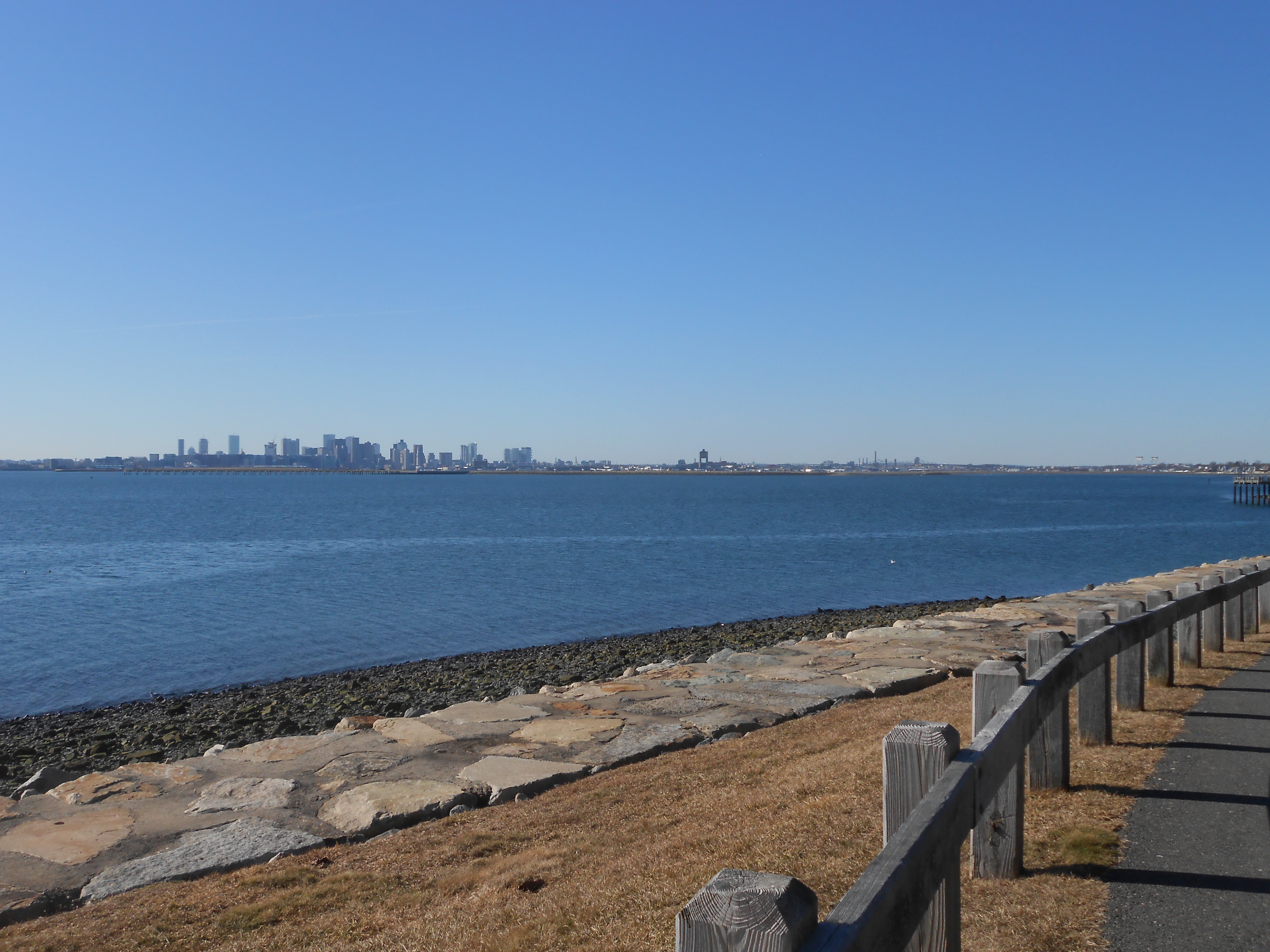
There are some wonderful views of
Boston Harbor. You can also see that I have this really neat white hat on, given me for Christmas by my good friend Kathy Pender Phaneuf.  This hat has kept my noggin warm on many a seaside trek to scope out the water fowl.  Thank you, Kathy – and dig these views!


On the far side of the island:


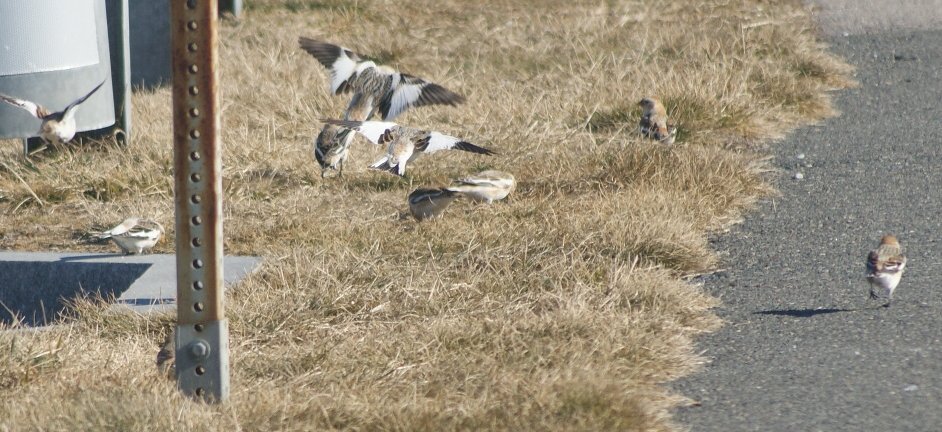
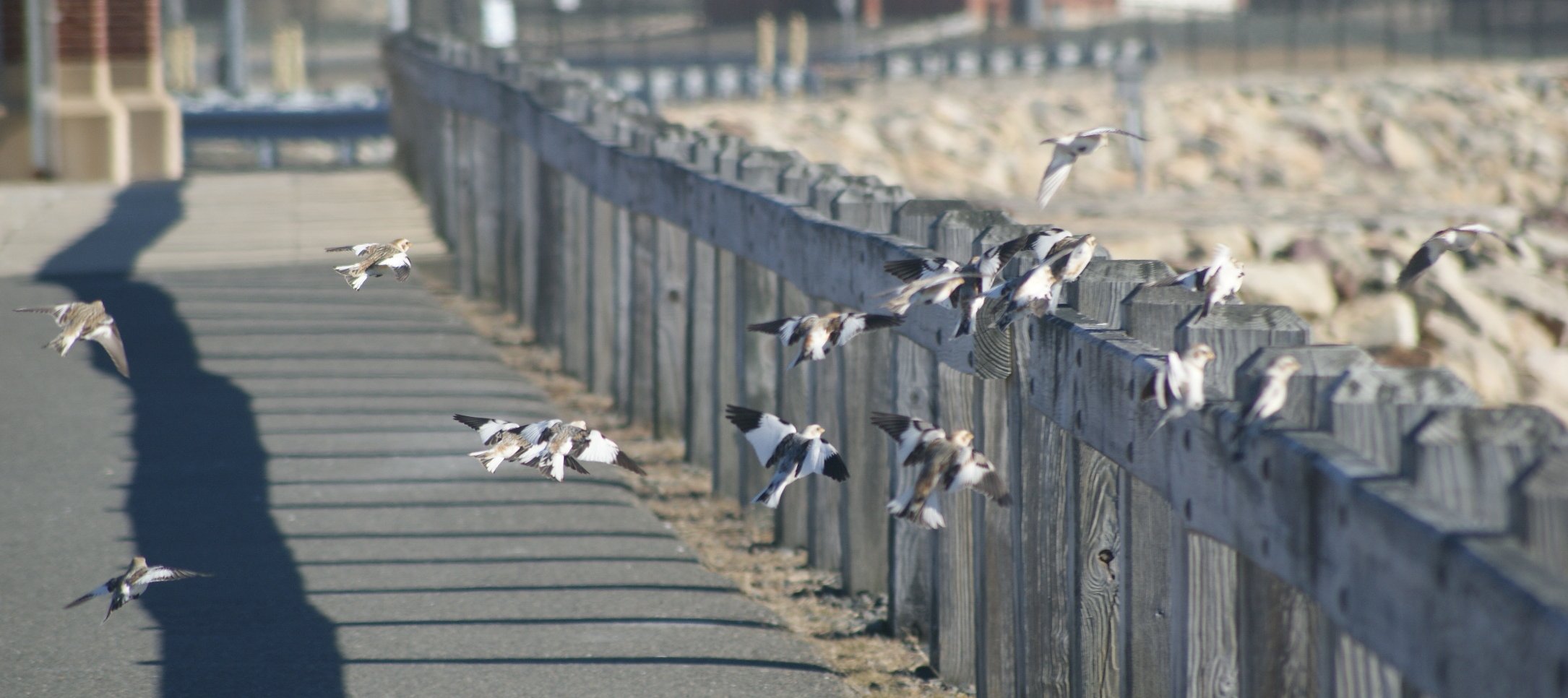
There was, indeed, quite a bit to view in the fine-feathered-friend department.  I got to see my Snow Buntings!  You should click on the images to get a really good look at these guys.


I first heard them somewhere on the beach, but couldn’t see them.  I walked along the wall next to the trail, looking at the ground to watch my step, when all of a sudden, Yang called, “Stop!  Look in front of you!” There they were – and what fun they were to watch.  If you creep up very slowly and quietly, you can get a good look at them, but you have to be careful.  These birds are extremely timid and spook easily.  Then the flock is in the air, flying in precision formation, but often circling back  nearly to where they started.  When they fly, you can see white and black chevrons on their wings that are beautiful!


Here are a few closeups.  I love that gorgeous white on their tummies.


There were even more birds IN the water than out of it!  We had been to the Cape looking for Eider Ducks recently, but hadn’t seen many.  Now we know where to find them – along with Scoters of all kinds, Scaups, Buffleheads – you name it!


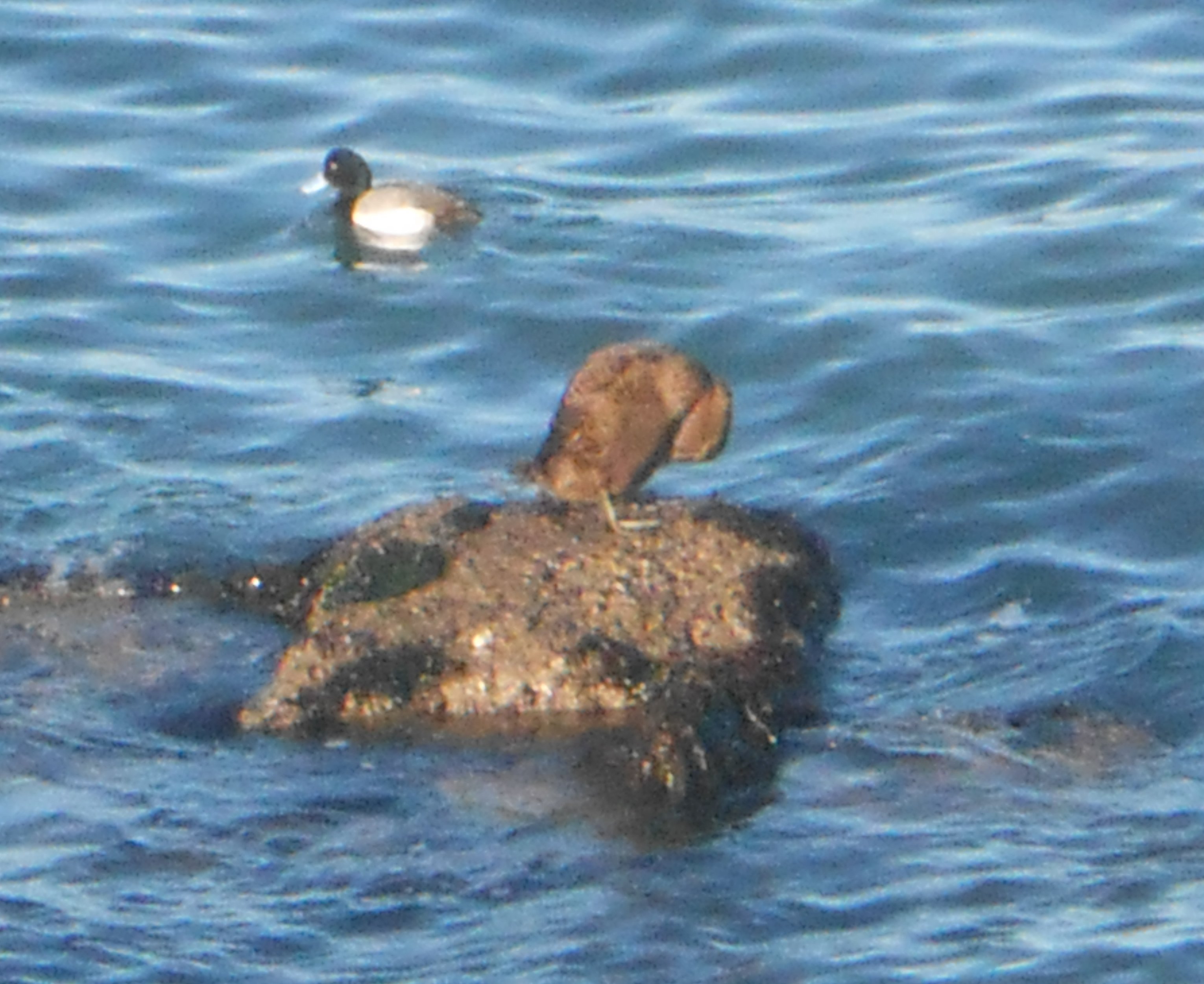
Here are some close ups of the Scaups, and it looks like a female Bufflehead.


There were lots of Eider Ducks.  We got a special kick out of this lady who was have a fine time for herself out of the water on her own personal rock – with a special guest shot by a Scaup.


Then, she has to get down with her bad self in this next picture.

We did see  and hear some Song Sparrows. I wonder if in the spring some interesting song birds will return to sing in the brush or atop this Celtic Cross?

Christmas Beauty at Hammond Castle

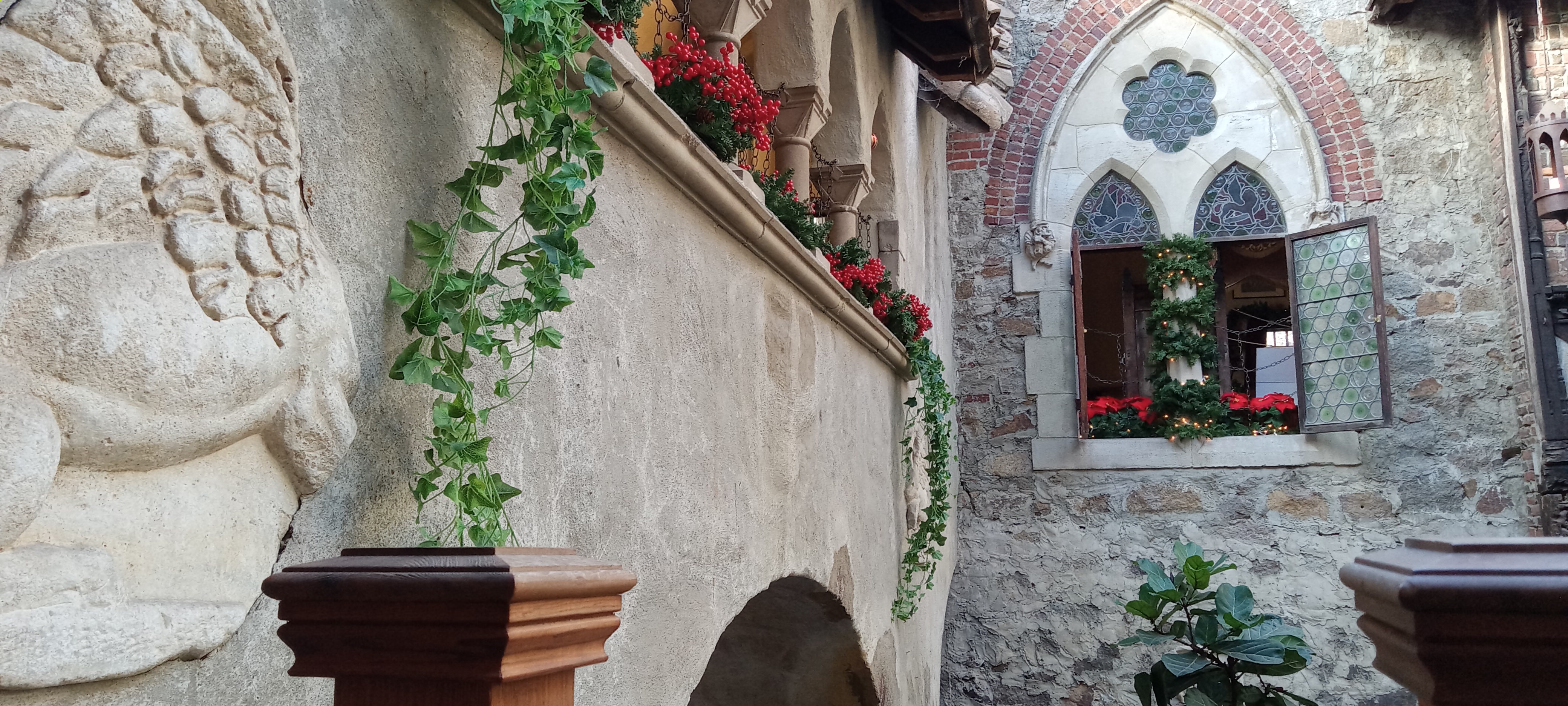
Since we’re still in the middle of the twelve days of Christmas, how about a blog where you can see the cheery holiday decorations at one of my favorite spots, Hammond Castle?  I hadn’t been there for years, but I remembered how they did up the castle right for Christmas one of the times I was there many moons back.  So, Yang and I decided to celebrate the season by visiting once again.  We were not disappointed.

John Hammond built this castle early in the 1900s, funding it by the sale of his patents for all kinds of applications to navigation, radar, radio, etc.  In fact, I believe he holds the record for the largest number of patents awarded in this country.  He did come from a prominent and wealthy family, but they disowned him for marrying an older divorced woman – with whom he shared a long and happy marriage – so there Mom and Pop Hammond!

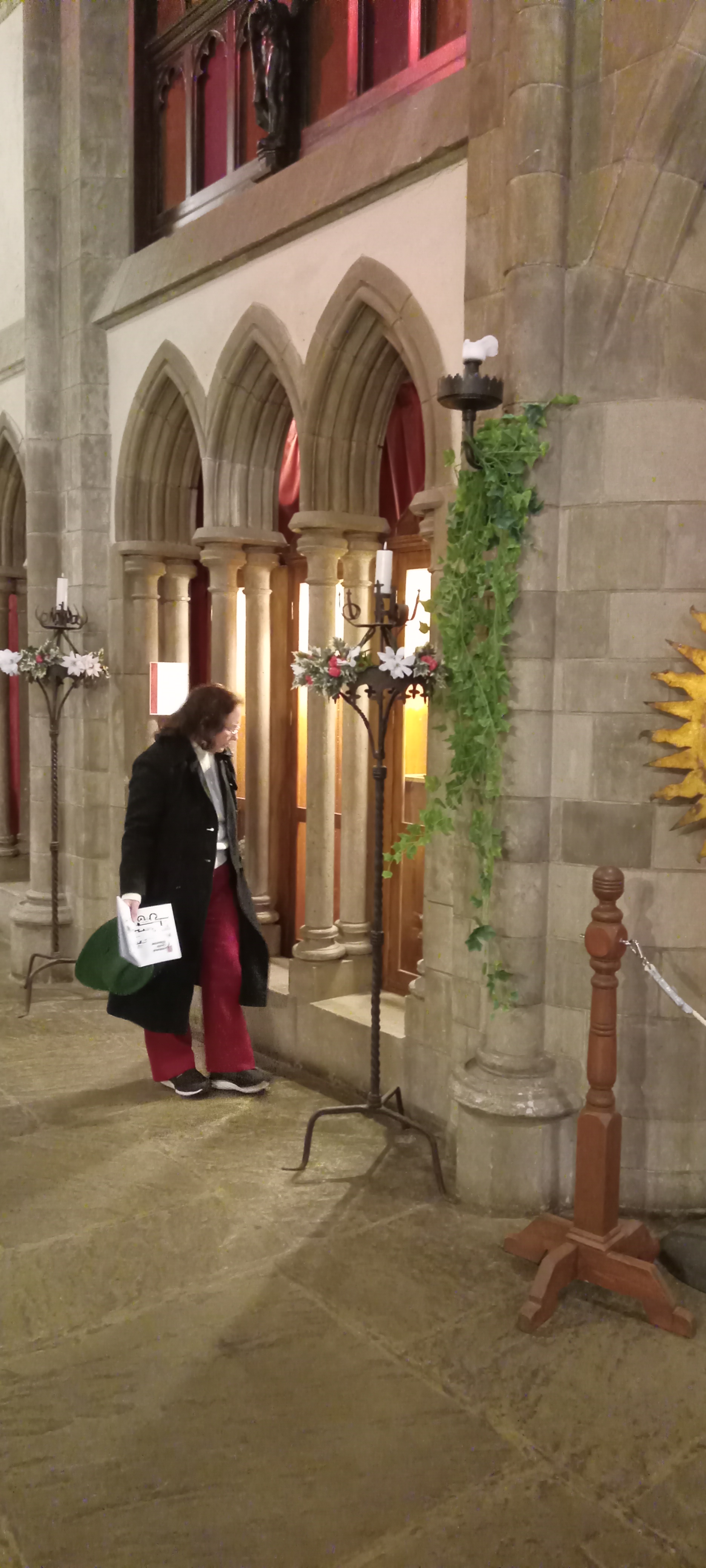
The main shots we have here are of the Great Hall and the Courtyard.  Yang took some really neat shots of the Great Hall.  Hammond would have large family and friend gatherings here in his day, including lots of famous film political, and business figures. I remember back in the 1980s and later when I came here, I attended concerts on the pipe organ and by smaller consorts.  I also got to watch silent films in the Great Hall. It was the perfect setting to enjoy Lon Chaney’s The Phantom of the Opera.  In this photo, you can get an idea of the length of the hall.  You can also see the beautiful rose window.


You can also observe some of the alcoves off the main hall  in these photos.  I wish we’d had a chance to take pictures in the dining room and the library off the Great Hall, facing the ocean, but the light was not great for photographing — too much sun coming in.  Natasha would have liked it, though!  Some of the decor were skillful reproductions of classical, medieval, and renaissance art; however, much was also pieces that had been rescued from ruins or antique dealers.


How about this huge hearth?  Would it keep the entire hall warm?  Well, maybe you ought to remove the Christmas decorations first!

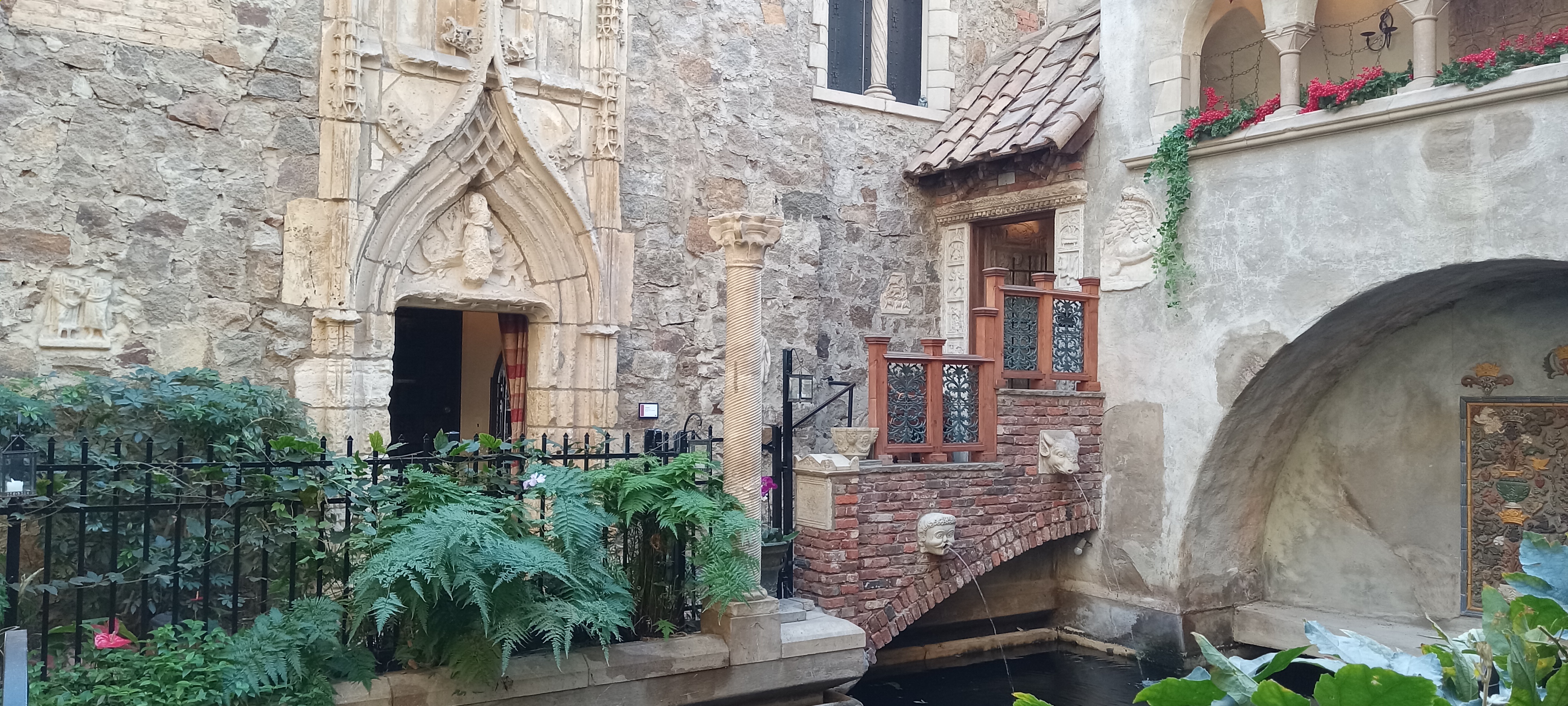
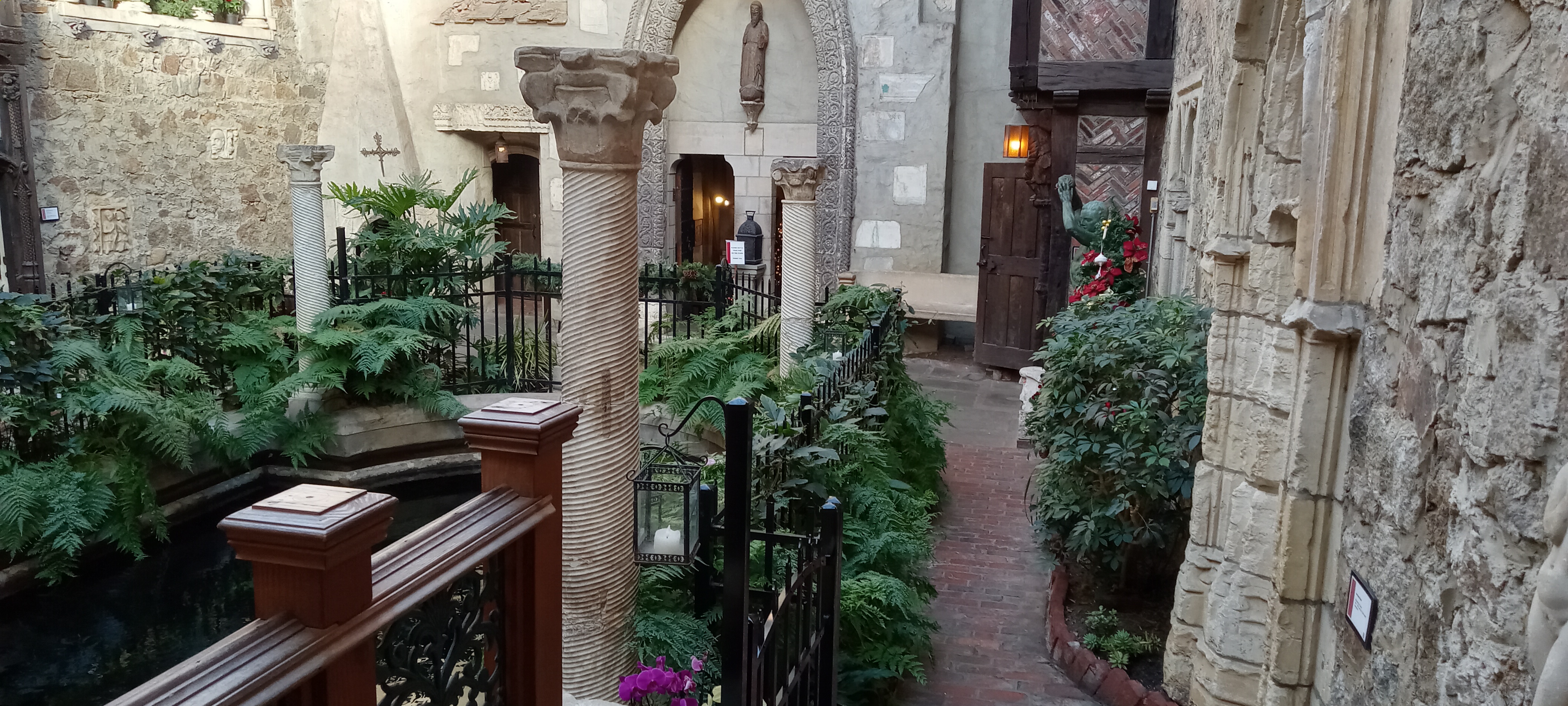
The courtyard was a real treat!  Recreations or imports of medieval and renaissance shop fronts were integrated into the walls, leading into various rooms.  The courtyard was roofed with glass skylighting, allowing for the growing of all kinds of plants that surrounded a long, eight-foot deep pool.   Here is a view from the balcony to one end of the courtyard from which Mr. Hammond enjoyed diving off  into the pool for a swim – but I think he changed into his trunks first. How would you like to jump in from here?

We were lucky enough to meet two of the guides there who took our picture.  We had a great chat with them about the castle and ruins, castles, mansions, and other haunted spots in new England.  If we go back for a guided tour, I know that they would do a great job.  they helped make our day!

Anyway, here are some more shots of the courtyard.


Looking at these photos, you can see how Hammond integrated reliefs, tombstones, storefronts, etc, into the construction of the hall.  It’s eclectic, but it works!

The Christmastide greenery adds seasonal beauty and cheer to the castle.

We don’t have photos of the bedrooms or the kitchen or Hammond’s workrooms.  Maybe that’s for another day – or for you to find on your own trip to the castle.

Finally, the outside is also a pleasure to enjoy.  For one thing, there’s a draw bridge.  An interesting story connects here.  Apparently, Hammond also built a covered bridge for the cats to leave the castle near here as well – but they didn’t deign to use it.  I think they were busy chilling in the boxes in which some of the antiquities arrived.


Of course, we can’t forget to include picture of the person to whom we can credit the majority of these photographs.


I love these Gothic arches framing the view of the Atlantic on this sunny winter’s day.

For your final delectation, below is a video that reveals the glory of the Great Hall in panorama.  If you want to enjoy Hammond castle for yourself, here’s a link to their web site. Their “Deck the Halls” tours are open until December 30th.


November December Flora and Feathered Fauna

Even as November eased into December, Yang and I have still enjoyed the creatures and plantation around the Yang Manse.  Would you believe that we still had morning glories toward the middle of November?  Gallantly battling colder, shorter, darker days, these Heavenly Blues waited until the last gasps of autumn to bloom.  Their beauty shown through the dying colors of the late season. They even provided a lovely contrast to the last of autumn’s orange and rust foliage.

Though we had an extremely poor crop of pumpkins and gourds (three fertilized, two surviving long enough to be picked), we did still manage to grow some of the plants to maturity.  Here, is one gourd that started out lovely, but succumbed to cold, too much dampness, and the onslaught of slugs.  You can see how pretty it was before Mother nature went wild on it.


In a happier vein, though, how about a look at the survivors?  This gourd that did make it was a surprise fertilization, which we found peeping under some leaves.  Here it is shortly after discovery.  We try to put a rock or plate under the growing gourds and pumpkins to keep the damp ground from rotting them.


And here is the same gourd all grown up.  Sadly, because it was fertilized, late it never grew very much and then spoiled after only about six weeks.  It was pretty while it lasted!


We also managed to get one pumpkin!  It was fertilized during a short break in the rain for a week or so of sunshine and hot weather.  Here’s our pumpkin a beautiful dark green as it grows slowly but surely, out facing damp and ravenous slugs!


It may not be the biggest pumpkin we’ve ever grown, but like Reba Mcentire, it can sing, “I’m a survivor” – if pumpkins can sing. Now the pumpkin resides in state in the picture window on the sun porch, where we can enjoy viewing it as we watch the birds chowing down at our feeders.


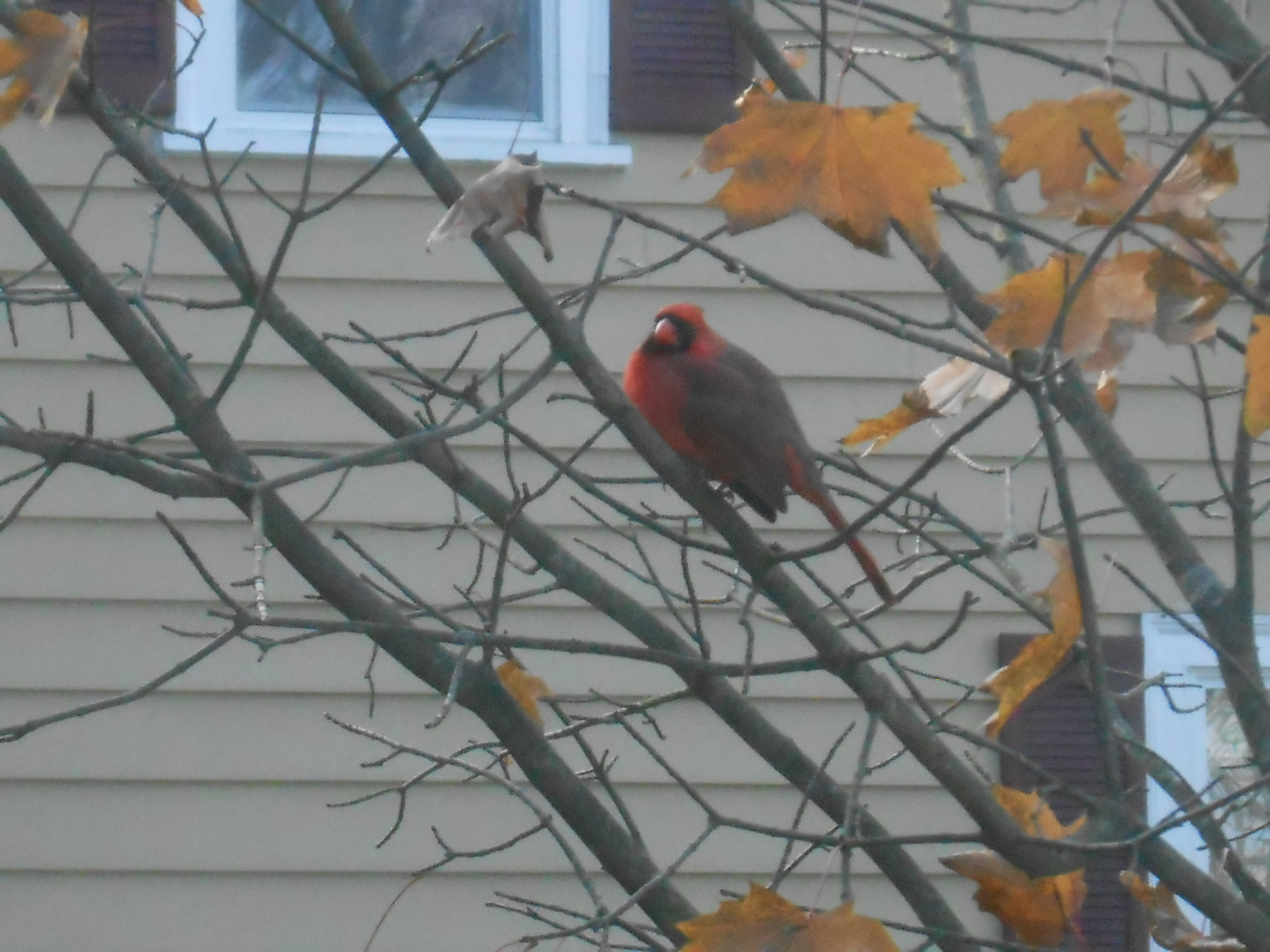
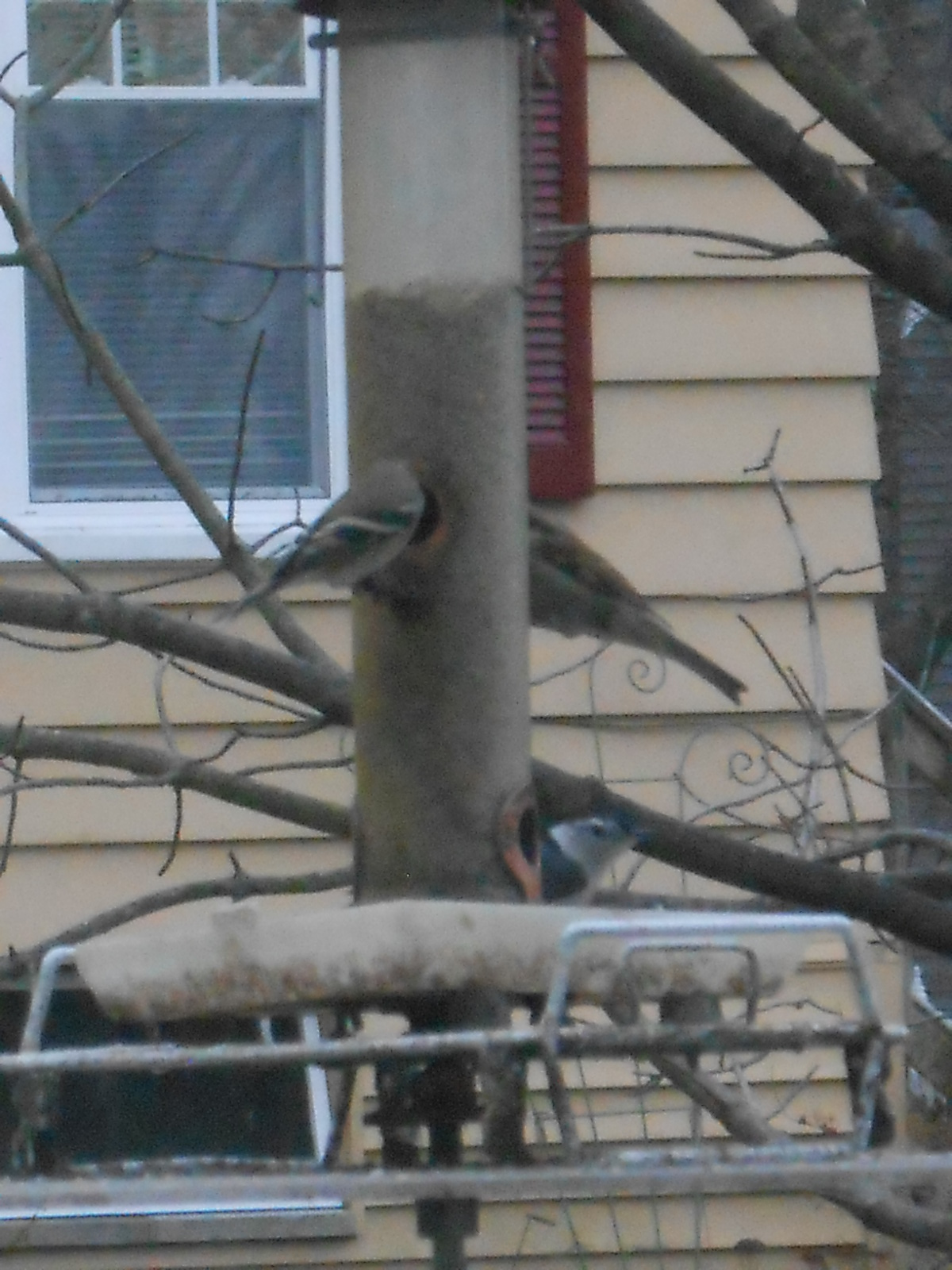
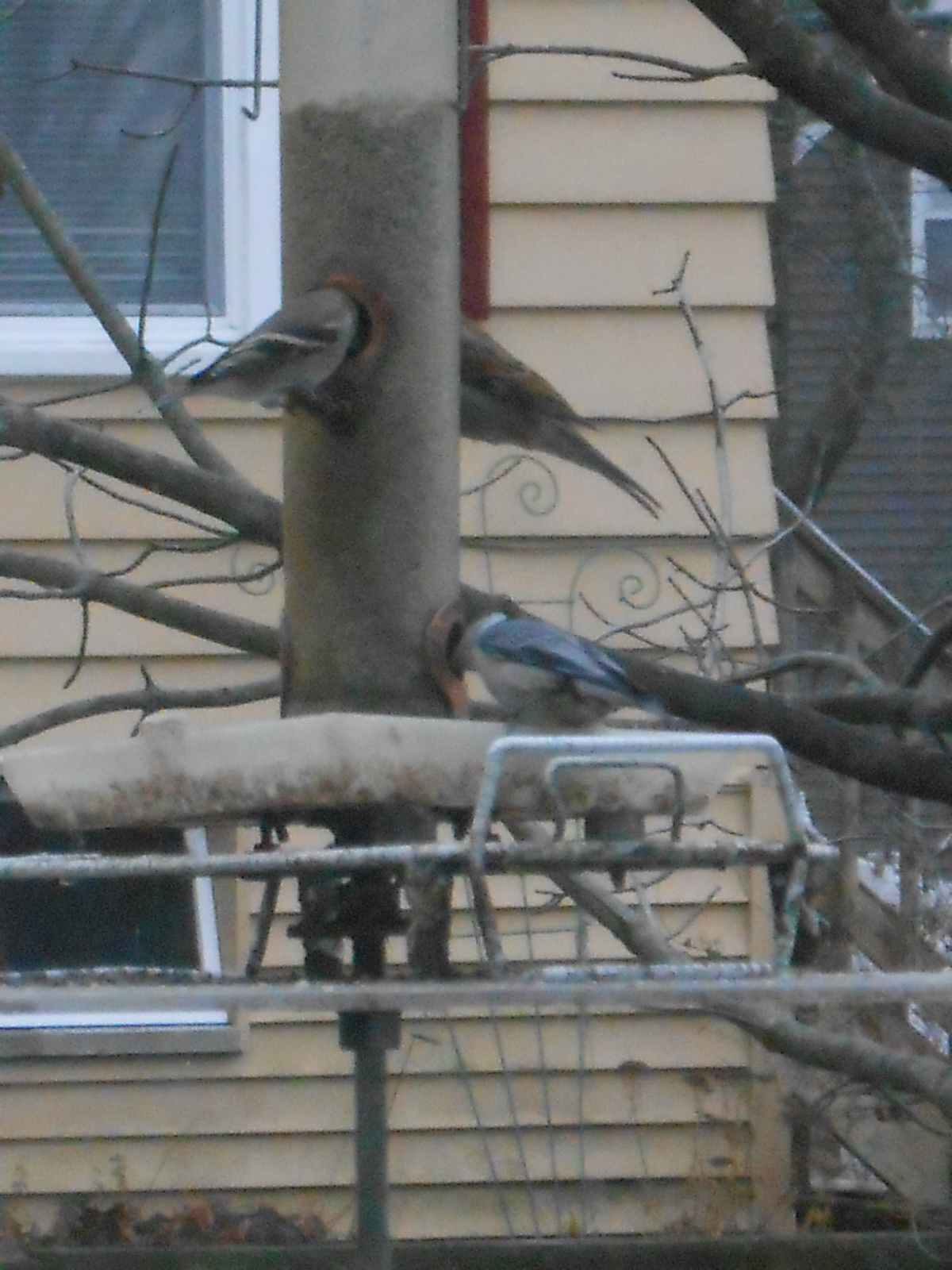
And speaking of birds chowing down on our feeders, we’ve got plenty of the little feathered guys to watch!  We have the usual suspects: Mourning Doves, Blue Jays, Cardinals,  Chickadees, Red Bellied Woodpeckers, Titmice, Downy Woodpeckers, and Nuthatches, for example.


But there are also returning old friends, as well.  The harbingers of winter, the Slate Colored Juncos, are back.  At first, they did their typical feeding off the ground, but now they are returning to old habits of taking lunch at the feeding bar.  It just takes them a little while to remember that they can do that. I love to see them flying away, making the sound of castanets and flashing the white stripes on the fan of their tails.


Who else should make a return engagement after a short absence, but the Goldfinches!  As summer ended, these guys disappeared from my feeders for several weeks.  Then, suddenly, they all returned in November, wearing their olive winter coats. They also like to chow down with the other birds, so I have some neat shots of them with their pals, though woe betide the bird who tries to chase one of these aggressive little olive-garbed guys away!  I love this picture with two Goldfinches and a Titmouse (on the right)doing acrobatics.

Here’s another one of the Goldfinch with a Nuthatch.  Isn’t the Nuthatch in picture #1 adorable, just peeking around the corner of the feeder? Don’t you love the gorgeous blue/grey of the Nuthatch’s cloak, more visible in picture #2?


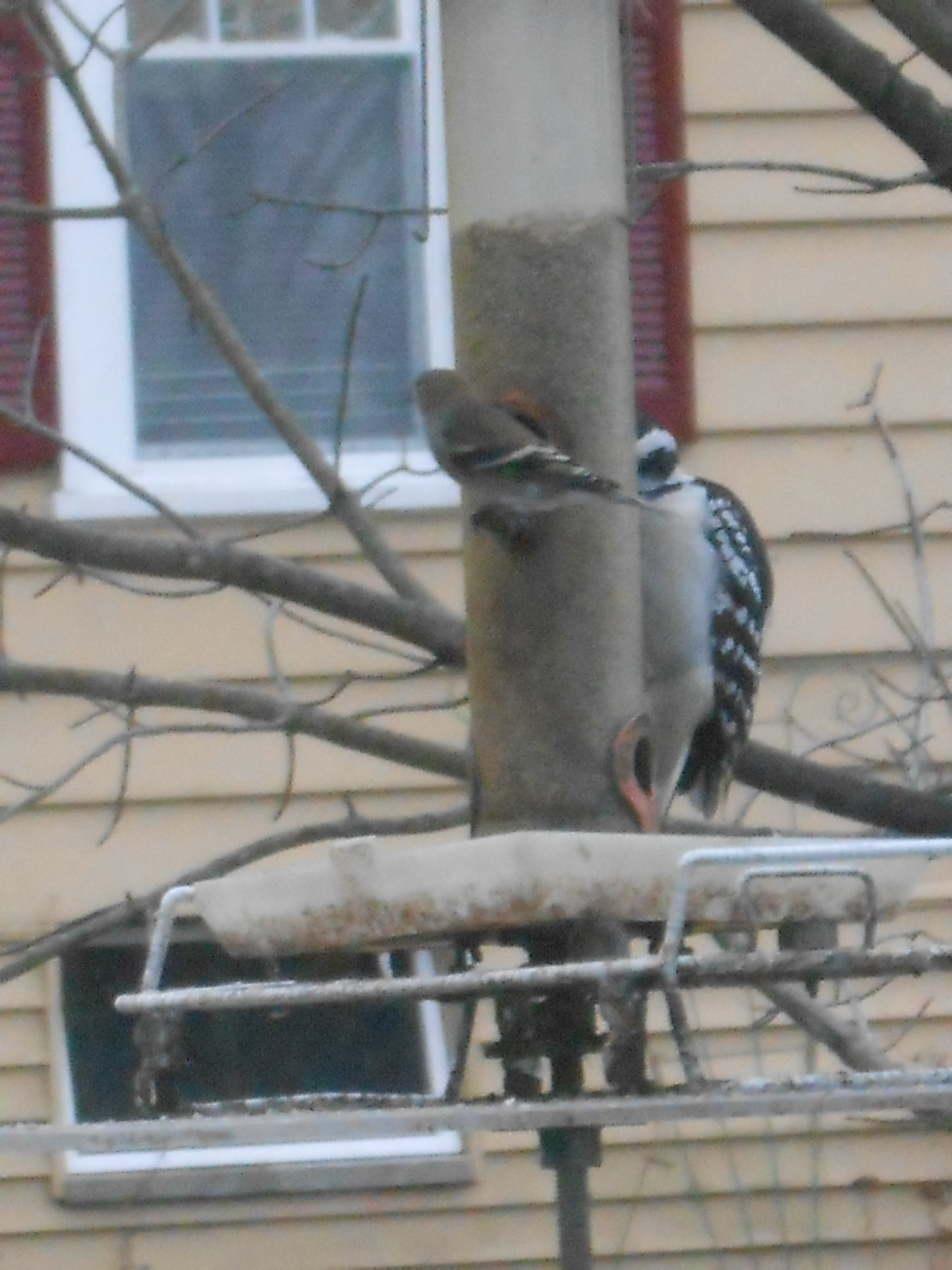
As you can see here, the Goldfinches don’t seem to have trouble getting along with either the Hairy (photo #1) or the Downy Woodpeckers (Photo #2).


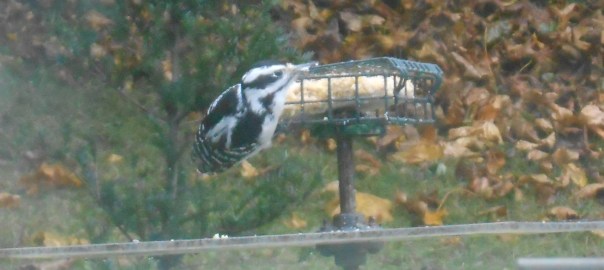
In fact, this summer and fall, I don’t think I’ve seen so many  Hairy Woodpeckers on my feeders.  They certainly do seem to look like Downies on steroids.  Here are some nice shots I got of the female  Hairy.  You can tell the difference because the only the male has a red spot on the back of his head – like in the case of the Downies.

So, I’ll just end with a shot of a Titmouse and a Goldfinch snacking away.

Until the Titmouse turns to me with a definite, “Who you lookin’ at, human!” expression.


Autumn’s Last Will and Testament, Part One

All the leaves brown and the sky is grey.  The Mamas and Papas song seems to sum up perfectly the end of November and beginning of December. So, I thought you might enjoy a look back at some of autumn’s leafy glory to tide you over until the soft blues and pristine whites of winter take over.

One new place Yang and I visited was the Albany Rail Trail in New York.  The trail starts on an uphill slope, but once you get to the top, it levels off and is smooth sailing till the end.  We ended up doing 18 miles of beautiful fall scenery along a river and through the woods.


Then, returning, after a flat ride, we sailed downhill at a feisty clip – but not before I stopped a few times to get some gorgeous shots of the brilliant fall colors, especially gorgeous along the sides of the valleys that sloped into the river, with that goldening light of the setting sun.


Here’s your liquid moment of Zen, in video format: 


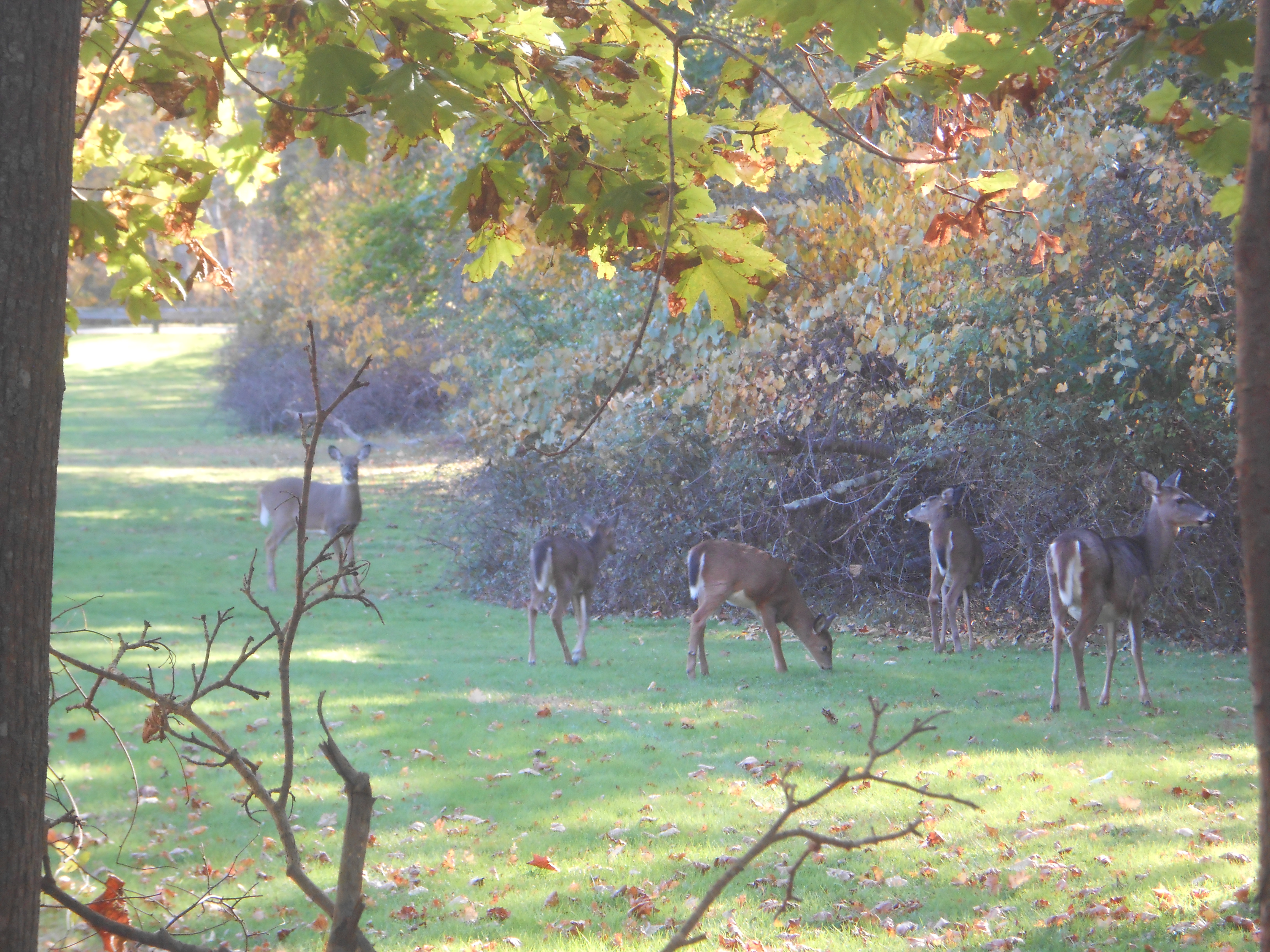
Yang and I also made our autumn pilgrimage to Colt State Park – after lunch at the Beehive in Bristol, RI – Yum, their pumpkin spice latte!  The day was brisk and sunny.  We had the pleasure of all kinds of  fauna.  Walking up a road that cut through the woods and emerged into the open with two large, stone-fenced fields on either side, we caught sight of these guys on our right.  Since we were on foot and not in a car, we had no fear of another fatal collision.  The deer were chill, too.


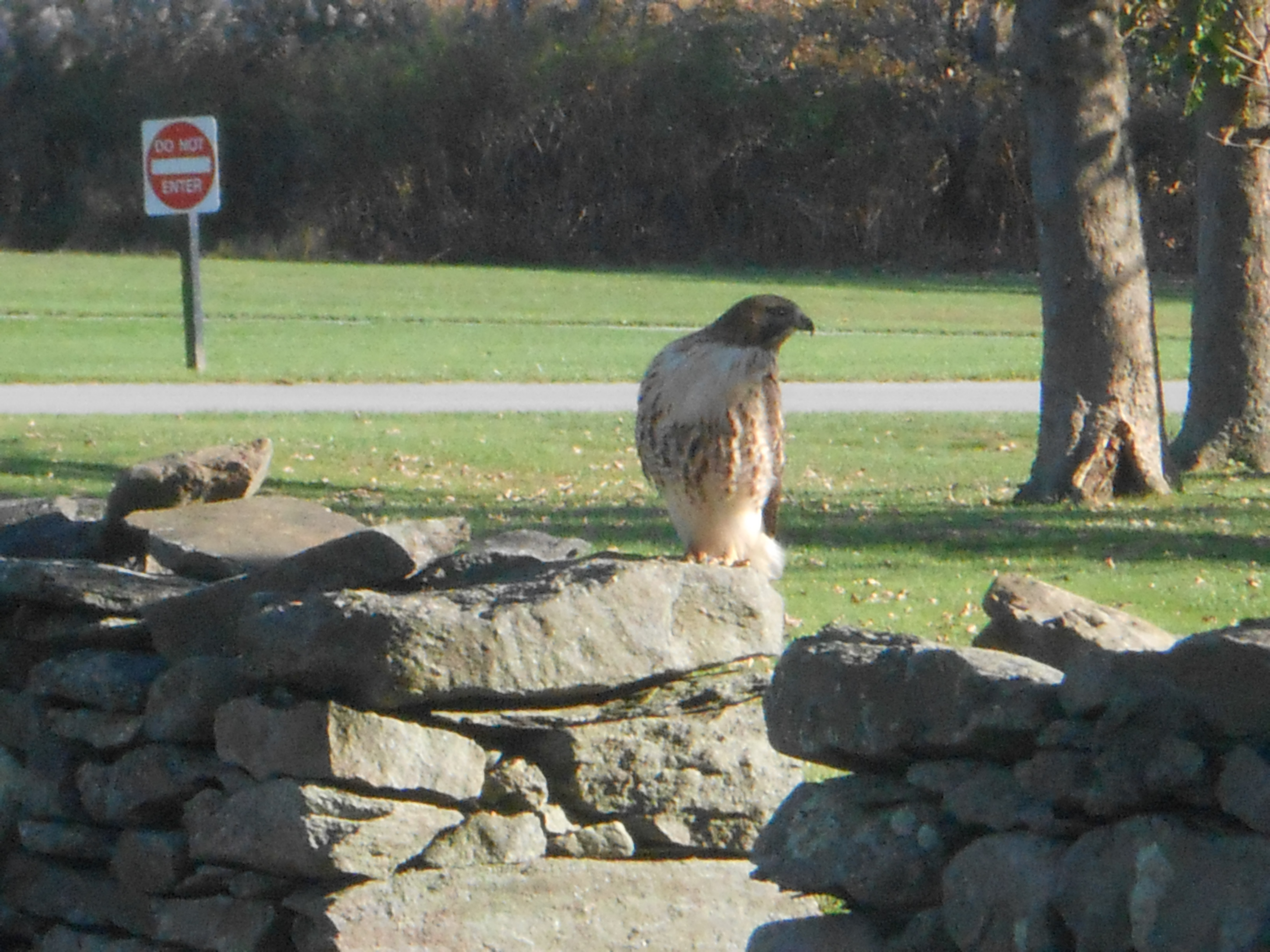
A little further down the road, what should swoop past us to disappear on the other side of the stone wall but a Red Tail Hawk!  Clearly, her eagle, err hawk, eyes had spotted something edible scurrying through the leaves on the far side of that wall.  Unfortunately for her, but fortunate for the mouse, vole, rabbit, or whatever, our hawk hunter emerged and tromped down on the wall with nothing to eat in her claws.  Apparently she was a tad embarrassed because her look here clearly says:  “What are YOU lookin’ at?”


Finally, we also made it out of the woods and onto the shore to make our first sighting of Brant Geese. They kind of look like stocky Canada Geese, but they are quite different.  They also may have a black head, but that’s marked by a white band around their necks, plus, they lack the brown feathers of the Canada Geese. These guys always swim in tight formation and have the most adorable vocalization – not the rowdy honks of their North of the border brethren.


Below is a video where you can hear them almost quacking, rather than honking, but you have to listen carefully!