Category Archives: Fall

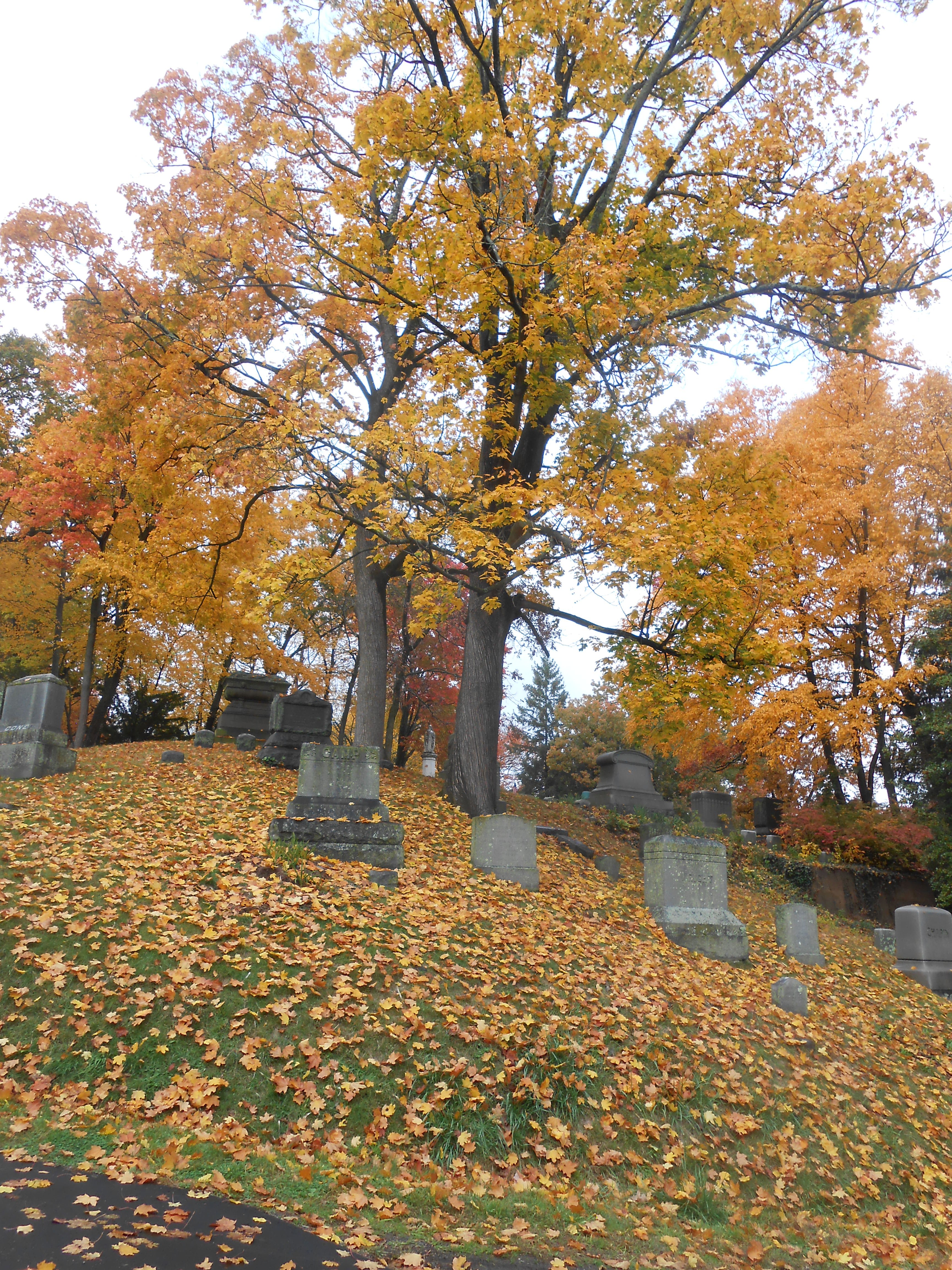
Precious Blood Cemetery, an Autumn Visitation

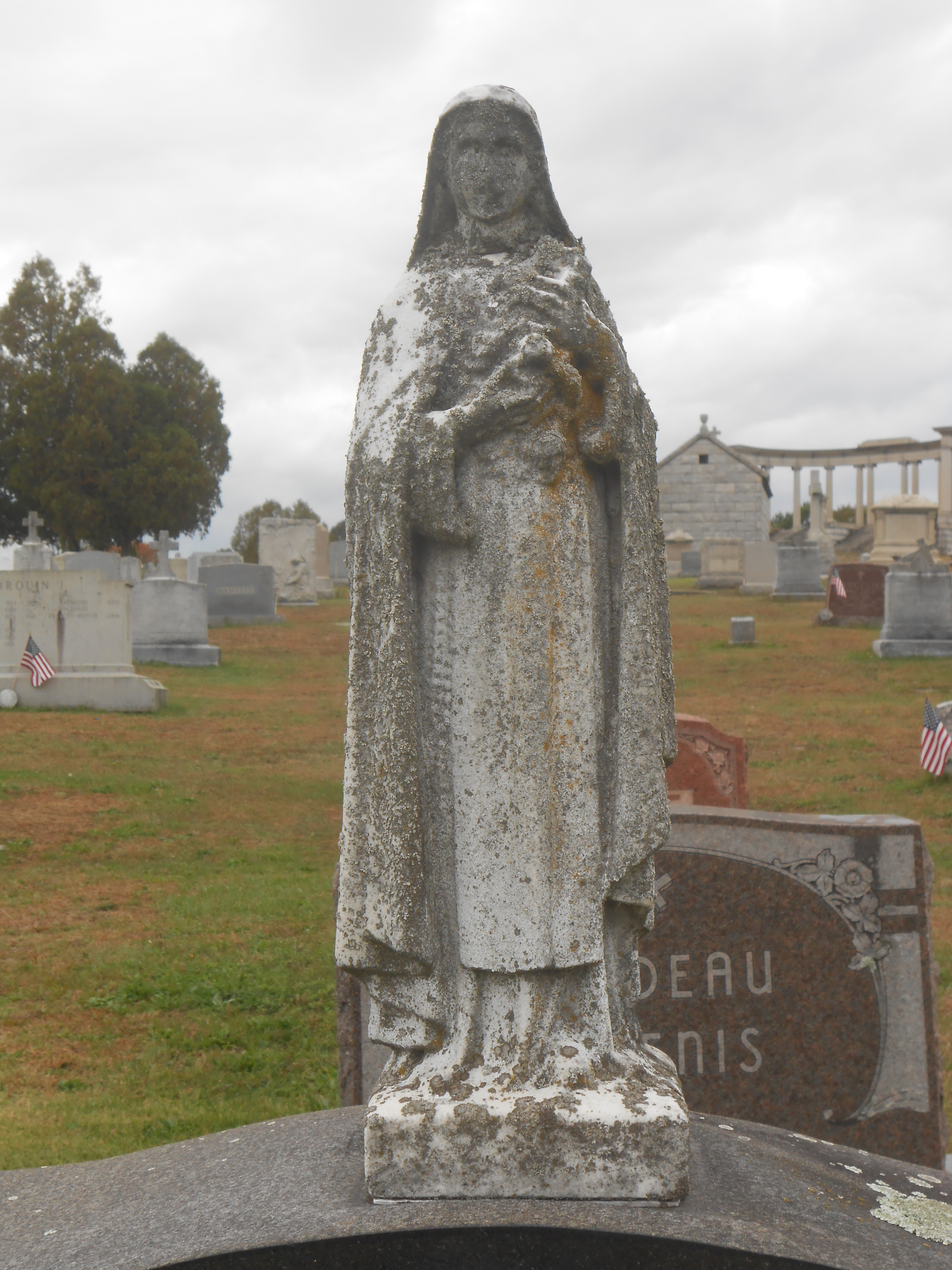
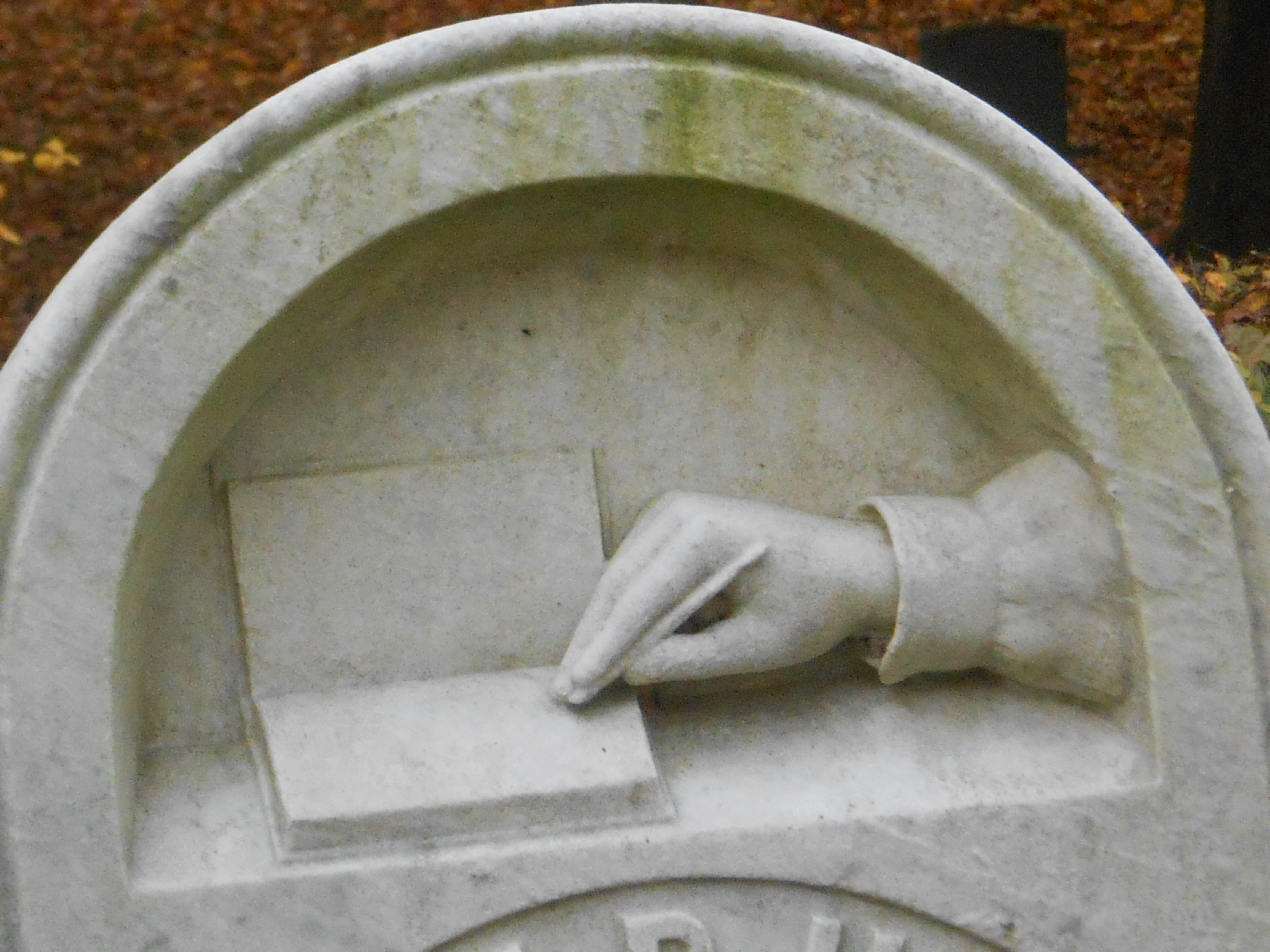
Earlier this fall, Yang and I took a trip to the Precious Blood Cemetery in Woonsocket, where my patron saint is buried.  Here’s a picture of her grave – though technically she was never canonized.  Does that mean I was never really a Catholic?  Oh well, I’m an Episcopalian now anyway.
It’s a wonderful graveyard on the edge of the city with some lovely statuary – and on a grey Saturday afternoon, the trip seemed perfect for the season.   As a Catholic cemetery, there are statues of saints that you just don’t find in the Protestant cemeteries.
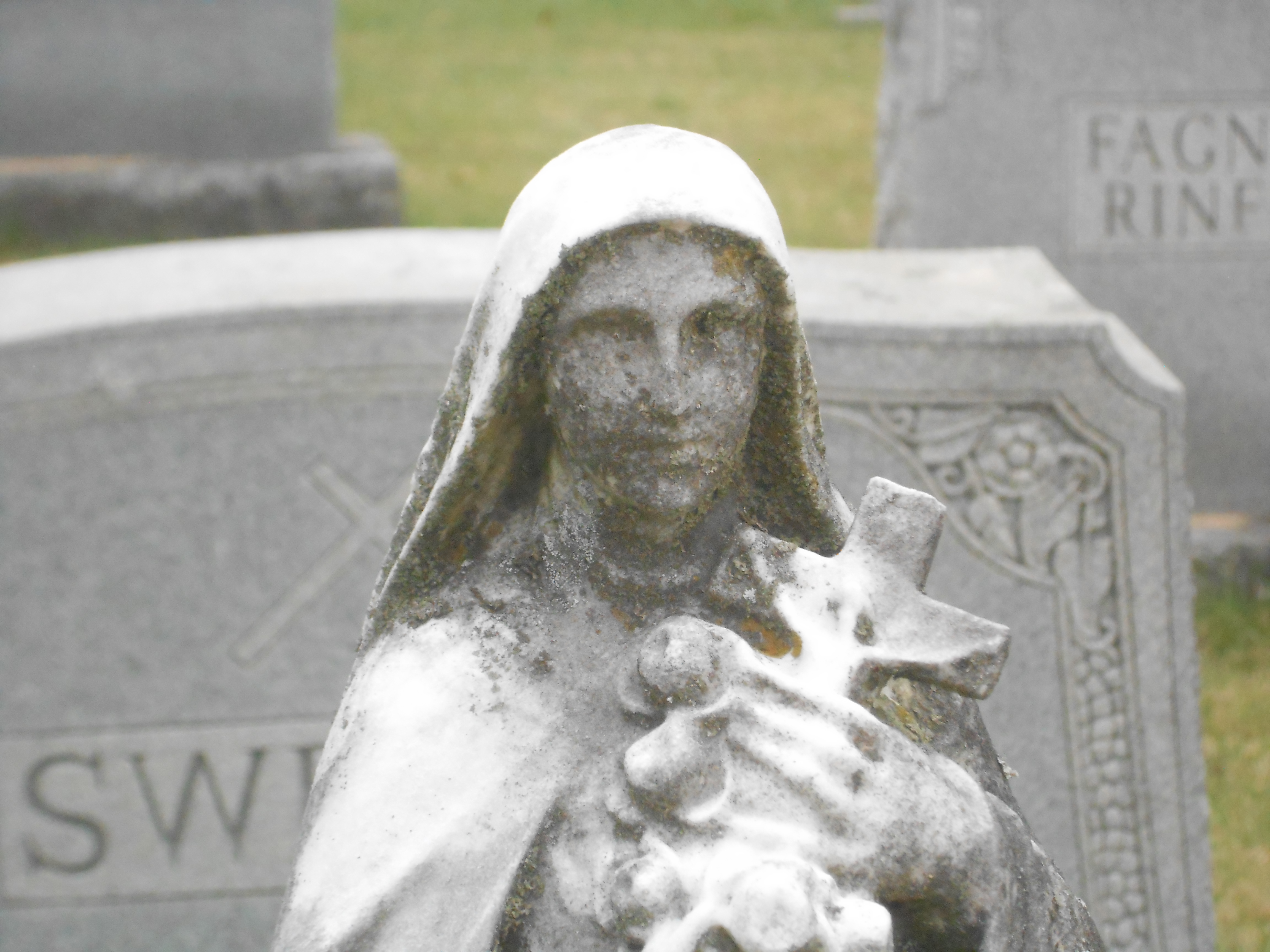
Many people seem to have valued the Little Flower, Saint Therese de Lisieux.  Not surprising since she is a French saint and the large number of Catholics here are immigrants or descendants of immigrants from Canada.  I actually took Therese’s name as my confirmation name because she had to struggle with a bad temper with  incompetent people – guilty as charged.  Those who know me can let me know if you think it helped.

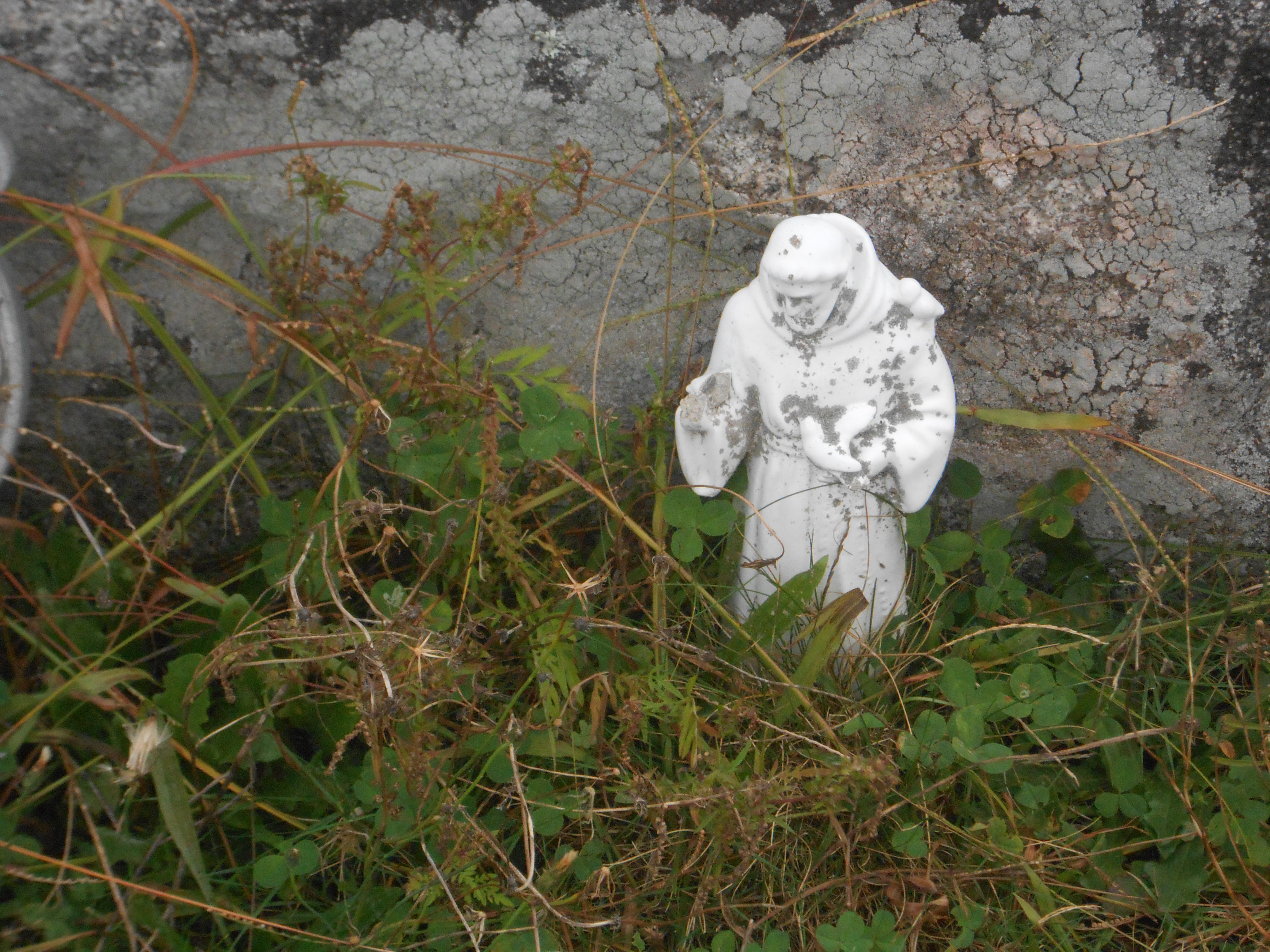
I also saw  a mini St. Anthony, 
and a St. Anthony with the baby Jesus – in statuary form, that is.  Remember, if you’ve lost something, Anthony is the go-to guy.

Jesus also made other appearances – again only in statuary form.
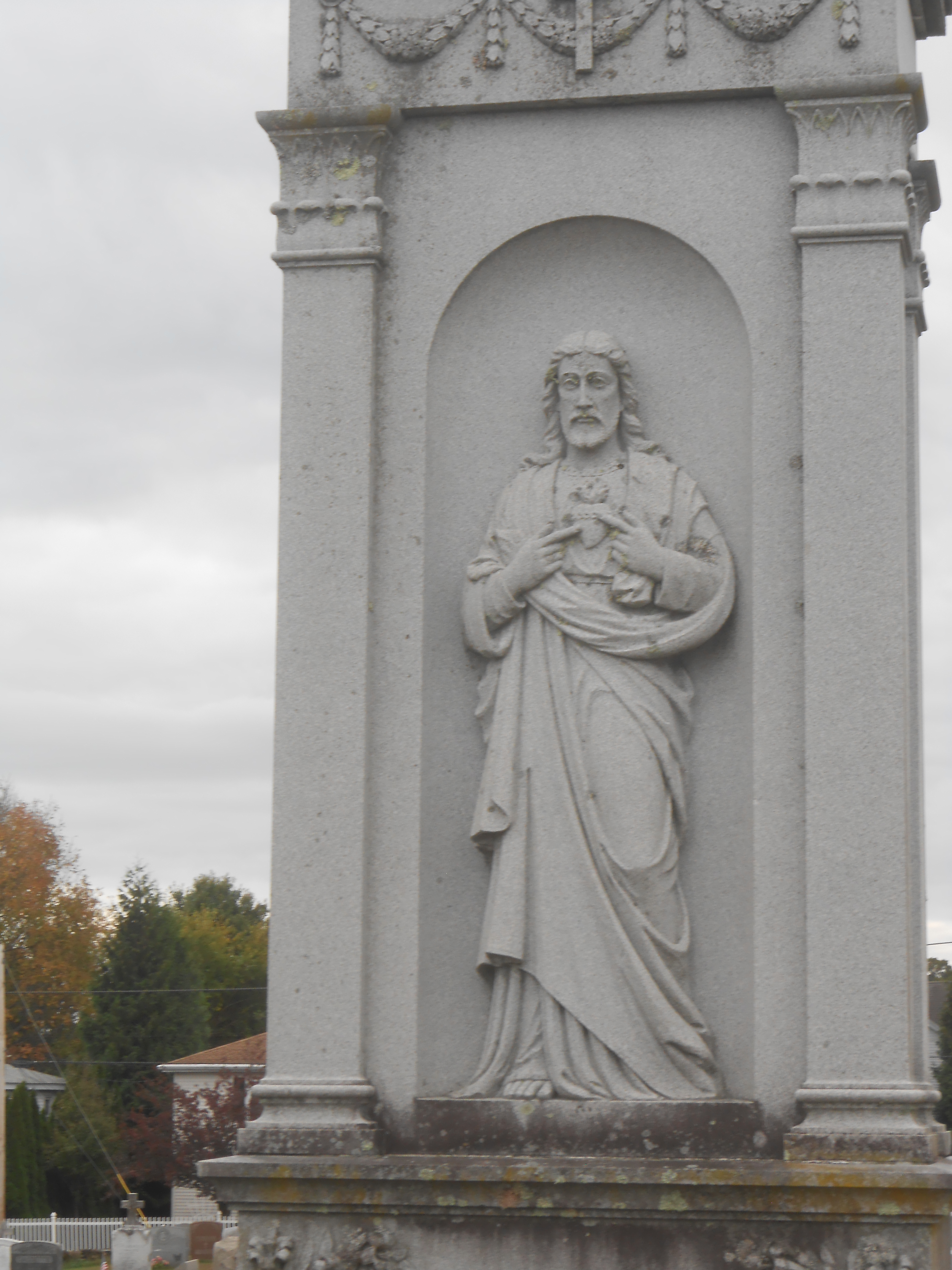
Here’s the sacred heart.


Here is a bronze relief of Christ’s passion on the cross affixed to a grey granite monument, his suffering conveyed through the twist of the metal form.


One grave was surmounted by a life-size bronze of of the three Marys suffering along with Jesus as they witness his crucifixion.


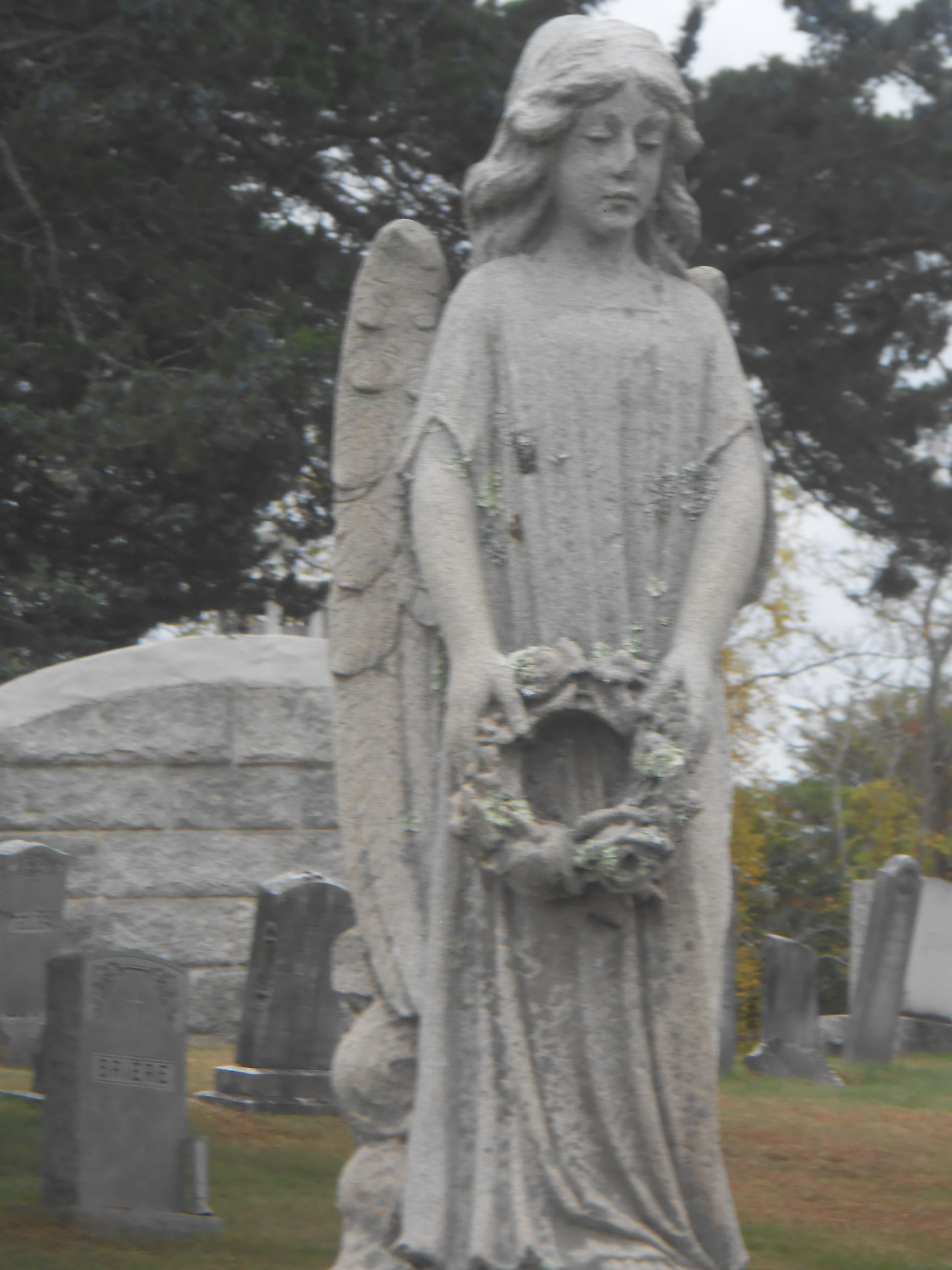
There were also  funerary sculptures that you might find in more secular or not Catholic cemeteries.  Everyone has angels!  Here are some of my favorites from the visit.  There is this child angel.


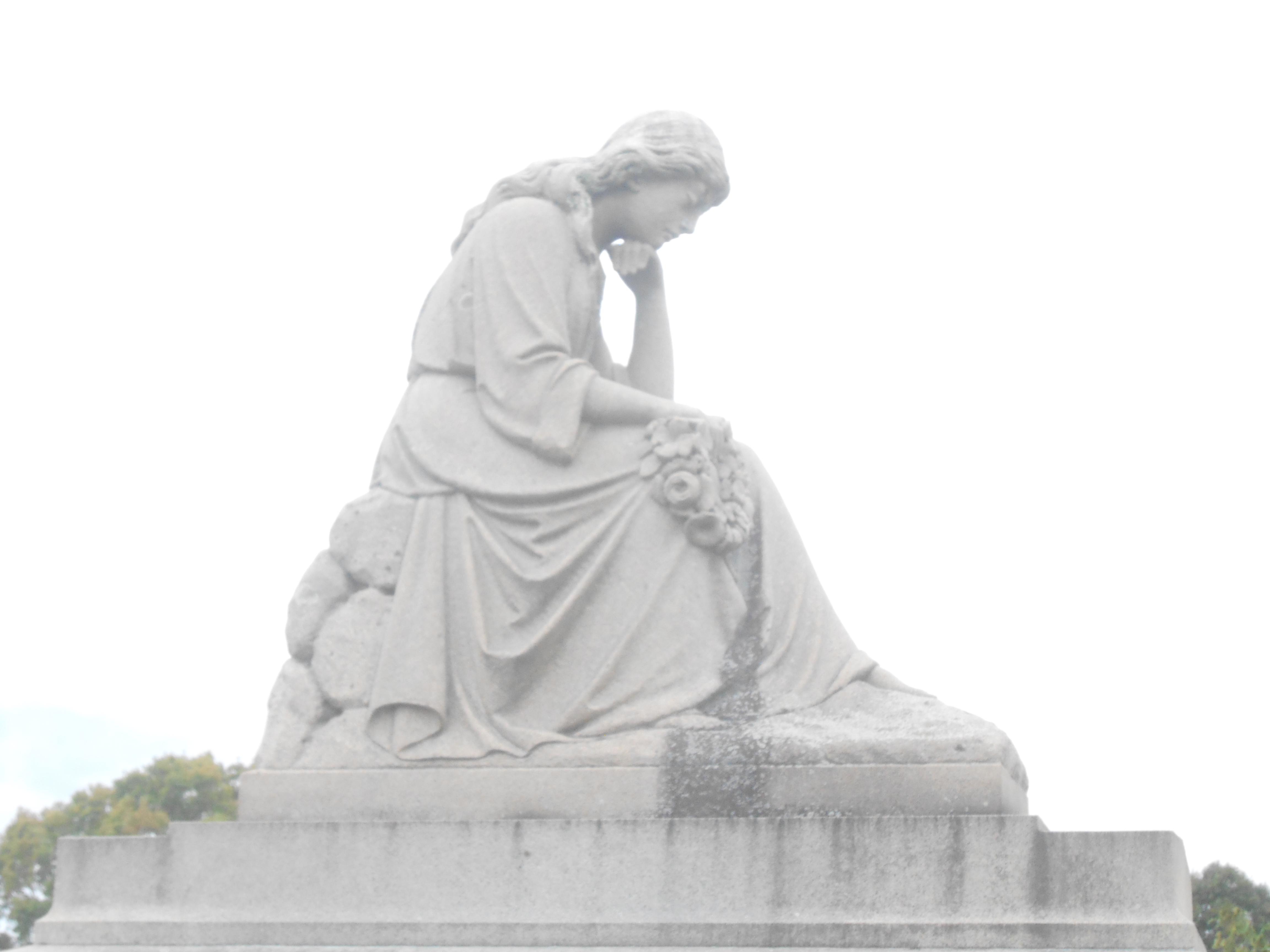
And this grown-up grieving angel


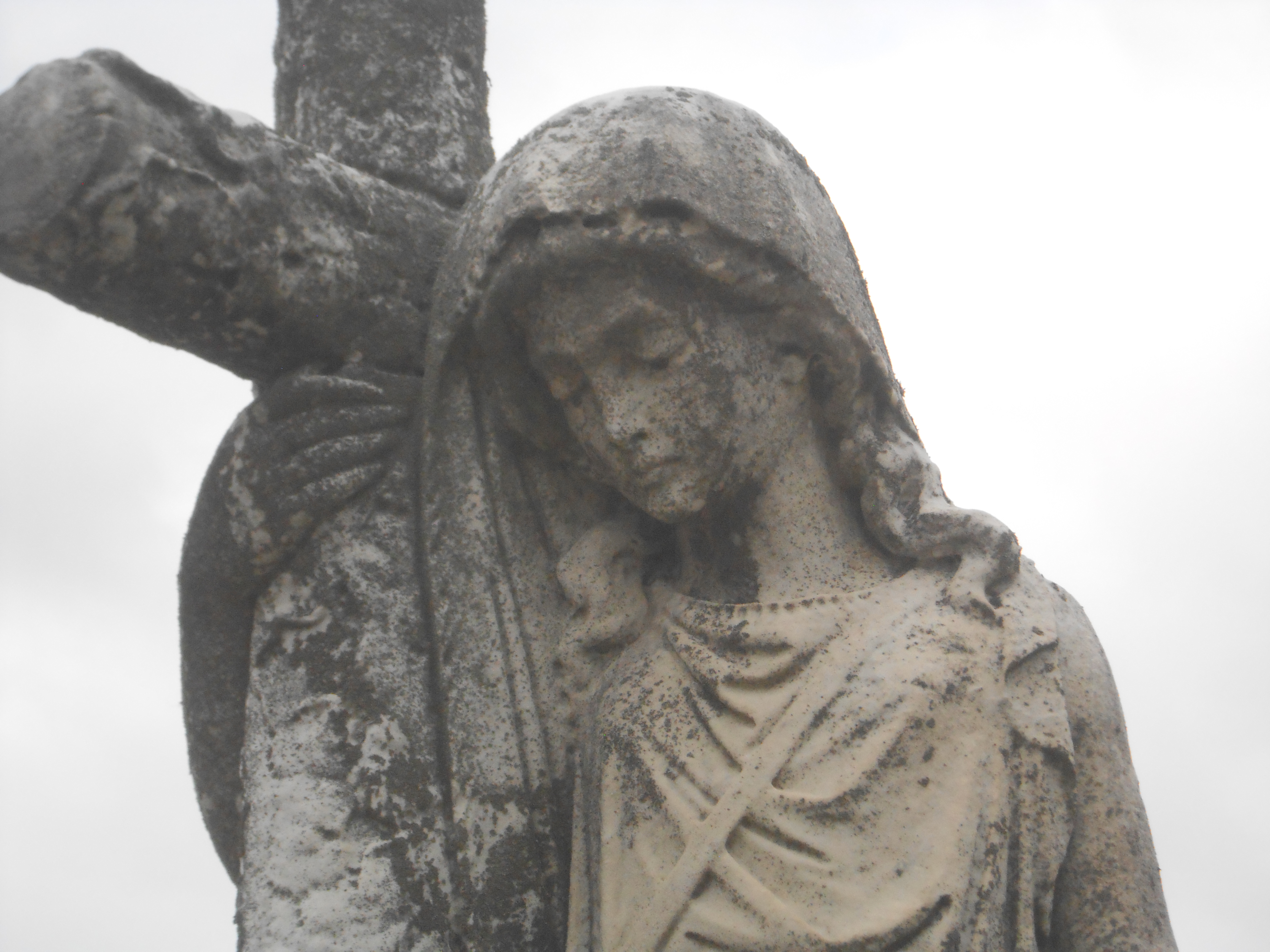
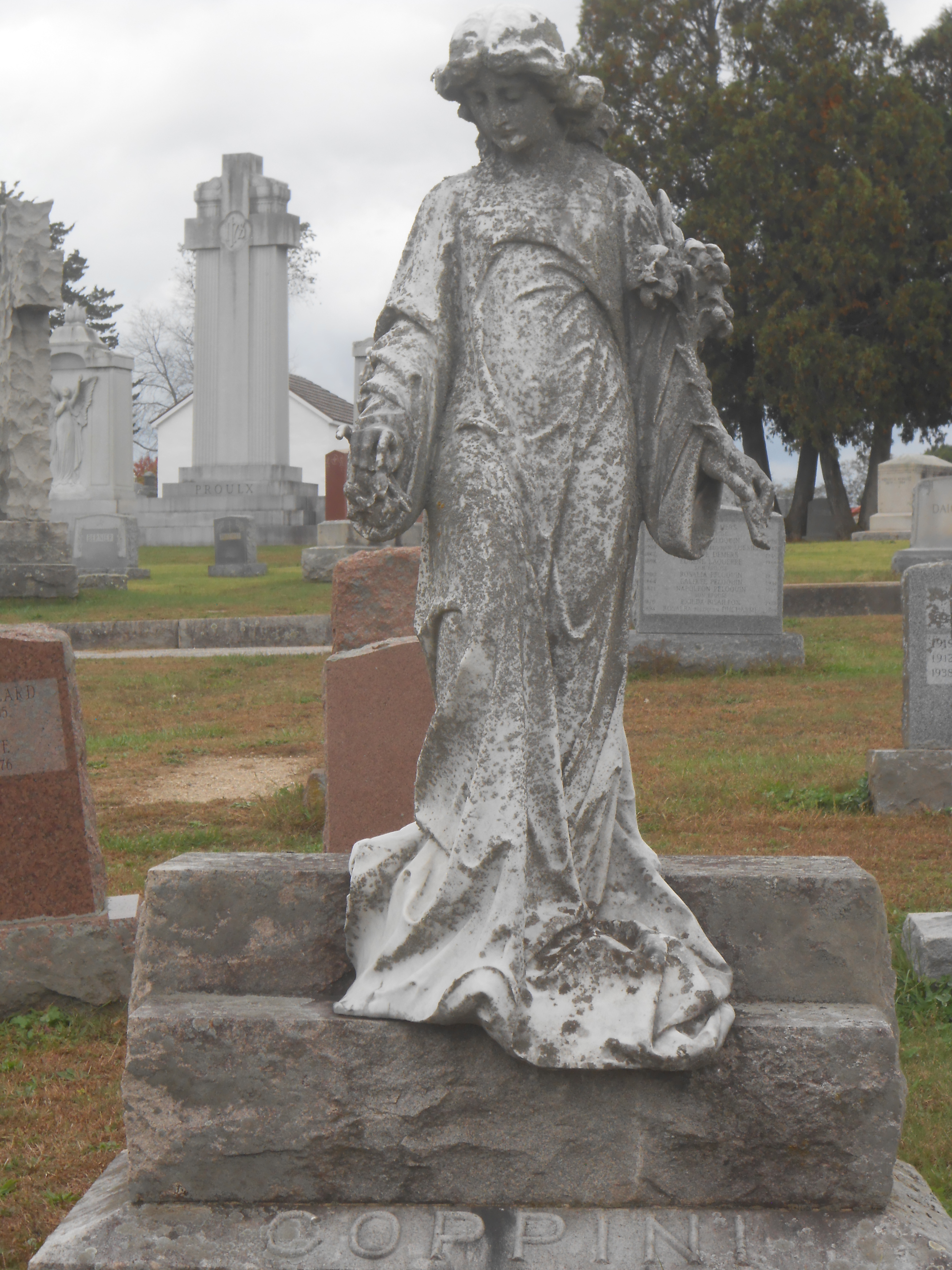
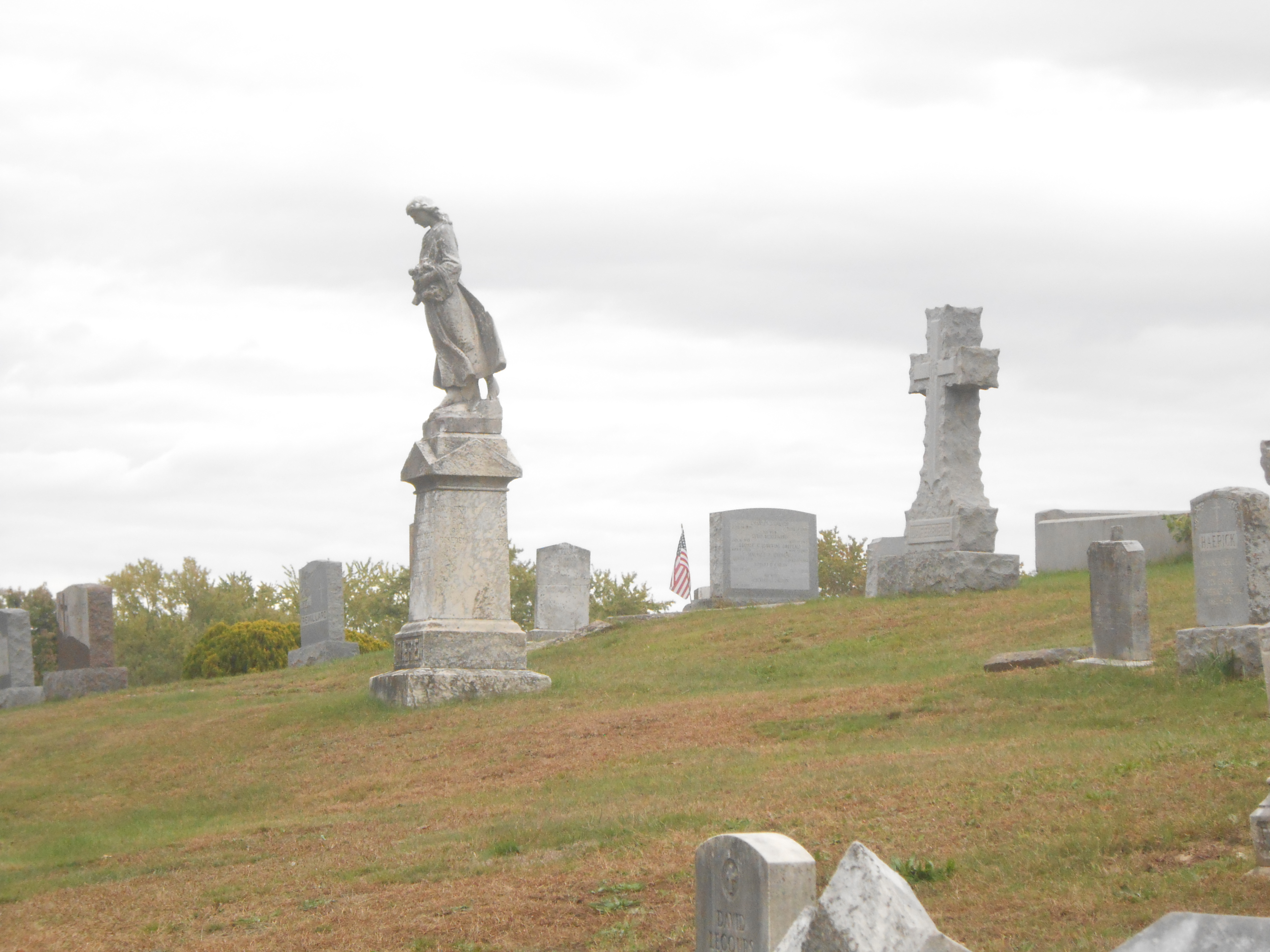
I saw many women, grieving, bearing their crosses of repentance, or descending with grace for the departed


I was particularly taken by some of the mausoleums.  One looked like a French or Canadian farm house.


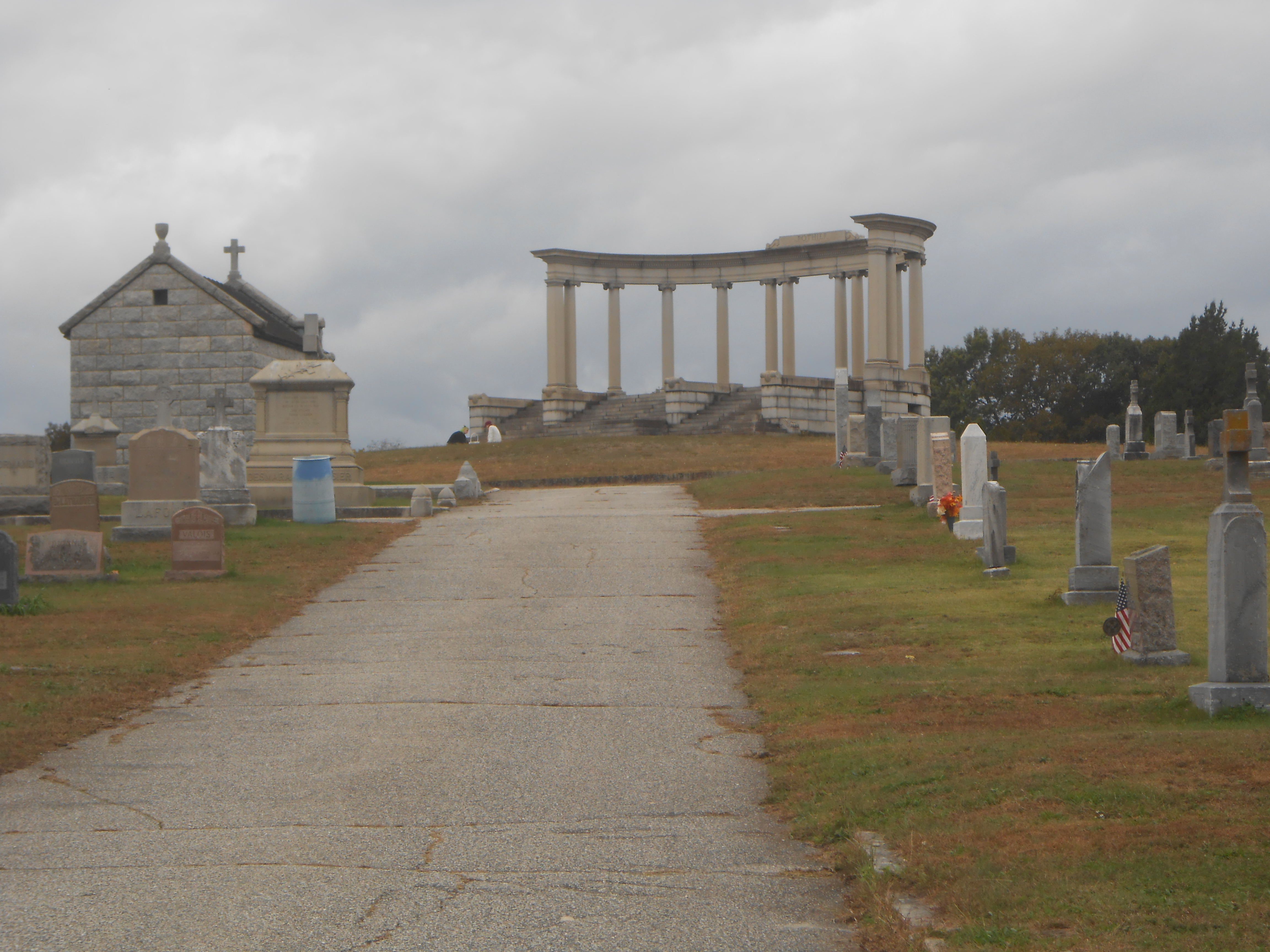
Another was a circle of columns raised above the cemetery on a hill.  It was like a classical ruin.


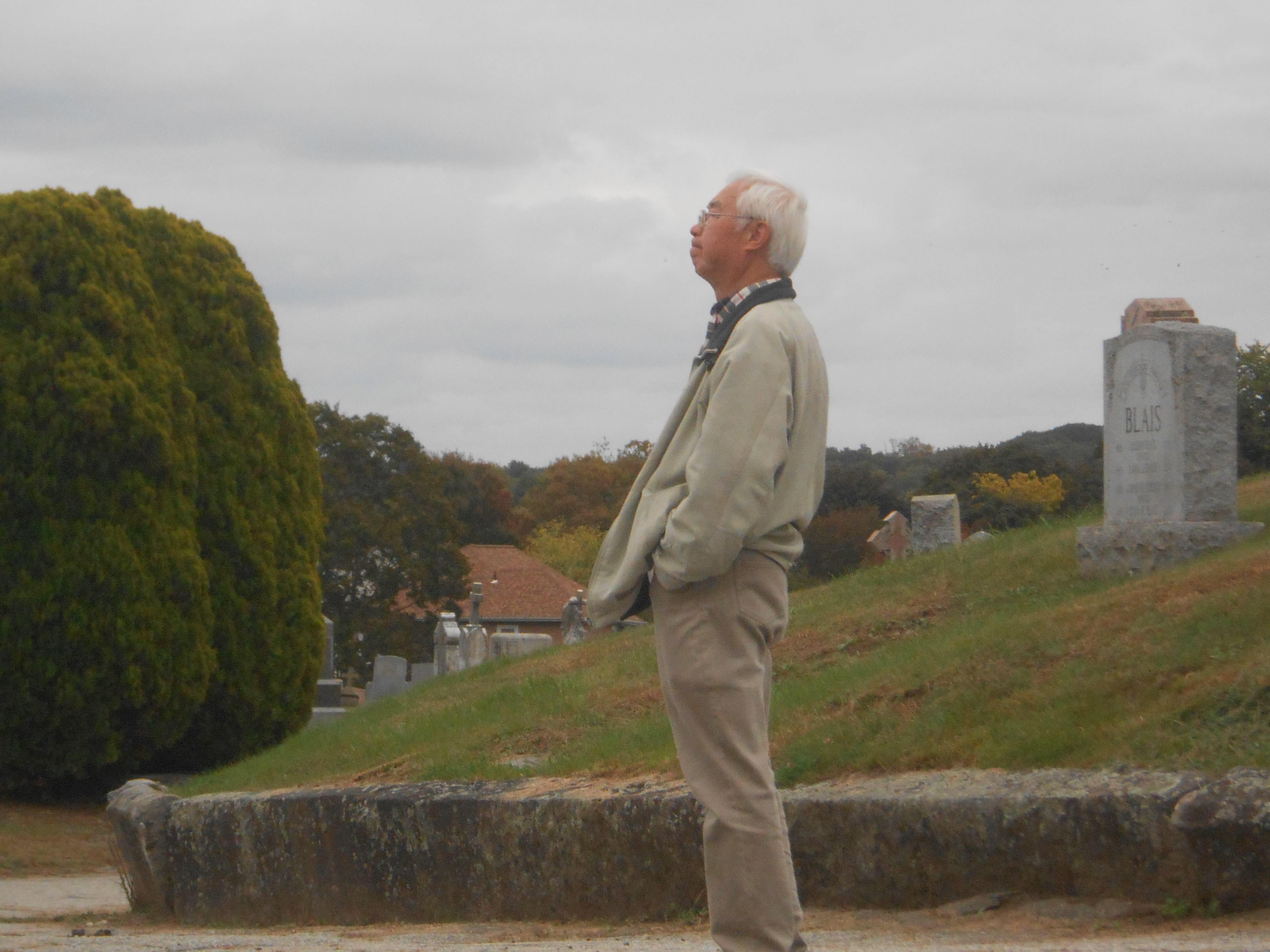
Yang took a moment for contemplation.
I was looking out on vistas of graves


to view this:


And aren’t these graves always the saddest ones of all?


“Autumn Reflections 2024”

“Autumn Reflections 2024”

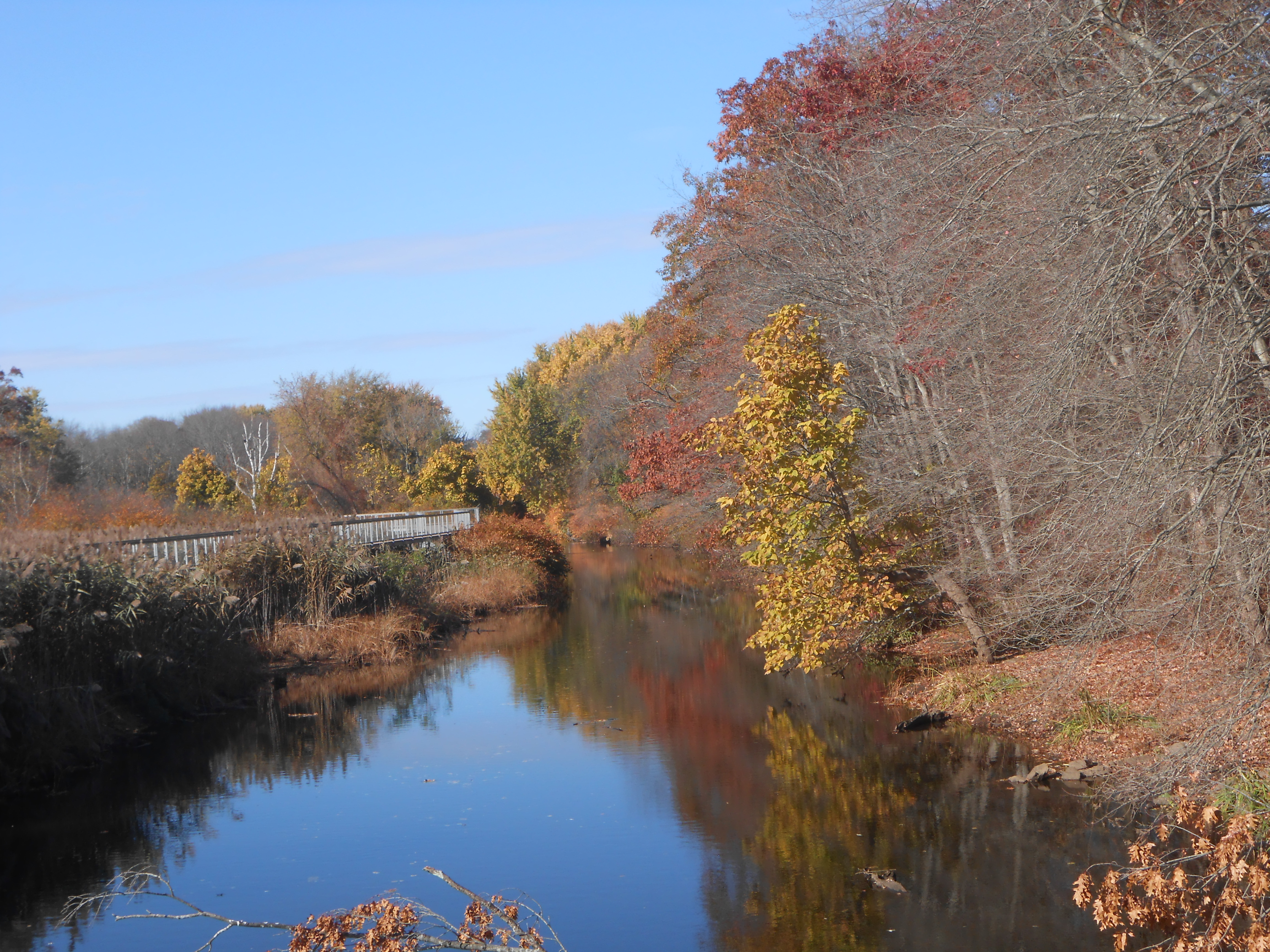
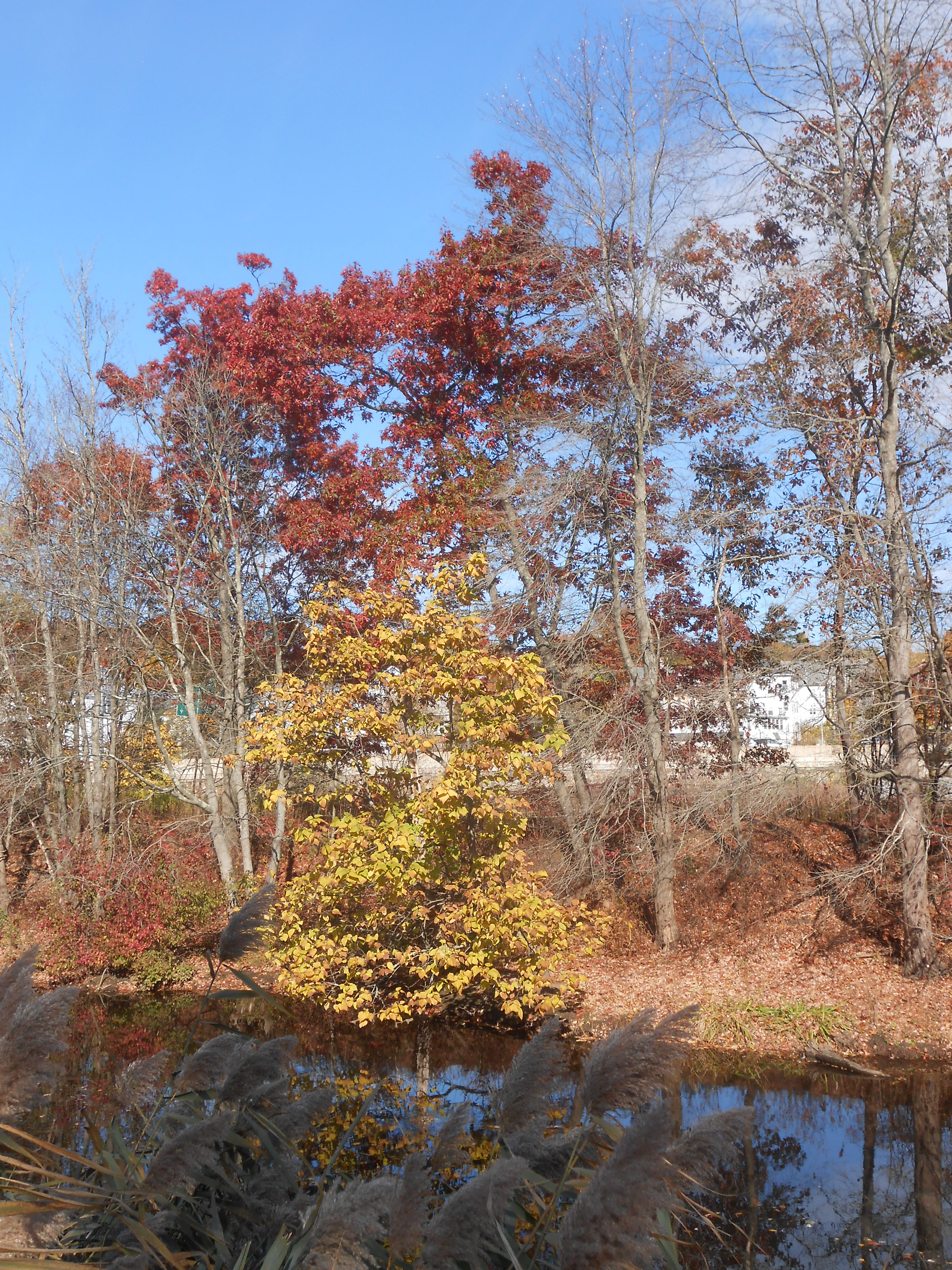
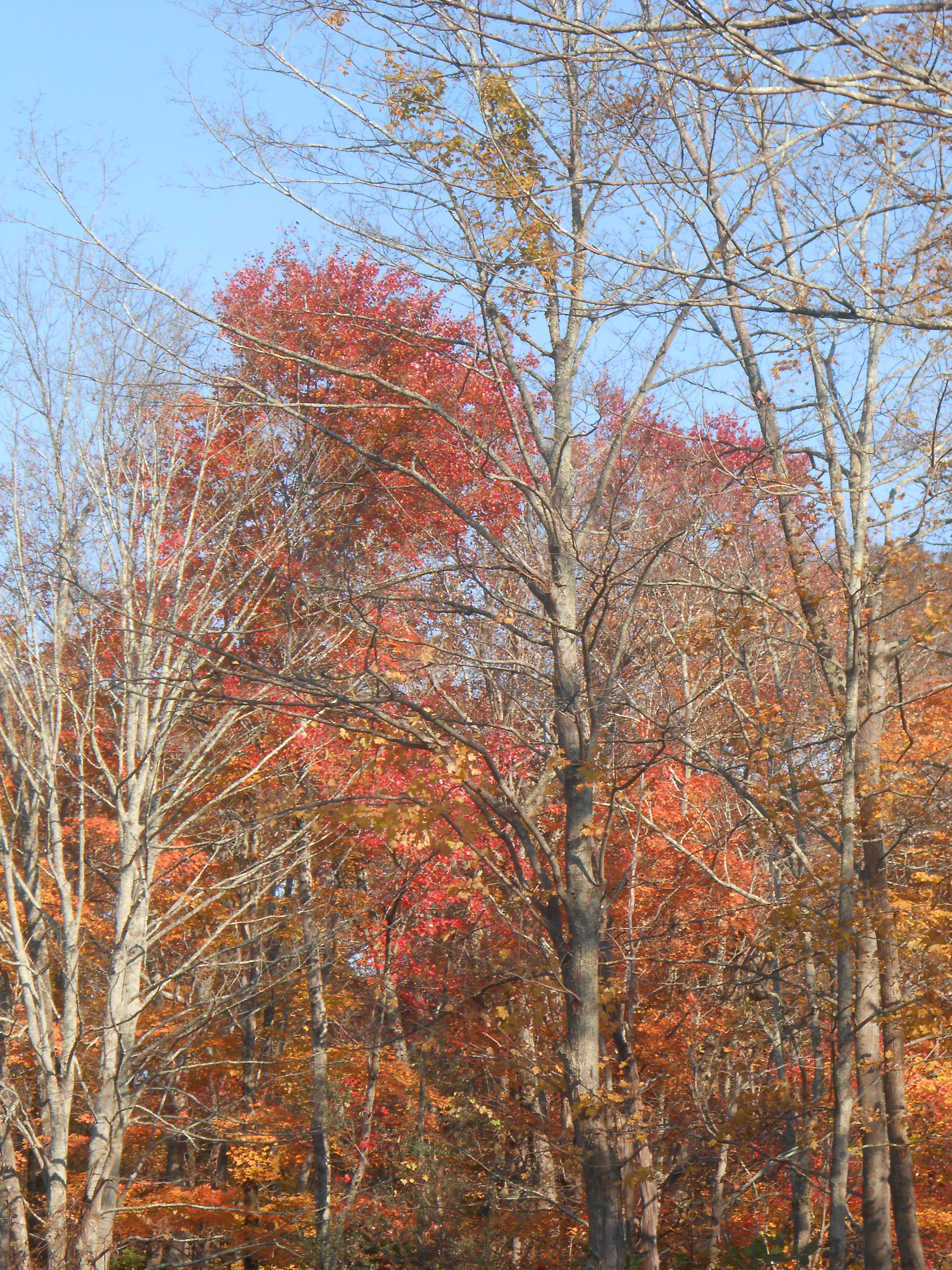
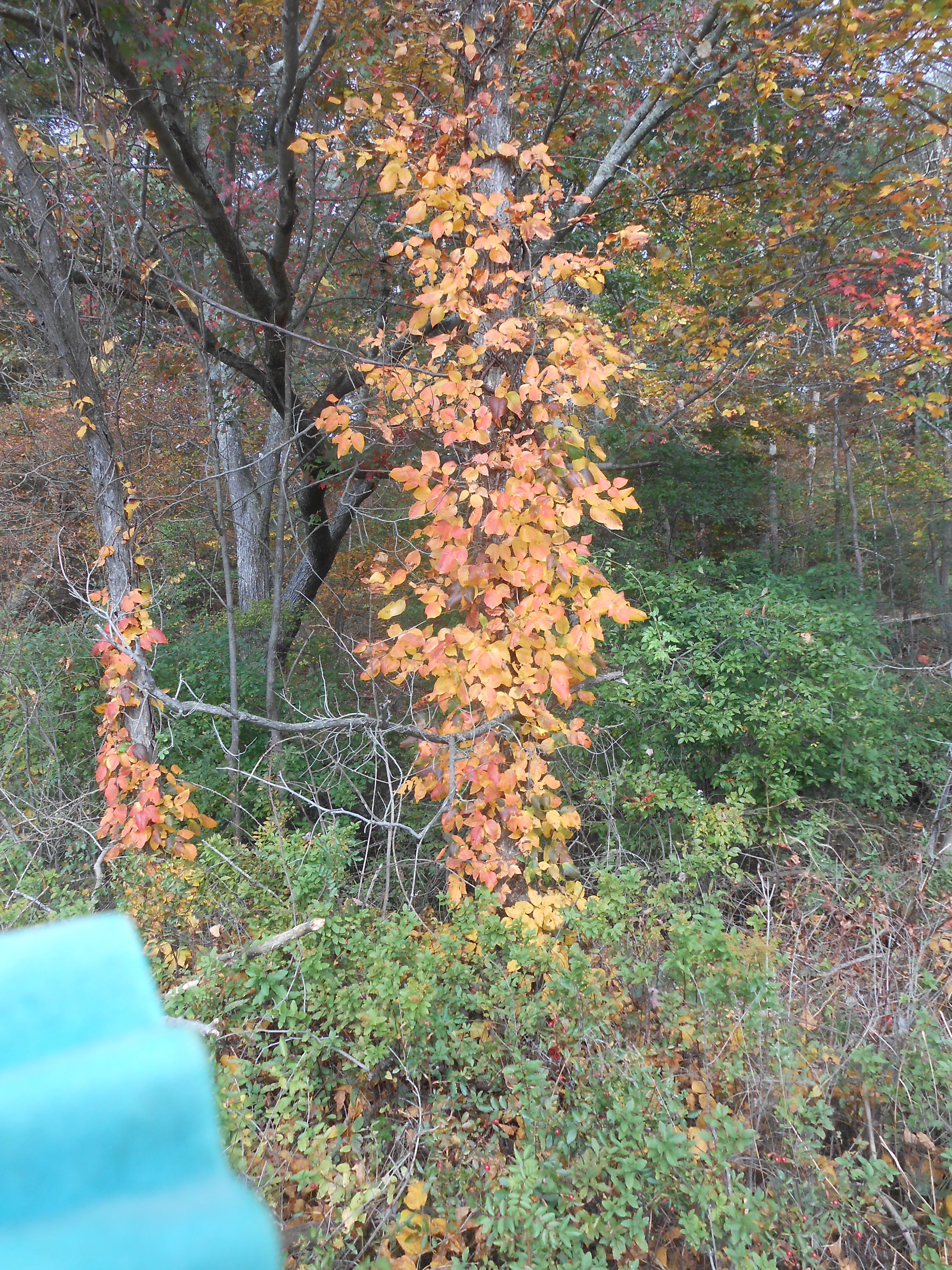
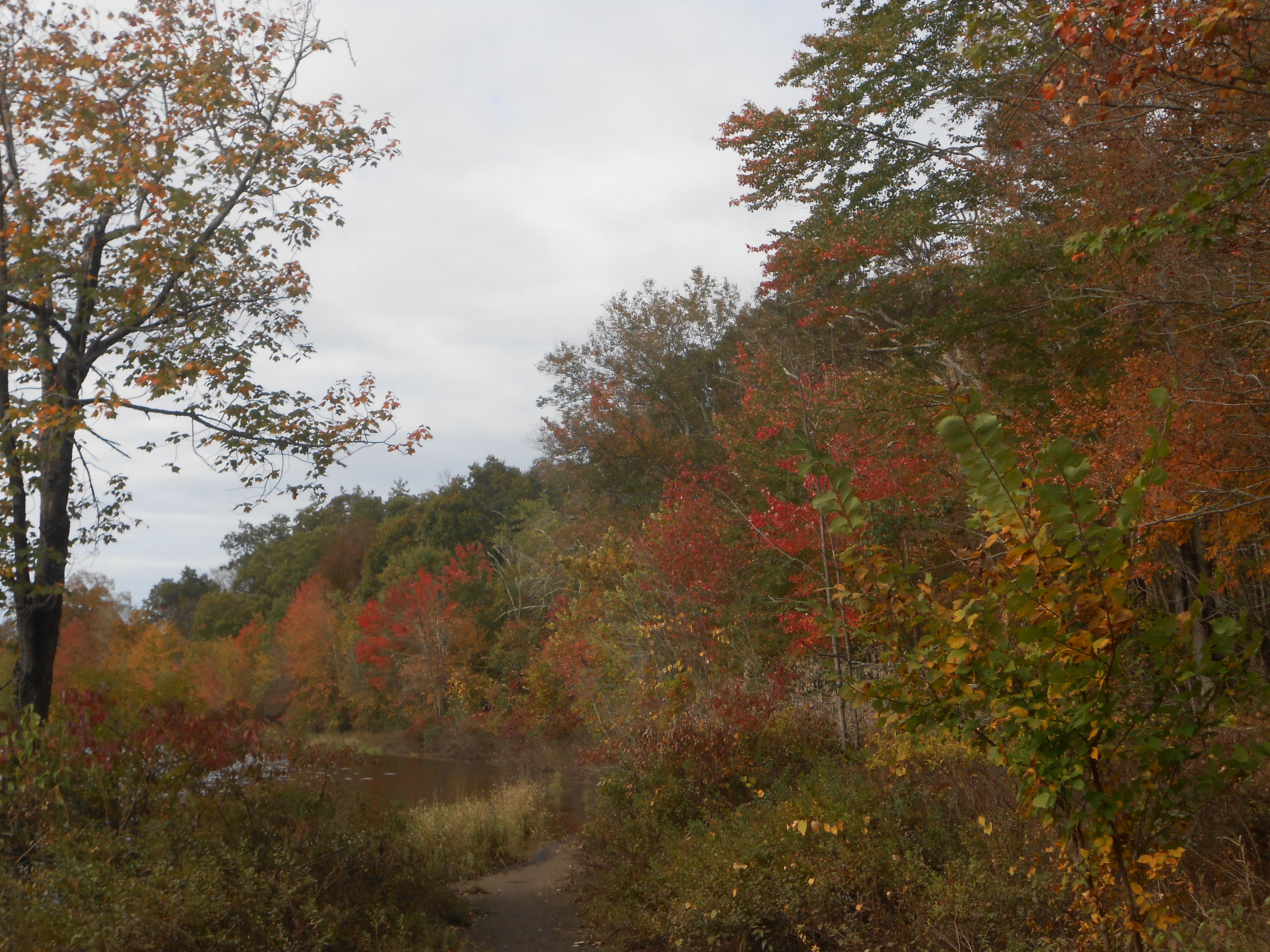
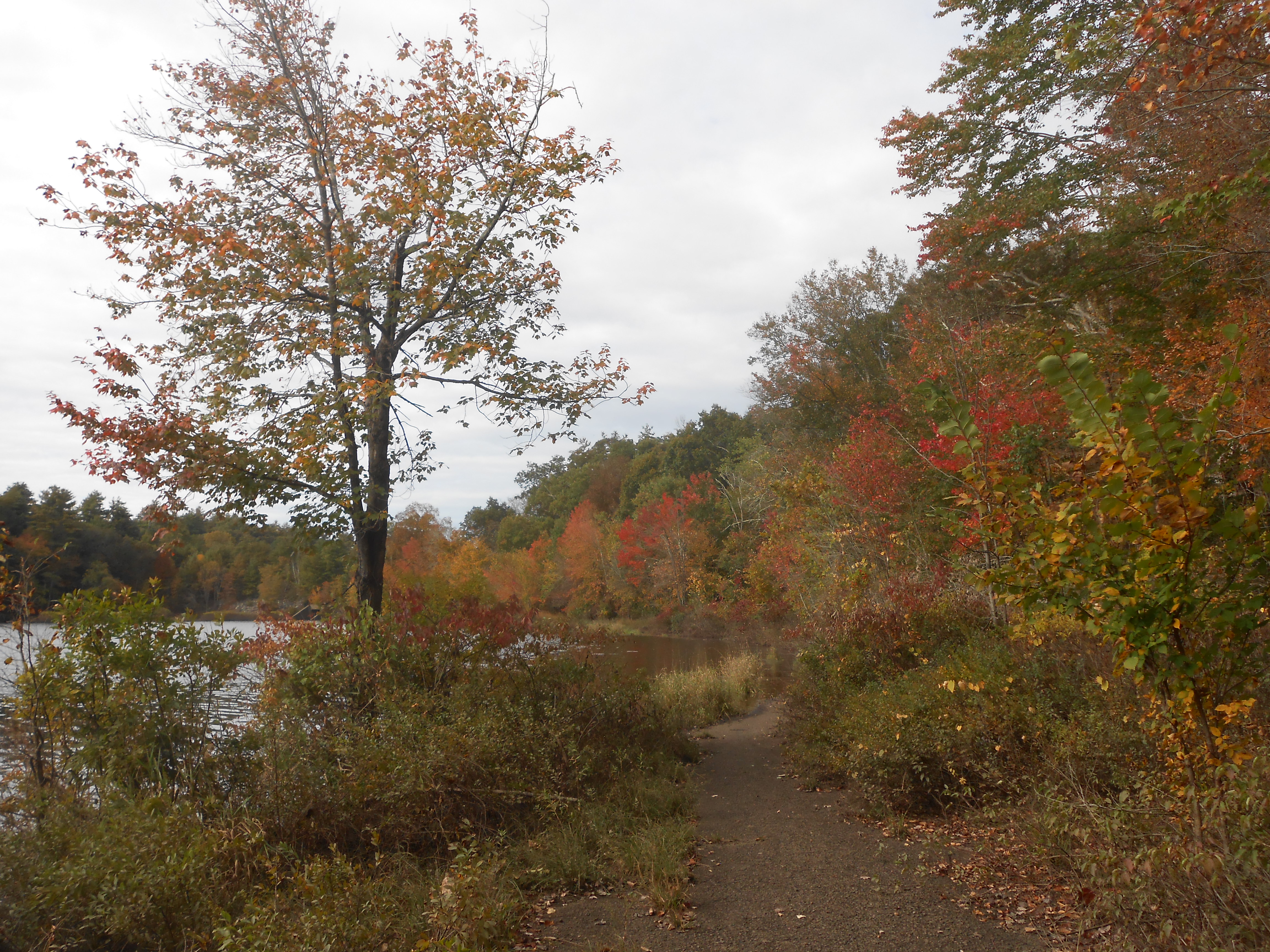
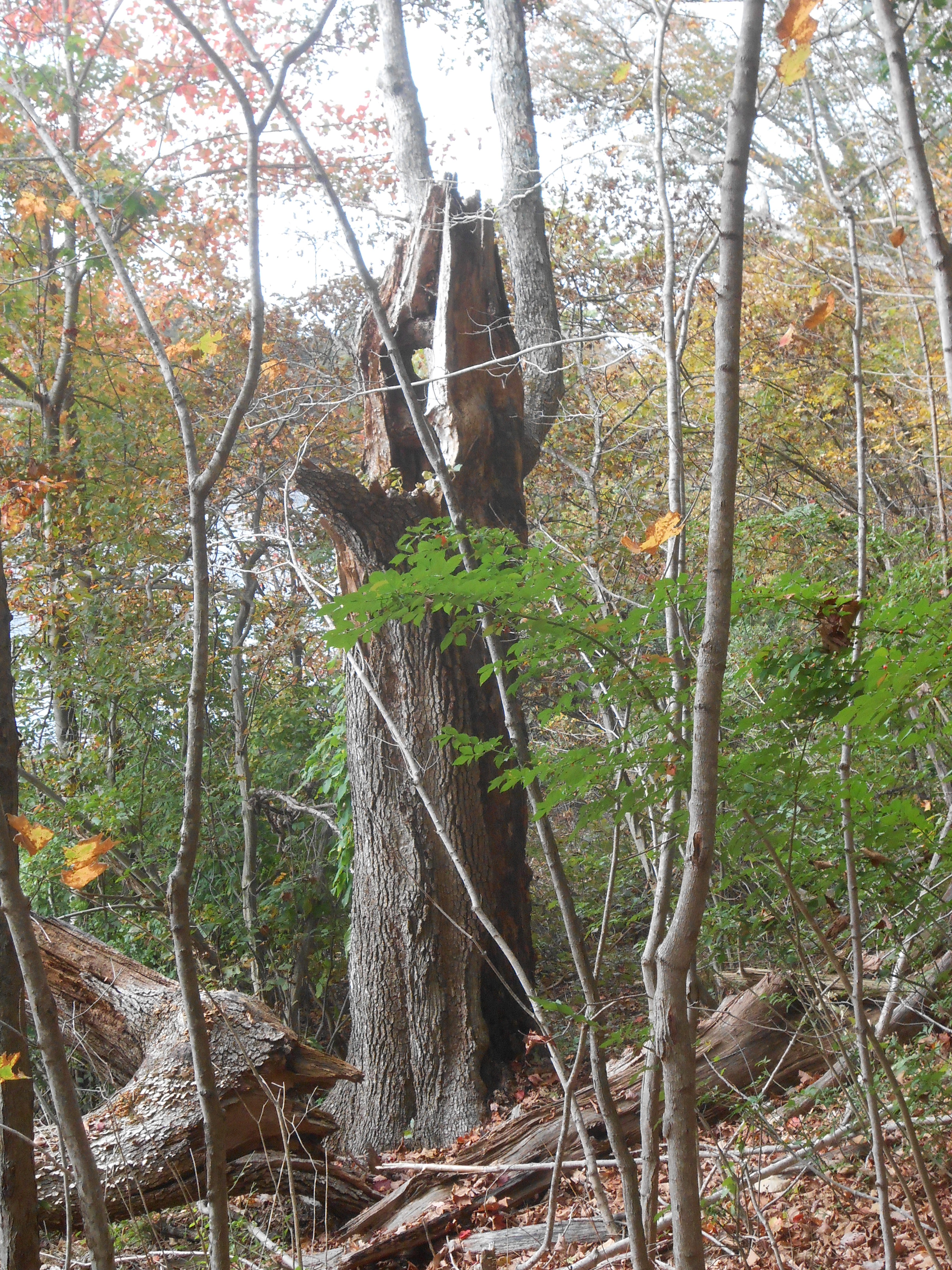
Well, we’ve had our first snowfall here in Massachusetts, so even the brown, greys, and maroons of late autumn are now sheeted o’re with white.  Still, it’s nice to recall the glories of September and October, isn’t it?  So, I thought you folks might enjoy an overview of some of the autumn travels Yang and I did to enjoy the lovely landscapes of autumnal New England.
Starting not far from home, Yang and I took a stroll along the board walk that takes you across wetlands and the Muddy River near the College of the Holy Cross.  We came across some beautiful colors, even as we noted how the drought had dried up much of the little river and the marsh.
We didn’t see any waterfowl, which was very unusual – not even any Mallards of Canada Geese.  No beavers were in view, either.  However, I did catch sight of this beauty and a chum galloping through the grass.  If you click on the photo, you can see her really well. You’ll notice that she looks as interested in me as I am in her!


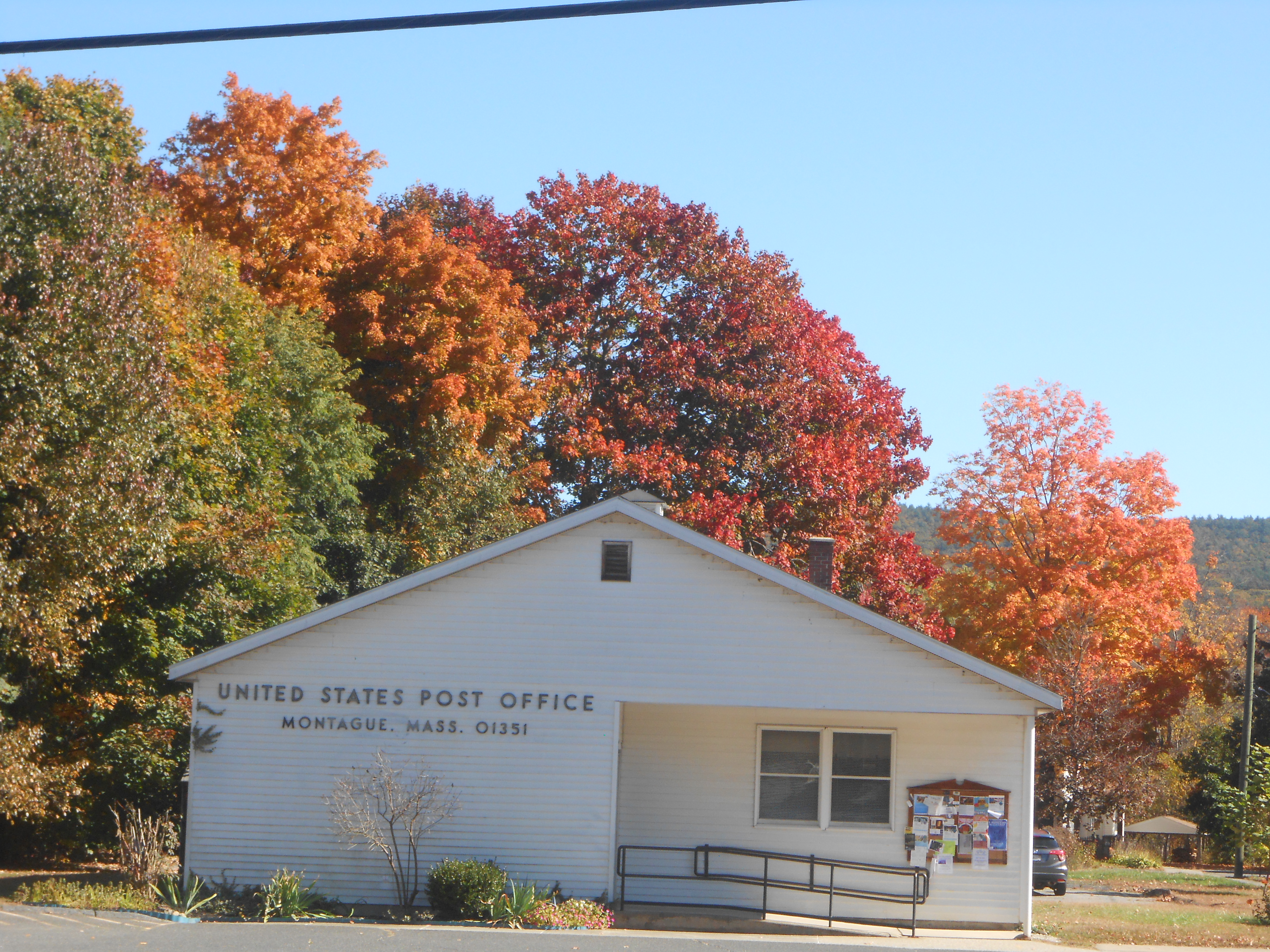
Next stop on your Fall Tour is Montagu, Mass.  We went out there to sell some books at the Book Barn, have breakfast at Lady Killigrew’s, then take a stroll in the part of town nearby.  There were some absolutely beautiful colors to enjoy.


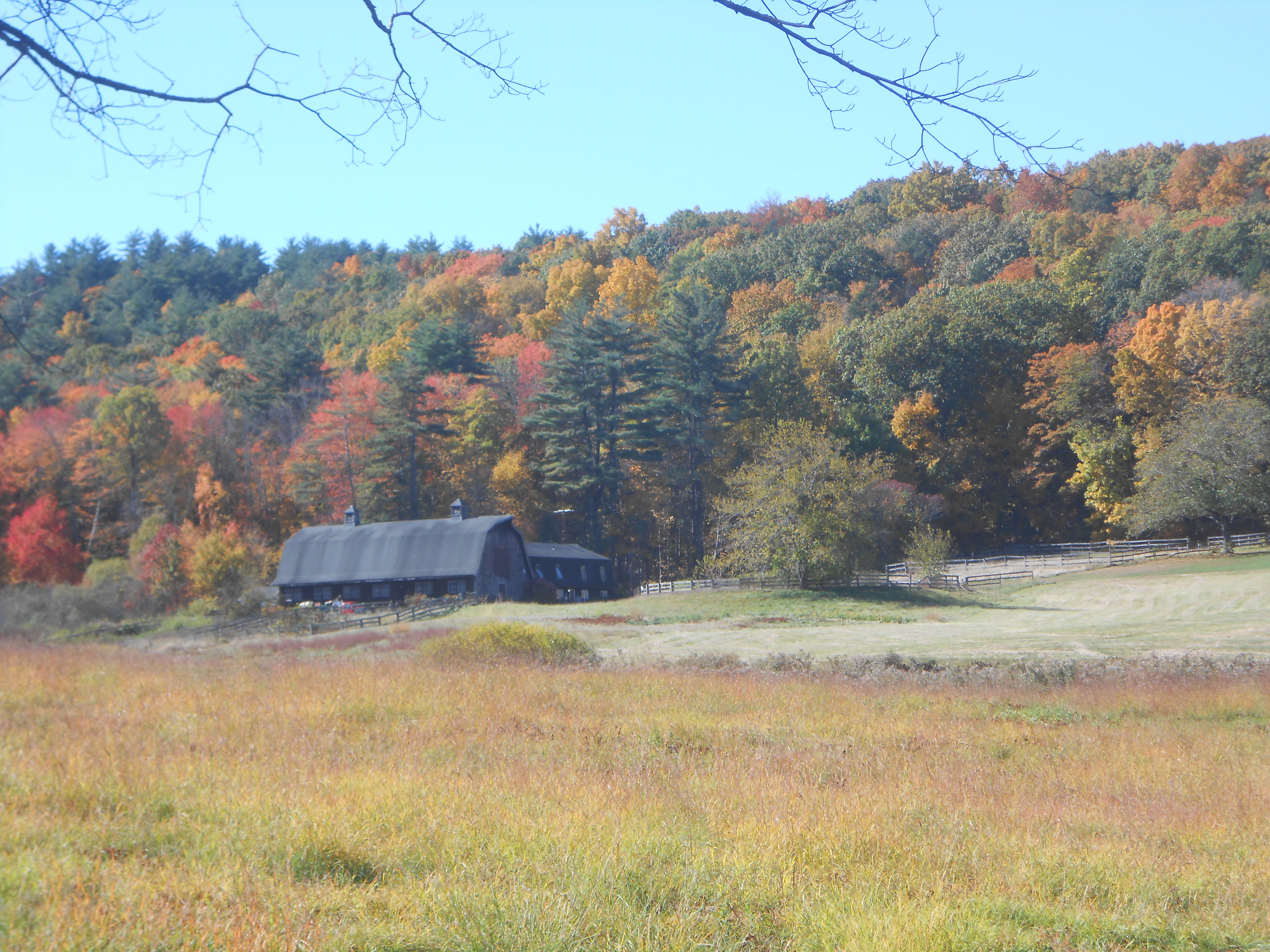
I love this picture of a New England farm.  It looks as if it had been painted in pastels.
Our bike ride  from Pittsfield to just above Adams, Mass. once more rewarded us with some exciting views of foliage.  There’s Yang, pedaling away from me through a tunnel of gold, tangerine, and green.
Here’s a row of scarlet and gold flanking the trail.


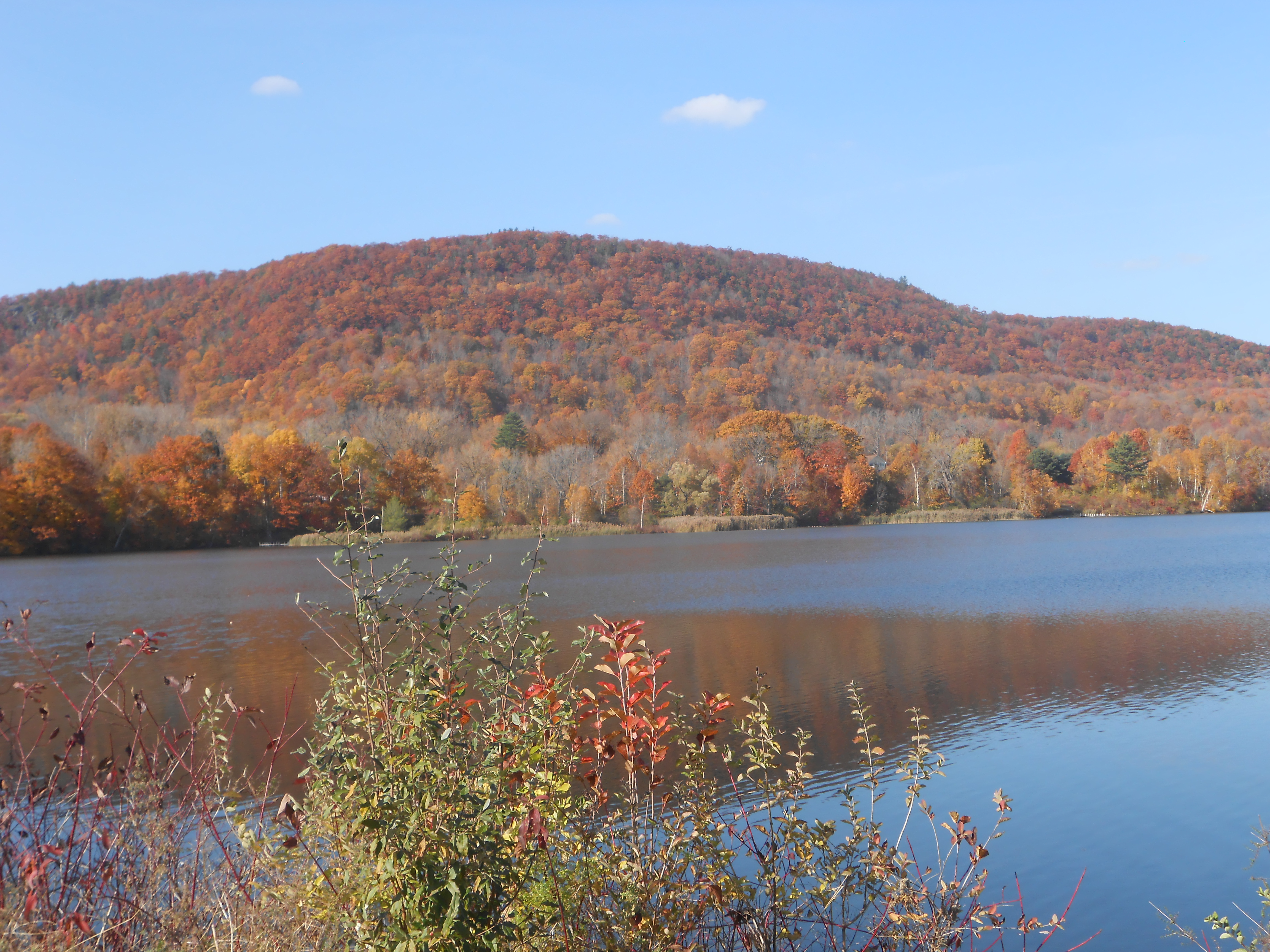
Across the lake from us the shore blazed red, gold, and orange.


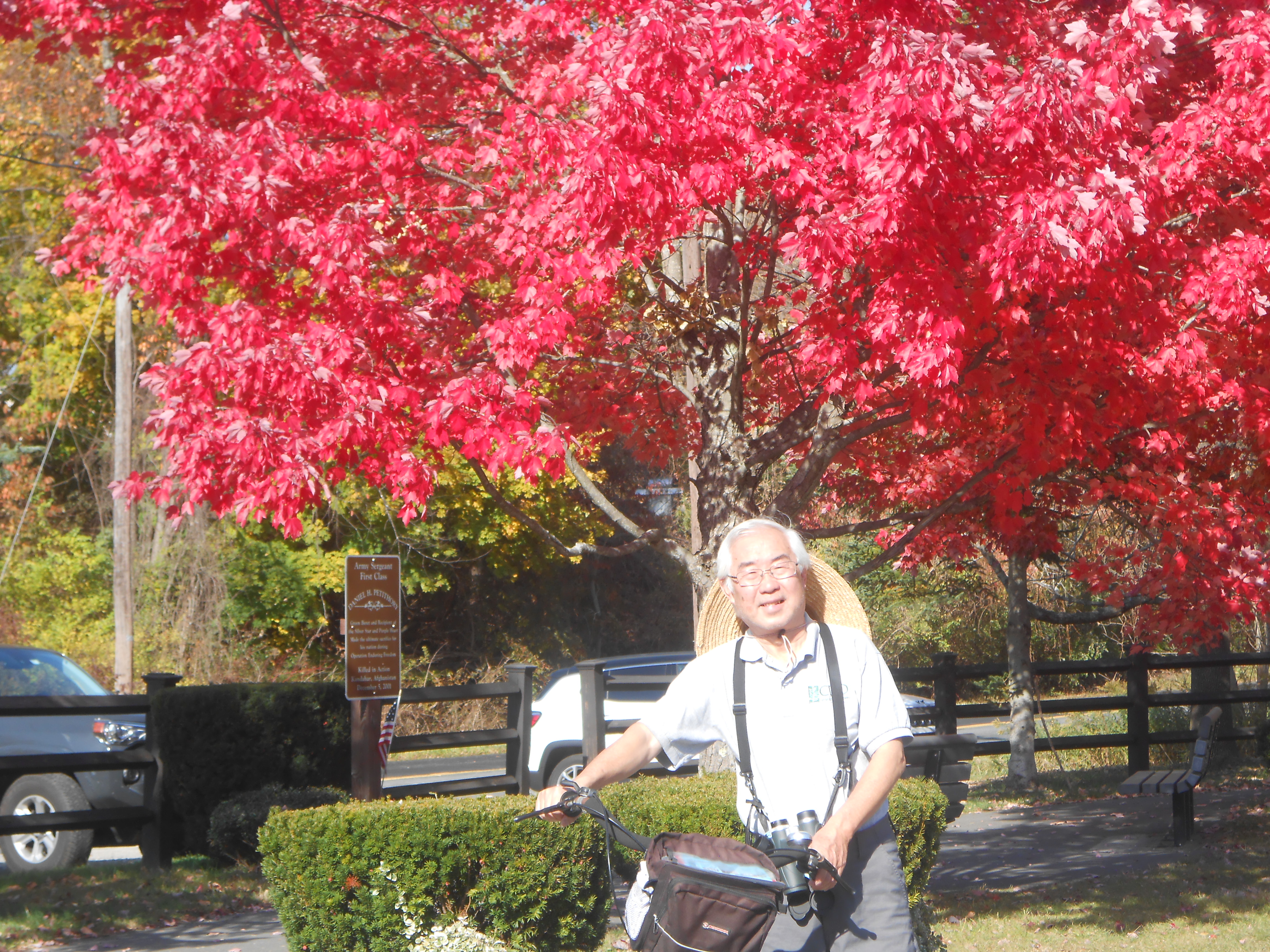
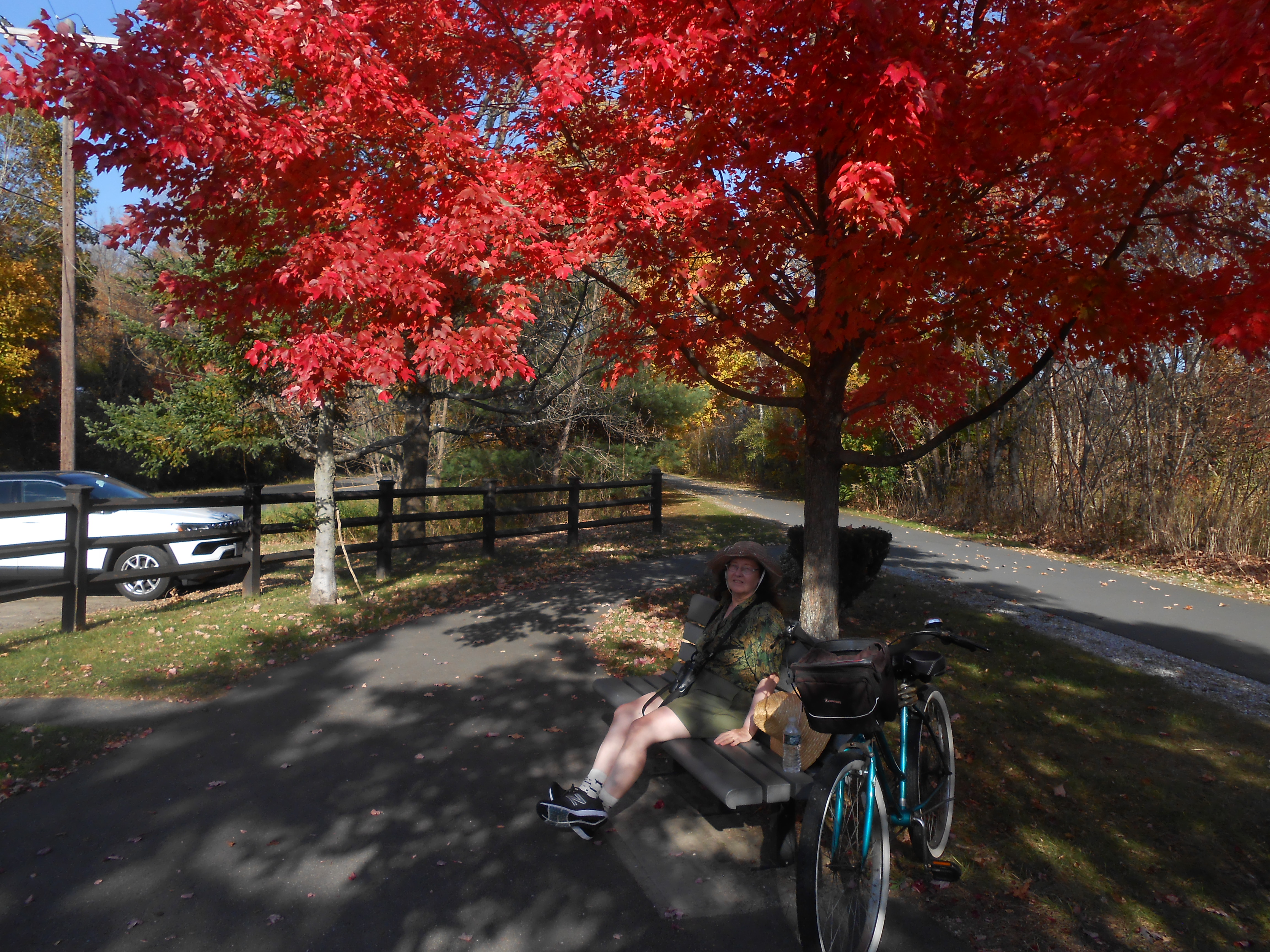
And the scarlet of some of the maples was exhilaratingly vibrant.  Here’s a nice shot of Yang under one such tree.

We finally made it to one place I’d been wanting to visit for years:  The William Cullen Bryant Homestead.  Though I’m more of a specialist in British Lit, Bryant was always an American poet whom I especially liked.  I’m sorry that the house itself wasn’t open for viewing.  From the outside, you can see it’s spacious, gracious, and beautiful.
The view from the house is gorgeous, crossing a meadow to reveal the color-splashed trees beyond.


We had an enjoyable walk in the woods near the house, still part of the homestead.  Here, autumn provides a tunnel of  dreamy, misty color.


Yang challenged me to be able to photograph the fascinating swirls of moss decorating the rough New England boulder layered with marble and blanketed with brown, crisped leaves.  I guess I showed him!

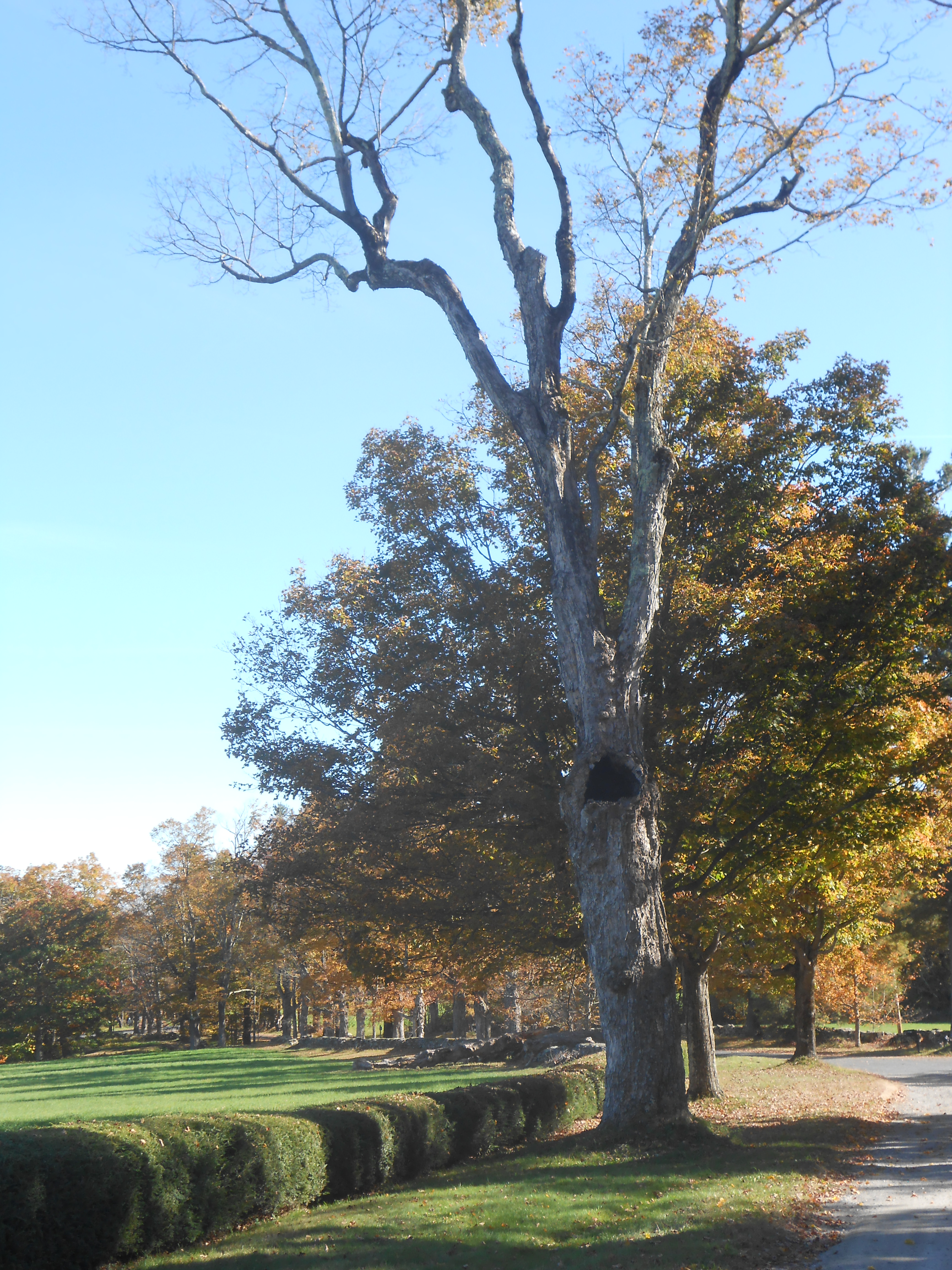
One of my favorite sights was this old tree with a gaping maw.

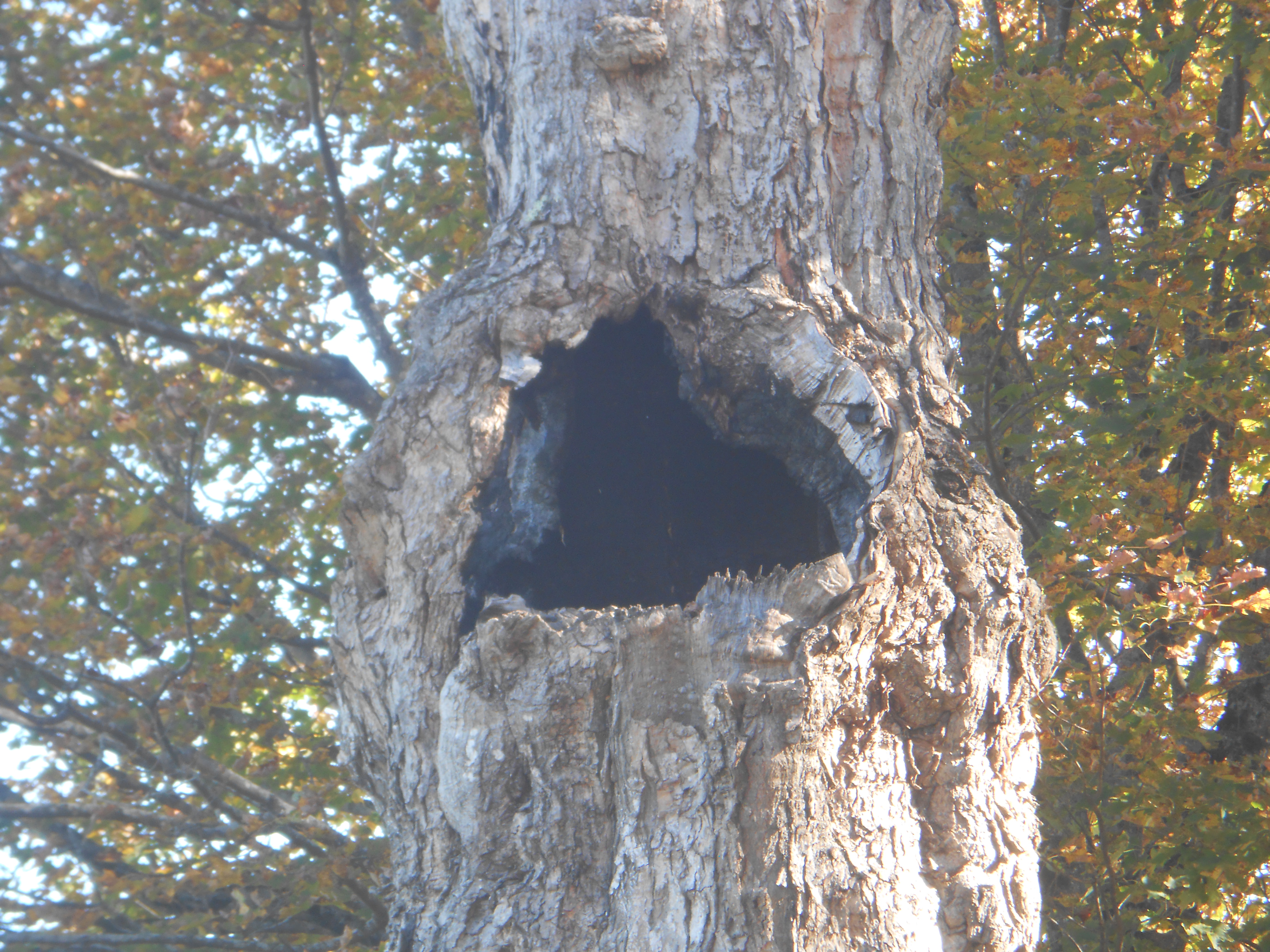
I just had to get a close up of said maw.  Really, isn’t it perfectly Lovecraftian? Do you see those jagged teeth on the upper part?

Finally, there’s one of my old favorites, Stafford.  Here are some of the traditional views.
Across the pond.


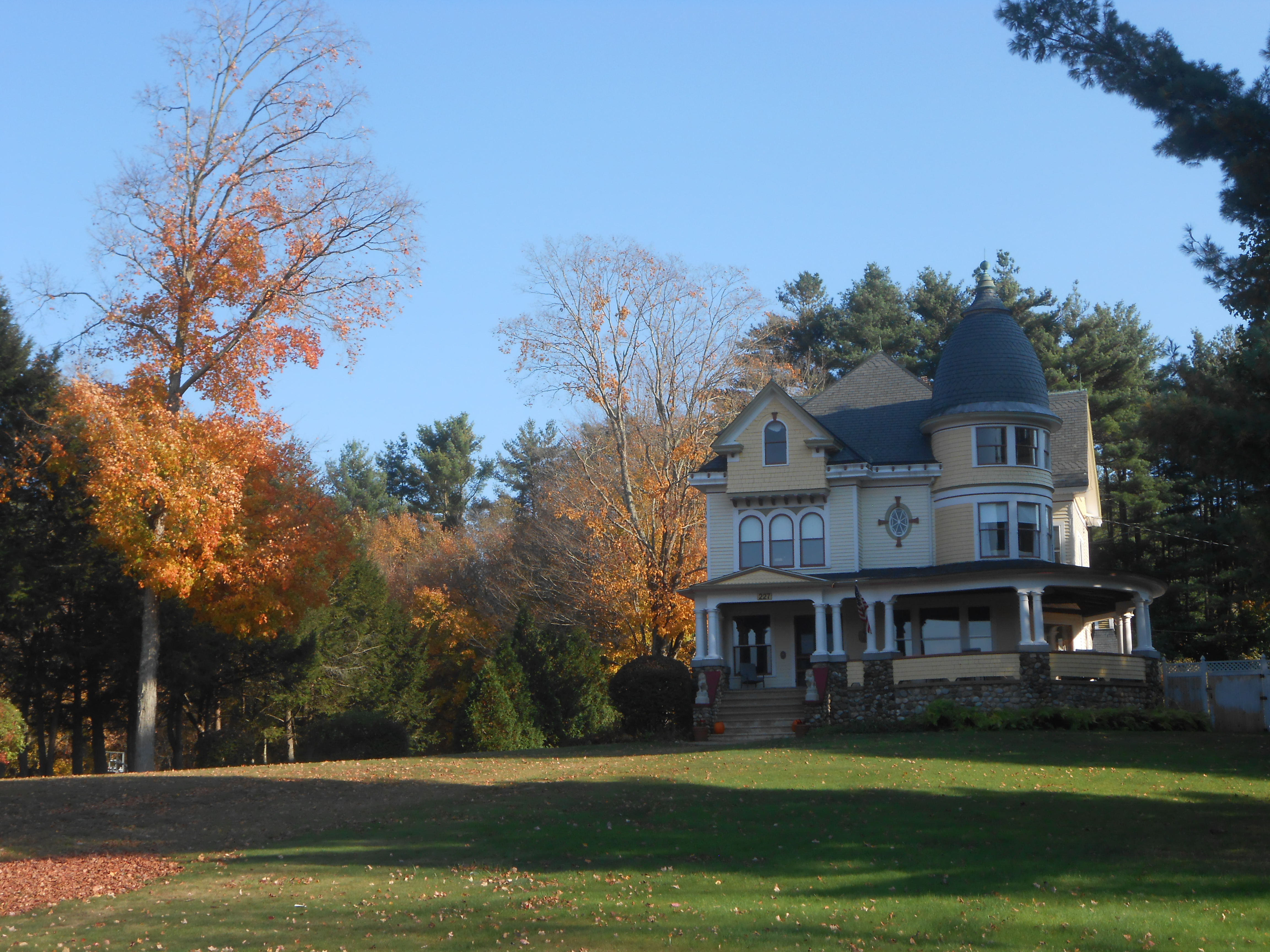
My Favorite Victorian House.  Couldn’t I really decorate that one swell for Halloween!


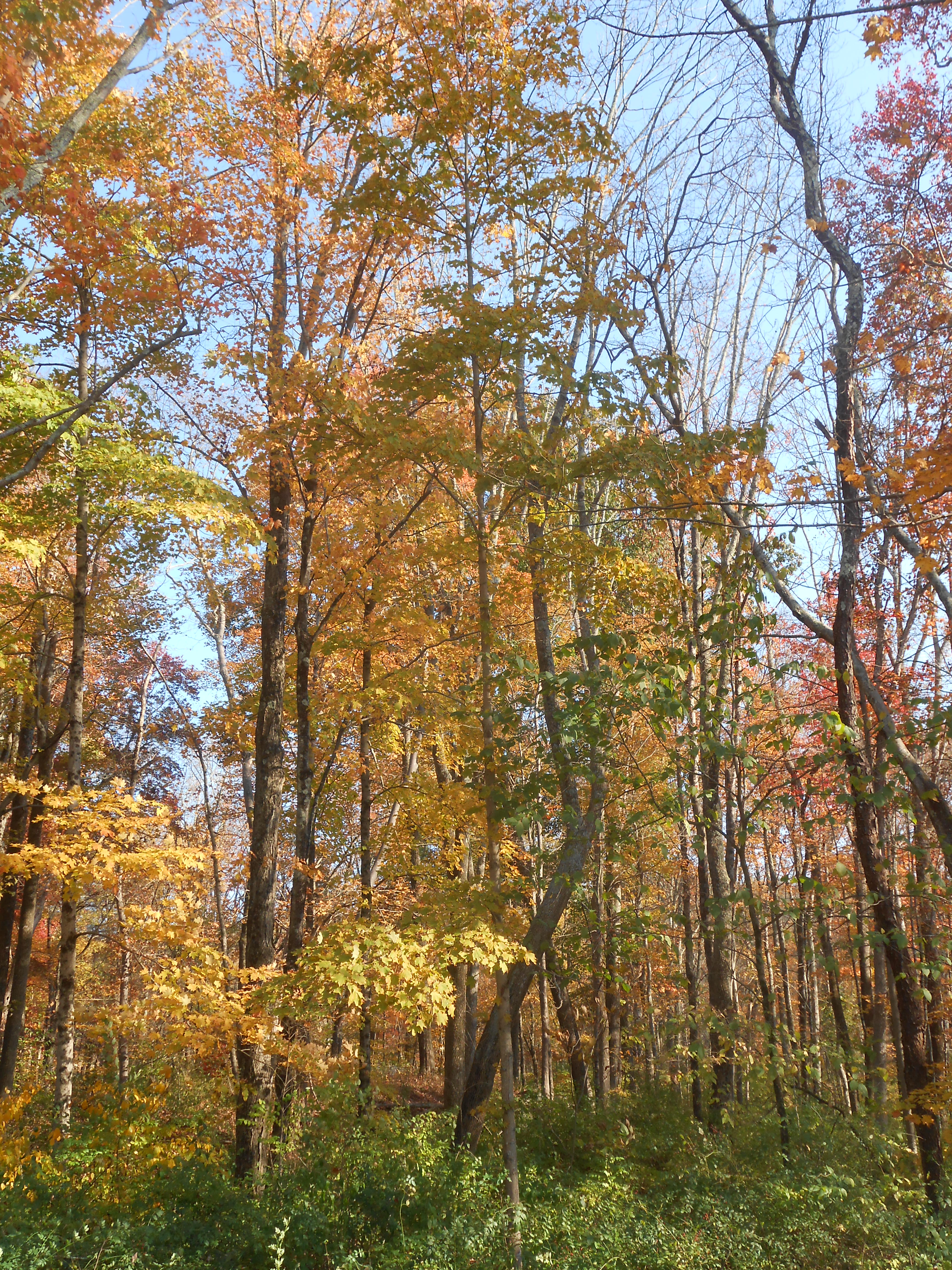
But some of the shots of foliage and sky thrill me even more.  I love the way the azure sky serves as a perfect complement to the golds, yellows, and orange flames of the autumn leaves.


Now, if you’ll excuse me, I’ve got to sit down and rest.  All this traveling and photographing has me exhausted!

Live! And on the Air!: Shadows of a Dark Past!

In my first novel, Bait and Switch, heroine Jessica Minton starts out as a moderately successful stage actress.  So why did I switch her from the stage to the radio as I continued the series with  Letter from a Dead Man?  Well, there are two reasons.  First of all, radio work gave Jessica more free time to join her sister Liz in unraveling mysteries.  However, the second reason is far more interesting.  I’ve always been fascinated by the imaginative entertainment radio provided Americans for almost five decades. The more I delved into how shows were written and produced; what made some actors excel and others bomb when playing to an audience over the airwaves; the way audiences were engaged, even enthralled, by the “theatre of the mind,” the more possibilities I could see this environment inspiring in a mystery.

My first awareness of radio entertainment of the classic 1920s-50s came from old movies of the ’30s through ’50s that I watched on TV as a child – a very young child.  I loved the excitement of actors and musicians, quiz contestants, and newscasters performing before live audiences.  I was so influenced by what I saw that I was close to six or seven before realizing that the music I heard on the radio was not being performed live at the local radio studio. Until that epiphany, I had been dearly puzzled by how the Beatles and Supremes could get from Lowell to Lawrence, MA in a matter if minutes! 

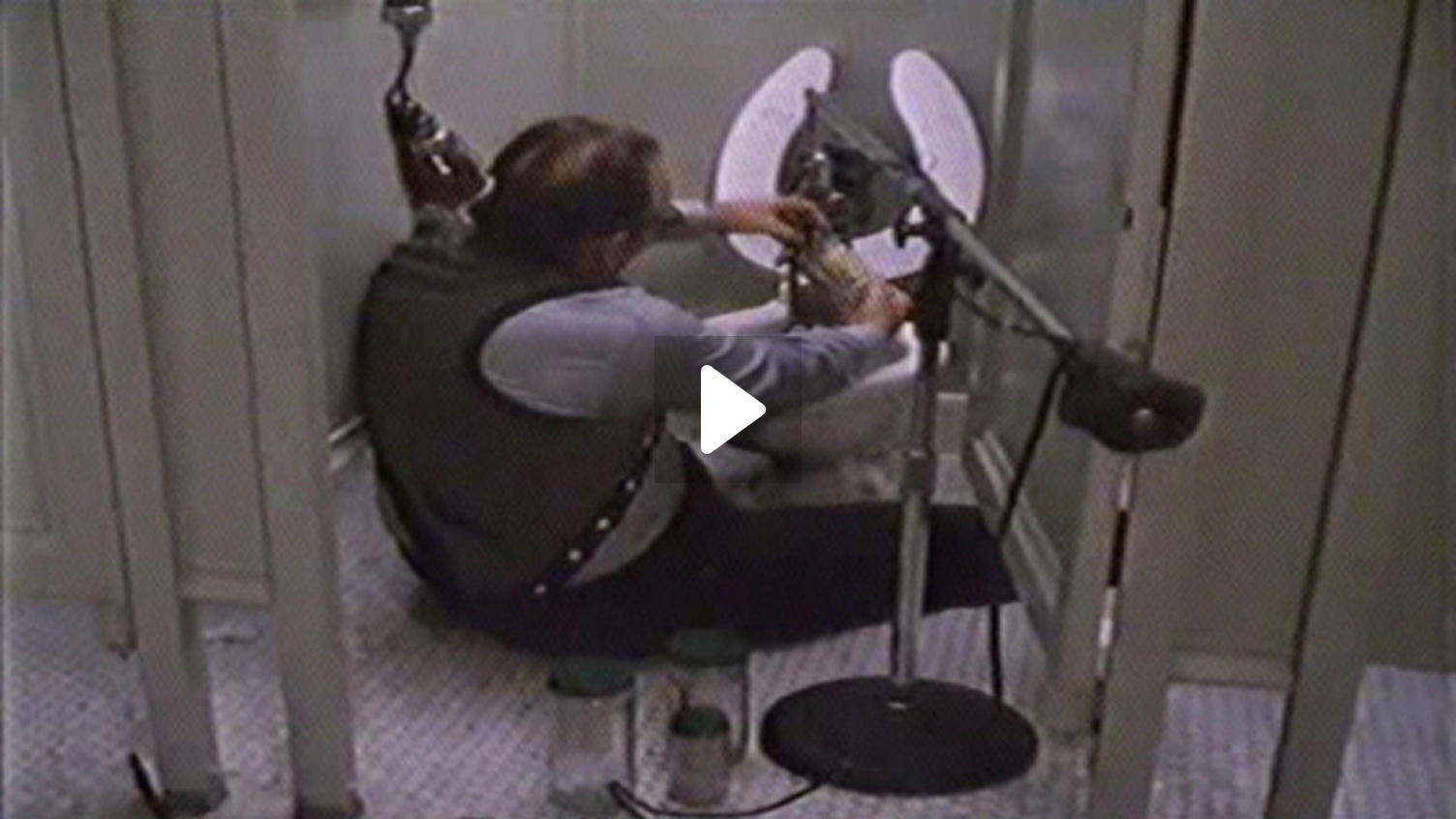
As I got older, read more, and watched movie and TV portrayals of radio with a deeper understanding, I learned more about the intricacies of production – including writing, directing, acting, and sound effects creation, which made me even more fascinated.  Books such as The Great American Radio Broadcast, Terror on the Air, Suspense, Inner Sanctum Mysteries, and The I Love a Mystery Companion  revealed to me the behind the scene creation of programs such as Inner Sanctum, Lux Radio Theatre, Suspense, and I Love a Mystery, to name a few – from initial inspiration and pitching of a show to sponsors, to the intense schedule for writing and rehearsing, to actors’ perspective on radio performing, to audience reactions.  I was especially intrigued by how special sound effects, combined with an audience’s willing imagination, were such a powerful force in creating reality:  coconut shells became pounding hooves, a stabbed melon was transformed into a fatally impaled human, a flushing toilet could be modified to become space invaders’ horrific weapons, or a heart beat might be created with a rubber sponge, a turn table, and a stylus (Maltin 108)!  Of course, there were also the ultra realists like Jack Webb whom Leonard Maltin reveals created the sounds of passing cars on Los Feliz Blvd. at 2:30 a.m. by having a sound man go out and record passing cars at 2:30 a.m. on Los Feliz Blvd. (Great American Radio Broadcast 100).

One source that especially galvanized my interest was Rupert Holmes’s Remember WENN (the real first original AMC series).  This delightful program traced the adventures of a Mid-West small-town girl who makes it to the big city (sort of), Pittsburgh, and starts as writer but soon finds the hectic demands of the station moving her swiftly into the roles of director; producer; business manager; and, occasionally, actress.  With humor that is sometimes whimsical, but always clever, Remember Wenn joyfully captures the seat-of-your-pants spirit at a radio station that characterized how this medium entertained and delighted audiences.

Whether in Remember Wenn or in the books I read, I especially loved learning how actors had the pleasure of playing an enormous catalogue of roles because we created their characters in our minds on the inspiration of their voices.  That’s how a short, chubby chap could become a strapping western marshal or a middle-aged man could mentally materialize as a kindly old grandmother in the theatre of our minds!  Or we got to “see” our favorite actors playing roles they never had a chance to have a crack at on the screen.  For example, as a Joan Bennett fan, I was delighted to catch her deftly cracking wise in Rosalind Russell’s part in Hired Wife or seductively manipulating Burt Lancaster in Barbara Stanwyck’s role in Double Indemnity

And short stories or novels were brought alive for us as well – especially Orson Welles’s infamous trick more that treat, War of the Worlds.  Both situations inspired me to think about what fun it would be to take some of my favorite horror or mystery stories or even movies and imagine them as venues for Jessica to strut her thespian stuff.  So, in Dead Man, Jess gets to talk about doing “A Rose for Emily” and “The Dunwich Horror”; in Dark Horse, we have reference to her playing in “The Horla.”


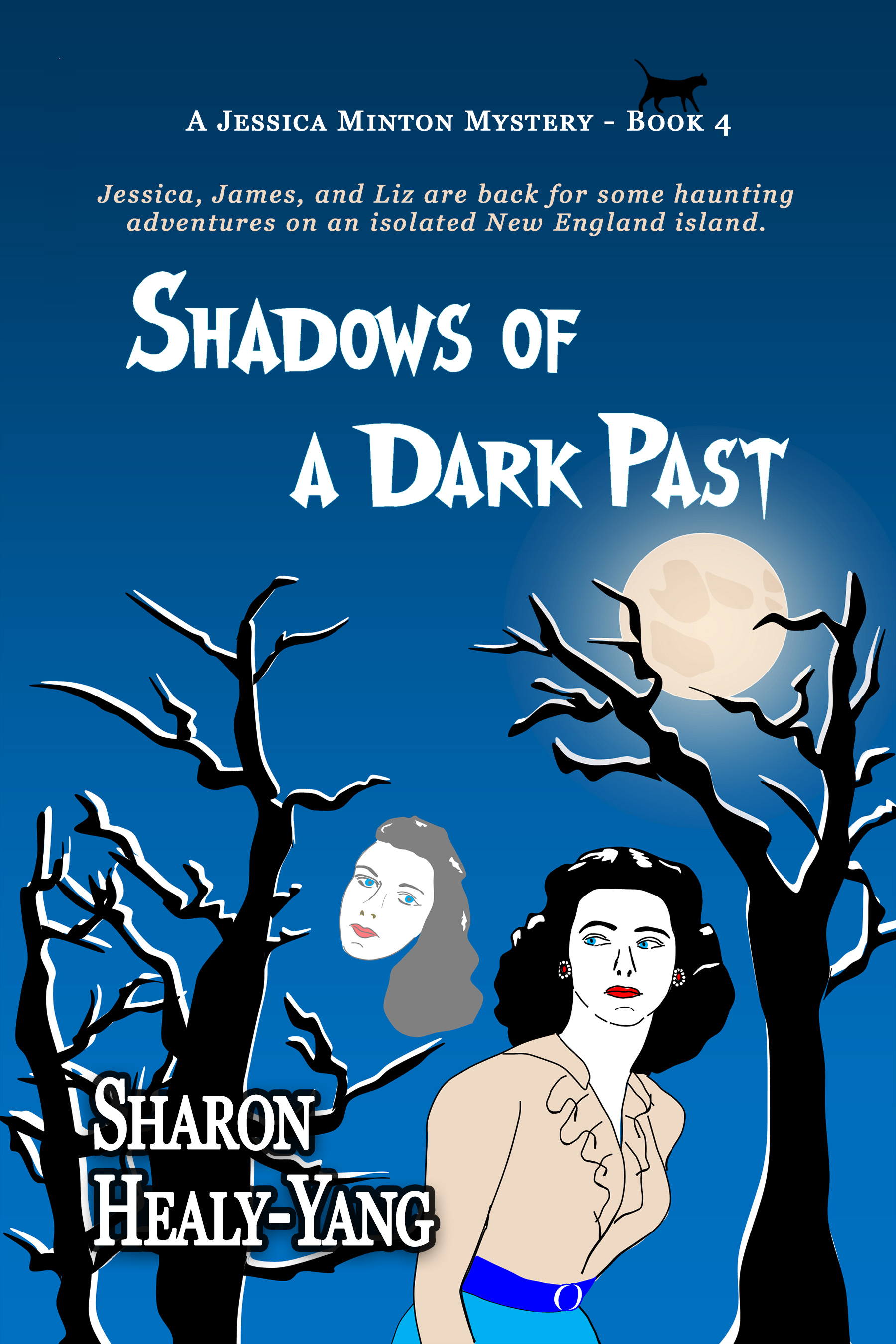
In Jessica’s most recent adventure, Shadows of a Dark Past, I’ve centered the story around her work on a remote broadcast in a haunted New Hampshire mansion (somewhat inspired by Charlie Chan in the Wax Museum). Attempting to drum up ratings, her director/producer Scott plans to reopen the tragedy of a woman’s tragic disappearance, and likely murder, in this mansion twenty years before.  The owner of the mansion, the husband of the woman reputed to be the ghost, her daughter, and others in the town who remember the event have dangerously mixed emotions about the broadcast.  And Jessica finds that she has a disturbing connection to the woman in question.  Then there’s the Hound of Hell. The topper is when things go horribly wrong in a séance recorded for later transmission.

In a book still in the outline stage, the plot revolves around Jessica’s work in the studio with some members of the writing team who are dangerously not what they seem. It’s Dusty who sets the plot in motion! So, don’t change that station!  I plan to bring you more exciting installments of the adventures of Jessica, Liz, James, and Dusty in and out of the studio!


If you’re looking for some films to give you a flavor of radio at its most exciting and mystery-inspiring, check out Charlie Chan in the Wax Museum (1940),  Abbott and Costello’s Who Done It? (1942), Danger on the Air (1938), The Hucksters (1949), That’s Right, You’re Wrong (1939), The Big Broadcast of 1938, Playmates (1941) The Frozen Ghost (1945), Radioland Murders (1994 – George Lucas directing, no less), and The Scarlet Clue (1945).  For a sardonic look at the effects of Orson Welles’s broadcast of War of the Worlds, have a chuckle at Hullabaloo (1940); and for a (mostly) more serious look, watch The Night That Panicked America (1975).

Image of Orson Welles directing:  Broadcasting play:  https://musingsofamiddleagedgeek.blog/2022/10/07/the-night-that-panicked-america-1975-is-a-little-seen-tv-movie-about-the-greatest-halloween-prank-ever-played/

Screen shot of  soundman and toilet from The dvd The Night That Panicked America,CBS Studios, (c) 2014

Image of Melinda Mullins from AMC Movie Magazine.

Image of Joan Bennett, Dusty, and Jessica Minton, author’s collection

Back to Home Page

Autumn’s Last Will and Testament, Part One

All the leaves brown and the sky is grey.  The Mamas and Papas song seems to sum up perfectly the end of November and beginning of December. So, I thought you might enjoy a look back at some of autumn’s leafy glory to tide you over until the soft blues and pristine whites of winter take over.

One new place Yang and I visited was the Albany Rail Trail in New York.  The trail starts on an uphill slope, but once you get to the top, it levels off and is smooth sailing till the end.  We ended up doing 18 miles of beautiful fall scenery along a river and through the woods.


Then, returning, after a flat ride, we sailed downhill at a feisty clip – but not before I stopped a few times to get some gorgeous shots of the brilliant fall colors, especially gorgeous along the sides of the valleys that sloped into the river, with that goldening light of the setting sun.


Here’s your liquid moment of Zen, in video format: 


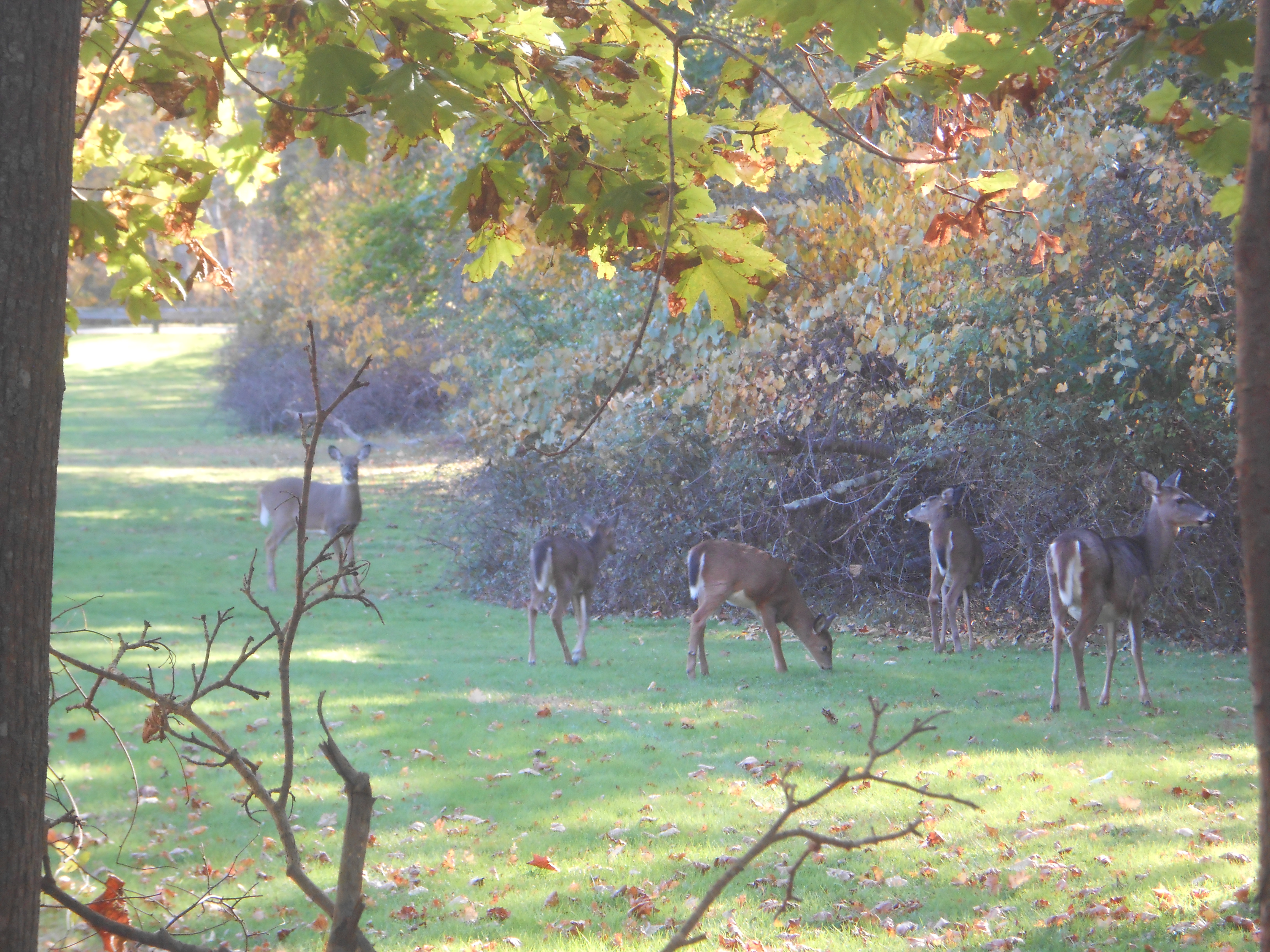
Yang and I also made our autumn pilgrimage to Colt State Park – after lunch at the Beehive in Bristol, RI – Yum, their pumpkin spice latte!  The day was brisk and sunny.  We had the pleasure of all kinds of  fauna.  Walking up a road that cut through the woods and emerged into the open with two large, stone-fenced fields on either side, we caught sight of these guys on our right.  Since we were on foot and not in a car, we had no fear of another fatal collision.  The deer were chill, too.


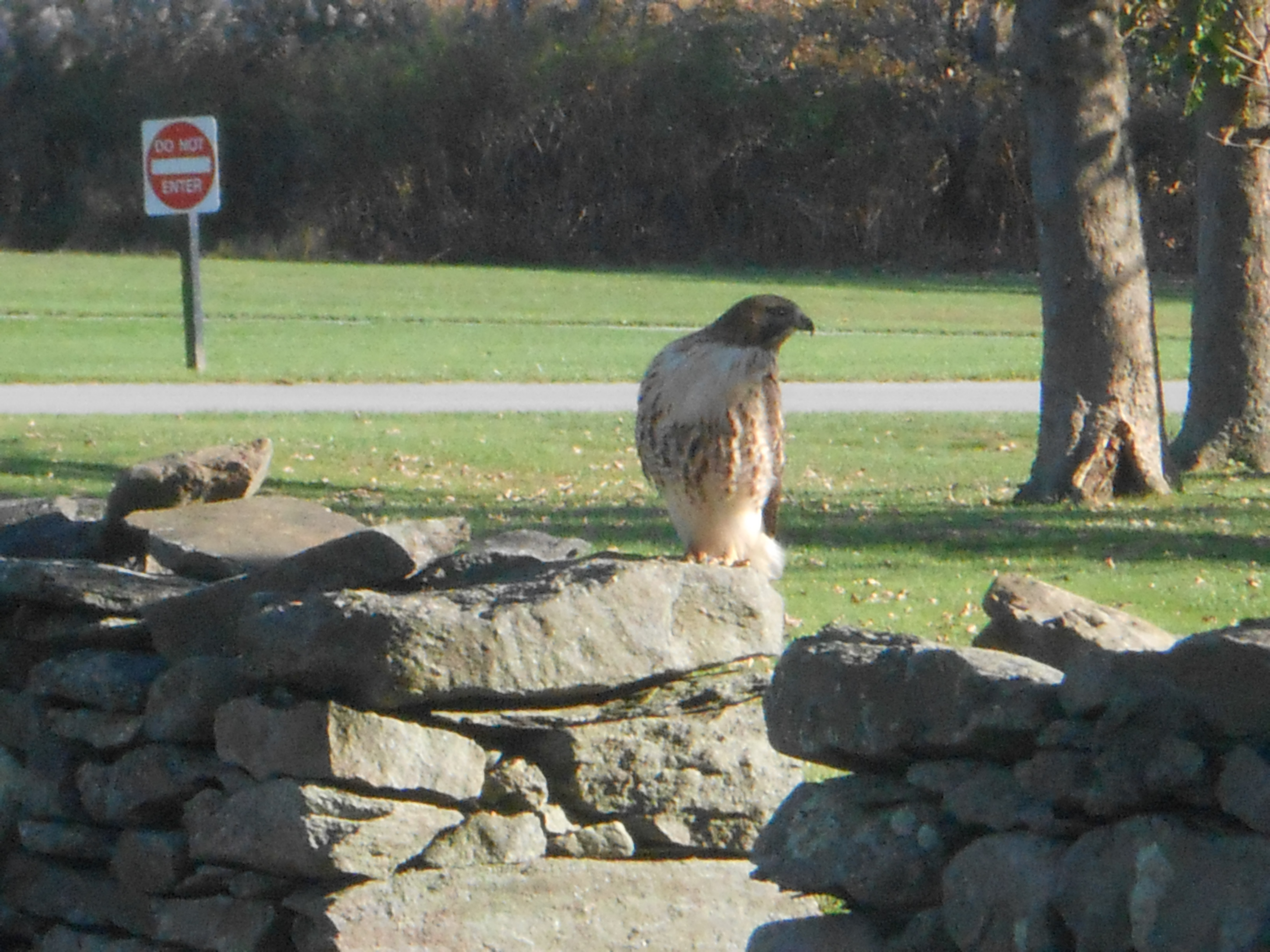
A little further down the road, what should swoop past us to disappear on the other side of the stone wall but a Red Tail Hawk!  Clearly, her eagle, err hawk, eyes had spotted something edible scurrying through the leaves on the far side of that wall.  Unfortunately for her, but fortunate for the mouse, vole, rabbit, or whatever, our hawk hunter emerged and tromped down on the wall with nothing to eat in her claws.  Apparently she was a tad embarrassed because her look here clearly says:  “What are YOU lookin’ at?”


Finally, we also made it out of the woods and onto the shore to make our first sighting of Brant Geese. They kind of look like stocky Canada Geese, but they are quite different.  They also may have a black head, but that’s marked by a white band around their necks, plus, they lack the brown feathers of the Canada Geese. These guys always swim in tight formation and have the most adorable vocalization – not the rowdy honks of their North of the border brethren.


Below is a video where you can hear them almost quacking, rather than honking, but you have to listen carefully!


The Secret Place of Fall Foliage

Every season, Yang and I try take a hike at what we call “The Secret Place.”  It’s really not so very secret, since we usually run into a few hikers or kayakers there.  Still, it feels secret to us.  Anyway, we made our fall visit a couple of weeks back, hoping to see some beautiful foliage and do a little birding.  We’ve seen quite a few warblers, aquatic fowl, and even eagles over the years here.  You can see Yang is well prepared with his fancy-schmanzy camera.


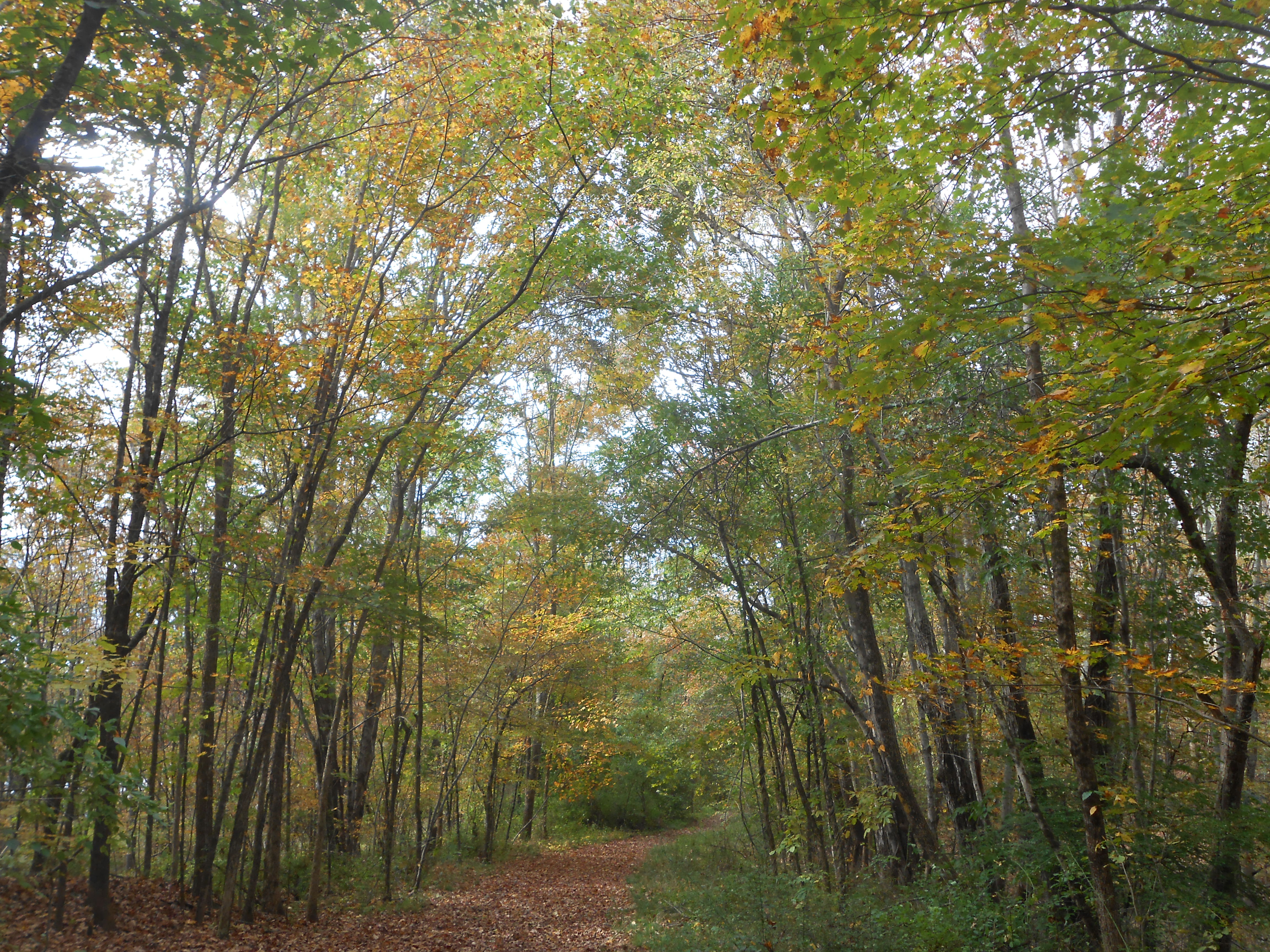
After our breakfast of bagels and good pumpkin spice coffee (invented by George Crabtree in the early 20th century), we drove over to our destination.  The colors looked promising, as you can see from the tunnel of trees extending before us.


Though the Secret Place may not have been at it’s peak, we found all kinds of beautiful colors.

Reds


Oranges


A beautiful mixture

I especially love how the colors hug the shore and complement the pale blue waters of the reservoir and sky.


Aren’t these berries cool, as well. Perfect autumn decor?!


However, with the recent rains, the reservoir had flooded over part the abandoned asphalt road that is the trail. So  we couldn’t take the direct route to the dam at the end of the trail. Gorgeous colors, though, right?

Yang and I were not daunted.  We knew of a dirt trail in the woods that would circle around the flooded road and, with luck, bring us to an unflooded portion of the road by the dam.  En route, we came across this wonderfully haunted looking dead tree.


The trail looped through the woods and lo and behold! Dry asphalt and the bridge where we would usually  chill to watch turtles in the summer and water fowl or raptors most of the year!

Unfortunately, we didn’t see any warblers (out of season), raptors, Whimbrels, Yellow Legs, fancy ducks, or even Cormorants.  We did see a couple of Mallards and a gull or two.  We even heard a Kingfisher, but couldn’t catch sight of that proud, crested avian dive-bomber. I did get a nice shot of Yang amidst all the autumn color, though.

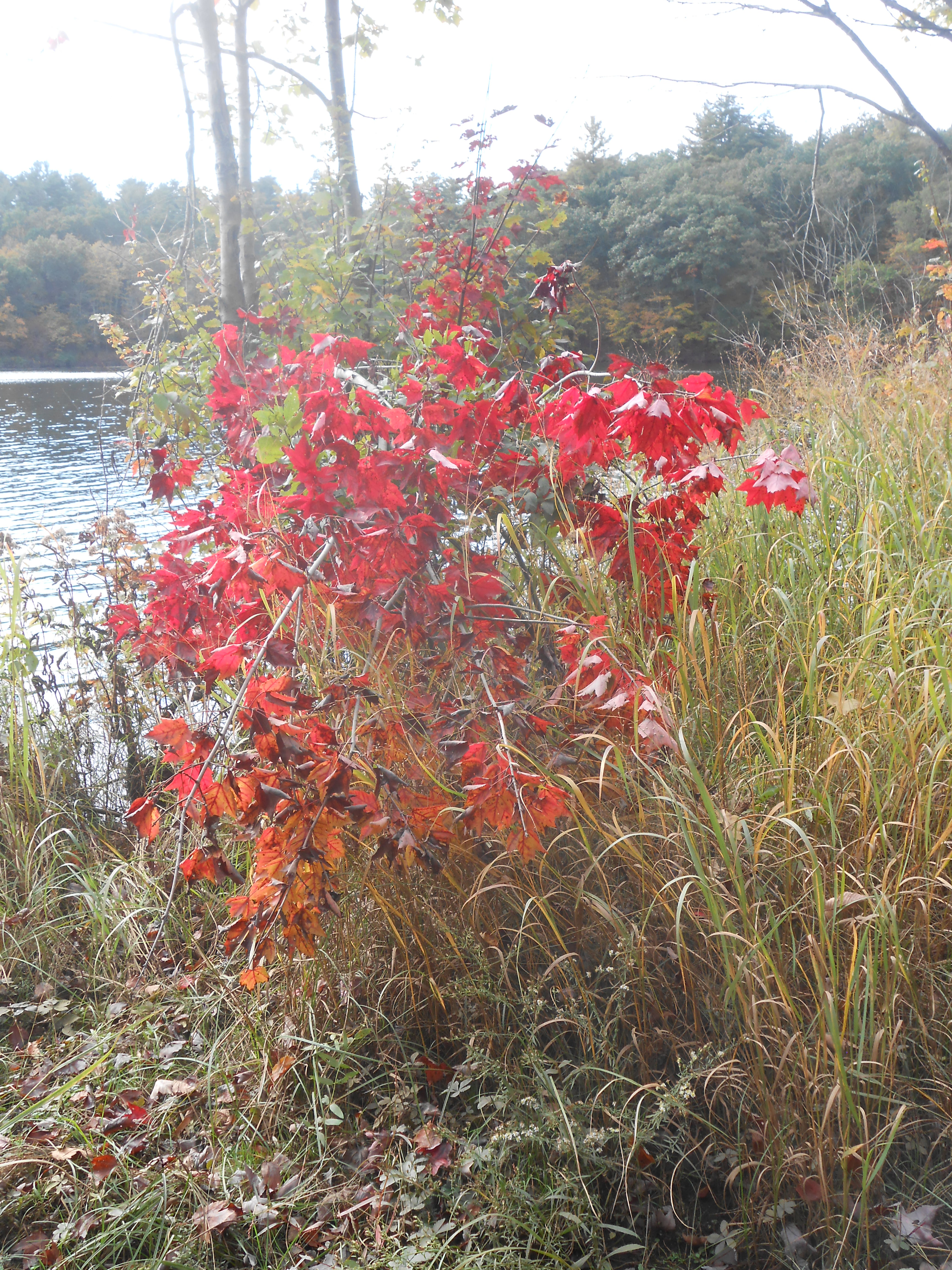
So, I hope that you can enjoy your own “secret places” in their fall glory.  If you can’t get out, maybe you can share in  mine.  I’ll leave you with this scarlet beauty below.

Return to Riverside Cemetery: Autumn Leaves Bursting with Color

This past October. we returned to the Riverside Cemetery in Waterbury with hopes of seeing the statuary complemented by gorgeous fall colors.  Yang and I were not disappointed!

The entrance was serene and gracious, with background colors hinting at the beauty we would find beyond.

The highlight that these fall colors brought t o the monuments was deliciously melancholy.  The leaves behind this woman leaning on a cross brought forth the saffron beauty of autumn.


Then there was the flame of orange encompassing this melancholy dame, flaring against the shadows of a of grey autumn day.


Or there was this lone, proud figure fronting a brilliant crimson of oak trees.

I loved this shot from behind of the woman gazing out over the rolling hills of autumn glory.

I think this deer must feel at home, encompassed by the gorgeous green morphing to yellow-gold of fall.

Likewise, this pensive young woman is lost in deep thought while greens turn to flame and yellow-green.


I was especially enchanted by so many trees that combined various colors as their leaves slowly shut down the ports to chlorophyll and let their true hues burst froth in brilliant glory.

Green and Gold


Orange and Red, like a flame reaching heavenward.

And then, some trees seemed to  us gifted with four colors at once!

Well, maybe that’s a Japanese maple photo bombing the sugar maple.

Just gazing across the cemetery, you see slopes rolling with gorgeous fall glory:


The trees were so gorgeous, Yang decided to stick one in his back pack to carry it home.

Just kidding:  optical illusion.


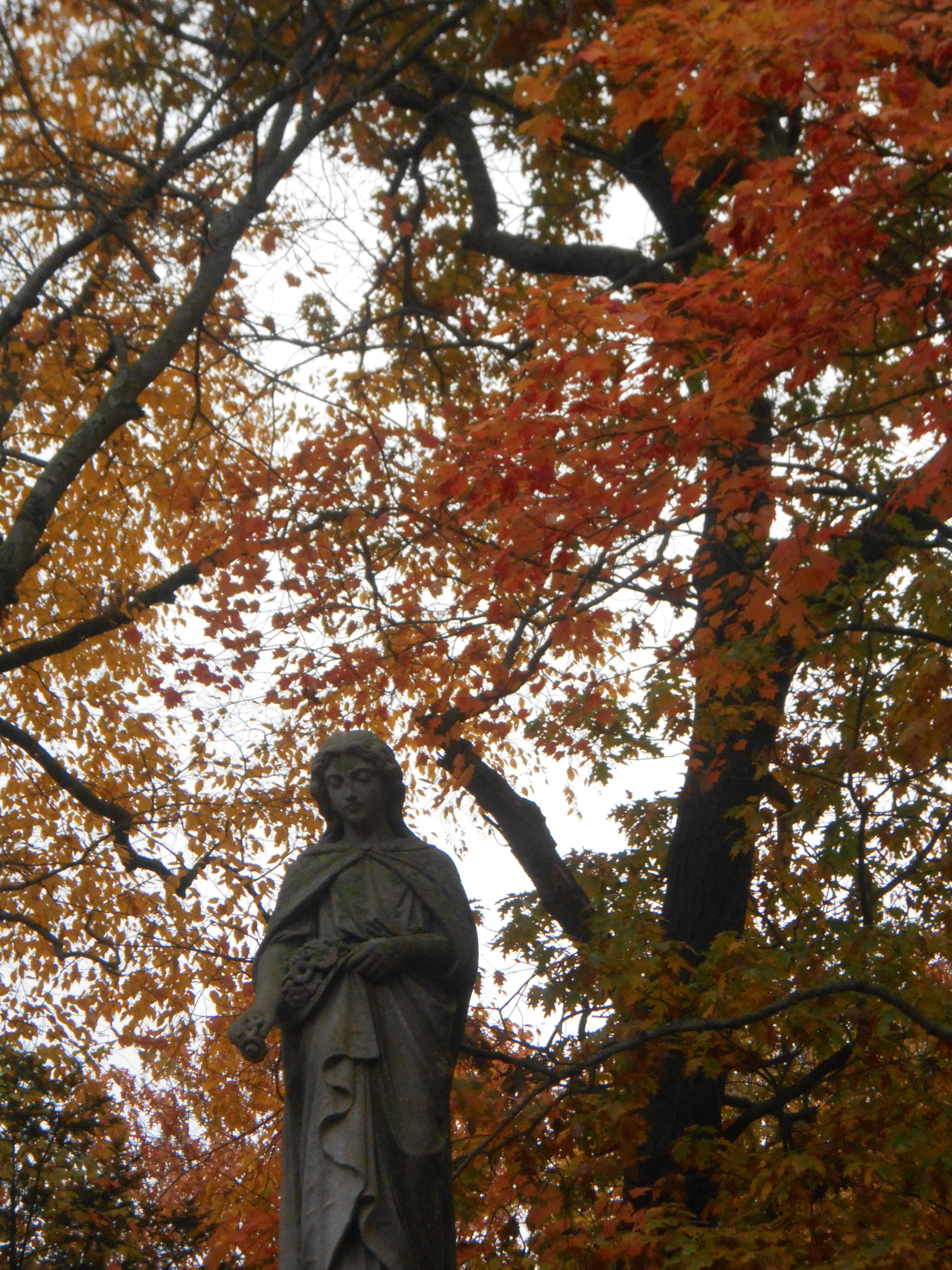
I particularly loved this sage woman’s pensive and imposing presence, her blue-green copper complementing the reds and greens of the trees behind her.

And that, my friends, is all she wrote.


Lee Library Author Event: A Walk on the Noir Side in Shades of Autumn

Since some of the Covid issues have waned, I’ve started going back to doing in-person author readings.  Friday, October 14th, I had the good fortune to do an event at the Lee Library in Lee, Massachusetts.  What a wonderful day!  Lee is in the western part of Massachusetts, so my husband and I had an exciting drive through all the gorgeous fall foliage to arrive at our destination.  Lee is a neat little town with a main street of equally neat shops, and in an antique store I found a 1940s movie magazine with pictures of favorite stars.  The main street has lots of  tasty restaurants.  We had our lunch at The Starving Artist Cafe, where they craft the yummiest sandwiches and
crêpes. They made a pumpkin latte that was absolutely perfect – not all sugary and fake whipped cream, but good coffee, the flavor of pumpkin spice, and steamed milk.  We sat outside at the street seating on a warm October day and enjoyed the small-town scenery, great food, and trees dressed in their autumn flames and oranges.After a stroll amongst the shops and a peek at some of  the gorgeous Victorian houses in town, we went to the library for my talk.  You can see what a beautiful old building the library is.  When visiting the town earlier, I was taken with the building and thought, “I’d like to do a talk here.”  Well, I contacted Jodi Magner at the library, and she was tremendously welcoming and enthusiastic at the prospect of my doing an event.  She told me that they loved mysteries in that town!

That day, Jodi and her daughter Megan made me so welcome and helped my husband and I set up.  I was delighted that my friend, mystery writer, Leslie Wheeler could join us, as well as other women whom I’d never met before.  We were a small group, but we had a great time.  I got so many intelligent questions, and people seemed interested in my inspiration from film noir and haunting movies of the 1940s like Val Lewton’s films and The Uninvited.  They seemed to get a kick out of the excerpts that I read from Bait and Switch, Letter from a Dead Man, and Always Play the Dark Horse to illustrate how the dark, dreamy elements of noir and the smart talking gals of the 1940s influenced my writing!  One of the women even said that a friend, sometime earlier,  had been suggesting she read the Jessica Minton series.  I’m getting a fan base! And now you can read all three Jessica Minton novels through the Lee Library.

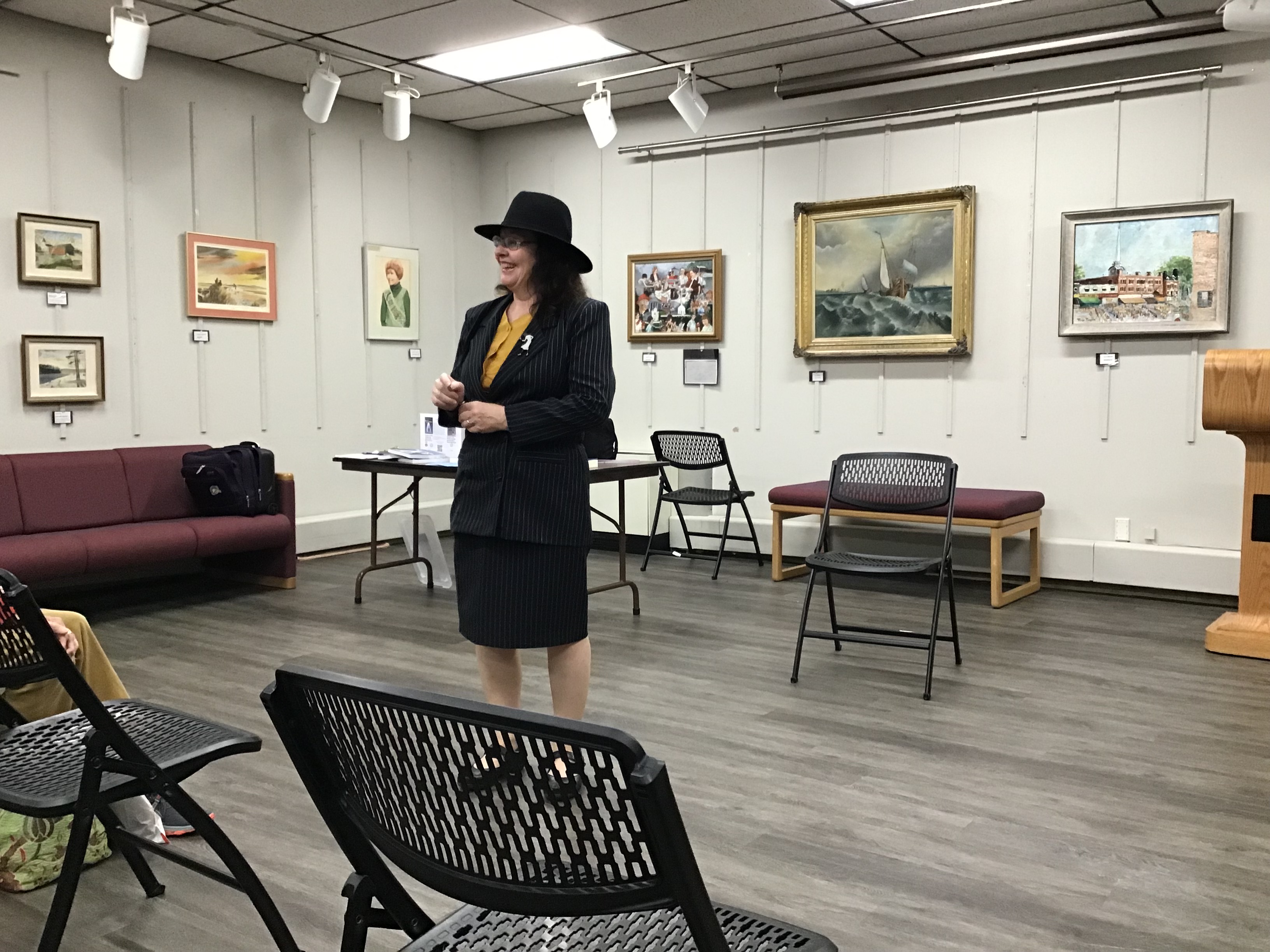
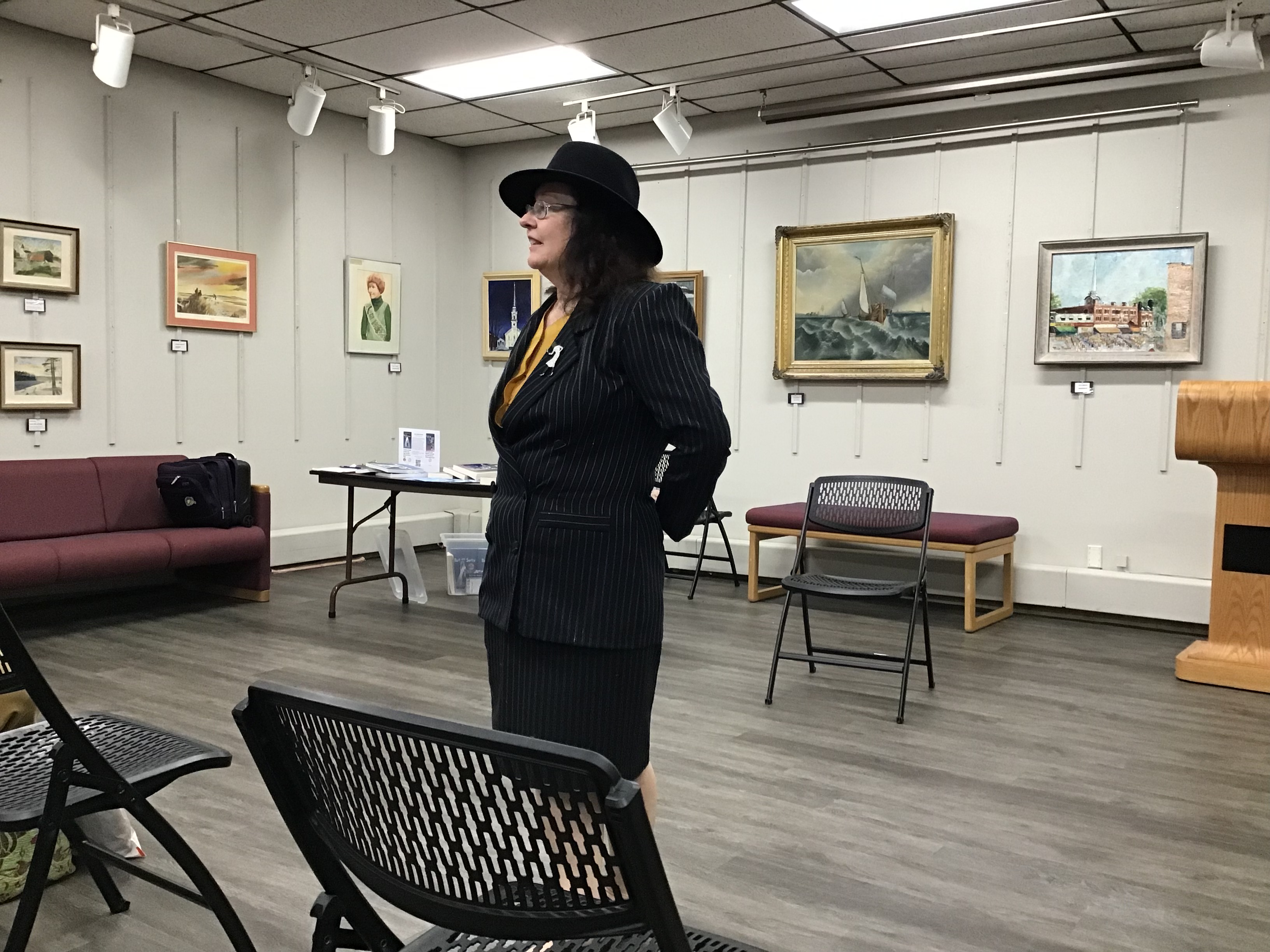
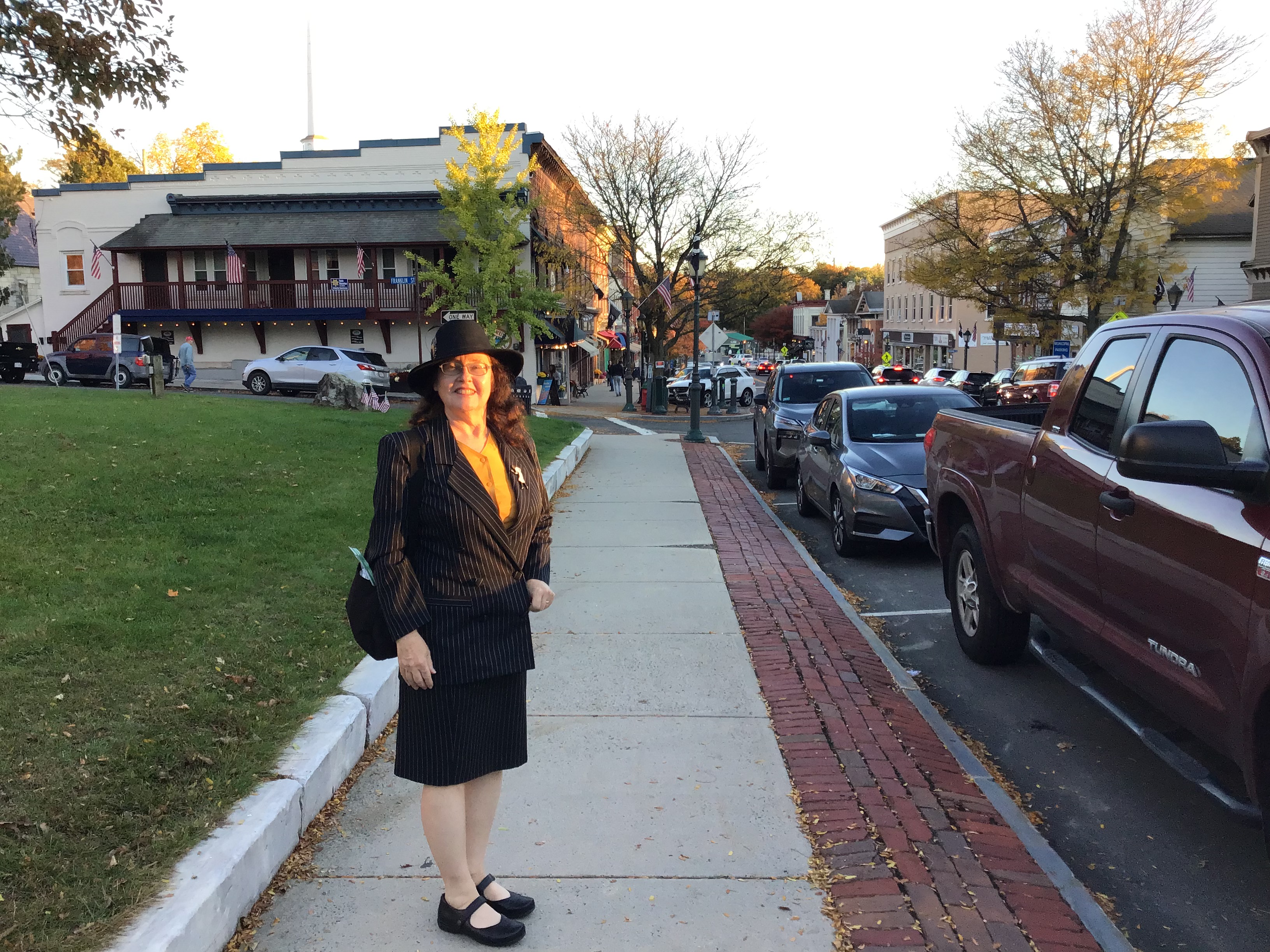
Say, how do you like the pin-stripe black suit and the black fedora?  I thought the gold blouse was just right to add fall color. Should I have brought along a gat?

I’m hoping to go back in the summer, after the fourth novel comes out:  Shadows of a Dark Past.  Maybe I’ll see you there!

Return to Colebrook Reservoir

Two years ago, Yang and I made our first trip to Colebrook Reservoir on a brisk Halloween afternoon.  What a treat!.  After at least a year of drought, the old Rte. 8 was completely clear and dry of the water.  We even saw part of the “ghost bridge” and the stone walls marking the boundaries of farms in what had once been a community displaced by the formation of the reservoir.  That day, we saw our first slate-colored juncos of the season, while the fall colors were still in bloom.  (Check out an earlier blog on our adventure here).
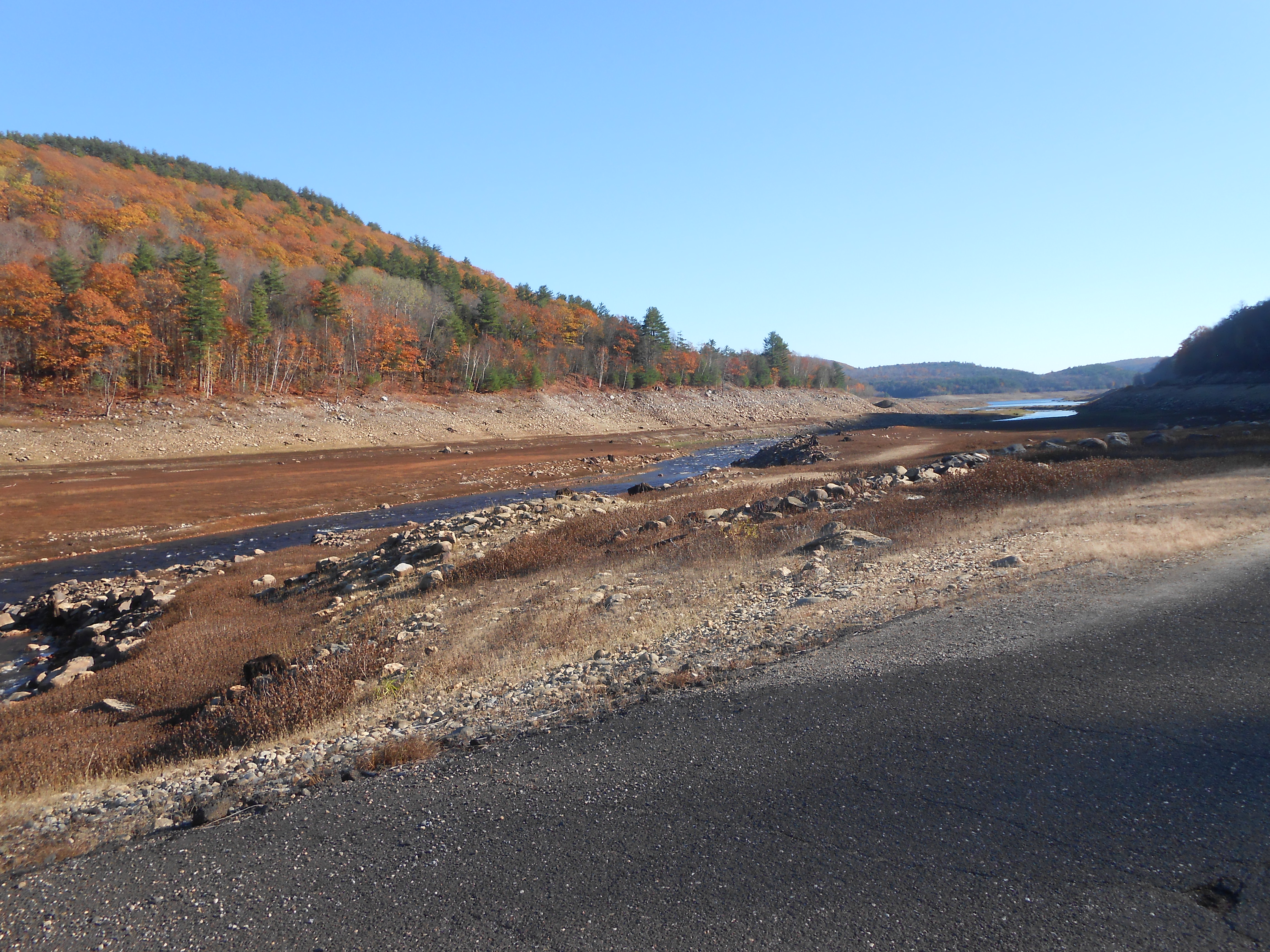
We came back last year, after an extremely rainy summer and discovered just how quickly a reservoir can fill up!  Not even a trace of the road we traveled between a slope of boulders and the water.  We were lucky the parking lot wasn’t swimming!

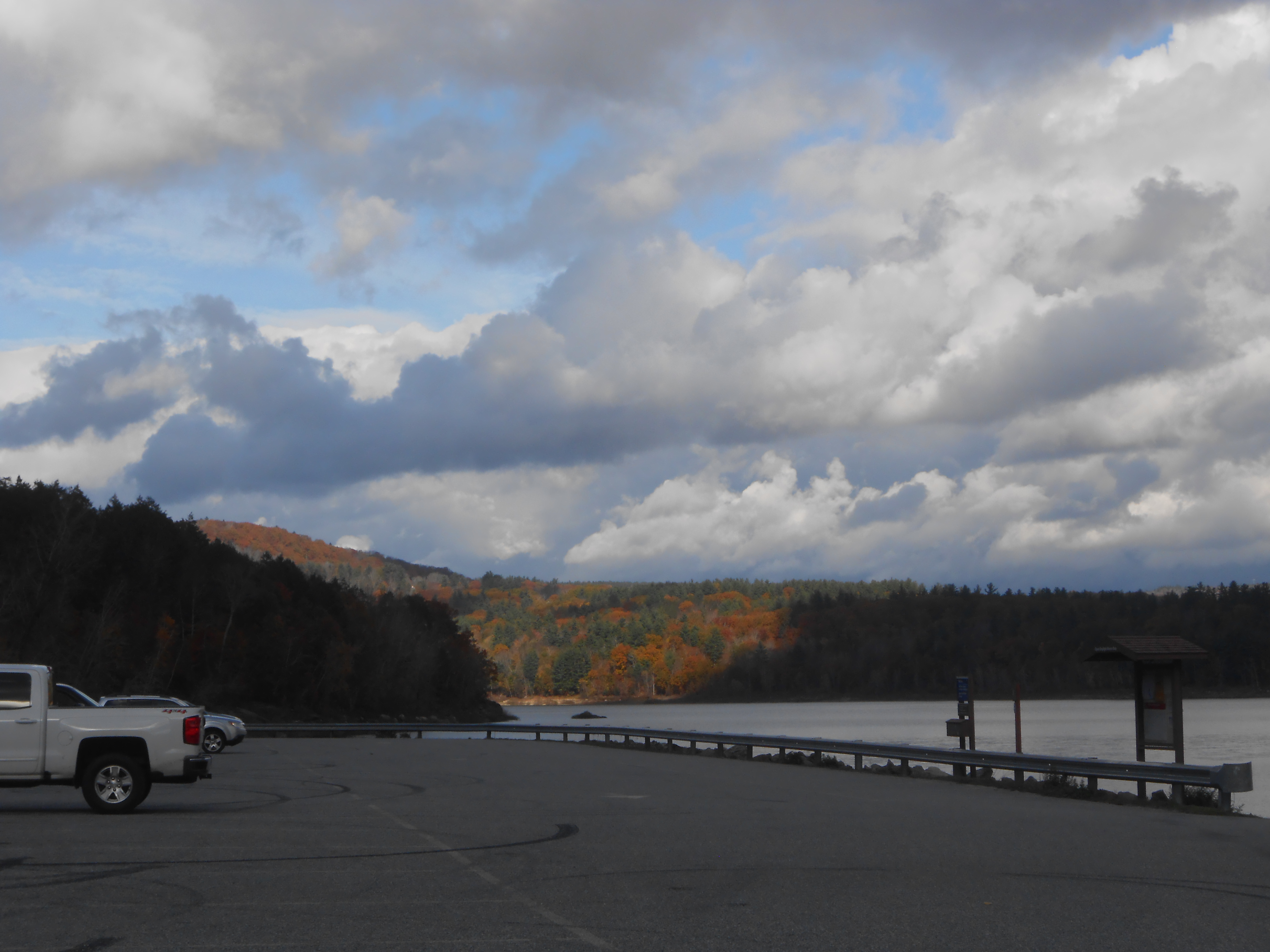
Ah, but 2022 brought another summer drought – and maybe the only good thing about the dearth of precipitation was that the way at Colebrook became so much clearer – though not nearly as clear as two years ago!

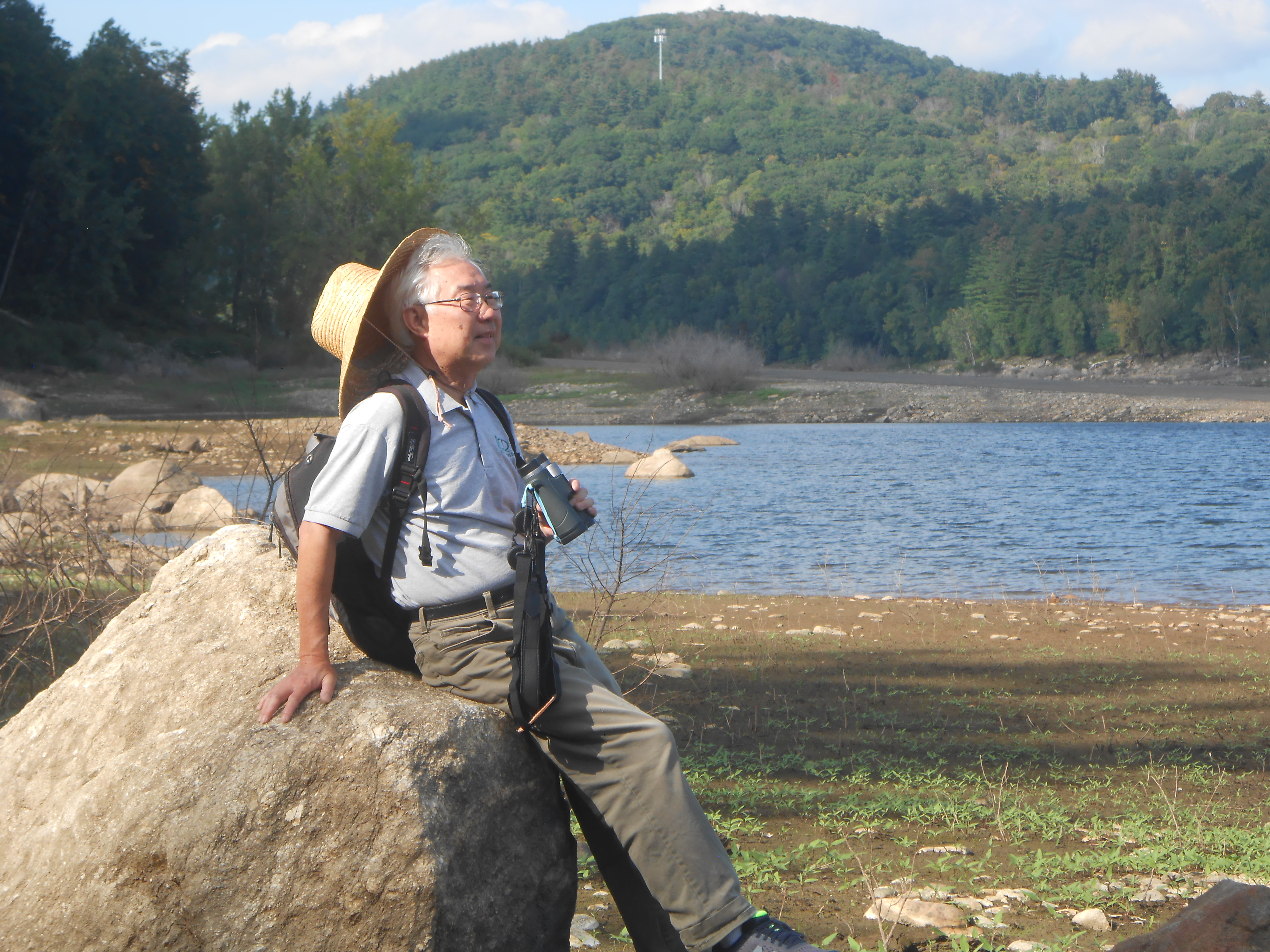
So, here’s my report, with photographic evidence!  On a gorgeous September afternoon, we were able to take the road (old Rte. 8) down from the parking lot for a bit of a stroll, until the inundation of the low road cut us off.  Were we daunted?  Not we two Yangs!  We scrambled over 1/8 to 1/4 of a mile of boulders flanking the waters.  You can get a bit of a picture from this photo, though you can’t see quite how steep the slope was – it was too hard to take pictures and scramble at the same time!


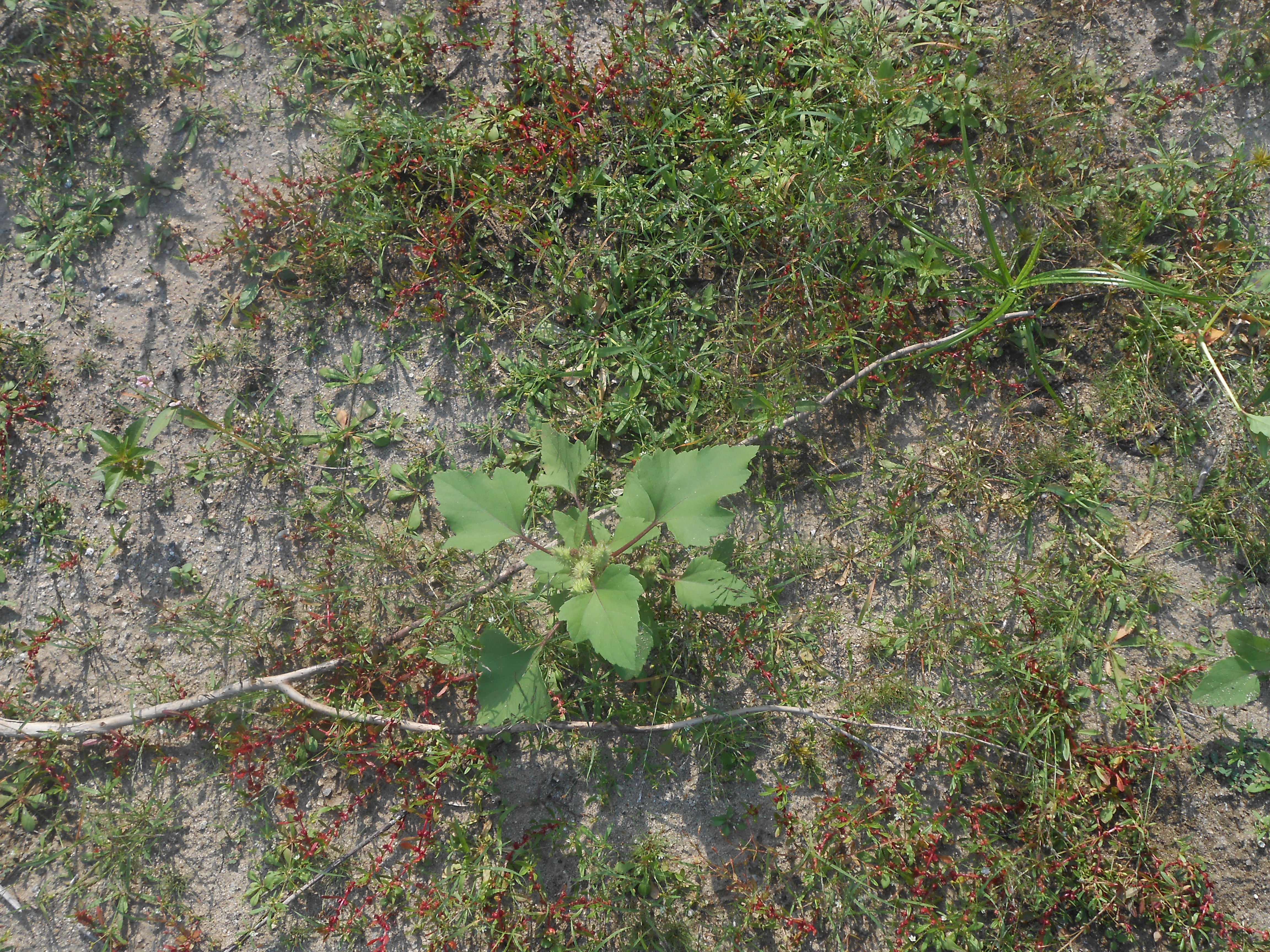
Where the road rose on higher ground, it was clear of water.  Unfortunately, there were gaps of low lying road that were inundated.  So, we managed to circle around the submerged road through rock-strewn mud flats, where we saw all kinds of fauna tracks:  deer, lynx, big herons.  We also saw some neat flora, as well.  I was taken with these nettles, some of which were accompanied by red berries.  Anybody recognize them?  We kept an eagle eye out for ticks!  Also, for fellow MSTKies, we did watch out for snakes.  None sighted – not even in the water.

It was fascinating to see how the wash of waters over the past few years had covered what was left of some of the road with gravel and how the flooded areas created islands of what had once been  roads.  Yang and I were both struck by how torn up the exposed blacktop had been since the last time we’d walked this road.  When we went through a stand of trees, we found some big trees down that we had to climb over.  No riding our bikes here the way we did two years ago when we had returned the day after Thanksgiving.

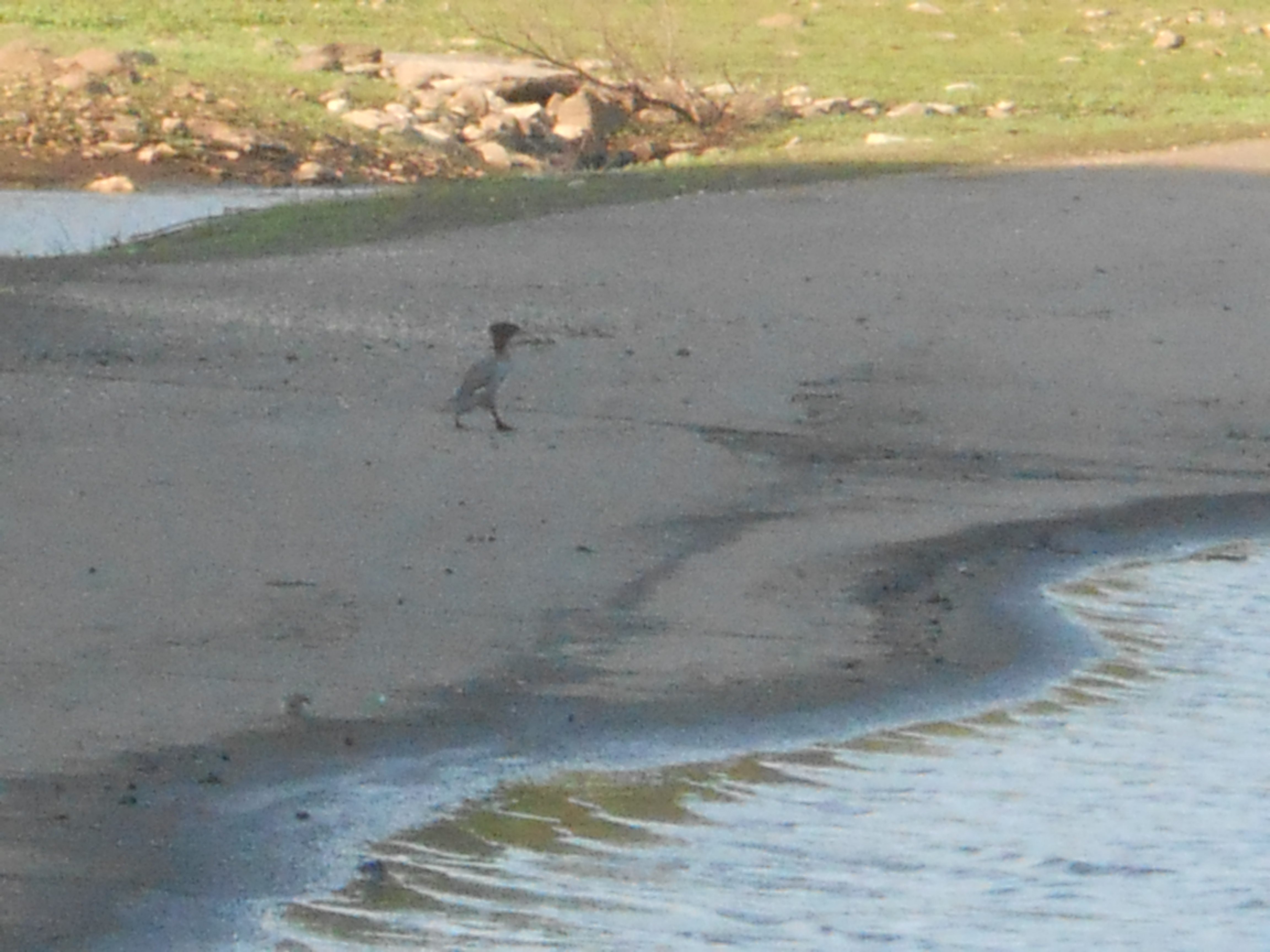
Last time we were here,  we had walked out to a highway bridge from the 1950s that crossed a stream emptying into what was originally a river (now the reservoir).  There was even a jetty to walk out on a little further along.  Well, at least the bridge was still there, but water was almost even with it.  Still we had a nice walk there and a little beyond, until the road dipped and the water filled in everything.  As you can see, we weren’t the only ones who enjoyed the bridge.  The area seemed to have become the playground for female and juvenile male Common Mergansers.  These ducks were having a grand time strolling about, splashing, and playing in the water.

Speaking of birds, Yang was disappointed not to see any Juncos (though it’s a bit early).  Nevertheless, he more than made do with the many water birds we saw.  Across the waters were Great Egrets, and on our side we saw several interesting types.  On the left is one of the Spotted Sandpipers we saw, though we usually saw only one at a time.  Maybe it was the same one a few times over?  We also saw this Greater Yellow Legs.  It might have been a Lesser Yellow Legs, but we didn’t have anything with which to compare him.  Less than whom?  There were plenty of Cormorants, too.

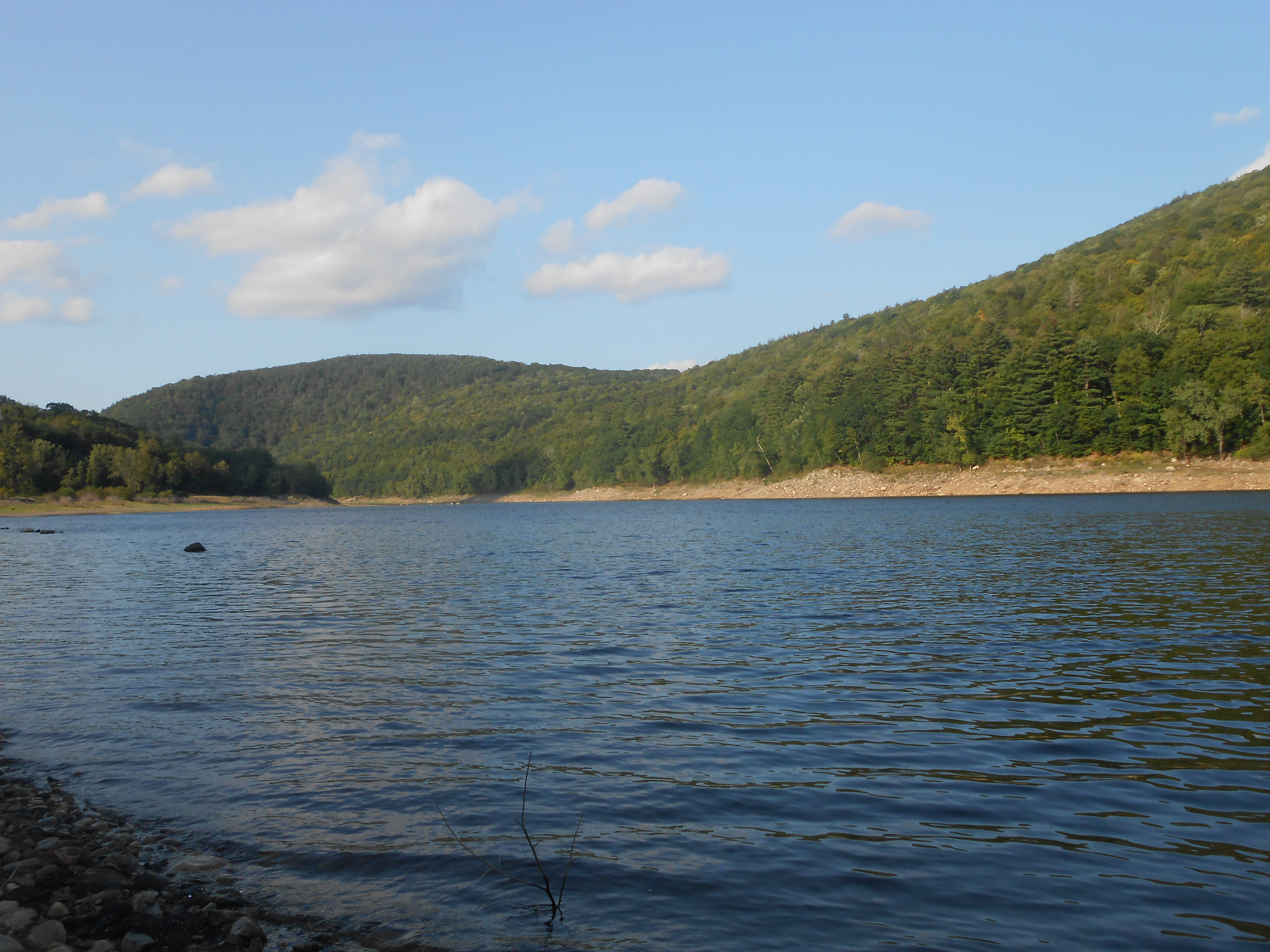
This was a pretty scene of the shore across the reservoir.  I really enjoyed the view.  Too bad we won’t be able to go back this year when the colors really go full-on autumn.

Of course, this is my favorite view.


I hope you’ll pardon me while I duck out now.

Haunting by the Riverside

The second day of December is not yet winter, with traces of muted versions of the fall colors lingering, especially in the trees and grass of an old cemetery, almost forgotten.  On that date this year, Yang and I finally got to visit the Riverside Cemetery in Waterbury, Ct.  When passing by on the highway, we would always look down on the Victorian Gothic chapel and monuments to those lost in death, leaving us fascinated by its haunting, melancholy beauty.  Finally, we managed to make a trip there to explore.  We  were not disappointed.

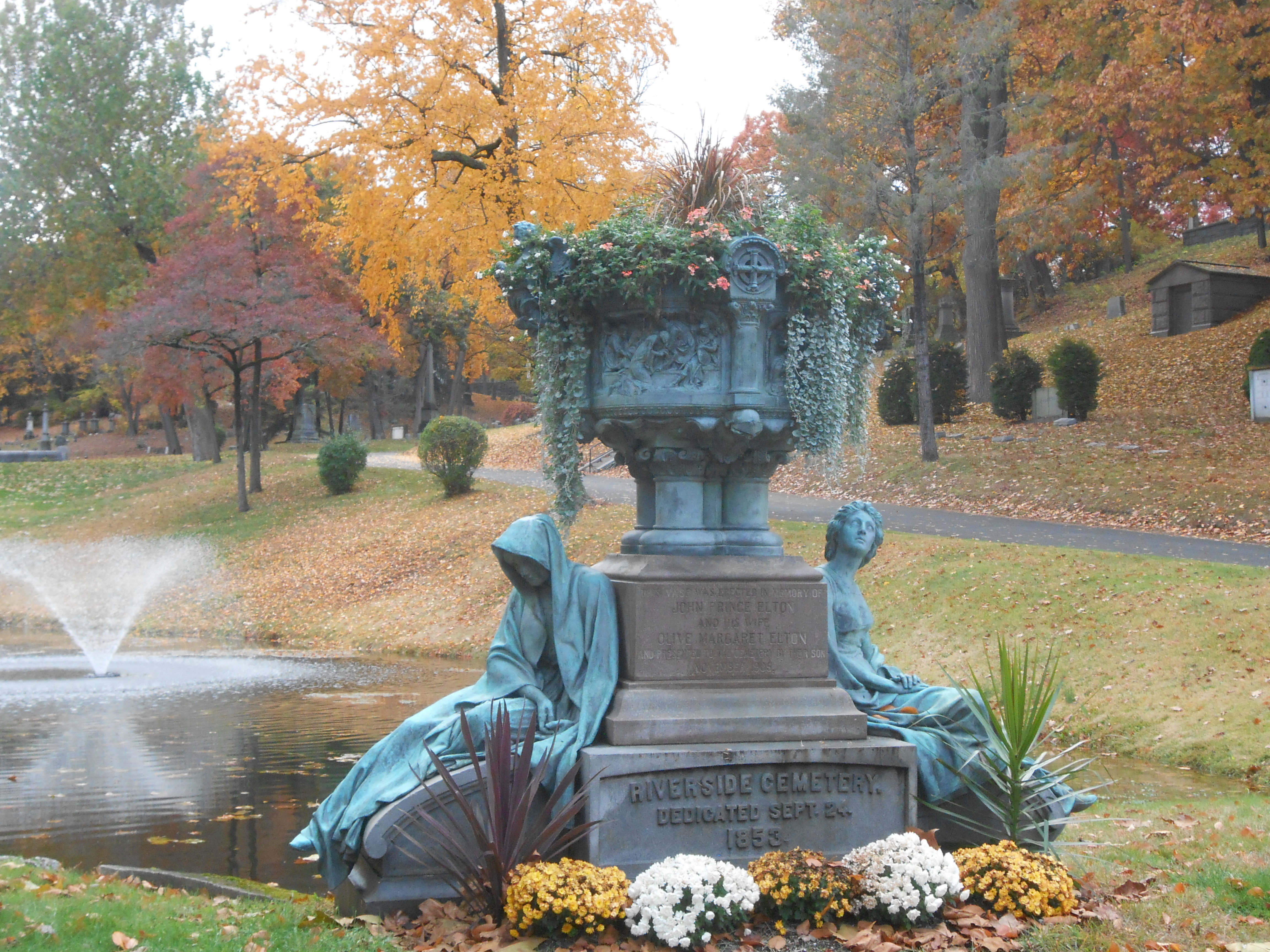
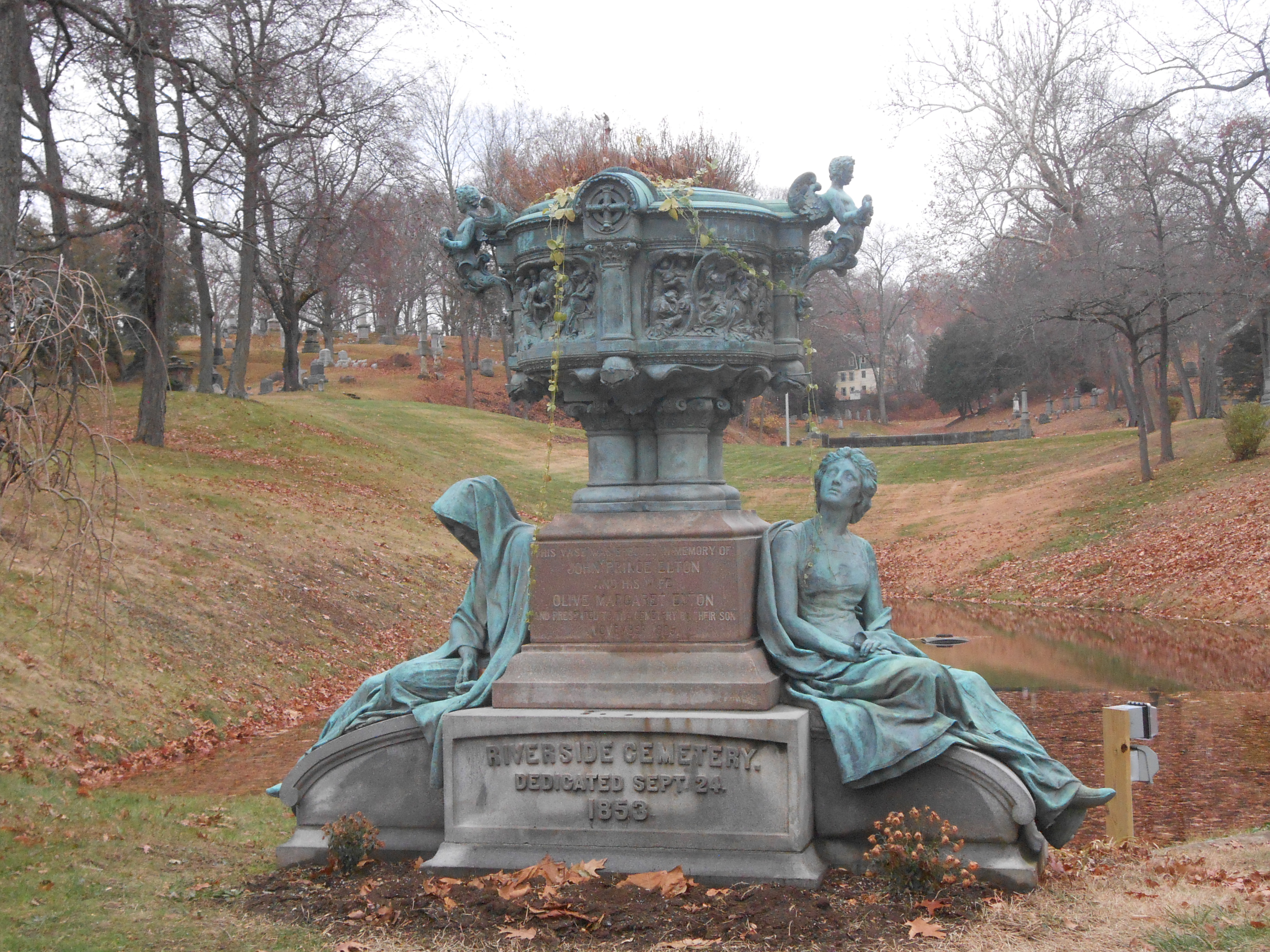
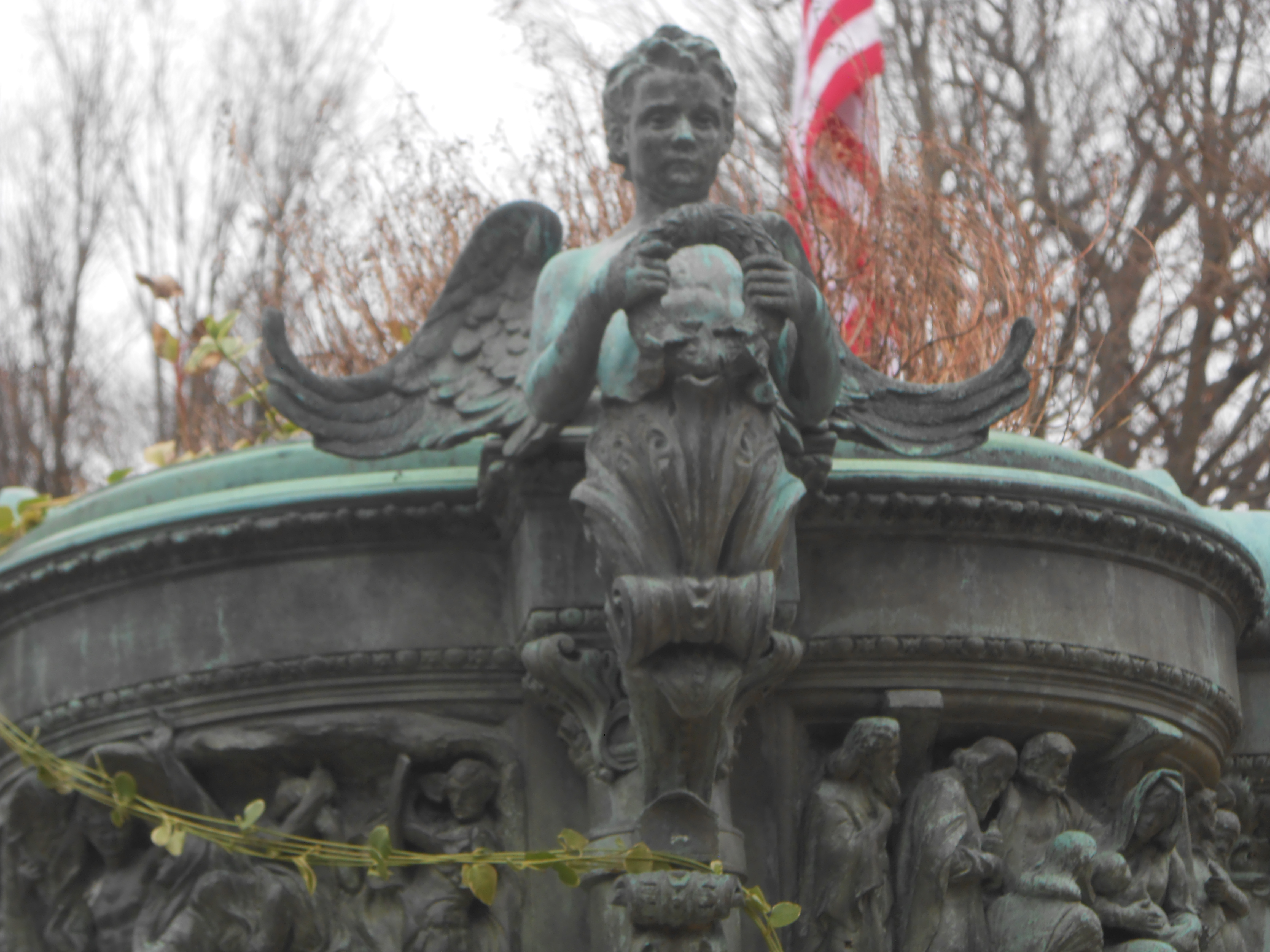
Of course, we stopped first in Seymore for tea at Tea with Tracey, where I enjoyed a delicious fig and cherry tea and Yang took pleasure in a nice green tea.  The array of tea sandwiches was yummy, and soon we were well fortified for our expedition into the past of Waterbury through its monuments to the passed. The day was appropriate, with grey skies and a nip in the air.  As you entered, you are greeted with an exquisite monument to the Elton family. The bronze has turned a soft green, but the female figures flanking either side of the memorial urn are beautifully articulated.  On one side is a shrouded figure of grief at death and on the other a hopeful one looking upward serenely.  The execution of the figures is graceful and feeling.  Interestingly, the handles of the urn are cherubs, somewhat menacing in demeanor. I think it’s kind of neat that the man’s name is John Elton. Reverse the order and you have . . .
You can find the actual grave of the Elton family deeper into the cemetery. Clearly this was one of the leading families of Waterbury in the 19th and early 20th centuries.  I heard that there was even a highly regarded Elton Hotel in the town quite some time back.  What has happened to them since?  I can’t tell you. Perhaps there are some Waterbury historians reading this blog who would like to take that one? I’d love to know!
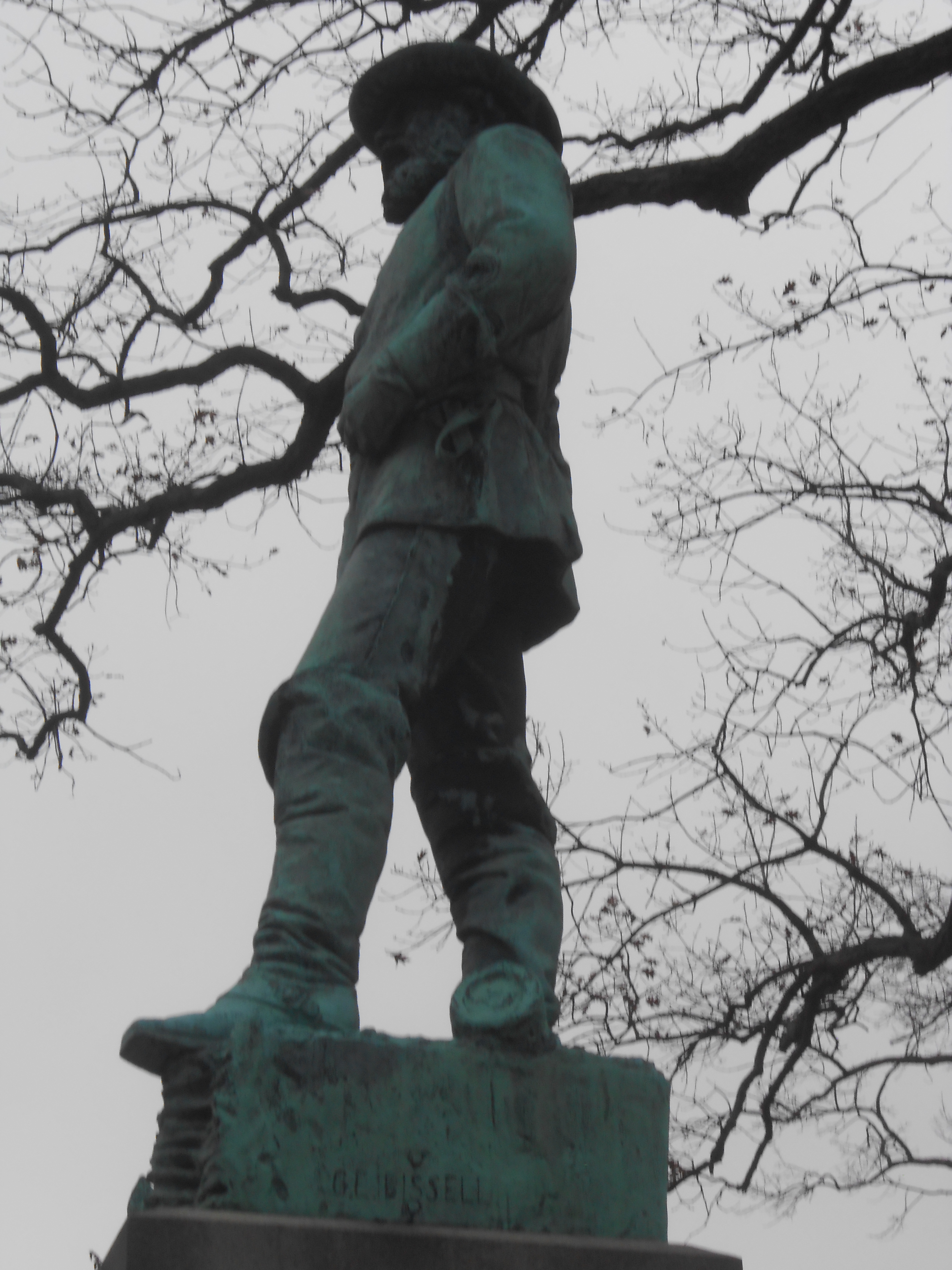
There were several others who were clearly prominent in the town, indicated by the plaques on their graves or the imposing nature of their monuments.  One interesting sort was the Civil War veteran John Lyman Chatfield.  This plaque tells the story of his wounding on the battlefield and subsequent death back in Waterbury.  The bronze statue of him in uniform further attests to his history as a Civil Warrior.  The Chatfield family must have been one with tremendous clout in the city to be able to leave such an imposing monument.  Any local historians want to fill us in on more about him?


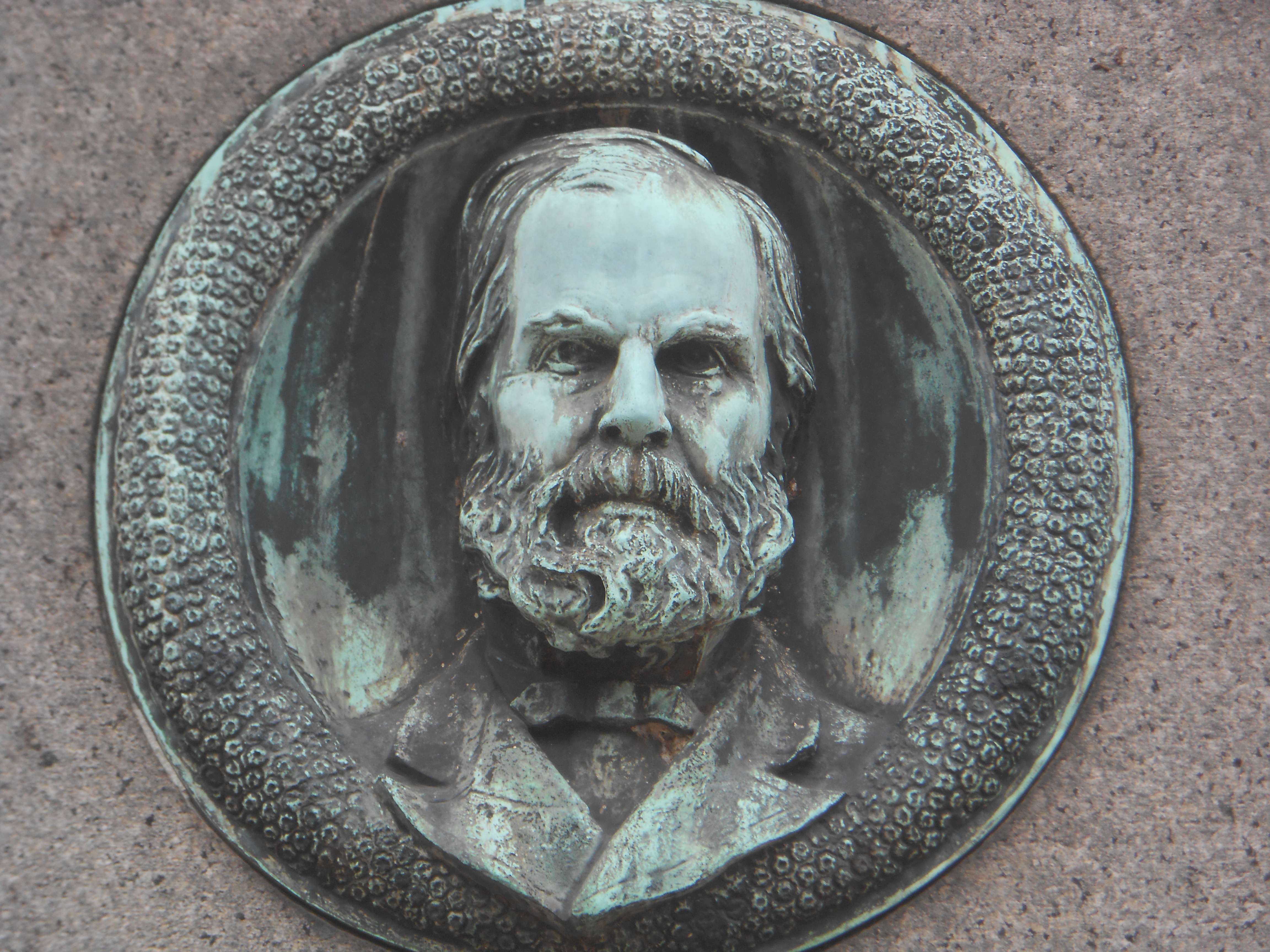
The Spencer family also must have been amongst the movers and shakers of 19th-century Waterbury.  Witness the tall monument with the carefully carved likeness in relief.  This guy must have worked awfully hard for his money and position because he does look rather cranky, don’t you think?
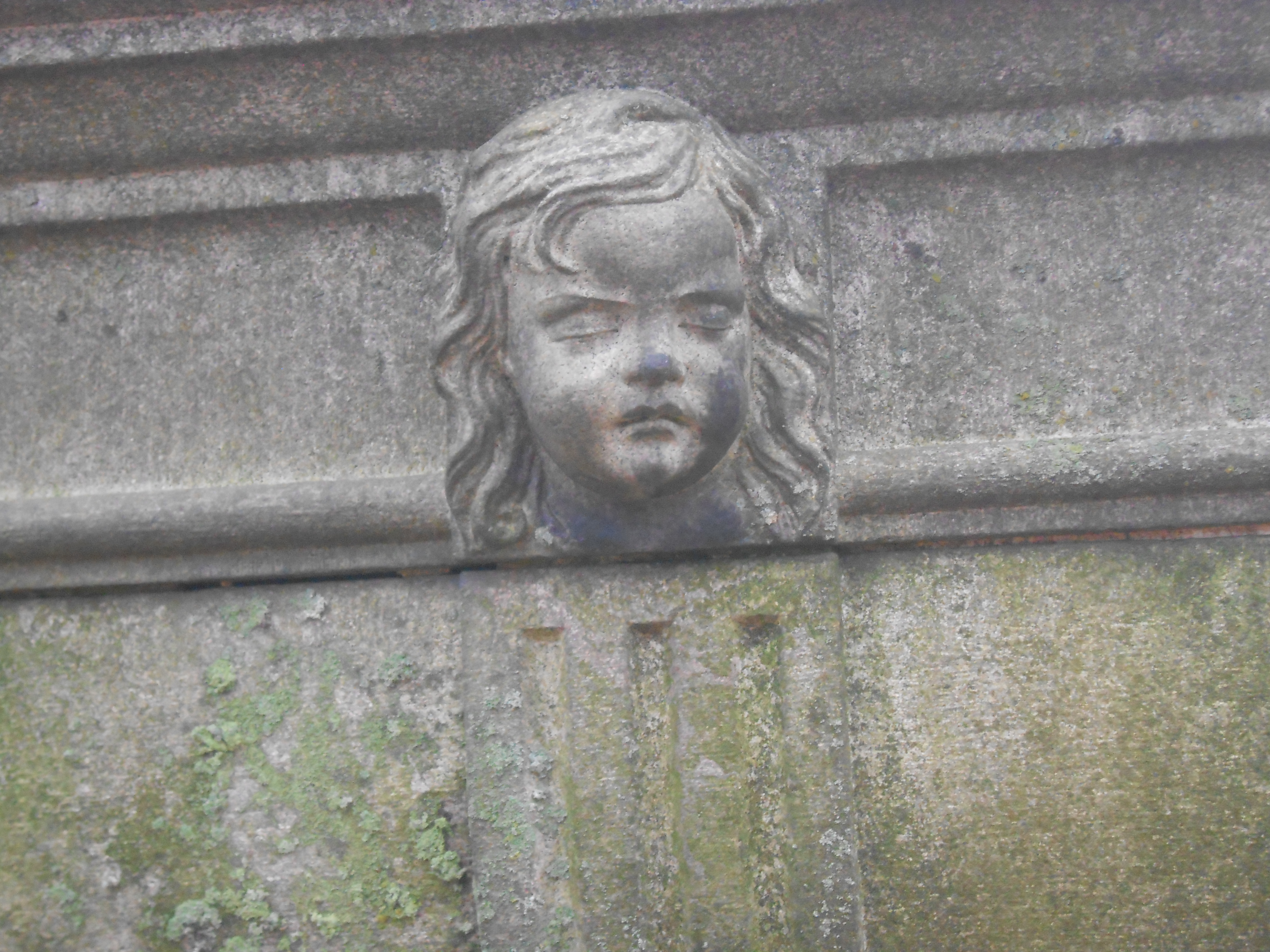
Here we have a doctor who must have had a great deal of success and done much good.  The description of his work helping children reveals his value to the population.  Perhaps that’s likely the reason for the sleeping children on the corners of the face of this elaborate tombstone.  They are a little creepy though, don’t you think?  I guess that’s why they’re so Victorian, the era of photographing your dead all dressed up to remember them by – if you were upper middle class.
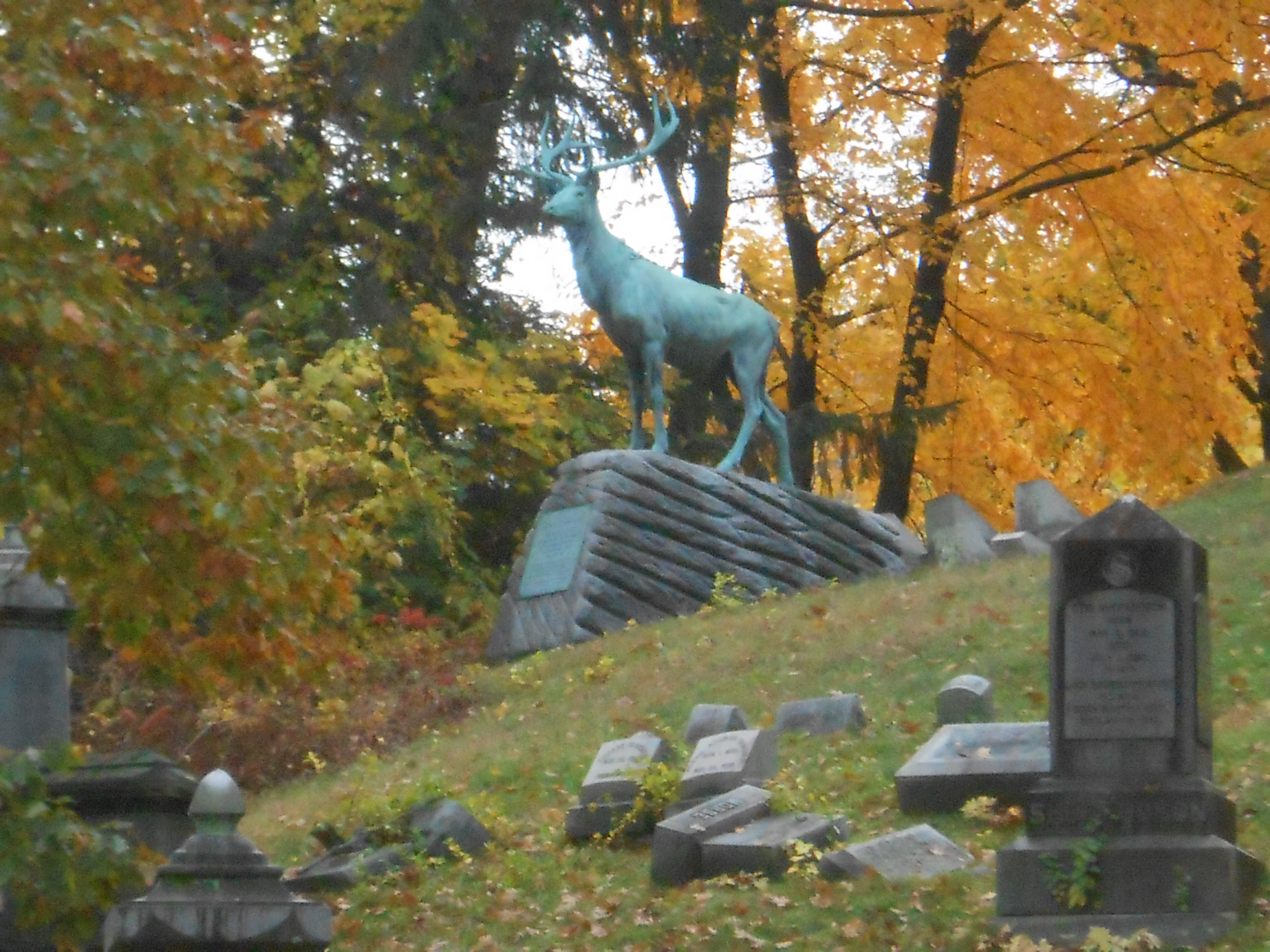
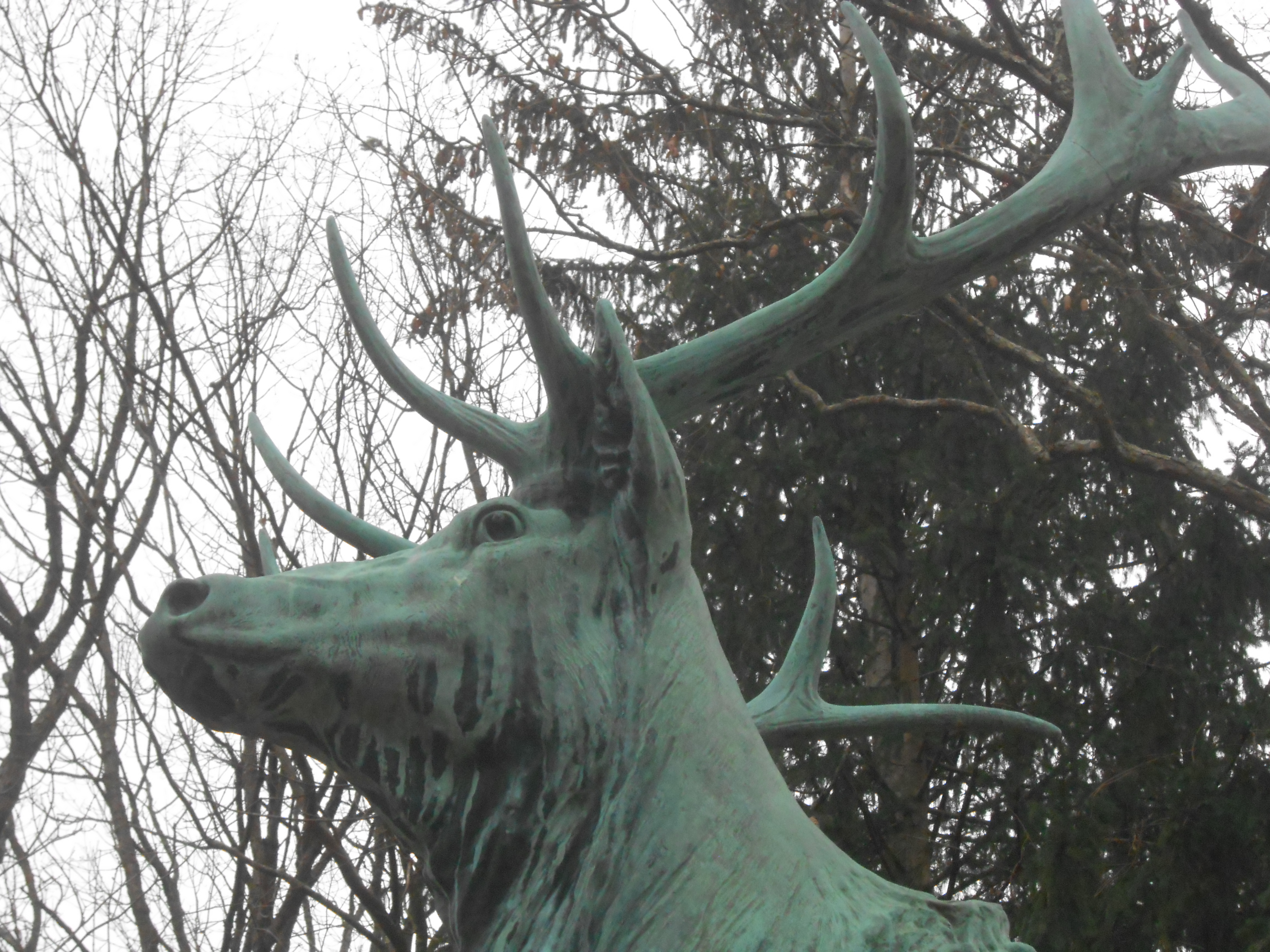
And of course the BPOE was a force to be reckoned with in those days as well.  If you were a high-antler and did a lot of good, then you’d certainly be properly memorialized, so check out this monument.  I don’t remember of the chap honored here, unfortunately, but I had to get several shots of this elk.  How does he compare with the elk in the Edson Cemetery of Lowell’s ?  Click here for an earlier blog to make a comparison.  The one in Lowell does have the advantage of being cleaned and returned to its original bronze glory.  Anyway, I can’t help providing you with several shots of this wonderful statue. It’s so cool how his base is shaped as a rock crag and is set on the hillside, so that he presides over the rolling slopes of the cemetery.


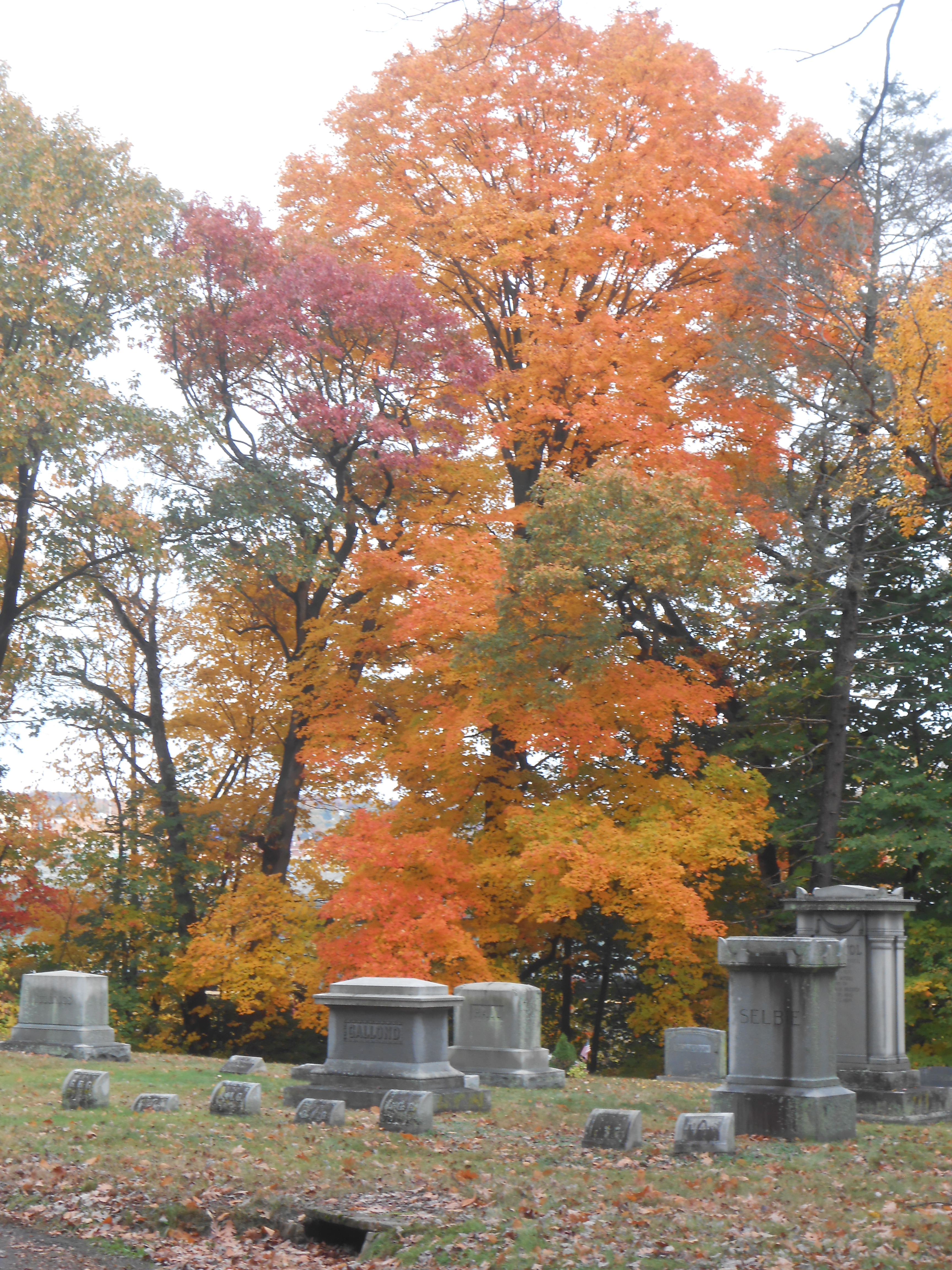
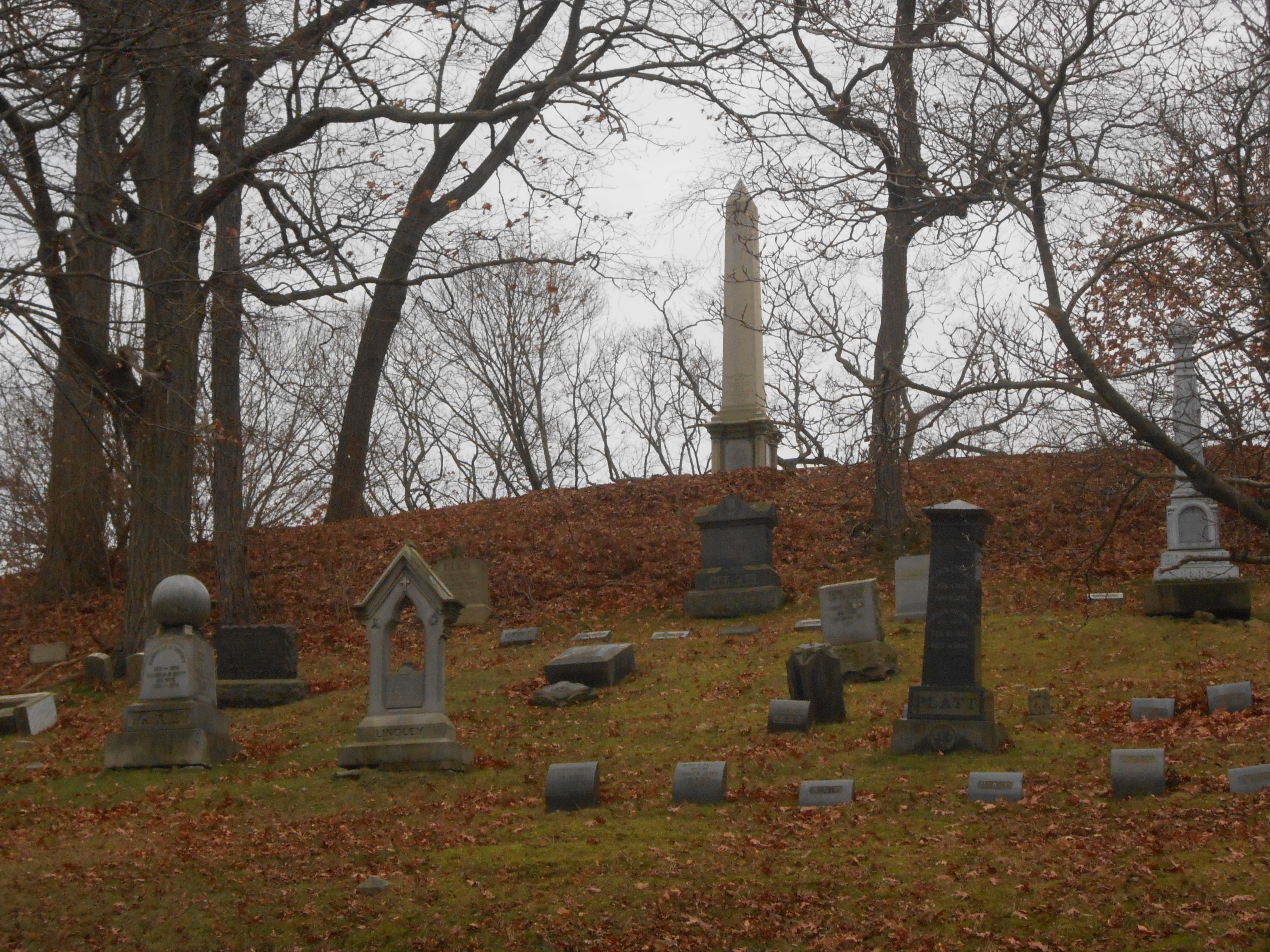
And roll those slopes do!  I think navigating that terrain is half the reason the injured ligaments in my knee haven’t healed yet! You notice that geography immediately on entering the cemetery, with mausoleums banking upwards to a bleak late autumn sky, almost as grey as their stone. I want to share images of the slopes of stone rolling  through the cemetery, topped with trees whose mostly denuded branches scratch across the grey sky, the grass rusty brown, and an occasional shrub or tree bearing the maroons or dark orange of late fall.  Definitely the perfect setting for a mystery or a tale of terror.  I just have to work this place into a novel, too!
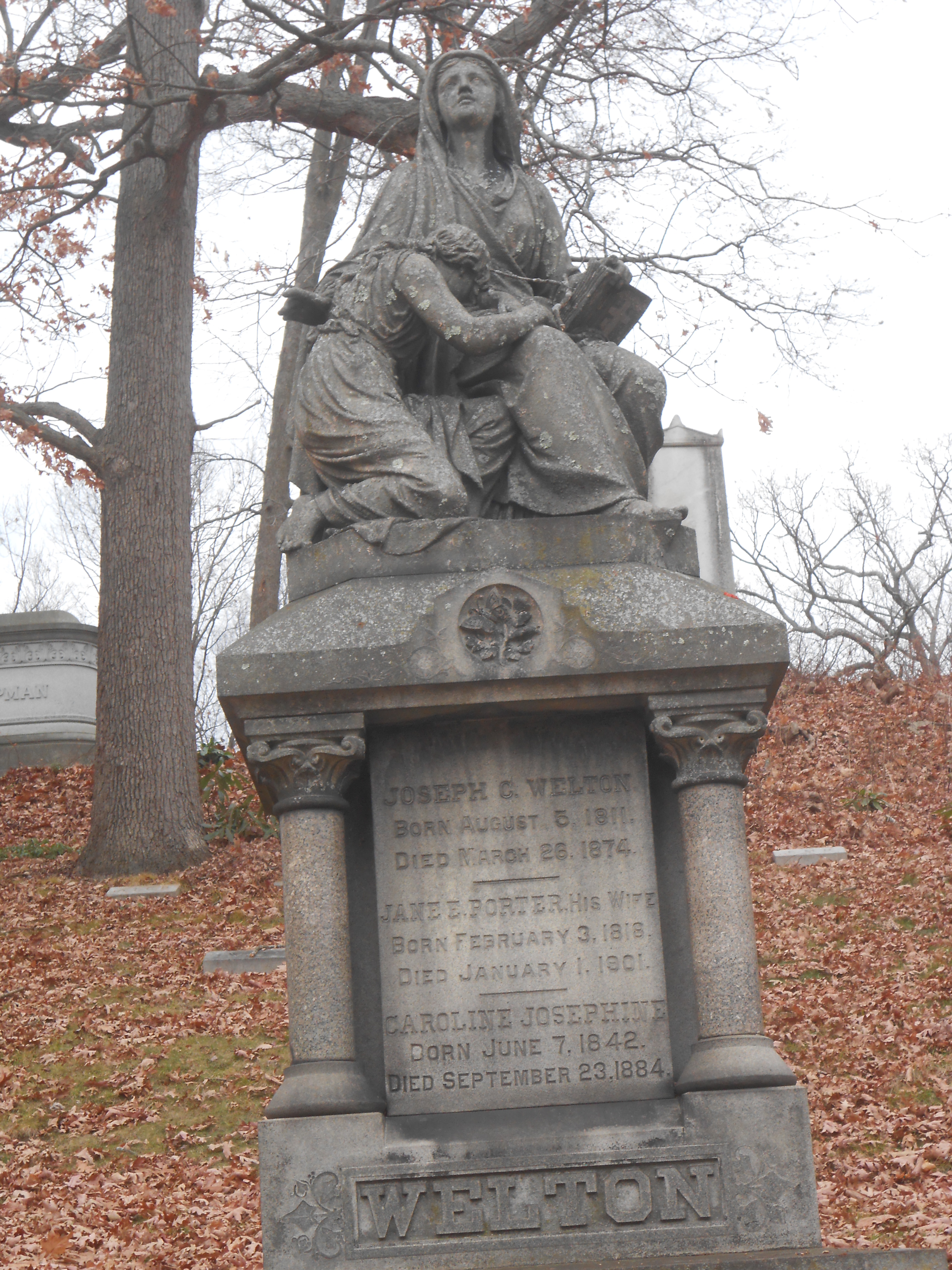
Of course the statuary revealed the entrancing work of inestimable craftsmen.  There were so many haunting statues of women.  For example, regard the deep feeling of this woman who guards the entrance to one family’s mausoleum.  Is this an actual likeness to a wife or mother of the N.J. Welton family who preserved that family’s secure home?  Was the truth of that family portrayed in this woman’s intense devotion, or are any conflicts whitewashed here for posterity?


This statue of woman and child from another branch of the Welton family seems to portray a sad loss.  Did mother and child pass when both were young or are they immortalized as eternally young in the next world?  The child seems afraid, burying herself in the comforting lap of her mother, who has one arm  around her but raises her hand hopefully, while the other holds a book and looks into the beyond. Is she holding the Book of Life or the Bible?  Her steadfast stare and gentle but firm hold on her daughter  indicates her guidance of her family toward redemption.  This seems a statuary representation if the Victorian Angel in the House.


It’s hard to select which other statues to show you,  there are so many beautiful, poignant ones, so I’ll try to select the more unique. I was fascinated by the bronze cast of this woman, whose plaque celebrated her firm virtues.  The photo doesn’t quite convey how massive the bronze form is. Her hair style, dress, and sandalled feet portray her as a Roman matron.  so, clearly, she was a powerful force in her family, devoted to her duties there and preserving them.  Again, the book she holds indicates learning and wisdom, though perhaps only in religion if it’s a Bible.  More knowledge of the family and this woman might indicate she was actually learned in areas outside the woman’s domestic sphere.  Anyone know something of her?
This statue was particularly intriguing, for the base was not a smooth column, but in the shape of a cairn, with the information of the family’s deceased inscribed on the individual stones. I’m fascinated by the creativity of the masons who contributed to the Riverside Cemetery.  Their statuary is amongst the most unique I’ve encountered in my explorations of cemeteries.


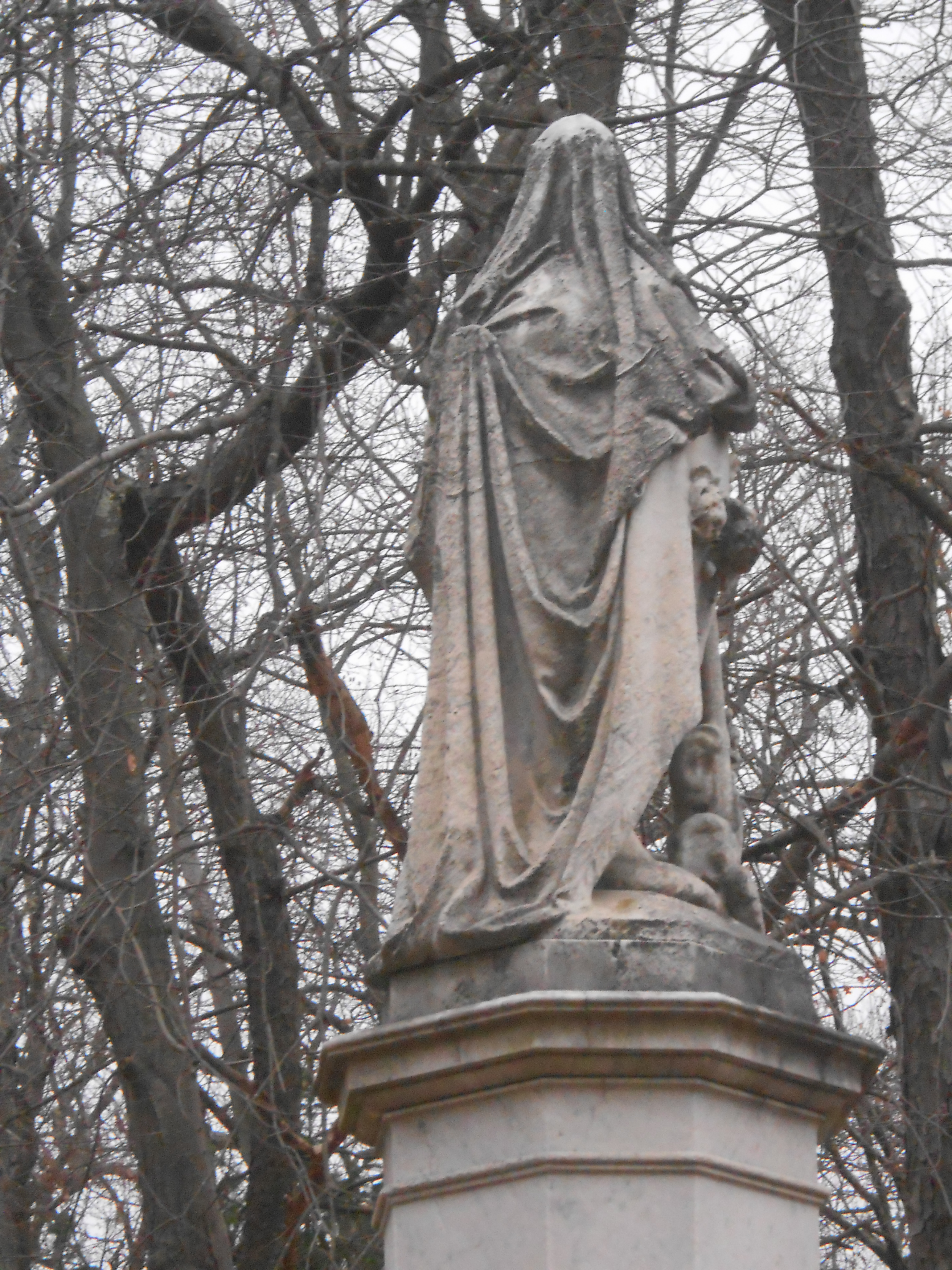
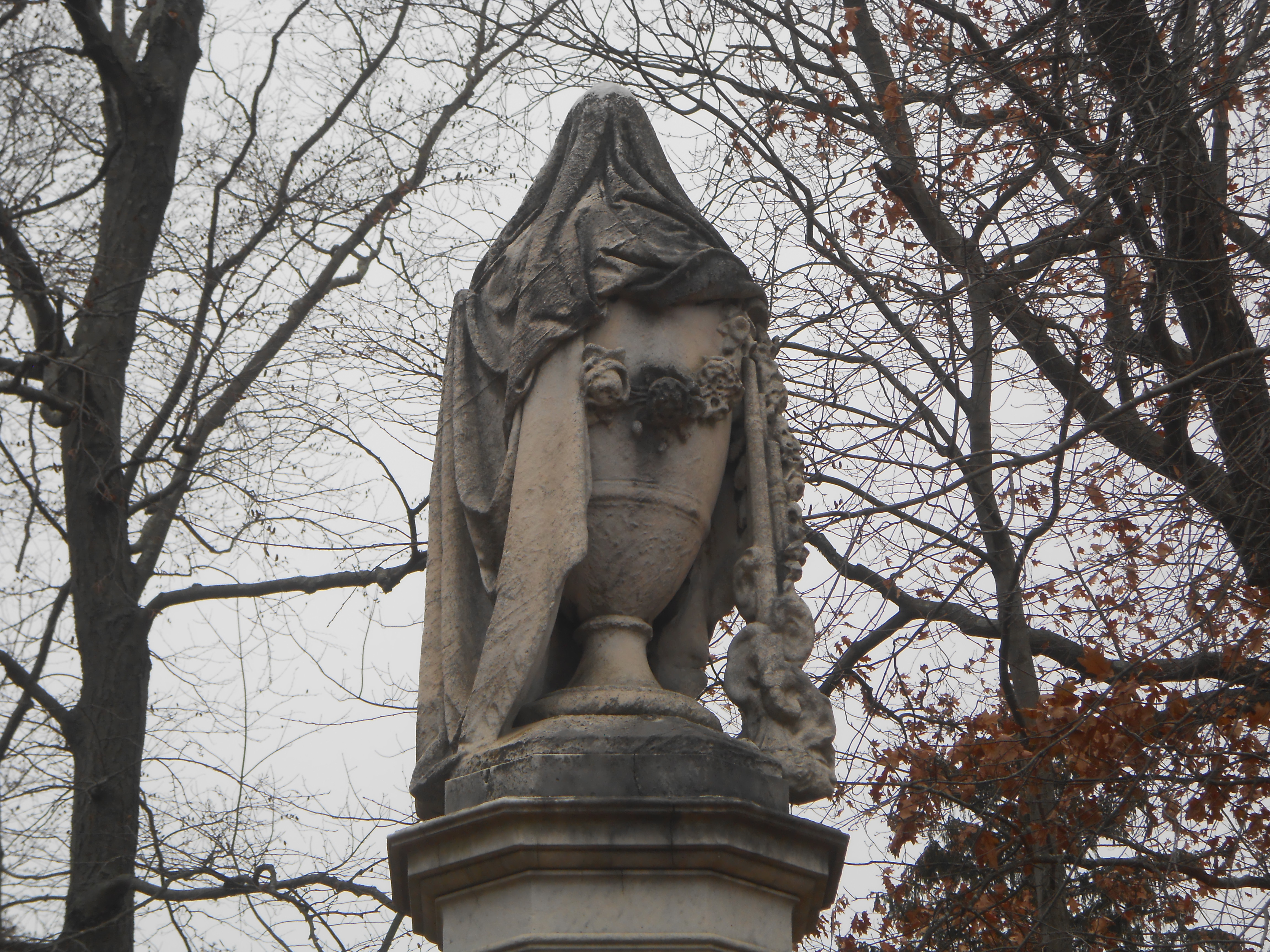
Now this statuary tremendously intrigued me.  Coming upon it from behind, both Yang and I thought it was a spectral figure in a shroud, a figure implying the mystery of the world beyond this. However, as we came around the front of the monument, we realized that what you saw from the front was a partially  draped urn.  This leads me to wonder if the artist intentionally played with our perceptions, implying the ineffablity of pinning down or defining death.  Was he, perhaps, implying our thoughts of ghosts and spirits turn out to be nothing more than dust in a dead stone urn?  Or was he implying that perception of death as final dissolution into dust and cold stone was a superficial view that we have to look behind or beyond to accept the mystery of the world beyond? Maybe I just think to much?  I was an English professor; it’s an occupational hazard.
 I’ll just wrap up with  an image that delights me in my most melancholy, Keatsian vein.


Last Glimpses of Autumn

Here we are with only two days left to November, closing out autumn. Though the season doesn’t officially end until December 21 or 22, depending on the year, the last day of November always feels like the turn of the page into winter with December 1st.  So, I’d like to present you with a blog or two taking a lingering, pleasing look back at the “season of mellow fruitfulness.”
Last year, Yang and I celebrated Halloween during the day with a hike at Colbrook Reservoir in western Mass.  Remember how we were in drought status that year?  Well, that’s why we not only were able to have a memorable walk along the waterway on an abandoned two-lane paved road, but also could discern parts of the town that had been submerged  by the flooding to create the reservoir.  We even caught sight of the phantom bridge!  This year we sought to repeat our adventure, with hopes of an even more pleasant outing since the weather was so much warmer than last year.  Unfortunately,  in 2021 we had so much more of something else than last year:  Rain!
Last year there was water, shoreline, road, rocks and trees.  This year, there was water, rocks, and trees.  We were flooded out in both directions of the road from the parking lot.  Yang mentioned that we also rode our bikes here the day after Thanksgiving last year; so, I commented that unless we had paddle boats, we weren’t doing any paddling here this year!  Disappointed, I still managed to get some nice shots of foliage and water, as you can see.  Yang had another idea, which also had been percolating in my head.  We hopped in the car and headed just across the nearby border for Heublein Tower on Talcott Mountain  in Connecticut! (If you want to get a look at what we saw  at Colbrook last year, click here for my earlier blog .)
A little on Heublein Tower.  Heublein was the third tower to stand on Talcott Mountain, built by German-born, American businessman from Hartford, Gilbert Heublein,  While hiking the mountain with his fiancee, he promised her “a castle on a mountain,” keeping his promise after their marriage by constructing this tower.  The edifice, which contained bedrooms on all but the pinnacle, a spacious ground-floor living  room and foyer, dining room; second floor sun room, an elevator, and a ballroom on the glassed-in top floor was completed by 1929.  Here, the Heubleins relaxed in their summer home, inviting guests and holding events that drew the cream of Hartford’s social crop. Heublein died in 1937, with his  building falling out of use until bought in 1943 by The Hartford Times.  Once again, it became the place to be for social events with celebrities of the era in attendance, including Tallulah Bankhead!  Eventually, it was let slide by the Times and nearly bought by developers, until saved by the group  Save Talcott Mountain.  Now the mountain and the Tower are open to the public for hiking and viewing, as the area has become a state park. It’s a wonderful place to enjoy nature and some unique architecture.  For more details on the Tower and the park, click here for the web site.
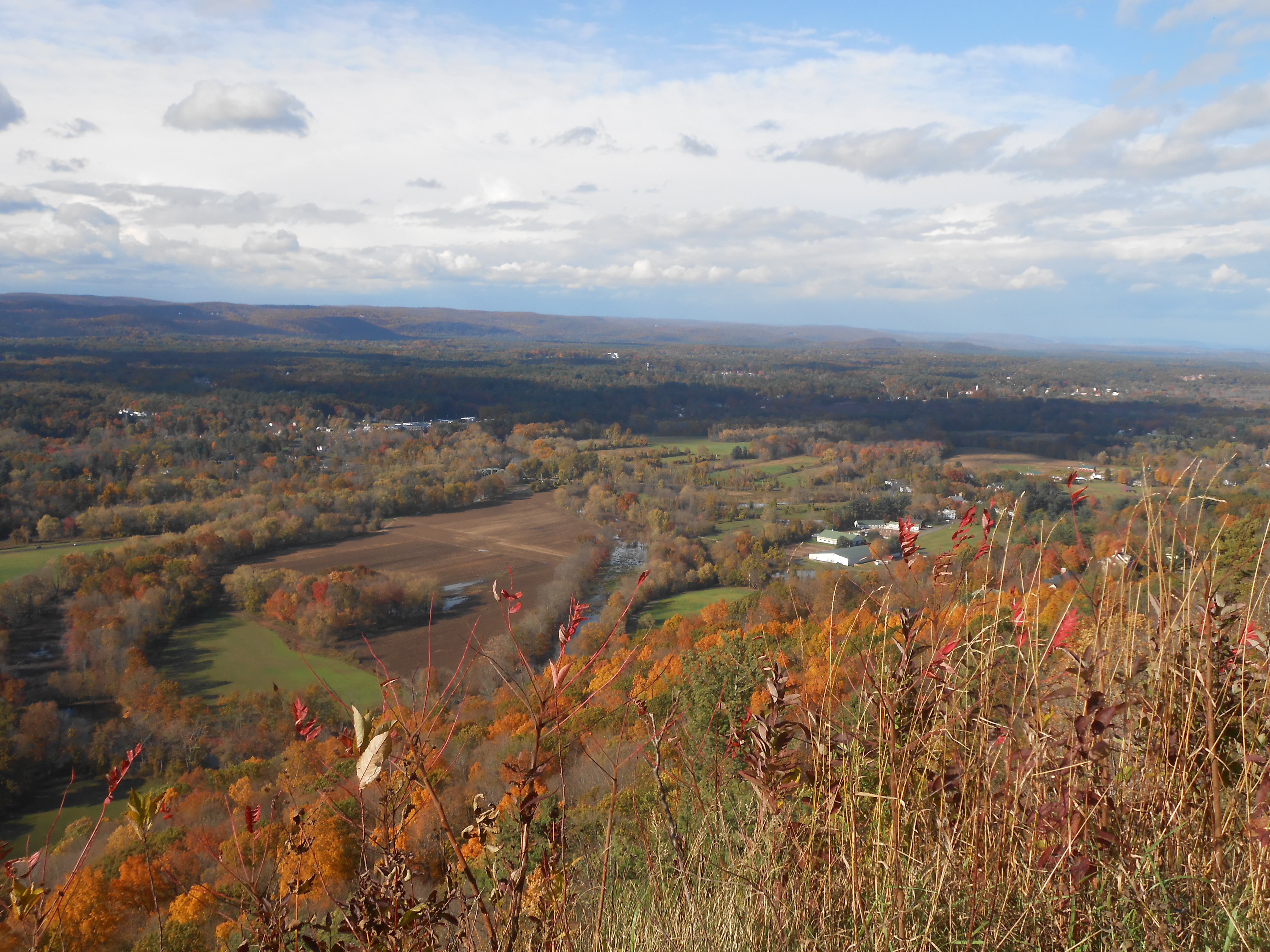
Hiking up the mountain isn’t too bad a hike at all.  There are several trails to get to the Tower.  The most popular one is a little steep at first, through autumn woods, but there are benches along the way if you’re out of shape and need a rest.  We were in good enough shape not to!  Then, you come out of the woods and onto a ridge overlooking the valley below.  The view along this ridge is wonderful, and you might even see a hawk as we did! Some great overlooks.
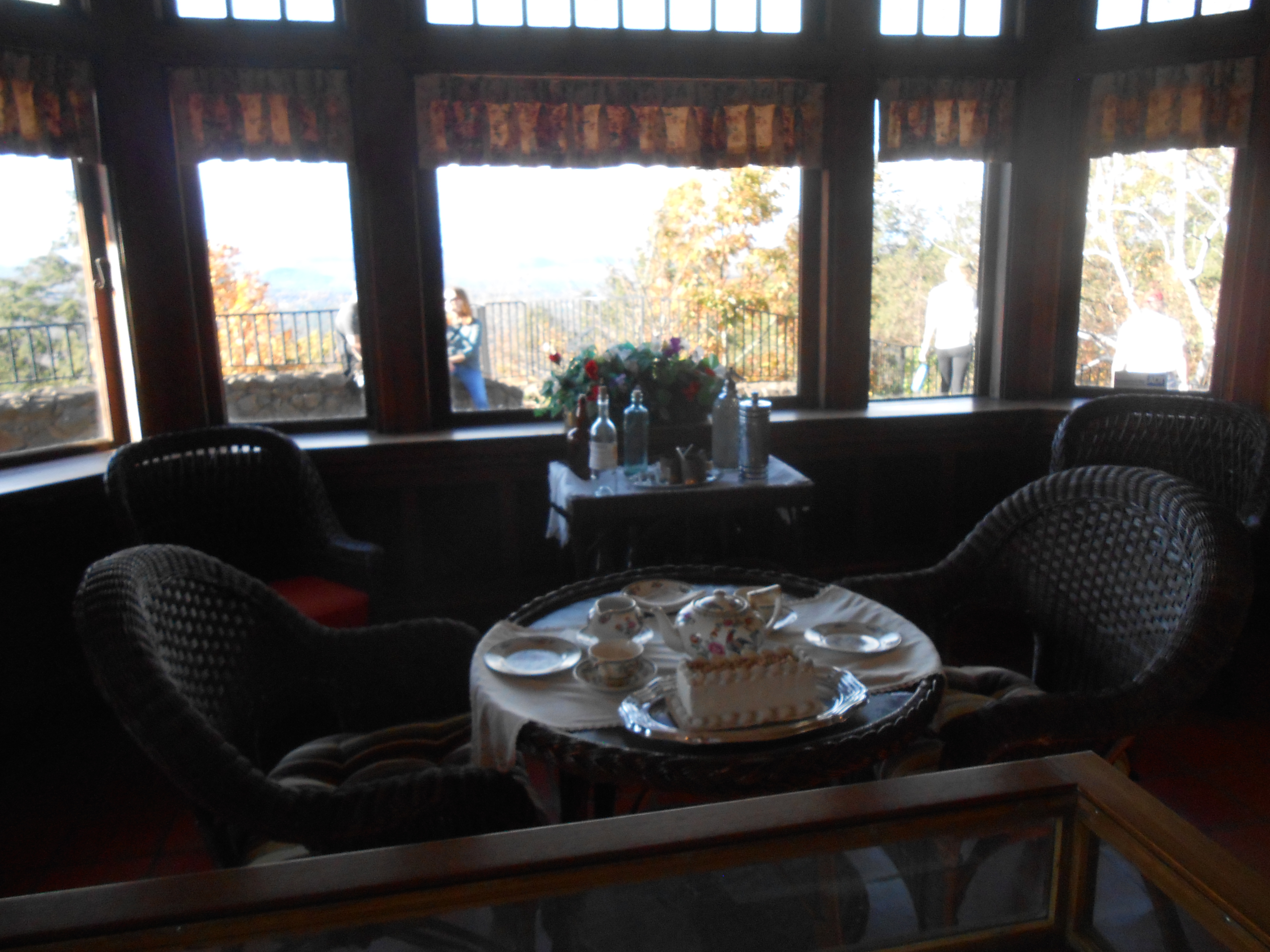
The Tower itself is quite a treat!  This old photo shows what the foyer and living room originally looked like.  My shot lets you see an updated in-color version.  The furnishings have been carefully assembled to approximate the style and taste of the original era.  Though I’m not sure I would have wanted a big deer head on my wall, I would have loved to relax before that fireplace in a comfy chair or to play card games with friends on a crisp fall evening, with coffee or tea and scones for sustenance.  And how about this nook by the window that looks out over a gorgeous mountain landscape, cascading fall colors into the valley below?  How’s that for having breakfast or an afternoon tea?  I wonder  what flavor that cake is on the table?
Or maybe I’d take tea, solo or with companions, on this wonderful sun porch, warm with solar emanations?  Could also be a great place to settle down and read or listen to the radio programs back in the day.  And the view from up here ain’t bad, either.


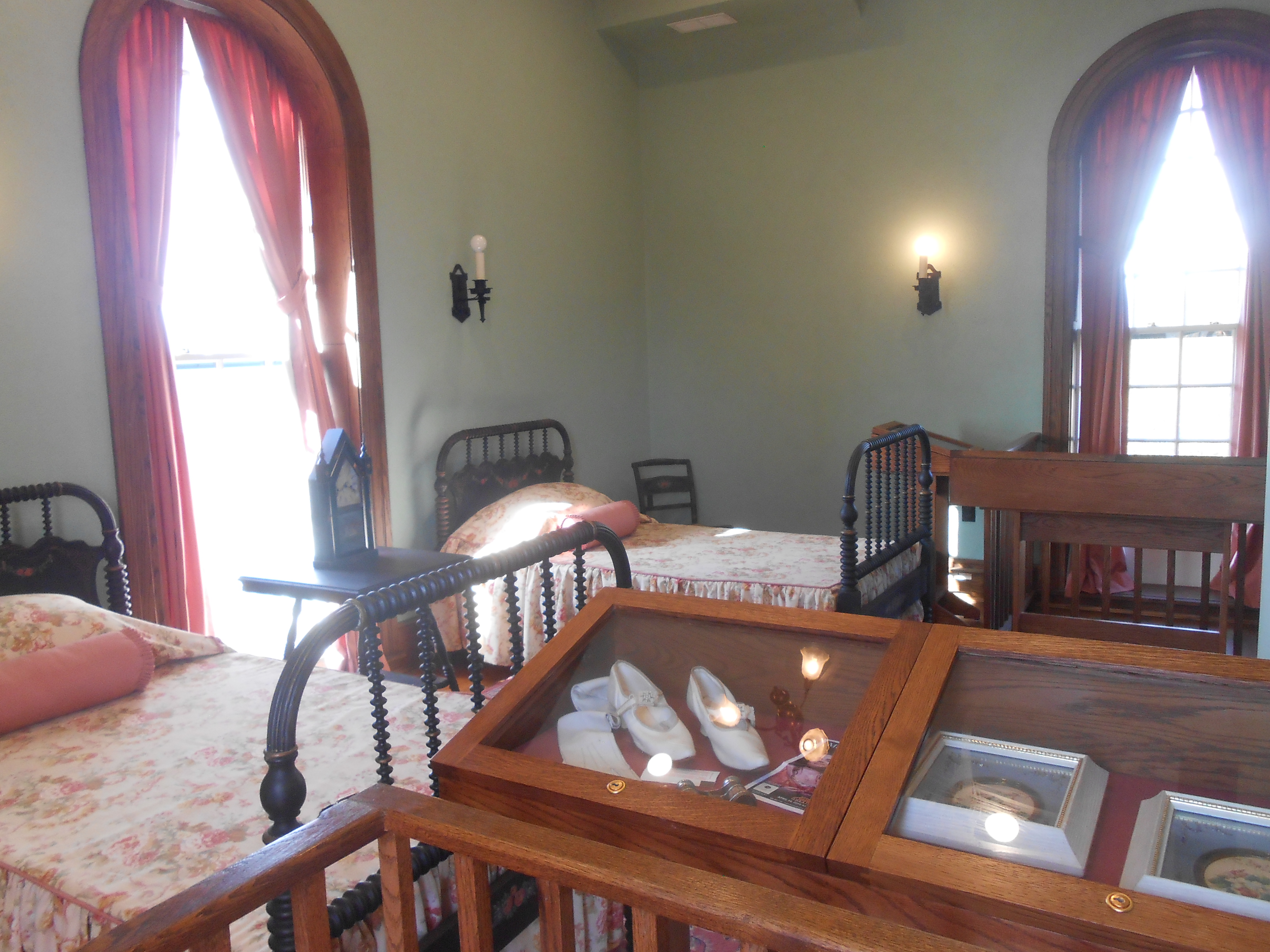
How about some of those bedrooms?  Not necessarily luxurious, but roomy enough.  Plenty of sunlight during the day, should you wish to retire here. Pleasant, if not elaborate, decor.  But you’re on a rustic  retreat, so who needs frills?  Though this set up is far from camping on the cold, hard New England bedrock.  And, oh, those views when you get up in the morning!  Imagine the rising sun setting aflame these fall colors!
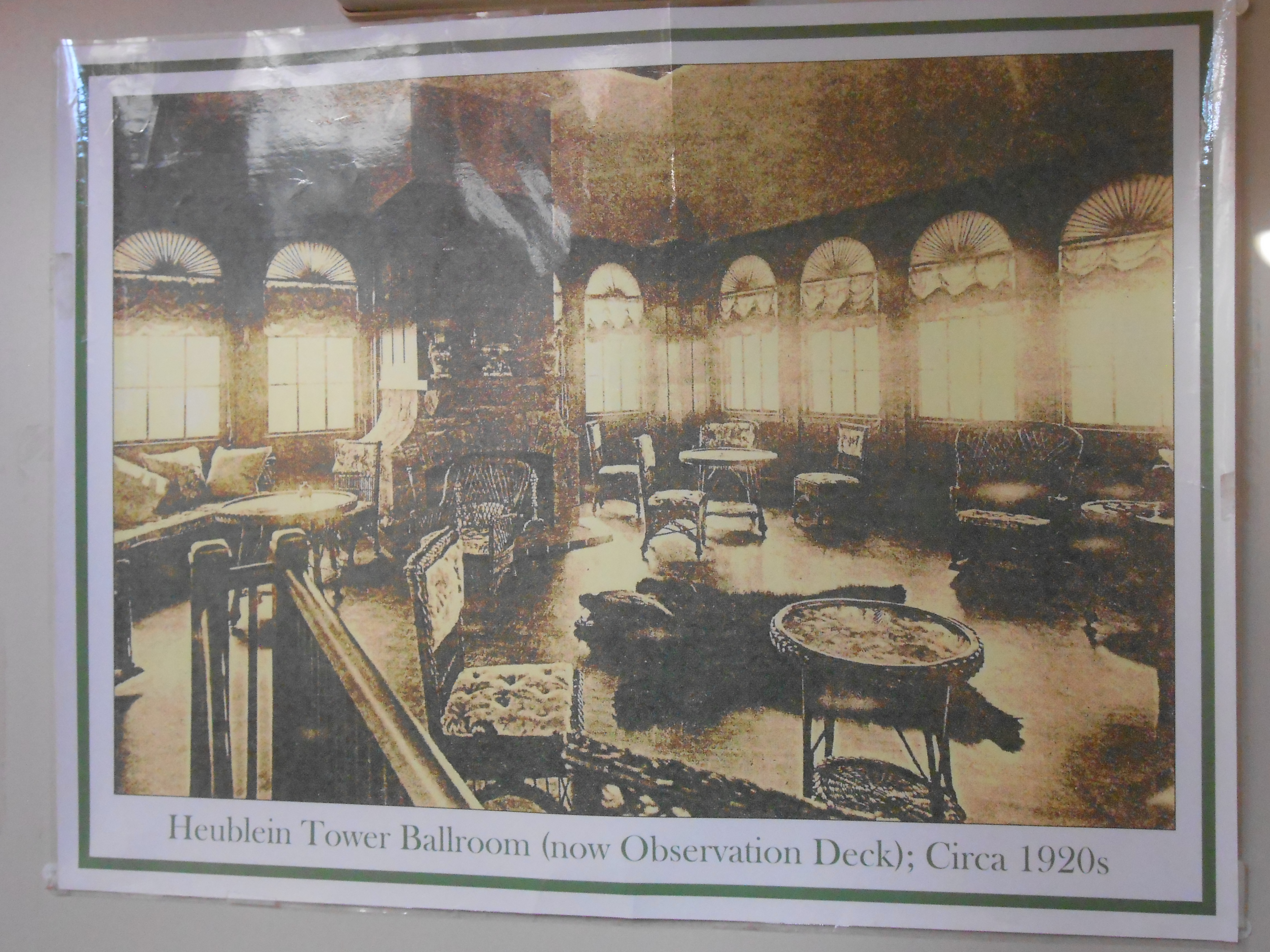
One of the most interesting parts of the Tower is the observation deck.  Originally, this area was known as the ballroom, as you can see from this old image of the earlier set up.  Wouldn’t it be grand to dance away the evening on these hard wood floors?  It could be a real Stardust Ballroom, with the twinkling lights of the darkened heavens glittering through the tall windows of all four sides of the room.  Of course, you’d have to move away all that furniture.  Great place for a big party!
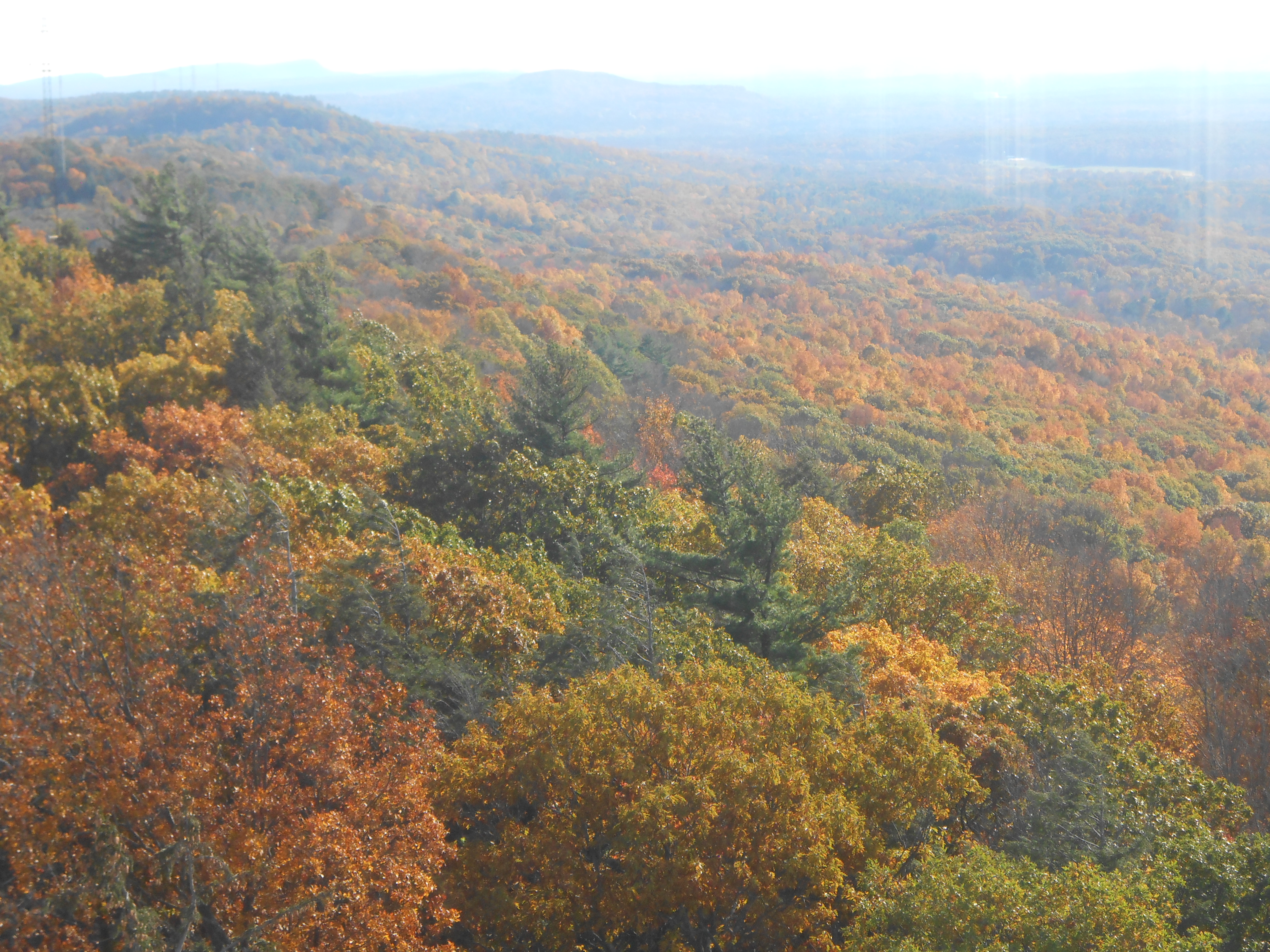
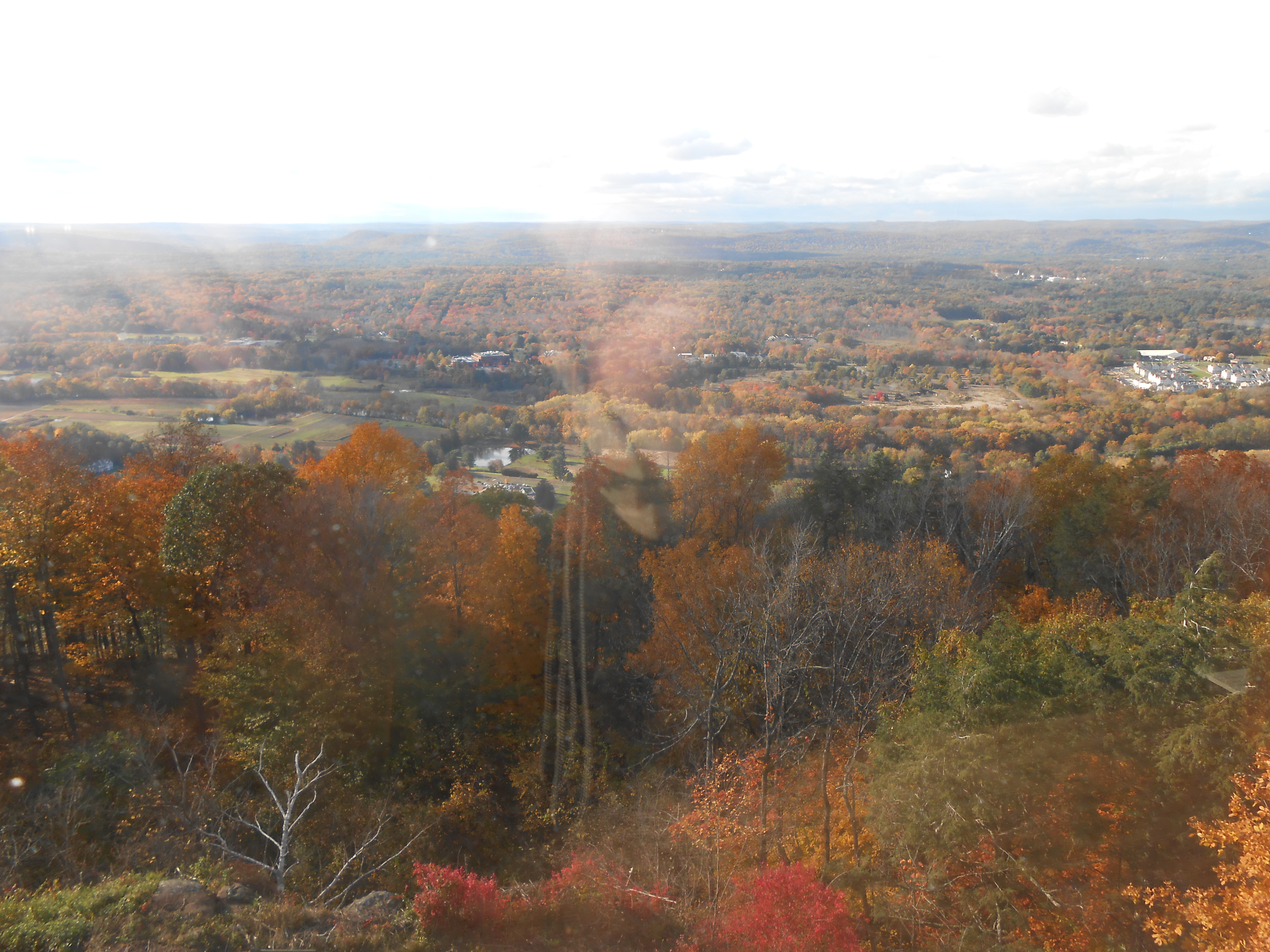
Yet there’s no need to wait for evening to fall in love with the observation deck.  During the day, you get views  for miles, across Connecticut and into Massachusetts – an especially fine sight in the autumn, when the hills burst with colors.  Feast your eyes!


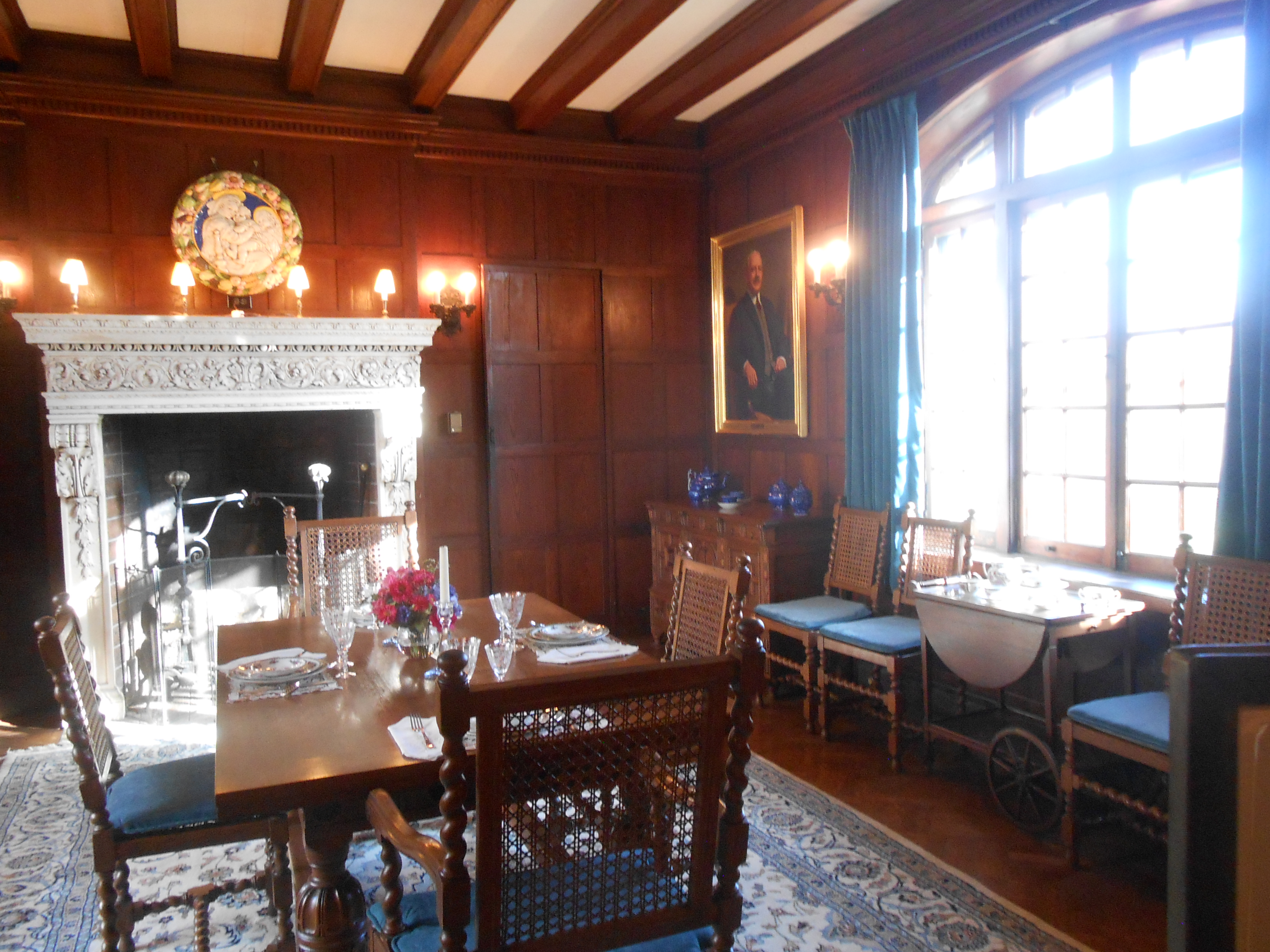
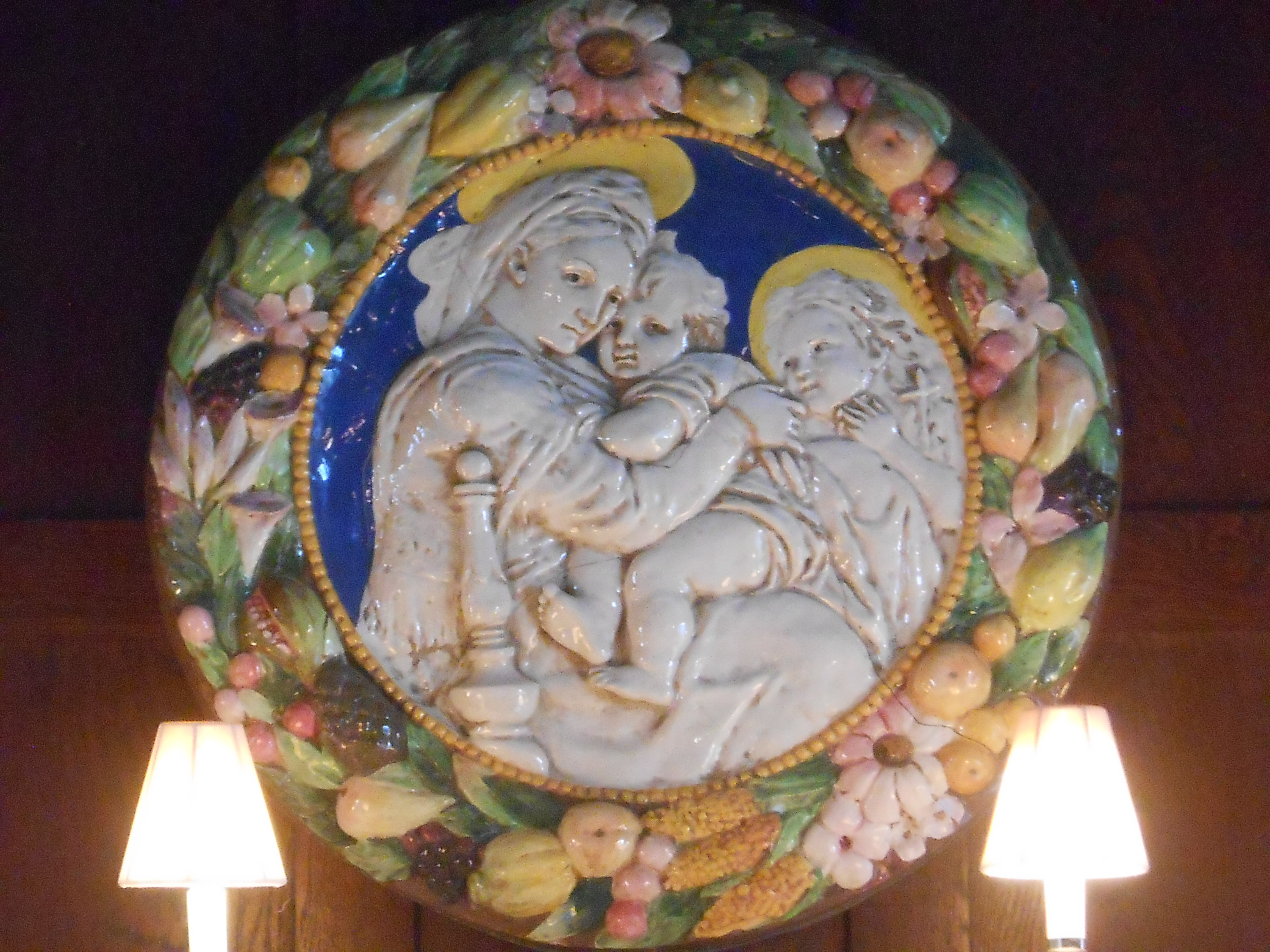
Finally, returning to the first floor, towards the rear of the building, you find the formal dining room, gorgeous in wood paneling, dark wood furniture, marble fireplace, exquisite Persian rug, elegant china and cutlery, and painted medallion above the fireplace.  How about the gorgeous beamed ceilings? It’s fun to notice that the door to the butler’s pantry is hidden in the shape of the paneling on one side of the fireplace, while a closet is similarly hidden on the other.  Light pours in the windows.

Now, I ask you, would this not be the perfect setting for a mystery?  This is how the UConn campus at Avery Point inspired me for Always Play the Dark Horse.  So, how should we work this?  Jessica and James are invited for a weekend by the owner,  a mysterious sort who seems to know more about them than they about him or her?  Or maybe it is someone they know, or think they do.  Should guests start dropping like flies over a dinner in that elegant dining room?  Should Jessica settle down to a quiet read on the sun porch, only to be interrupted by a figure sailing past to his/her death below? Should Liz also be on hand?  What do you think?