Tag Archives: Gothic

Precious Blood Cemetery, an Autumn Visitation

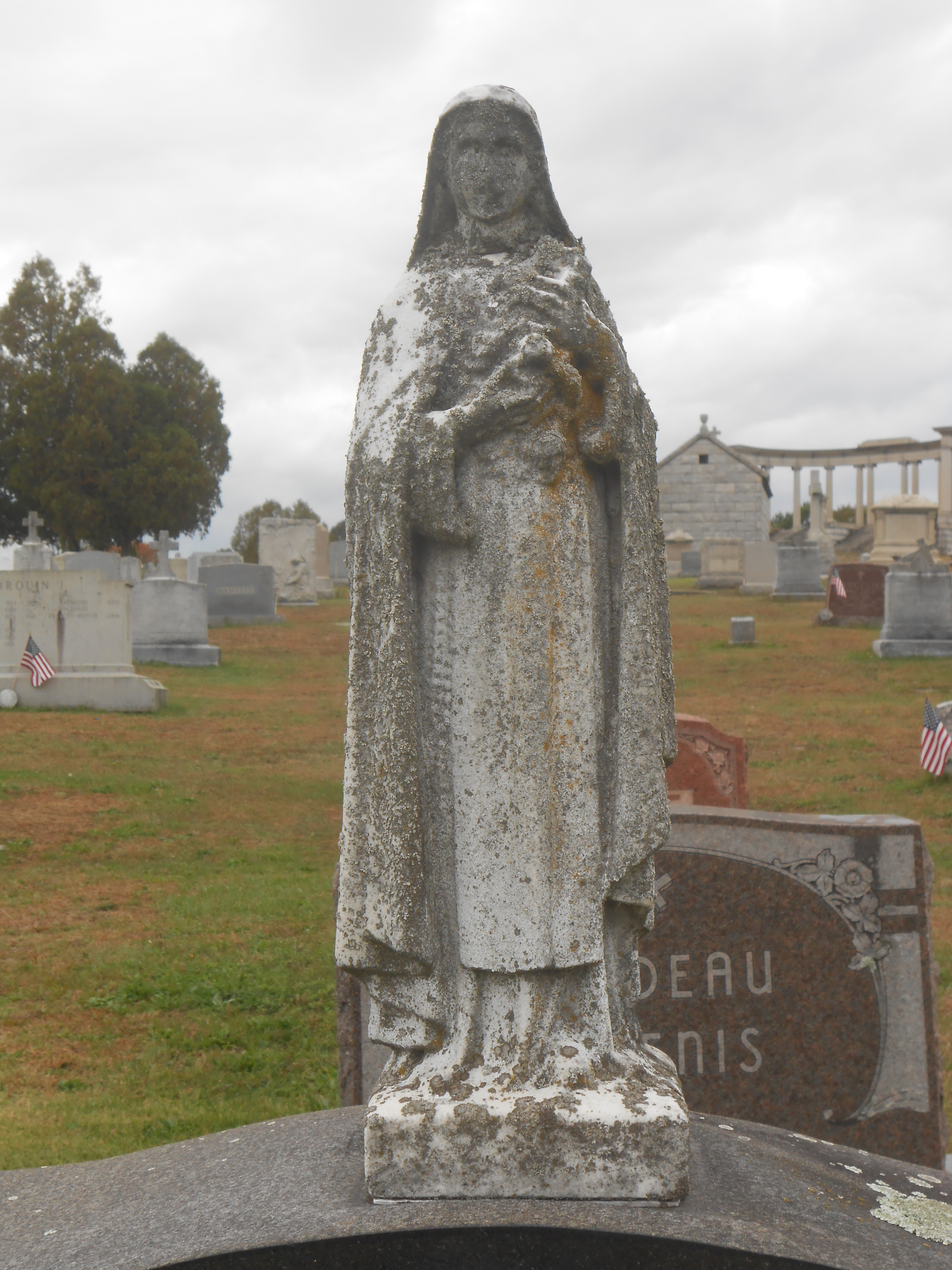
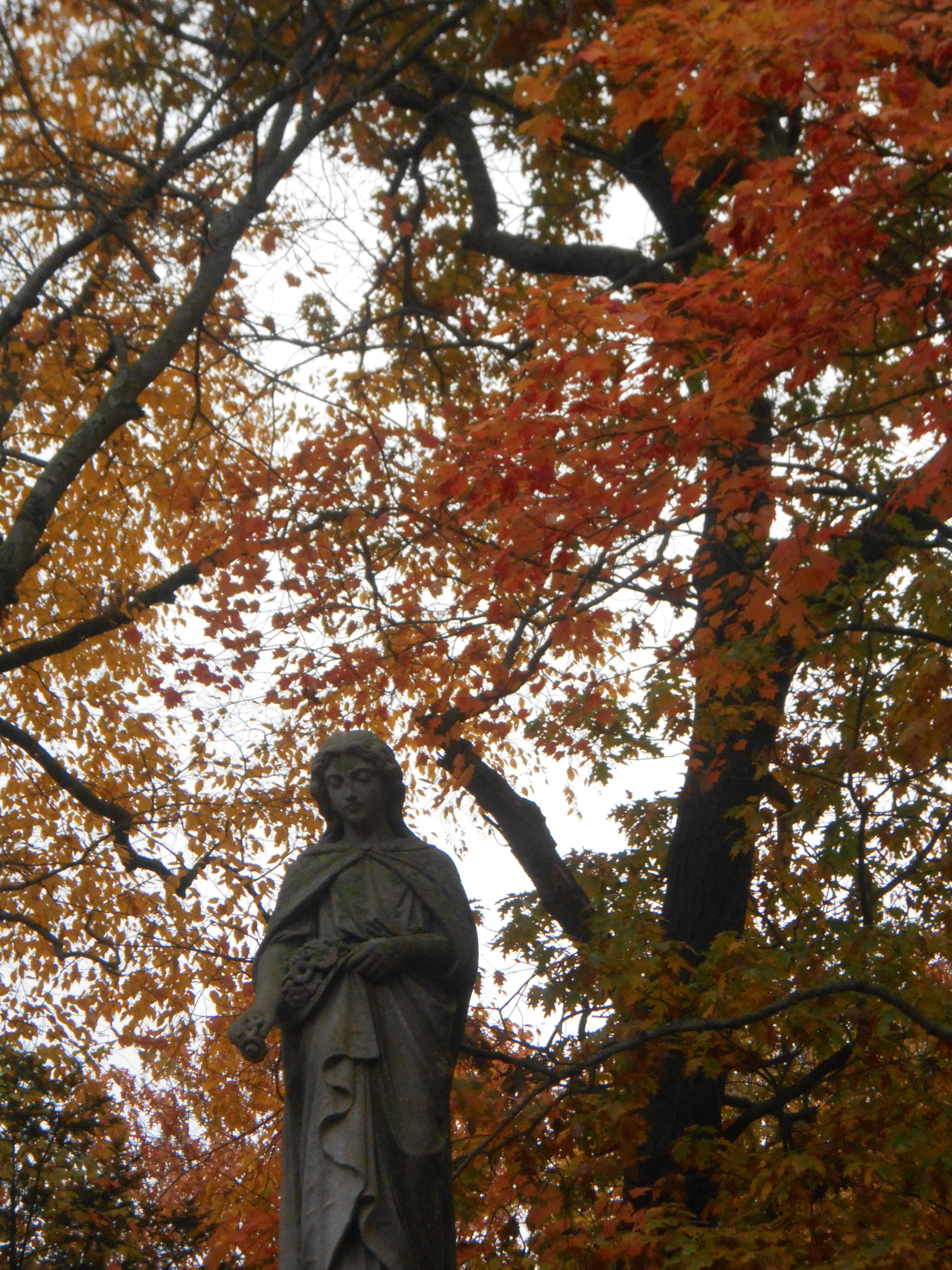
Earlier this fall, Yang and I took a trip to the Precious Blood Cemetery in Woonsocket, where my patron saint is buried.  Here’s a picture of her grave – though technically she was never canonized.  Does that mean I was never really a Catholic?  Oh well, I’m an Episcopalian now anyway.
It’s a wonderful graveyard on the edge of the city with some lovely statuary – and on a grey Saturday afternoon, the trip seemed perfect for the season.   As a Catholic cemetery, there are statues of saints that you just don’t find in the Protestant cemeteries.
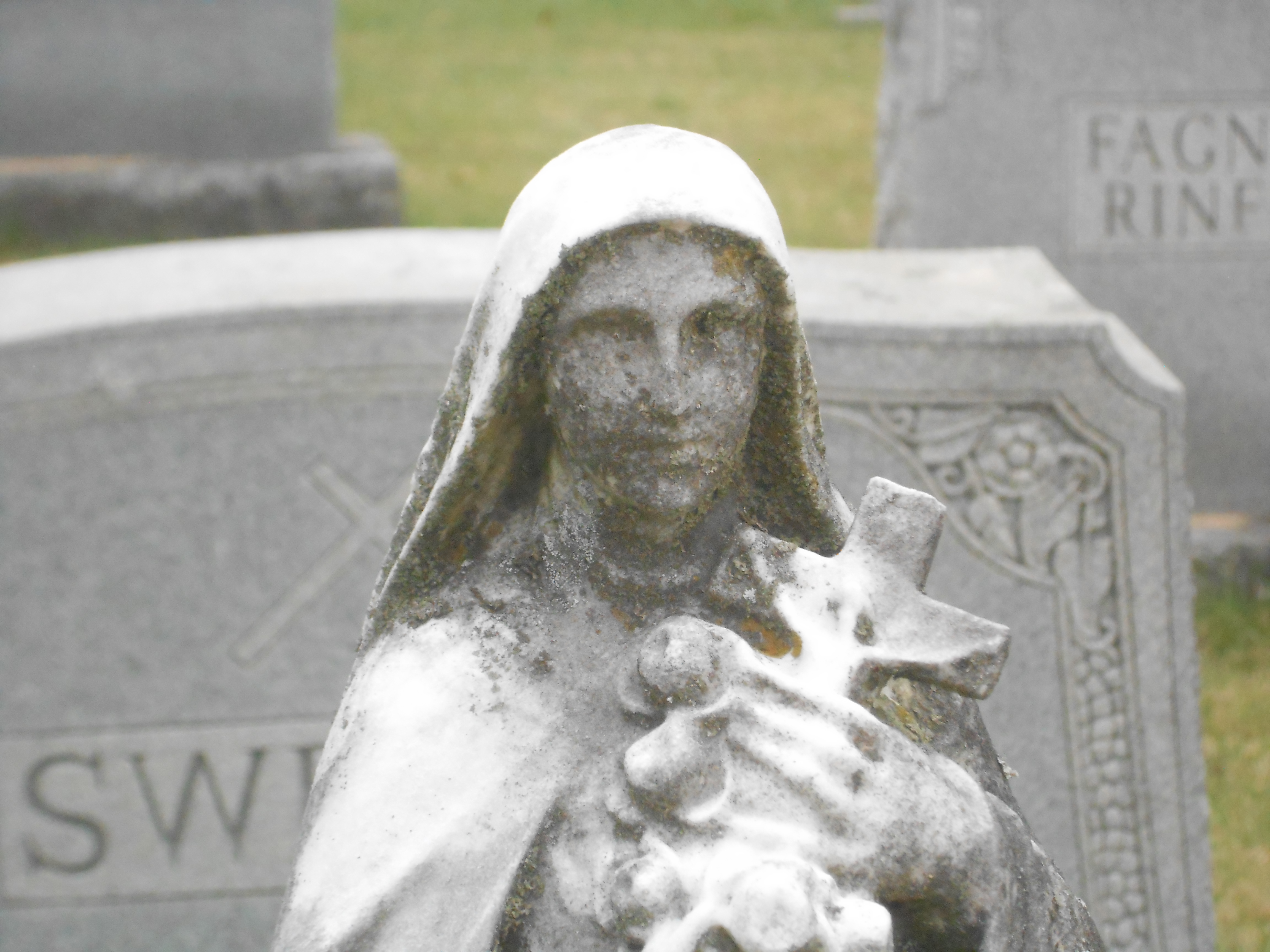
Many people seem to have valued the Little Flower, Saint Therese de Lisieux.  Not surprising since she is a French saint and the large number of Catholics here are immigrants or descendants of immigrants from Canada.  I actually took Therese’s name as my confirmation name because she had to struggle with a bad temper with  incompetent people – guilty as charged.  Those who know me can let me know if you think it helped.

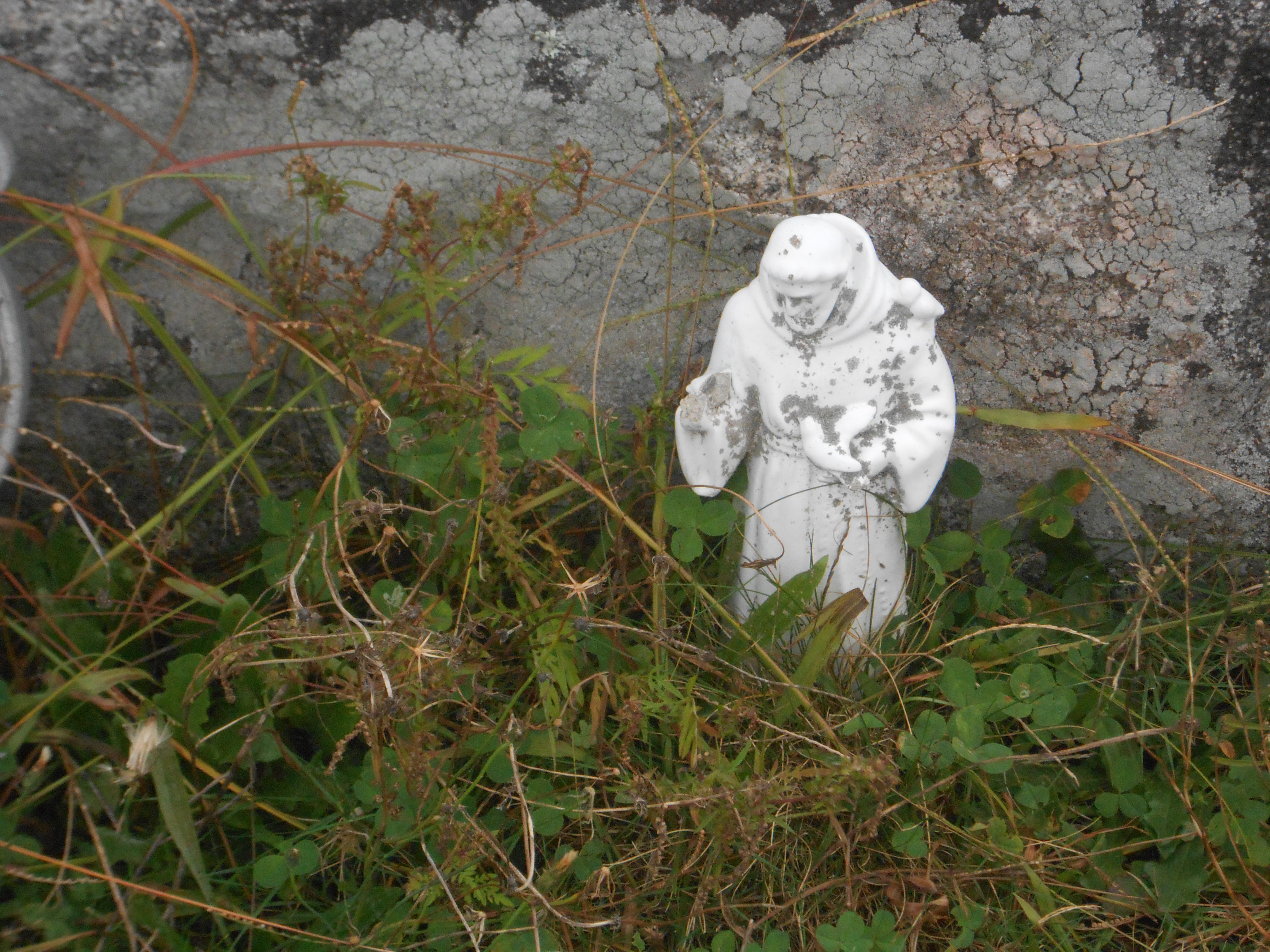
I also saw  a mini St. Anthony, 
and a St. Anthony with the baby Jesus – in statuary form, that is.  Remember, if you’ve lost something, Anthony is the go-to guy.

Jesus also made other appearances – again only in statuary form.
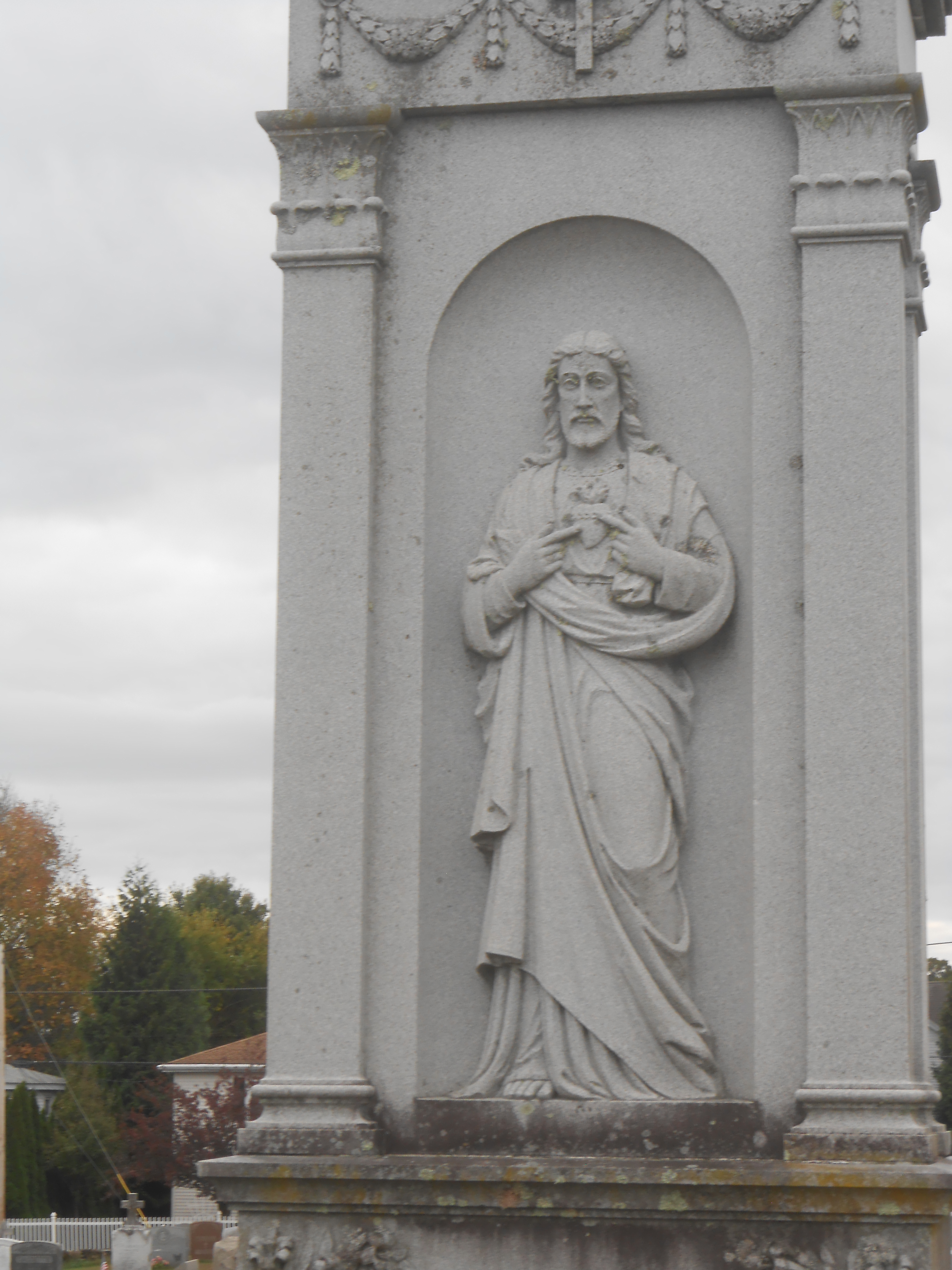
Here’s the sacred heart.


Here is a bronze relief of Christ’s passion on the cross affixed to a grey granite monument, his suffering conveyed through the twist of the metal form.


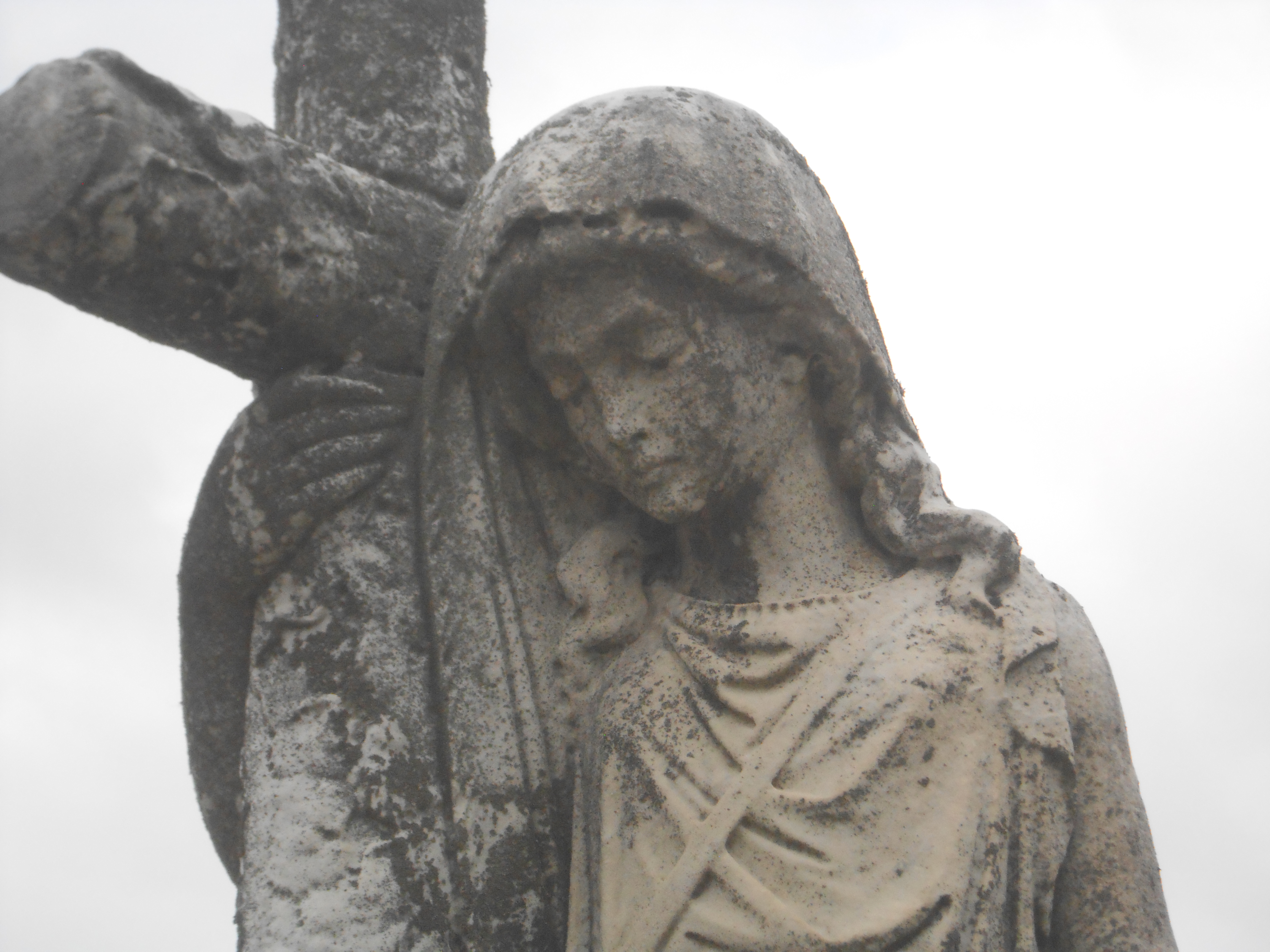
One grave was surmounted by a life-size bronze of of the three Marys suffering along with Jesus as they witness his crucifixion.


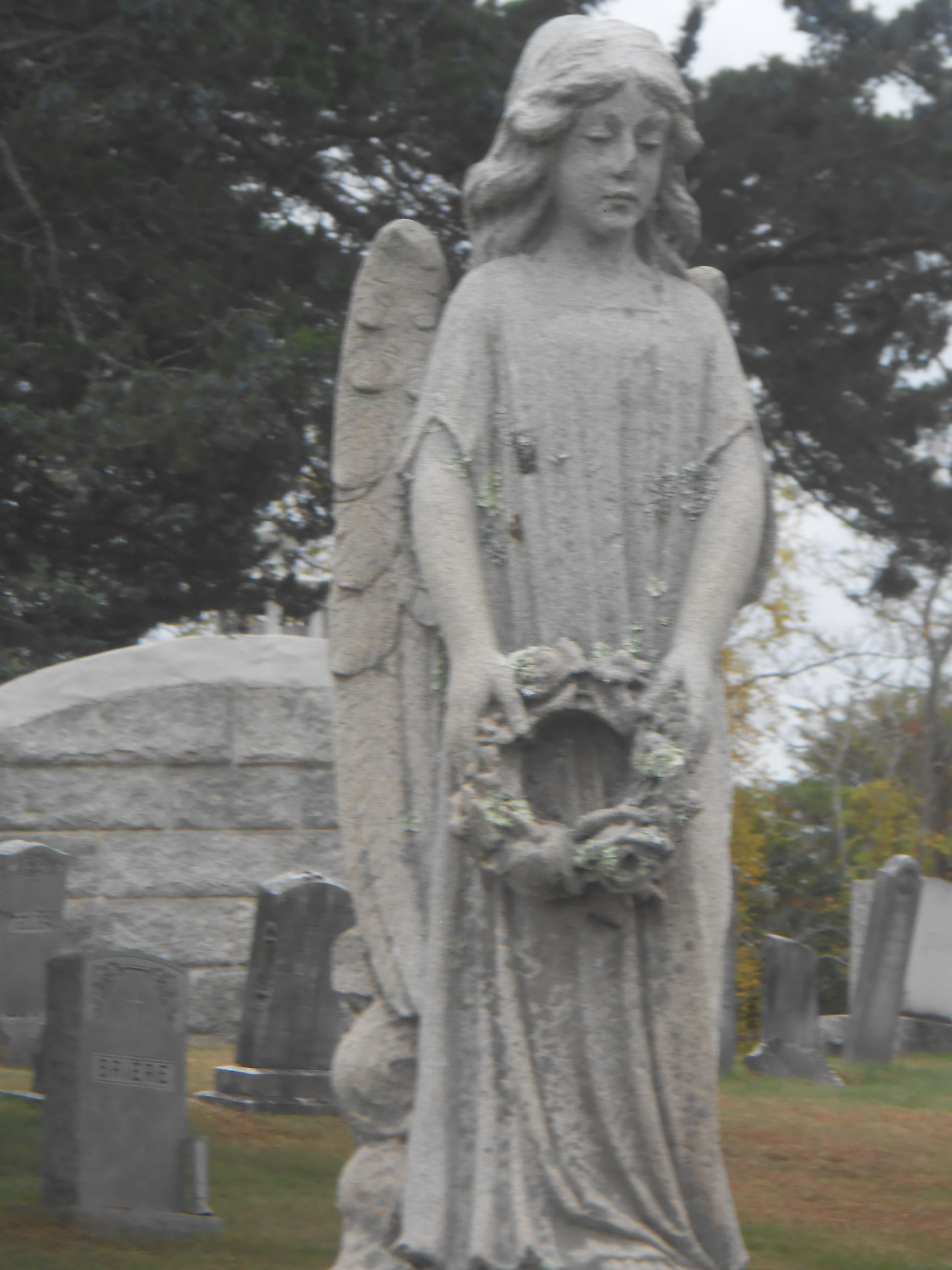
There were also  funerary sculptures that you might find in more secular or not Catholic cemeteries.  Everyone has angels!  Here are some of my favorites from the visit.  There is this child angel.


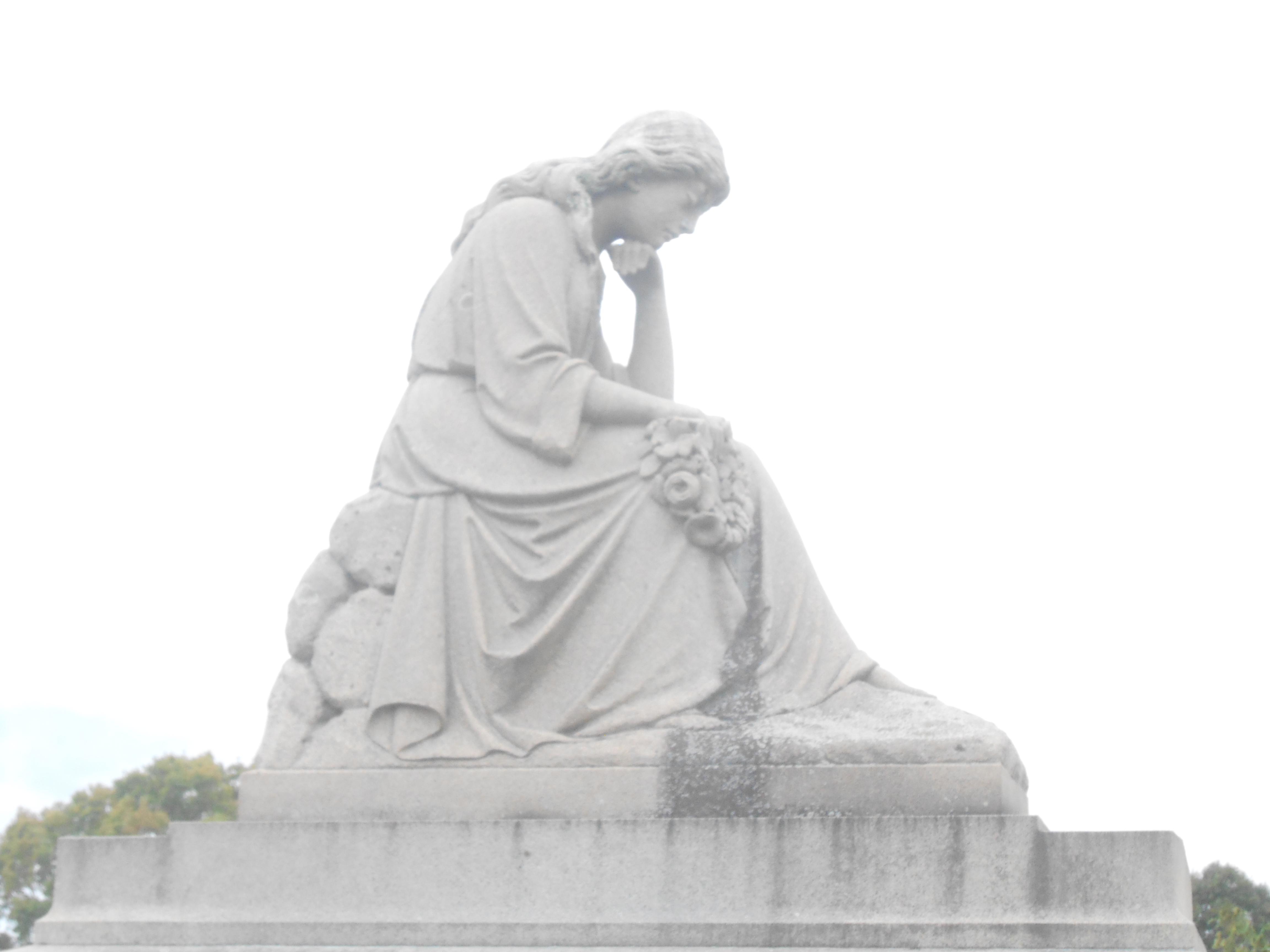
And this grown-up grieving angel


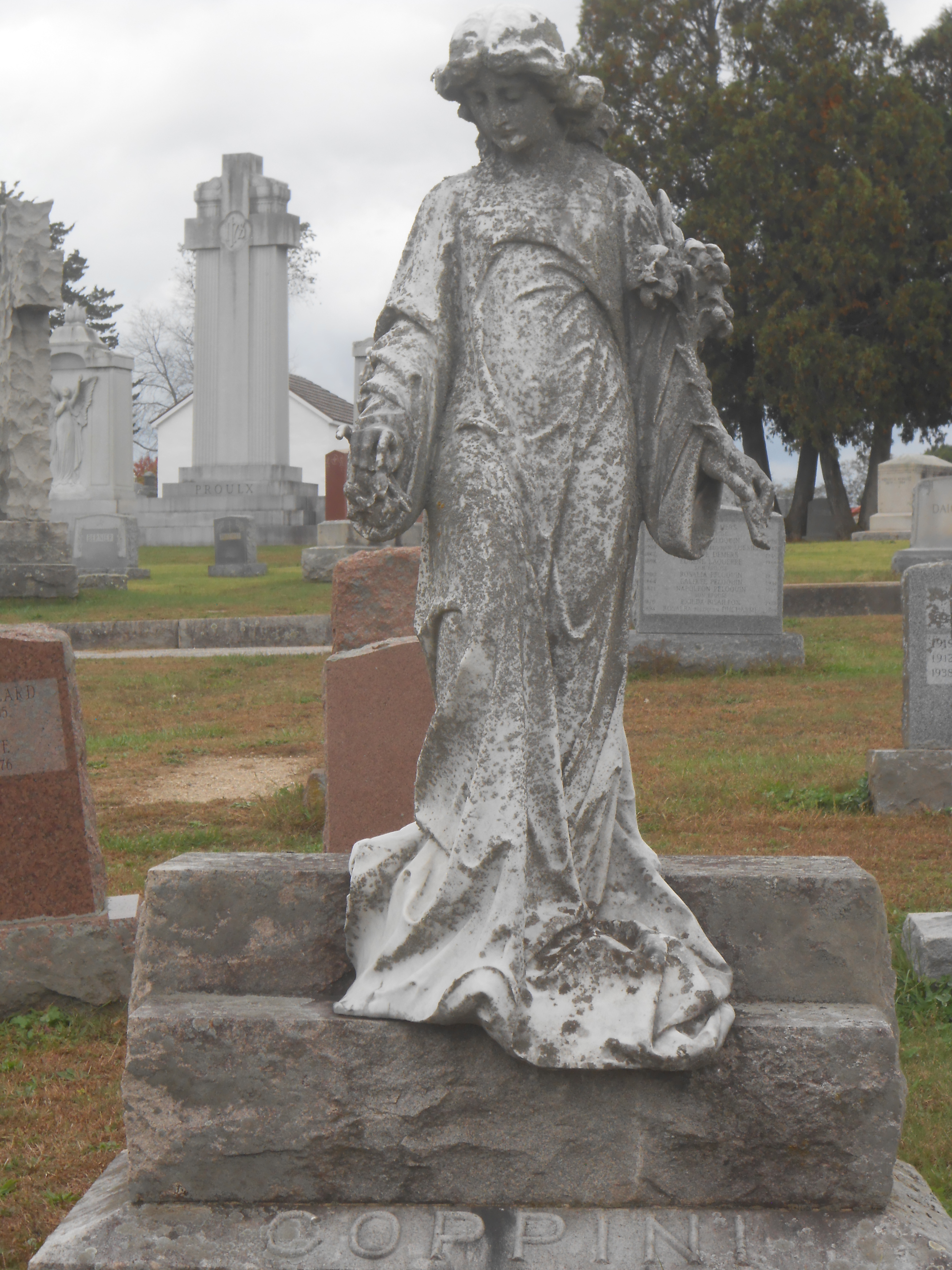
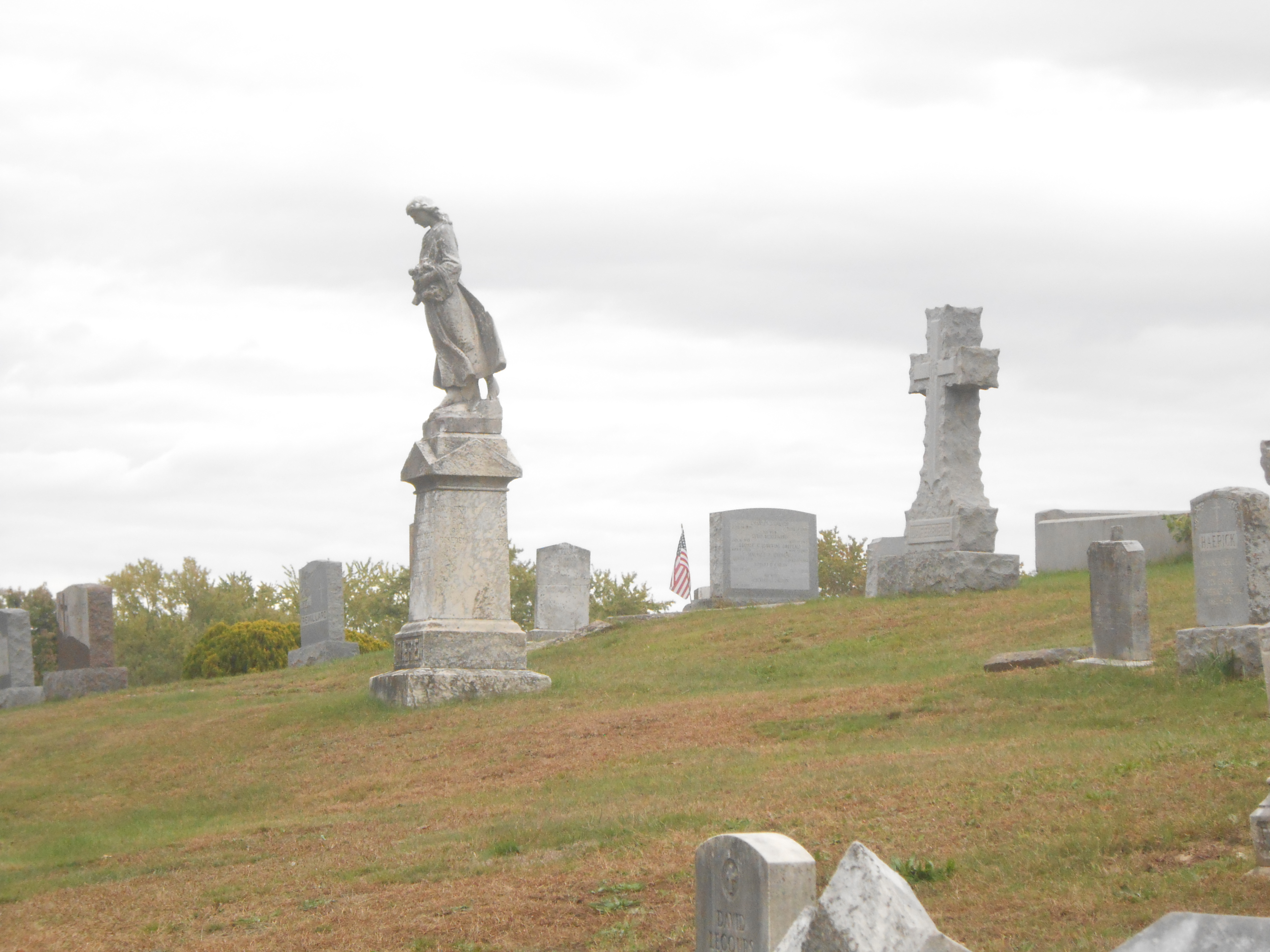
I saw many women, grieving, bearing their crosses of repentance, or descending with grace for the departed


I was particularly taken by some of the mausoleums.  One looked like a French or Canadian farm house.


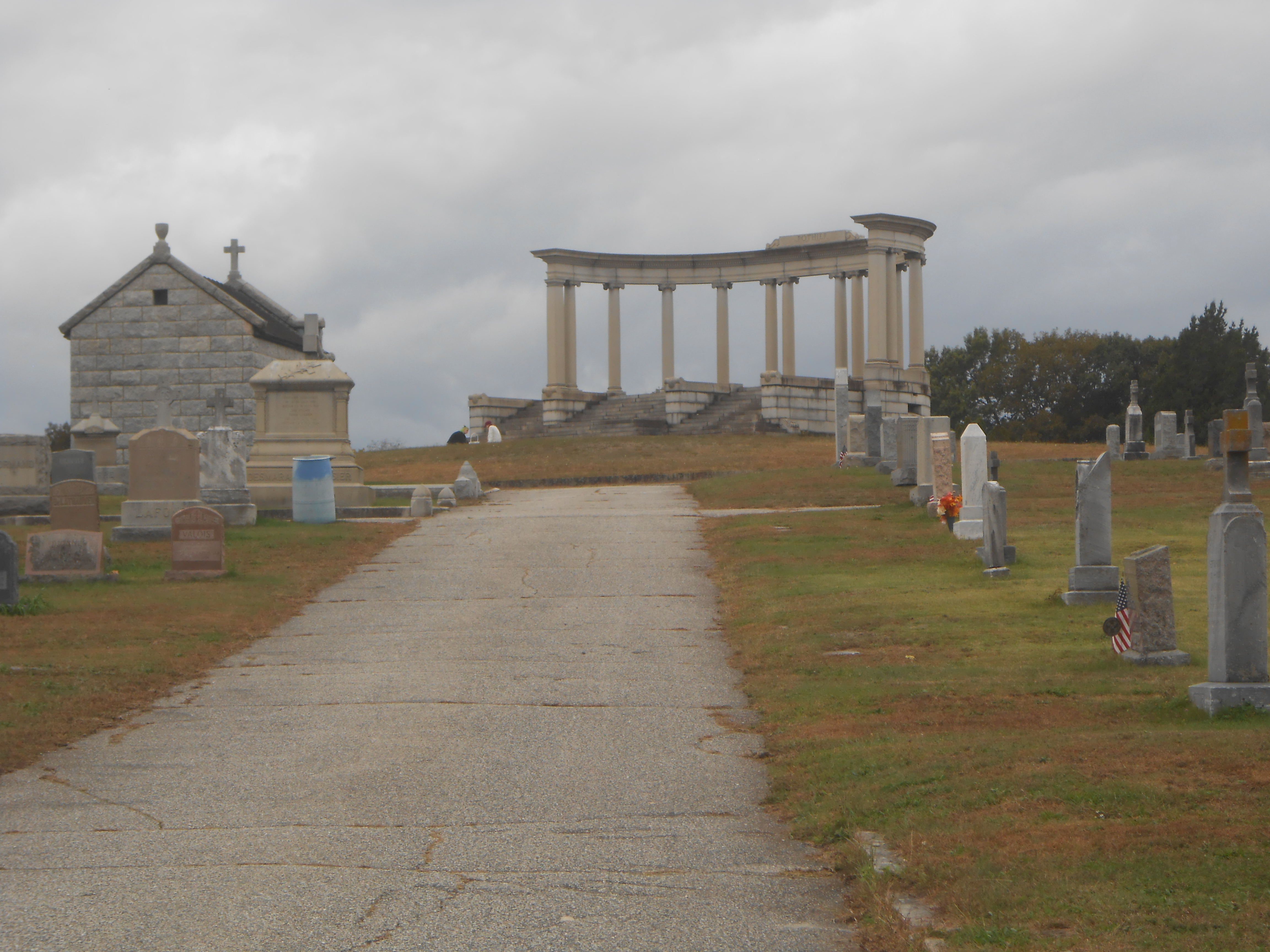
Another was a circle of columns raised above the cemetery on a hill.  It was like a classical ruin.


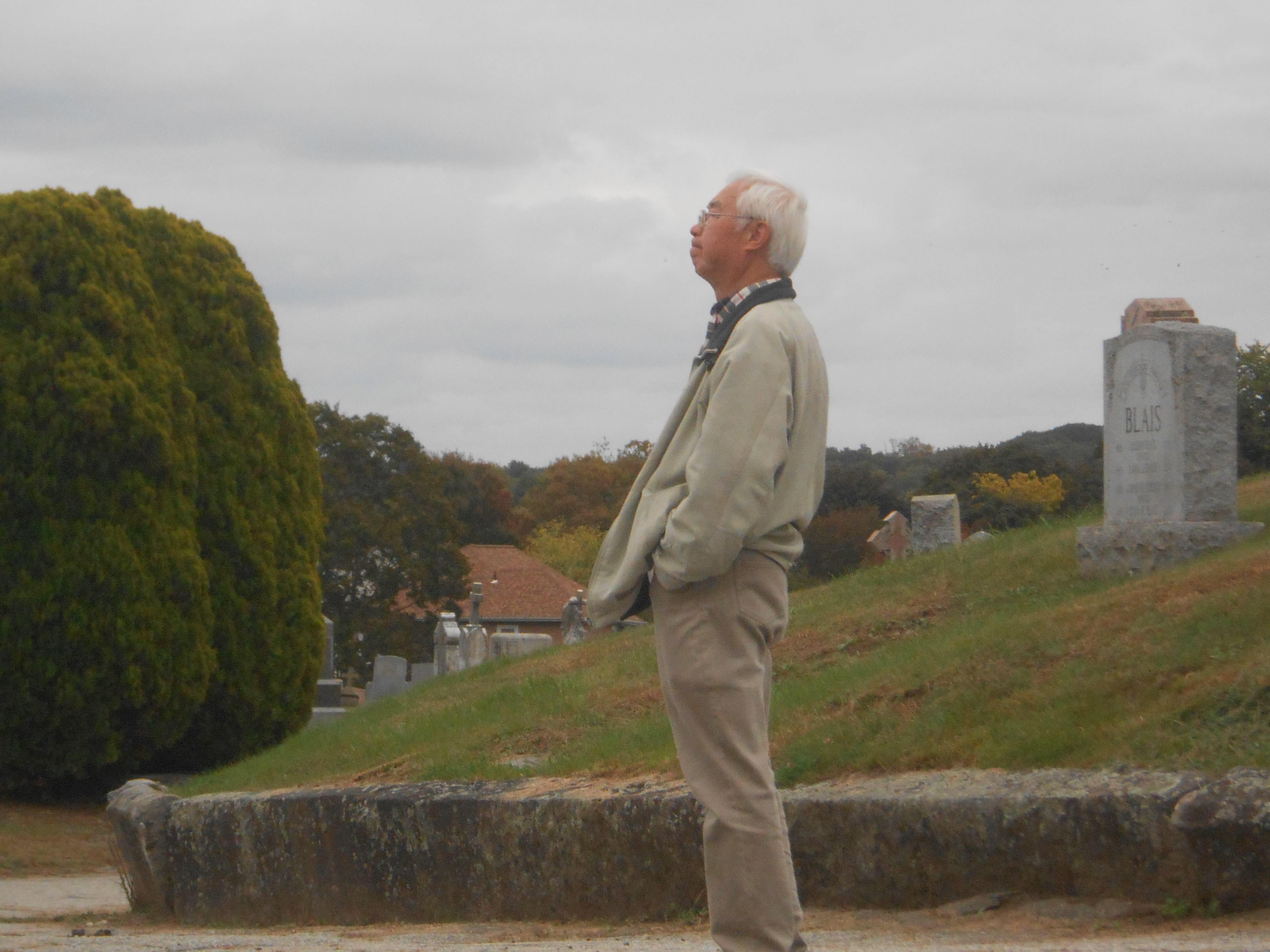
Yang took a moment for contemplation.
I was looking out on vistas of graves


to view this:


And aren’t these graves always the saddest ones of all?


Casting Shadows, Part Two

“Casting Shadows,  Part Two”


Philip Carlyle –  The master of the Carlyle Estate where the Wellstone Mystery Hour is making its remote broadcast, Philip Carlyle has opened his home and the secrets of its past to answer the mystery behind the disappearances of Felicia Blasko and his brother Bill Carlyle.  An engineer and businessman by profession, Philip still nurses the soul of a poet and musician, while holding secrets of his own concerning Felicia.  Embodying Philip requires a man of power, incisive wit and vision, as well as a sympathetic sense of artistry ‒ someone whose fascination with Jessica Minton rings more sad than creepy.  Claude Rains is my choice.  Think of the urbanity and authority of his Victor Grandison in The Unsuspected and the sly, mordant humor in Casablanca’s Inspector Renault.  Then there’s his incisive and forthright authority as Now Voyager’s Dr. Jaquith, tempered by his wry humor and genuine, though never soppy, compassion. Also think about the vulnerable passion of Paul Verin in The Man Who Reclaimed His Head, a quality that burns beneath the wall of authority in Job Skeffington of Mr. Skeffington. That’s the complexity of Philip Carlyle.


Jeanne Rivers and Madame Wanda are two ladies who may or may not be whom they seem.


Jeanne Rivers is the housekeeper for Philip Carlyle in the mansion that Felicia haunts.  She’s a top sergeant making the place run like clockwork, even managing to banish the indomitable Liz Minton from kitchen gossip fests with the help. Her wit can be acerbic, but she can show warmth and good humor when she’s helpful ‒ a woman of practical advice.  She also has ties to the mansion’s tragic past that could open up its secrets. ­A fine choice to inspire Jeanne is Jean Brooks, leading lady of the RKO B-division.  Brooks has demonstrated a dry and clever wit in such films as The Leopard Man, The Falcon in Hollywood, and The Falcon and the Co-eds. Falcon Tom Conway can’t get by without her popping up somewhere! Further our Ms. Brooks is no stranger to a cinematic world of shadows.  A veteran of Val Lewton’s dark tales, in addition to playing a smart-talking gal in The Leopard Man, Brooks also portrayed the haunted Jacqueline in The Seventh Victim.


Madame Wanda – Wanda Hendrix brings more than a first name to Shadows’ medium.  Apple-cheeked and merry-eyed, Hendrix played comedy deftly in films like Miss Tatlock’s Millions and The Admiral Was a Lady.  Thus, Madame Wanda shatters the stereotypes of film mediums as otherworldly, mysterious, and at times even sinister.  Our stylishly outfitted Madame Wanda is quick with a quip to challenge and defeat skepticism about her capabilities, especially from the suspicious Liz Minton and Gerry Davis.  Still, Wanda’s description of her powers and her conjuring of a voice from beyond the pale demonstrate her bona fides for connecting with the supernatural.  Preparing her for the darkness of Shadows, in My Own True Love and Ride the Pink Horse  Hendrix moves through a post-war world now darkened by bitterness, vengeance, and corruption.

Next entry, a look at more of Jessica’s colleagues from the Wellstone Mystery Hour.

Casting Shadows, Part One
Shadows of a Dark Past
Jessica Minton Mysteries
Home
Images

-Claude Rains  Photo from John Engstead. Star Shots: Fifty Years of  Pictures and Stories by One of Hollywood’s Greatest Photographers. New York:  EP Dutton, 1978. p. 185.

-Jean Brooks in white trenchcoat:  Wikipedia public domain, https://en.wikipedia.org/wiki/Jean_Brooks#/media/File:Jean_Brooks_1940s_fan_photo.jpg

-Jean Brooks in plaid jacket public domain:  https://commons.wikimedia.org/wiki/File:Jean_Brooks_in_The_Falcon_in_Danger_1943.png?uselang=en#Licensing

-Wanda Hendrix photo, Author’s collection


Live! And on the Air!: Shadows of a Dark Past!

In my first novel, Bait and Switch, heroine Jessica Minton starts out as a moderately successful stage actress.  So why did I switch her from the stage to the radio as I continued the series with  Letter from a Dead Man?  Well, there are two reasons.  First of all, radio work gave Jessica more free time to join her sister Liz in unraveling mysteries.  However, the second reason is far more interesting.  I’ve always been fascinated by the imaginative entertainment radio provided Americans for almost five decades. The more I delved into how shows were written and produced; what made some actors excel and others bomb when playing to an audience over the airwaves; the way audiences were engaged, even enthralled, by the “theatre of the mind,” the more possibilities I could see this environment inspiring in a mystery.

My first awareness of radio entertainment of the classic 1920s-50s came from old movies of the ’30s through ’50s that I watched on TV as a child – a very young child.  I loved the excitement of actors and musicians, quiz contestants, and newscasters performing before live audiences.  I was so influenced by what I saw that I was close to six or seven before realizing that the music I heard on the radio was not being performed live at the local radio studio. Until that epiphany, I had been dearly puzzled by how the Beatles and Supremes could get from Lowell to Lawrence, MA in a matter if minutes! 

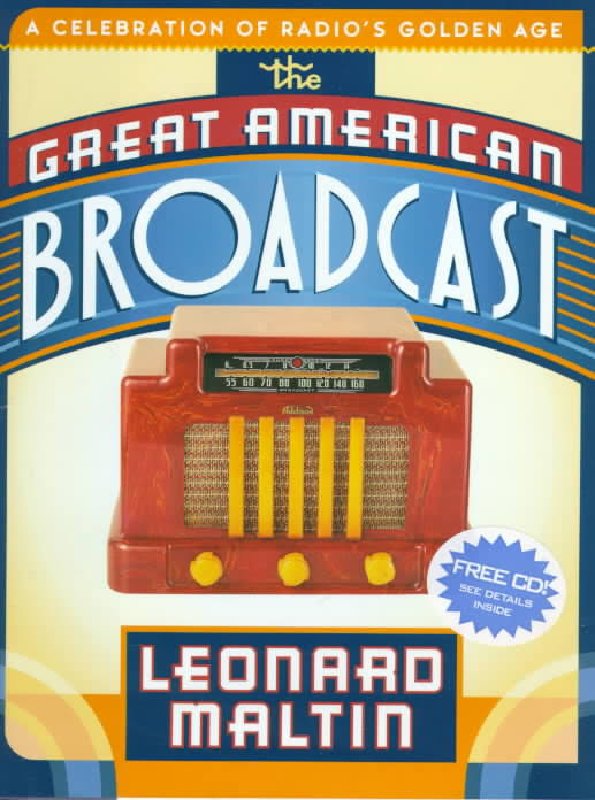
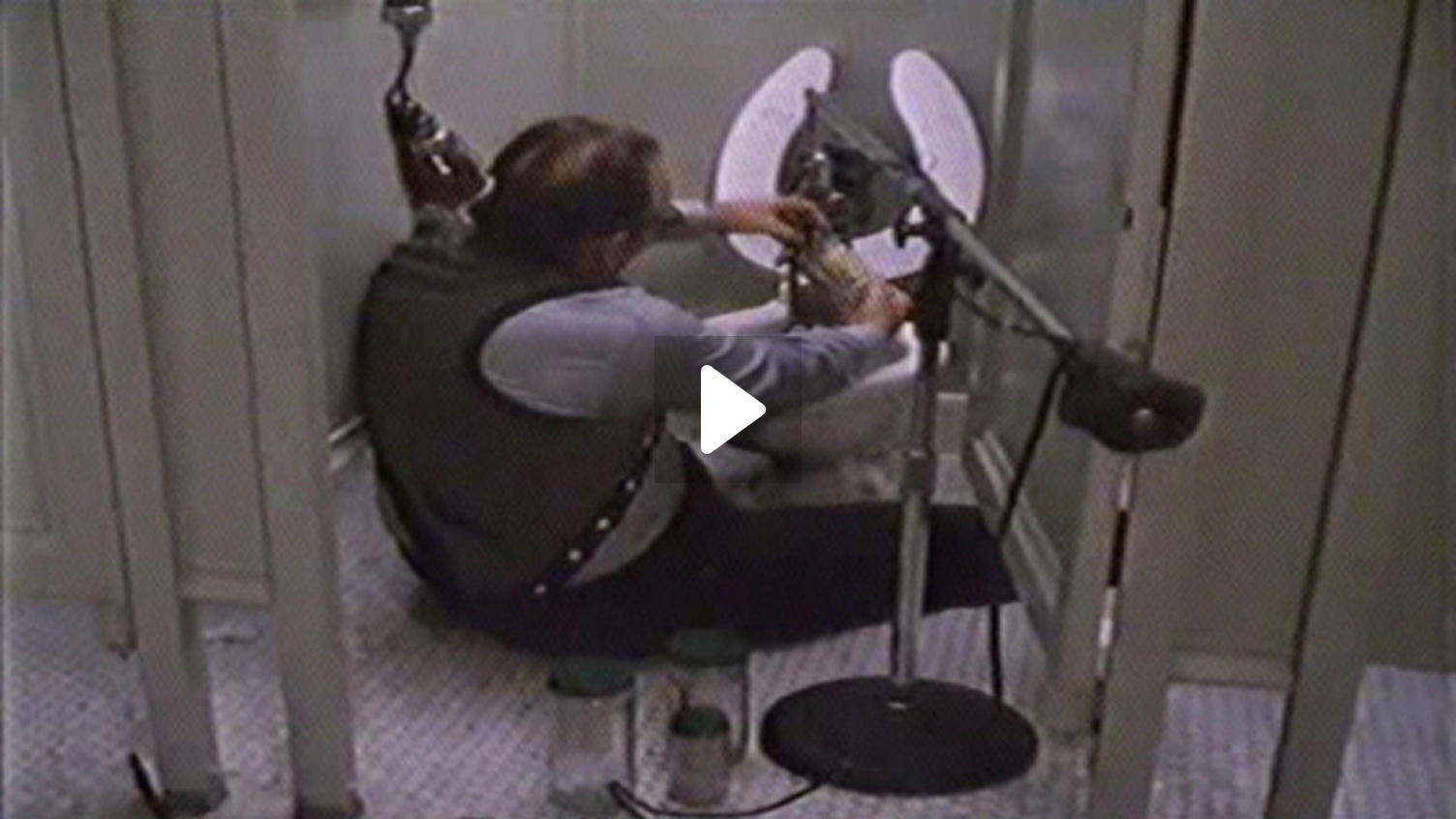
As I got older, read more, and watched movie and TV portrayals of radio with a deeper understanding, I learned more about the intricacies of production – including writing, directing, acting, and sound effects creation, which made me even more fascinated.  Books such as The Great American Radio Broadcast, Terror on the Air, Suspense, Inner Sanctum Mysteries, and The I Love a Mystery Companion  revealed to me the behind the scene creation of programs such as Inner Sanctum, Lux Radio Theatre, Suspense, and I Love a Mystery, to name a few – from initial inspiration and pitching of a show to sponsors, to the intense schedule for writing and rehearsing, to actors’ perspective on radio performing, to audience reactions.  I was especially intrigued by how special sound effects, combined with an audience’s willing imagination, were such a powerful force in creating reality:  coconut shells became pounding hooves, a stabbed melon was transformed into a fatally impaled human, a flushing toilet could be modified to become space invaders’ horrific weapons, or a heart beat might be created with a rubber sponge, a turn table, and a stylus (Maltin 108)!  Of course, there were also the ultra realists like Jack Webb whom Leonard Maltin reveals created the sounds of passing cars on Los Feliz Blvd. at 2:30 a.m. by having a sound man go out and record passing cars at 2:30 a.m. on Los Feliz Blvd. (Great American Radio Broadcast 100).

One source that especially galvanized my interest was Rupert Holmes’s Remember WENN (the real first original AMC series).  This delightful program traced the adventures of a Mid-West small-town girl who makes it to the big city (sort of), Pittsburgh, and starts as writer but soon finds the hectic demands of the station moving her swiftly into the roles of director; producer; business manager; and, occasionally, actress.  With humor that is sometimes whimsical, but always clever, Remember Wenn joyfully captures the seat-of-your-pants spirit at a radio station that characterized how this medium entertained and delighted audiences.

Whether in Remember Wenn or in the books I read, I especially loved learning how actors had the pleasure of playing an enormous catalogue of roles because we created their characters in our minds on the inspiration of their voices.  That’s how a short, chubby chap could become a strapping western marshal or a middle-aged man could mentally materialize as a kindly old grandmother in the theatre of our minds!  Or we got to “see” our favorite actors playing roles they never had a chance to have a crack at on the screen.  For example, as a Joan Bennett fan, I was delighted to catch her deftly cracking wise in Rosalind Russell’s part in Hired Wife or seductively manipulating Burt Lancaster in Barbara Stanwyck’s role in Double Indemnity

And short stories or novels were brought alive for us as well – especially Orson Welles’s infamous trick more that treat, War of the Worlds.  Both situations inspired me to think about what fun it would be to take some of my favorite horror or mystery stories or even movies and imagine them as venues for Jessica to strut her thespian stuff.  So, in Dead Man, Jess gets to talk about doing “A Rose for Emily” and “The Dunwich Horror”; in Dark Horse, we have reference to her playing in “The Horla.”


In Jessica’s most recent adventure, Shadows of a Dark Past, I’ve centered the story around her work on a remote broadcast in a haunted New Hampshire mansion (somewhat inspired by Charlie Chan in the Wax Museum). Attempting to drum up ratings, her director/producer Scott plans to reopen the tragedy of a woman’s tragic disappearance, and likely murder, in this mansion twenty years before.  The owner of the mansion, the husband of the woman reputed to be the ghost, her daughter, and others in the town who remember the event have dangerously mixed emotions about the broadcast.  And Jessica finds that she has a disturbing connection to the woman in question.  Then there’s the Hound of Hell. The topper is when things go horribly wrong in a séance recorded for later transmission.

In a book still in the outline stage, the plot revolves around Jessica’s work in the studio with some members of the writing team who are dangerously not what they seem. It’s Dusty who sets the plot in motion! So, don’t change that station!  I plan to bring you more exciting installments of the adventures of Jessica, Liz, James, and Dusty in and out of the studio!


If you’re looking for some films to give you a flavor of radio at its most exciting and mystery-inspiring, check out Charlie Chan in the Wax Museum (1940),  Abbott and Costello’s Who Done It? (1942), Danger on the Air (1938), The Hucksters (1949), That’s Right, You’re Wrong (1939), The Big Broadcast of 1938, Playmates (1941) The Frozen Ghost (1945), Radioland Murders (1994 – George Lucas directing, no less), and The Scarlet Clue (1945).  For a sardonic look at the effects of Orson Welles’s broadcast of War of the Worlds, have a chuckle at Hullabaloo (1940); and for a (mostly) more serious look, watch The Night That Panicked America (1975).

Image of Orson Welles directing:  Broadcasting play:  https://musingsofamiddleagedgeek.blog/2022/10/07/the-night-that-panicked-america-1975-is-a-little-seen-tv-movie-about-the-greatest-halloween-prank-ever-played/

Screen shot of  soundman and toilet from The dvd The Night That Panicked America,CBS Studios, (c) 2014

Image of Melinda Mullins from AMC Movie Magazine.

Image of Joan Bennett, Dusty, and Jessica Minton, author’s collection

Back to Home Page

Take That One Step Beyond

Recently, I caught actor/director John Newland in a 1948 Bulldog Drummond movie, Thirteen Lead Soldiers.  That appearance piqued a craving to see more of Newland in a TV program that those of us growing up in the late 1950s and early 1960s knew, One Step Beyond.  So, for the past couple of weeks, I’ve been re-watching the program on my Alpha Video editions.  A perfect treat to prime me for the Halloween holidays.

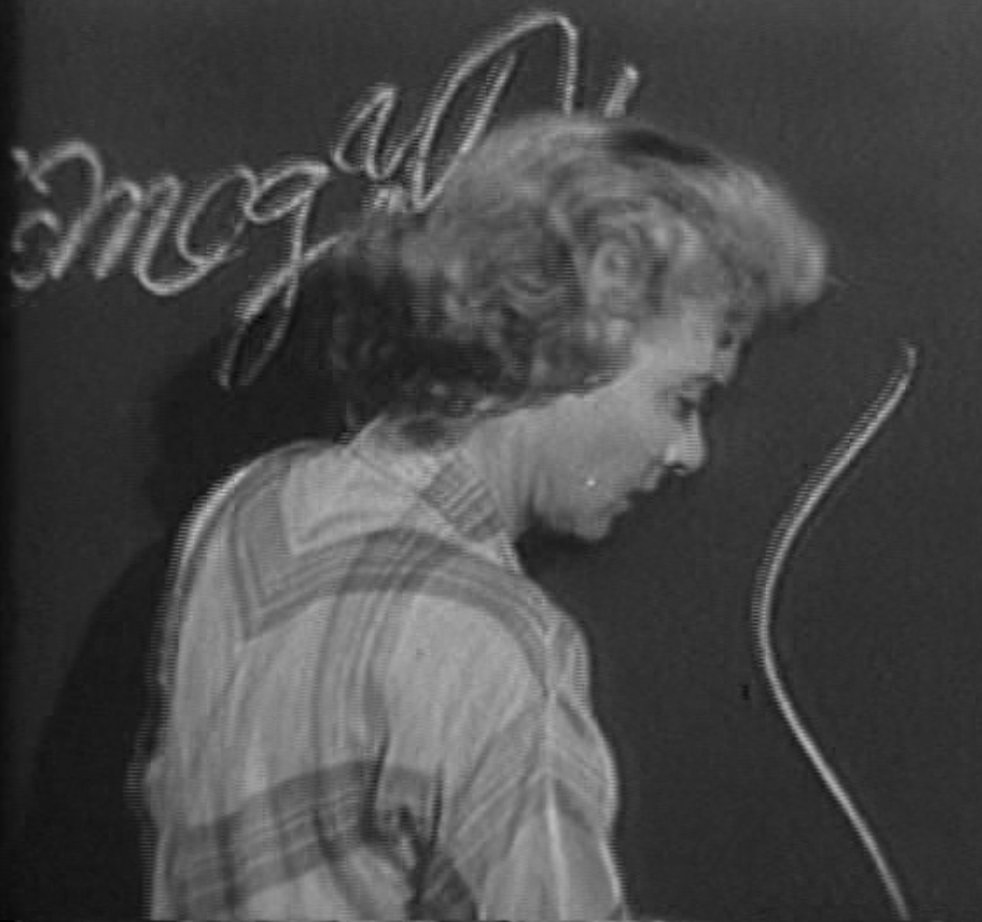
What is One Step Beyond?  Well, the half-hour (23-5 minutes sans commercial) was one of the early horror anthologies of the time period I mentioned above – right in there with The Twilight Zone, Thriller, and (just a little behind these) The Outer Limits (original version).  All filmed in glorious black and white.  Part of what made One Step Beyond stand out from the others was that its stories were all allegedly true, taken from “the records of human history.” So, the crippled woman calling out for help at the immanent impact of a tidal wave is rescued by and rescues the only one who hears her, a deaf man whose disability leaves him unaware of the blaring warning sirens.  A turn-of-the-century young wife is haunted by premonitions of deadly blazes set by a twin to whom she seems to be psychically attuned. A pilot radios back that he’s seeing something astonishing of the UFO variety, disappears for several days, then miraculously reappears hundreds of miles beyond the range of his prop plane before dying.  A bellhop repeatedly has visions of the rooms and buildings around him crumbling in an earthquake – in San Francisco, 1905.  No one believes him, and then it’s too late.  A German submarine sets out to sea as the Third Reich crumbles, with hammering and thumping in between hulls haunting it – only for a skeleton to be found between hulls holding a wrench twenty years later.  A night-school teacher receives a cameo as a gift from an awkward student, then finds whenever she writes on blackboard or paper that her hand is possessed to write in a foreign language she doesn’t know but is native to her gift-giver – all of which puts her at risk from him at what the writing reveals.

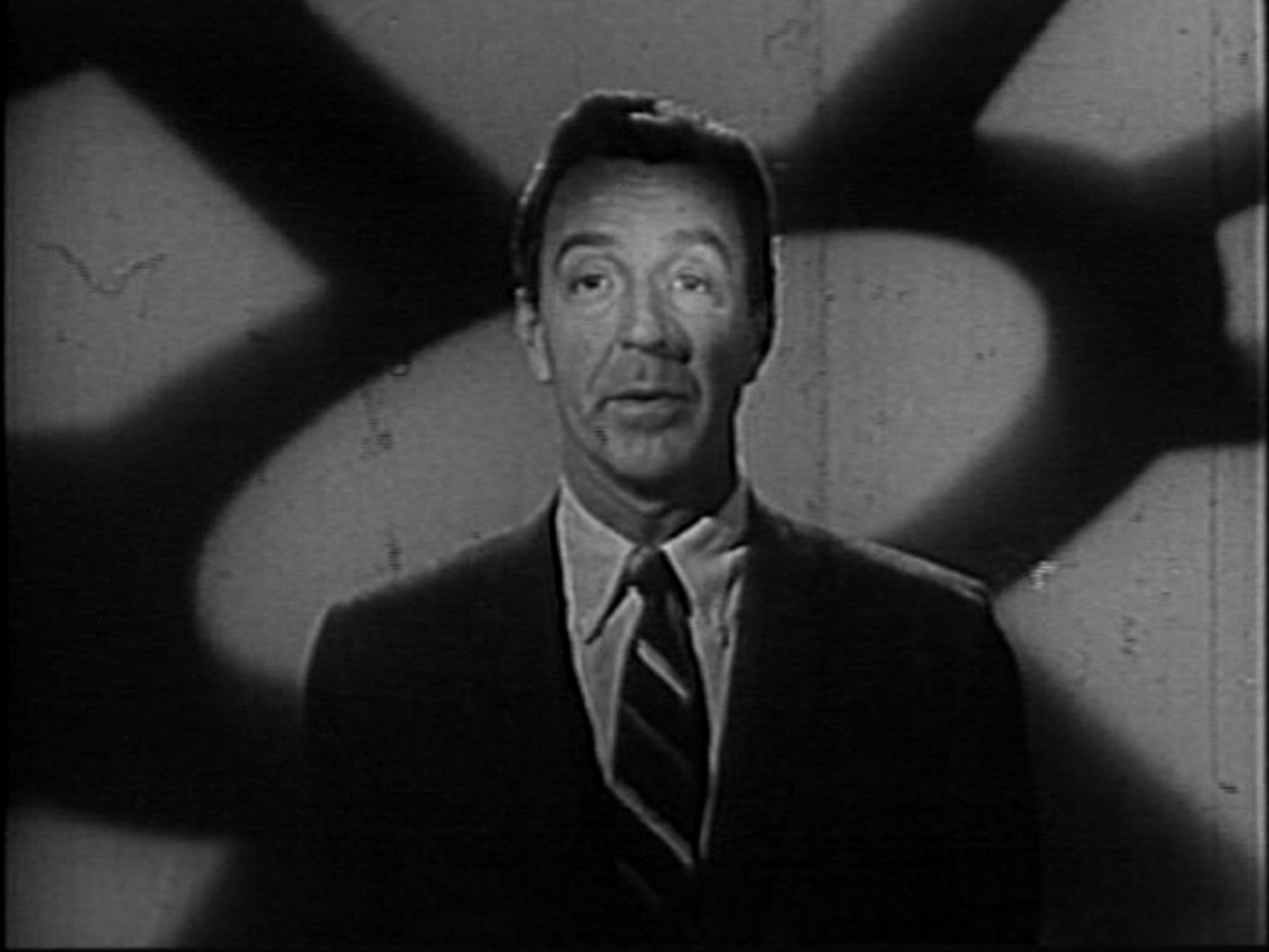
John Newland, himself, adds a unique touch.  Neither skeptical like Serling nor sinister like Karloff (Thriller), he talks to us calmly, almost warmly, all the while undercutting our “logical” explanations, raising questions with his knowledge of experts on “bilocation,” “psychometry,” “telepathy,” “precognition,” etc.  Then he ends with a warm smile, reassuring us – or maybe slyly enjoying having destabilized our certainties.


One Step Beyond may be less disturbing than its fellow horror shows for another reason.  Usually, the supernatural events occur to set right murder or injustice, give voice to the oppressed, reunite estranged spouses or families, rescue those in danger, or give comfort the suffering.  UXB guy William Shatner manages to see his wife one last time under unusual circumstances when she is pregnant. A wife leads her husband to their son trapped in a mine, only the rescuers also find her dead body trapped in that same mine. A psychic bond leads a wife to find her husband trapped under a car in rising waters, while the spirits of three neglected children reunite a child with her estranged father.  More unnerving but still equitable, ghosts mete out justice to their murderers who have left them on a mountain to die, sent them off to die on a patrol ambushed by Indians, poisoned them to marry a mistress, or disguised their killing as suicide.  Still, there are enough threatening, even unjust, experiences recounted to make us wonder just how reassuring John Newland’s smile is.  All her premonitions about being caught on a sinking boat doesn’t save a young bride’s husband from death on the Titanic.  The poor bellhop with premonitions of the San Francisco quake dies, even if his warnings do save that adorable old Italian couple.  How about the woman whose twin sister appeared to be setting fatal conflagrations – did she really merit for her fate? Did photographer Cloris Leachman ask to be chased around her apartment by the maniacal ghost of the guy who murdered his wife many years ago? No wonder she moved to Minneapolis and changed her name to Phyllis Lindstrom!

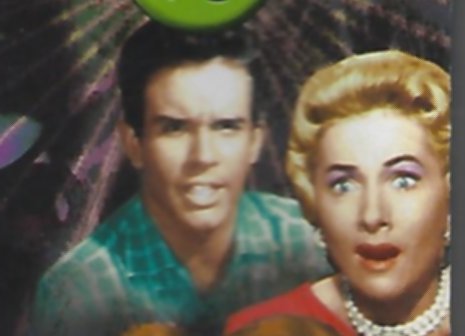
The program also has an intriguing roster of guest stars.  There are up-and-comers:  William Shatner, Louise Fletcher (!),Warren Beatty (!!!), Charles Bronson, Elizabeth Montgomery, Suzanne Pleshette, Patrick McNee, Robert Blake, Mike Conners, Werner Klemperer, Cloris Leachman, and Robert Lansing – to name a few.  Then there are some folks who were once big or relatively big names: Joan Fontaine, Anna Lee, Patty McCormick, Carl Esmond, Ron Randall, and Catherine McCleod.  Bob Newhart’s father-in-law, Bill Quinn, makes a few appearances, too – as well as lots of sixties stalwarts like William Schallert, Joanne Linville, Ed Platt, Johnny Seven, Warren Stevens, Scott Marlowe, and Jan Miner. Those of you who know your TV supporting players and later stars will have a blast identifying them.

Other folks I know who have seen One Step Beyond pretty much all agree on one point.  The really scary thing about the program wasn’t the stories, the acting, the visuals, even John Newland.  It was the damned music!  That darned theme, appropriately named “Weird” by composer Arthur Lubin, sent chills coursing through out bodies!  Then there was “Fear”:  once its bars snaked into hearing, you knew something creepy was afoot – but more powerful was that their sinuous, haunting snake up your spine.  I’ll tell you, when I was a little kid and my bedtime was 7:00, there were only two shows that I could see worth watching (long before cable!):  first One Step Beyond, then The Twilight Zone.  No wonder I slept with a night light until I was thirty-seven.

So, here, to set your October off in the right mood are  links to “Fear” and “Weird”.  Listen – if you dare!  But be sure to put on a sweater first – chills up the spine, you know!


Some Episodes that I highly recommend”

“The Promise”

“The Dark Room”

“Reunion”

“The Dead Part of the House”

“Ordeal on Locust Street”

“Deadringer”

“The Explorer”

“The Death Waltz”

“To Know the End”

John Newland Image:  https://upload.wikimedia.org/wikipedia/commons/a/a8/John_Newland_-_1959_%28One_Step_Beyond%29.jpg

Images from episodes are screen shots of public domain episodes and cover of Alpha Videos art work; author’s collection

Christmas Beauty at Hammond Castle

Since we’re still in the middle of the twelve days of Christmas, how about a blog where you can see the cheery holiday decorations at one of my favorite spots, Hammond Castle?  I hadn’t been there for years, but I remembered how they did up the castle right for Christmas one of the times I was there many moons back.  So, Yang and I decided to celebrate the season by visiting once again.  We were not disappointed.

John Hammond built this castle early in the 1900s, funding it by the sale of his patents for all kinds of applications to navigation, radar, radio, etc.  In fact, I believe he holds the record for the largest number of patents awarded in this country.  He did come from a prominent and wealthy family, but they disowned him for marrying an older divorced woman – with whom he shared a long and happy marriage – so there Mom and Pop Hammond!

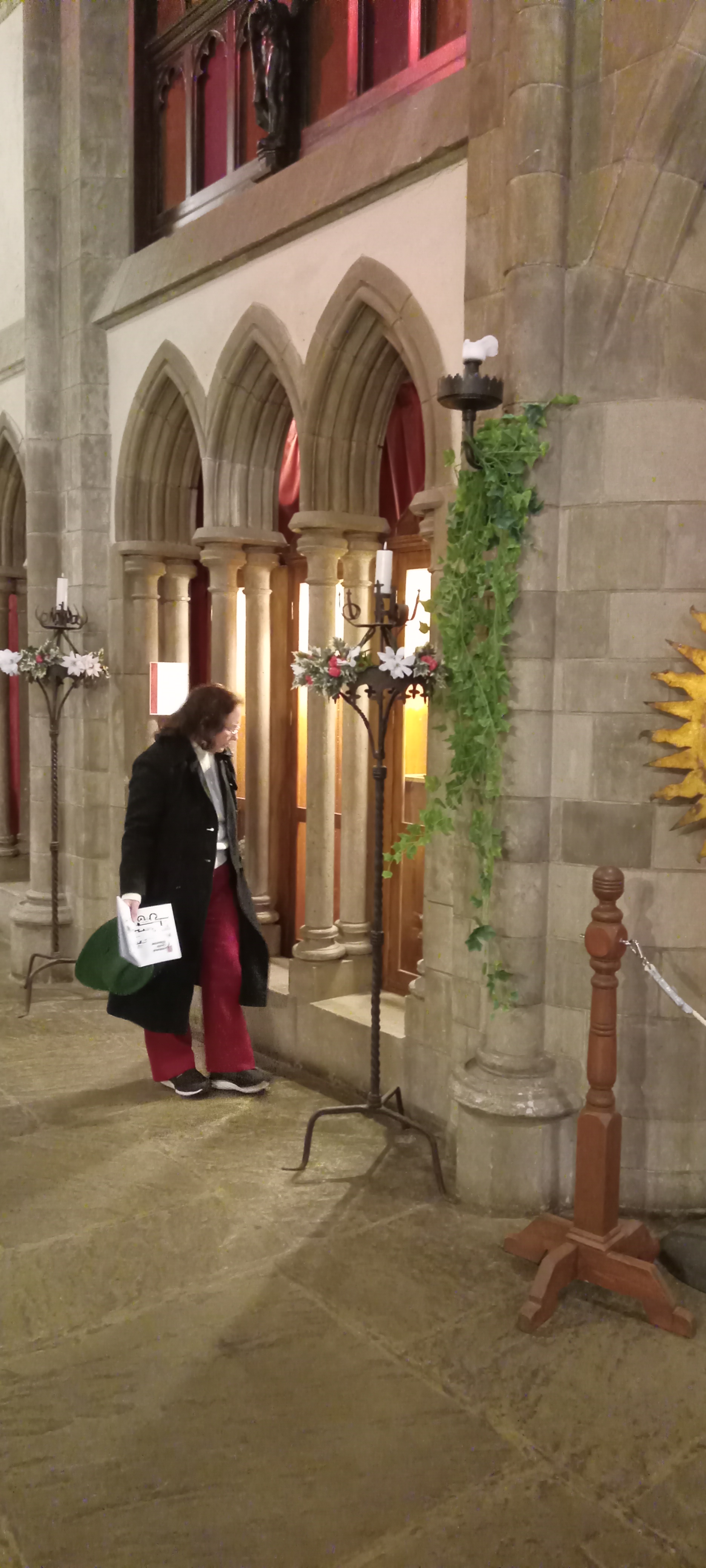
The main shots we have here are of the Great Hall and the Courtyard.  Yang took some really neat shots of the Great Hall.  Hammond would have large family and friend gatherings here in his day, including lots of famous film political, and business figures. I remember back in the 1980s and later when I came here, I attended concerts on the pipe organ and by smaller consorts.  I also got to watch silent films in the Great Hall. It was the perfect setting to enjoy Lon Chaney’s The Phantom of the Opera.  In this photo, you can get an idea of the length of the hall.  You can also see the beautiful rose window.


You can also observe some of the alcoves off the main hall  in these photos.  I wish we’d had a chance to take pictures in the dining room and the library off the Great Hall, facing the ocean, but the light was not great for photographing — too much sun coming in.  Natasha would have liked it, though!  Some of the decor were skillful reproductions of classical, medieval, and renaissance art; however, much was also pieces that had been rescued from ruins or antique dealers.


How about this huge hearth?  Would it keep the entire hall warm?  Well, maybe you ought to remove the Christmas decorations first!

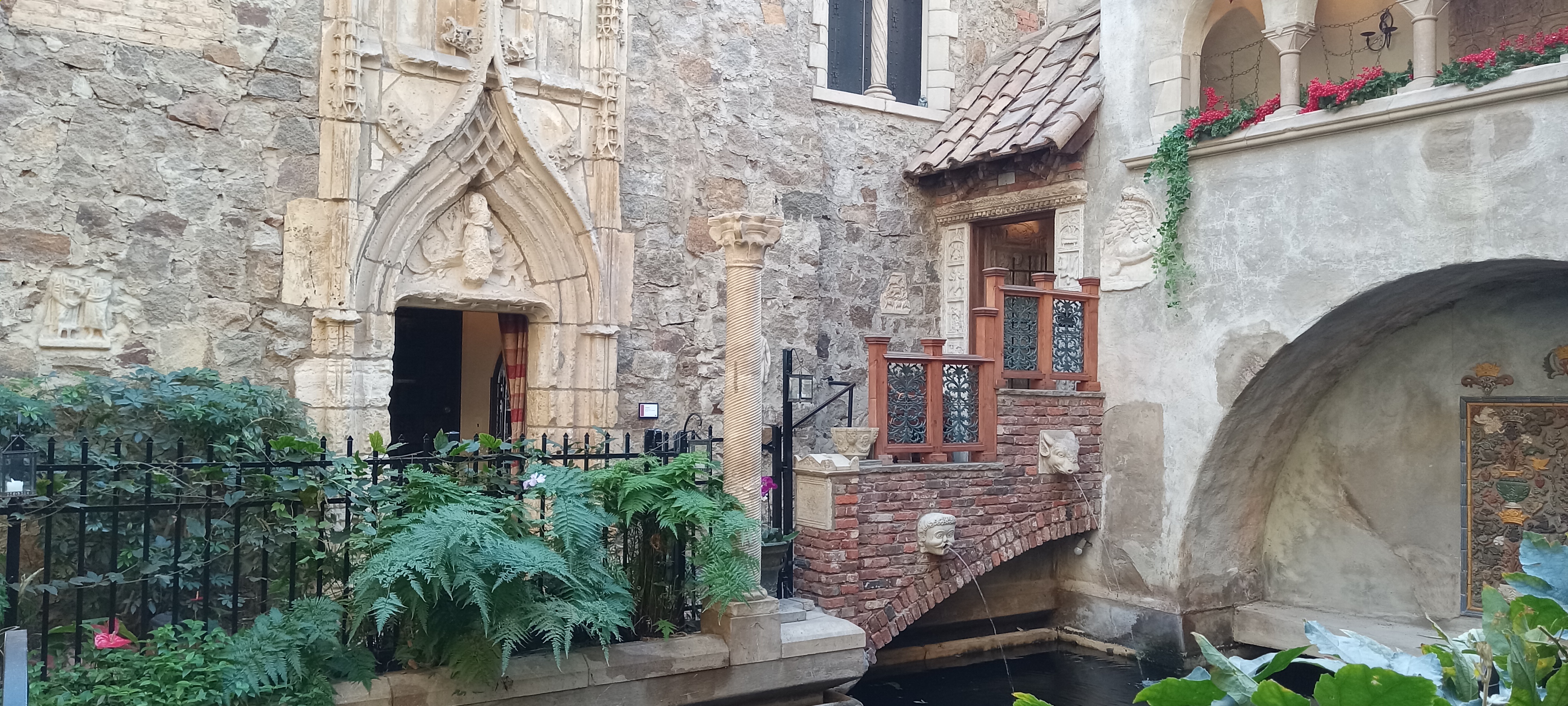
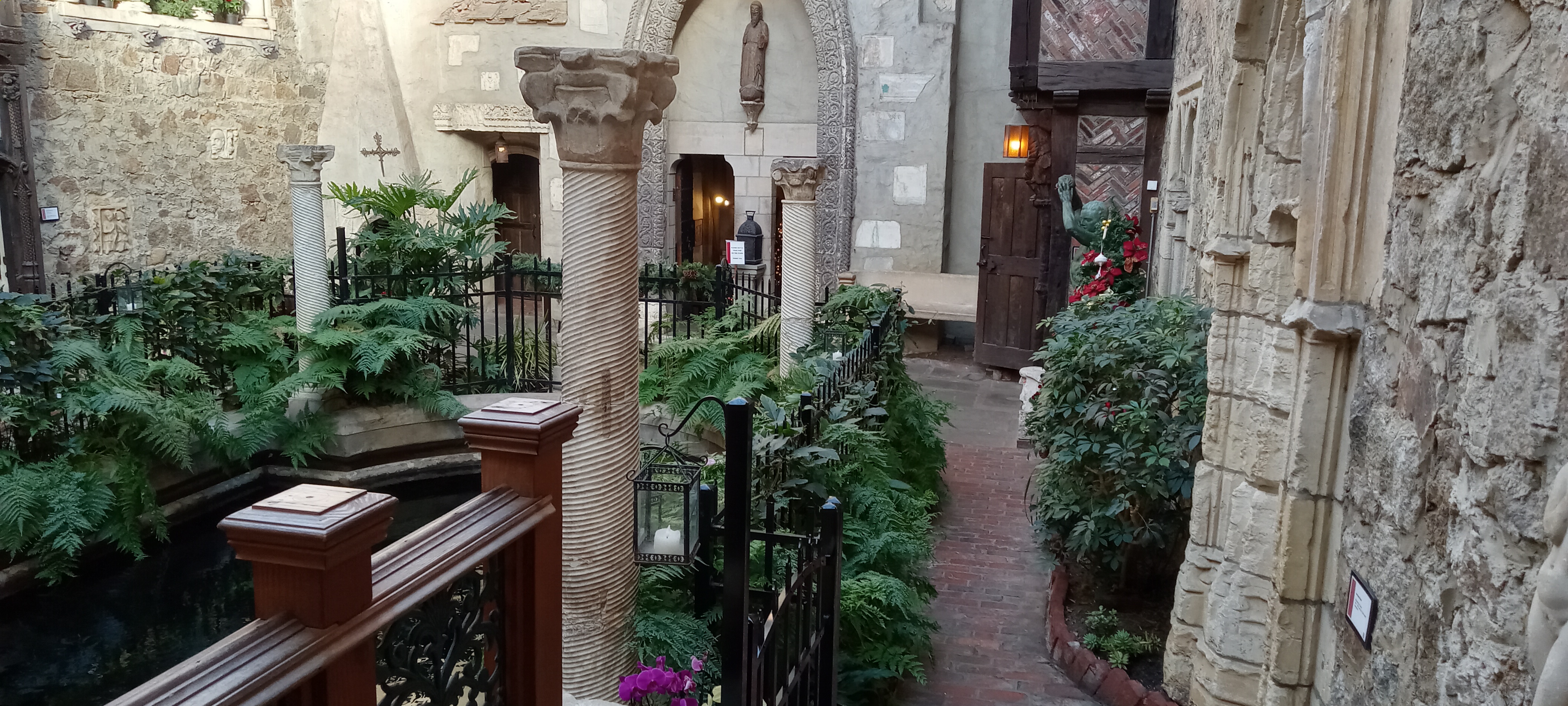
The courtyard was a real treat!  Recreations or imports of medieval and renaissance shop fronts were integrated into the walls, leading into various rooms.  The courtyard was roofed with glass skylighting, allowing for the growing of all kinds of plants that surrounded a long, eight-foot deep pool.   Here is a view from the balcony to one end of the courtyard from which Mr. Hammond enjoyed diving off  into the pool for a swim – but I think he changed into his trunks first. How would you like to jump in from here?

We were lucky enough to meet two of the guides there who took our picture.  We had a great chat with them about the castle and ruins, castles, mansions, and other haunted spots in new England.  If we go back for a guided tour, I know that they would do a great job.  they helped make our day!

Anyway, here are some more shots of the courtyard.


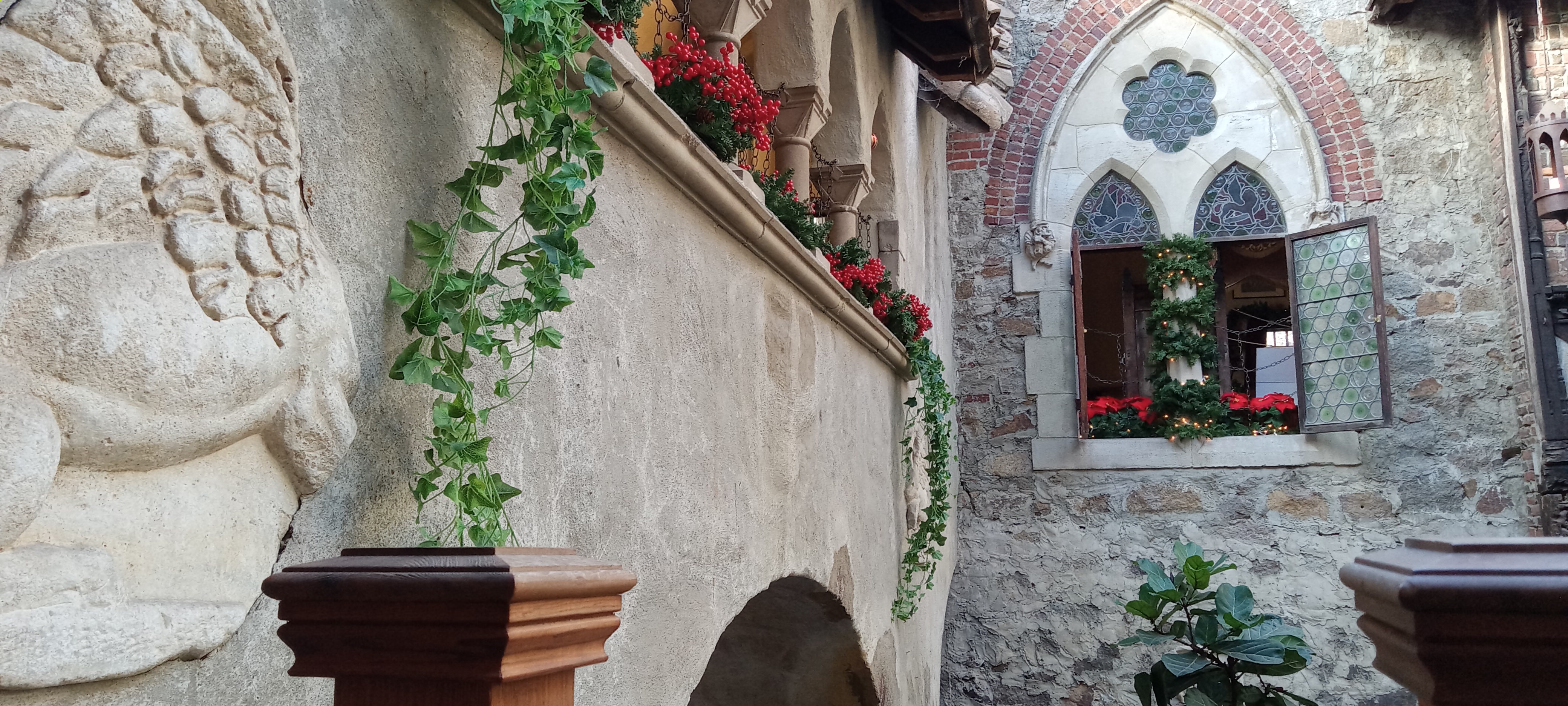
Looking at these photos, you can see how Hammond integrated reliefs, tombstones, storefronts, etc, into the construction of the hall.  It’s eclectic, but it works!

The Christmastide greenery adds seasonal beauty and cheer to the castle.

We don’t have photos of the bedrooms or the kitchen or Hammond’s workrooms.  Maybe that’s for another day – or for you to find on your own trip to the castle.

Finally, the outside is also a pleasure to enjoy.  For one thing, there’s a draw bridge.  An interesting story connects here.  Apparently, Hammond also built a covered bridge for the cats to leave the castle near here as well – but they didn’t deign to use it.  I think they were busy chilling in the boxes in which some of the antiquities arrived.


Of course, we can’t forget to include picture of the person to whom we can credit the majority of these photographs.


I love these Gothic arches framing the view of the Atlantic on this sunny winter’s day.

For your final delectation, below is a video that reveals the glory of the Great Hall in panorama.  If you want to enjoy Hammond castle for yourself, here’s a link to their web site. Their “Deck the Halls” tours are open until December 30th.


Made for TV Horror 1: The Norliss Tapes

The Norliss Tapes (1973)

In some ways, the 1970s were a golden age for horror on network TV.  Series such as Ghost Story, Night Gallery, The Sixth Sense, and The Night Stalker chilled us back then, though the over-plus of poster-vision, superimposition, electronic music, and a dizzying tracking in and out may seem a little cheesy now.  And why did everyone think harpsichord music was so scary?  The horror genre also heavily populated another 1970s television trend, the made-for-TV movie.  One of the most prolific purveyors of  ’70s TV horror in a series or a one-off film was Dan Curtis, the guy who brought us Dark Shadows, the first gothic soap opera, in the 1960s.  Many people know Curtis for Darren McGavin’s  The Night Stalker series, which actually started out with two TV movies:  The Nigh Stalker and The Night Strangler. Dan Curtis, quite the busy beaver, also wrote, produced, and/or directed quite a few other telefilms, including Trilogy of Terror, Dracula, The Strange Case of Dr. Jekyll and Mr. Hyde, and The Picture of Dorian Grey.  One film he wrote/directed/produced that was not based on a classic horror tale was The Norliss Tapes.  A pilot that never  made it to a series, The Norliss Tapes is a kind of upscale Night Stalker, based on the premise of writer David Norliss investigating  supernatural incidents in order to debunk them.  Kind of a Scully and Mulder in one.  It could have made an interesting series.

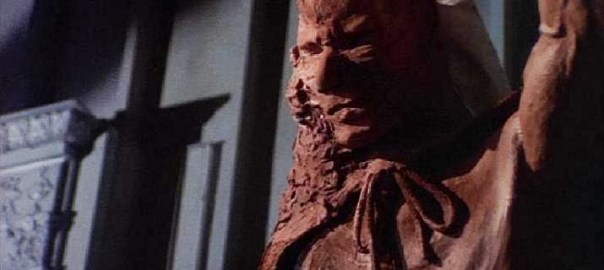
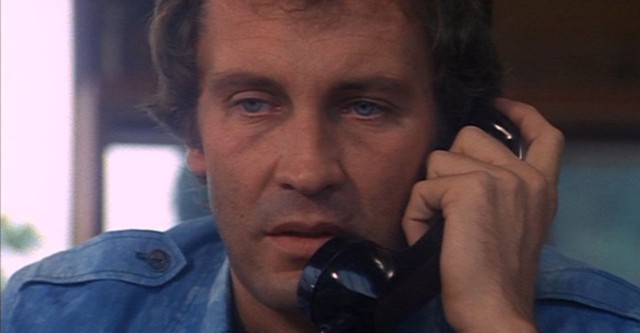
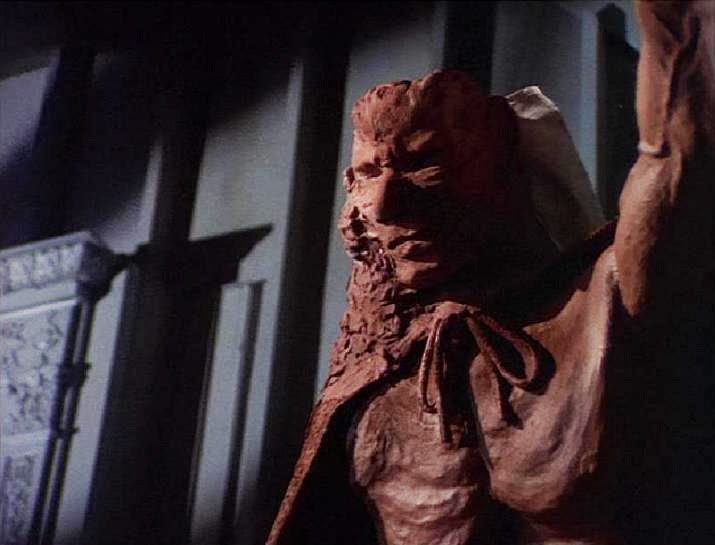
The movie starts with a tense David Norliss (Roy Thinnes) brooding over a foggy San Francisco landscape from the balcony of his apartment, then calling up his editor (Don Porter) to pressure him into a meeting about a book he was supposed to have completed on his investigations of the supernatural, with an aim to debunk.  He cryptically alludes to threats that have kept him from writing, which he now fears may even take his life.  When Norliss misses the meeting, the publisher seeks the writer at his apartment only to comes across a note telling him to play a set of numbered tapes (in the right order!) to understand what’s really going down.  After putting the tape in a handy cassette player/recorder (Now there’s a trip down memory lane!), the publisher and audience hear David’s voice narrating us to his first adventure into darkness — dissolve back into the past and away we go!  The tale unfolds with a recently widowed woman (Angie Dickinson) encountering a gruesome being in her late husband’s art studio, which of course she and her German Shepherd have to cross a hill and some woods in the middle of the night to access.  The creature whips the dog across the room and takes blasts from her shotgun as if it’s only a tackle from a linebacker.  Still, he’s down long enough for the woman to get away so she can tell her sister, a pal of David’s, that this thing is a creepy version of her husband.  He shows up to investigate, but for a skeptic he comes to believe the woman right quick — dazzled by Angie’s charms?  Before you can say Necronomicon (which actually is a long word), victims are being strangled and drained of blood, a new sculpture of something demonic in reddish clay appears to be gradually being finished in the studio, reports emerge of the husband’s prior involvement in dark arts once he learned he was dying, and creepy caverns and crypts reveal horrible secrets. All of which David pieces together, despite the local sheriff’s skepticism not his own.

Despite some of those annoying trackings in and out and a little too much screeching with the electronic music (Robert Colbert did his job much better on Dark Shadows), the movie has some genuinely creepy and suspenseful moments as victims are stalked on dark, lonely nights; in a dank mausoleum; or to a lonely motel room.  The film even makes effective use of the traditional “We’ve got to find the monster  in this forbidding underground passage before he stirs.”  Roy Thinnes, no stranger to the eerie (The Invaders, Horror at 30,000 Feet), makes an interesting and capable investigator:  discovering the right people to interview and asking the right questions, as well as effectively using the library.  Still, Thinnes plays the guy a little too much on the low-key side; he could make Duchovny’s Mulder look peripatetic.  In all fairness, though, didn’t an ambiance of low grade, indefinable anxiety predominate many films of the era, especially mystery and horror? After tale number one ends, the film returns to the editor, ending with him selecting tape number two.  So, one wonders what new adventure in horror David Norliss would have faced had this pilot led to a series.  Though Chris Carter credits The Night Stalker as an inspiration for The X-Files, the sophistication and the detecting skills of Norliss suggest this film is a much closer match.  How might Carter have developed his series if The Norliss Tapes had become a series?  Thinnes did reappear on The X-Files as Jeremiah Smith, ironically, an alien, though one with good intentions for us benighted earthlings.

No copyright infringement intended by use of the properly attributed photos.  If you feel there is a problem, contact me about removing the images.

Image One – author’s collection

Image 2 – https://www.justwatch.com/us/movie/the-norliss-tapes

Image3 – http://thebloodypitofhorror.blogspot.com/2013/10/norliss-tapes-1973-tv.html

Image 4 – https://cleigh6.tripod.com/CTP/CTP-grotesque.html

Image 5 – https://moviebuffsforever.com/products/the-norliss-tapes-dvd-1973

Return to Riverside Cemetery: Autumn Leaves Bursting with Color

This past October. we returned to the Riverside Cemetery in Waterbury with hopes of seeing the statuary complemented by gorgeous fall colors.  Yang and I were not disappointed!

The entrance was serene and gracious, with background colors hinting at the beauty we would find beyond.

The highlight that these fall colors brought t o the monuments was deliciously melancholy.  The leaves behind this woman leaning on a cross brought forth the saffron beauty of autumn.


Then there was the flame of orange encompassing this melancholy dame, flaring against the shadows of a of grey autumn day.


Or there was this lone, proud figure fronting a brilliant crimson of oak trees.

I loved this shot from behind of the woman gazing out over the rolling hills of autumn glory.

I think this deer must feel at home, encompassed by the gorgeous green morphing to yellow-gold of fall.

Likewise, this pensive young woman is lost in deep thought while greens turn to flame and yellow-green.


I was especially enchanted by so many trees that combined various colors as their leaves slowly shut down the ports to chlorophyll and let their true hues burst froth in brilliant glory.

Green and Gold


Orange and Red, like a flame reaching heavenward.

And then, some trees seemed to  us gifted with four colors at once!

Well, maybe that’s a Japanese maple photo bombing the sugar maple.

Just gazing across the cemetery, you see slopes rolling with gorgeous fall glory:


The trees were so gorgeous, Yang decided to stick one in his back pack to carry it home.

Just kidding:  optical illusion.


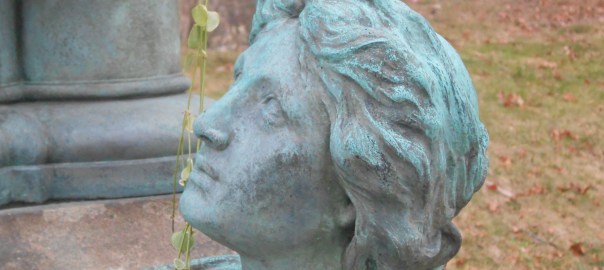
I particularly loved this sage woman’s pensive and imposing presence, her blue-green copper complementing the reds and greens of the trees behind her.

And that, my friends, is all she wrote.


Haunting by the Riverside

The second day of December is not yet winter, with traces of muted versions of the fall colors lingering, especially in the trees and grass of an old cemetery, almost forgotten.  On that date this year, Yang and I finally got to visit the Riverside Cemetery in Waterbury, Ct.  When passing by on the highway, we would always look down on the Victorian Gothic chapel and monuments to those lost in death, leaving us fascinated by its haunting, melancholy beauty.  Finally, we managed to make a trip there to explore.  We  were not disappointed.

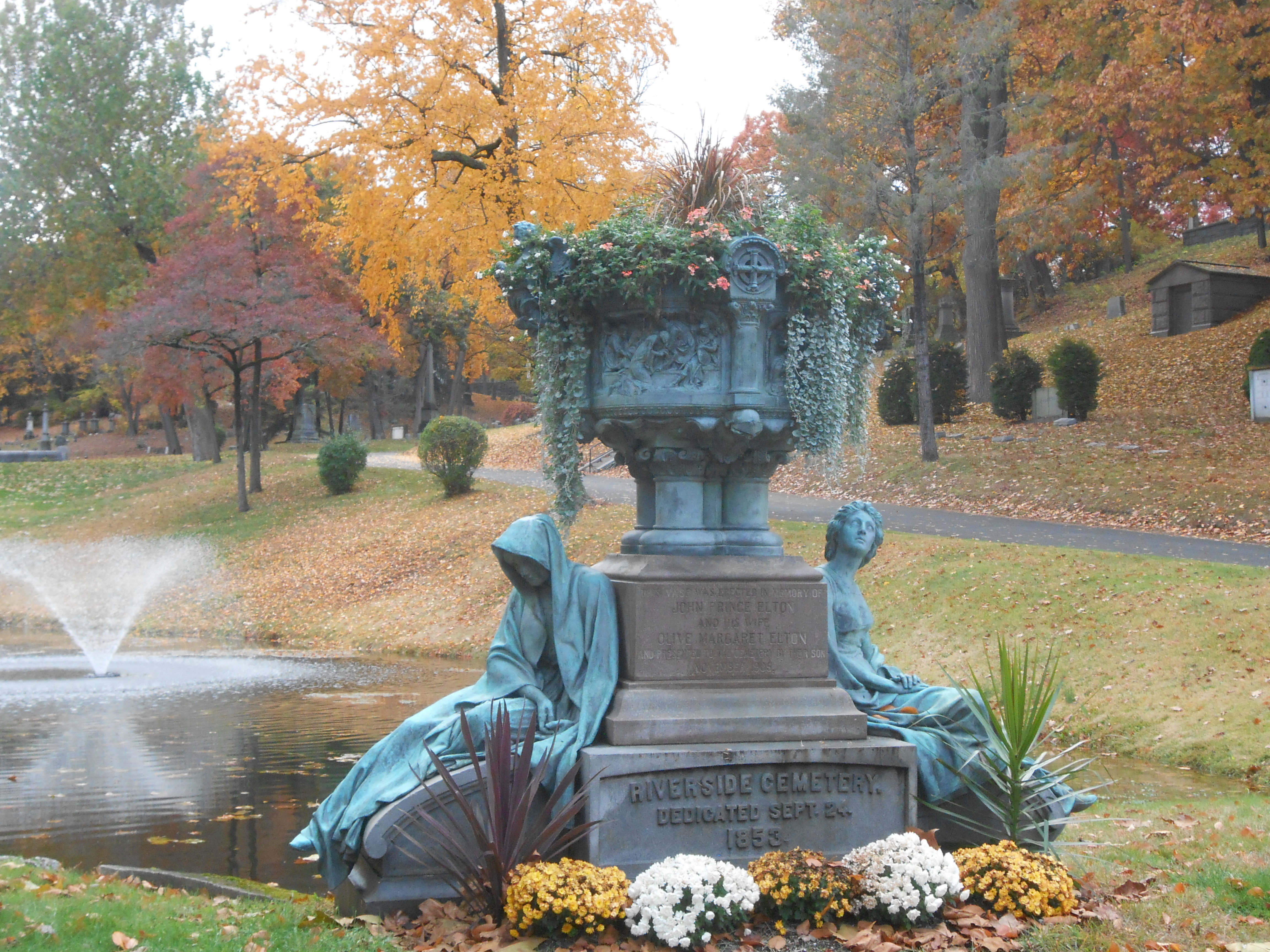
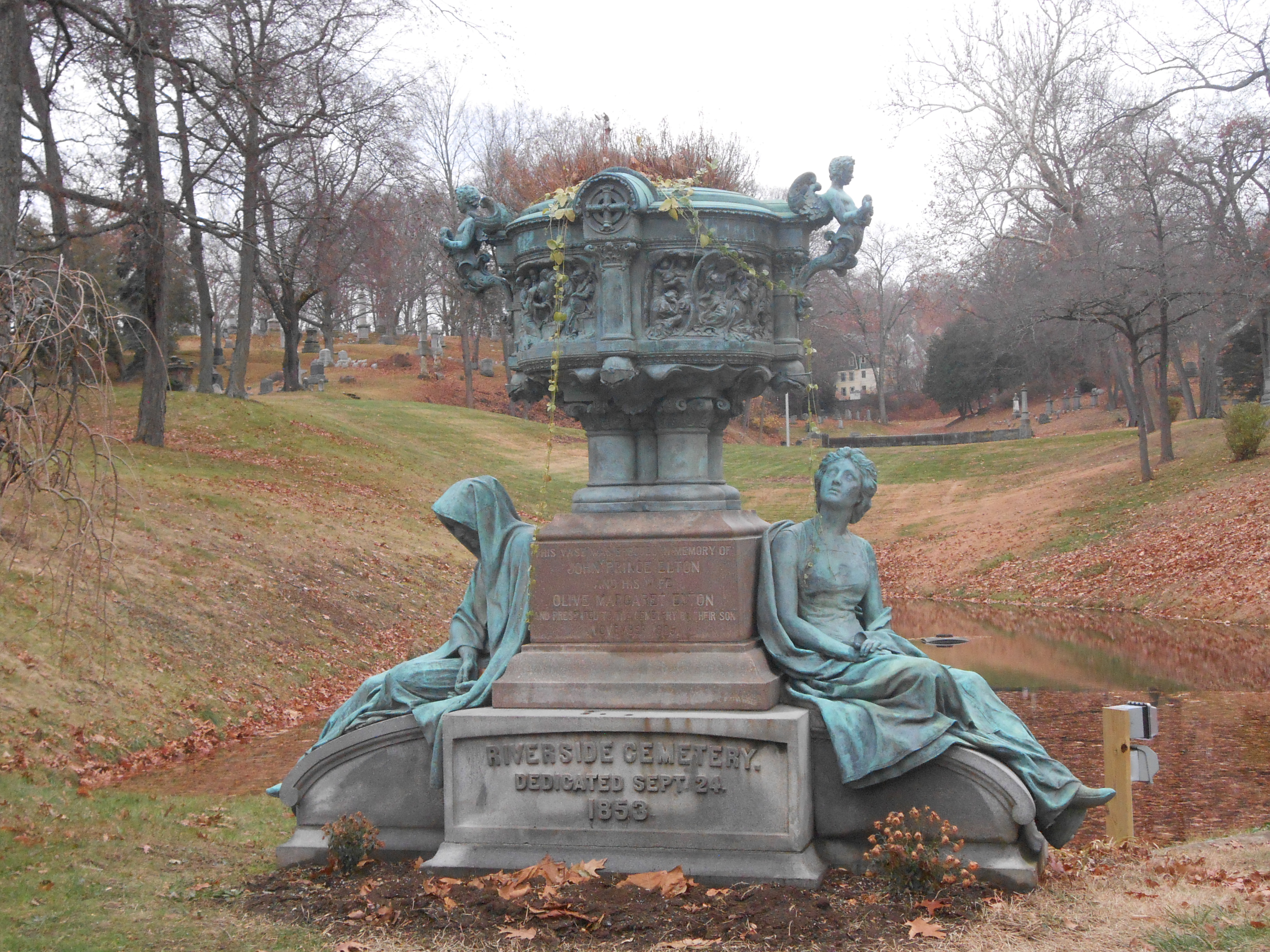
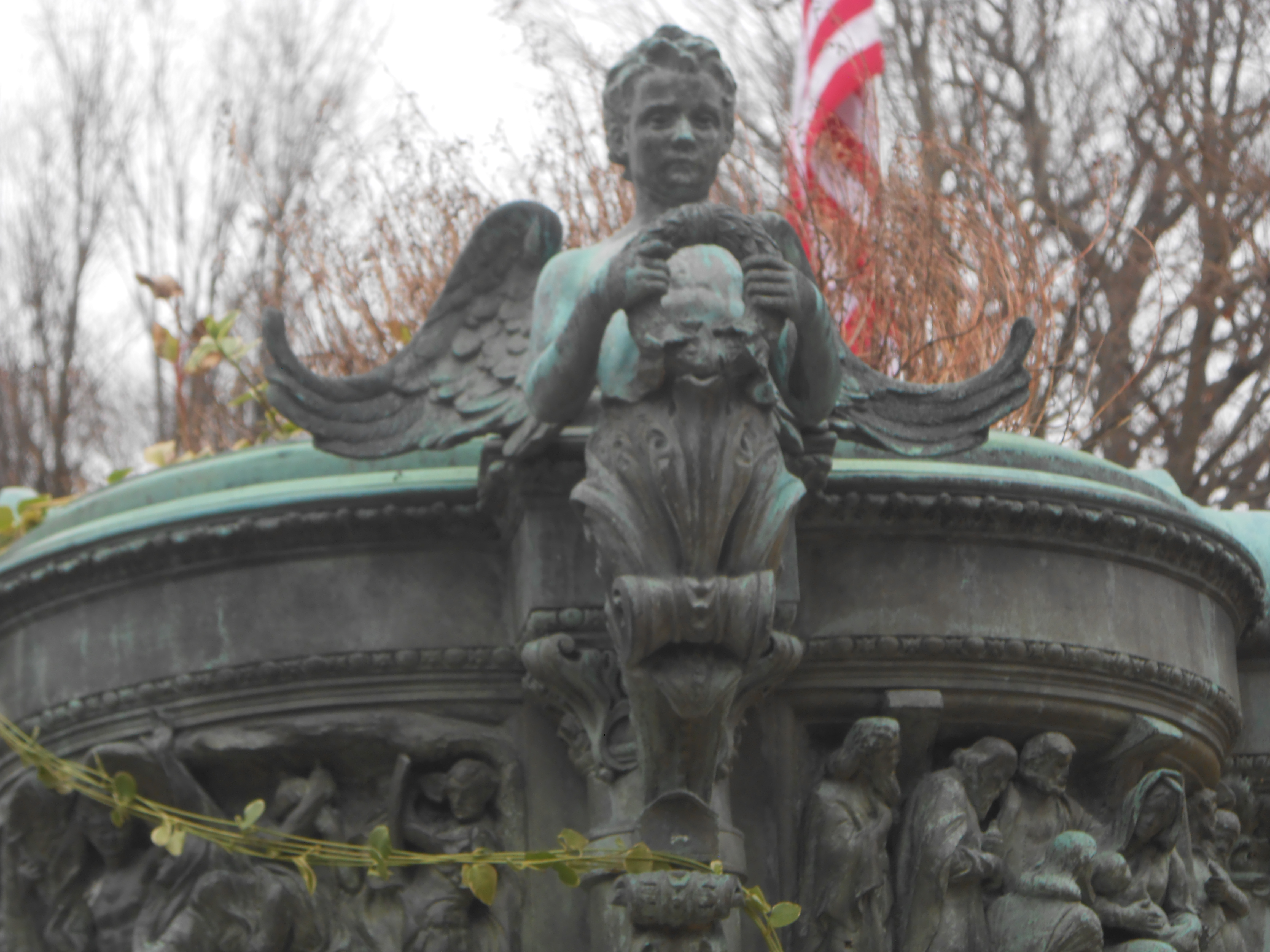
Of course, we stopped first in Seymore for tea at Tea with Tracey, where I enjoyed a delicious fig and cherry tea and Yang took pleasure in a nice green tea.  The array of tea sandwiches was yummy, and soon we were well fortified for our expedition into the past of Waterbury through its monuments to the passed. The day was appropriate, with grey skies and a nip in the air.  As you entered, you are greeted with an exquisite monument to the Elton family. The bronze has turned a soft green, but the female figures flanking either side of the memorial urn are beautifully articulated.  On one side is a shrouded figure of grief at death and on the other a hopeful one looking upward serenely.  The execution of the figures is graceful and feeling.  Interestingly, the handles of the urn are cherubs, somewhat menacing in demeanor. I think it’s kind of neat that the man’s name is John Elton. Reverse the order and you have . . .
You can find the actual grave of the Elton family deeper into the cemetery. Clearly this was one of the leading families of Waterbury in the 19th and early 20th centuries.  I heard that there was even a highly regarded Elton Hotel in the town quite some time back.  What has happened to them since?  I can’t tell you. Perhaps there are some Waterbury historians reading this blog who would like to take that one? I’d love to know!
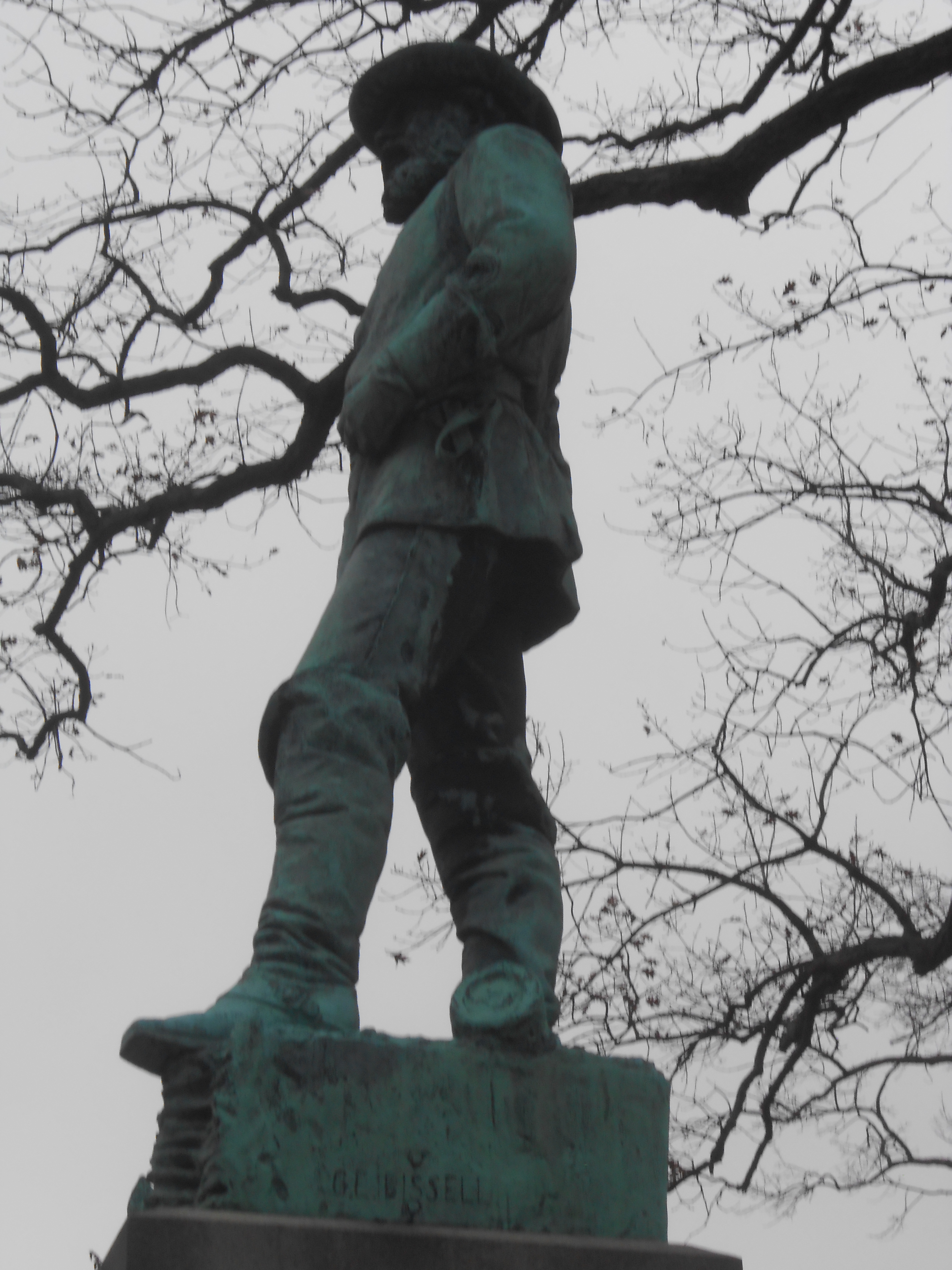
There were several others who were clearly prominent in the town, indicated by the plaques on their graves or the imposing nature of their monuments.  One interesting sort was the Civil War veteran John Lyman Chatfield.  This plaque tells the story of his wounding on the battlefield and subsequent death back in Waterbury.  The bronze statue of him in uniform further attests to his history as a Civil Warrior.  The Chatfield family must have been one with tremendous clout in the city to be able to leave such an imposing monument.  Any local historians want to fill us in on more about him?


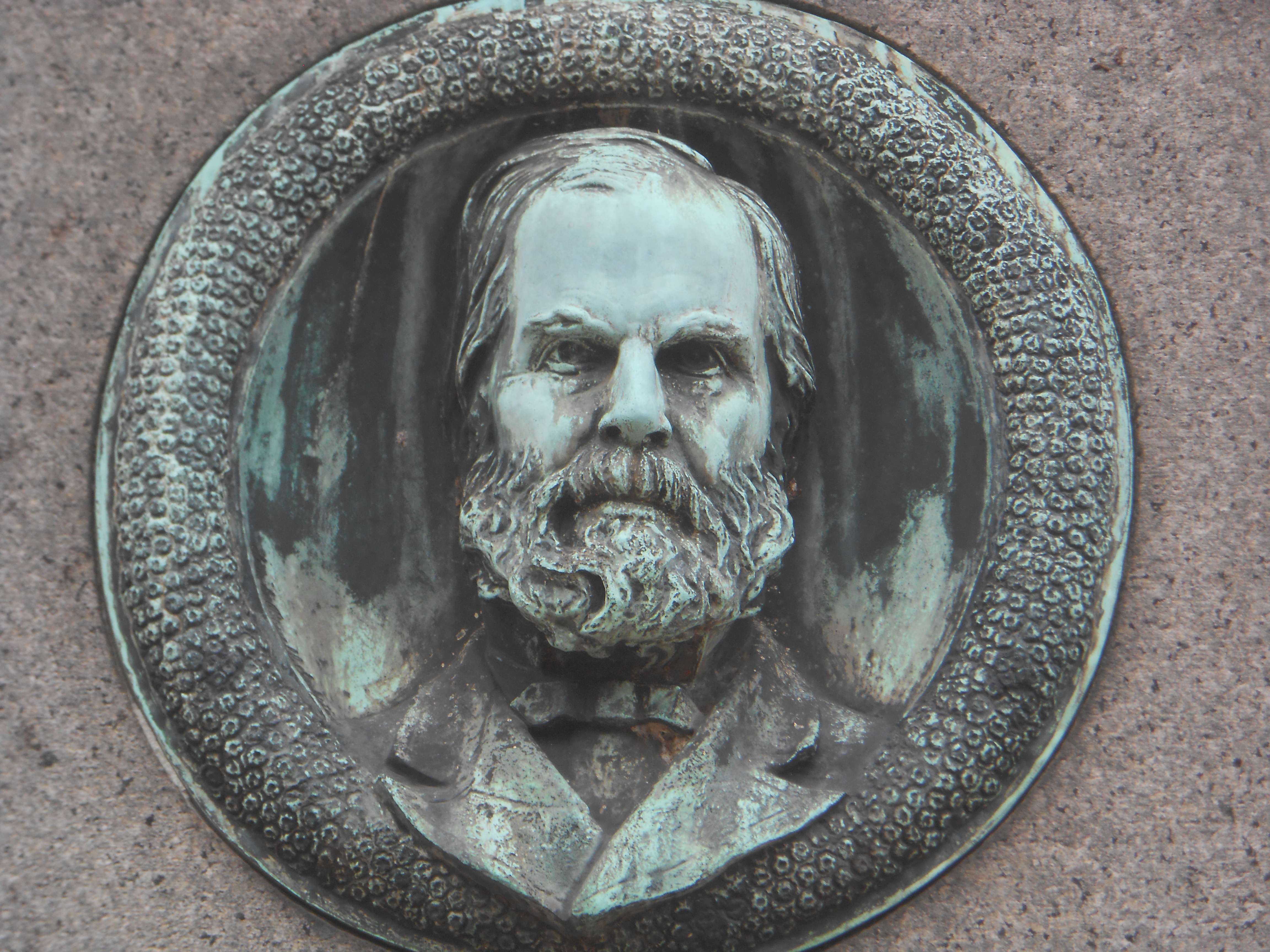
The Spencer family also must have been amongst the movers and shakers of 19th-century Waterbury.  Witness the tall monument with the carefully carved likeness in relief.  This guy must have worked awfully hard for his money and position because he does look rather cranky, don’t you think?
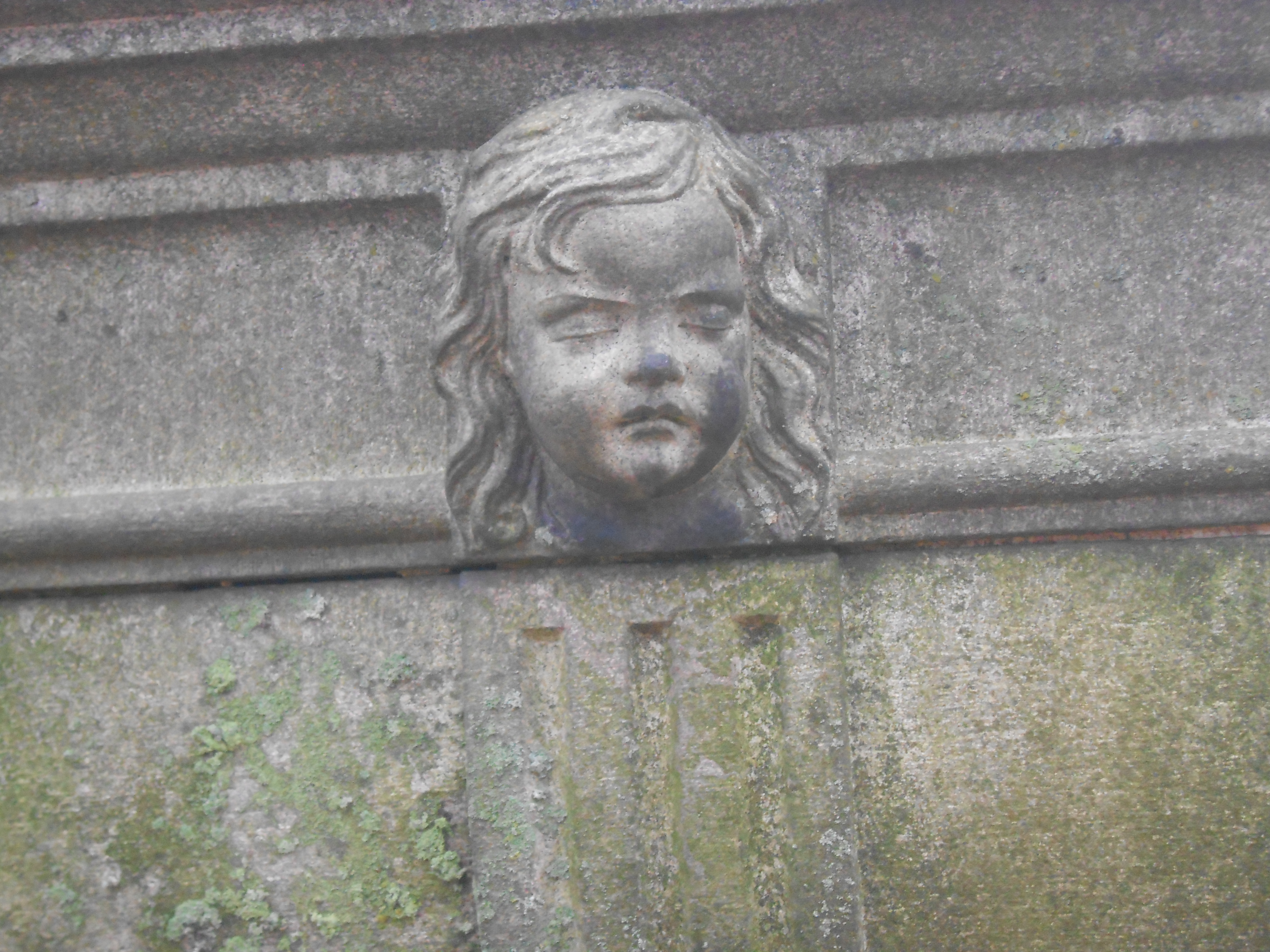
Here we have a doctor who must have had a great deal of success and done much good.  The description of his work helping children reveals his value to the population.  Perhaps that’s likely the reason for the sleeping children on the corners of the face of this elaborate tombstone.  They are a little creepy though, don’t you think?  I guess that’s why they’re so Victorian, the era of photographing your dead all dressed up to remember them by – if you were upper middle class.
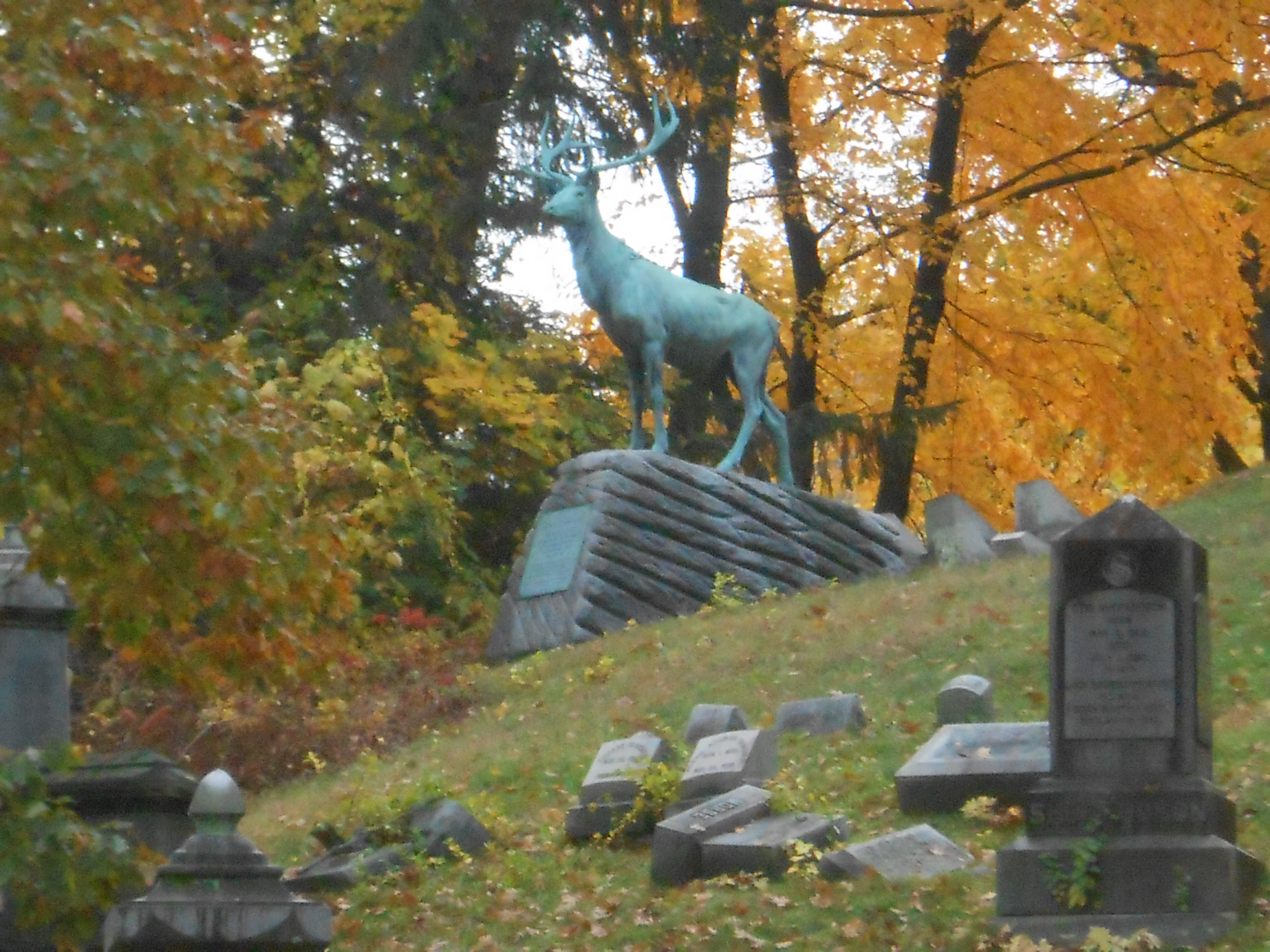
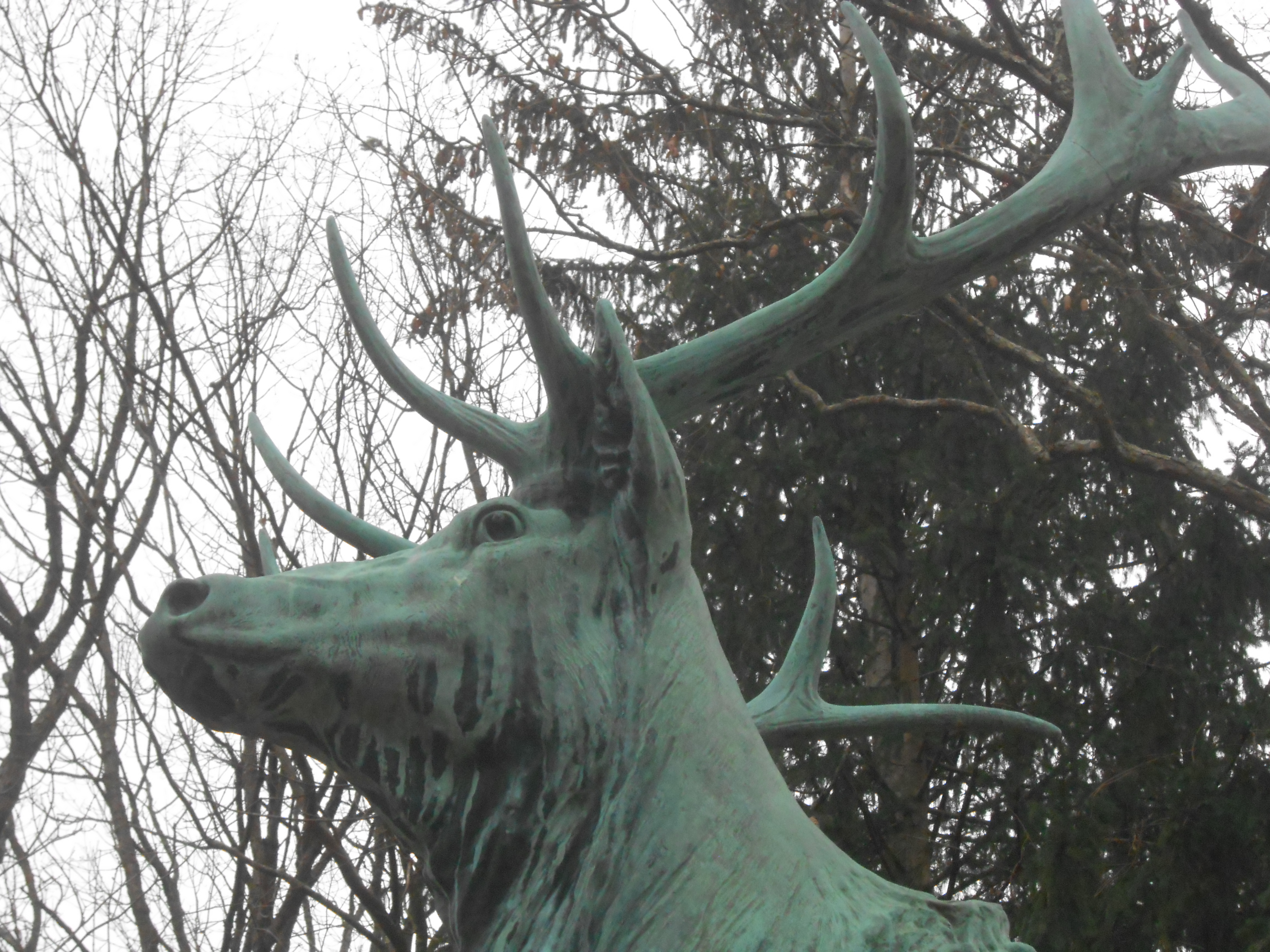
And of course the BPOE was a force to be reckoned with in those days as well.  If you were a high-antler and did a lot of good, then you’d certainly be properly memorialized, so check out this monument.  I don’t remember of the chap honored here, unfortunately, but I had to get several shots of this elk.  How does he compare with the elk in the Edson Cemetery of Lowell’s ?  Click here for an earlier blog to make a comparison.  The one in Lowell does have the advantage of being cleaned and returned to its original bronze glory.  Anyway, I can’t help providing you with several shots of this wonderful statue. It’s so cool how his base is shaped as a rock crag and is set on the hillside, so that he presides over the rolling slopes of the cemetery.


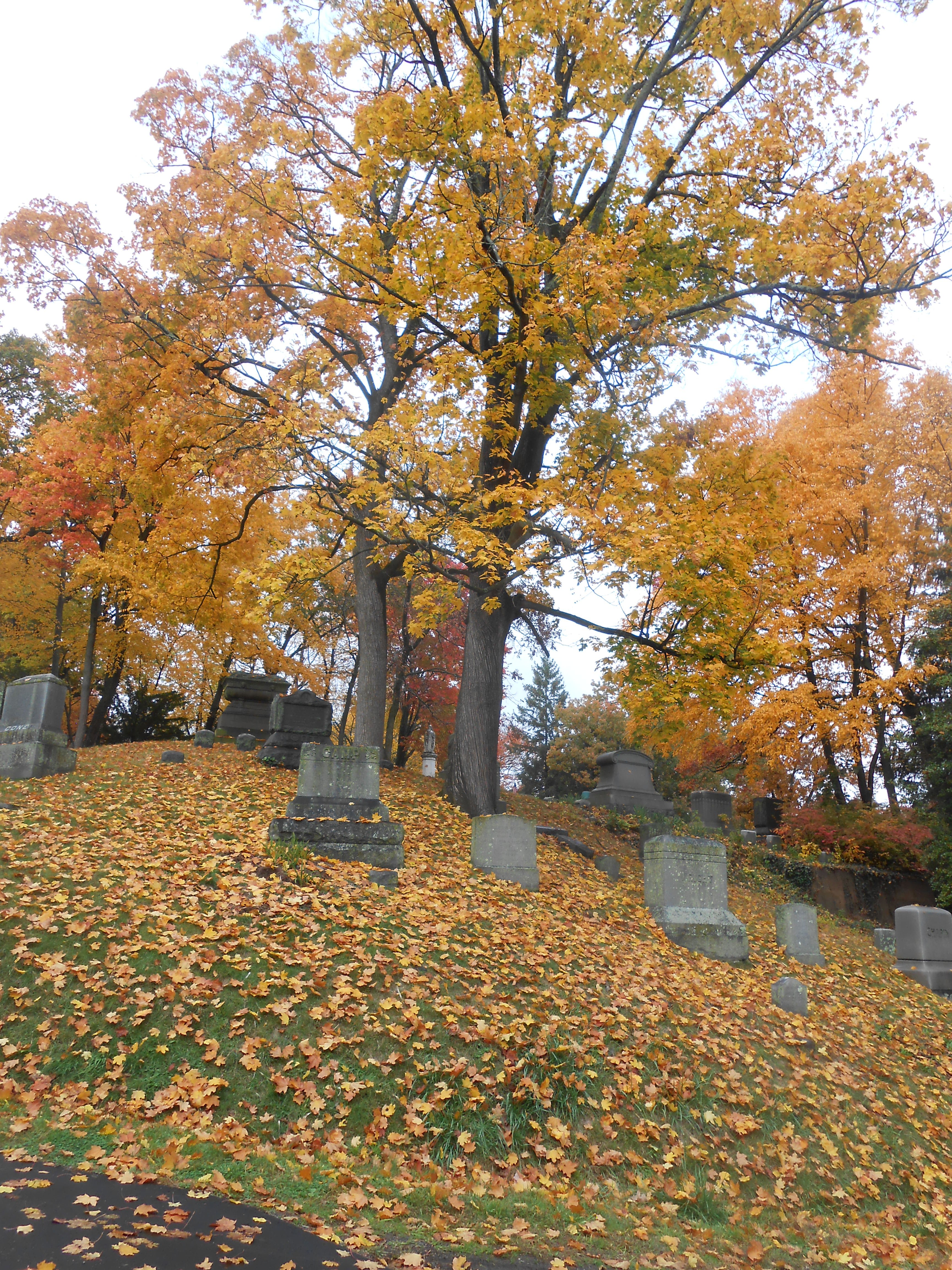
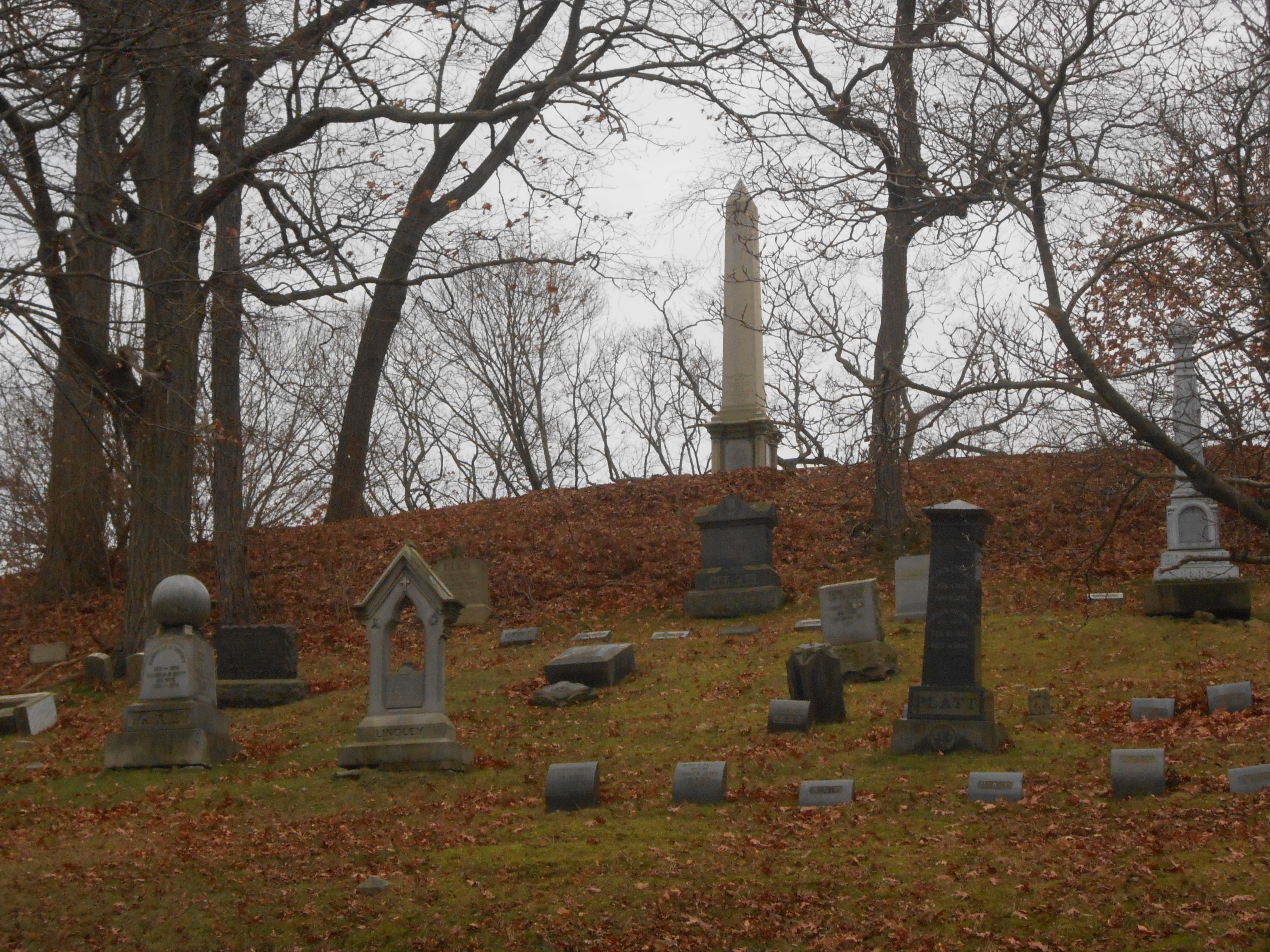
And roll those slopes do!  I think navigating that terrain is half the reason the injured ligaments in my knee haven’t healed yet! You notice that geography immediately on entering the cemetery, with mausoleums banking upwards to a bleak late autumn sky, almost as grey as their stone. I want to share images of the slopes of stone rolling  through the cemetery, topped with trees whose mostly denuded branches scratch across the grey sky, the grass rusty brown, and an occasional shrub or tree bearing the maroons or dark orange of late fall.  Definitely the perfect setting for a mystery or a tale of terror.  I just have to work this place into a novel, too!
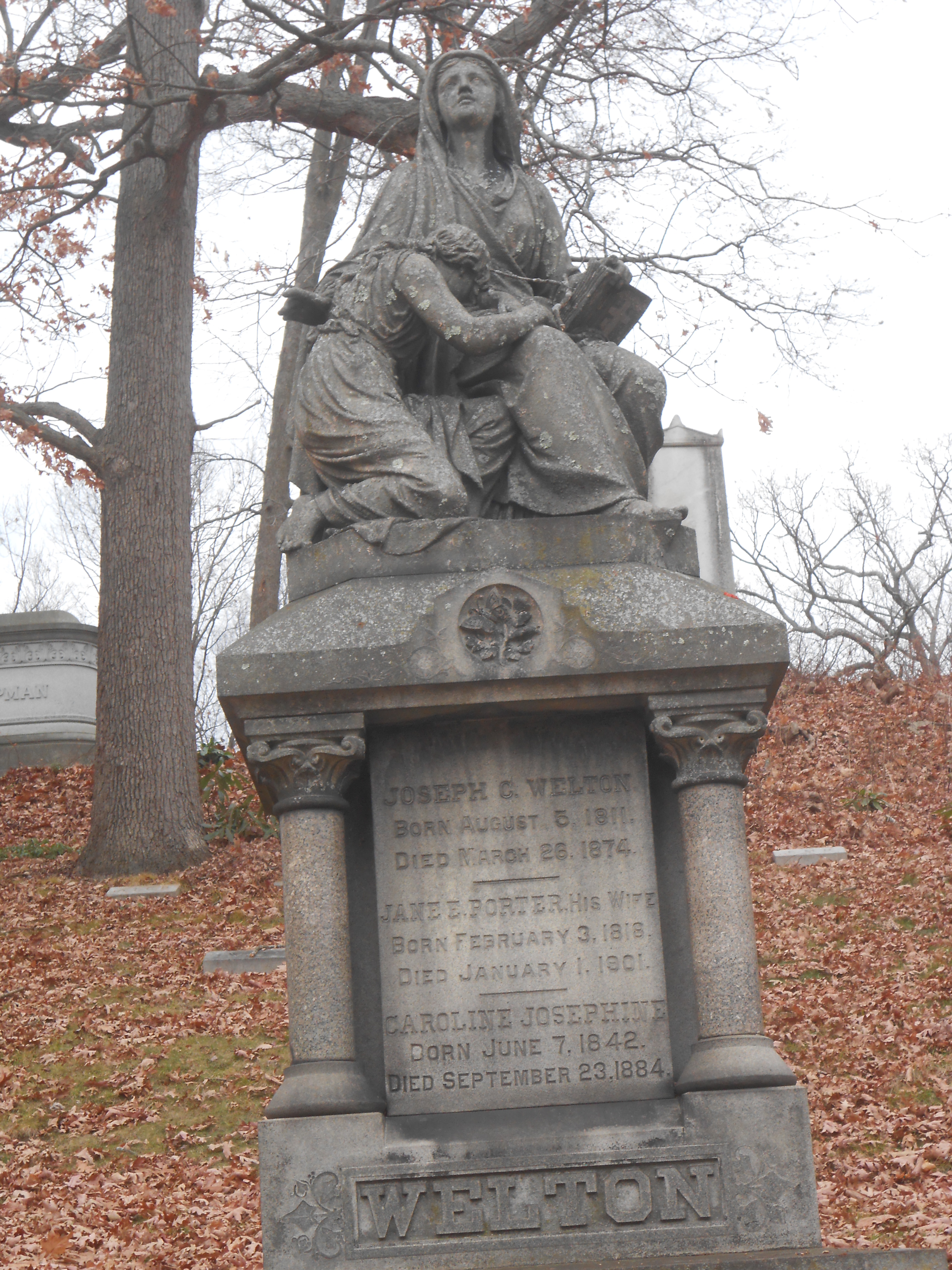
Of course the statuary revealed the entrancing work of inestimable craftsmen.  There were so many haunting statues of women.  For example, regard the deep feeling of this woman who guards the entrance to one family’s mausoleum.  Is this an actual likeness to a wife or mother of the N.J. Welton family who preserved that family’s secure home?  Was the truth of that family portrayed in this woman’s intense devotion, or are any conflicts whitewashed here for posterity?


This statue of woman and child from another branch of the Welton family seems to portray a sad loss.  Did mother and child pass when both were young or are they immortalized as eternally young in the next world?  The child seems afraid, burying herself in the comforting lap of her mother, who has one arm  around her but raises her hand hopefully, while the other holds a book and looks into the beyond. Is she holding the Book of Life or the Bible?  Her steadfast stare and gentle but firm hold on her daughter  indicates her guidance of her family toward redemption.  This seems a statuary representation if the Victorian Angel in the House.


It’s hard to select which other statues to show you,  there are so many beautiful, poignant ones, so I’ll try to select the more unique. I was fascinated by the bronze cast of this woman, whose plaque celebrated her firm virtues.  The photo doesn’t quite convey how massive the bronze form is. Her hair style, dress, and sandalled feet portray her as a Roman matron.  so, clearly, she was a powerful force in her family, devoted to her duties there and preserving them.  Again, the book she holds indicates learning and wisdom, though perhaps only in religion if it’s a Bible.  More knowledge of the family and this woman might indicate she was actually learned in areas outside the woman’s domestic sphere.  Anyone know something of her?
This statue was particularly intriguing, for the base was not a smooth column, but in the shape of a cairn, with the information of the family’s deceased inscribed on the individual stones. I’m fascinated by the creativity of the masons who contributed to the Riverside Cemetery.  Their statuary is amongst the most unique I’ve encountered in my explorations of cemeteries.


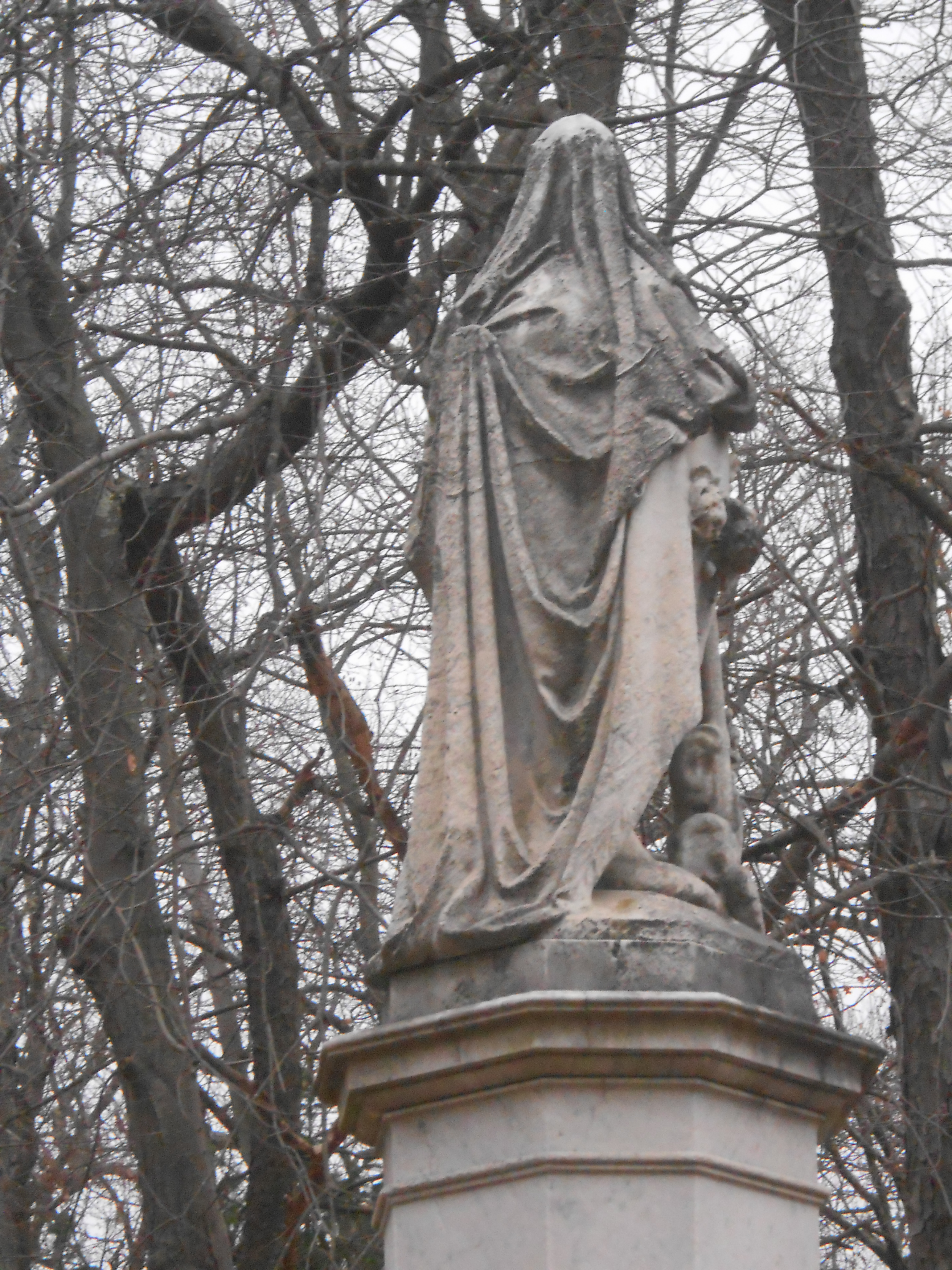
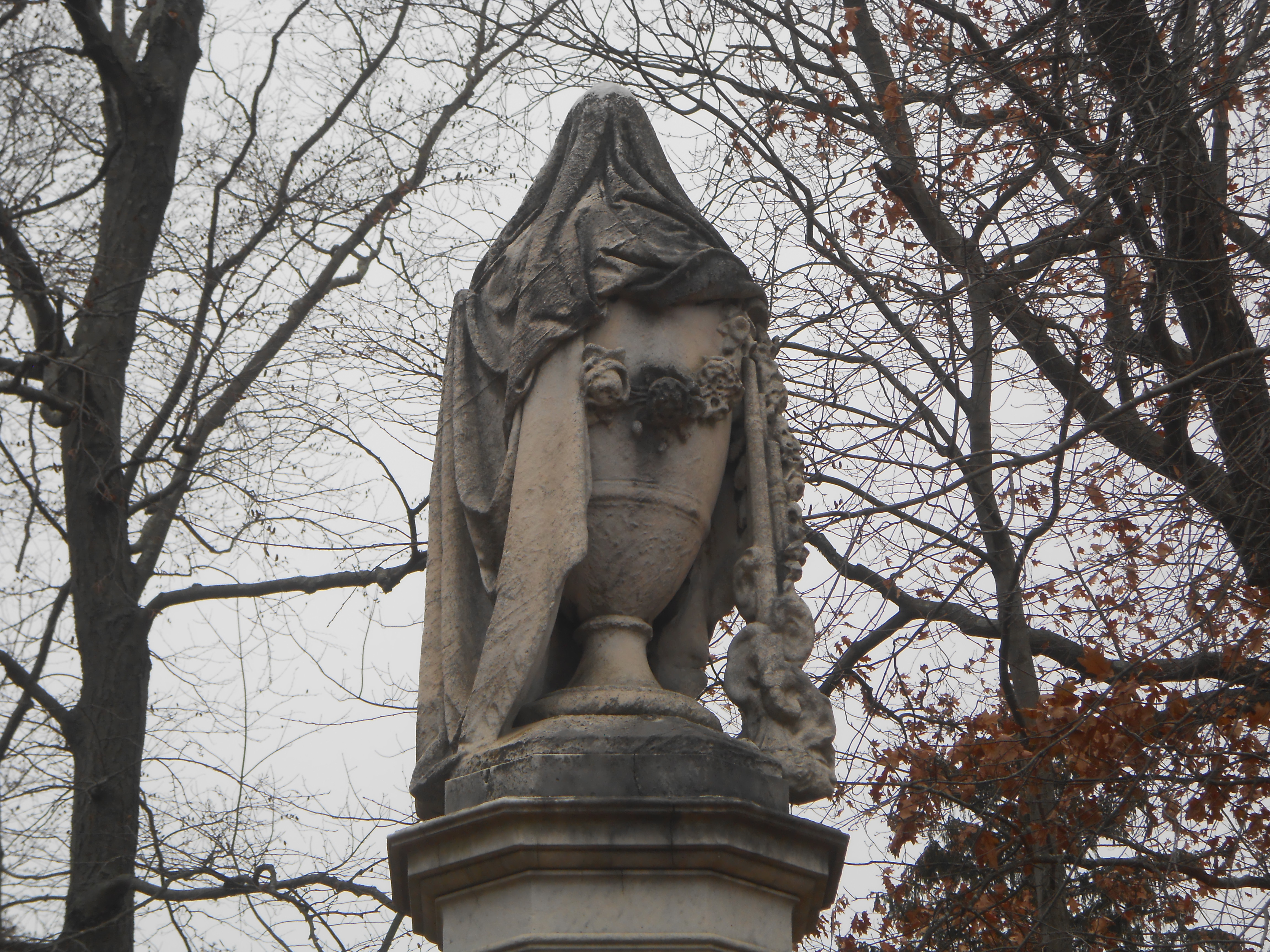
Now this statuary tremendously intrigued me.  Coming upon it from behind, both Yang and I thought it was a spectral figure in a shroud, a figure implying the mystery of the world beyond this. However, as we came around the front of the monument, we realized that what you saw from the front was a partially  draped urn.  This leads me to wonder if the artist intentionally played with our perceptions, implying the ineffablity of pinning down or defining death.  Was he, perhaps, implying our thoughts of ghosts and spirits turn out to be nothing more than dust in a dead stone urn?  Or was he implying that perception of death as final dissolution into dust and cold stone was a superficial view that we have to look behind or beyond to accept the mystery of the world beyond? Maybe I just think to much?  I was an English professor; it’s an occupational hazard.
 I’ll just wrap up with  an image that delights me in my most melancholy, Keatsian vein.


Forest Hills Cemetery: Touching or Eerie? Both?

Yang and I found a gorgeous old cemetery in Utica, NY when we went to the Joan and Constance Bennett film festival in Rome this past summer.  However, life has just been so busy with all the prep for Dark Horse‘s release, then it’s actual release, that I just didn’t have time to put together a pictorial blog on it.  Maybe that’s just as well, because aren’t we in just the right season for a sepulchral tour?
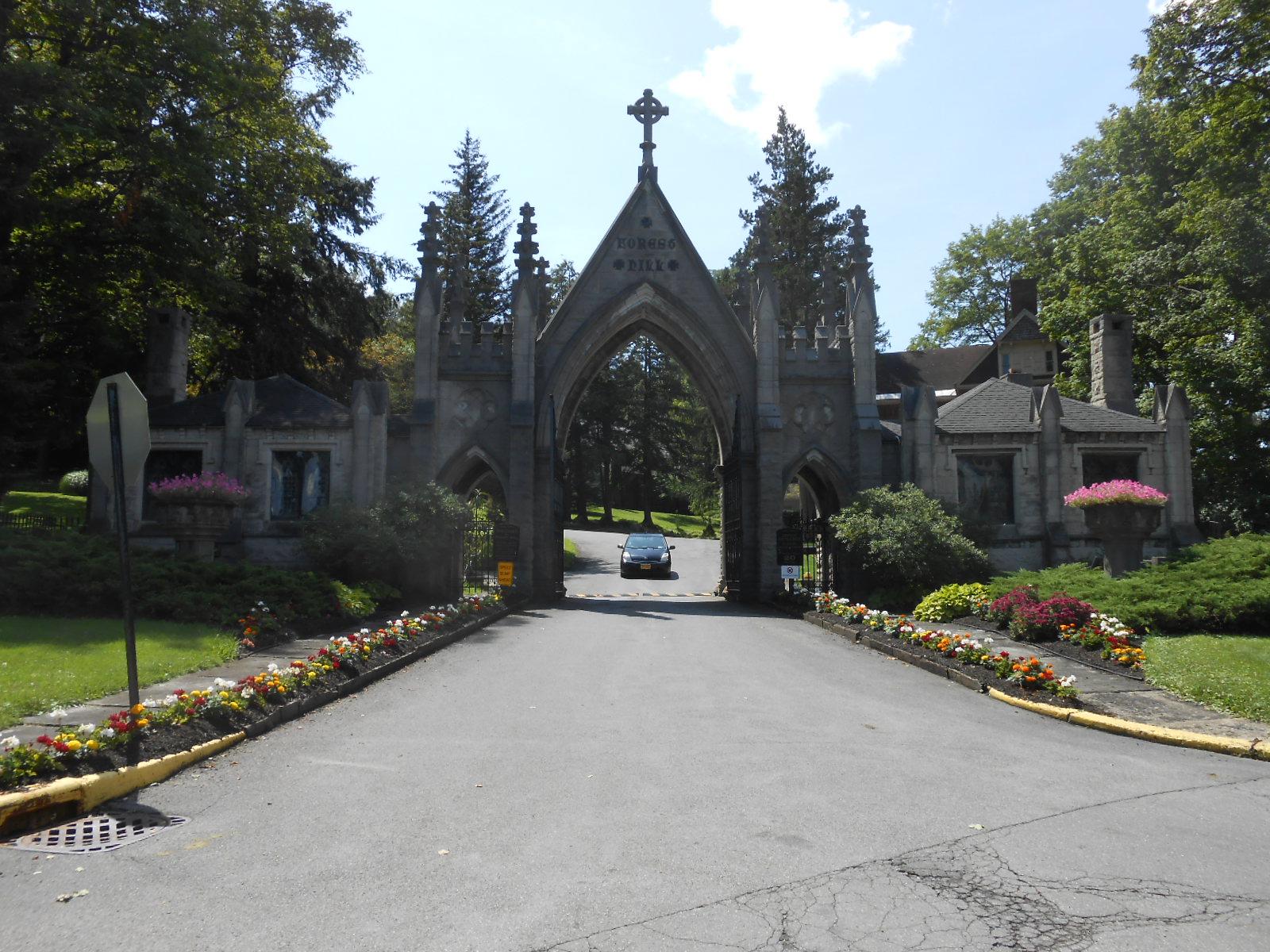
So, welcome to Forest Hill Cemetery.  You know this is going to be one neat burial ground when you enter through these wonderfully Gothic gates.  And the cemetery is definitely well-named, winding up above Utica on an extensive tree-shrouded, green hillside.  Maybe we don’t have flaming autumn colors; however, the misty green mossyness perfectly emanates a Keatsian melancholy.
The statuary here was marvelously haunting:  women, angels, urns, unique mausoleums, and one guy backed by a tree that seemed like something out of a Lovecraft piece.  Let’s start with the angels.  The first one that I noted, just getting out of my car (me not the angel), was a uniquely colored creature.   It wasn’t as large as many or the others and the tip of one wing was chipped.  Yet it’s lines were straight and powerful, grace and strength in a soft glow of gold.
Yet, there were other more traditionally imposing figures.  This angel rose above a long bench that curved like his wings.  It’s an imposing figure that makes you uneasily recall the Dr. Who injunction, “Don’t blink!  On the other hand, this  angel below sits peacefully atop the Ives family monument exuding comfort and repose.  If it came to life, it would offer gentleness and compassion.  The day’s sky, still a tad cloudy, softens the gleaming white of its stone.


This family must, indeed, have had clout!  Not only do they have a fancy sepulchre, but they have two angels guarding the way to their entombed remains.  Facing us, you can see that one angel holds a book, while, in the case of the one with its back to us, you can just make out its trumpet.  Clearly that divine guy is ready to blow the horn to announce Judgment Day – or it’s Harry James.


Speaking of sepulchres, there are some really neat fancy ones here.  This one makes me think of a stone beehive.  It also has a medieval look. The stones fit together like the blocks of a castle.  There are spires and arches like in a Gothic cathedral.  Even fleur de lis are carved on joining stones on the sides and back. Note the brass door gone green. The graceful furl of draping ribbons carved on the doors evokes the unfurling of a gentle melancholy sigh, doesn’t it?  Here’s a closeup so you can better perceive the detail.  Notice how flowers trail from the end of the ribbons.  A symbol of life’s fragility like a flower or of life’s renewal of flowers from seeds shed by flowers past/passed?


This mausoleum is more in the art deco vein.  It’s shape is square-angled with blocks sharply cut.  The woman on its metal door, though Grecian garbed, has the stylized posture of art deco figures.  Pressing herself to a door carved with a gate of flowered shapes holding her out, her stance and expression are quietly yet powerfully sad.  Is she reaching for the lost departed or is she a departed soul reaching back for life?
The statues of women representing faith, loss, families also abound here in some beautiful forms. I loved the view of this weather-stained woman peering down the hillside, through waving grass and dark green trees into the world beyond her, outside the grave.  In a closer view from the front, you can see she supports stalks of harvested grain.  The soul harvested from this earth?  Or her life’s harvest of experience, carried into the next realm?


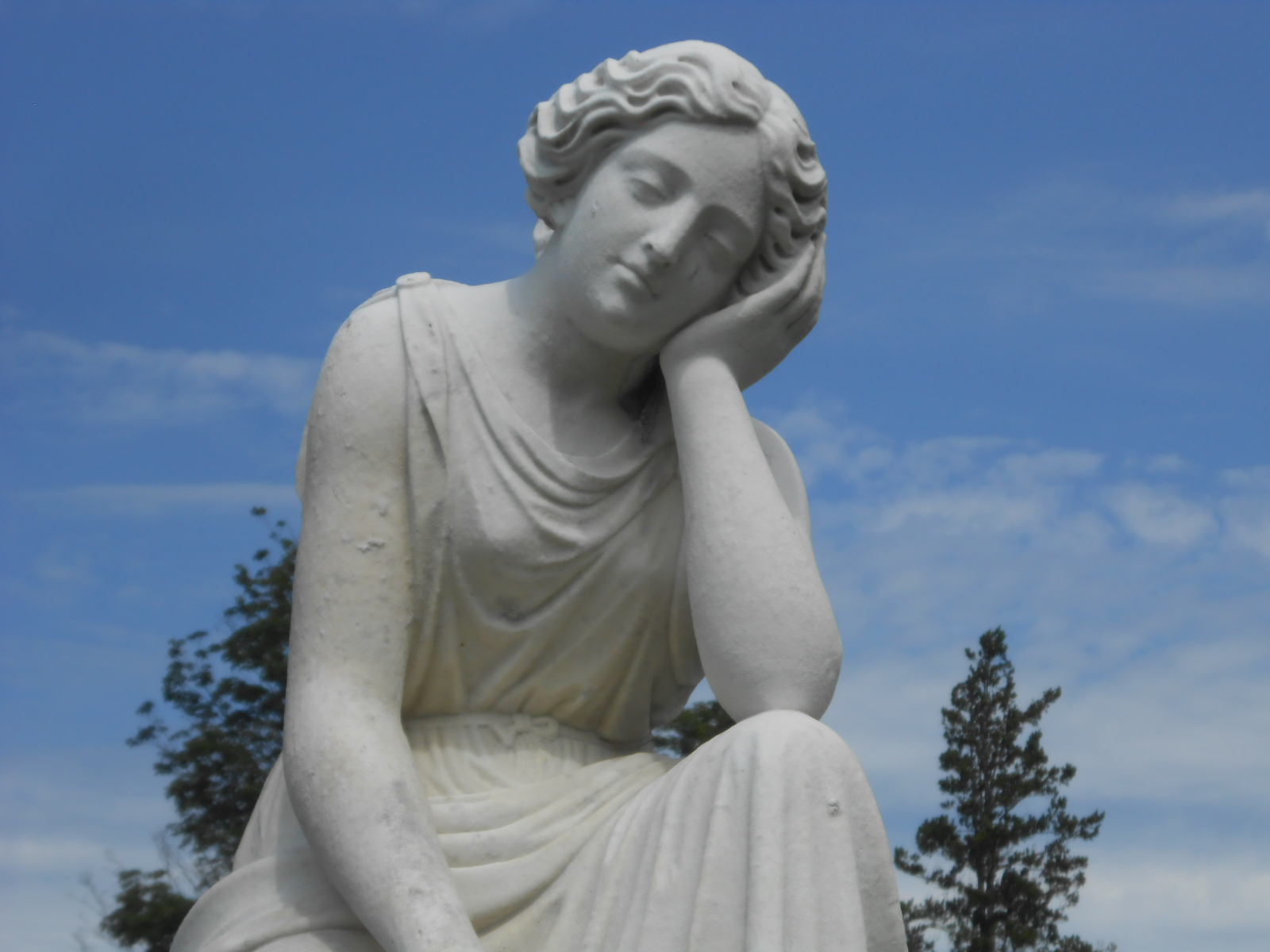
Here sits a pensive female, pure white against the greenery.  Though she marks the reality of death,  there is peace in her expression. Does she represent the soul’s passing into a realm beyond suffering to a place of calm contemplation or the quiet remembrance that those left behind have of loved ones   now  beyond the veil? I love capturing a close up of her features against the vivid blue streaked with the  gauzy whiteness of clouds.
This woman is celebrated as a dignified Roman matron.


Here an angelic figure points an attentive Victorian mother and plump toddler heavenward.  There are no wings on the rising figure, but there are definitely suggestions of her angelic nature. Interestingly, her trumpet points downward.  A reference to the family in the world of the living below? The sculpture beautifully creates the illusion of the female figure rising through the sweep of her garments. I can’t help thinking that perhaps this monument commemorates the loss of a young wife and a child.  Is the rising figure a younger daughter who had angelic qualities?
Then there is this far from traditional carving of gleaming white marble.  The figure does not seem  carved so much as  transforming  stone into a vibrant, pure flame  consuming a body  into a higher, ethereal form.  Is her expression joyous, pained, both – combining the two in the ineffable constitution of the sublime.


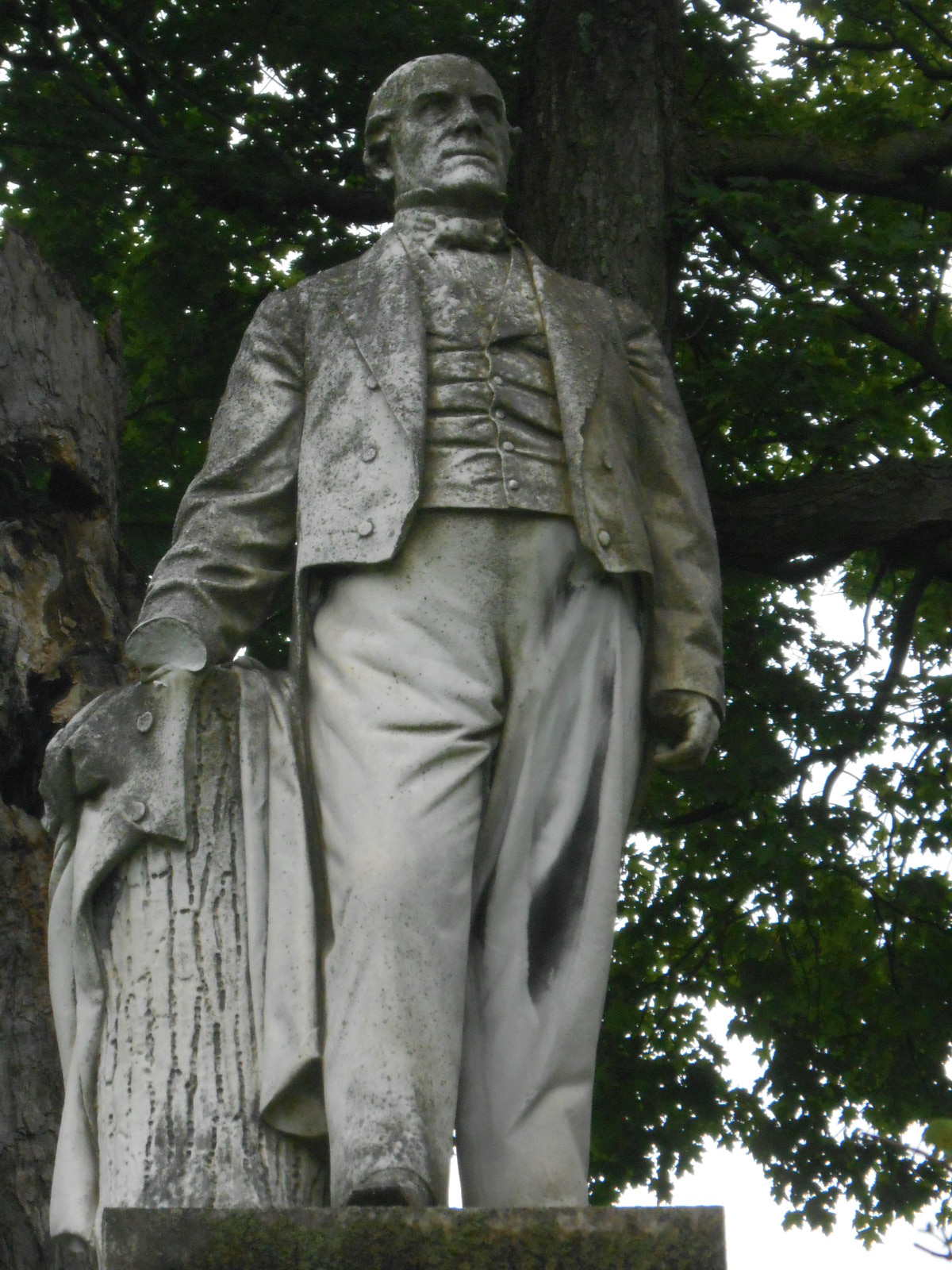
Of course, we can’t forget about the gents, either.  This chap must have been something, taking up the center of an enormous monument that surrounds him as if part of a capitol building or cathedral.  Gothic arches and fancy urns denote his prominent family standing. You can see me standing there in front providing scale. The book he holds in his hand and his far away look seem to mark him as a scholar of some sort, or at the very least, a man of great learning.
I’m not sure who this guy was, but he certainly must have been important to get such a fancy statue of himself.  He must have been wealthy, too, to be so well fed.  Reminds me of Sidney Greenstreet.  What do you think? Something else that’s neat is that if you look carefully behind him, you can see a tree that almost seems to have a cyclops eye; a long, bowed nose-trunk; and menacing upraised arms.  The image didn’t photograph as well as it should have, but it’s still very Lovecraftian. Below is a picture of just that just shows that eldritch, daemonic tree, appearing to stride forth on an unspeakable quest of relentless destruction.  And here’s a link to a list of Lovecraft’s favorite adjectives.


I’ve got to say that this tree also  looks as if it’s up to no good, eldritch or otherwise.  There’s a horror story in here somewhere.

There are still more wonderful monuments of unique shapes and beautiful scenes of a sea of stones, but I’ve just no more space.  Perhaps, I can do a second edition on this cemetery.  We’ll see.  October is a busy month.  Hmm, what’s that I hear tapping at my window pane?  I hope it’s nothing cyclopean or eldritch.
Say “so long” to Forrest Hill as we drive out those wonderful Gothic Gates!

Capitolfest ’21: A Joan-O-Rama!

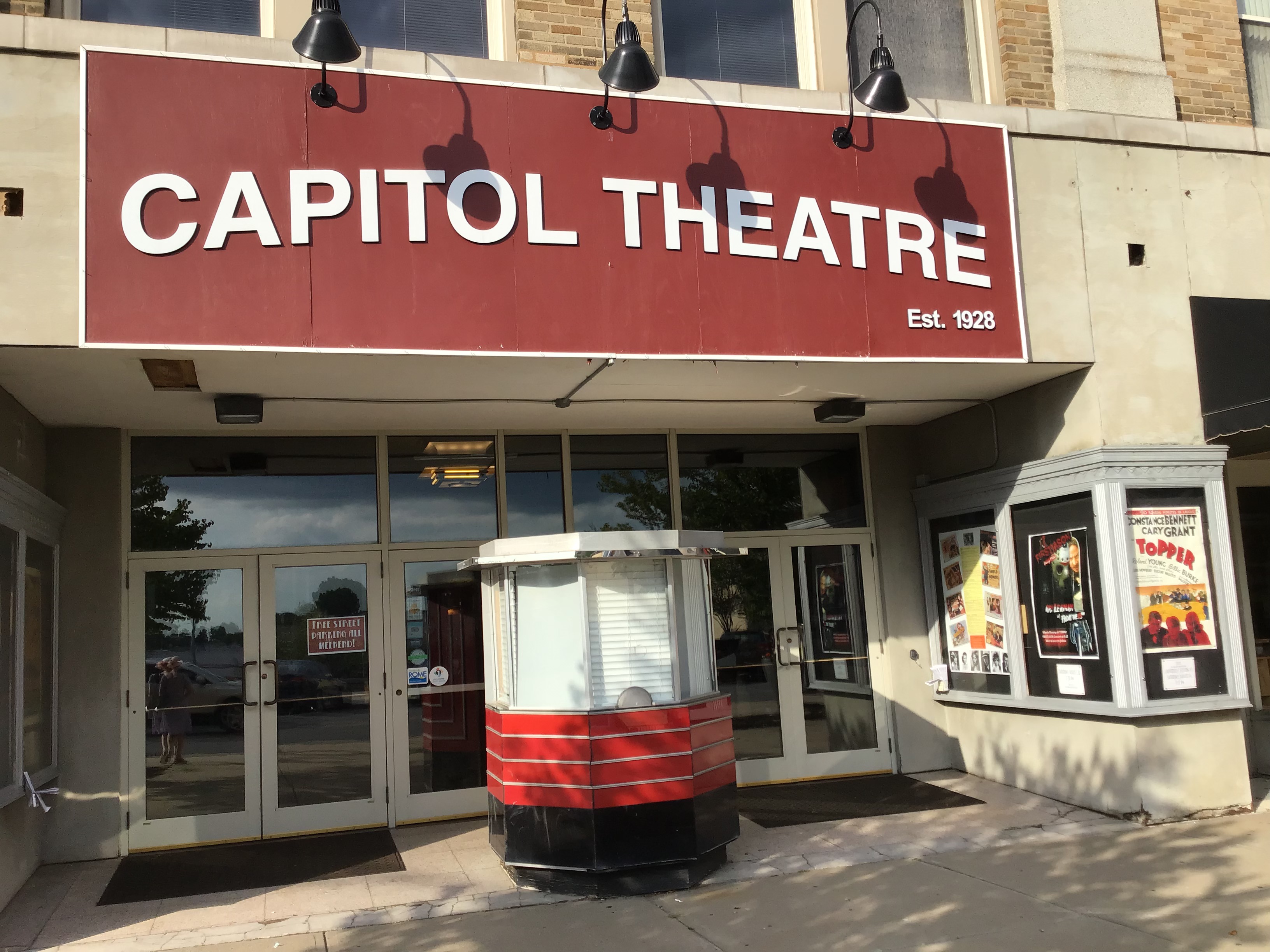
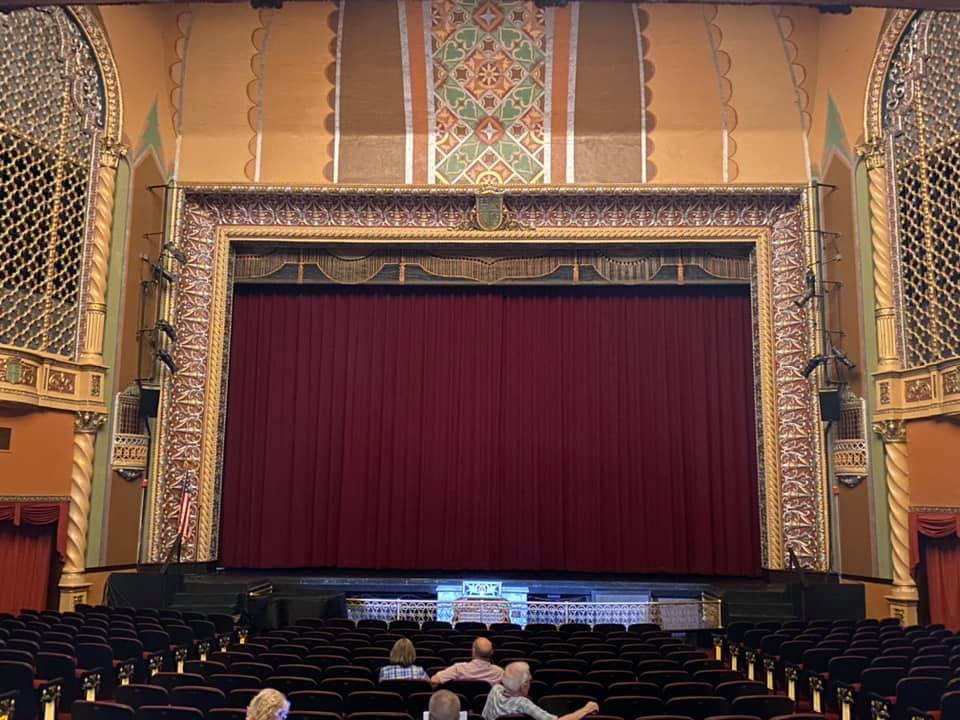
In our first overnight trip away, Yang and I traveled to the renovated Capitol Theatre in Rome, New York for Capitolfest.  This year’s subjects proved irresistible:  the fabulous Bennett sisters, Joan and Constance!  We were fortunate to see the theatre, designed by Leon H. Lempert and first opened in 1928, returned to much of its original art deco glory.  However, our trip was even more of a treat.  Not only did we get to see two Joan Bennett movies from early in her career that I’ve never seen, but we met up with wonderful friends from the Friends of Joan Bennett FB group:  Kayla Sturm and Eve and Edward Lemon!  It was a fun, heart-warming, and exciting experience.

First, let me tell you about the theatre – and share some images with you, too.  Many of these are courtesy of Eve and Kayla.  You can see that the original marquee is not the same, but the outside still has much of the original feel.  Further, once you enter the lobby, you see wonderful polished wood doors and art deco detailing on the walls and ceiling.

The inside is spacious, seating over 1000 people, with plenty of room on the ground floor and in the balcony.  The latter place is where we Bennettphiles sat.  You can see that the screen is huge, just like in the old days that some of us are life-experienced enough to remember.  Other Lowellians, remember the Strand Theatre, with that ginormous chandelier that none of us wanted to sit under – just in case? There’s me in the lower right corner, wearing my hat and my mask.
Note the organ just below and in front of the stage.  The theatre was built in 1928, so silents still would have played there in the infantine era of sound.  Also, people would love to hear pre-show concerts on that organ – before you got to the raffles, the cartoons, the newsreel, the Lower half of the double bill, then the feature.  Here’s a closeup of the organ.  We had a little concert, ourselves, before the start of Weekends Only.  (Note:  both these shots are courtesy of Kayla Sturm.)
Kayla also took a nifty shot of the gorgeous ceiling decor.
She also photographed one  of my favorite things to shoot:  heads in relief.  I wonder who these guys are? To me, they look like Eisenhower, Marx, and Peter Lorre; but I’m probably wrong.
How about this shot by Kayla of the gorgeous arches?
Even the telephone booths were cool!
There were lots of early, pre-Production Code films by Joan and Constance – plus both Joan and Constance doing their bits against the Nazis in Manhunt and Madame Spy, respectively.  Come to think of it, Joan practically made a cottage industry out of taking down goosesteppers:  Manhunt, Confirm or Deny, The Man I Married, The Wife Takes a Flyer, and Margin for Error.  Who needs John Wayne?! (That’s Kayla’s photo of the Manhunt poster).
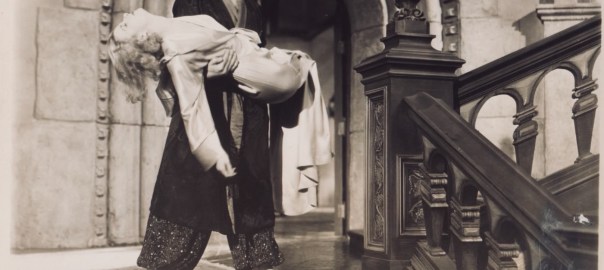
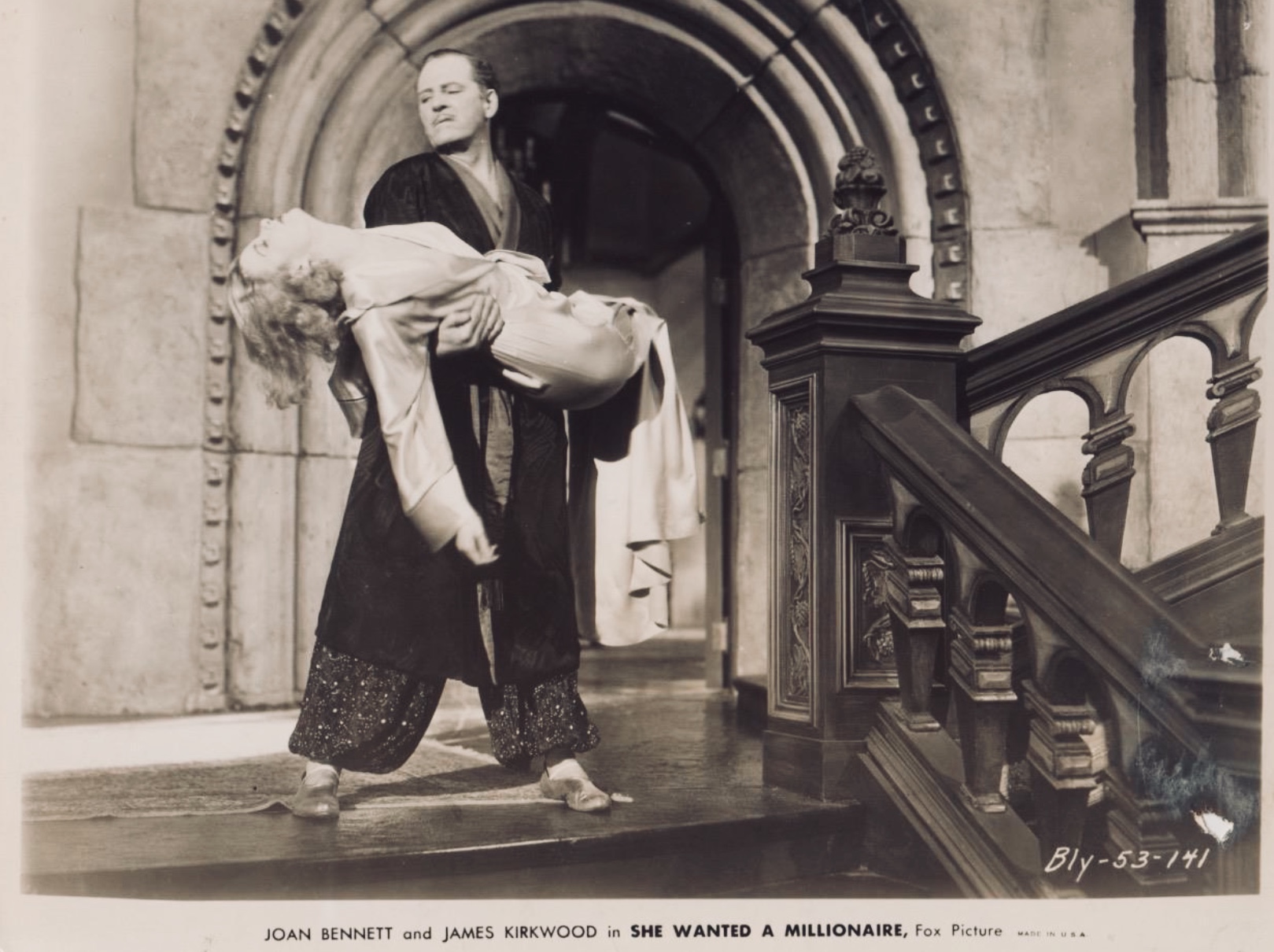
Anyway, Yang and I saw two films I’d never seen before:  She Wanted a Millionaire and Weekends OnlyHush Money had also been on the bill, but Disney forced the festival to pull it in a legal CYA move.  That’s the technical term my lawyer nephew gave me.  God bless UCLA for going to bat for the festival and still getting us these two films.  They were something else.  Millionaire is a humdinger, starting out as a romantic comedy and turning into a Gothic piece with a sadistic husband who lures a naif into marriage, using the typical secret passages, peep holes, and untrustworthy servants in his isolated, creepy mansion, but modernizing Otranto’s castle with high tech (for ’32) listening devices.  His manipulations, viciousness, and violence would give Manfred, Brother Ambrose, and Schedoni a run for their money.  Joan does get up the gumption to hang tough and give her tormentor what for; but, darn it all, they have her faint at a crucial moment.  They just had to go all Victorian, didn’t they? Victorian, with the exception of Margaret Hale in North and South, who has to get hit in the head with a rock to go down for the count.
Weekends Only was interesting and enjoyable.  Joan was a snappy, intelligent gal who grows up fast when her rich-girl paradise crashes and burns with the stock market in 1929.  She’s smart and independent, so she’s is no easy victim to sly seductions or aggressive assertions.  We also can tell that this is a pre-Production Code because it’s clear that when she and artist Ben Lyon fall in love and show that they genuinely care for each other there are a couple of fadeouts that indicate the two aren’t off for a round of pinochle.  Of course, misunderstandings do gum up the romantic works; however, things get resolved in a way that suggests their reconciliation is believable.  And the slick rich guy who wants Joan for his mistress bows out with humor.  The depictions of the loft apartments where Joan and Ben Lyons live hint at an almost pre-noir dreaminess.  Black and white is so evocative.  I do wonder what happened to the two portraits painted for the movie. (Thanks to Eve for the shot of the film’s opening on that delicious big screen!)
Anyway, our crew had a wonderful time.  We enjoyed films together.  Traded Joan gossip.  Got to know one another better.  Had a lovely dinner ensemble after the first movie on Friday afternoon on the outside terrace at the Delta Lake Inn – thanks to Eve’s planning!  Gosh, I had a great time.  I can’t wait for another Joan festival to bring us all back together!

Background on the origins of the Capitol Theatre:  Cinema Treasures  and Capitol Arts Complex Homepage.

Images from Weekends Only and She Wanted a Millionaire from IMDb

Thanks again to Kayla Sturm and Eve Lemon for letting me borrow their photos for this blog.