Previously, I blogged on the complexity and hard work behind developing Memories of You. Well, now that draft #2 of  Memories is marinating on my D drive, I’ve plunged into turning the outline for my fifth Jessica Minton mystery into an actual book. However, Dusty’s Christmas surprise has not flown easily from my pen, despite the detailed outline crammed into a stack of variously sized, lined pages, all written down at multiple points over the past two years. Memories is marinating on my D drive, I’ve plunged into turning the outline for my fifth Jessica Minton mystery into an actual book. However, Dusty’s Christmas surprise has not flown easily from my pen, despite the detailed outline crammed into a stack of variously sized, lined pages, all written down at multiple points over the past two years.
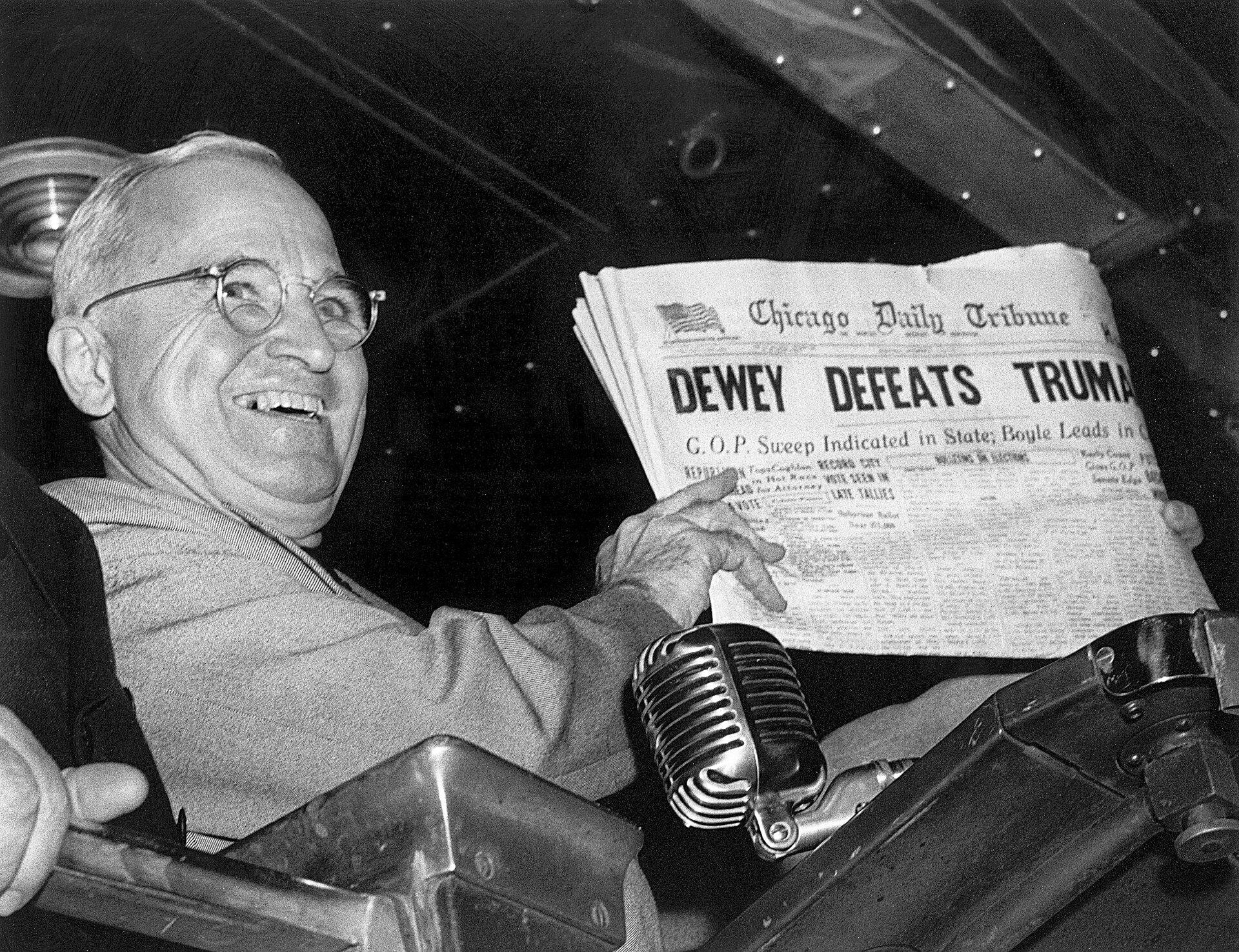
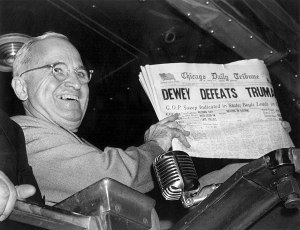 First, there was the background research for 1948, and not just December of the year when the story unfurls. My general research started with an interesting little tome called Live It Again 1948. Lots on politics, the economy, home life, and domestic and international events. Harry Truman’s hard-fought presidential victory, the Soviet Blockade and resultant Berlin Airlift, and Citation winning the Triple Crown were just a few important events. Did you First, there was the background research for 1948, and not just December of the year when the story unfurls. My general research started with an interesting little tome called Live It Again 1948. Lots on politics, the economy, home life, and domestic and international events. Harry Truman’s hard-fought presidential victory, the Soviet Blockade and resultant Berlin Airlift, and Citation winning the Triple Crown were just a few important events. Did you  know that Kitty Litter and Scrabble as we now know it both came on the market that same year? Dusty will certainly delight in the former. With Liz’s penchant for mangling the English language, I’m sure she’ll make some intriguing contributions to the latter. know that Kitty Litter and Scrabble as we now know it both came on the market that same year? Dusty will certainly delight in the former. With Liz’s penchant for mangling the English language, I’m sure she’ll make some intriguing contributions to the latter.
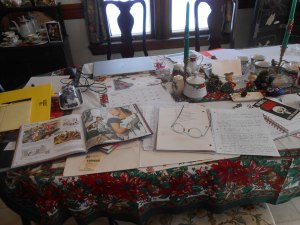
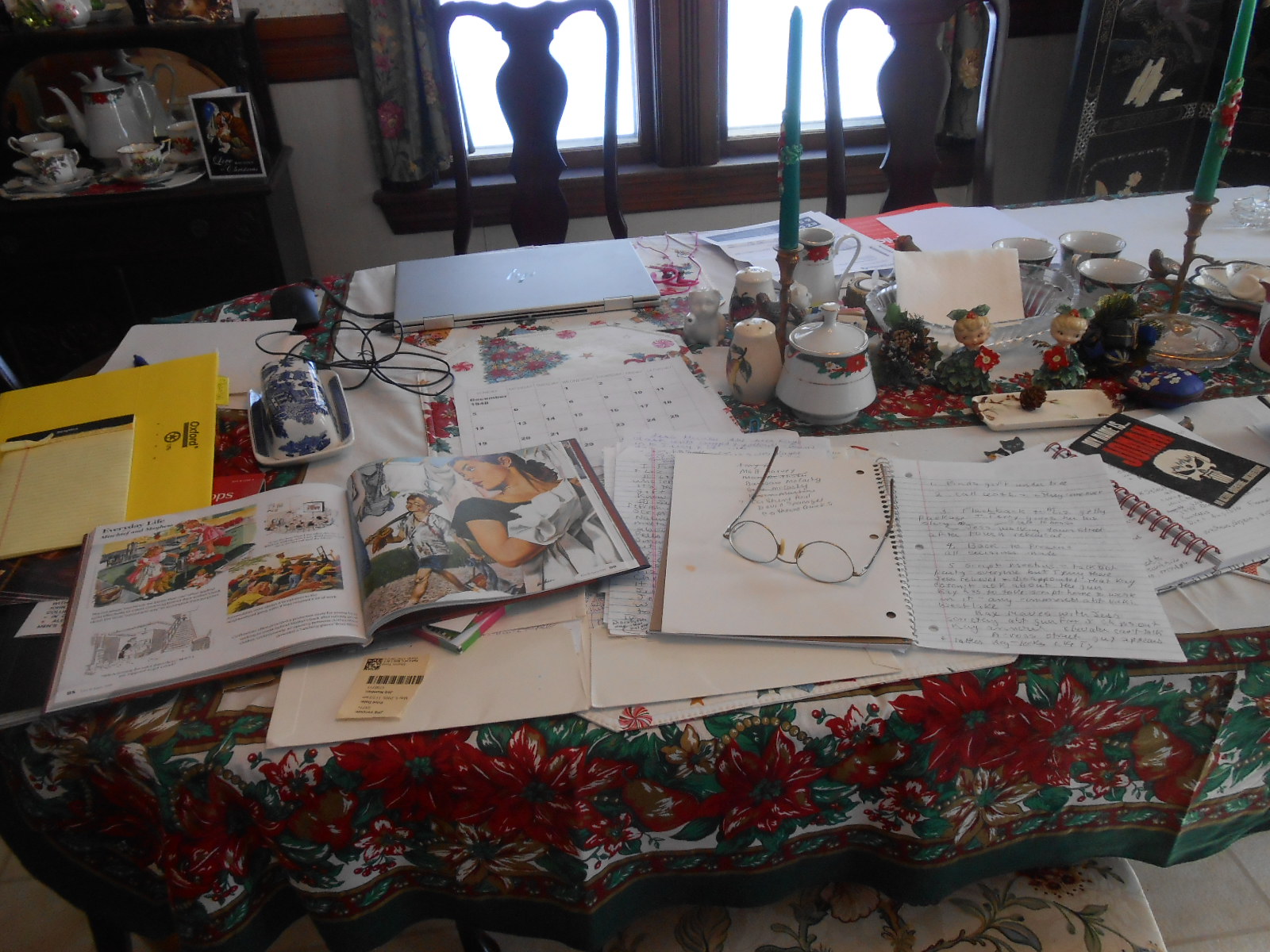
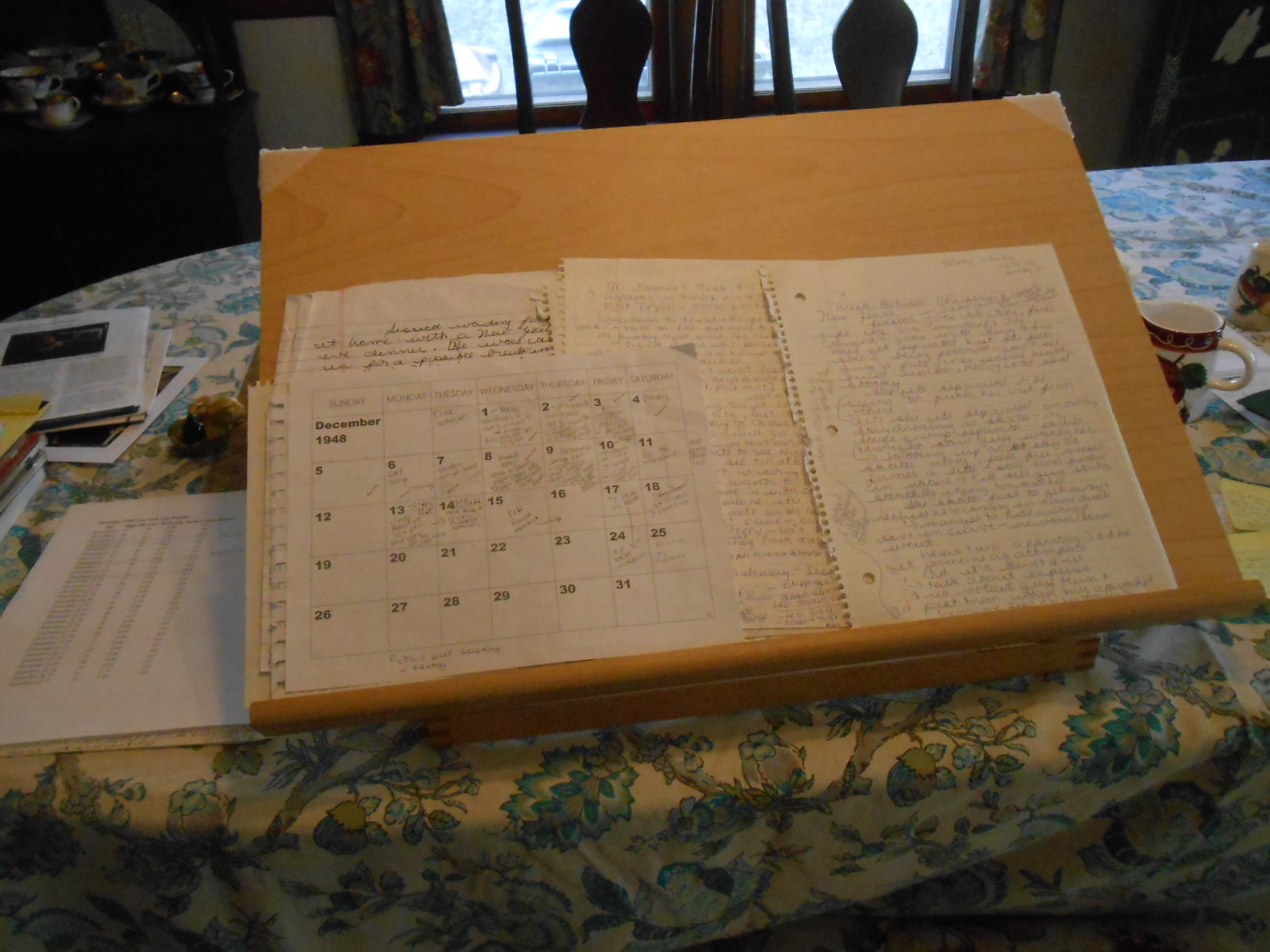
You can see the notes I’ve been taking from this book above. 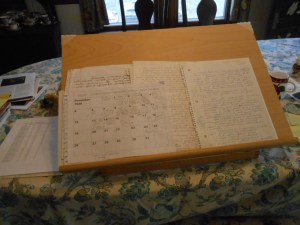 Also observe that the picture to the right shows how I made up a calendar for December 1948 with room on the squares for each day to write in events occurring in the story – but written in pencil! Once you start actually writing, you find that events may notconnect in the ways you’d expected or fit the order you’d originally planned. Hence, a little erasing and a little rewriting, in pencil, enables you to make adjustments, so that you are always looking at the big picture over the weeks the story covers. It helps me to see the plot in a linear layout. Also observe that the picture to the right shows how I made up a calendar for December 1948 with room on the squares for each day to write in events occurring in the story – but written in pencil! Once you start actually writing, you find that events may notconnect in the ways you’d expected or fit the order you’d originally planned. Hence, a little erasing and a little rewriting, in pencil, enables you to make adjustments, so that you are always looking at the big picture over the weeks the story covers. It helps me to see the plot in a linear layout.
Another big help was a stack of movie magazines from 1948 that my fellow author Barbara Struna graciously donated to me. They gave me the lowdown on what 1948 people were experiencing – directly, by reporting on films, gossip, music; indirectly, by showing advertisements for films, consumer goods, and photos of hair and clothing fashions. Primary texts give you a nice picture of people’s everyday life in the time period of your choice. Closer to creating a final draft, I’ll be looking at the New York Times for December 1948, to get more depth on world, national, and city concerns – as well as on entertainment, what people are buying and the costs, and personal interest stories.
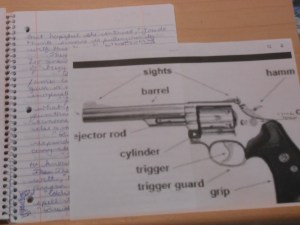
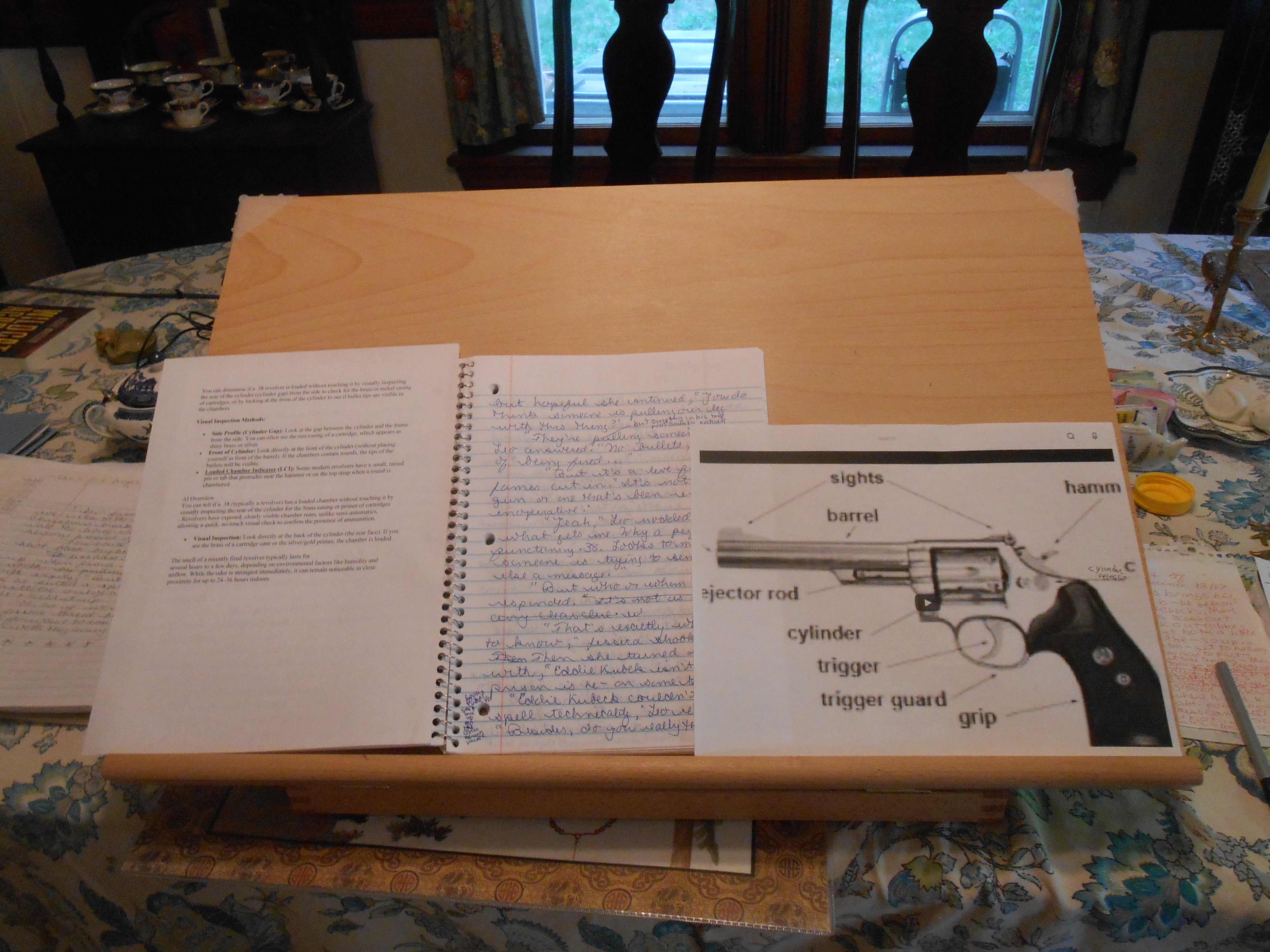
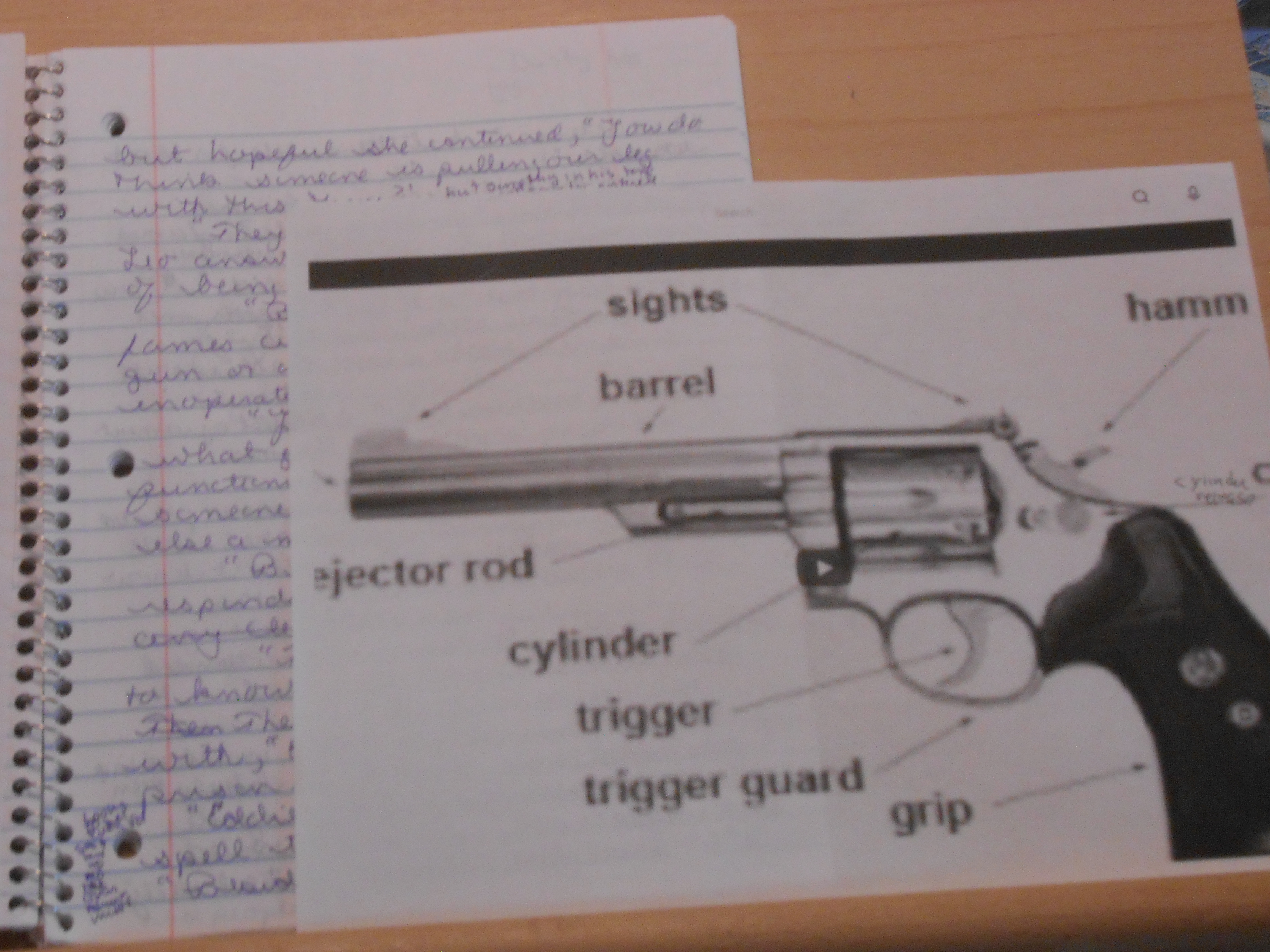
Now, I also needed help with some nitty-gritty details. Only three chapters in and I had to figure out how one character could check 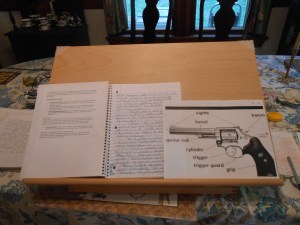 whether a thirty-eight was loaded, without getting fingerprints on the gun. God bless the Internet (sometimes). Here you can see that I retrieved and printed instructions on how to check for bullets, while also getting a picture of the gun itself to see all the parts described. So, I was able to describe how to handle the weapon without getting pesky fingerprints all over it. whether a thirty-eight was loaded, without getting fingerprints on the gun. God bless the Internet (sometimes). Here you can see that I retrieved and printed instructions on how to check for bullets, while also getting a picture of the gun itself to see all the parts described. So, I was able to describe how to handle the weapon without getting pesky fingerprints all over it.
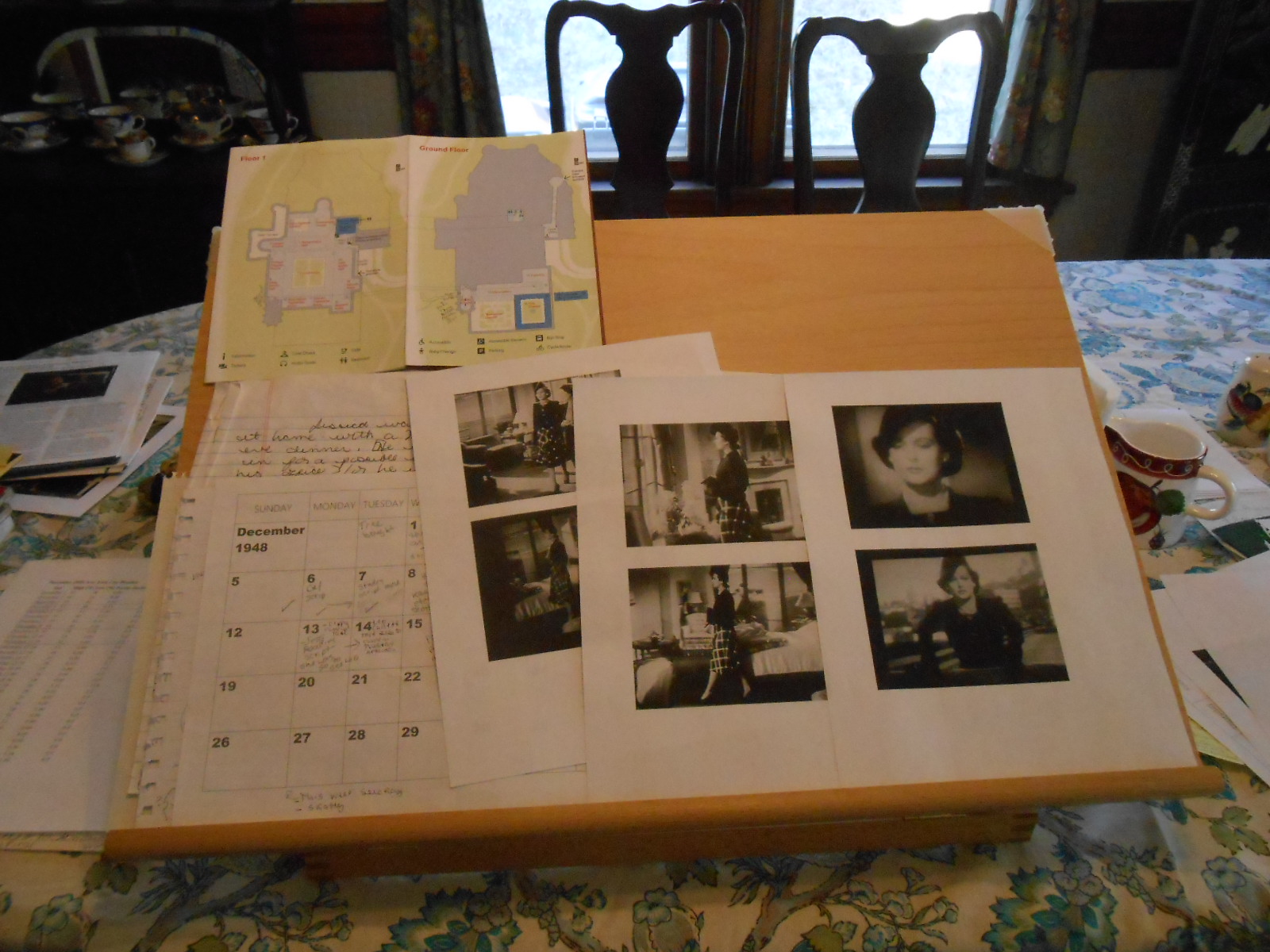
Many people tell me that they love my descriptions of my era’s clothes, often asking how I can create those images so vividly and accurately. Here’s my “secret.” I draw on photos of the 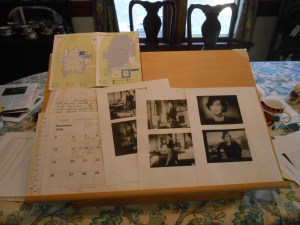 actual styles of the era. As I’ve mentioned in other of my blogs, I’m inspired by classic-era actors when I create my characters. With Joan Bennett as an inspiration for Jessica, I often turn to images of her to inspire both scenes and descriptions of what she’s wearing in those scenes. For a Saturday morning visit to The Cloisters, I selected this number from House Across the Bay. Now, House was released in 1940, but the longer plaid skirt and nip-waisted jacket turned out also to suit (if you pardon the pun) 1948 fashions. actual styles of the era. As I’ve mentioned in other of my blogs, I’m inspired by classic-era actors when I create my characters. With Joan Bennett as an inspiration for Jessica, I often turn to images of her to inspire both scenes and descriptions of what she’s wearing in those scenes. For a Saturday morning visit to The Cloisters, I selected this number from House Across the Bay. Now, House was released in 1940, but the longer plaid skirt and nip-waisted jacket turned out also to suit (if you pardon the pun) 1948 fashions.
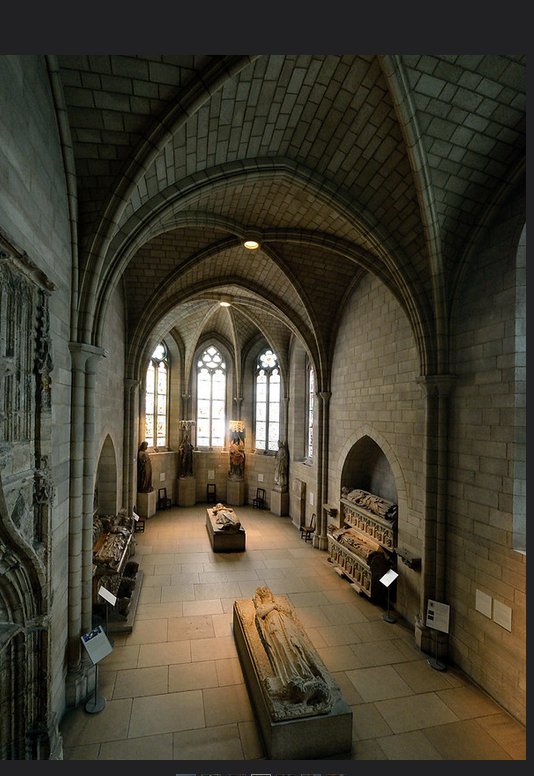
You can also see in the picture at the beginning of the previous paragraph that I have a layout of The 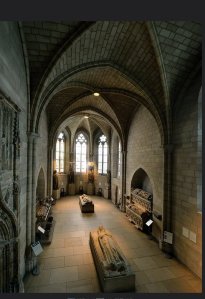 Cloisters on my writing easel. I had planned to take a trip there to refresh my memory for recreating that setting; however, I was unable to do so before writing this passage. After checking online articles about the layout and exhibitions of The Cloisters in 1948, I blended that map with images and descriptions from those articles to create the setting of two dangerous encounters for Jessica. Can you guess where Jess was hiding when she overheard a telling conversation? Cloisters on my writing easel. I had planned to take a trip there to refresh my memory for recreating that setting; however, I was unable to do so before writing this passage. After checking online articles about the layout and exhibitions of The Cloisters in 1948, I blended that map with images and descriptions from those articles to create the setting of two dangerous encounters for Jessica. Can you guess where Jess was hiding when she overheard a telling conversation?
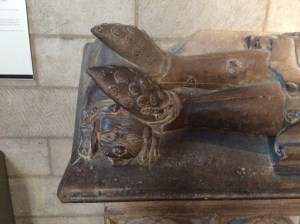
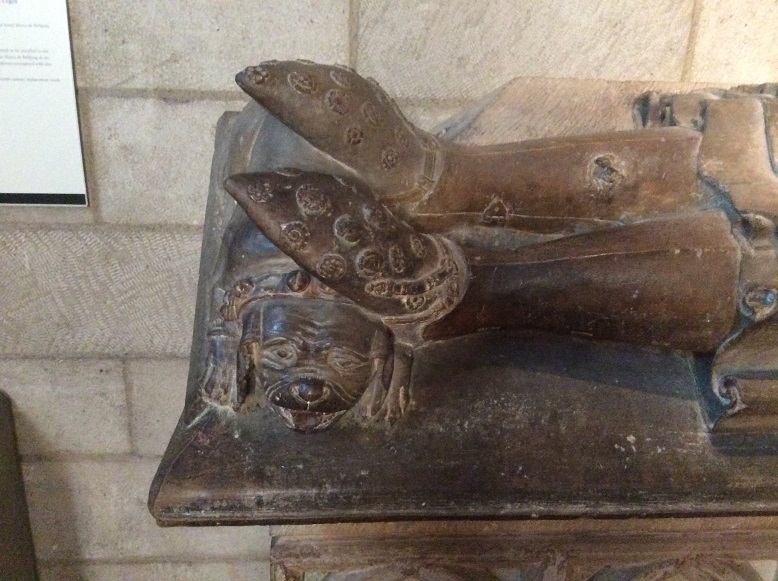
Before things get dicey, this faithful dog memorialized beneath his nobleman owner’s feet leads Jessica to ponder if Dusty would do her similar honors, in stone, What do you think?
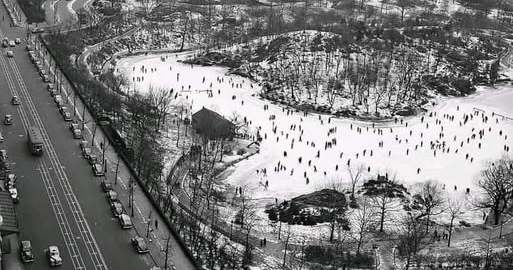
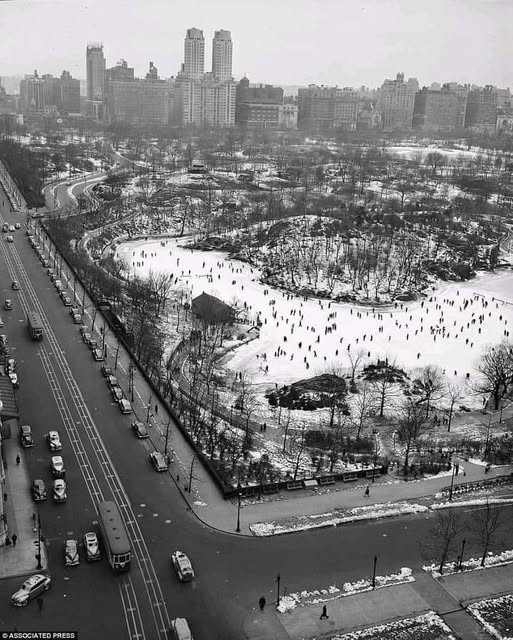
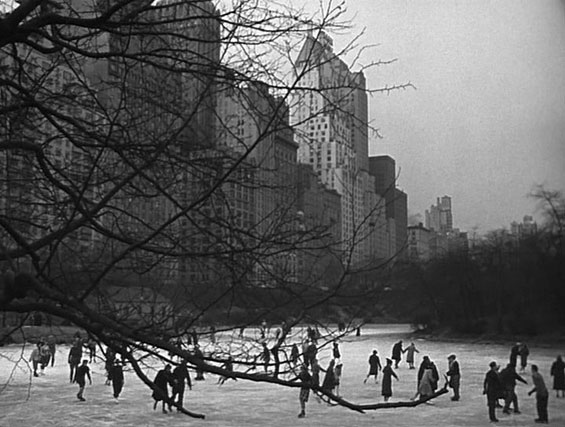
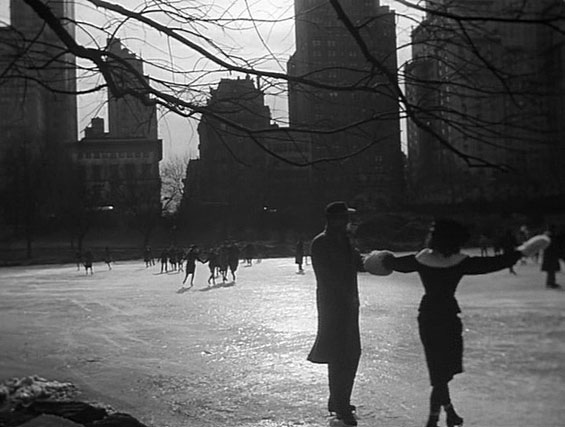
Additionally, I’d planned a scene where Jessica is pursued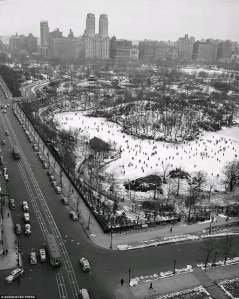 across a skating pond in Central Park by a mysterious predator. However, Yang claimed that the skating ring in the park was an open arena that wouldn’t allow any surreptitious, threatening chases. Again, a little research confirmed that Yang’s rink only opened in 1950, but there was, indeed, a frozen skating area called The Pond fitting my needs across a skating pond in Central Park by a mysterious predator. However, Yang claimed that the skating ring in the park was an open arena that wouldn’t allow any surreptitious, threatening chases. Again, a little research confirmed that Yang’s rink only opened in 1950, but there was, indeed, a frozen skating area called The Pond fitting my needs 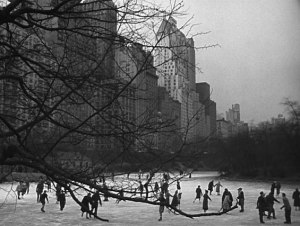 exactly. Its memory had haunted me from the 1948 film Portrait of Jenny. The hair-raising chase was back on! So, enjoy these images that I discovered. The article that particularly helped me was “NYC in film Portrait of Jennie 1948.” exactly. Its memory had haunted me from the 1948 film Portrait of Jenny. The hair-raising chase was back on! So, enjoy these images that I discovered. The article that particularly helped me was “NYC in film Portrait of Jennie 1948.”
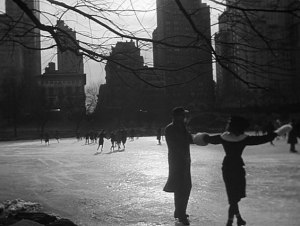 Of course these photos were all taken during the day. Jessica’s adventure had the added threat of taking place at night by lantern light. Of course these photos were all taken during the day. Jessica’s adventure had the added threat of taking place at night by lantern light.
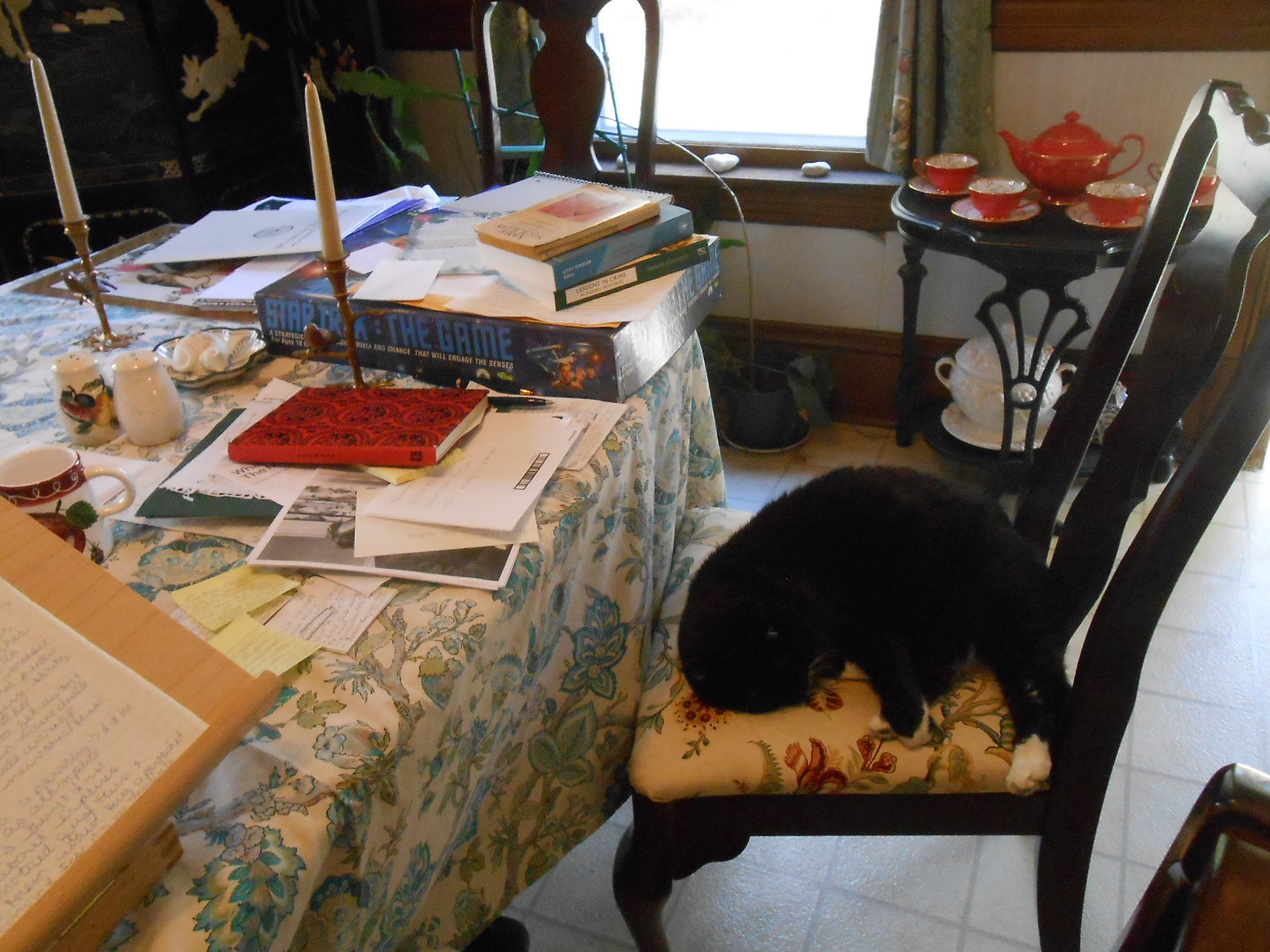
Lastly, I needed an expert to certify that Dusty’s catlines is 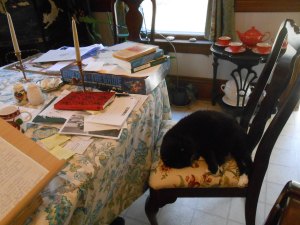 fully accurate. Here’s Natasha, exhausted after her thorough vetting of what I’ve written so far. Yup, ’Tasha Yang gives me two paws up – but she has to lean on something when she does it or she’ll fall over. fully accurate. Here’s Natasha, exhausted after her thorough vetting of what I’ve written so far. Yup, ’Tasha Yang gives me two paws up – but she has to lean on something when she does it or she’ll fall over.
|






.jpg)