Last December (2021) I did a ZOOM with fellow mystery writers Lisa Lieberman and Janet Raye Stevens on “Writing the War Years” – as in WWII. One aspect of doing research to give our tales  verisimilitude was looking into the kinds of clothes that people wore. That topic and the fact that many of my readers and reviewers seem to get a kick out of my descriptions of the wardrobes of Jessica Minton and her fellow players set me thinking. It would be fun for me and interesting for you, my readers, if I revealed the inspirations for the clothes that helped create a sense of “being there” in my novels. verisimilitude was looking into the kinds of clothes that people wore. That topic and the fact that many of my readers and reviewers seem to get a kick out of my descriptions of the wardrobes of Jessica Minton and her fellow players set me thinking. It would be fun for me and interesting for you, my readers, if I revealed the inspirations for the clothes that helped create a sense of “being there” in my novels.
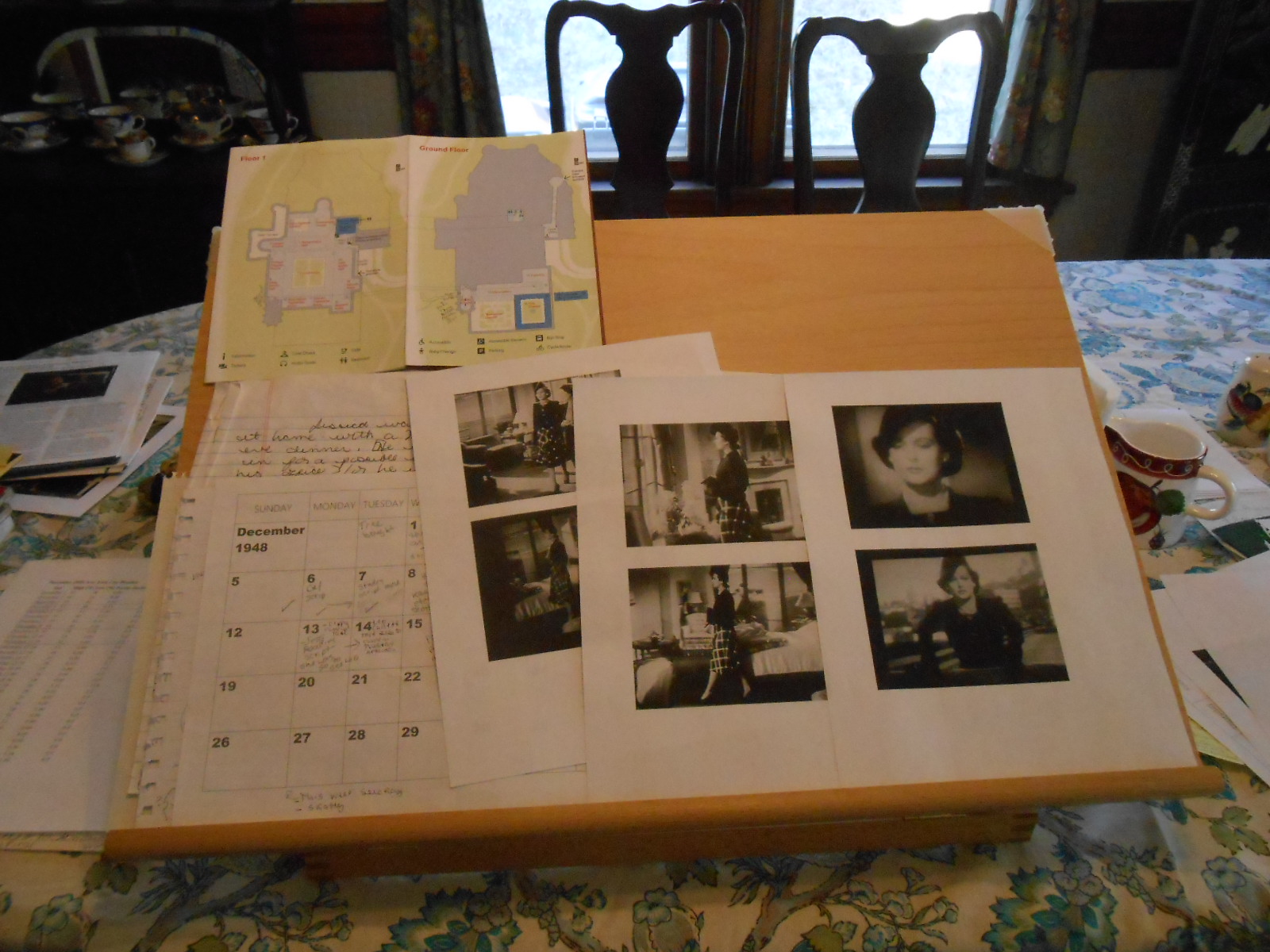
To be honest, I can’t take credit for “designing” those 1940s outfits, not all of them, anyway. True,  some do come out a familiarity with fashion developed from perusing films, magazines, and Sears catalogues. However, a large number of my creations are inspired by films that helped spark my tales. The trigger for Bait and Switch might be traced to this image of Joan Bennett from The Woman on the Beach. Studying this picture, I wondered, “If you just look at this out of context, what tale does it tell? What is this woman’s conflict with the man she faces? What could be in the package?” The answers that I spun out from those questions led me to create Jessica’s exciting adventures with James Crawford and Nazi fifth columnists. What I perceived of her garb in the picture inspired an outfit that not only re-appeared in at least one other novel in the series, but a fashion reflecting a major shift in women’s empowerment. some do come out a familiarity with fashion developed from perusing films, magazines, and Sears catalogues. However, a large number of my creations are inspired by films that helped spark my tales. The trigger for Bait and Switch might be traced to this image of Joan Bennett from The Woman on the Beach. Studying this picture, I wondered, “If you just look at this out of context, what tale does it tell? What is this woman’s conflict with the man she faces? What could be in the package?” The answers that I spun out from those questions led me to create Jessica’s exciting adventures with James Crawford and Nazi fifth columnists. What I perceived of her garb in the picture inspired an outfit that not only re-appeared in at least one other novel in the series, but a fashion reflecting a major shift in women’s empowerment.
When I first looked at the picture, in a smaller version, I perceived the woman in question as wearing a light coat over a white blouse and dark slacks. That white blouse with the flowing sleeves and dark slacks became a staple for women who were independent, free-moving, and downright  comfortable. Think of Barbara Stanwyck pounding away on her typewriter, casual but still determined, in her first scene in Christmas in Connecticut. However, as she becomes imprisoned in playing the domestic roles imposed by men, we see her cinched up and confined in skirts and suits. So, Jessica’s taking off on an adventure that might save her country, while rejecting her boyfriend’s protective attempts to curb her independent agency, is best served by that same outfit. Here you see her, from the cover of the novel, comfortably outfitted and ready for action, though a bit trepidatious of what the future holds. comfortable. Think of Barbara Stanwyck pounding away on her typewriter, casual but still determined, in her first scene in Christmas in Connecticut. However, as she becomes imprisoned in playing the domestic roles imposed by men, we see her cinched up and confined in skirts and suits. So, Jessica’s taking off on an adventure that might save her country, while rejecting her boyfriend’s protective attempts to curb her independent agency, is best served by that same outfit. Here you see her, from the cover of the novel, comfortably outfitted and ready for action, though a bit trepidatious of what the future holds.
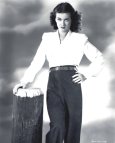 The eponymous blouse and slacks prove the importance of ease of movement when Jessica dons The eponymous blouse and slacks prove the importance of ease of movement when Jessica dons  them in Always Play the Dark Horse to explore a wrecked ship that reveals dangerous secrets, to ride out on a mysterious black horse to rescue a friend, and later to face off against a murderer and spy. them in Always Play the Dark Horse to explore a wrecked ship that reveals dangerous secrets, to ride out on a mysterious black horse to rescue a friend, and later to face off against a murderer and spy.
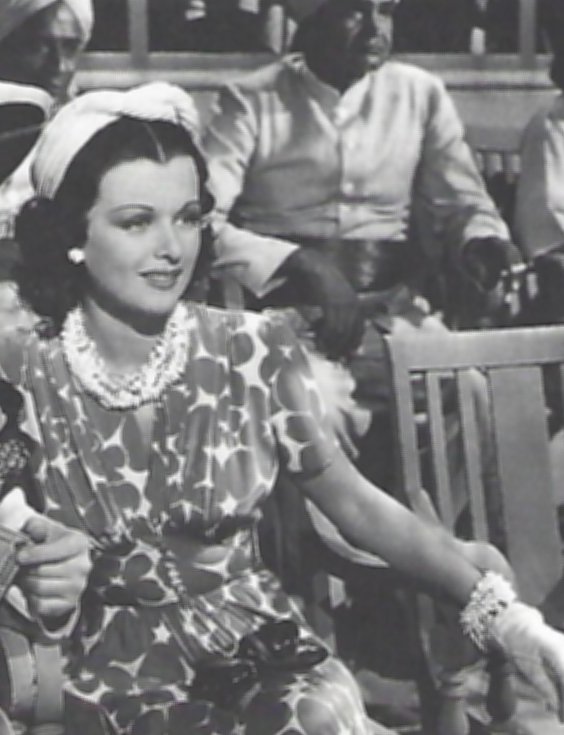
 Of course, a smart talkin’ gal of the forties like a Joan Bennett, Lynn Bari, or Rosalind Russell could still assert herself and delve into danger even when back in a dress and heels, as Jessica proves with this number: “this light dress, with its pale raspberry swirls on white” and “her white turban.” Thusly garbed, in Bait and Switch, Jess finds herself confronted at the racetrack by her mystery man and spirited away from the crowd; however, a fitted dress in no way prevents her from letting him have it on the jaw when he oversteps bounds. Of course, a smart talkin’ gal of the forties like a Joan Bennett, Lynn Bari, or Rosalind Russell could still assert herself and delve into danger even when back in a dress and heels, as Jessica proves with this number: “this light dress, with its pale raspberry swirls on white” and “her white turban.” Thusly garbed, in Bait and Switch, Jess finds herself confronted at the racetrack by her mystery man and spirited away from the crowd; however, a fitted dress in no way prevents her from letting him have it on the jaw when he oversteps bounds.
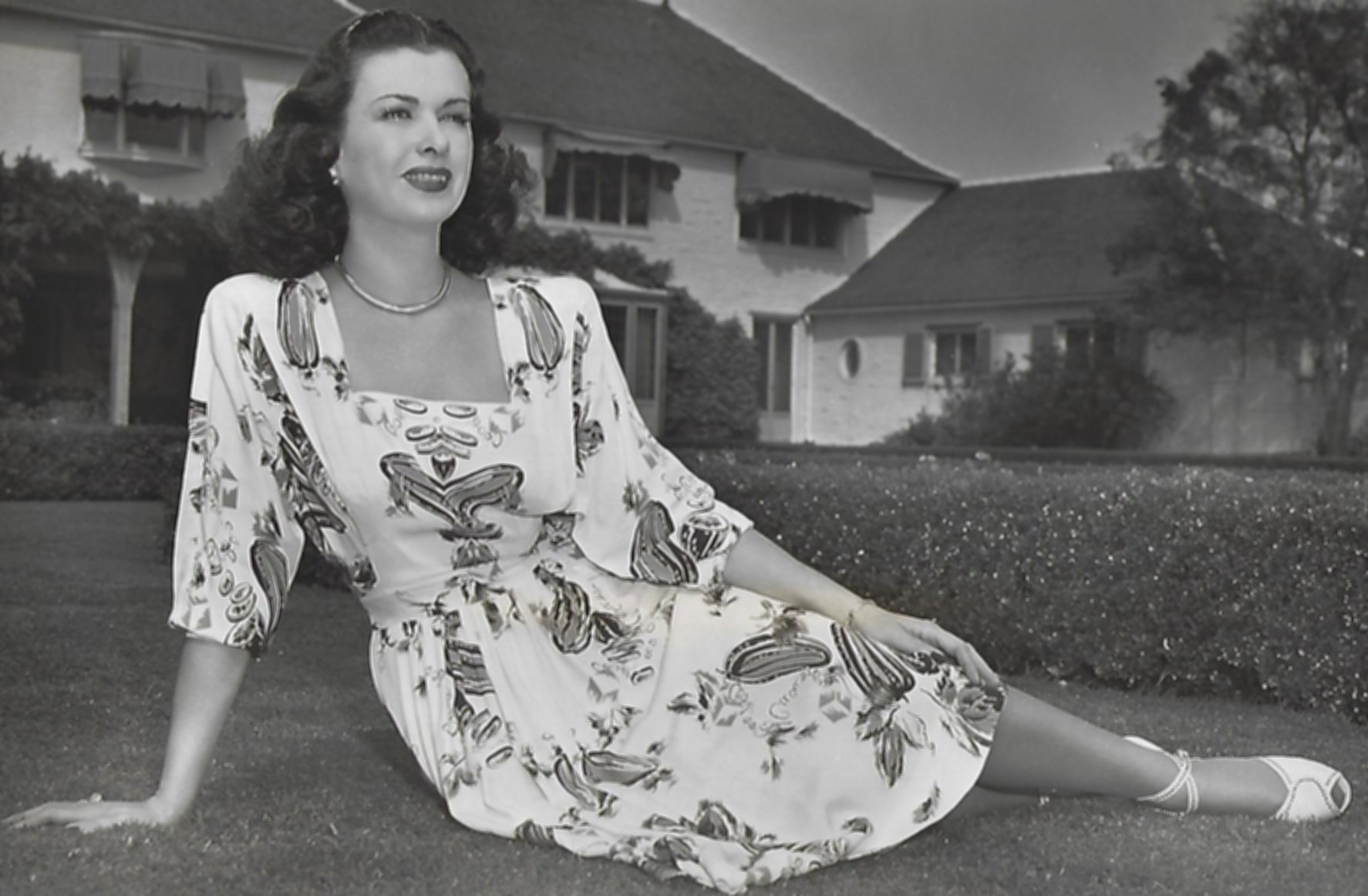
In Letter from a Dead Man, Jessica is back in this silky number of “raspberry swirls on creamy silk” on another hot summer afternoon while helping her sister search the secret room of a murdered friend, then dive into a closet when their nemesis unexpectedly shows up with two torpedoes. The inspiration for this frock? Joan Bennett’s white and color swirled dress in Trade Winds. Now an interesting thing about describing this and some of the other outfits Jess wears is that I got to see the originals in black and white, either on the screen or in publicity shots. So, it’s up to me to imagine what colors swirl through the white with this, and other outfits. I saw a soft raspberry pink: perfect for a summer afternoon. What color do you see? another hot summer afternoon while helping her sister search the secret room of a murdered friend, then dive into a closet when their nemesis unexpectedly shows up with two torpedoes. The inspiration for this frock? Joan Bennett’s white and color swirled dress in Trade Winds. Now an interesting thing about describing this and some of the other outfits Jess wears is that I got to see the originals in black and white, either on the screen or in publicity shots. So, it’s up to me to imagine what colors swirl through the white with this, and other outfits. I saw a soft raspberry pink: perfect for a summer afternoon. What color do you see?
In Dark Horse, I had to use my imagination when having Jessica model two of her dress-designing sister’s creations. This is the outfit I adapted for Jessica’s visit to the tea sponsored by the college where her husband is teaching and where murder and espionage lurk in the shadows. It’s a tea where Jess has to look great while trying to maintain her cool amongst dangerous suspects and startlingly unexpected revelations.
“Jessica sprang up, undoing her robe to reveal a gorgeous white silk dress, fitted in the bodice, with 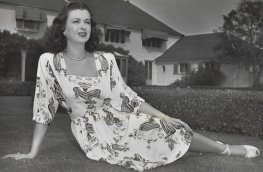 a graceful A-line skirt that swirled as she moved and flatteringly shaped itself to her when she stood still. The square neckline revealed its wearer’s collarbones without dipping too low. What Jess thought really gave it elegant flair was a pattern on the bodice of abstract shapes, almost like an archangel by Picasso, in unexpectedly complementary soft liquid blue, green, and pink, bordered by silver.” a graceful A-line skirt that swirled as she moved and flatteringly shaped itself to her when she stood still. The square neckline revealed its wearer’s collarbones without dipping too low. What Jess thought really gave it elegant flair was a pattern on the bodice of abstract shapes, almost like an archangel by Picasso, in unexpectedly complementary soft liquid blue, green, and pink, bordered by silver.”
I will tell you, it was not easy to try to give you an image that would evoke the patterns on this dress. What do you think?
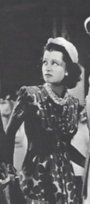
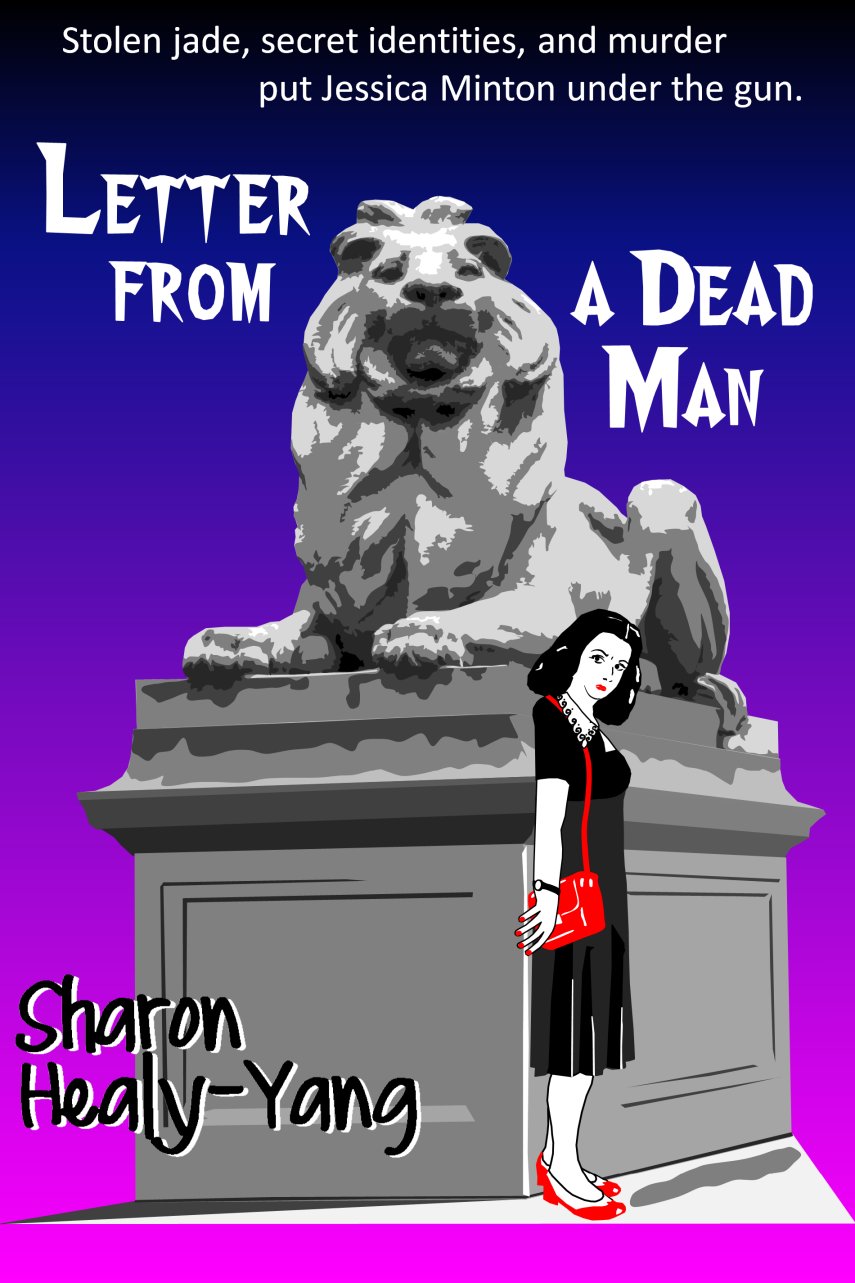
 In Dead Man, Jessica’s fitted black linen dress with the white linen collar is In Dead Man, Jessica’s fitted black linen dress with the white linen collar is 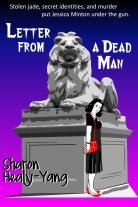 inspired by this outfit from She Knew All the Answers. As you can see from the picture, I didn’t have to use much imagination to come up with black and white for this one. The colors do play an important role in the narrative, though. For when Jessica tries to hide behind the refuge of one of the NYPL lions, she lives in terror that a flash of white from her collar will give her away to her deadly pursuers. inspired by this outfit from She Knew All the Answers. As you can see from the picture, I didn’t have to use much imagination to come up with black and white for this one. The colors do play an important role in the narrative, though. For when Jessica tries to hide behind the refuge of one of the NYPL lions, she lives in terror that a flash of white from her collar will give her away to her deadly pursuers.
 In Dark Horse, it’s the cut not the color of the dress that adds to the story. Jess finds herself caught in an awkward position when the dress’s sweetheart neckline and flattering fit causes an old boyfriend’s wife to see red rather than the black of the dress, though that wasn’t Jessica’s intention. And that woman may have permanently eliminated a real rival for her husband. In Dark Horse, it’s the cut not the color of the dress that adds to the story. Jess finds herself caught in an awkward position when the dress’s sweetheart neckline and flattering fit causes an old boyfriend’s wife to see red rather than the black of the dress, though that wasn’t Jessica’s intention. And that woman may have permanently eliminated a real rival for her husband.
Finally, as you may have noticed, I repeated several outfits from one book to another. Why? Well, part of it has to do with the images inspiring what I write. However, another, and especially  important, point is that most women throughout decades past hung on to outfits over a period of years. We find something we like and we keep wearing it . I am writing in the era before fast fashion took hold, not that Jessica would ever be such a frivolous shopper. So, it creates verisimilitude to show my characters wearing the same outfit more than once over a few years. However, I’m not looking forward to hitting 1948/9 when the hemlines drop drastically. Will Jessica have to get a whole new wardrobe?! Well, I can at least promise you that our Jess will not be chopping off her hair, as was that late forties and early fifties fashion! important, point is that most women throughout decades past hung on to outfits over a period of years. We find something we like and we keep wearing it . I am writing in the era before fast fashion took hold, not that Jessica would ever be such a frivolous shopper. So, it creates verisimilitude to show my characters wearing the same outfit more than once over a few years. However, I’m not looking forward to hitting 1948/9 when the hemlines drop drastically. Will Jessica have to get a whole new wardrobe?! Well, I can at least promise you that our Jess will not be chopping off her hair, as was that late forties and early fifties fashion!
How about you? Are there any outfits from the series that you’d like to ask me about? I’m ready and waiting to answer. |

 verisimilitude was looking into the kinds of clothes that people wore. That topic and the fact that many of my readers and reviewers seem to get a kick out of my descriptions of the wardrobes of Jessica Minton and her fellow players set me thinking. It would be fun for me and interesting for you, my readers, if I revealed the inspirations for the clothes that helped create a sense of “being there” in my novels.








.jpg)