Category Archives: Dark Shadows

Made for TV Horror 3: Spectre (1977)

Spectre (1977)

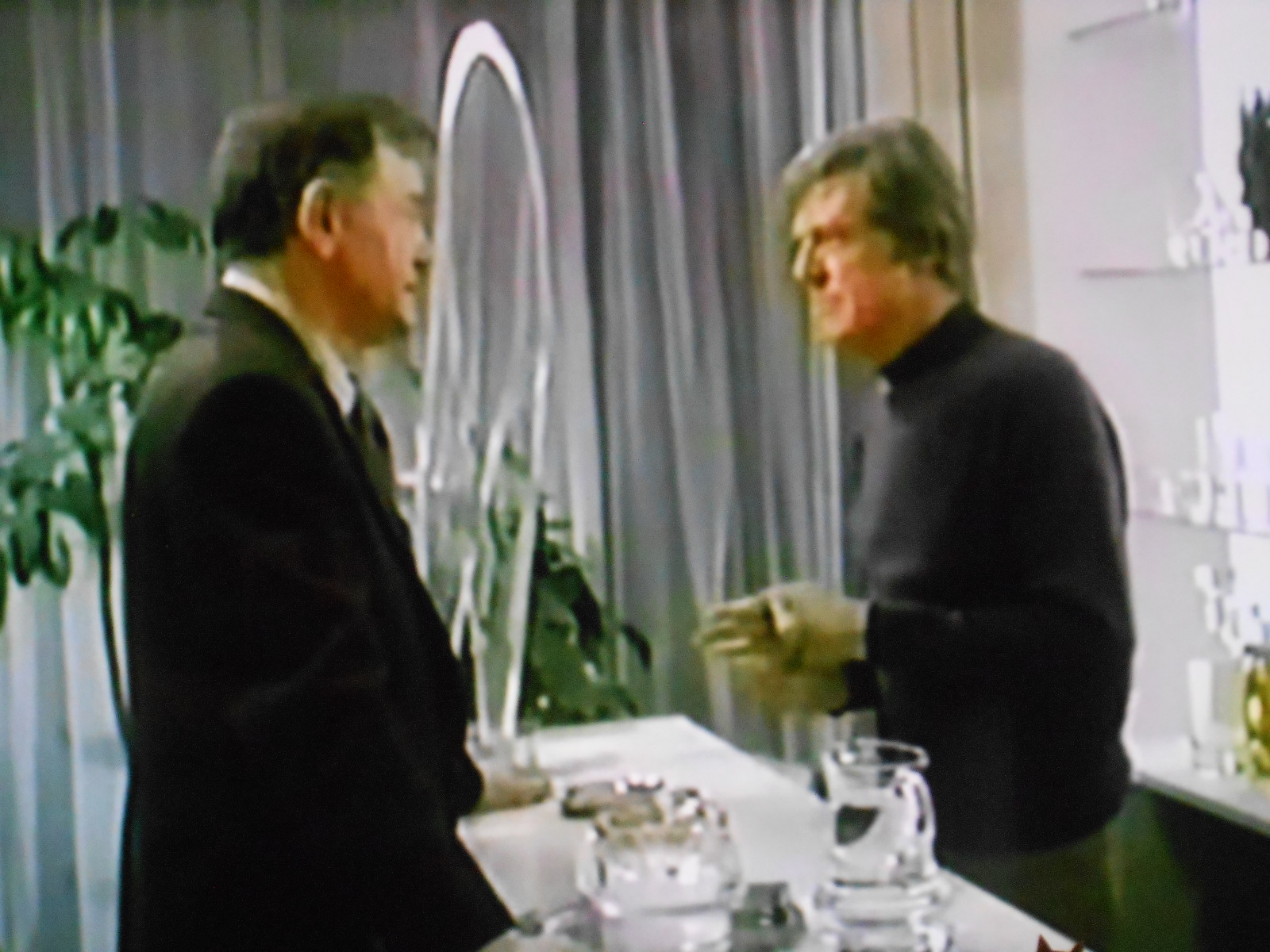
Spectre (1977) is a made-for-Television film that I had read about but was not able to catch for many years.  The premise of two investigators of the supernatural, one a wealthy and erudite believer (Robert Culp) and one a disgraced doctor and skeptic (Gig Young) ,  investigating the paranormal had piqued my interest – something of an ancestor of The X-Files duo – except Scully wasn’t a heavy drinker, though working with Mulder certainly could have pushed her in that direction.  About 20 years ago, I caught the last ten or fifteen minutes of it and was intrigued, hungry for more, which I finally got some years later.  At the time, I was pretty well satisfied with what I saw; however, watching the movie again, this month, my approval dropped precipitously.  There are some good things about the film.  The early interactions between Culp and Young, as Culp tries to convince the latter that he is the victim of voodoo, do raise mystery and suspense.  Clever is Culp’s figuring out that the unexpectedly arriving sister of a fellow expert is a succubus via her subtle avoidance of a chair he offers her to rest, a chair with a cross design on the back, and his disposal of her/it by pressing an arcane sacred text against her.  Lilith, the laconic, knowing housekeeper who guides Young’s character through Culp’s moderne abode further establishes an air of mystery and eeriness.  Then, there is the inexplicable rough weather that nearly downs the investigating duo’s trip to England, piloted by Culp’s British fellow expert in the supernatural (John Hurt!).  Equally good is Culp and Young’s arrival in London, searching for another expert to help them, taking them through a London rain-slicked and shadowy like a noir metropolis.  There, the tension grows as they enter a mansion where something demonic has horribly mangled the man they seek and only a pentagram can keep them safe.  Produced by Gene Roddenberry and cowritten by him and Sam Peebles, the movie led me to expect good things – even if the film does fall into the ’70s trap of assuming an over abundance of harpsichord music is always scary.

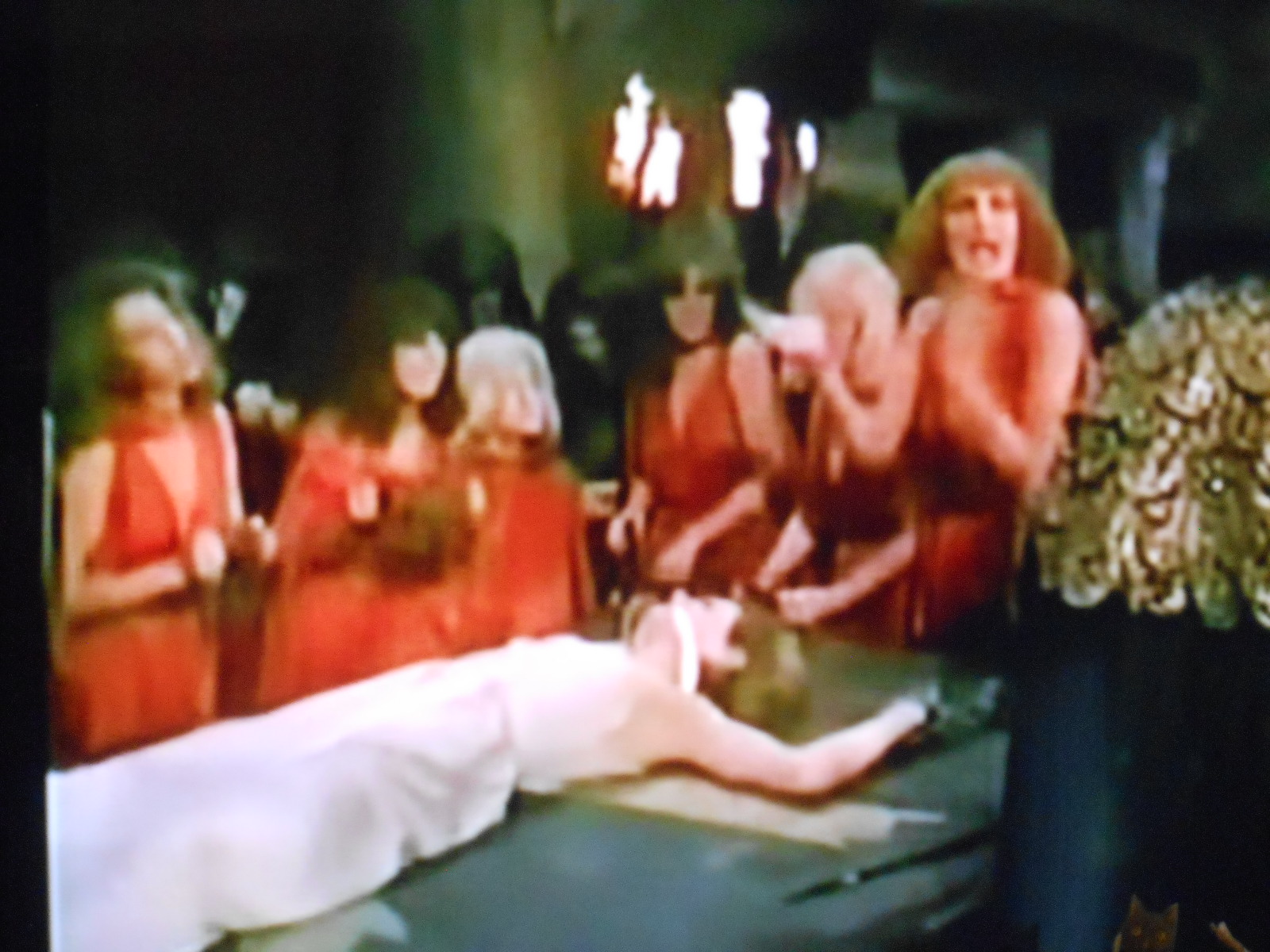
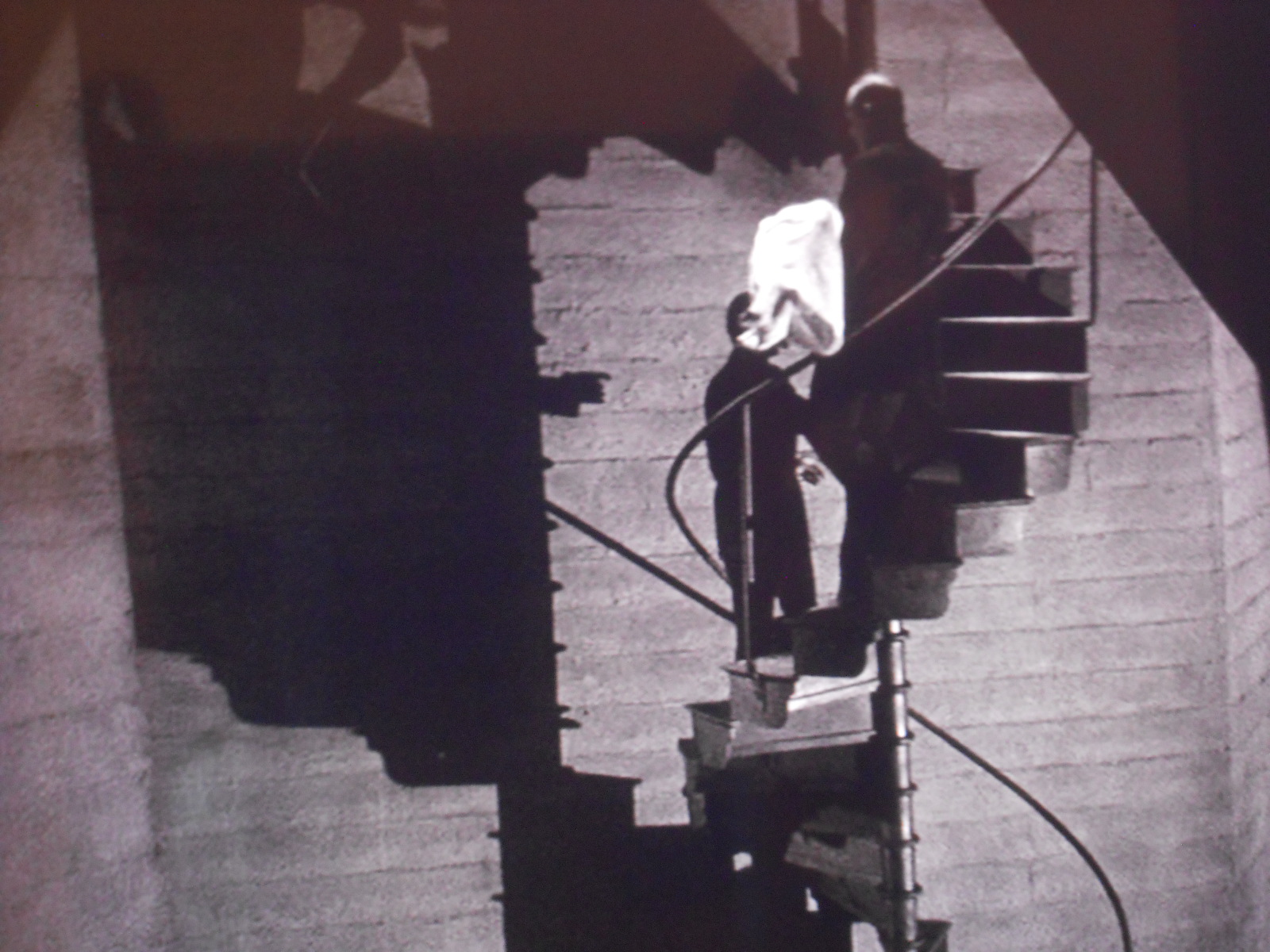
But things fall apart, especially when we get to the orgy/satanic celebration and sacrifice toward the end.  Like too many 1970s films, even horror ones, there’s just too much filler light.  The final sacrifice, as it were, actually looks pretty damned (so to speak) cheery with lighting as full and bright as you see in most sitcoms.  And don’t forget the artificial rocks of the cavern walls, all nice and shiny.  Director Clive Donner and Cinematographer Arthur Ibbetson really ought to have taken a gander at Edgar Ulmer’s work in The Black Cat, where impossible angles on stairs, altars, crosses, and doors in chiaroscuro  unsettle with an unnatural, Expressionist vision of reality.  Then there is also the fine example of disquieting cinematography in the use of shadow and darkness in Tourneur’s Night of the Demon.  In the ’70s,  even Dan Curtis gets the lighting right with his use of blue filters and eerily obscuring (dark) shadows  (I couldn’t resist) in the Norliss Tapes.  Click here for my review of that made-for-tv movie) 

It gets bit creepier when Culp goes up against demon Asmodeus, but the monster is till a rubber-mask dinosaur-type.

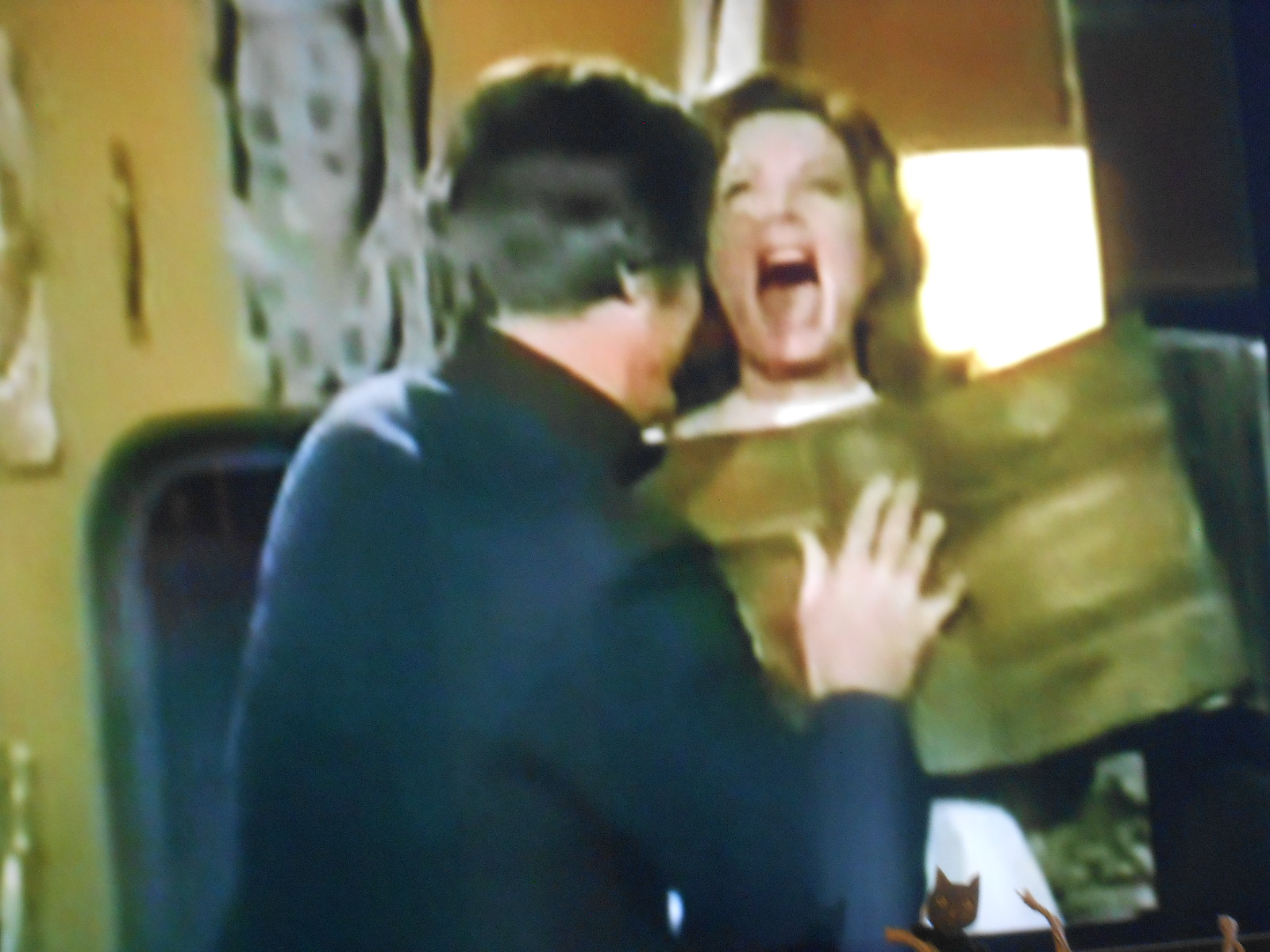
Furthermore Spectre’s demonic festivities look more like a lascivious New Year’s Eve Party.  We are supposed to be shocked by all that sexuality, especially the repeated  shots of ladies’ boobs  escaping their flimsy scarlet costumes and jiggling around.  My pearls remained unclutched. All I could think of was that one shot in Airplane mocking gratuitous nudity where, amidst the panic of the passengers, a topless woman suddenly jumps in front of the camera, shakes her girls, then disappears.  Apparently, this material was added for a theatrical release of Spectre.  Obviously, 1970s television wouldn’t have been ready for such hot stuff.

In all fairness, it does get a bit creepier when Culp goes up against the demon Asmodeus, but the monster is still a rubber-mask dinosaur-type.

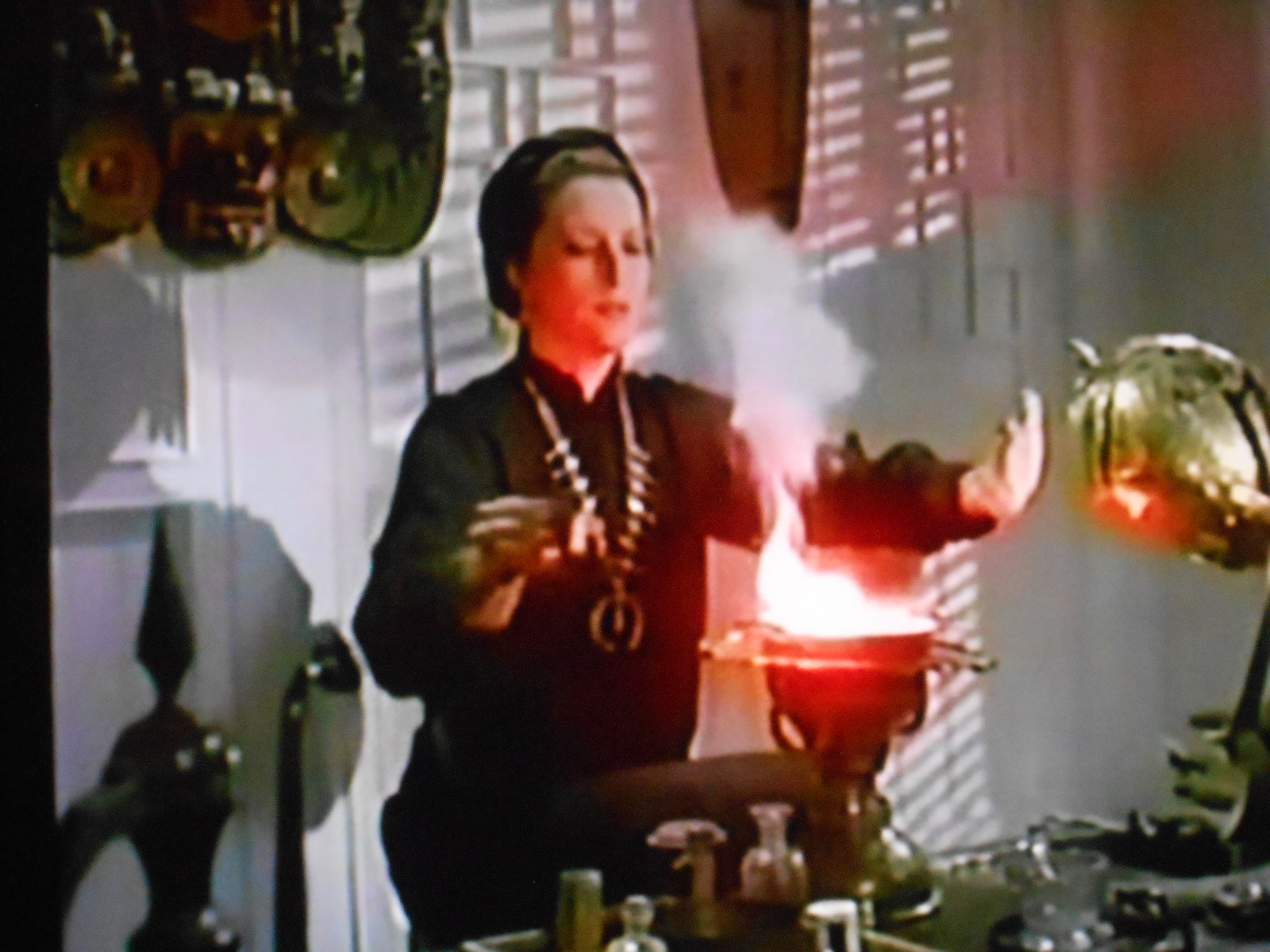
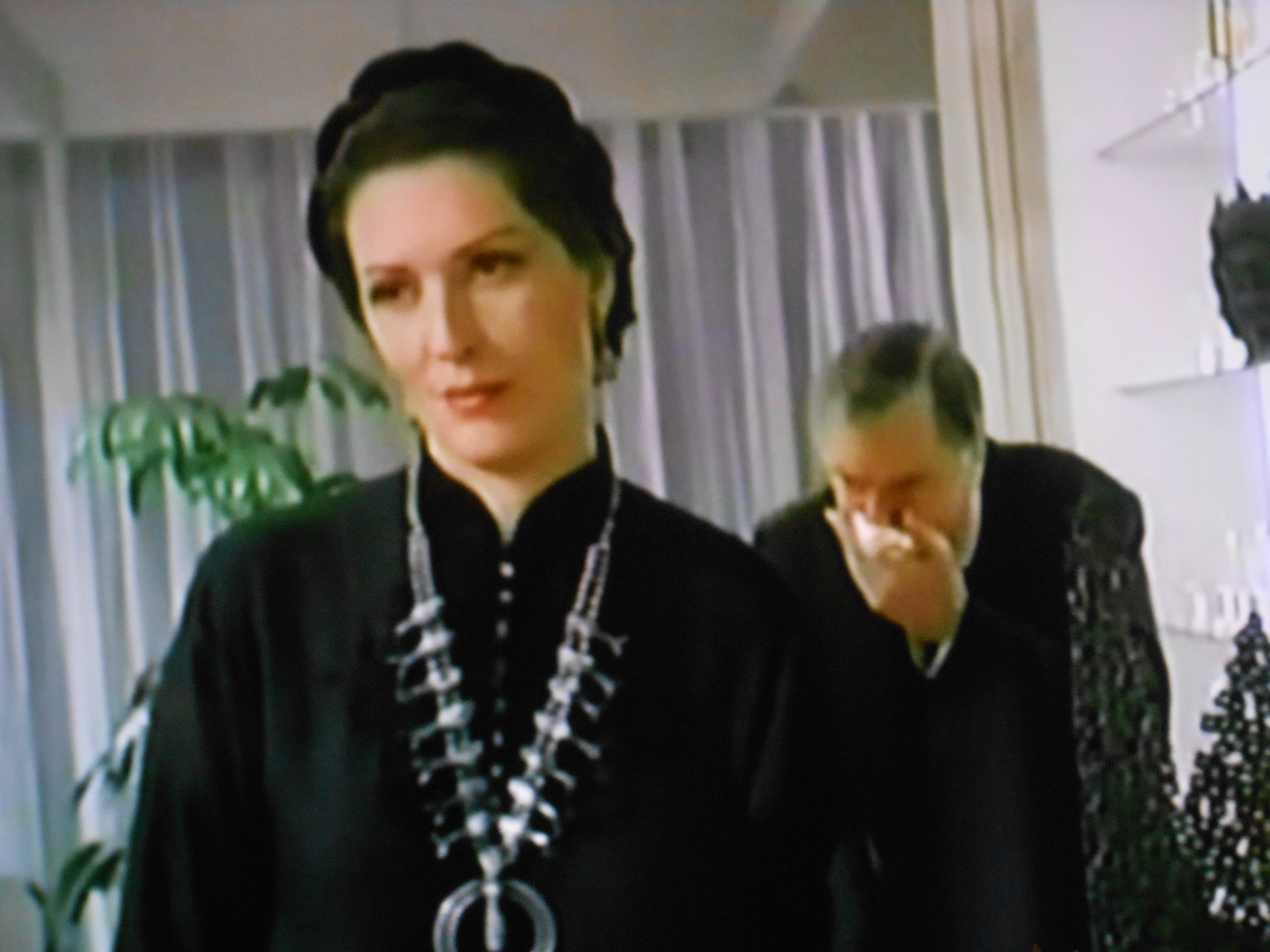
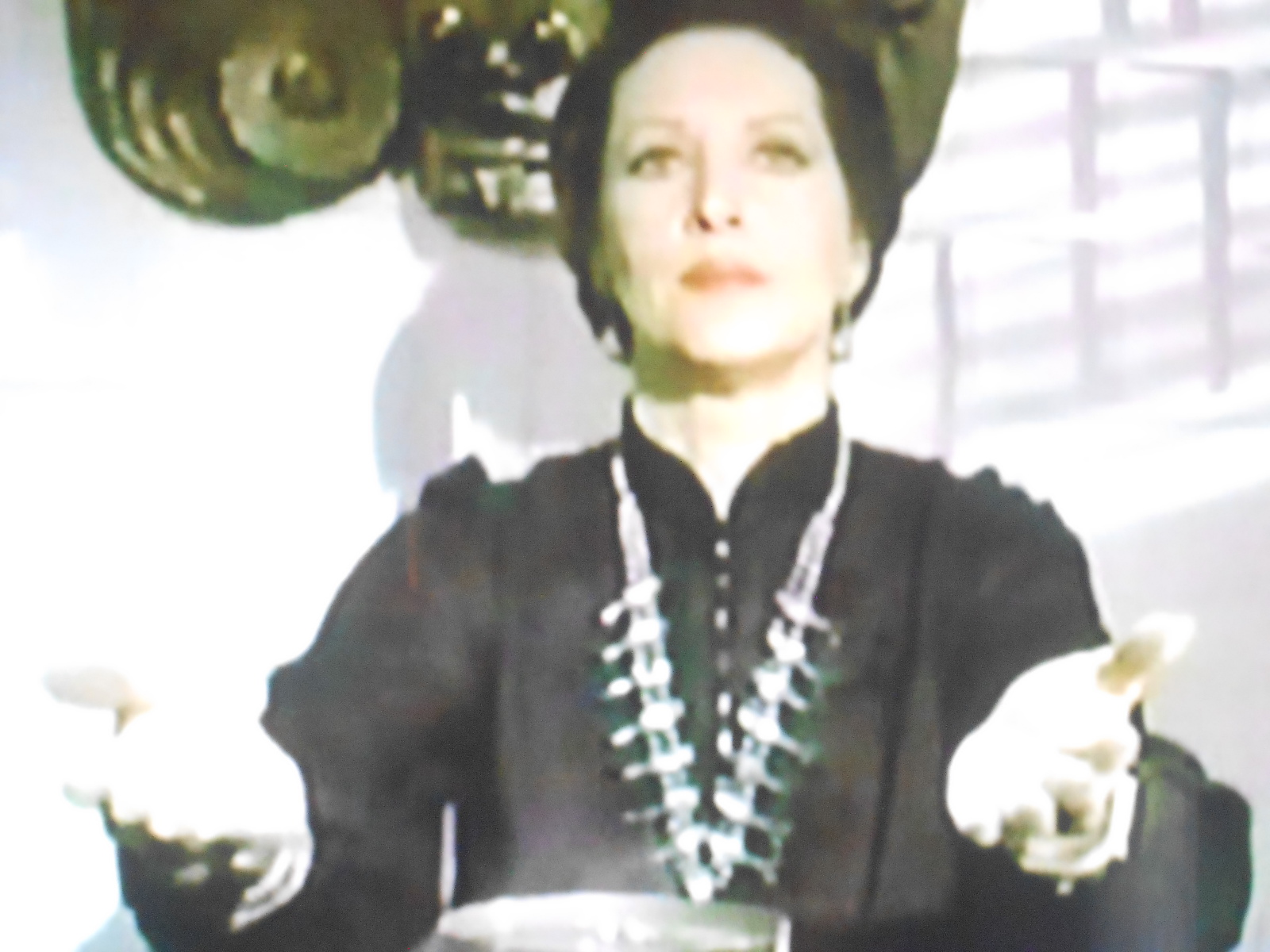
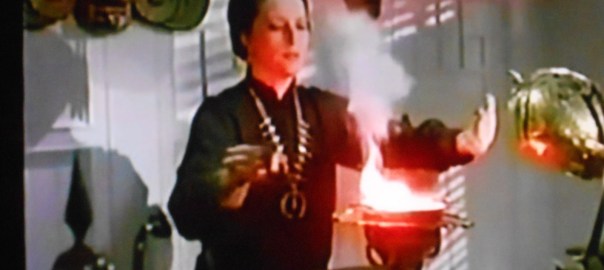
The one gem in this movie was Majel Barrett as the housekeeper Lilith.  Tall, stately, beautiful, and commanding in a long black dress reminiscent of a chi pao, she was also a wry breath of fresh air.  Barrett’s Lilith was fully in charge of Culp and Young through her practical magic, guiding characters with a wonderfully wry, subtle sense of humor.  What a breath of fresh air.  This made-for-TV movie was a pilot for a proposed series by Roddenberry that didn’t get accepted.  Still, with some fine-tuning and more of Majel Barrett (aka Mrs. Roddenberry), we might have had something here.  Anyway, it’s still worth a watch. 

For more background on the film click on the IMDB link and the Wikkipedia link.

All images screen shots from Spectre (1977, Twentieth Century Fox), author’s collection)

No copyright infringement intended by use of the properly attributed photos.  If you feel there is a problem, contact me about removing the images.

10/28/26


Casting Characters, Part 3: Always Play the Dark Horse

Part Three: Always Play the Dark Horse  horse and rider

Now we come to Always Play the Dark Horse, with a cast of characters 106738603_10223680069933821_7022871368887621055_nboth new and familiar.  Rose Nyquist, Jessica’s professor friend, returns from Dead Man, only this time she helps Jessica navigate academic politics at the College at Margaret Point, even joining Jessica and James to face intrigue and murder.  Who better to play this part than the straight-from-the-shoulder, quick-witted Barbara Stanwyck – with a dash of my good friend Kathy Healey, who is also quick-witted and straight-from-the shoulder.
DSCN5749The English Department’s chair is Nigel Cross, a man of powerful character, icy cold control, and a devastating wit to those who try to play cute with him.  With those he respects, though, he seems a square shooter. The perfect inspiration for the character, especially the first part of the description? How about Nigel Bennett, well known as the formidable and cool LaCroix on Forever Knight?
Terry Clarke was Jessica’s college boyfriend many years back, in a relationship that didn’t end well when he opted to look for a gal with the do[ugh]-re-mi to restore his family fortunes.  Now a professor at Margaret Point College, he’s intelligent, capable, witty, and charming enough to balance out his ego, almost.  However, Terry’s also a bit of a ladies’ man, to his wife’s chagrin.  My casting choice was the handsome, young Quentin played by David Selby on Dark Shadows.  That hint of a Southern accent dovetails nicely with Terry’s Virginia horse-country roots. No Quentin-1897 sideburns, though. But those blue eyes, WOW!
Maureen_O'Hara_1950Meanwhile, there’s Carolina Brent Clarke, the wife who resents Terry’s philandering with another teacher who has mysteriously gone missing.  Who should inspire the Virginia belle whom Terry thought he could marry for money, only to discover she had the same misapprehension about him?  Well, I don’t have enough redheads in my stories, so how about the fiery-tressed and -tempered Maureen O’Hara?  I know she usually plays a heroine, but she could go fatale when she wanted.  So I traded in her Irish accent for the faint strains of a Maryland one and let her take the folks at Margaret Point for one hell of a ride!
Then, there’s Sailor, aka Phil Novack, the mysterious man who rides theRyan equally mysterious Dark Horse of the title.  A solitary sort, haunted by war memories and perhaps something more, to whom Jessica is drawn by their mutual love of horses.  This becomes dangerous for them both. My inspiration was the craggy-featured, brooding presence that Robert Ryan so beautifully brought to the screen.  Naturally, I’m thinking more of the decent but tortured and confused types he played in The Woman on the Beach or Act of Violence, not the sly, murdering racist in Criss-Cross.
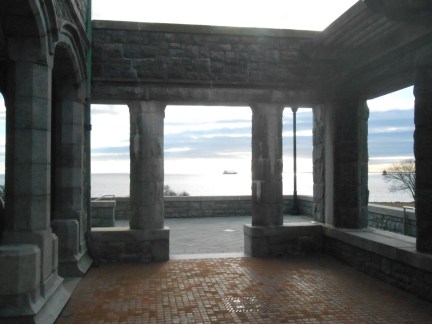
DSCN4673And what inspired my College at Margaret Point?  Ah, that’s interesting.  Over the years, I’ve made many a visit to the campus of UConn at Avery Point.  It’s located on the Long Island Sound, with wonderful grounds, a gorgeous view of the ocean, and an impressive mini-chateau that was once  a wealthy business person’s Branford House.DSCN4684  Now the House holds administrative offices and hosts conferences or even weddings in its magnificent Great Hall, with its first-floor rooms  boasting gorgeous woodwork and carved mantels.  On the second floor is a  small but nifty art gallery.  Although I embroidered on the campus a bit by including stables,  victory gardens, and cozy faculty-cottage housing in my novel,  the fictional Cameron House neatly captures the elegance of Branford House.
Once again, Dusty remains Dusty!  Mice, murderers, and master spies beware! What’s she nabbing now?!

Dustyg

Stay tuned for more blogs to whet your appetite for Always Play the Dark Horse, coming out on August 24th.

DSCN4680
Barbara Stanwyck Image, unknown source
Nigel Bennett Image:  Screen shot, Forever Knight, Sony Pictures Home Entertainment, 2006
Maureen O’Hara Image:  By J. Fred Henry Publications – page 32, Public Domain, https://commons.wikimedia.org/w/index.php?curid=44624486
Images of David Selby, Robert Ryan, Branford House, and Dusty:  Author’s collection

No copyright infringement intended by use of images.  Only educational and entertainment purposes.  Contact me should you feel your copyright has been infringed

Always Play the Dark Horse

Home

Summer Peregrinations: Joan Bennett and Sherlock Holmes

Last week, Yang and I made one of our periodic visits to Joan Bennett’s final resting spot in Lyme, Ct.  We had planned to try to clear up any overgrowth as well as pay our respects, but, fortunately, the caretakers had mown the cemetery and Alixandra Lindberg (on a brave February visit) had put things on the grave stone in order.  In fact, I can’t praise Alixandra  enough for the fabulous job she did on Joan’s headstone.  You can see that clearly in this picture.  A tip of one of my many hats to you, Alixandra (I have about 136 of them!).  There was an old Christmas wreath at the grave, but we didn’t remove it because we didn’t know if a family member had left it. Doing so felt intrusive.
The cemetery is a small one, but it’s pretty. We even saw some Phoebes flitting about – birds not girls.  Across the road used to be a riding stable, now closed, sadly.  I used to think Joan would have liked that location, given her experience as a rider – except for  the Gilda Grey incident.
All we really needed to do was clip some overhanging grass with scissors and brush away some dirt.  Yang did the clipping and I did the brushing.  Here’s photographic evidence of me with a brush, anyway.  By the way, Yang made that gorgeous blue blouse I’m wearing.  There’s little he can’t do!


We didn’t just go to see Joan – that’s a two hour ride for a twenty-minute visit.  Afterwards, we went to the nearby town of Essex and had lunch at the Griswold Inn:  socially distancing of course.  We also wore our masks – except when we were eating. Then we drove to fairly nearby  Gillette Castle, built by William Gillette at the turn into the twentieth century.  Gillette was a famous Sherlock Holmes  for his day.  Kind of an early twentieth-century Benjamin, er, Benedict Cumberbund, um, bach – you know whom I mean!  Fortunately, there were few people around, so we hiked the extensive wooded grounds, avoided poison ivy,  and saw many Bluebirds!  Gorgeous! We also strolled around the outside of the castle and enjoyed the gardens and the extraordinary views of the Connecticut River below.  Just for fun, we had taken the car ferry across the river to get to the castle.  The ride was under ten minutes, but hey, nice river views. Even nicer views from the terrace of the castle.  Imagine waking up every morning to these images.

So, it was a lovely expedition and a lovely way to spend the day.  You may not see us wearing our masks in the pictures, but that’s only because we took them when no one else was around at all!  We also picked places to go where infectious incidents were low, as well as a time of day and day of the week when most people would not be visiting.  No dangerous interchanges!  So, I hope you enjoyed this little virtual tour and adventure.

“My Smart-Talking Gal Mystery Heroine: A Joan Bennett Birthday Tribute”

“My Smart-Talking Gal Mystery Heroine: A Joan Bennett Birthday Tribute”

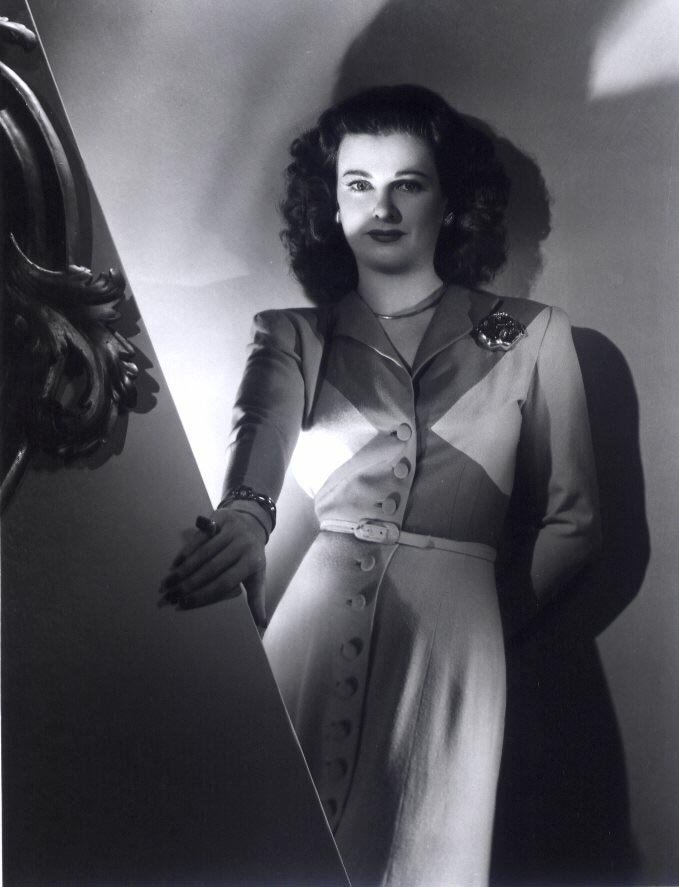
It’s only natural to honor Joan Bennett on her birthday by explaining her powerful influence on my writing. A lot of this influence goes back to my earlier years watching old movies. As a kid, I started out hooked on Bela Lugosi, Boris Karloff, and the rest of the stable of Universal and RKO horror films – God Bless Val Lewton! The mystery and otherworldliness of black and white film, the smart dialogue, the clever twists of plot that other forties and thirties film genres shared with horror lured me into a liminal world like a perpetual deep summer night. I was further captured by classic films’ biting wit, challenging plots, and independent women – especially in what I came to know as film noir. And who showed herself the queen of this world? Above them all, Joan Bennett.

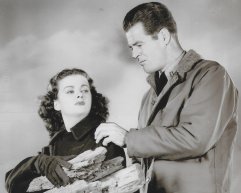
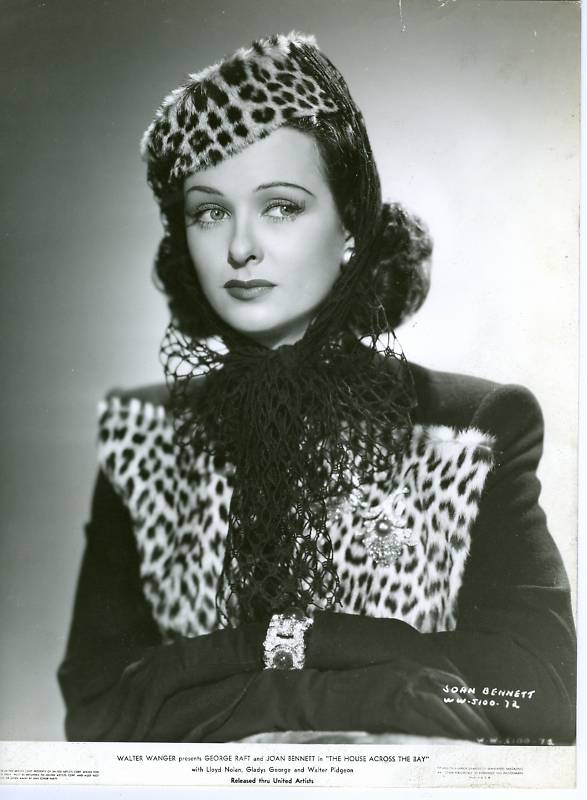
I must admit that I first came really to know Joan when she appeared in Dark Shadows. Her Elizabeth Collins Stoddard was formidable, reminding me of my mother when I was in deep trouble. How could vampires, werewolves, and witches withstand her powerful, regal stare? Still, like my Mom, there was deep feeling and love for her daughter and her family. However, only in film did I discover Joan displaying one of the traits I loved best about my Mom: that witty, smart-talking-gal sense of humor. In outright comedy, Joan could drop a clever line with style and intelligence, but even in some of her darkest dramas that wit came through. What a delight to see her wield that humor to put firmly in their places anyone trying to crush or bamboozle her. In The House across the Bay, she undercuts a smart-mouth chorine who harangued her, “Cheep, cheep, cheep,” with “Where’s the birdseed?” When the obnoxious woman tries to go after her physically, Joan rakes her over the coals with, “Just a minute, Miss Dimwit.  I was silly enough to apologize, but now that you want to make something of it, I’ll give you a good reason. You’re a phony, you’ve got a voice like four panes of cracked glass, and about as much appeal as a can of embalming fluid. I could go on, but that ought to give you a rough idea of how I feel about you.” Eight years later, when Paul Henreid tries to disparage her cynicism towards him in The Scar with a deprecating, “You’re a bitter little lady,” she puts him in his place with a world-weary but tough, “It’s a bitter little world, full of sad surprises, and you don’t go around letting people hurt you.” In The Man I Married, Joan’s not even daunted by Nazis, telling her husband-turned-fascist, “Heil heel,” when he promises to dump her and take their son. Her feistiness isn’t limited to verbiage, either. Take a gander at this picture.
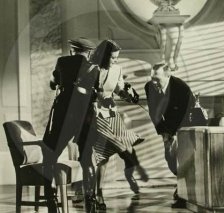
Like my Mom, Joan played women of wit, strength, humanity, and confidence – not just what the New York Times dubbed her gallery of “hydrochloric dames.”
So, in my twenties, when I decided to take my writing more seriously than developing Victoria Holt knock-offs or spoofs of Dark Shadows, I turned to 1940s style mysteries to inspire my own adventures of romance, danger, suspense, and wit. Interestingly, as a writer influenced by film, I found I could better create distinct, believable characters by casting them as actors with whom I was familiar, blending their traits with some of the people I knew (including myself!). I also knew that I didn’t want my heroine to be wimpy, weepy, and inclined to faint in the final reel or pages, which, unfortunately, did often happen on the page or screen in the ’40s and ’50s. Guess whom I saw as perfect for the role of Jessica Minton, a smart, independent, quick-with-a-quip forties gal? Someone who had a sensitive heart and a strong sense of responsibility, but didn’t take guff from anyone – and would smack said guff out of the ballpark with whip smart humor.

Surprise!
I do see a lot of myself in Jessica – and in Joan’s less nasty roles – or maybe an idealized version of myself, anyway. I know that mischievous banter with those I love and pointed barbs for those I don’t is something I share with Jess, which Joan plays to perfection. However, I doubt that, like Jessica, I’d have the guts to hold onto a mysterious package left by a mysterious and handsome British stranger at the risk of being liquidated by Nazi fifth columnists – to disguise myself as a maid to get into a criminal’s apartment while he’s still there (!) to retrieve a gun used to frame a friend – to grab a gunsel by the lapels and threaten to turn him into a soprano if he ever threatened my cat again – to show up in a shadow-draped room and wittily bargain with a gun-toting femme fatale and her hired gun to trade stolen jade for my friends’ lives – or to slip into a cove and explore a beached and rotting ship while layers of ocean fog swept in around me. I might dare to weaponize a banana-cream pie, but I can’t guarantee my aim would be as good as Jessica Minton’s. I can guarantee you that any fans of our Joanie could picture her carrying off these adventures with verve and wit, though not without human trepidation.
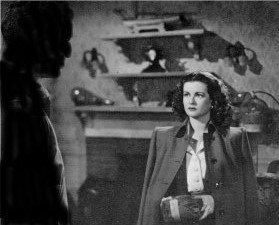
Those of us who love Joan Bennett and appreciate her talents would also, as Sam Fuller writes, see her as “a sensitive actress” enough to also believe her playing Jessica’s distress at being torn between loyalty to an old boyfriend and to a new man who brings her adventure and love; a sister who gets annoyed with her older sibling’s foibles leading them into danger but sticking by her to the end (though not without a smart quip or two exchanged between them); a sweetheart waiting to hear news of a fiancé lost in the war, then a wife supporting her husband’s struggle with memories from that war. And Jessica loves her cat. I know Joan was a dog person, but heck, there’s still part of me in Jessica Minton. So, she’s a cat person!
Anyway, that’s all I’ve got to say on the subject, but if you’d like to take a peek at some passages from Bait and Switch or Letter from a Dead Man, click on the links on the titles and have fun picturing Joan working her magic as Jessica Minton. Oh, and by the way, I cast her sister Elizabeth as Rosalind Russell (and my sister-on-law). Can you imagine what a grand ride it would have been to catch Joan and Roz trading quips with each other, then marshaling their humor to take on Nazis, criminally corrupt American aristocrats, femme fatales, underworld crooks, and crooked cops? And I’ve got two more books on the way! Viva Jessica Minton and Joan Bennett!

If you love mysteries on the screen or on the page, especially centered on the golden era, click here to go to my web page where you can find lots of interesting stuff – including my Joan Bennett tribute page!


Photos: Author’s collections